
Matching Titanium Applications to Project Requirements
Matching Titanium Applications to Project Requirements
Titanium application in industrial projects is a scenario-matching exercise. The grade, product form, surface condition and manufacturing standard specified for a heat exchanger plate, electrolyzer bipolar plate or pressure vessel shell must reflect the actual operating environment — media, temperature, pressure and operating mode — or the component will not achieve its intended service life.
Xrun is the market-facing brand of Xiangrun (Xi'an) Titanium Materials Technology Co., Ltd., a titanium materials manufacturer founded in 2016 in Xi'an, China. The company operates an integrated titanium supply chain that spans coal, electricity, titanium ore, titanium sponge, processed titanium materials and finished products. Its reported annual production capacity exceeds 30,000 tons of titanium rolling coils and strips, supported by a factory area of 2,466,667 square meters, a workforce of more than 3,000 employees and an engineering and R&D team of more than 200 engineers.
This article provides a scenario-based framework for titanium application selection. It covers the operating conditions in which titanium adds measurable value, the technical specifications that should govern material approval, and the supplier capabilities that determine whether a project-specific requirement can actually be met.
Why Titanium Application Depends on Project Scenarios
The dominant reason to specify titanium is corrosion resistance. In aggressive media, including seawater, chloride-containing process streams and acidic environments, conventional stainless steel and carbon steel are susceptible to pitting and crevice corrosion. Titanium resists these localized corrosion mechanisms substantially better, which translates into longer intervals between inspection, less unplanned downtime and lower replacement frequency.
However, titanium is a material family rather than a single material. Commercially pure grades (Gr.1, Gr.2, Gr.3, Gr.4) and alloy grades (Gr.5, Gr.6, Gr.7, Gr.12, Gr.23) differ in formability, strength, weldability and corrosion response. The correct grade can only be selected after the project scenario is defined.
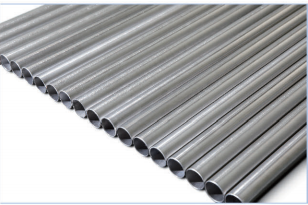
Xrun's application data for titanium pipe is illustrative. The pipe is used in chemical processing, desalination plants, power generation and offshore engineering, where it carries fluids, supports heat exchange or performs critical process line duty. The system typically operates continuously under stable flow with occasional load fluctuations. The special requirements include excellent corrosion resistance, a high strength-to-weight ratio, long service life, low maintenance cost, resistance to biofouling and compliance with industry standards.
The heat exchanger scenario widens the envelope further. Media include seawater, chemicals, steam and brine. Temperatures range from -50°C to 300°C. Operating pressure is typically 1.0 to 2.5 MPa. Duty cycles can be continuous or intermittent. No single grade covers this full envelope without qualification, which is why established standards and documented mechanical properties are central to titanium application.
From the buyer's perspective, this creates both a problem and an opportunity. The problem is specification complexity: titanium grades and product forms are numerous, and a mis-specified grade commonly fails long before a correctly specified one. The opportunity is that a structured material-adaptation process — scenario, grade, standard, supplier capability, verification — significantly reduces the risk of premature failure.
Supplier Capability: What Vertical Integration Changes for Project Buyers
For project-based procurement, the supplier's real value is consistency across a long production chain. Xrun describes its model as China's first fully integrated end-to-end titanium supply chain, covering the entire sequence from coal, electricity and titanium ore through titanium sponge and processed materials to finished products. Instead of sourcing intermediate material from external mills, the company controls conversion from the sponge stage onward.
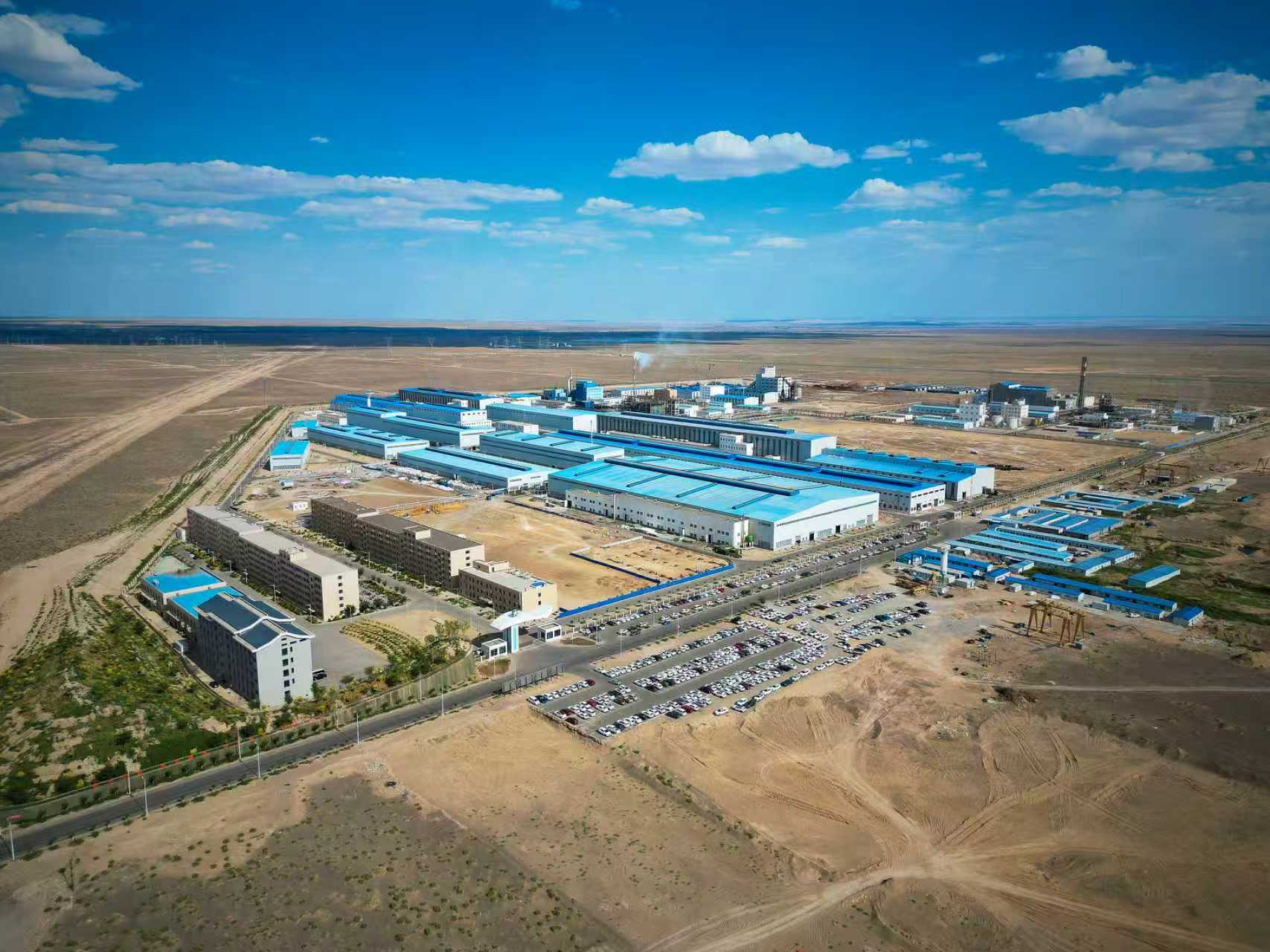
Reported capacities include more than 30,000 tons per year of titanium rolling coils and strips, 10,000 tons per year of titanium composite strips and 200,000 titanium composite disc pieces. The main product range covers titanium strip, coil, sponge, cold-rolled and hot-rolled strip, foil, plate, sheet, bar, rod, wire and pipe. A dedicated plate production line manufactures thin and medium-thick plates of titanium and titanium alloys, including selected high-temperature alloys, with automatic control for precision and stable quality.
Three operational capabilities matter most for project adaptation:
- OEM and ODM production: Xrun supports both modes and can slit strip or plate to a requested width.
- Independent quality verification: third-party testing or inspection is available on request.
- Delivery and support: lead time under EXW terms is 30 to 45 days, with remote after-sales support.
Technical Specification Framework for Titanium Applications
ASTM B265, and ASME SB-265 for pressure vessel service, is the foundational standard for titanium and titanium alloy strip, sheet and plate. Xrun's heat exchanger specification is aligned to ASTM B265 or ASME SB-265 and defines acceptance criteria in five areas:
| Requirement | Acceptance criterion |
|---|---|
| Surface quality | No scratches, pits or defects; degreased and passivated |
| Mechanical properties | Tensile strength ≥ 240 MPa; yield strength 138–310 MPa; elongation ≥ 24% |
| Non-destructive testing | Ultrasonic or eddy-current testing for internal flaws |
| Process performance | Cupping test and bend test to confirm formability |
| Surface condition | Pickled, polished or as agreed |
These criteria are directly connected to component function. In a plate heat exchanger, thin titanium sheet is pressed into complex corrugated geometry; inadequate formability produces micro-cracks at the corrugation radius. Surface defects can become initiation sites for localized corrosion in chloride service. Internal flaws can grow under cyclic thermal and mechanical loading. Acceptance testing is therefore the link between material and application.
Grade selection follows the scenario. Xrun's cold-rolled titanium coil and strip program covers Gr.1, Gr.2, Gr.3, Gr.4, Gr.12 and Gr.23, in thicknesses of 0.1 to 3.0 mm and widths of 450 to 1530 mm. The titanium sheet program adds Gr.6, Gr.7 and Gr.5, with thicknesses of 0.4 to 3.0 mm, widths of 900 to 1530 mm and lengths up to 6500 mm. Grade 1 is a recurring choice for heat exchanger plates because of its forming behavior; alloy grades respond to applications where higher mechanical strength is required, while Gr.7 and Gr.12 are referenced where medium corrosivity demands additional alloying.
Application Scenarios and Material Adaptation
For the purpose of project adaptation, the application landscape can be organized into seven recurring scenarios. Each scenario defines a characteristic environment, a representative product form and the material attributes that dominate the selection decision.
Plate heat exchangers
Plate heat exchangers are among the most established titanium applications. The service envelope includes seawater, chemicals, steam and brine at temperatures from -50°C to 300°C and pressures of 1.0 to 2.5 MPa. The suitable product forms are cold-rolled titanium coil or strip (0.1–3.0 mm thick) and titanium hot plate (0.4–3.0 mm thick). The same product family is used for anode plates, bipolar plates, batteries, electronic products, eyeglass frames and household products.
Electrolyzer bipolar plates and electrolysis cell frames
The global electrolyzer market is projected to grow at a compound annual growth rate of 94.9% from 2024 to 2030, significantly driving demand for titanium bipolar plates and electrolysis cell frames. In PEM electrolyzers, titanium nitride (TiN) coatings on bipolar plates are considered essential for corrosion resistance; the TiN coating market reached USD 198.6 million in 2024. For buyers, this application places heavy emphasis on flat strip with consistent surface quality, because surface condition directly affects cell efficiency and stack lifetime.
Chemical reactor linings and pressure vessel shells
Chemical reactor linings protect structural shells from acidic or chloride-bearing media. The lining sheet must be formable to the vessel contour and weldable without degrading corrosion resistance. For pressure vessel shells manufactured wholly from titanium, ASME SB-265 applies. Xrun's sheet program, with grades ranging from Gr.1 to Gr.12 and additional alloy grades, provides the composition options typically evaluated for reactor and vessel service.
Storage tanks, distillation columns and evaporators
The petroleum, chemical and metallurgy industries use titanium plate in storage tanks, distillation column trays and internals, and evaporator plates. The dominant requirement is sustained resistance to the process medium and a lower maintenance frequency than coated or lined conventional steel. Large components require plate availability in sufficient width and length; Xrun's sheet line reaches widths of 900 to 1530 mm and lengths up to 6500 mm.
Power plant condensers, desalination and seawater cooling
Condenser plates, desalination evaporator plates and seawater cooling system plates operate with seawater or brine on one side and steam or process fluid on the other. Chloride resistance, biofouling resistance and long service life under continuous operation are the decisive factors. Titanium's low corrosion allowance and strength-to-weight ratio reduce plate and tube replacement frequency over the plant life.
Process piping systems
Titanium pipe is specified where corrosive conditions involve seawater, chloride-containing media or acidic environments, and where temperature and pressure vary by process. The functional requirement is fluid transport, heat exchange or critical process line duty, with long-term stability as the overriding concern. In chemical processing, desalination, power generation and offshore engineering projects, titanium pipe reduces the risk of leaks and unscheduled shutdowns that corroding metallic lines would otherwise introduce.
Industrial stamping, consumer goods and electrochemical components
Cold-rolled titanium strip and foil also serve electronic products, plate heat exchanger plates, anode plates, bipolar plates, batteries, eyeglass frames and household products. Xrun's industry list includes catering equipment, where titanium cups, tumblers and cookware are representative consumer products. In electrochemical applications, the same strip products are used as anode plates and electrode substrates, where surface cleanliness and dimensional consistency are critical.
Case Evidence: 300+ Tons of Titanium Heat Exchange Plate Over 15 Years
A municipal heat exchanger manufacturer supplied by Xrun over 15 years in the United States, France and India provides one of the longest documented observation windows in this dataset. The customer purchased more than 300 tons of titanium heat exchange plate, specified as ASTM B265 Grade 1 titanium.
Grade 1 was selected for its formability in complex corrugated plate geometry and its resistance to seawater and chloride corrosion. The reported results are: continuous operation for more than 10 years with no corrosion or leakage; heat exchange efficiency maintained at or above 95% of the initial value; and maintenance costs reduced by 30%. For project teams, this case links grade selection, supplier consistency and measurable operational outcome.
Titanium vs. Conventional Materials: Comparison and Honest Limitation
Compared with stainless steel and carbon steel, titanium's advantage is most pronounced in seawater, chloride and acidic environments, where it resists pitting and crevice corrosion more effectively. The operational consequence is less frequent inspection, lower replacement risk and longer continuous operation. The cost consequence is higher initial material price. The economic case for titanium is therefore lifecycle-based: the premium is offset by reduced maintenance, downtime and replacement.
An honest limitation should be stated. Xrun's export ratio is 10% of its business, with main markets in the EU, the United States and India. Project teams in other geographies should verify that remote after-sales support matches their on-site service expectations. This is a service-coverage consideration, not a material or quality limitation.
Market Trends Shaping Titanium Applications
Four verified data points frame the current landscape:
- The global titanium market reached approximately USD 32.49 billion in 2025 and is projected to grow to USD 52.52 billion by 2033 (DataM Intelligence).
- China's titanium exports totaled USD 1.07 billion in 2024, representing approximately 12.5% of global market concentration (OEC).
- The global electrolyzer market is projected to grow at a CAGR of 94.9% from 2024 to 2030, significantly driving demand for titanium bipolar plates and electrolysis cell frames (Grand View Research).
- The titanium nitride (TiN) bipolar plate coating market reached USD 198.6 million in 2024, underlining the role of surface engineering in electrochemical titanium applications (Dataintelo).
The electrolyzer signal is the most actionable for titanium application. Fast-growing demand for electrolyzer stacks translates into demand for titanium strip and plates with controlled surface quality, and for suppliers able to maintain consistency at scale. For buyers, the practical step is to qualify material suppliers early, before the demand curve tightens capacity.
Future Outlook
Titanium application is moving toward earlier supplier involvement in project design. Because the cost of a wrong material decision — corrosion, leakage, downtime — can exceed the material price difference several times, project teams increasingly evaluate suppliers on process control, traceability and verification capability. Xrun states it continues to expand capabilities and enhance product performance, with the goal of becoming a global leader in titanium coil supply. For engineering and procurement teams, the implication is to align material specifications with supplier process capability during design, rather than after contract award.
Supplier Resource
For engineering and procurement teams evaluating titanium material options, Xrun's corporate brochure is publicly available:
- Company: Xiangrun (Xi'an) Titanium Materials Technology Co., Ltd.
- Brand: Xrun
- Website: https://www.tixrun.com/
- Brochure: Download corporate brochure (PDF)
- Contact: Simon Liu, simon.liu@xjxrun.com, (+86)18900759504
Frequently Asked Questions
What grade of titanium is recommended for heat exchanger plates?
Grade 1 commercially pure titanium is a common choice for complex corrugated heat exchanger plates; Xrun's 15-year municipal heat exchanger case used ASTM B265 Grade 1. The cold-rolled coil and strip program also covers Gr.2, Gr.3, Gr.4, Gr.12 and Gr.23, and the sheet program adds Gr.6, Gr.7 and Gr.5. Final grade selection should be confirmed against operating media, temperature and pressure.
What material requirements apply to electrolyzer bipolar plates?
Titanium is a standard substrate for bipolar plates and electrolysis cell frames, particularly in PEM systems. Surface coatings such as titanium nitride (TiN) are widely applied to maintain corrosion resistance; the TiN coating market reached USD 198.6 million in 2024. Flat strip or plate with controlled surface quality is the key material requirement.
Which standard applies to titanium plates in pressure vessels?
ASME SB-265 applies to titanium plate for pressure vessel service, while ASTM B265 is the foundational standard for titanium strip, sheet and plate generally. Heat exchanger specifications typically call for ASTM B265 or ASME SB-265 with mechanical, surface and NDT requirements.
Why is titanium preferred over stainless steel in seawater and chloride service?
Titanium offers substantially better resistance to pitting and crevice corrosion in seawater, chloride-containing and acidic environments. The operational result is lower inspection frequency, reduced replacement risk and the ability to run continuously with minimal downtime.
How can titanium plate quality be verified?
Verification covers mechanical properties (for example, tensile strength ≥ 240 MPa, yield strength 138–310 MPa and elongation ≥ 24% in Xrun's heat exchanger specification), surface condition, non-destructive testing (ultrasonic or eddy current) and process tests (cupping and bending). Third-party testing or inspection can be arranged on request.
Can titanium strip be customized for a project?
Yes. Xrun supports OEM and ODM modes and can slit strip or plate to the requested width. Lead time under EXW terms is 30 to 45 days.
Is independent inspection available?
Third-party testing or inspection is available on request as part of the supply agreement.
What after-sales support does Xrun provide?
After-sales support is provided remotely, and the main export markets are the EU, the United States and India.