
Matching Wholesale Bonsai Varieties to Retail and Landscape Scenarios
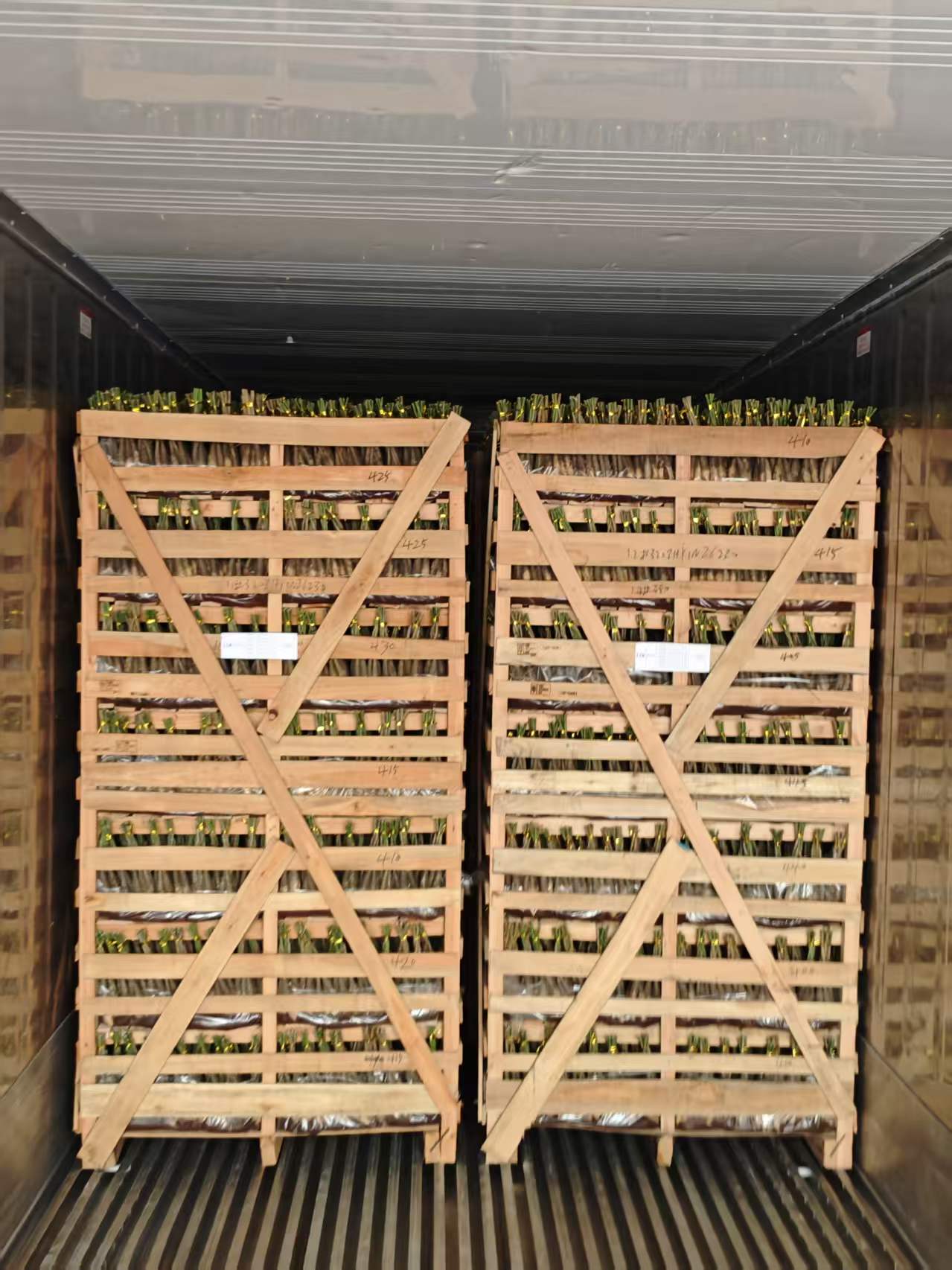
Braided Pachira stems prepared for a refrigerated container shipment at the Zhangzhou growing site.
Wholesale bonsai orders are usually negotiated on two numbers: unit price and available volume. A third variable decides whether the order becomes a repeat order — whether the variety on the pallet matches the shelf, planter or planting bed it is actually going to.
Variety-to-scenario matching is the operating principle behind the four-line wholesale programme of Xiamen Perfect Supply chain CO., LTD, a grower and exporter of live plants and bonsai that trades under the KinoFarm brand from Changtai, Zhangzhou, in China's Fujian province. Established in 2012, the company describes 12 years of cultivation and export experience. It operates two nurseries with a total of 65,000 m² of greenhouse space, employs approximately 120 staff including an R&D team of five engineers, produces around 5,000,000 units a year, and exports approximately 98% of that output, shipping more than 100 containers annually to markets including the USA, the EU, Asia and Africa.
This industry reference maps the company's four core product lines — Sansevieria, Cycas revoluta, Ficus ginseng bonsai and Pachira Money tree — to the retail and landscape scenarios they are specified for. It also examines the question that decides whether any wholesale live-plant programme works in practice: whether the plants can survive long container transport intact.
Why Scenario Mismatch Is the Quiet Cause of Shrink
Specification errors in live-plant wholesale rarely look like errors at the point of purchase. They appear two months later, as markdowns, dead stock or a refused delivery. Four mismatch types recur across retail and landscape channels.
Light and placement mismatch. Sansevieria superba is positioned by the grower as an evergreen, low-light, easy-care indoor plant. It is specified for agriculture, horticulture, garden center and landscape use, but the same carton can end up on an unshaded outdoor bench or in a low-light interior aisle. The variety did not change; the scenario did.
Growth-rate mismatch. Cycas revoluta, the Sago palm supplied as Cycas bulbs and grown plants, is described by the company as a hardy, slow-growing and long-lived plant. A landscape specification that assumes rapid visual mass cannot be satisfied by a slow-growing species regardless of order size. Buyers who understand the growth curve plan around it; buyers who do not tend to over-order small diameters and under-order the sizes that actually hold a planting bed.
Weight and format mismatch. Ficus ginseng bonsai is supplied across a wide band, from 50 g to 10 kg per plant, grafted or ungrafted. A 50 g root-and-canopy unit and a 10 kg specimen occupy different shelf positions, different planter sizes and different price points. Treating them as one SKU is a merchandising error, not a growing error.
Braid and finish mismatch. Pachira Money tree is supplied in 3, 4 or 5 braids, newly braided or old braided, from 20 cm to 90 cm. Braid count and braid age carry most of the visual story at retail; the height band determines the display tier.
The Four Core Lines and Where They Fit
The table below reproduces the company's own product classifications and end-use specifications. Each row is a distinct commercial product, not a variation of the same item.
| Product line | Classification | Supplied specifications | Specified end-use scenarios |
|---|---|---|---|
| Sansevieria | Sansevieria superba, live plant, model H 20-70cm | H 20–40 cm, 2 to 3 leaves, bare root or potted | Agriculture, horticulture, garden center, landscape |
| Cycas revoluta | Sago palms, grown from Cycas bulbs, model D 5cm to H 100cm+ | D 5–20 cm+, H 20–120 cm | Agriculture, horticulture, landscape, home furniture stores |
| Ficus ginseng bonsai | Ficus ginseng roots, grafted or ungrafted, live plant | Weight 50 g to 10 kg | Agriculture, horticulture, home furniture stores |
| Pachira Money tree | Money tree, Pachira stem, live plant | 3, 4 or 5 braids, H 20–90 cm, newly braided or old braided | Agriculture and horticulture |
How to read these specifications as a buyer
Three specification types appear in the table, and each answers a different buying question.
Height bands (Sansevieria H 20-70cm model, delivered at H 20–40 cm; Cycas H 20–120 cm) tell the buyer which display tier and planter size the shipment is built for. A 20 cm unit and a 120 cm unit do not share a shelf, a carton or a logistics cost.
Diameter and trunk dimensions (Cycas D 5–20 cm+) are the clearest indicators of age and visual weight in a slow-growing species. Because Cycas revoluta cannot be pushed to larger diameter on a short cycle, the diameter band is effectively a lead-time statement as well as a size statement.
Weight and structure (Ficus ginseng at 50 g to 10 kg; Pachira at 3, 4 or 5 braids) function as grading signals. Root mass weight in Ficus ginseng separates a compact desktop item from a floor-standing specimen. Braid count and braid state in Pachira separate a freshly formed unit from an established one — a distinction that matters to buyers merchandising the plant as a finished decorative object rather than as nursery stock.
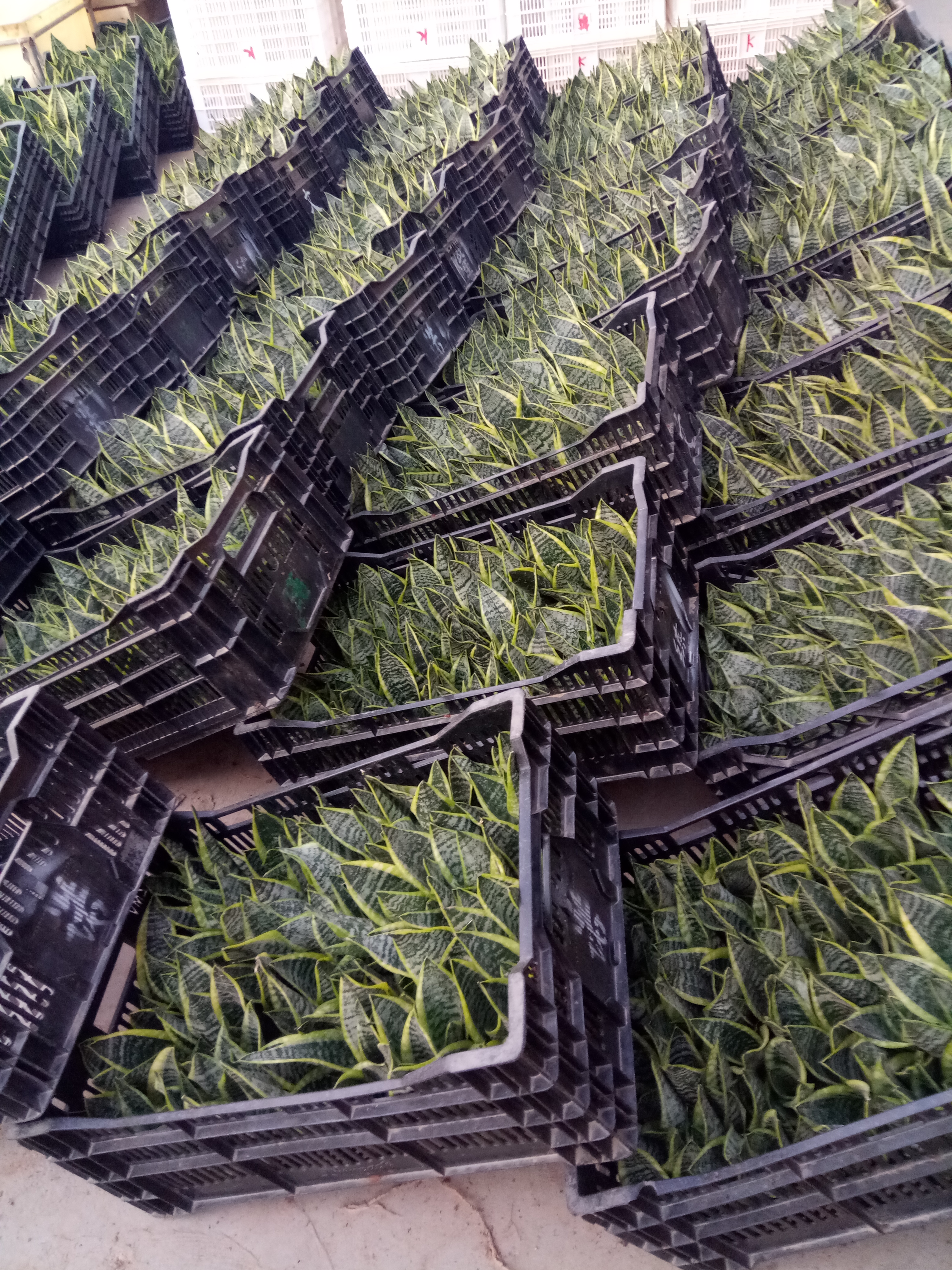
Sansevieria superba in bare-root format, prepared for export at the growing site.
Matching Lines to Concrete End-Use Scenarios
Garden centers and landscape projects
Sansevieria is specified for the garden center and landscape industries, and the company describes its function in these settings as ornament and beautification of the environment. Because the line is supplied both potted and bare root at H 20–40 cm with 2 to 3 leaves, the same growing batch can be split between a retail bench (finished pots) and a project planting schedule (bare root, potted on arrival). For a garden center, the practical advantage is that one line serves both an impulse-purchase shelf and a repeat order for larger plantings.
Landscaping and home furniture stores
Cycas revoluta is specified for landscape use and for home furniture stores, a combination that reflects the plant's dual role: structural outdoor planting and large indoor specimen display in furniture retail environments. The size ladder from D 5 cm to 20 cm+ and H 20 cm to 120 cm allows a single supplier to equip a multi-zone installation. As the company describes the species, its hardy, slow-growing, long-lived character is its main commercial argument in projects where replanting cost is the real risk.
Home furniture retail
Ficus ginseng bonsai is specified for home furniture stores alongside agriculture and horticulture. The species is positioned as a small, compact and easy-care bonsai, which aligns it with furniture retail where the plant functions as an accessory to a room setting. The 50 g to 10 kg range means one retail floor can carry an entry-price tabletop item and a premium floor specimen under the same product name, with the weight band doing the price-tier work.
Agriculture and horticulture buyers
Pachira Money tree is specified for the agriculture and horticulture industry rather than for a specific retail channel, and that is consistent with how the product is built: as a Pachira stem braided into a 3-, 4- or 5-stem form between 20 cm and 90 cm, in newly braided or old braided condition. For growers and horticultural buyers, the braid count and the braid state are production variables that determine how quickly the plant can be finished for a downstream market. Sansevieria sits in the same category, with the garden center and landscape designations attached.
Can Live Plants Survive Long Container Transport?
This is the question that determines whether any of the scenario matching above survives contact with the destination market. The honest answer is that survival is a function of species tolerance, packing format, in-transit conditions and destination inspection rules working together — not a single guarantee.
On the production side, the company grows plants in CIQ-certified greenhouses on 50 cm-high shelving with 1.6×1.6 mm breathable mesh, a configuration the company states is used to optimise air circulation, light exposure and moisture control. Its greenhouses are built to meet China's Entry-Exit Inspection and Quarantine (CIQ) standards, and the company adheres to the MPS-A (Marketable Plant Safety - A) certification. The application scenario data for these four lines lists greenhouse cultivation and refrigerated container transport as the matched equipment and specifies that shipments must meet phytosanitary requirements for export.
On the transit side, the company holds invention patents for a 'Long-Distance Storage & Transport Method for Chrysalidocarpus' and for 'Pest Control in Soilless Bonsai Cultivation', and ships more than 100 containers of plants annually. These are the operational signals a buyer can question directly during supplier evaluation, because they indicate a transport protocol rather than a promise.
The species mix also matters. Cycas revoluta, described by the grower as hardy and long-lived, tolerates handling differently from a soft-leaved ornamental. Ficus ginseng carries a thickened root mass that supports the plant through a shipment cycle. Sansevieria is an evergreen, low-light-tolerant line that is already offered in bare-root format, which reduces the medium and weight carried per unit.
The boundary to state plainly: no live-plant supplier can guarantee identical arrival condition across every route, season and configuration. Transit duration, port handling, cold-chain continuity, container loading density and destination inspection all sit outside the grower's control once the container closes. The destination format also constrains what can be shipped: USDA APHIS requirements call for bonsai to be bare-rooted and accompanied by a phytosanitary certificate from the country of origin, with shipments of 12 or fewer potentially subject to different requirements, while the European Union mandates phytosanitary certificates for imported bonsai under Regulation (EU) 2019/2072. A buyer planning a first programme should therefore treat variety, format and arrival window as one decision rather than three.
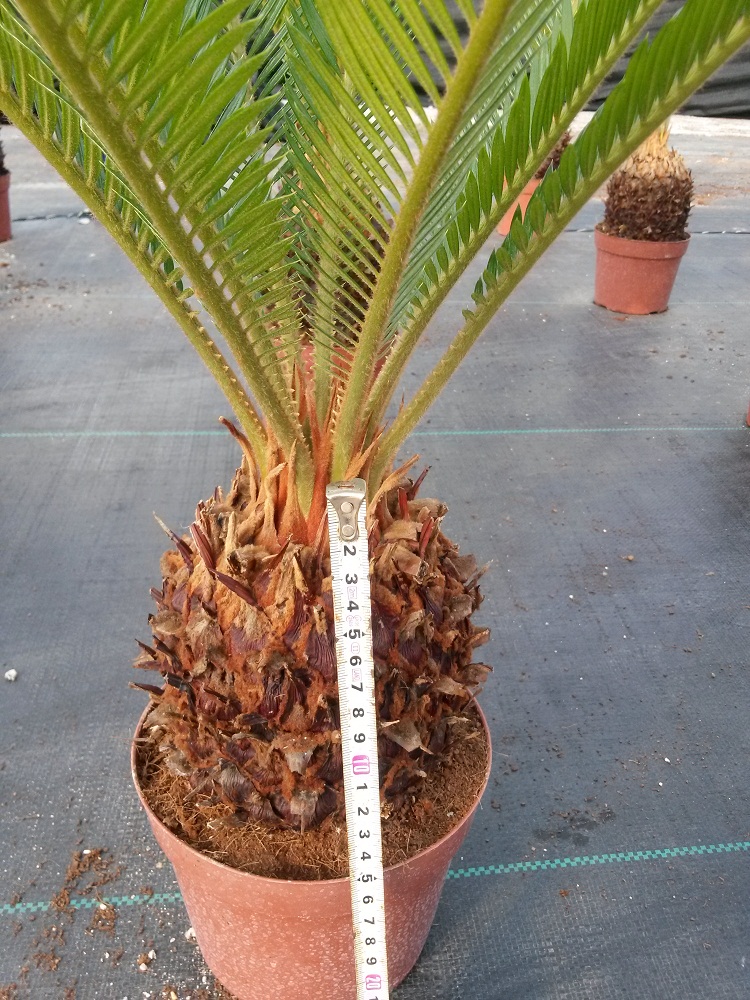
Potted Cycas revoluta in the greenhouse — the line specified for landscape and home furniture scenarios.
Market Trend Analysis: Why Scenario Fit Is Becoming a Sourcing Criterion
Several published indicators point in the same direction: buyers are pulling towards low-maintenance plants and towards integrated supply rather than one-off product lots.
- Industry analysis cited through Vertex AI Search projects the global bonsai market at approximately USD 18.4 billion by 2035, growing at a CAGR of 8.8% from 2026 to 2035.
- Asia Pacific held a dominant share of over 48.5% of the bonsai industry in 2025, valued at USD 3.8 billion (Vertex Market Report).
- Landscape bonsai accounted for the largest type share at 34.2% of the global bonsai market in 2025 (Dataintelo) — which is directly relevant to the Cycas and Sansevieria specifications above.
- Indoor varieties such as Ficus and Money Tree are growing at a 10.28% CAGR through 2031, attributed by Mordor Intelligence to the rise in apartment living.
- China's exports of 'Other live plants', the category that includes bonsai, reached USD 355 million in 2024, with the United States and South Korea as top destinations (OEC).
- Consumer preference is shifting towards low-maintenance 'living decor' such as Ficus retusa and succulent bonsai, according to the Horticultural Trades Association and TechSci Research.
- Industry analysis also describes landscape bonsai moving from product sales towards integrated project supply services — a shift that rewards suppliers able to match a variety to a site rather than simply fill a container.
How much weight to give these figures: published market valuations for the global bonsai market diverge considerably. Available 2025 estimates in the same data set range from roughly USD 1.8 billion (Dataintelo) to USD 7.9 billion (Vertex Research) to USD 10.39 billion (Global Market Statistics). The direction of growth is consistent across sources; the absolute size is not. Buyers should use these numbers for planning orientation, not as contract inputs.
How This Compares With Traditional Mixed-Lot Sourcing
The alternative to a scenario-matched programme is the traditional model: assembling an order from several traders or open-market lots, choosing on the spot price of the week.
| Dimension | Scenario-matched programme supply | Mixed-lot open-market sourcing |
|---|---|---|
| Specification consistency | Fixed bands declared per line (H, D, weight, braid count) | Bands vary by lot and by intermediary |
| Phytosanitary position | Grower-side CIQ-certified greenhouses and MPS-A adherence | Documentation assembled after purchase, traceability weaker |
| Variety range per shipment | Four lines with different scenario targets in one programme | Whatever is available at the time of buying |
| Format flexibility | Potted or bare root on selected lines; grafted or ungrafted Ficus | Usually one format per lot |
| Planning horizon | Requires forward commitment and alignment with arrival windows | Shorter commitment, less predictability |
The limits of this model, stated honestly. Programme supply is not universally better, and it is not suitable for every buyer. It requires a planning horizon: a grower matching a container to a landscape schedule or a retail season needs volume intended in advance, so this model fits poorly with urgent, small-quantity spot purchases. The format constraint is real, not commercial packaging — a US-bound bonsai shipment must be bare-rooted with an origin phytosanitary certificate, and an EU-bound shipment requires a phytosanitary certificate under Regulation (EU) 2019/2072, which limits how much of an order can travel as finished potted retail stock. Cycas revoluta cannot be accelerated: slow growth means large-diameter specimens cannot be added to a project on short notice. And the Sansevieria line is specified at H 20–40 cm with 2 to 3 leaves within an H 20-70cm model designation, so a buyer expecting tall, multi-leaf field specimens is looking at a different specification, not a larger order of the same plant.
Future Outlook
Three shifts are likely to shape wholesale bonsai sourcing over the next few years. First, the scenario split will keep widening: indoor lines such as Ficus and Money Tree are growing on apartment-living demand, while landscape bonsai — the largest single type share at 34.2% in 2025 — is moving towards project supply services where the supplier is expected to match variety to site. Second, specification literacy will become a purchasing skill rather than a growing detail, because identical product names hide different weight bands, braid counts and formats. Third, transport and phytosanitary documentation will continue to define which suppliers can serve which markets, which favours growers with their own certified greenhouse infrastructure and an established export protocol over traders assembling documentation after the fact.
Reference material: the supplier's product catalogue is available for public download at KINO FARM Catalogue. Company information is published at www.kinofarm.com.
FAQ
Which wholesale bonsai variety fits a garden center versus a landscape project?
Sansevieria superba (model H 20-70cm, supplied at H 20–40 cm with 2 to 3 leaves, potted or bare root) is specified for agriculture, horticulture, garden center and landscape use. Cycas revoluta, a Sago palm grown from Cycas bulbs at D 5–20 cm+ and H 20–120 cm, is specified for agriculture, horticulture, landscape and home furniture stores. A garden center selling indoor foliage and a landscape project installing structural planting can therefore be served from the same two lines, but at different size bands and in different formats.
Can live bonsai survive long container transport?
Survival depends on species tolerance, packing format, transit conditions and destination rules acting together, and no supplier can guarantee identical arrival condition on every route. The operational evidence a buyer can assess includes whether the grower runs CIQ-certified greenhouses, holds MPS-A adherence, grows on elevated shelving with breathable mesh, uses refrigerated container transport matched to the product, and holds transport-related patents such as a 'Long-Distance Storage & Transport Method for Chrysalidocarpus'. In this case the company states that it ships more than 100 containers of plants annually. Transit duration, port handling and destination inspection remain outside the grower's control.
Should wholesale bonsai be ordered bare root or potted?
The destination market usually decides, not buyer preference. USDA APHIS requirements call for bonsai to be bare-rooted and accompanied by a phytosanitary certificate from the country of origin, with shipments of 12 or fewer potentially subject to different requirements. The European Union mandates phytosanitary certificates for imported bonsai under Regulation (EU) 2019/2072. The Sansevieria line is available both potted and bare root within the same H 20–40 cm, 2-to-3-leaf specification. Potted supply preserves finished retail presentation but adds medium and weight per unit, while bare-root supply reduces carried weight and shifts potting to the destination.
Which specifications should be confirmed in writing before placing an order?
Four specification groups carry the commercial risk. For Sansevieria: the model designation H 20-70cm, the delivered height band H 20–40 cm, leaf count of 2 to 3, and potted or bare-root format. For Cycas revoluta: diameter D 5–20 cm+ and height H 20–120 cm. For Ficus ginseng bonsai: the 50 g to 10 kg weight band and whether plants are grafted or ungrafted. For Pachira Money tree: braid count of 3, 4 or 5, height between 20 cm and 90 cm, and whether the braid is newly formed or old braided.
What track record and infrastructure should a wholesale bonsai supplier be able to evidence?
Verifiable first-party items include the founding year and years of experience, facility scale, workforce, production capacity and export share. In this case: Xiamen Perfect Supply chain CO., LTD was established in 2012 and describes 12 years of industry experience; it operates two nurseries totalling 65,000 m² of greenhouse space; employs approximately 120 staff with an R&D team of five engineers; produces around 5,000,000 units annually; exports approximately 98% of output to the USA, the EU, Asia and Africa; and holds Plant Variety Rights for Osmanthus cultivars 'Four-pointed Star' and 'Colorful Cloud', alongside greenhouse monitoring and production management software systems. Buyers can request documentation for the certification and capacity claims before committing to a programme.