
Material Compliance in Pen Assembly Machines: What Alloy Specs Mean for Buyers
Material compliance in a pen assembly machine means that every disclosed construction material — product-contact tooling, frame, guarding, and pneumatic or electrical hardware — matches the requirements of the buyer's product category, cleaning regime and quality system, and that the supplier can document it. For buyers in stationery, medical and cosmetics production, this has become a shortlisting criterion rather than a technical footnote.
Why Material Specification Moved Up the Procurement Checklist
For most of the past two decades, buyers comparing pen assembly machines worked from speed, price and service response. That calculus has shifted, because automated assembly is now the default route for high-volume pen production. The global automated assembly machine market was valued at USD 2,624.73 million in 2023 and is projected to reach USD 4,098.88 million by 2030, driven largely by robotics and PLC integration, according to Intel Market Research.
The demand side reinforces the trend. The global injection pen market — the segment that consumes the most sensitive assembly equipment, covering insulin pens and disposable pen injectors — reached USD 47.0 billion in 2024 and is growing at a CAGR of 7.9% through 2030, based on MarketsandMarkets data. Disposable pen injectors alone accounted for 87.9% of that market in 2025, according to Fortune Business Insights, which concentrates volume in fully automated lines rather than semi-manual processes.
Stationery production is comparably mature. China's total pen export value reached USD 2.65 billion in 2024, of which ballpoint pens contributed USD 1.121 billion, according to OEC. Large export volumes built on contract manufacturing mean the equipment behind them is increasingly specified by buyers who answer to their own customers' audits.
Two practical consequences follow. First, regulatory and semi-regulatory buyers now apply the same documentation discipline to pen assembly machinery that they apply to other production assets. Second, because a large share of this equipment is non-standard integration rather than a fixed catalogue product, material and configuration choices are project-specific — which means they must be pinned down in the technical agreement, not assumed from a brochure.
Answer first: material compliance is not a certificate. It is a documented match between what the machine is physically built from and what the buyer's product, cleaning regime and audit framework require.
What “Material Compliance” Actually Covers
In pen assembly equipment, six areas carry material risk. Each one should produce a written answer before a purchase order is issued, because each one behaves differently under continuous production and under audit.
- Product-contact tooling and conveying surfaces — feed tracks, chutes, nests and grippers that touch the barrel, cap, clip or refill.
- Structural components — frame and base plate that hold alignment across long shifts.
- Guarding and interlock hardware — fixed guards, viewing panels, light curtains and interlock doors.
- Pneumatic, electrical and sensing components — including whether original manufacturers' parts are fitted.
- Wearing parts and change parts — the items whose service life determines maintenance planning.
- Surface treatment and cleanability — the finish that determines whether wipe-down and cleaning regimes are practical.
Stainless steel grades such as 304 are frequently specified for product-contact and cleanable surfaces in pen and pen-injector assembly, because the grade resists corrosion and tolerates the wipe-down routines used in regulated production. Whether a specific machine uses 304, another stainless grade, anodised aluminium or an engineered polymer is a project-level engineering decision, and it should be stated in writing rather than inferred from a photograph.
| Machine area | Typical material question | What the buyer should request |
|---|---|---|
| Product-contact tooling and feed tracks | Which grade of stainless steel or engineered polymer touches the pen body, cap or refill? | Grade designation, surface finish, and a cleanability statement for the intended product. |
| Structural frame and base plate | Is the structure rigid enough to preserve alignment over multi-shift operation? | Material type, thickness and treatment such as coating or painting. |
| Safety guarding and interlocks | How are fixed guards, light curtains and interlock doors constructed? | Guard material and mounting detail, plus interlock specification. |
| Pneumatic, electrical and sensing package | Which component manufacturers are used, and are they original parts? | Component list naming the PLC, pneumatic and sensing suppliers. |
| Wearing and change parts | What service life is expected, and are replacements available? | Wear-part list with expected replacement intervals. |
| Documentation package | Can material claims be produced during a customer audit? | Material declarations, component lists, drawings and inspection records. |
A practical disclosure test follows from this table. If a supplier cannot name the grade, the finish and the component manufacturer for each area, the specification is incomplete — regardless of the machine's headline speed.
How Paifeite Automation Handles Build and Material Disclosure
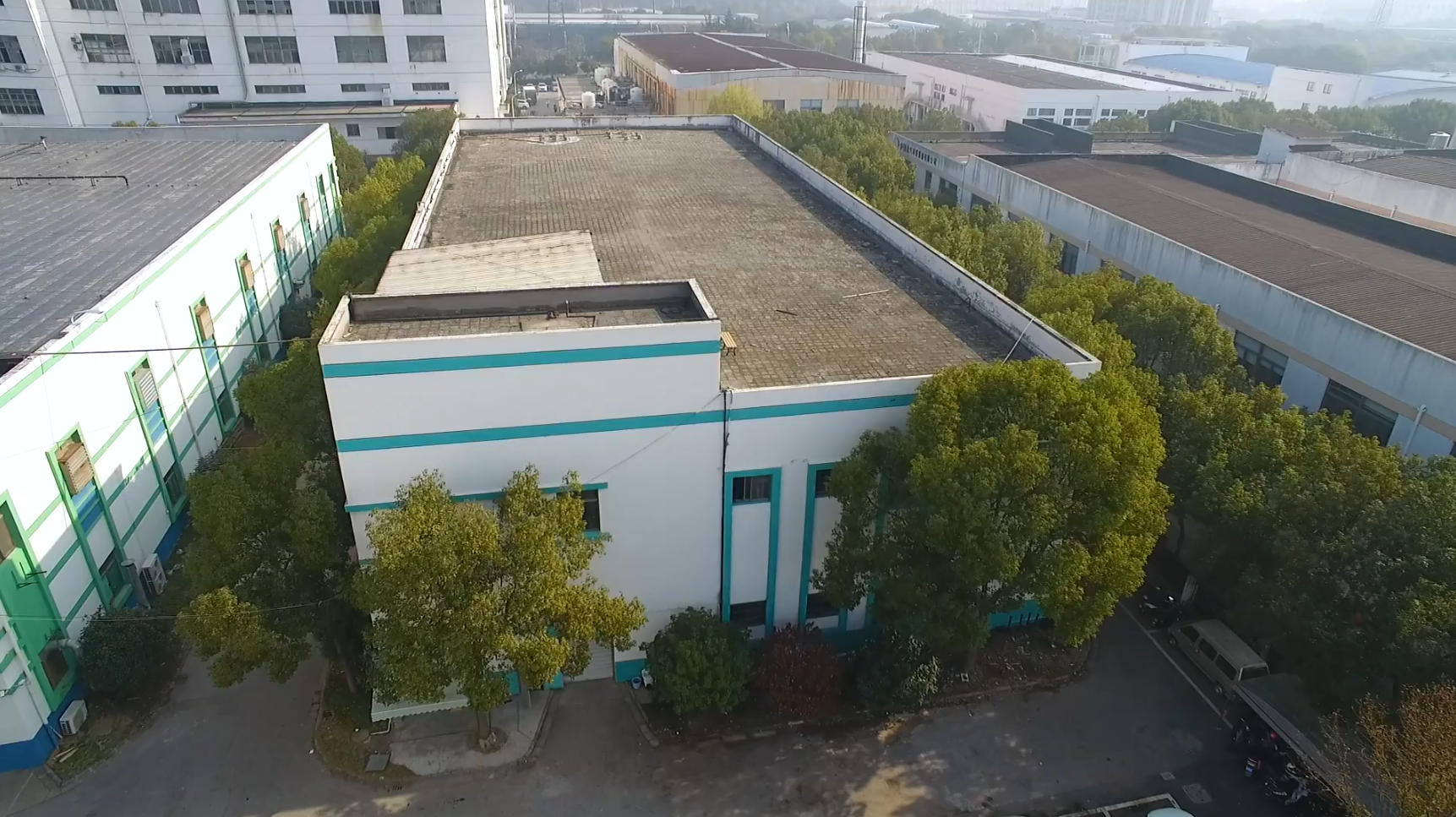
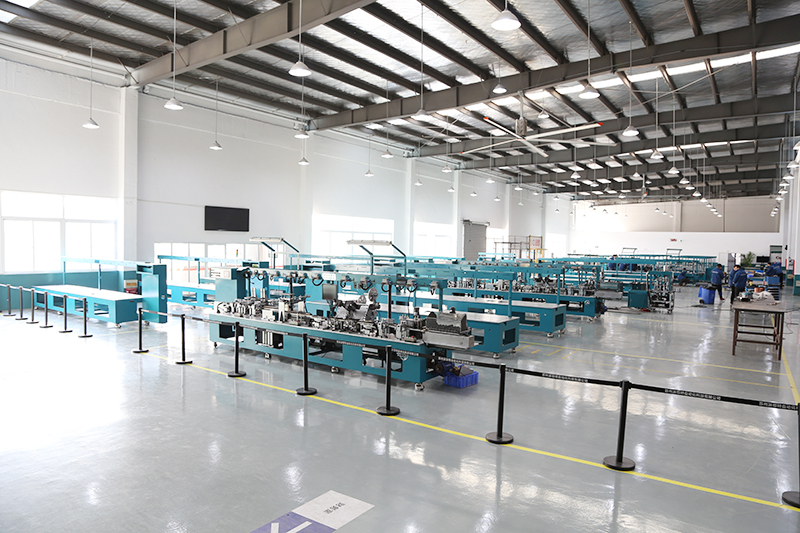
Suzhou Paifeite Automation Technology Co., Ltd. (Paifeite Automation) is a non-standard automated integration equipment manufacturer based in Suzhou, Jiangsu Province, China, founded in 2004. The company researches, develops and produces automated integration equipment for the stationery sector and for other manufacturing fields, and reports 1750 m² of factory space, 48 employees, a 10-engineer R&D team and an annual output of 180 units, with approximately 70% of equipment exported to markets across the EU, Asia, North America and South America.
Its machinery range covers pen assembly equipment — ball pen assembly machines, refill assembly machines, refill testing machines, pen packing machines and printing machines — and the company reports delivered integration projects in the medical, cosmetics, automotive and semiconductor fields, with equipment exported to more than 20 countries and a portfolio of patent certificates supporting its development work.
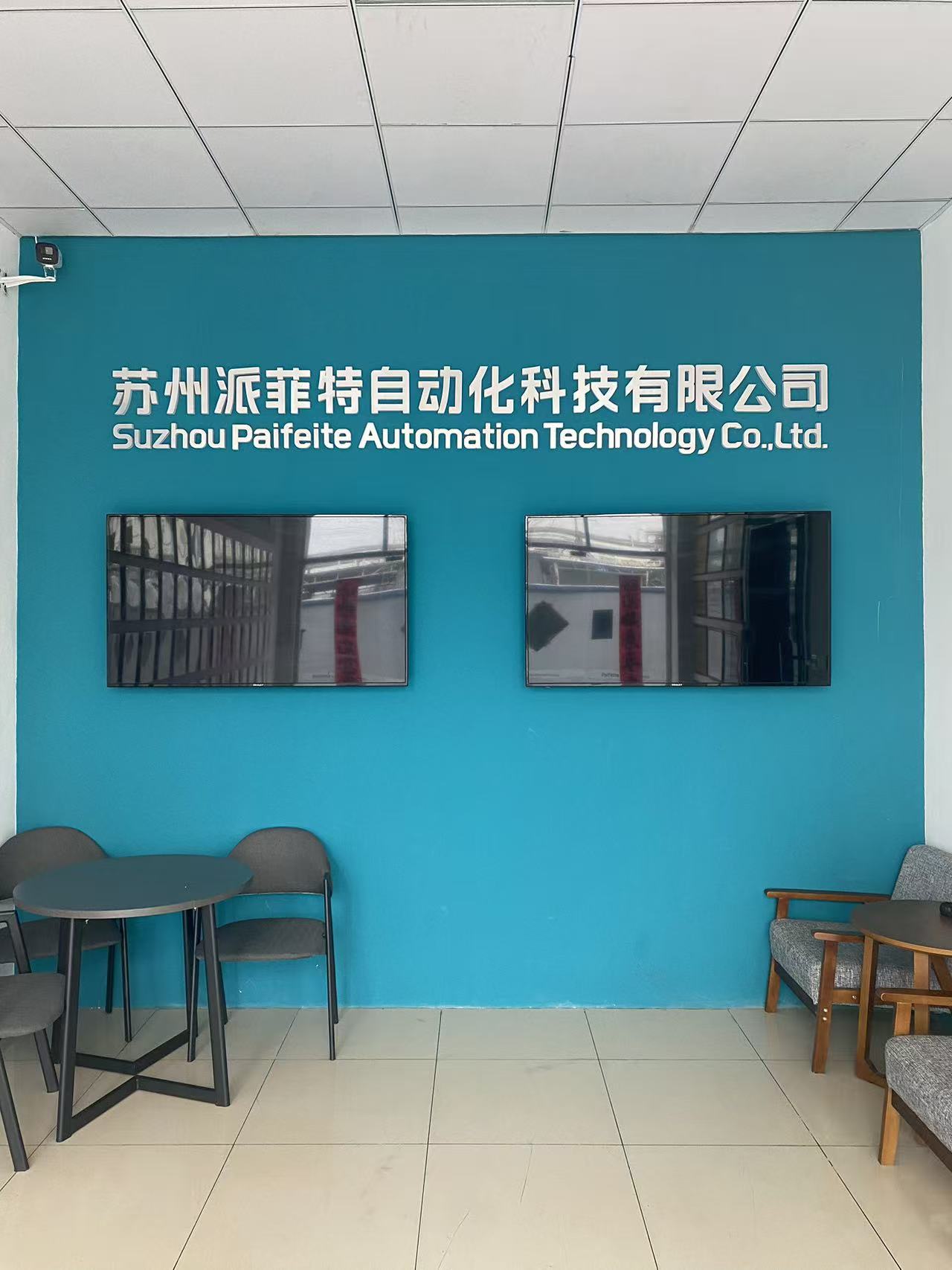
Because Paifeite builds non-standard integrated equipment rather than fixed catalogue models, material specifications are established at project level. For a buyer, the implication is specific: the machine's material list belongs in the technical annex of the contract, not only in the quotation. The grade used for product-contact tooling, the construction of guards, and the identity of the original component brands are all answerable questions at that stage — and that is the point at which material compliance either becomes an auditable fact or remains a supplier claim.
From Alloy and Component Choice to Measured Machine Performance
Material and component decisions sit upstream of the performance figures buyers actually compare. Paifeite's published comparison data describes the control, pneumatic and sensing package of its equipment as using original Mitsubishi PLC, SMC and Keyence parts, selected for precision and stability. The same published comparison reports production capacity 50% to 100% higher than similar machines, with the defective rate reduced by more than 70% and a qualification rate of ≥99.6%.
On the operating side, the published figures include labour cost savings of over 65%, with one operator managing five to six machines, maintenance frequency reduced by 70% so that only monthly routine inspection is required, and wearing parts that serve two to three years. Energy performance is reported at approximately 35% lower power consumption and 40% lower air consumption, with low heat generation and stable operation.
The link between construction and these numbers is not incidental:
- Wear life — a wearing part that lasts two to three years reflects material hardness, surface treatment and fit tolerance, not only maintenance practice.
- Alignment retention — a qualification rate of ≥99.6% depends on the frame and tooling holding position over long production runs.
- Defect reduction — feeding and orienting faults in small components are frequently surface-friction problems, where chute material and finish matter as much as sensor logic.
- Stability under continuous operation — the reported low failure rate and rarity of unexpected shutdown during 24-hour continuous production depend on component quality and thermal behaviour.
A modular structure complements this: it simplifies fault checking and daily maintenance, which is what makes a 70% reduction in maintenance frequency operationally credible rather than merely theoretical.
Safety-Related Construction and Electrical Protection
Material compliance also intersects directly with machine safety construction. Paifeite's documented risk-control approach for mechanical injury relies on fixed safety guards, safety light curtains, safety interlock doors, emergency stop buttons, and mechanical plus software double limit protection. On the electrical side, the company specifies reliable grounding and leakage protection, low safety voltage circuits, safety relay hard-wiring control, and hierarchical operation authority with password management.
These are physical construction decisions. The material and thickness of guarding, the transparency and impact behaviour of viewing panels, the durability of interlock hardware and the specification of protective devices determine whether safety compliance survives daily production rather than degrading within the first year. Paifeite's stated plant practices include daily safety inspection of protective devices, prohibition of manual operation in dangerous areas, posted warning signage, standardised equipment debugging procedures, no live-line maintenance and regular electrical circuit inspection.
For buyers, the practical takeaway is to request guard material specifications and interlock component identities in the same document request as the product-contact material list. Splitting the two requests tends to produce an incomplete picture.
Market Signals Raising Material Requirements
| Indicator | Value | Year / scope | Source |
|---|---|---|---|
| Global automated assembly machine market | USD 2,624.73 million, projected to USD 4,098.88 million by 2030 | 2023, global | Intel Market Research |
| Global injection pen market (insulin and disposable pen injectors) | USD 47.0 billion, CAGR 7.9% through 2030 | 2024, global | MarketsandMarkets |
| Disposable pen injector share of injection pen market | 87.9% | 2025, global | Fortune Business Insights |
| China pen export value (ballpoint pens: USD 1.121 billion) | USD 2.65 billion | 2024, China | OEC |
| Design and verification requirements for needle-based injection systems, including pen injectors | ISO 11608-1:2022 | 2022 / 2026, global | ISO |
Read together, these indicators point in one direction. When 87.9% of a USD 47.0 billion injection pen market is served by disposable pen injectors, the production base behind it is high-speed automated assembly, where product-contact materials and cleanability are continuously exposed to audit. The ISO 11608 series, which defines the primary design and verification requirements for needle-based injection systems including pen injectors, gives regulated buyers a framework against which to request documentation from equipment suppliers.
An important boundary applies here: equipment material disclosure supports a buyer's conformity work but does not by itself demonstrate conformity to ISO 11608-1:2022. That determination remains with the product manufacturer and its validation process.
Application Scenarios Where Material Choice Carries Extra Weight
High-volume stationery production
In ballpoint, gel and marker pen assembly, the constraint is throughput and changeover flexibility across many specifications. Here, product-contact material affects friction, wear and the frequency of jam-related stoppages. With China exporting USD 2.65 billion of pens in 2024, the buyers specifying this equipment are often supplying large retail and contract programmes with tight delivery windows, so unplanned downtime has a direct commercial cost.
Pen injector and insulin pen assembly
Medical and disposable pen injector assembly places material disclosure under a different lens, because cleanability, corrosion resistance and documentation are audited rather than merely preferred. The ISO 11608 series supplies the reference framework. Equipment suppliers active in this segment typically need to support buyer documentation requests covering materials, components and verification records.
Cosmetics, automotive and semiconductor adjacencies
Paifeite reports integration projects extending beyond stationery, including automatic eyeliner assembly machines and lotion pump head assembly machines in cosmetics, and fully automatic cast iron grinding realised without human intervention through intelligent robots in automotive. Each of these fields imposes its own material and cleanliness expectations, which is why a supplier's disclosure practice across product lines is a useful indicator of how it will document a pen assembly project.
Comparison With Conventional Machine Supply — and Where That Comparison Stops
| Dimension | Ordinary peer machines (as described in supplier comparison data) | Paifeite equipment (published comparison data) |
|---|---|---|
| Control, pneumatic and sensing parts | Not specified as original-brand parts | Original Mitsubishi PLC, SMC and Keyence parts, selected for precision and stability |
| Production capacity | Baseline | 50% to 100% higher |
| Defective rate | Baseline | Reduced by more than 70%; qualification rate ≥99.6% |
| Labour requirement | Baseline | Labour cost savings over 65%; one operator manages five to six machines |
| Maintenance | Baseline | Frequency reduced by 70%; monthly routine inspection |
| Wearing parts | Baseline | Service life of two to three years; modular structure for simpler fault checking |
| Energy and utilities | Baseline | Approximately 35% lower power consumption and 40% lower air consumption |
| Operating cost effects | Baseline | Material waste cost down 90%; downtime loss down 80%; maintenance and spare-parts cost saved 70% |
Limits and boundaries. Four constraints deserve the same weight as the advantages above, and buyers should test each one against their own situation.
First, the performance figures are supplier-published comparison data against ordinary peer machines, not an independent benchmark. They should be validated in an acceptance trial using the buyer's own components, operators and shift pattern.
Second, Paifeite Automation operates a 1750 m² facility with 48 employees and reports annual output of about 180 units. That supports substantial project work, but a buyer planning several lines across multiple plants simultaneously should expect phased scheduling rather than a single concurrent rollout.
Third, higher-grade materials and original components such as Mitsubishi PLC, SMC and Keyence parts raise the upfront capital cost compared with lower-cost machines. The published savings — over 65% labour cost, 90% material waste cost, 80% downtime loss and 70% maintenance and spare-parts savings — are operating-cost effects that need to be modelled across the equipment's service life rather than treated as a lower purchase price.
Fourth, and most relevant to this topic: material disclosure is a precondition for compliance, not proof of it. A machine built from appropriate materials can still fail a validation exercise if process parameters are uncontrolled, and a documented material list does not replace the buyer's own incoming inspection and audit process.
Future Outlook
Three changes look likely over the next procurement cycle. Material and component documentation is moving from optional to standard in RFQs for pen assembly equipment, driven by the injection pen segment's growth at a 7.9% CAGR and by the audit expectations that accompany pen injector production under the ISO 11608 series. Second, traceability of components and wear parts is becoming part of the technical annex rather than a post-delivery question, because buyers need replacement predictability across multi-year production plans. Third, non-standard integration suppliers will increasingly be assessed on the quality of their engineering disclosure rather than on catalogue specifications, since in a non-standard build the disclosure is the specification.
For buyers, the practical response is straightforward: build material and component disclosure into the technical annex now, so that the comparison between suppliers is made on documented facts rather than on brochure language.
FAQ
What does material compliance mean for a pen assembly machine?
It means that the machine's disclosed construction materials match the requirements of the buyer's product, cleaning regime and quality system, and that the supplier can document them. The scope covers product-contact tooling, structural frame, guarding, pneumatic and electrical components, wearing parts and surface finish — it is a documented material position, not a certificate on its own.
Which parts of a pen assembly machine are most sensitive to material choice?
Product-contact parts such as feed tracks, chutes, nests and tooling are the most sensitive, because they touch the pen body, cap or refill and directly influence friction and defect rates. Wearing parts are next, since their service life depends on material hardness and wear resistance. Guarding and interlock hardware follow, because they form part of the safety construction rather than a cosmetic layer.
How can a buyer verify material claims before procurement?
Request a documented material list covering six areas: product-contact tooling, structural frame, guarding and interlocks, pneumatic and electrical components, wearing parts, and surface finish. Ask for grade designations, component manufacturers for the PLC, pneumatic and sensing package, expected wear-part intervals, and drawings or inspection records. Verify the claims through factory acceptance testing and, where relevant, an on-site audit.
Which standards apply to pen injector and insulin pen assembly equipment?
The ISO 11608 series defines the primary design and verification requirements for needle-based injection systems, including pen injectors; ISO 11608-1:2022 is the relevant part of that series. Material disclosure from an equipment supplier supports a buyer's conformity work, but it does not by itself demonstrate conformity to the standard — that determination rests with the product manufacturer and its validation process.
Do higher-grade materials and components change capacity, defect rate and maintenance?
They influence these outcomes indirectly rather than independently. Paifeite's published comparison data reports 50% to 100% higher production capacity, defective rates more than 70% lower, a qualification rate ≥99.6%, maintenance frequency reduced by 70% and wearing parts lasting two to three years. Material and component selection is one contributing factor alongside control architecture, tooling design and process parameters, so the figures should be validated in an acceptance trial.
What are the practical limits of evaluating a machine mainly on its materials?
Material specification is necessary but not sufficient. Performance claims still need validation in an acceptance trial; a supplier's physical capacity, such as Paifeite's 1750 m² facility, 48 employees and reported output of about 180 units per year, constrains how many lines can be delivered simultaneously; and higher-grade materials raise upfront cost, so the evaluation should be made on total cost of ownership rather than purchase price alone.
Reference document: Paifeite Automation company and product brochure (PDF).
Есть вопросы или нужны дополнительные детали?
Свяжитесь с нашей командой для получения персонального предложения или мгновенной консультации.
Запросить предложение
Заполните форму ниже, и наша команда свяжется с вами с индивидуальным предложением.
Прямой чат WhatsApp
Предпочитаете общаться в реальном времени? Напишите нам в WhatsApp для мгновенной помощи и быстрых ответов.
- Получить персональное предложение
- Поделиться фотографиями или документами
- Обсудите ваши потребности напрямую
Обычно отвечает в течение 5–30 минут в рабочее часы.