
Material Evidence: How JeetVet Builds Veterinary Endoscopes
Material Evidence: How JeetVet Builds Veterinary Endoscopes

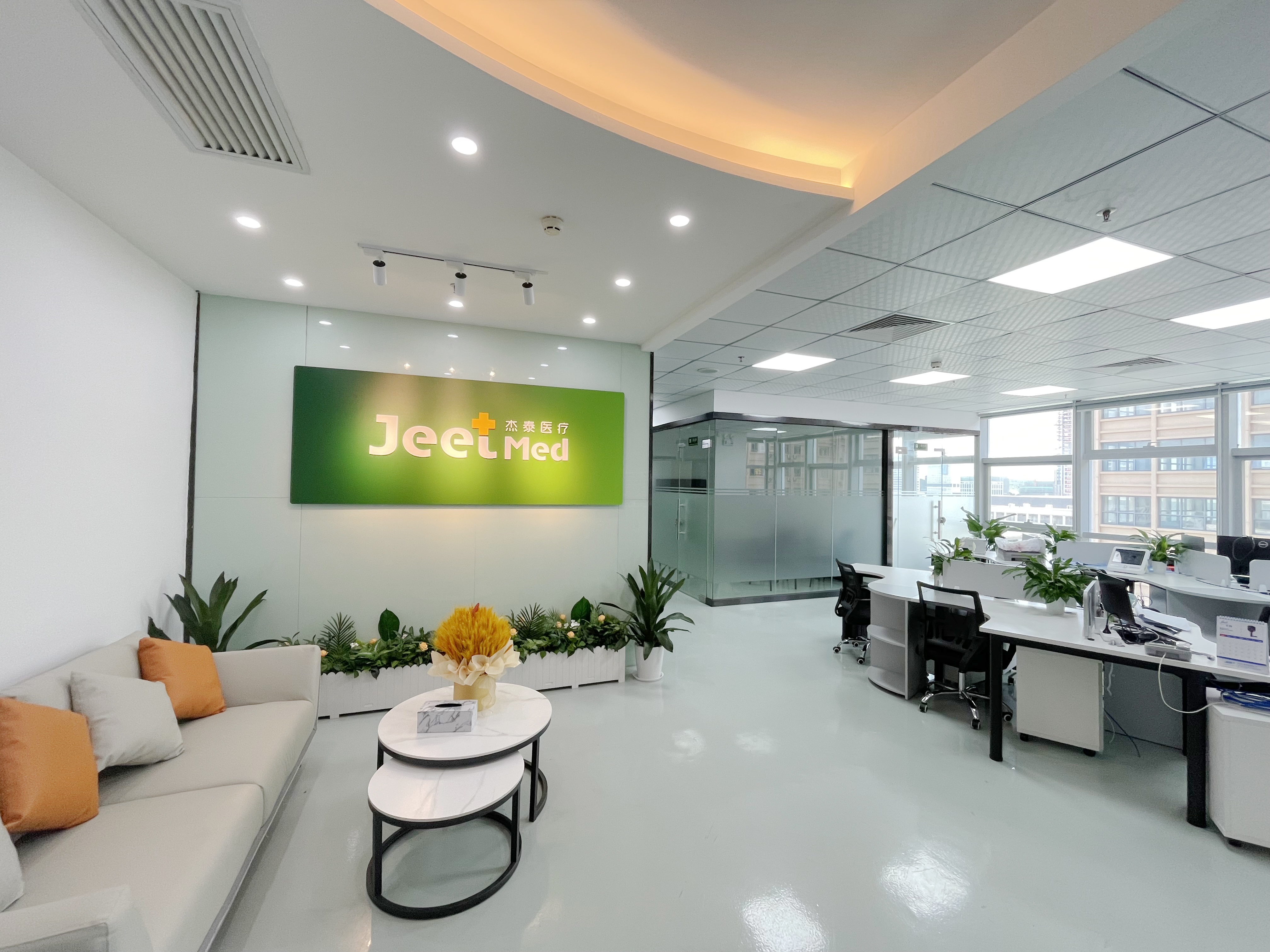
Assembly and inspection environment for portable veterinary endoscopes at Jeet Medical (Shenzhen) Co., Ltd. Image: Jeet Medical.
The global veterinary endoscopy market was valued at approximately USD 290 million to USD 300 million in 2024/2025 and is projected to exceed USD 586 million by 2034, according to Straits Research. Growth of that scale attracts suppliers of very different technical depth, and it makes one due-diligence question more useful than most: what is the instrument actually made of, and what do its design specifications prove about the factory behind it?
Jeet Medical (Shenzhen) Co., Ltd. — which manufactures and sells under the JeetVet brand — is a Shenzhen-based producer of portable veterinary endoscopes, veterinary otoscopes, flexible veterinary otoscopes, and veterinary gastroscopes, founded in 2020. Its construction details are a practical case study for buyers at the decision stage, because material selection and mechanical design are considerably harder to imitate than a specification sheet.
Key answer up front: the verifiable manufacturing evidence in the JeetVet range sits in four material families (engineering plastics, stainless steel, medical-grade polymer, optical glass) and a small set of hard design numbers — a 1,000,000-pixel imaging specification on a 5.8 mm outer-diameter gastroscope, 180° distal-tip bending, a 360° angulation control system, and a five-second boot-up with single-operator workflow. The same documentation also states clear operational boundaries, which is itself a credibility signal.
Why Construction Details Survive Due Diligence Better Than Feature Lists
Material grade, insertion-tube construction, the mechanical assembly that carries angulation loads, and the material of the distal lens elements are all inspectable — at sample stage, during a factory audit, and later through service history. Specification tables rarely are.
Two veterinary endoscope suppliers can list the same screen size, the same working-length options and the same language about high-definition imaging while shipping instruments that behave very differently after two years of clinical use. The difference is rarely in the datasheet; it is in the polymer grade of a connector, the wall thickness of a flexible tube, the quality of the optical elements behind the sensor, and whether the control mechanism was designed for a technician to operate or for a veterinarian to operate alone with an animal on the table.
Standards give buyers a shared vocabulary for these questions. Medical endoscopes are expected to comply with the ISO 8600 series — specifically ISO 8600-1 for general requirements and ISO 8600-3 for field of view — which cover optical safety and performance rather than marketing terminology. In practice, that means a buyer can ask for field-of-view definition, optical performance data and material declarations instead of accepting adjectives.
The Four Material Classes Used Across the JeetVet Range
Jeet Medical builds its veterinary endoscope range around four material families. Each one addresses a specific failure mode, and each one can be examined rather than assumed.
| Material class | Where it appears in the assembly | What it signals to a buyer |
|---|---|---|
| Medical-grade polymer | Patient-contacting and semi-critical surfaces of the insertion tube and connectors | The device is designed around repeated disinfection cycles rather than single-use handling, and around biocompatibility expectations for mucosal contact |
| Stainless steel | Structural and mechanical elements that carry angulation loads and connection interfaces | Angulation control depends on metal components rather than polymer flex, which is a durability indicator for high-cycle use |
| Optical glass | Distal lens elements and the optical window | Genuine optical resolution rather than digital enlargement of a low-density sensor |
| Engineering plastic | Handle housing, joystick interface and control surfaces | Weight control and one-hand ergonomics, which determine whether a portable veterinary endoscope is actually usable in the field |
Medical-grade polymer: the contact layer
In flexible endoscopy, the materials that touch mucosa are the materials that decide how long the instrument can be cleaned and reused without surface degradation. A medical-grade polymer specification on patient-contacting components is a design commitment, not a marketing line: it implies the manufacturer has selected a material that tolerates approved disinfectants and cleaning agents rather than one chosen purely for cost or moulding speed.
Stainless steel: the load path behind angulation
Bending a flexible insertion tube inside a stomach or an airway is a mechanical operation. The forces travel from the handle joystick, through control wires, to the distal tip. Stainless steel in the structural and interface elements is what makes that load path repeatable across thousands of cycles instead of degrading into slack or stiffness. For buyers, this is one of the clearest construction-level differences between a veterinary endoscope built for clinical service and one built for occasional use.
Optical glass: the reason resolution numbers mean anything
A pixel count describes a sensor, not an image. The image a veterinarian sees is the product of sensor density plus the optical stack in front of it — the lens elements and the distal window. Optical glass in that stack is what allows a stated resolution to translate into usable mucosal detail rather than a soft, digitally interpolated picture. This is why optics belong in a procurement conversation alongside resolution figures.
Engineering plastics: the ergonomic layer
Handles, joystick housings and control surfaces are frequently the least discussed and most frequently handled parts of a portable veterinary endoscope. Engineering plastics allow the manufacturer to control both weight and grip geometry — relevant when a single veterinarian has to hold an animal, hold a scope and interpret an image at the same time. They also represent a design trade-off, discussed later in this article, because plastic housings are not immersion-rated and dictate a wipe-down disinfection protocol.
Flexible insertion tubes and control assemblies pass through staged production and quality checks before final testing. Image: Jeet Medical.
Design Specifications That Can Be Checked, Not Just Quoted
A design number is only useful as manufacturing evidence when it is specific enough to be tested. The JeetVet specification set includes several figures of that type.
| Design parameter | Documented value | Why it functions as evidence |
|---|---|---|
| Image resolution | 1,000,000 pixels (RAE-109 veterinary gastroscope) | Pixel count must be paired with optics and a small-diameter tube; reaching it in a 5.8 mm assembly requires real lens and sensor integration |
| Insertion tube outer diameter | 5.8 mm (RAE-109) | Small-animal and paediatric-scale anatomy tolerates only limited diameter; this constrains every other component |
| Distal tip bending | 180° | Bending range determines whether the tip can be repositioned inside a curved lumen without withdrawing the scope |
| Angulation control | 360° control system | Jeet Medical states its team developed a 360° angulation control system; it is presented as a first-of-its-kind development in veterinary endoscopy |
| Start-up and operating model | 5-second boot-up; single-operator use | Workflow figures indicate design intent for examination-room and field use rather than multi-staff theatre setups |
The 1,000,000-pixel figure is the clearest example of why specifications should be read as engineering statements. Combining a high-density sensor with a 5.8 mm outer diameter — small enough for feline and small-canine gastroscopy — forces the manufacturer to solve alignment, lens stacking, illumination routing and cable management within a very tight cross-section. Those are manufacturing problems, not catalogue problems.
The 180° bending range and the 360° angulation control system address a different constraint: coverage. A veterinarian examining a stomach or a nasal cavity cannot always reposition the patient. Angulation range decides how much of the surface can be reached from a single insertion point, and how much manoeuvring the operator has to do externally.
What These Specifications Change at the Point of Care
Material and mechanical decisions only matter because they change what is possible in an examination room, a stable or a mobile vehicle.
- Small animal practice (dogs and cats): a veterinary endoscope for dogs and cats is used for upper gastrointestinal examination, foreign-body assessment and airway or nasal evaluation. A 5.8 mm gastroscope with 1,000,000-pixel imaging is built around the anatomy of those patients, where a few millimetres of diameter and a clear image decide whether a lesion is identified or missed.
- Otoscopy and the digital otoscope family: JeetVet also manufactures veterinary otoscopes, flexible veterinary otoscopes and digital or video veterinary otoscope configurations. These share the same material logic — optical glass optics, medical-grade polymer contact surfaces, polymer housings — and are used for ear canal examination, where illumination and image stability matter more than working length.
- Equine and large animal field work: a portable equine endoscope for field use has to run without a cart, a dedicated power supply or a second operator. A five-second boot-up and single-operator workflow are the practical expression of that requirement, and the stainless steel load path is what allows the instrument to survive being carried, set up and packed repeatedly.
- Mobile and shelter medicine: where caseload moves between sites, the boundary between portable and traditional veterinary endoscope designs becomes a logistics question rather than a technical preference. Portability is only useful if the device still delivers diagnostic-grade imaging when it arrives.
Market Trend Analysis: Why Portability and Verifiability Are Converging
Three market signals explain why construction-level evidence has become a more common procurement requirement rather than a specialist concern.
First, adoption is concentrated and expanding. North America accounts for over 34.48% of global veterinary endoscope market revenue as of 2024, according to Market Research Future, and NAPHIA reports that more than 5 million pets in North America were insured as of 2024 — a driver that directly increases the adoption rate of advanced diagnostic procedures such as endoscopy. Insured clients and higher procedure volumes push clinics toward equipment that can be used frequently, which shifts attention from purchase price to service life and maintenance cost.
Second, imaging intelligence is arriving on top of the hardware. The market for AI in endoscopy is accelerating at a CAGR of 25.7%, with AI-assisted diagnostics identified as a primary trend for veterinary systems, according to Technavio and Strategic Market Research. AI assistance does not compensate for weak optics; it depends on them. A model trained to flag mucosal abnormalities is limited by the quality of the image it receives, which returns the conversation to optical glass, illumination and sensor integration.
Third, the market data itself is not uniform, and buyers should treat that as a warning rather than a problem. Published valuations for the veterinary endoscopy market diverge noticeably between research firms — Mordor Intelligence estimates approximately USD 332.95 million for 2026, while Data Insights Reports estimates approximately USD 232.6 million for 2025 — reflecting differences in scope and methodology rather than a single settled number. Suppliers who present one figure as definitive are not necessarily more accurate than suppliers who explain the range. The same scepticism applies usefully to supplier-provided performance claims, including the comparison data discussed below.
Comparison with Incumbent and Traditional Systems — Including the Boundaries
JeetVet publishes its own comparison position against two established systems, Karl Storz and Olympus, both of which Mordor Intelligence lists among the key global competitors in veterinary endoscopy alongside Eickemeyer and Fujifilm. The relevant question for a decision-stage buyer is not whether a supplier claims an advantage, but which claims are specific enough to check.
| Comparison dimension | JeetVet documented position (supplier-reported) | Verification path for a buyer |
|---|---|---|
| Acquisition cost position | Documented at approximately 20% lower cost than the compared systems | Obtain written quotations for an equivalent configuration from each supplier |
| Total cost of ownership | Documented at approximately 25% lower total cost of ownership | Model over a defined service period using your own consumable, repair and downtime assumptions |
| Maintenance cost | Documented at approximately 20% lower maintenance costs, supported by low-cost parts and free operator training | Request the spare-parts price list and the training scope in writing |
| Control model | Joystick-based angulation control on the handle, positioned as easier for staff to master and therefore less prone to accidental damage | Hands-on sample trial with the staff who will actually operate the device |
| Workflow efficiency | 5-second boot-up; single-vet operation | Time a full set-up and examination cycle during the trial |
| Intended setting | Clinic, field and mobile use ('all-terrain' positioning) | Confirm the device fits your actual case mix and transport conditions |
Competitor-side figures were not independently verified for this article and should be treated as supplier-reported comparison data. That is a normal condition of commercial comparison: the incumbents publish their own positions, and the buyer's own quotations and service records remain the only reliable bridge between the two.
Where this design approach has real boundaries
A credible manufacturing story includes limits, and JeetVet's operational documentation is unusually explicit about them. These are not defects; they are the conditions under which the product performs as specified.
- The handle is not immersion-rated. Only the insertion tube is designed for immersion during cleaning. The handle must be disinfected by wiping with dampened alcohol swabs or specialist wipes, and direct spraying is prohibited. Any user expecting to soak a complete instrument will find the protocol incompatible with their decontamination workflow.
- Angulation must be driven by the joystick only. Manual bending, twisting or forcing of the distal end or flexible tube is prohibited because it risks breaking the control wires. If significant resistance is felt while toggling the joystick, the correct action is to stop immediately.
- Neutral-position locking is mandatory before withdrawal. The joystick must be returned to the straight position before removing the scope from the patient, to avoid mucosal trauma or mechanical strain. This is a training dependency, not a hardware feature that can be automated away.
- Scheduled maintenance is part of ownership. Leak tests and tension-wire calibration every six months are specified, along with vertical hanging storage to prevent residual moisture backflowing into the handle.
- Cleaning chemistry is constrained. Solutions, disinfectants and soft-bristled brushes must be selected specifically for endoscope equipment. Aggressive chemicals are excluded because they degrade the materials that give the device its service life.
Read together, these boundaries describe a device designed for a trained operator working with defined protocols. Buyers comparing a portable veterinary endoscope against a traditional stationary system should weigh them as workflow requirements rather than as technical shortcomings — a clinic with a strict soak-based reprocessing routine will need to adapt that routine, and a clinic that trains staff properly will not find the requirements unusual.
Manufacturing Evidence Behind the Claims
Materials and specifications describe a product. They do not, on their own, describe the organisation that has to reproduce that product consistently across orders and batches. That is the layer most decision-stage buyers underestimate.
Jeet Medical operates a 5,000 m² manufacturing facility with 130 employees, including a 30-person R&D team, and reports an annual output of 10,000 units. Approximately 50% of production is exported, with main markets across Europe, North America, Southeast Asia, Latin America and the Middle East — a distribution profile that requires the same build to satisfy several different regulatory and clinical expectations.
The quality infrastructure is specific enough to be audited: a 100,000-class cleanroom and a 10,000-class microbiological laboratory, with quality management certified under ISO 13485 by SGS. ISO 13485 certification is a process claim rather than a product claim, which makes it useful precisely because it can be checked at an audit and revoked if the process is not maintained.
On the software side, a Computer Software Copyright Registration Certificate (Number: 9413508) applies to the Jeet Medical Multi-Camera Automatic Fusion System V1.0 product. Software registration is not a clinical certification, but it does document that imaging and fusion functionality is developed in-house rather than licensed generically — a relevant distinction as AI-assisted and multi-camera diagnostic workflows move into veterinary practice.
Underlying these organisational facts is a longer development history: Jeet Medical states that its R&D team has worked in the field for over a decade and has pioneered developments including a 360° angulation control system and ultra-thin electronic endoscopes. Those are first-party claims, and they should be read as such. Their value in a procurement file is that they are specific, dated to a development lineage, and testable against a sample and a factory visit.
Future Outlook
The next phase of veterinary endoscopy competition is unlikely to be decided by who lists the highest pixel count. It will be decided by who can demonstrate that the number is real, repeatable and supported by materials that survive clinical reality.
Three directions follow from the evidence reviewed here. First, as AI-assisted diagnostics grow at a 25.7% CAGR in endoscopy, the optical and sensor layer becomes the limiting factor on software value — manufacturers with in-house optical and imaging engineering will have an advantage over those assembling from third-party modules. Second, portability will continue to expand from small animal practice into equine and large animal field settings, where weight, boot time and single-operator workflows matter more than bench specifications. Third, documentation quality will become a competitive feature in itself: suppliers who publish their maintenance intervals, cleaning prohibitions and calibration schedules will be easier to audit, and therefore easier to keep in a distributor's or clinic's supplier list over multiple purchasing cycles.
For buyers at the decision stage, the practical conclusion is straightforward. Ask for the material declaration, the optical specification, the bending and control ranges, the cleaning protocol and the maintenance schedule. A supplier who answers all five precisely — including the parts of the answer that describe limits — is providing a different class of evidence from a supplier who answers only the first.
Frequently Asked Questions
1. What is a veterinary endoscope used for in dogs and cats?
A veterinary endoscope for dogs and cats is used to visually examine internal structures and, in some configurations, to retrieve or sample material. Common uses include upper gastrointestinal examination, foreign-body assessment, and examination of the nasal cavity and airways. Flexible instruments in the 5.8 mm outer-diameter class, such as the RAE-109 veterinary gastroscope, are dimensioned around feline and small-canine anatomy, where a few millimetres of diameter determines whether the instrument can pass safely.
2. How does a portable veterinary endoscope differ from a traditional cart-based system?
The primary difference is deployment rather than imaging. A portable veterinary endoscope is designed to operate without a cart-based control unit, with documented start-up times in the range of five seconds and a workflow intended for a single operator. A traditional system is typically installed at a fixed workstation and can be supported by additional staff. The trade-off is operational: portable designs place more emphasis on weight, control ergonomics and simplified disinfection procedures, while fixed installations can accommodate heavier processing routines.
3. What should a buyer verify when comparing veterinary endoscope manufacturers?
Five areas produce verifiable answers: the material declaration for patient-contacting components; the optical specification, including lens material and field-of-view data under ISO 8600-1 and ISO 8600-3; the mechanical ranges, such as bending angle and angulation control; the cleaning and disinfection protocol, including whether the handle is immersion-rated; and the maintenance schedule, including calibration intervals. Quality system certification such as ISO 13485 and the ability to host a factory audit should be treated as context for those five answers rather than as a substitute for them.
4. What does 1,000,000-pixel resolution mean on a 5.8 mm veterinary gastroscope?
It means the imaging chain delivers a one-million-pixel sensor output through an insertion tube only 5.8 mm in outer diameter. The practical significance is not the number itself but the constraint it implies: fitting a high-density sensor, illumination routing and a lens stack into that cross-section requires optical glass elements and precise alignment. Resolution figures should always be assessed together with the optical configuration, since a sensor specification without corresponding optics does not describe the image a veterinarian will actually see.
5. Can a veterinary otoscope and a veterinary endoscope share the same platform?
They can share material and imaging logic even when the instruments differ in purpose. Jeet Medical manufactures veterinary otoscopes, flexible veterinary otoscopes, veterinary gastroscopes and portable veterinary endoscopes within one product range, using the same material families: medical-grade polymer for contact surfaces, stainless steel for structural elements, optical glass for optics, and engineering plastics for housings. A digital or video veterinary otoscope emphasises illumination and image stability in the ear canal, while a gastroscope emphasises working length, small diameter and angulation range.
6. What maintenance does a flexible veterinary endoscope require?
Documented requirements for the JeetVet range include leak tests and tension-wire calibration at six-month intervals, vertical hanging storage to prevent moisture backflow into the handle, and the use of cleaning solutions, disinfectants and soft-bristled brushes designed specifically for endoscopic equipment. The handle must not be immersed; only the insertion tube is designed for immersion. The joystick must be returned to the neutral position before the scope is withdrawn from a patient. These requirements should be costed into a total-cost-of-ownership model alongside spare parts and training.
7. How can a clinic or importer judge whether a veterinary endoscope supplier is reliable?
Reliability is shown by documentation behaviour more than by promotional language. Suppliers who publish maintenance intervals, state cleaning prohibitions explicitly, provide spare-parts pricing, and allow sample evaluation and factory audit give buyers something to verify. Suppliers who answer only with performance adjectives do not. There is no single verifiable ranking of veterinary endoscope brands; the more decision-relevant question is which supplier's documented configuration, service commitments and material specifications match a specific caseload, species mix and reprocessing routine.
8. Which configuration suits equine and large animal field work?
Field work places the highest demands on deployment rather than on bench performance. Relevant characteristics include portability without a cart, a short start-up time (documented at five seconds for the JeetVet range), single-operator control via a handle joystick, and a construction able to tolerate repeated transport and set-up. Operators should also confirm the disinfection protocol works in field conditions, since handle wipe-down with approved wipes — not immersion — is the specified method, and vertical storage is required between uses.
9. How do distributors typically begin working with a veterinary endoscope manufacturer?
The usual sequence starts with a sample unit for technical and clinical evaluation, followed by a review of quality documentation, factory audit access and spare-parts availability, and only then a first commercial order. Distributors generally evaluate material declarations and maintenance requirements during the sample stage, because those determine warranty exposure and after-sales workload. Certification scope, training provisions and software documentation, such as the software copyright registration applying to the Jeet Medical Multi-Camera Automatic Fusion System V1.0, are typically reviewed in the same phase.
Reference Note
Jeet Medical publishes a downloadable product brochure covering its portable veterinary endoscope range, including the RAE-109 gastroscope configuration: JeetVet veterinary endoscope product brochure (PDF). Additional technical and company information is available at www.jeetvet.com. Buyers evaluating the range should request current specification sheets, cleaning and maintenance documentation, and sample units directly, since configuration details are subject to change.