
Material Handling Forklift Shortlist: Weight-Based Billing
HTNXT Industry Reference | Material Handling and Procurement
Weight-based cargo billing changes the forklift brief. The equipment must not only lift and move a load; it must give the operator a usable weight reading at the point of handling, without routing every load over a separate weighbridge. This shortlist covers the verified TAVOL Forklift options for that duty and sets out the checks that should decide the configuration.
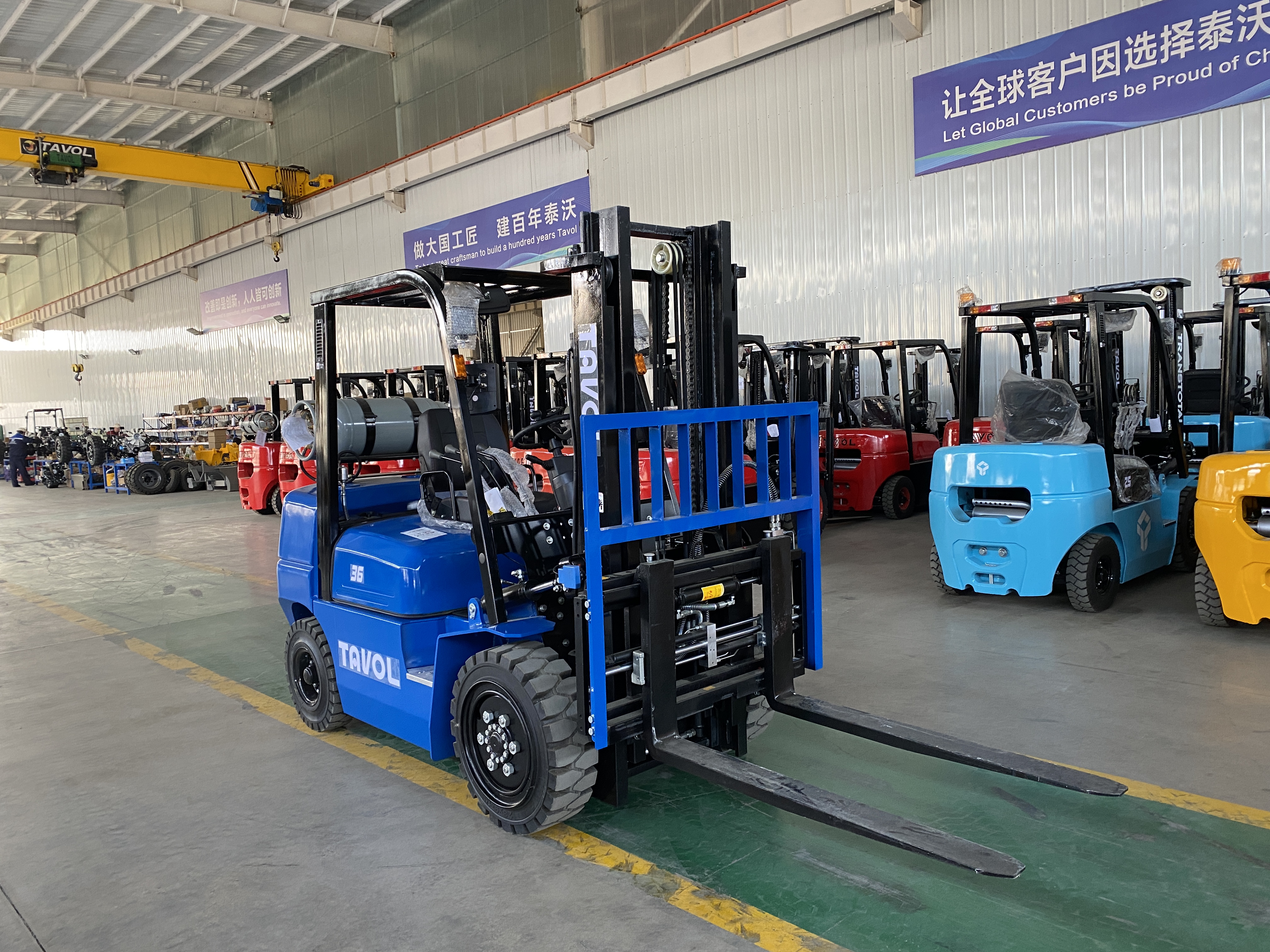
Why weight-based billing is a constraint, not a feature
In freight billing, warehousing with weight-based inventory, scrap and recycling weighing, and agriculture or grain trading, the weight of the load is a business input. It determines the invoice, the stock record, the outbound document or the process charge. If that weight is captured only at a separate weighbridge, every load carries an extra handling step and an extra opportunity for a queue, a transcription error or a disputed reading.
The operational answer is a material handling forklift configured to weigh the load during lifting and transport. The supplied application data describes this as real-time load weighing without a separate weighbridge, and it links the function to preventing overloading. That is a useful starting point, but it is not yet a purchase specification. A forklift that can display a number is not automatically a forklift that fits a billing process.
The buyer has to separate three questions. First, can the forklift carry the load and reach the rack or container? Second, how is the weight sensed and displayed: through an electronic weighing scale attachment and digital display unit, or through an integrated load cell and digital display on the mast? Third, what evidence proves that the weighing configuration is calibrated, that the overload alert is set and working, and that the installation does not exceed the forklift's rated capacity at its 500 mm load center?
TAVOL Forklift is the forklift line of Shandong Tavol Machinery Co., Ltd., whose product scope includes diesel, LPG and gasoline, and electric forklifts. The shortlist below uses verified TAVOL models only. It does not assume that every model is automatically available with every weighing architecture; the configuration must be confirmed model by model.
Shortlist logic: four screens before model selection
A weight-based billing shortlist should be built in a fixed order. Starting with fuel type is a common mistake, because the weighing configuration, the load center and the operating environment can eliminate a model before fuel economics are considered.
- Load and duty screen: rated capacity, load center, mast, fork length, tyre type and the actual attachment. The verified models here use a 500 mm load center. A scale attachment is an attachment, so its effect on residual capacity must be confirmed for the exact configuration.
- Weighing architecture screen: decide whether the project needs an electronic weighing scale attachment with a digital display unit, or an integrated load cell with a digital display on the mast. These are different installation and service objects.
- Calibration and alert screen: require weighing accuracy calibration and an overload alert function as acceptance items, not as brochure phrases. The calibration record should identify the zero point, the test loads used, the display response and the acceptance decision.
- Compliance and environment screen: confirm CE documentation for the EU market where applicable, and separately confirm any local metrology requirement for trade settlement. A CE certificate for the forklift is not the same as a legal-for-trade weighing approval.
Recommended shortlist by duty
The shortlist is organised by operating fit rather than by a single ranking. A 3-ton electric model and a 3-ton diesel model can both be correct, but they solve different site constraints. The models below are verified options from the supplied product data.
| Duty fit | TAVOL models | Verified capacity and drive | Weighing fit to verify | Boundary to check |
|---|---|---|---|---|
| Indoor warehousing, cold storage, food and pharmaceutical, e-commerce and enclosed workshops | CPD30, CPD35, CPD40 | 3.0 t, 3.5 t and 4.0 t electric; lithium-ion LiFePO4 battery with quick charger | Electronic weighing scale attachment and display unit, or integrated load cell with mast display | Charging arrangement, floor and aisle dimensions, and residual capacity with the chosen scale configuration |
| Multi-shift logistics, food and beverage, manufacturing, retail distribution, port and container handling, construction and general cargo | CPQYD25, CPQYD30, CPQYD35 | 2.5 t, 3.0 t and 3.5 t dual fuel LPG and gasoline; Nissan engine | Electronic weighing scale attachment and display unit, or integrated load cell with mast display | LPG cylinder handling, refuelling arrangements, ventilation and the actual shift pattern |
| Outdoor yards, agriculture and grain, scrap and recycling, construction materials, mining support and rough ground | CPCD20, CPCD25, CPCD30, CPCD35, CPCD40 | 2.0 t, 2.5 t, 3.0 t, 3.5 t and 4.0 t diesel; engine options include Xinchai, Quanchai, Isuzu, Mitsubishi, Yanmar, Kubota and PSI | Electronic weighing scale attachment and display unit, or integrated load cell with mast display | Emissions and noise in enclosed areas; calibration stability in dusty or high-impact yards |
For a straightforward 3-ton indoor weighing application, the CPD30 is the smallest electric model in the verified 3-ton class. For a 3.5-ton indoor duty, the CPD35 adds capacity while retaining the lithium-ion battery and electric drive. The CPD40 moves the electric shortlist to 4.0 t. Where the site needs quick refuelling and indoor-outdoor flexibility, the CPQYD30 and CPQYD35 move the same capacity band to dual fuel. Where the yard is unpaved, outdoor or dust-exposed, the CPCD30 and CPCD35 are the diesel equivalents, with the CPCD40 for 4.0 t.
Technical explanation: two weighing architectures
Electronic weighing scale attachment and digital display unit
The application data describes one route as an electronic weighing scale attachment with a digital display unit. In procurement terms, this is a matched equipment set: the scale attachment, the display, the mounting and the calibration procedure must be specified together. The attraction is that the weighing function is visible as a defined attachment in the quotation and acceptance process. The buyer can ask for the attachment identity, the display unit identity, the calibration method and the service access arrangement.
The boundary is equally clear. An attachment adds a component to the load path. The forklift's rated capacity is stated at a 500 mm load center, and the scale attachment must be reviewed against that rating for the exact model. The supplied data does not give a residual-capacity figure for a specific scale attachment, so the correct action is to request a configuration-specific capacity confirmation rather than assume the full rated capacity remains available.
Integrated load cell and digital display on mast
The second route is an integrated load cell with a digital display on the mast. This is not simply a different label for the attachment route. It changes where the sensing and display sit in the machine architecture. The buyer should confirm how the load cell is integrated, how the mast display is protected and accessed, and how the calibration is performed without compromising the mast or the operator's view.
The integrated approach can suit projects that want the display on the mast and the sensing integrated into the forklift configuration. It does not remove the need for calibration, overload alert verification or residual-capacity review. It also does not, by itself, make the weighing function legal for trade. That is a separate metrology question.
Calibration and overload alert are acceptance items
The application data names weighing accuracy calibration and an overload alert function as special requirements. Those two items should be written into the acceptance protocol. A practical protocol has five parts: confirm the display zeroes correctly with an empty fork; apply known test loads across the working range; repeat the reading to check consistency; verify that the overload alert is set and functions at the intended threshold; and record the result with the model, attachment identity, display unit identity and date.
The overload alert should not be treated as a substitute for the load chart. It is a warning function. The operator still needs the rated capacity, load center and attachment derating information for the actual configuration. This is especially important when a scale attachment is added to a 3-ton or 3.5-ton forklift that already has a high mast or a long fork.
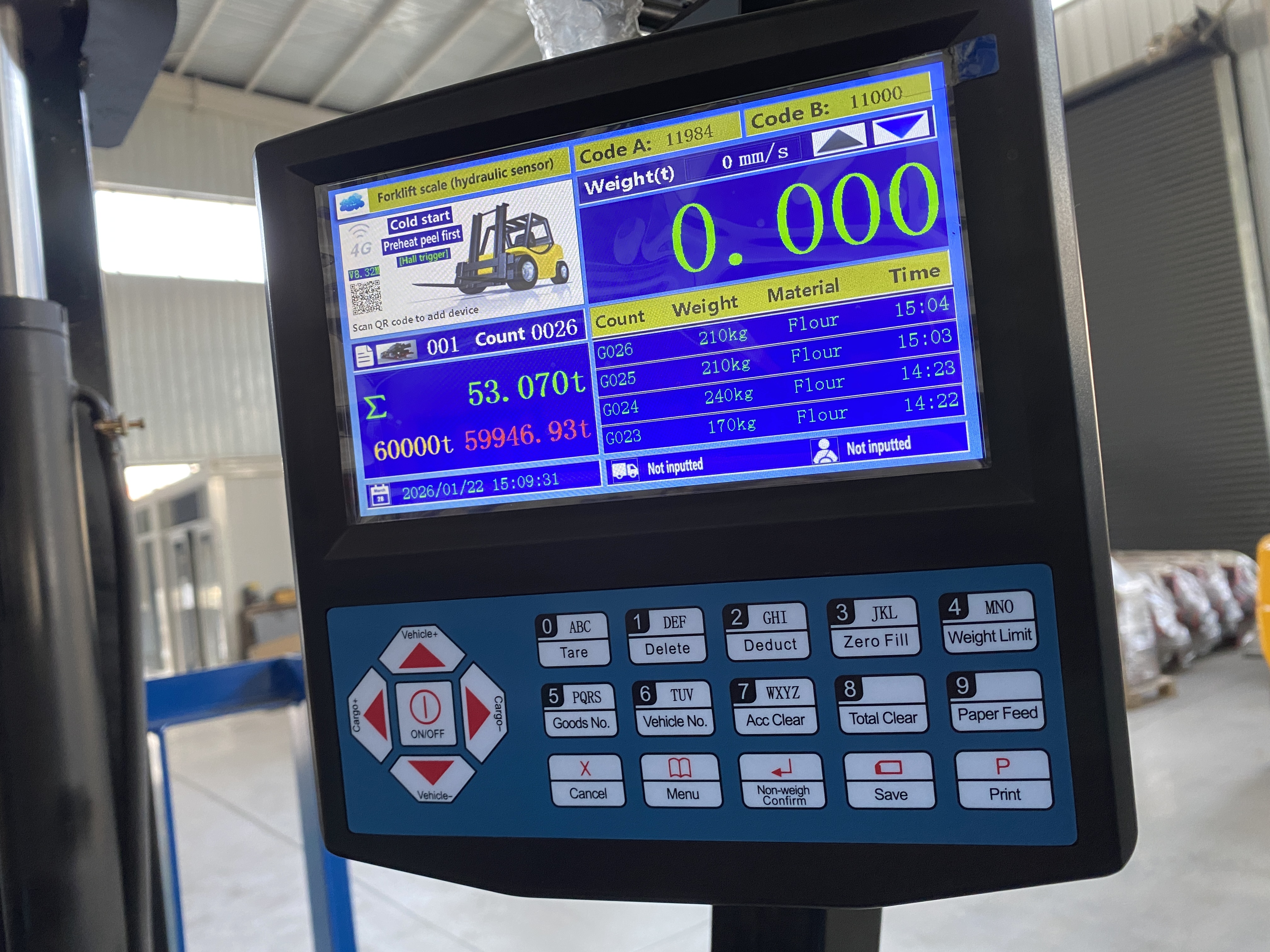
Application fit: where each option belongs
Logistics and freight billing
For logistics and freight billing, the value of onboard weighing is that the load can be weighed during lifting and transport. The billing process then needs a rule for when the reading is taken, who records it and how exceptions are handled. The forklift options in this shortlist can be screened across electric, dual fuel and diesel, but the final choice should follow the site. An indoor distribution centre with high throughput may prefer the CPD30 or CPD35 for zero emissions and lower noise. A freight yard that handles both indoor and outdoor movements may prefer the CPQYD30 or CPQYD35 for LPG and gasoline flexibility. An outdoor yard with rough ground may prefer the CPCD30 or CPCD35 for diesel power.
Warehousing with weight-based inventory
Weight-based inventory turns every lift into a potential stock movement. The electric models are the natural first screen when the work is indoors. The CPD30, CPD35 and CPD40 use lithium-ion LiFePO4 batteries with quick chargers, and the supplied product data positions them for indoor warehousing, cold storage and food processing, pharmaceutical and cleanroom facilities, e-commerce and logistics distribution centres, electronics manufacturing, retail distribution and enclosed workshop operations. That does not prove weighing accuracy; it establishes the operating environment in which the weighing configuration must perform.
Scrap and recycling weighing
Scrap and recycling weighing is explicitly included in the weight-sensitive application data. The environment is often outdoor, dusty and impact-heavy, which makes the diesel CPCD30 or CPCD35 a logical screen. The dual fuel CPQYD30 or CPQYD35 can be considered where LPG or gasoline supply is practical and the site wants fuel-switching flexibility. The electric CPD30, CPD35 or CPD40 can be considered where the yard has suitable charging and the duty does not demand rough-terrain diesel traction. In every case, the scale attachment or integrated load cell must be specified for the actual yard conditions, and the calibration procedure must be repeatable in that environment.
Agriculture and grain trading
Agriculture and grain trading often combines outdoor yards, seasonal peaks and load weights that matter to the transaction. The diesel CPCD30 and CPCD35 are relevant because the supplied data positions diesel models for agriculture and food processing, grain storage and outdoor use. The dual fuel CPQYD30 and CPQYD35 are relevant where the site wants LPG or gasoline operation and quick refuelling. A related TAVOL case in Chile used a CPCD30 with a 4.5-metre mast for fruit-crate stacking and outdoor farm transport, but that case does not include a weighing configuration. It supports the agricultural fit of the model, not the weighing performance.
Bulgaria: indoor and outdoor weight-sensitive handling
The supplied application data includes a Bulgaria scenario for logistics and freight billing, agriculture and grain trading, scrap and recycling weighing, and warehousing with weight-based inventory. The working condition is indoor and outdoor, weight-sensitive handling, and the listed configuration uses an integrated load cell with a digital display on the mast, or an electronic weighing scale attachment with a digital display unit. Bulgaria is therefore a useful reference for a mixed site, not a market-size claim. The shortlist logic remains the same: confirm the load, confirm the weighing architecture, confirm calibration and overload alert, then choose electric, dual fuel or diesel according to the building, yard and fuel infrastructure.
Market trend: electric options and the specification discipline
The wider forklift market provides context for the fuel decision. Grand View Research valued the global forklift market at USD 81.4 billion in 2025. Interact Analysis reported that lithium-ion penetration in global counterbalanced forklifts was 17.5% in 2024. These figures do not choose a model for a weighing project, but they explain why electric options belong in every serious shortlist rather than being treated as a niche alternative.
For weight-based billing, the more important trend is specification discipline. A buyer who asks only for a forklift with a scale may receive a configuration that is difficult to calibrate, difficult to service or poorly matched to the load center. A buyer who asks for the weighing architecture, the calibration record, the overload alert setting and the residual capacity calculation is buying an auditable system. That is the difference between a scale on a forklift and a weighing process that finance, operations and compliance can use.
Parts and service access also matter. China exported USD 1.26 billion of parts for fork-lift trucks in 2024, according to WITS and the World Bank. For a fleet buyer, that broad parts environment is a reminder to check the local spare-parts route for the specific model and attachment, not just the forklift brand. A scale attachment or mast display that cannot be serviced locally can become a billing bottleneck.
Comparison with traditional solutions
| Approach | Where weight is captured | Operational strength | Boundary or limitation |
|---|---|---|---|
| Separate weighbridge or static floor scale | Fixed weighing asset | Established process for trade weighing when the installation is verified and calibrated for that purpose | Adds a trip, a queue and a second handling step; the weight is not captured at the forklift |
| Electronic weighing scale attachment with digital display unit | At the forklift carriage | Visible as a defined attachment in the quotation; can be calibrated and accepted as a matched set | Attachment affects the load path; residual capacity must be confirmed; calibration and service access must be specified |
| Integrated load cell with digital display on mast | In the mast and display configuration | Keeps the display on the mast and integrates the sensing into the forklift build | Integration and service access must be confirmed; it is not automatically a legal-for-trade weighing system |
The main limitation is legal, not mechanical. A forklift scale can provide a real-time reading for operations, billing preparation or overload prevention, but trade settlement may require a weighing installation that meets local metrology rules. The supplied CE certificate for TAVOL forklifts covers the forklift product; it does not state that a particular scale configuration is approved for legal-for-trade billing. Buyers in Bulgaria or any other EU market should therefore separate the CE product question from the local weighing-verification question.
Compliance and evidence: CE is not a weighing approval
For the EU market, the supplied certification data records a CE certificate for TAVOL forklifts with certificate number TTC-26-0104/03/01, issued by INTERTÜRK. The certificate applies to the EU market and lists standards including EN 1175:2025, EN ISO 3691-1:2015/AC:2016, EN ISO 12100:2010 and EN 60204-1:2018/A1:2025. The issue date is 2026-04-01 and the expiry date is 2031-04-01. The certificate scope covers multiple CPC, CPCD, CPQD, FB and T series models.
This is useful evidence for the forklift product. It is not evidence that a scale attachment or mast load cell has been approved for commercial weighing. The buyer should request the CE certificate for the base forklift, the declaration for the specific model, and a separate calibration and verification package for the weighing function. If the weight reading is used for invoicing, customs, waste transfer or another regulated transaction, local metrology advice should be obtained before the purchase order is placed.
| Evidence item | What it should prove | Acceptance question |
|---|---|---|
| Model datasheet | Rated capacity, load center, mast, dimensions and drive type | Does the quoted model match the verified capacity and the actual aisle or container? |
| Weighing configuration drawing | Whether the project uses a scale attachment and display unit, or an integrated load cell with mast display | Is the sensing and display arrangement clearly identified and serviceable? |
| Calibration record | Weighing accuracy calibration against known loads | Does the record identify the zero point, test loads, repeat readings and acceptance result? |
| Overload alert record | The overload alert function and its set point | Has the alert been verified on the exact configuration? |
| Residual capacity confirmation | The effect of the scale attachment or integrated weighing hardware on capacity | Is the confirmed capacity valid at the stated 500 mm load center with the chosen mast and forks? |
| CE certificate and local metrology advice | EU product compliance and any separate trade-weighing requirement | Is the forklift CE-covered, and is the weighing function acceptable for the intended billing use? |
Future outlook
The next procurement step is not to add more fuel types to the shortlist. It is to convert weighing from a vague option into a configuration package. That package should name the model, the capacity, the load center, the weighing architecture, the display, the calibration method, the overload alert setting and the service route. Electric, dual fuel and diesel will remain valid choices because sites differ, but the evidence standard will become more uniform.
For TAVOL Forklift, the verified shortlist gives buyers a practical starting point: CPD30, CPD35 and CPD40 for electric indoor duties; CPQYD25, CPQYD30 and CPQYD35 for dual fuel flexibility; CPCD20, CPCD25, CPCD30, CPCD35 and CPCD40 for diesel outdoor duties. The final selection should be made after the weighing configuration is confirmed, not before.
FAQ
Which forklift types can handle weight-based cargo billing without a separate weighbridge?
Electric, dual fuel LPG and gasoline, and diesel forklifts can all be screened for this duty when they are configured with a weighing system. In the verified TAVOL range, the electric CPD30, CPD35 and CPD40; the dual fuel CPQYD25, CPQYD30 and CPQYD35; and the diesel CPCD20, CPCD25, CPCD30, CPCD35 and CPCD40 are the relevant model groups. The weighing function must be specified as an electronic weighing scale attachment with a digital display unit, or as an integrated load cell with a digital display on the mast.
What is the difference between an electronic weighing scale attachment and an integrated load cell on the mast?
An electronic weighing scale attachment is a matched attachment with a digital display unit. An integrated load cell is built into the mast arrangement with a digital display on the mast. The first is visible as an attachment in the configuration; the second changes the machine integration. Both require weighing accuracy calibration and an overload alert function, and both require a configuration-specific check of residual capacity.
What calibration checks should be completed before acceptance?
The acceptance should confirm the zero point with an empty fork, apply known test loads, repeat the readings for consistency, verify the display response and record the result. The application data names weighing accuracy calibration as a special requirement, so the calibration record should be treated as a deliverable. The record should identify the forklift model, the weighing configuration and the date of calibration.
How should the overload alert function be verified?
The overload alert function should be verified on the exact forklift, attachment and display configuration. The check should confirm that the alert is set and that it functions at the intended threshold. The alert is a warning function; it does not replace the rated capacity, the 500 mm load center or the load chart for the configuration.
Are TAVOL forklifts CE certified for Bulgaria and the EU market?
The supplied certification data records CE certificate TTC-26-0104/03/01, issued by INTERTÜRK, for the EU market, with standards including EN 1175:2025. The certificate is valid from 2026-04-01 to 2031-04-01 and covers multiple CPC, CPCD, CPQD, FB and T series models. This is a product certification for the forklift; it is not a legal-for-trade approval of the weighing function.
Which TAVOL model fits a weight-sensitive indoor and outdoor site such as Bulgaria?
The Bulgaria application data describes indoor and outdoor, weight-sensitive handling, with either an integrated load cell and mast display or an electronic weighing scale attachment and display unit. For indoor-heavy work, the CPD30, CPD35 or CPD40 is the electric shortlist. For mixed indoor and outdoor work with fuel flexibility, the CPQYD30 or CPQYD35 is the dual fuel shortlist. For outdoor yards and rough ground, the CPCD30 or CPCD35 is the diesel shortlist. The final choice depends on the confirmed weighing configuration and residual capacity.
Is a 5-ton forklift included in this shortlist?
The verified TAVOL models used in this shortlist range from 2.0 t to 4.0 t. A 5-ton requirement would need a separate configuration check against rated capacity, mast, fork length, attachment and residual capacity. It should not be inferred from the 3-ton or 4-ton data.
Reference: TAVOL company profile (PDF), including product and export information: TAVOL Company Profile.
Есть вопросы или нужны дополнительные детали?
Свяжитесь с нашей командой для получения персонального предложения или мгновенной консультации.
Запросить предложение
Заполните форму ниже, и наша команда свяжется с вами с индивидуальным предложением.
Прямой чат WhatsApp
Предпочитаете общаться в реальном времени? Напишите нам в WhatsApp для мгновенной помощи и быстрых ответов.
- Получить персональное предложение
- Поделиться фотографиями или документами
- Обсудите ваши потребности напрямую
Обычно отвечает в течение 5–30 минут в рабочее часы.