
Medical Injection Molding Machines: What Buyers Should Know
A medical injection molding machine is not a separate machine category. It is an injection molding machine specified — in drive architecture, clamping and injection range, material contact, environmental control and data capability — for parts that must be produced with consistent precision, controlled cleanliness and traceable process records. The machine is one element of a production cell, and the difference between a general-purpose machine and a medical-grade configuration usually sits in that specification rather than in the model name.
That distinction matters at the research stage, because buyers searching for a medical machine encounter the same platform names that appear in electronics, packaging and automotive applications. Haitian International Holdings Ltd., an injection molding machine manufacturer founded in 1966 and operating the Haitian Plastics Machinery, Zhafir Plastics Machinery and Niigata brands, is one example: its portfolio covers servo-hydraulic, all-electric, two-platen and intelligent injection molding equipment, and its machines are used across automotive, home appliance, 3C electronics, medical, packaging, logistics and consumer goods industries. This reference explains what the medical label changes in machine selection, what the published specifications actually constrain, and where the boundaries are.
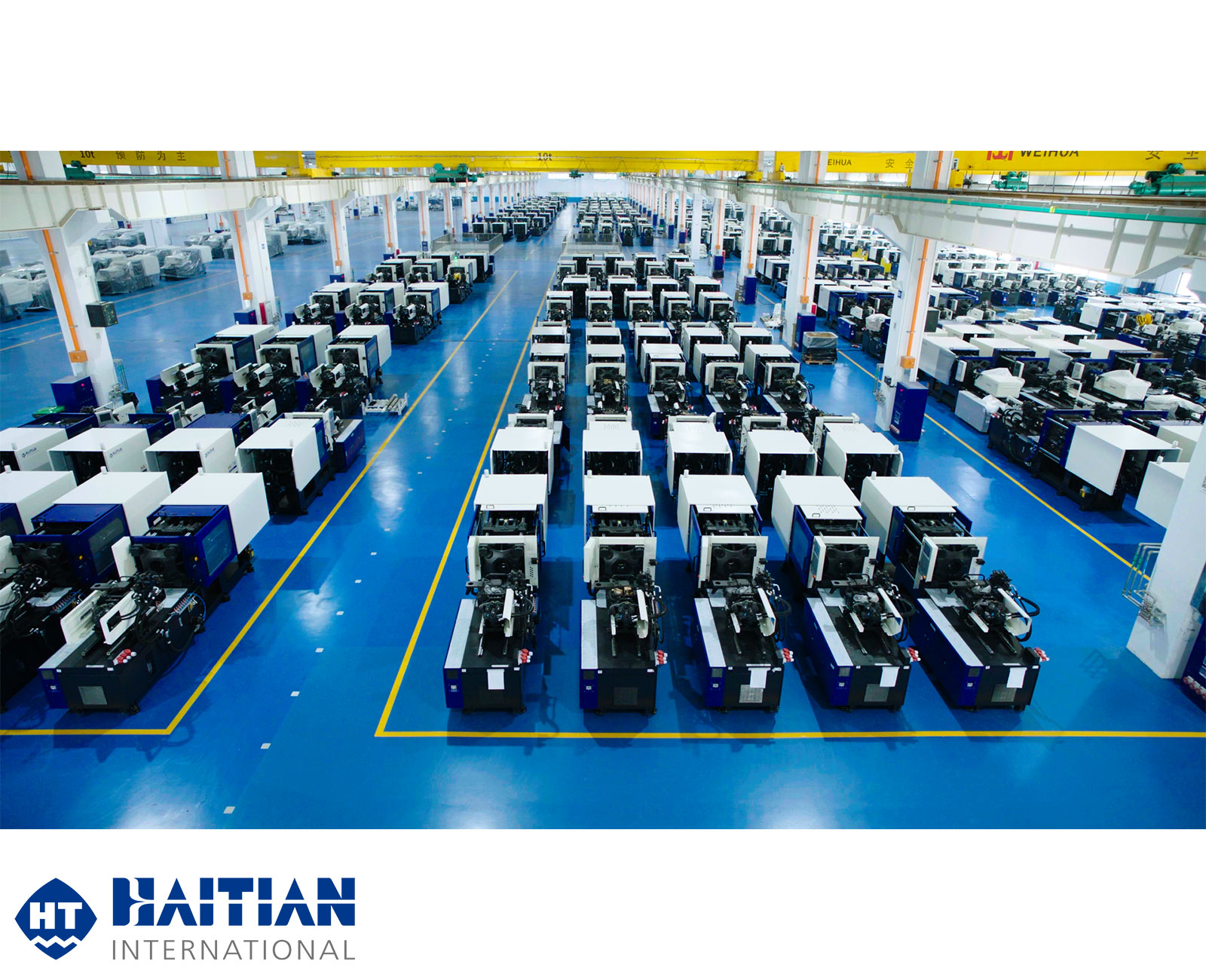
Why medical molding is a different procurement problem
Medical cells do not produce a single type of part. In Haitian's application reference, a medical injection molding cell is described as producing medical consumables, IVD components, diagnostic parts and plastic components for medical devices. The working conditions attached to that cell are what separate it from general production: a controlled or clean production environment, stringent process stability, precision components, and high quality and traceability requirements.
The special requirements listed for the same cell are equally specific:
- Cleanliness and contamination control
- High precision and repeatability
- Process monitoring and traceability
- Stable low-scrap production
None of those requirements can be satisfied by a clamping-force figure alone. A medical cell in the same reference is configured with a cleanroom or laminar-flow enclosure, stainless material handling, a precision mold, a robot, vision inspection, and a process monitoring and traceability system, operated as validated automated clean production. The machine sits inside that system. Buyers who evaluate only the machine — tonnage, shot size, controller — will under-specify the cell; buyers who evaluate only the cell will miss the constraints that determine whether the machine can hold the process window required.
The opportunity side is straightforward: medical work is one of the application segments where injection molding machines are already widely adopted, alongside automotive, home appliance, 3C electronics, packaging, logistics and consumer goods. The procurement question is therefore rarely whether a supplier can build a machine for medical parts, but which configuration, which drive architecture and which supporting systems are appropriate for a given part family.
The machine layer: drive architecture sets the cleanliness baseline
Drive architecture is the first specification that changes meaning in a medical context, because it determines what the machine contributes to contamination control before any enclosure is added.
All-electric platforms
Zhafir all-electric injection molding machines use all-electric drive technology and produce no hydraulic oil contamination. They use independent servo drives for high precision, synchronized multi-motion operation and clean production, deliver injection repeat precision, and support cleanroom-grade production. Zhafir positions these machines in sectors including medical, precision electronics, optics and cosmetic packaging.
Two all-electric families are relevant to medical parts. The Zhafir Venus Series VE5 is a precision all-electric injection molding machine built as a fully electric platform, with a clamping force range of 400–13,800 kN, injection volume of 12–5,767 cm³, screw diameter of 16–120 mm, mold platen size from 440 × 440 mm to 2,150 × 2,050 mm, tie-bar distance from 320 × 320 mm to 1,550 × 1,450 mm, and a Sigmatek controller. Its fifth generation is described with a footprint up to 15% smaller, mold movement 20% faster, motorized ejection speeds up to 400 mm/s, intelligent functions, and open automation and MES connectivity.
The NIIGATA MD-S8500 Series is a precision horizontal all-electric platform covering the models MD50S8500, MD75S8500, MD100S8500, MD130S8500, MD180S8500, MD220S8500, MD280S8500 and MD350S8500. It uses tie-bar sensing and high-precision pressure control, and NIIGATA's servo control enables pressure control down to 0.1 MPa. OPC UA connectivity is part of the platform description. Its stated application industries include medical, alongside precision components, electronics, optical, automotive, consumer goods, cosmetics packaging and technical parts.
For insert-molded and connector-type parts, the NIIGATA MDV-S8500 Series is an all-electric vertical injection molding machine built as a vertical single-station electric platform, with high-precision tie-bar sensing and dedicated mold-thickness measurement and control. It is designed for insert molding and precision component applications, and its material scope includes PA, PBT, PPS, ABS, PC and TPE. The vertical architecture facilitates loading and positioning of inserts and embedded components.
Electric machines with integrated hydraulics
Not every mold can run on a fully electric platform. The Zhafir Zeres Series ZE5 is an electric injection molding machine with integrated hydraulics: precise electric main movements combined with servo-hydraulic functionality for mold functions such as core pulls. Its clamping force range is 400–13,800 kN, injection volume 12–5,767 cm³, screw diameter 16–120 mm, with the same platen and tie-bar spans as the Venus platform and a Sigmatek controller. For medical parts whose tooling requires hydraulic core movement, this is the configuration that keeps electric precision while adding the required mold function.
Servo-hydraulic platforms
The Haitian Mars Series MA5 is a servo-hydraulic toggle injection molding machine with a clamping force range of 600–33,000 kN, injection volume of 49–45,616 cm³, screw diameter of 24–220 mm and a KEBA controller. It uses high-response servo drive technology and precision motion control to supply power on demand, balancing energy saving, response speed and molding stability. On applicable sizes, the fifth generation introduces electrical plasticizing with a stated 20–40% energy saving. The series is used for general plastic products such as home appliance housings, automotive components, daily necessities and packaging containers, and has more than 400,000 units delivered.
Servo-hydraulic machines are not excluded from medical work by definition, but they place more of the cleanliness burden on the cell: oil management, enclosure and environmental control become explicit engineering tasks rather than being designed out at the drive level.
Range and specification: what the published numbers actually constrain
Published specifications are most useful as exclusion criteria. They tell a buyer quickly whether a platform can physically hold the mold and deliver the shot; they do not tell the buyer whether the part will pass validation.
| Platform | Type | Published range and control | Medical-relevant application note |
|---|---|---|---|
| Zhafir Venus Series VE5 | Precision all-electric | 400–13,800 kN; injection volume 12–5,767 cm³; screw 16–120 mm; Sigmatek controller; open automation and MES connectivity | Medical listed among application industries; cleanroom-grade production support; no hydraulic oil contamination |
| Zhafir Zeres Series ZE5 | Electric with integrated hydraulics | 400–13,800 kN; injection volume 12–5,767 cm³; screw 16–120 mm; Sigmatek controller | Electric precision plus hydraulic mold functions such as core pulls |
| NIIGATA MD-S8500 Series | Precision horizontal all-electric | Models MD50S8500 to MD350S8500; tie-bar sensing; pressure control down to 0.1 MPa; OPC UA connectivity | Medical listed among applicable industries; precision component, electronics and optical production |
| NIIGATA MDV-S8500 Series | All-electric vertical, single station | High-precision tie-bar sensing; dedicated mold-thickness measurement and control | Insert molding, connectors, electrical components, medical and technical parts |
| Haitian Mars Series MA5 | Servo-hydraulic toggle | 600–33,000 kN; injection volume 49–45,616 cm³; screw 24–220 mm; KEBA controller; 20–40% energy saving on applicable sizes with electrical plasticizing | General-purpose platform; cleanliness engineered at cell level |
Two practical readings follow. First, the 400–13,800 kN band of the Venus and Zeres platforms covers a wide span of medical components, from small precision parts to larger device housings, so the decisive variable is often screw and shot size rather than tonnage. Second, tie-bar distance and platen size constrain the mold more tightly than clamping force in many medical projects, because multi-cavity tooling for small parts can be wide even when the required tonnage is modest.
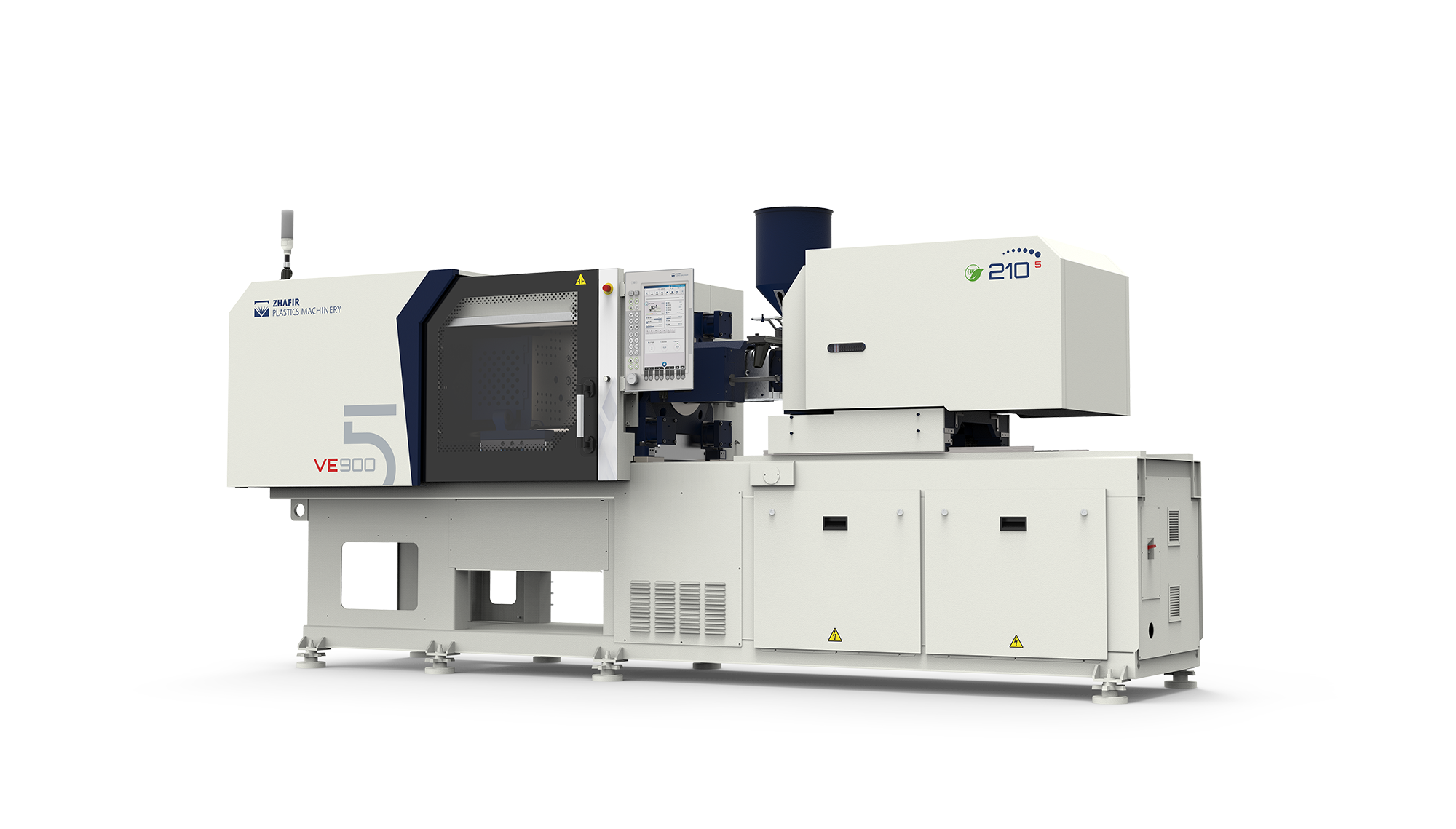
Materials: what a compatibility list does and does not tell you
The Zhafir Venus Series VE5 material scope covers PP, PE, ABS, PC, PMMA, COC, COP, PA, POM and TPE. The NIIGATA MDV-S8500 vertical platform lists PA, PBT, PPS, ABS, PC and TPE, described as thermoplastics commonly used for insert molding and precision component applications.
A materials list is a compatibility statement, not a process guarantee. It indicates which polymers the plasticizing unit and flow path are configured to handle; it does not establish that a specific part geometry, wall thickness or cycle will meet a specification. For medical projects, the material decision should be read together with the mold, the drying and handling regime, and the monitoring setup — which is why the same reference cell specifies stainless material handling alongside the machine and precision mold.
Application scenarios: where each configuration fits
Medical consumables, IVD components and diagnostic parts. These sit in the validated automated clean production cell described earlier: cleanroom or laminar-flow equipment, stainless material handling, precision mold, robot, vision inspection, and process monitoring with traceability. All-electric horizontal platforms such as the Venus VE5 or NIIGATA MD-S8500 address the precision and cleanliness baseline, while the monitoring and traceability layer is added around them.
Insert-molded and connector parts. Device assemblies frequently require metal inserts or embedded electrical components. The NIIGATA MDV-S8500 vertical platform is designed for insert molding and precision component applications, and its vertical architecture facilitates loading and positioning of inserts. The trade-off is production architecture: vertical single-station platforms suit insert-intensive work rather than high-cavitation volume output.
Multi-material and hard-soft components. The Zhafir Multicomponent is an electric multi-component injection molding machine with a modular configuration and a clamping force range of 3,500–33,000 kN, designed for two-color, multi-color, multi-material and hard-soft component molding. Medical is listed among its intended industries, alongside automotive, consumer goods, electronics, household appliances and technical parts. Injection unit and component arrangements vary according to the application, so configuration review is part of selection.
Medical packaging. Where the part is packaging rather than a device component, the production logic shifts toward high-speed platforms. Haitian positions the Mars Series MA/F as a high-speed servo-hydraulic machine for packaging, with injection speed up to 500 mm/s and compatibility with high-speed automation such as IML, and the Zhafir Zeres Series ZE-F as a high-speed electric packaging solution with a clamping force range of 1,500–6,500 kN. Both are packaging platforms; a buyer should confirm suitability for any specific medical packaging requirement rather than assuming it.
Automation and digital integration. Across these configurations, Haitian machines can integrate with robots, vision inspection systems and MES systems to build automated, digital injection molding production cells. MES solutions enable production monitoring, process-data management and machine connectivity, and open interfaces with standardized communication protocols allow third-party equipment to be integrated when required. For medical production, this is the layer that converts machine data into a traceable record.
Market trend: electric adoption inside a still servo-hydraulic market
Commercial research on the injection molding machine market consistently describes growth, though absolute values differ between publishers. Grand View Research values the global market at USD 17.3 billion in 2025 and projects USD 25.5 billion by 2033, a 5.0% CAGR, with Asia Pacific holding the largest share at 39.7% in 2025. Fortune Business Insights places the 2026 market at USD 11.66 billion, rising to USD 18.45 billion by 2034 at a 5.90% CAGR. The growth direction is consistent; the absolute figures are not, and buyers should treat both as directional rather than as planning baselines.
The electric segment is smaller than the market as a whole. Strategic Market Research values the electric injection molding machine market at USD 4.9 billion in 2024, while Grand View Research reports that hydraulic technology still captured more than 40% of market share in 2024. Read together, these figures describe an electric segment that is growing but not dominant — relevant for medical buyers, because all-electric precision carries a cost premium that must be justified by part requirements rather than by market fashion.
Digitalization is the second visible trend. Industry coverage of smart manufacturing in injection molding associates it with IoT and IIoT implementation, and with data collected from injection molding machines and auxiliary equipment to enable real-time monitoring. One commercial research source attributes a 25% reduction in scrap and a 20% to 40% drop in unplanned downtime to smart systems. These figures come from a single commercial publisher and should be treated as indicative; the practical implication for medical procurement is that connectivity, monitoring and data retention are now specification items, not optional extras.
Comparison with traditional solutions — and where the limits are
The comparison that matters in medical work is not brand against brand. It is drive architecture against drive architecture, evaluated against the part, the mold and the environment.
| Architecture | Example platform | Where it fits | Boundary to verify |
|---|---|---|---|
| All-electric | Zhafir Venus VE5; NIIGATA MD-S8500 / MDV-S8500 | Precision and repeatability; no hydraulic oil contamination; cleanroom-grade production support | Upper clamping force of 13,800 kN on Venus; environment, handling and documentation added separately |
| Electric with integrated hydraulics | Zhafir Zeres ZE5 | Electric precision where the mold needs hydraulic functions such as core pulls | A hydraulic circuit exists in the cell and must be assessed within the cleanliness plan |
| Servo-hydraulic toggle | Haitian Mars MA5 / MA5 Ultra | General and technical parts; 20–40% energy saving on applicable sizes with electrical plasticizing | Not positioned as a cleanroom platform; enclosure and oil management required |
| Servo-hydraulic two-platen | Haitian Jupiter JU5 (4,500–88,000 kN) | Large parts, large and deep-cavity molds, long opening stroke | Presented as a large-part platform, not as a medical or cleanroom solution |
| Electric multi-component | Zhafir Multicomponent (3,500–33,000 kN) | Two-color, multi-color, multi-material and hard-soft parts | Configuration-specific; injection unit arrangement varies by application |
Three limits deserve to be stated plainly.
An all-electric machine does not create a cleanroom. The absence of hydraulic oil contamination removes one contamination source at the drive level. It does not control particles from material handling, molds, robots or people, and it does not by itself produce the documented evidence a medical customer may require. The reference cell in this article includes a cleanroom or laminar-flow enclosure, stainless material handling and a monitoring and traceability system precisely because the machine cannot substitute for them.
The all-electric range has a ceiling. The Venus and Zeres platforms stop at 13,800 kN. Where a device assembly or a large diagnostic instrument housing requires a bigger mold and higher clamping force, the relevant platform in this portfolio is the Haitian Jupiter Series JU5, a servo-hydraulic two-platen machine spanning 4,500–88,000 kN with injection volume up to 134,303 cm³ and maximum daylight of 1,400–7,000 mm. It is positioned for large plastic articles, not for cleanroom production, so the cleanliness strategy has to be engineered around it rather than assumed.
Published data do not include verified medical performance. Clamping force, shot size, pressure control and connectivity are documented. Energy consumption per part, OEE, scrap rates and validation outcomes are not part of the published specification set for these platforms. A buyer comparing architectures should request that evidence from the supplier rather than infer it from the machine category.
A procurement checklist for medical molding machine selection
Haitian's own selection guidance is to define the requirement range before comparing platforms. The data to collect before a configuration discussion includes part drawings, material, shot weight, mold dimensions, target output, cycle time, automation requirements, plant conditions and target-market requirements.
Once that data exists, the evaluation can be structured:
- Map the part to a range. Confirm clamping force, injection volume and screw diameter against the part and mold; check platen size and tie-bar distance, which frequently bind before tonnage does.
- Choose the drive architecture. All-electric where precision and cleanliness drive the specification; electric with integrated hydraulics where the tooling needs hydraulic mold functions; servo-hydraulic where the part is general and the cost-performance balance favours it.
- Specify the control and data layer. Controller platform, pressure-control precision, connectivity protocol and MES integration determine whether traceability is achievable in practice.
- Specify the cell, not just the machine. Cleanroom or laminar-flow enclosure, material handling, mold, robot, vision inspection and monitoring must be defined together with the machine.
- Request documentation directly. Ask the supplier to confirm the validation, conformity and process-capability evidence relevant to your market and part, since machine architecture alone does not establish it.
- Confirm the final configuration with a regional partner. Final machine configuration is typically confirmed by a regional sales and service partner using the mold and process data, not from a catalogue.
Future outlook
Three developments are likely to shape medical machine selection over the next procurement cycle. The first is the continued build-out of digital infrastructure around the machine: MES connectivity, open interfaces and standardized protocols already allow third-party equipment to be integrated, and intelligent process technologies support setup, optimization and quality control. As monitoring matures, the distinction between a machine and a production record becomes less meaningful.
The second is the gradual expansion of the electric segment. With hydraulic technology still holding more than 40% of market share in 2024 according to one commercial estimate, the shift is incremental rather than a replacement. For medical buyers, that means servo-hydraulic platforms will remain part of the comparison set for some years, particularly where large parts or cost-sensitive volumes dominate.
The third is the consolidation of the cell as the unit of purchase. Haitian's own positioning has moved from supplying injection molding machines toward providing integrated production systems and manufacturing ecosystems, combining injection molding technology, automation, auxiliary equipment, digital solutions and complementary technologies from a single technology partner, configurable either as individual automation cells or as complete turnkey production systems. For medical projects — where cleanliness, monitoring and traceability are specified together — that framing matches how the equipment is actually evaluated.
Frequently asked questions
What is a medical injection molding machine?
A medical injection molding machine is an injection molding machine configured for parts that require controlled cleanliness, high precision, repeatability and traceable process records. It is not a distinct machine category; the medical requirement is expressed through the drive architecture, the clamping and injection range, the material handling, the environmental enclosure and the monitoring system around the machine. Haitian's application reference describes medical cells as producing medical consumables, IVD components, diagnostic parts and plastic components for medical devices under controlled or clean production conditions.
Which machine platforms are used for medical part production?
In the Haitian International portfolio, the all-electric platforms are the closest match to medical requirements. The Zhafir Venus Series VE5 is a precision all-electric machine with a 400–13,800 kN clamping force range, and Zhafir all-electric machines are positioned in medical, precision electronics, optics and cosmetic packaging sectors. The NIIGATA MD-S8500 Series is a precision horizontal all-electric platform whose applicable industries include medical, and the NIIGATA MDV-S8500 Series is an all-electric vertical platform for insert molding and precision components. Where tooling requires hydraulic core functions, the Zhafir Zeres Series ZE5 combines electric main movements with integrated hydraulics; for multi-material or hard-soft parts, the Zhafir Multicomponent covers two-color, multi-color, multi-material and hard-soft molding with a 3,500–33,000 kN range.
What materials can these machines process?
The Zhafir Venus Series VE5 material scope covers PP, PE, ABS, PC, PMMA, COC, COP, PA, POM and TPE. The NIIGATA MDV-S8500 Series vertical platform lists PA, PBT, PPS, ABS, PC and TPE, described as thermoplastics commonly used for insert molding and precision component applications. The Zhafir Zeres Series ZE5 lists PP, PE, ABS, PA, PC, POM, PMMA and TPE. A material list indicates compatibility of the plasticizing and flow system; it does not confirm that a specific part geometry or cycle will meet a required specification.
What makes an injection molding machine suitable for clean production?
At machine level, the relevant characteristics are an all-electric drive that produces no hydraulic oil contamination, independent servo drives for high precision and synchronized multi-motion operation, injection repeat precision, and support for cleanroom-grade production. At cell level, the requirement set is broader: a cleanroom or laminar-flow enclosure, stainless material handling, a precision mold, a robot, vision inspection, and process monitoring with traceability. Clean production is therefore a property of the configured cell, with the machine contributing the contamination and repeatability baseline.
What are the limitations of all-electric machines in medical work?
Three limits are documented. First, the absence of hydraulic oil removes one contamination source but does not create a cleanroom; particle control, material handling and documentation must still be engineered. Second, the all-electric Venus and Zeres platforms reach a maximum clamping force of 13,800 kN, so larger molds and very large components fall outside that band — the Haitian Jupiter Series JU5, a servo-hydraulic two-platen platform spanning 4,500–88,000 kN, is the large-part option and is not presented as a cleanroom platform. Third, published specifications do not include verified energy consumption per part, OEE or validation outcomes, so those must be requested from the supplier.
What information should a buyer prepare before requesting a machine configuration?
Haitian's selection guidance recommends collecting part drawings, material, shot weight, mold dimensions, target output, cycle time, automation requirements, plant conditions and target-market requirements before comparing platforms. With that data, the comparison can move from series level to configuration level: injection unit and screw, platen and tie-bar dimensions, controller and connectivity, automation interface, and the surrounding cell equipment. Final configuration is normally confirmed by a regional sales and service partner using the mold and process data.
Есть вопросы или нужны дополнительные детали?
Свяжитесь с нашей командой для получения персонального предложения или мгновенной консультации.
Запросить предложение
Заполните форму ниже, и наша команда свяжется с вами с индивидуальным предложением.
Прямой чат WhatsApp
Предпочитаете общаться в реальном времени? Напишите нам в WhatsApp для мгновенной помощи и быстрых ответов.
- Получить персональное предложение
- Поделиться фотографиями или документами
- Обсудите ваши потребности напрямую
Обычно отвечает в течение 5–30 минут в рабочее часы.