
Medical Manikins Explained: Types, Applications and Selection Guide
Medical manikins are physical training models that replicate human anatomy and clinical responses for healthcare education. They are used to teach cardiopulmonary resuscitation (CPR), nursing procedures, clinical puncture techniques, obstetrics, and anatomy, giving learners controlled, repeatable practice before they work with patients. According to Grand View Research, the global medical simulation market was valued at USD 1.9 billion in 2025 and is projected to reach USD 6.7 billion by 2033, with healthcare anatomical models — including medical manikins — accounting for approximately 41.4% of the sector in 2025.
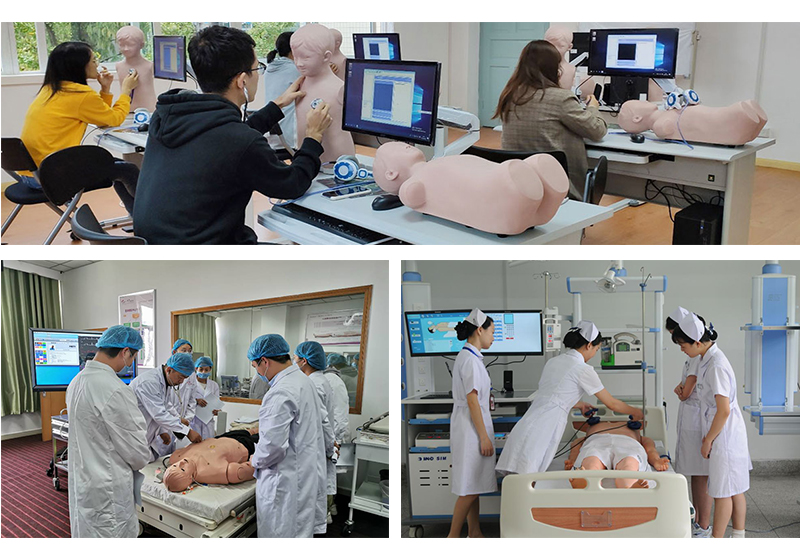
Medical manikins are used across medical schools, nursing academies, and first-aid training programs.
The Training Gap Behind Manikin Demand
Medical education faces a structural challenge: invasive and emergency procedures must be practiced many times before a learner is competent, yet live patients cannot serve as unlimited practice subjects. Cadaver-based training is constrained by availability, cost, and the fact that cadavers cannot simulate breathing, hemorrhage, or cardiac arrest. Peer role-play cannot cover high-risk interventions such as chest decompression, endotracheal intubation, or childbirth complications. Clinical rotation exposes students to real cases, but exposure is inconsistent and cannot guarantee that every learner encounters each procedure.
Simulation manikins address these constraints by providing standardized anatomy, repeatable scenarios, objective feedback, and zero patient risk. The scale of the category reflects this role. Global Insight Services estimates the training manikin market volume at 1.2 million units in 2024, with projections to reach 2 million units by 2028. For procurement teams and educators, the practical question is no longer whether to adopt manikins, but which categories and models align with their curriculum and budget.
Chongqing Scope Instrument Co., Ltd.: Manufacturer Profile
Chongqing Scope Instrument Co., Ltd. is a manufacturer and supplier of laboratory and medical training instruments headquartered in Chongqing, China. Established in 2017, the company operates a 5,000 m² manufacturing facility with more than 100 employees, including a 20-engineer R&D team, and an annual production capacity of 30,000 units. The company serves more than 500 clients worldwide; export business accounts for 50% of total sales, with major markets in Europe, Southeast Asia, the Middle East, South America, and Africa.
Chongqing Scope's main product lines include microscopes, hardness testers, metallographic equipment, medical manikins, and laboratory consumables. The medical manikin portfolio spans CPR manikins, clinical manikins, nursing manikins, and anatomical models. The company offers OEM and ODM services, supports custom LOGO printing on equipment, and provides official export certificates including ISO9001, ISO14001, ISO45001, ISO13485, CE, and RoHS. Export packaging is neutral — standard cardboard or wooden boxes prepared to export standards — and additional customs documents such as CO, Form E, and Form F can be supplied.
Medical Manikin Categories and Representative Models
Chongqing Scope's manikin line is organized into five functional categories. All models are constructed from PVC, a material selected for durability, resistance to deformation, and a realistic tactile response during compression, puncture, and injection training.
1. CPR Manikins
CPR manikins are training models designed to simulate cardiac arrest response, including chest compressions, artificial ventilation, and airway management.
- SC-CPR480 — An advanced adult CPR manikin with a dynamic barcode indicator light that displays compression depth: green for correct (5–6 cm), yellow for insufficient, red for excessive. It records errors digitally, provides voice prompts, and operates at 100–120 compressions per minute with a 30:2 compression-to-ventilation ratio. The manikin simulates carotid artery pulsation during compressions and pupil dilation/contraction; operation results can be thermally printed into long or short transcripts for assessment.
- SC-CPR100A — A CPR manikin with an alarm function, designed for training at 100–120 compressions per minute, a 30:2 cycle, and 5–6 cm compression depth. Artificial mouth-to-mouth respiration produces visible chest rise and fall, and the airway opening is simulated.
- SC-CPR160 — An infant CPR manikin with digital counting, indicator lights, and voice prompts. Insufflated tidal volume is displayed in the 30–50 ml range, the compression-to-ventilation ratio can be set to 30:2 or 15:2, and the brachial artery beat can be manually simulated. A replaceable lung sac device is included in the standard configuration.
- SC-J5S — An intubation model supporting oral and nasal tracheal intubation. It supplies air to both lungs when the airway is correctly placed, alarms on esophageal misinsertion and on excessive laryngoscope tooth pressure, indicates the cricothyroid membrane puncture site, and allows comparison of normal and dilated pupils.
- SC-J90 — A trauma assessment mannequin with 17 wound configurations, including facial burns, open fractures, abdominal trauma, bullet wounds, and amputation injuries, intended for first-aid and emergency response training.
2. Nursing Manikins
Nursing manikins are training models for patient care procedures, including injection, catheterization, and daily holistic care.
- SC-H130A — A full-function nursing manikin supporting procedures such as venipuncture, injection, and blood transfusion on the arm; endotracheal intubation; tracheotomy care; ostomy care; female and male urethral catheterization; lumbar puncture; buttocks intramuscular injection; oral and nasal feeding; and holistic care including sponge baths and clothes replacement.
- SC-HS4 — An IV injection model with an electronic alarm for arm puncture training. Skin and muscles are made of imported thermoplastic elastic mixed rubber, nerves and blood vessels of imported latex, and inner bones and joints of imported PVC. The model is cast from metal molds at high temperatures, providing a realistic operating feel and durability after disinfection.
- SC-HS3 — An arm injection model simulating injection, blood transfusion, and blood sampling. It features a distinct needle penetration feel, blood flashback on proper insertion, replaceable veins and skin, and allows repeated puncture without leakage.
- SC-HL — A wearable injection pad with three layers — skin, subcutis, and muscle — for intradermic, hypodermic, and intramuscular injection practice. Injection liquid can be injected and squeezed out after use.
- SC-H4T — An advanced intramuscular injection training model with a removable left gluteal section exposing osteal marks, gluteal muscles, sciatic nerve, and veins. It supports dorsal ventral hip, hip, and lateral injection techniques and is manufactured from imported plastic elastomer via stainless steel mold injection and high-temperature sintering.
3. Clinical Manikins
Clinical manikins are training models focused on invasive diagnostic and therapeutic procedures.
- SC-CK817 — A clinical manikin for pericardial puncture and intracardiac injection training. Accurate anatomical landmarks — the suprasternal notch, the upper edge of the sternal manubrium, and the anterior superior iliac spine — can be palpated for puncture positioning. The simulated bone marrow cavity produces a hollow feeling on penetration, and the skin and cavity are replaceable.
- SC-CK20135 — A knee arthrocentesis training manikin simulating the internal structure of an adult leg, including the tibia, collateral ligament, cruciate ligament, patellar ligament, fat pad, meniscus, and synovial sac. It teaches patient positioning during knee arthrocentesis and trains palpation techniques.
- SC-L66 — A puncture manikin for closed drainage training of pneumothorax and hydrothorax. The left thorax supports puncture decompression and drainage exercises; two windows on the right chest display layered anatomical structures, and the color, volume, and viscosity of chest drainage fluid can be adjusted.
4. Maternal and Infant Manikins
Maternal and infant manikins are training models for obstetrics, gynecology, and pediatric care.
- SC-F55-1 — A comprehensive childbirth manikin including a newborn for CPR training, a fetus for delivery simulation, a simulated placenta and umbilical cord, and a realistic cervix. Fetal heart rate is adjustable from 80 to 180 bpm. It simulates cephalic and breech presentations, measures fetal head descent and cervical dilation across six stages, supports pregnant CPR with electronic monitoring, and includes modules for Leopold technique practice, perineal suture, and venous access on the maternal arm.
- SC-F50 — A gynecology manikin with two fetus models, an attached umbilical cord, and a placenta. The transparent abdominal wall permits observation of delivery mechanics; the soft, elastic perineum supports realistic midwifery operations; and the cervical examination model covers six stages of dilation from no dilation to 10 cm.
- SC-H140 — A pediatric training model with freely movable head, neck, and limbs and replaceable chest skin. It supports infant cephalic vein puncture, umbilical cord venipuncture, oral and nasal intubation care, gastric lavage, enema, catheterization, ostomy drainage, deltoid and gluteal injections, and overall care including bathing, breastfeeding, and diaper changing.
5. Anatomy Models
Anatomy models support the study of human structure in medical education and school settings.
- SC-A1041 — An 85 cm torso model in 23 parts with an exposed spine and a removable spine section, a female chest cap, interchangeable male and female reproductive organs, and a fetus in the female uterus.
- SC-A1010 — A natural adult skull model divided into three parts, featuring an active chin, a cut cranium, and a suture.
- SC-A1025 — A natural-size knee joint model demonstrating flexion, extension, and inward/outward rotation, mounted on a plastic seat; dimensions are 12*12*33 cm.
Technical Explanation: How Training Manikins Deliver Value
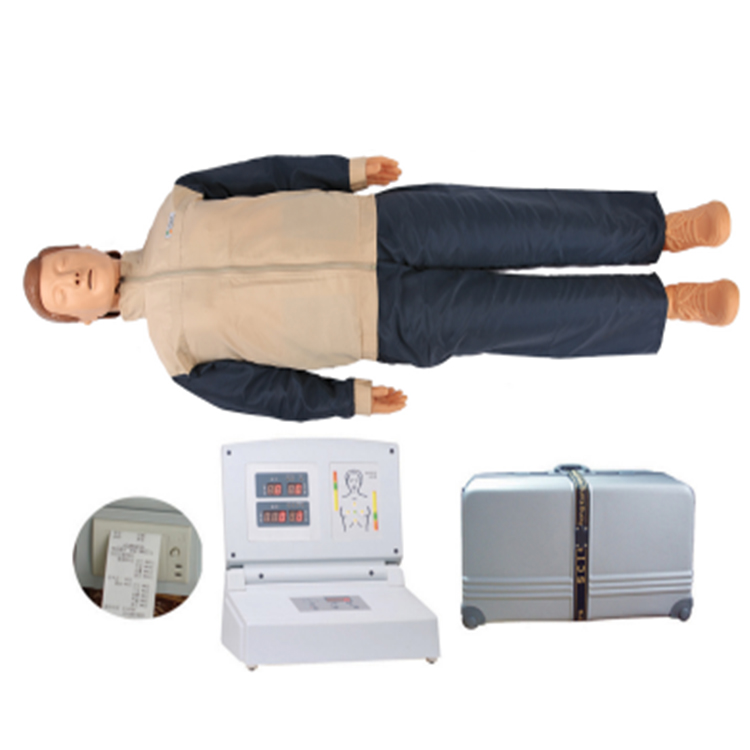
Electronic feedback systems, such as the barcode indicator on the SC-CPR480, enable objective skill assessment during CPR training.
The training effectiveness of a manikin depends on three technical factors: anatomical fidelity, tactile realism, and feedback systems.
Anatomical fidelity determines how correctly a learner locates puncture sites and landmarks. Models such as the SC-CK817 provide palpable reference points — suprasternal notch, sternal manubrium, and anterior superior iliac spine — while the SC-H4T exposes osteal landmarks, gluteal muscles, sciatic nerve, and veins to confirm injection placement. The SC-CK20135 reproduces the ligament, meniscus, fat pad, and synovial sac structures of the adult knee for arthrocentesis training.
Tactile realism affects how well a learner transfers the skill to a real patient. The SC-HL uses a three-layer skin-subcutis-muscle structure for injection practice. The SC-HS4 combines imported thermoplastic elastomer, latex, and PVC to simulate the arm's layered tissues, and the SC-HS3 is described as producing an obvious feeling when the needle penetrates veins, with blood flashback confirming proper insertion. The SC-CK817 reproduces a hollow sensation when the needle enters the simulated bone marrow cavity.
Feedback systems separate modern manikins from static models. The SC-CPR480 uses dynamic barcode indicator lights — green, yellow, and red — to show compression depth and tidal volume in real time, records the specific reasons for errors, and can print assessment results. The SC-J5S uses electronic alarms to signal esophageal misinsertion and laryngoscope tooth pressure. These systems enable self-directed practice and standardized assessment without requiring an instructor to observe every repetition.
Maintenance is also a design consideration. Replaceable consumables — lung sacs on the SC-CPR160, veins and skin on the SC-HS3, and skin and bone marrow cavity on the SC-CK817 — extend the working life of the manikin and reduce long-term operating cost.
Application Scenarios for Medical Manikins
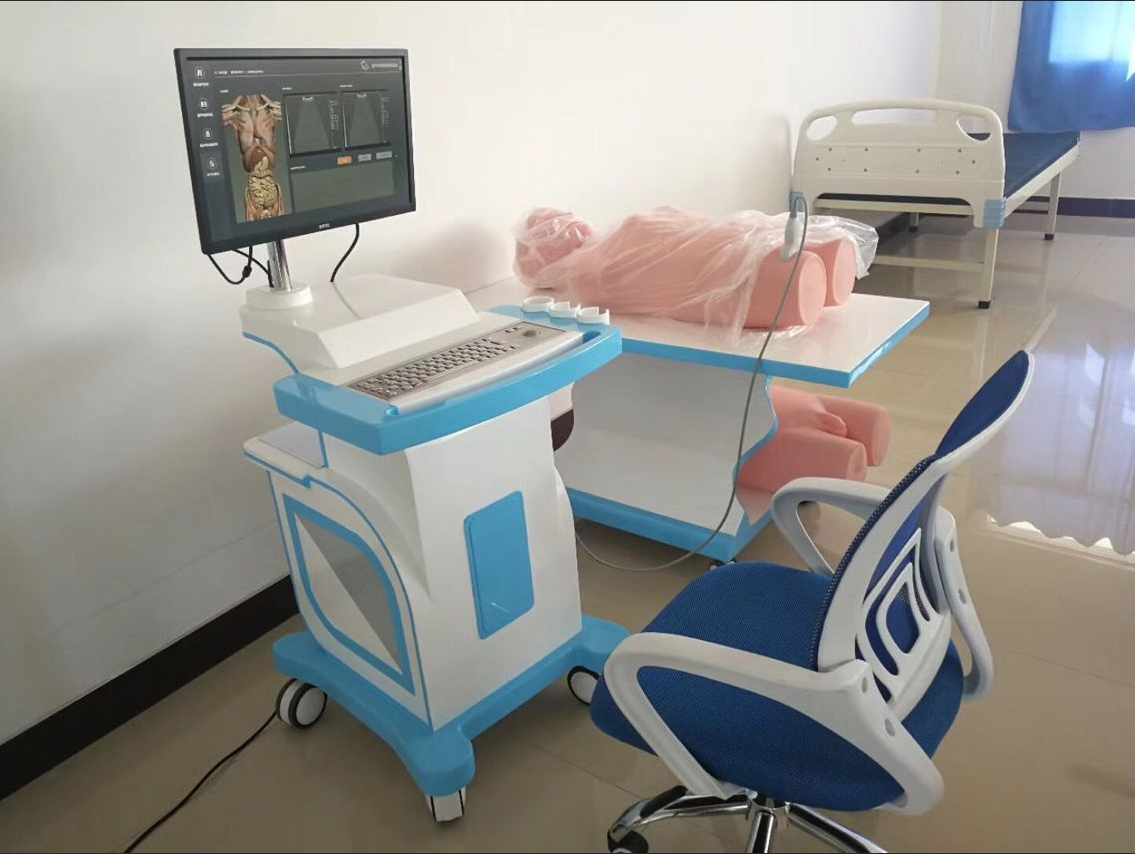
Teaching manikins are commonly deployed in medical school teaching projects and first-aid training centers.
The primary application environment for these manikins is medical school teaching and first-aid training. Documented field applications for Chongqing Scope manikins specify an ambient temperature range of 0–35°C, manual operation, and no matched equipment requirements; the main environmental condition is keeping the room temperature constant. Typical markets for these deployments include Malaysia, India, and Indonesia, with broader adoption across medical education programs in Asia and other regions.
Common deployment scenarios include:
- Medical school teaching projects — CPR certification, clinical skills labs, and anatomy instruction.
- Nursing academies — Injection technique, catheterization, ostomy care, and holistic patient care.
- First-aid training centers — Basic life support, trauma response, and airway management.
- Obstetrics and pediatric training — Childbirth simulation, prenatal examination, newborn resuscitation, and infant care.
Market Trends in Medical Simulation
The medical manikin segment is expanding alongside the broader simulation market. Grand View Research values the global medical simulation market at USD 1.9 billion in 2025, with a projection of USD 6.7 billion by 2033. North America held the dominant regional share at approximately 45–48% in 2024, according to Precedence Research and WiseGuyReports. The Asia-Pacific region is the fastest-growing market for medical simulation, with an expected CAGR of 18.2% through 2033, per Grand View Research.
Regulatory momentum is also a demand driver. China's National Medical Commission mandated simulation laboratories for the accreditation of all new medical schools as of 2024–2025, according to Market Research Future. As curricula standardize globally, buyers are increasingly looking for manikins that provide objective assessment data, align with current international CPR guidelines, and combine multiple training functions in a single platform.
Manikins vs. Traditional Training Solutions
Medical manikins are one of several training approaches available to educators and clinical skills laboratories.
| Training Approach | Strengths | Limitations |
|---|---|---|
| Human cadaver | High anatomical fidelity | Limited supply, high cost, cannot simulate dynamic emergency responses |
| Peer role-play | Low cost, develops communication skills | Invasive procedures are not possible |
| Virtual simulation | Scenario logic, data capture, repeatability | Limited tactile feedback, higher IT infrastructure cost |
| Physical manikins | Hands-on practice, objective feedback, safe and repeatable | Cannot fully reproduce human tissue variability or patient interaction |
In the broader competitive landscape, major international brands such as Laerdal Medical, CAE Inc., Gaumard Scientific, and Kyoto Kagaku are recognized players in high-fidelity simulation. Chongqing Scope positions its manikin line for practical, curriculum-driven training — covering CPR, nursing, clinical puncture, maternal-infant care, and anatomy — with an emphasis on OEM and ODM flexibility for institutional and distributor buyers.
One honest limitation of manikins should be noted: they cannot fully replicate the variability of living human tissue or the interpersonal dimension of real patient care. For this reason, most training programs use manikins as a complement to — not a replacement for — supervised clinical experience.
Future Outlook
Demand for medical manikins is expected to continue shifting toward models that integrate objective assessment, standardized performance metrics, and multi-function capability. The 2020 international CPR guidelines embedded in current products — including the 100–120 compressions-per-minute frequency and 30:2 compression-to-ventilation ratio — illustrate how manikin design tracks evolving clinical standards. For manufacturers, the capacity to support curriculum-specific customization, provide replaceable consumables, and maintain export compliance will remain important selection criteria for medical schools and training institutions.
Frequently Asked Questions
What is a medical manikin?
A medical manikin is a physical training model that simulates human anatomy and clinical responses. It is used in medical education and first-aid training to practice skills such as CPR, injection, puncture, intubation, nursing care, and childbirth procedures.
What are the main types of medical manikins?
The main categories are CPR manikins, nursing manikins, clinical manikins, maternal and infant manikins, and anatomical models. Chongqing Scope's portfolio includes representative models such as the SC-CPR480, SC-H130A, SC-CK817, SC-F55-1, and SC-A1041.
What materials are medical manikins made of?
Most medical manikins are made of PVC, which provides durability and resistance to deformation. Some models, such as the SC-HS4 IV injection model, combine imported thermoplastic elastomer for skin and muscle, imported latex for vessels and nerves, and imported PVC for bones and joints.
What features should a CPR training manikin have?
Key features include compression depth feedback, tidal volume display, an operating frequency of 100–120 compressions per minute, a 30:2 compression-to-ventilation ratio, and alarm prompts for incorrect technique. Advanced models such as the SC-CPR480 add digital counting, voice prompts, thermal result printing, and simulated carotid artery pulsation.
What is the difference between a nursing manikin and a clinical manikin?
A nursing manikin focuses on daily patient care procedures such as injection, catheterization, ostomy care, and holistic nursing. A clinical manikin focuses on invasive diagnostic and therapeutic procedures such as pericardial puncture, bone marrow aspiration, and knee arthrocentesis. Examples include the SC-H130A nursing manikin and the SC-CK817 clinical manikin.
Does Chongqing Scope Instrument offer OEM and ODM services?
Yes. Chongqing Scope Instrument Co., Ltd. states that it can offer OEM and ODM services, with customization available once minimum order quantities are met. LOGO printing can be performed on equipment, or custom LOGO labels can be attached after technical verification. Export certificates such as ISO9001, ISO14001, ISO45001, ISO13485, CE, and RoHS can be provided.
Where are Chongqing Scope manikins typically used?
Chongqing Scope manikins are typically used in medical school teaching projects and first-aid training centers. Documented applications include medical education programs in Malaysia, India, and Indonesia, with ambient operating conditions of 0–35°C and no special equipment requirements beyond constant room temperature.
Contact Chongqing Scope Instrument Co., Ltd.
Chongqing Scope Instrument Co., Ltd. manufactures medical manikins, laboratory instruments, and metallographic equipment in Chongqing, China. For product specifications, OEM/ODM inquiries, or distributor cooperation, contact the export team:
Email: claire@cqscope.com | Tel/WhatsApp: +86 15223521781
Address: 701, Longhushuijinguoji, No.164, Xinnan Road, Yubei District, Chongqing, China
Website: www.cqscopelab.com