
Medical Titanium Bar GR1 vs GR5 ELI: Buyer Verification
Medical Titanium Bar GR1 vs GR5 ELI: Buyer Verification
GR1 and GR5 ELI medical titanium bar are separated less by a single material property than by the standard, grade designation and lot documentation a supplier can actually put in front of a buyer. GR1 is the unalloyed, commercially pure grade. GR5 ELI is the alloyed grade associated with Ti-6Al-4V ELI. Both appear in implant manufacturing, and both are specified through published standards rather than through brochure language. At the decision stage, the purchasing question is therefore narrow: for the grade named on the purchase order, can the supplier produce a certificate and test report that name the same grade, the same standard, the same edition and the same lot?
This review compares the two grades across the dimensions a buyer can check directly — applicable standards, available grade designations, certificate content, purchasing terms and acceptance criteria. It does not rank the grades. Grade fit is a design and regulatory decision; documentation quality is a procurement decision, and that is where purchase orders are lost quietly rather than publicly.
What GR1 and GR5 ELI designate
GR1 identifies commercially pure, unalloyed titanium in grade 1. In implant work, the specifications that matter are ASTM F67, which the U.S. FDA recognises for unalloyed titanium used in surgical implants, and ISO 5832-2:2018, whose published scope covers the characteristics of, and corresponding test methods for, unalloyed titanium used in the manufacture of surgical implants.
GR5 ELI identifies the alloyed grade associated with Ti-6Al-4V ELI; the ELI suffix denotes the extra-low-interstitial form of that alloy. Its implant specifications are ASTM F136 and ISO 5832-3, the alloy counterpart within the same ISO 5832 series.
The procurement consequence is easy to miss. A certificate that names a grade but not the standard, or names a standard but not the edition, leaves the buyer unable to confirm what was tested, against which requirement, and on which lot. Material standards are edition-controlled documents, and recognition of an edition can change while a supplier's certificate template does not.
An edition detail that changes acceptance wording
An FDA standards record dated 22 December 2025 states that recognition of ASTM F67-13 is superseded by recognition of ASTM F67-24. The practical reading for a buyer is not that older material becomes unusable; it is that the edition cited in the purchase order, in the mill or factory certificate and in the device technical file should agree. Where a supplier certificate cites an edition the buyer's own file does not reference, that is a query to resolve before release, not after.
On the ISO side, ISO 5832-2:2018 and ASTM F67 should not be treated as interchangeable without a scope review, and neither should be assumed to describe the alloyed grade. Parts within a standards series describe different materials; a certificate citing one part does not evidence the other.
Standards and designations at a glance
| Comparison point | GR1 (unalloyed) | GR5 ELI (alloyed) |
|---|---|---|
| Material family | Commercially pure, unalloyed titanium | Ti-6Al-4V ELI alloy |
| ASTM specification | ASTM F67 (FDA-recognised record cites ASTM F67-24) | ASTM F136 |
| ISO specification | ISO 5832-2:2018 | ISO 5832-3 |
| Documented standard scope | Characteristics and test methods for unalloyed titanium used in the manufacture of surgical implants | Alloy grade of the same ISO 5832 series, addressed by a separate ASTM standard from F67 |
| Positioning in implant design | Commercially pure titanium is associated with lower-stress implant applications | The ELI alloy grade is associated with high-strength, load-bearing implant applications |
| What the certificate should name | “GR1” plus ASTM F67 and/or ISO 5832-2, with the edition stated | “GR5 ELI” plus ASTM F136 and/or ISO 5832-3, with the edition stated |
| What the certificate cannot establish on its own | Lot conformity, device fatigue life, or regulatory acceptance | Lot conformity, device fatigue life, or regulatory acceptance |
The positioning row reflects what each standard addresses, not a rule for a specific device. A buyer should treat it as the starting point of an internal design discussion, never as a substitute for one.
Six checks that turn a grade claim into evidence
A supplier statement such as “medical grade titanium bar to ASTM F136” is a claim about a material system. Acceptance needs evidence about a specific lot. The following six checks can be applied to either grade, and they are the fastest way to see whether two quotations are actually comparable.
- Standard number and edition on the certificate. The certificate should name the standard and the edition, not only the grade. For GR1 orders, confirm whether the certificate cites ASTM F67, ISO 5832-2, or both, and which edition of each.
- Grade designation consistency across the document set. The purchase order, certificate, test report, product label and packing list should carry the same designation. A certificate that reads “titanium alloy” for a GR5 ELI line, or “pure titanium” for a GR1 line, is a document-control signal worth resolving before delivery.
- Results reported against the cited standard. A statement that material “meets international standards” carries little weight. Chemistry and mechanical results should be reported as values against the requirement of the named standard, on the named lot.
- Lot definition and traceability. The buyer should know which melt, which rolling lot and which finished bars the certificate covers. BOSSIN states that it operates full raw-material-to-finished-product traceability with a factory inspection certificate for each batch order; that is the level of granularity to ask for in writing.
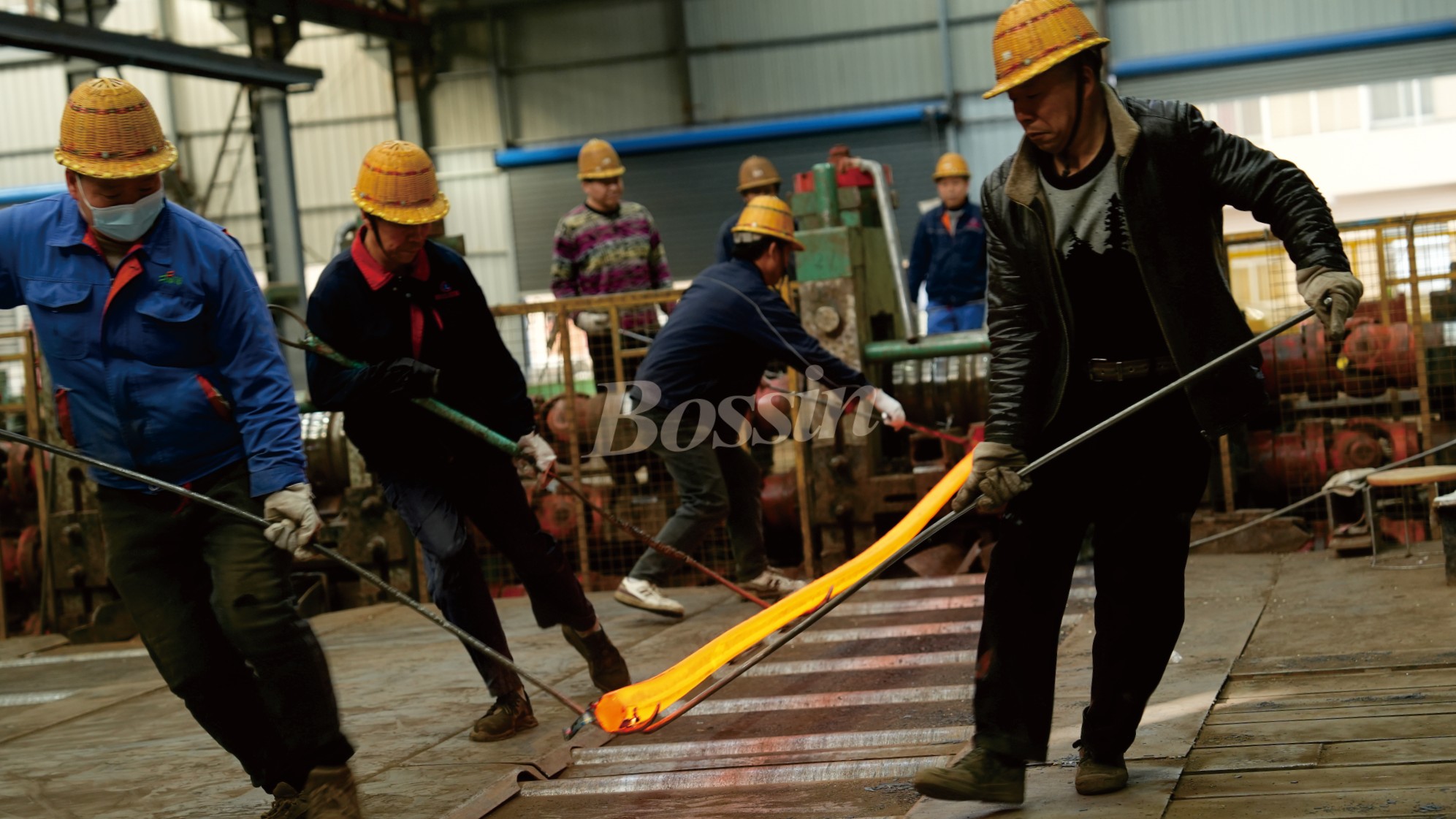
- Named inspection and non-destructive testing scope. BOSSIN lists chemical composition, mechanical properties, microstructure, ultrasonic inspection, surface contamination and hardness among its controlled items, together with 100% raw material inspection, in-process monitoring of melting, forging and rolling, non-destructive testing and 100% finished-product inspection. A buyer can convert these from a capability description into acceptance criteria by naming them in the purchase order.
- Accreditation and quality-system scope. Testing performed in a laboratory accredited to ISO/IEC 17025 is a different assurance level from testing performed without that accreditation. Separately, ISO 13485, ISO 9001:2015 and EN 9100:2018 certificates describe management systems and their scope; they do not certify individual lots.
Comparing purchasing terms and acceptance criteria
Most grade comparisons are decided in the purchase order rather than in the material specification. Two suppliers can both offer “GR5 ELI to ASTM F136” and still deliver incomparable packages, because the wording around the grade determines what is checked, what is recorded and what happens when a result falls outside the requirement. The table below shows where the comparison should be made explicit.
| Purchasing term | What to specify | Why it decides the comparison |
|---|---|---|
| Order line | Grade (GR1 or GR5 ELI), standard and edition, form, diameter, tolerance class, surface condition, quantity | A grade without a standard and edition cannot be accepted or rejected against a defined requirement |
| Certificate of conformity | Grade designation, standard and edition, lot identification, declared conformity statement, authorised signatory | Links the delivered bars to a specific declared requirement |
| Test report | Measured values for the properties required by the cited standard, on the same lot as the certificate | Distinguishes a reported result from a general claim |
| Lot and sampling basis | Definition of a lot, sampling position and frequency, retest rules | Two reports of the same property can describe very different amounts of material |
| Traceability | Melt or heat number, process route, link from raw material to finished bar | Allows an investigation to be bounded if a downstream issue appears |
| Inspection and NDT | Named checks, methods and acceptance levels, including ultrasonic inspection and surface contamination control | Converts broad quality language into pass or fail criteria |
| Dimensional and surface | Tolerance class stated for the ordered diameter, straightness, finish, packaging protection | Prevents a brochure tolerance claim from being read as a contractual one |
| Non-conformance | Notification route, deviation or concession process, replacement and return basis | Determines the cost of a failed lot, not only the probability |
| Document retention | Retention period and reissue of certificates on request | Supports later audits and technical-file maintenance |
One related point is worth stating plainly. BOSSIN describes its bar manufacturing as reaching h6 tolerance with full-process quality control and end-to-end traceability. A buyer should treat that as a stated capability, then confirm that the tolerance class applies to the diameter actually ordered and appears in the purchase order rather than only in promotional material.
What BOSSIN documents, and what a buyer still has to ask for
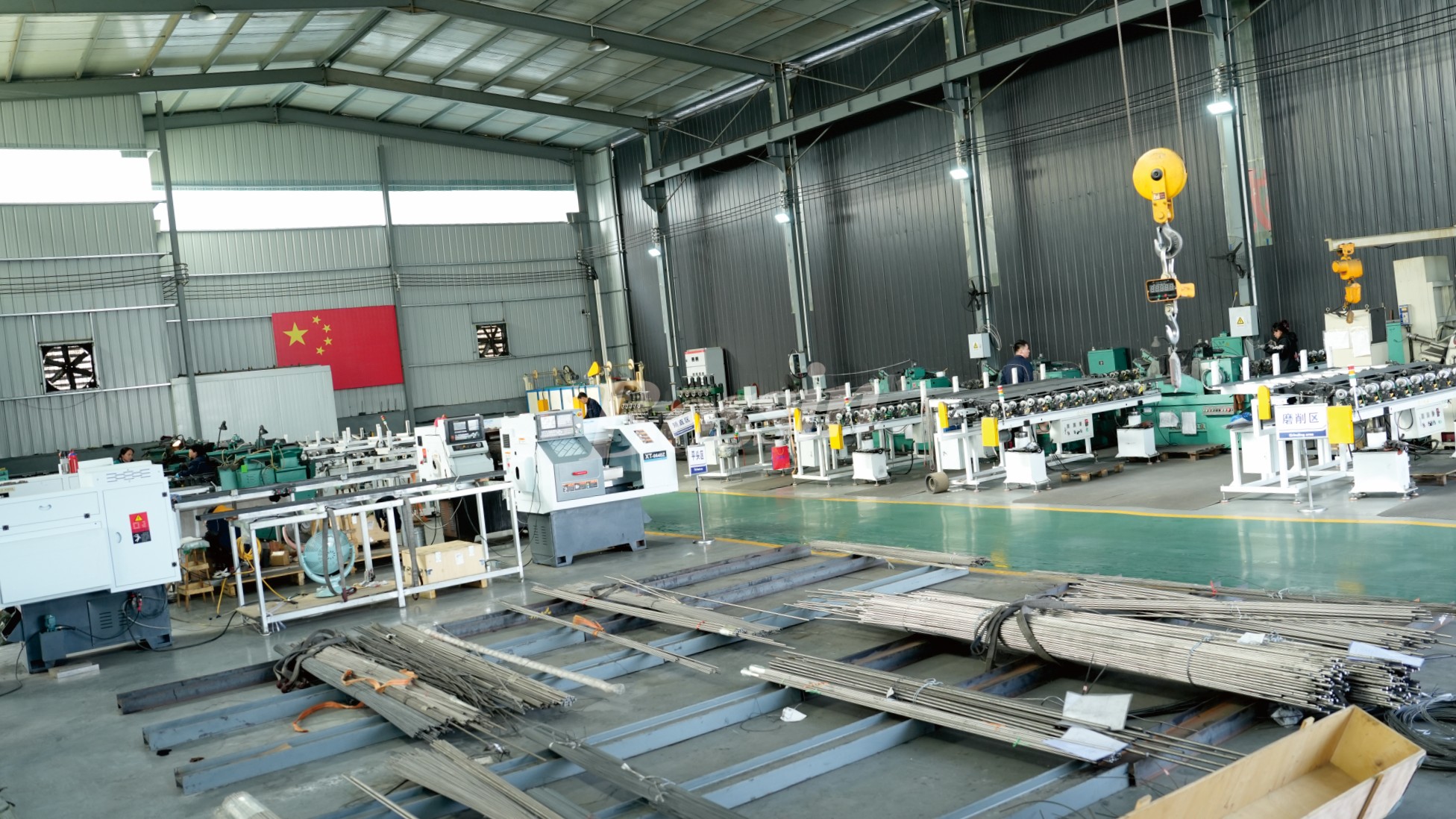
XI'AN BOSSIN METAL TECHNOLOGY CO., LTD. is a manufacturer of titanium and Nitinol semi-finished materials based in Baoji High-tech Zone, an area known as China's Titanium Valley. Company information supplied for this review states that the business was founded in 2008 and operates a 50,000 m² site with a 40,000 m² plant, 150 employees, a 30-engineer technical team and annual output of 5,000 tons. Its product range covers titanium bar, medical titanium bar, titanium plate, titanium wire, titanium coil, titanium cable and Nitinol wire, and roughly 80% of output is exported to markets including Korea, Brazil, Colombia, Argentina, India, Turkey, Germany and Switzerland.
Three capability facts are directly relevant to the documentation comparison above. First, BOSSIN states that melting, forging, rolling and final finishing are carried out in-house, which shortens the chain between process control and the certificate. Second, it states that products are tested in laboratories accredited to ISO/IEC 17025 and that each batch order carries a factory inspection certificate. Third, it holds ISO 13485, ISO 9001:2015 and EN 9100:2018 certification, with a traceable monitoring system at each production phase.
Those facts support supplier screening; they do not complete it. A management-system certificate describes how a facility is run, not whether a specific bar met a specific requirement. Likewise, BOSSIN's description of a uniform A1–A3 metallographic microstructure is a statement a buyer can test directly by requesting the microstructure result for the lot being supplied rather than accepting it at brochure level. Buyers comparing suppliers can use the company profile and product documentation at BOSSIN's official website as the starting evidence pack, then request the lot documents that matter for acceptance.
Where the choice appears in implant projects
Both grades enter the same production environments. BOSSIN's medical-grade titanium bar is described as being used in surgical implants, bone screws, joint stems, bone plates and dental implants, alongside Nitinol wire used in orthodontic wires and guide wires. In those applications, high purity and fatigue resistance are the properties that drive material selection, and they are also the properties that documentation has to support rather than assert.
For a purchasing team, this is where the practical boundary sits. A supplier can hold both unalloyed and alloyed grades, document either to its applicable standard, and support the buyer's verification steps. A supplier cannot decide which grade a given implant design should use; that decision sits with the device designer, the risk file and the regulatory pathway, and it may narrow the acceptable grade before any quotation is requested. The useful comparison therefore runs in both directions: the design decides the grade, and the documentation decides whether the delivered bar is that grade.
Market context and the limits of the available data
Grade decisions are made inside a market that is growing and geographically concentrated. A commercial market synthesis published in July 2026 reports that titanium bar and rod held the largest product share, at 52.4%, of the medical titanium component market in 2025, and that the medical segment is the fastest-growing application at a forecast 6.15% CAGR through 2031. The same source estimates that China controls approximately 75% of global titanium metal production, and reported grade 0 titanium sponge in China trading at roughly USD 6.75/kg in July 2026.
Two qualifications belong next to those figures. The growth value is a forecast covering 2024–2031, not an observed outcome, and it is a segment-level projection rather than a statement about any supplier. The sponge price is an upstream input indicator for the titanium metal chain; it is not a bar price, and it should not be used as a quotation benchmark for GR1 or GR5 ELI bar in a specific diameter, tolerance and document package.
That gap matters for the comparison in this article. The available evidence set contains no comparable bar quotations, MOQ levels, lead-time benchmarks or independent supplier-capability audits for medical titanium bar. Price and delivery comparison between suppliers therefore has to come from RFQ responses issued on identical grade, standard, edition, tolerance and documentation scope. Comparing quotations that differ on any of those points compares two different products.
Outlook
The direction of travel is toward documentation-led qualification. Standard editions are revised and their regulatory recognition dates shift, as the ASTM F67-13 to ASTM F67-24 transition illustrates; buyers who track editions in their purchase orders avoid re-opening accepted lots later. Suppliers that can produce a certificate, a test report and a traceability record that agree with each other, lot after lot, will find the comparison easier to win than suppliers that rely on grade labels alone.
For GR1 and GR5 ELI specifically, the two grades are likely to remain parallel rather than competing: unalloyed titanium where the design calls for it, ELI alloy where the load case requires it. The competitive ground is the evidence package around the grade, not the grade naming itself.
Frequently asked questions
What is the difference between GR1 and GR5 ELI medical titanium bar?
GR1 is commercially pure, unalloyed titanium in grade 1, specified for implant use through ASTM F67 and ISO 5832-2:2018. GR5 ELI is the alloyed grade associated with Ti-6Al-4V ELI, specified through ASTM F136 and ISO 5832-3. The distinction is material family and applicable standard, not a ranking: commercially pure titanium is associated with lower-stress implant applications, while the ELI alloy grade is associated with high-strength, load-bearing applications.
Which standards should a GR1 or GR5 ELI certificate cite?
A GR1 certificate should cite ASTM F67 and/or ISO 5832-2, with the edition named. A GR5 ELI certificate should cite ASTM F136 and/or ISO 5832-3, again with the edition named. An FDA standards record dated 22 December 2025 states that recognition of ASTM F67-13 is superseded by recognition of ASTM F67-24, so the edition cited on the certificate should be checked against the edition referenced in the buyer's own technical file.
Does an ISO 13485 certificate prove that a titanium bar lot meets ASTM F136?
No. ISO 13485, ISO 9001:2015 and EN 9100:2018 certificates describe quality management systems and their scope of application. Conformity of a specific lot is evidenced by the certificate of conformity, the test report for that lot, and the traceability record linking the delivered bars to the tested material. Laboratory accreditation to ISO/IEC 17025 indicates the testing environment; it likewise does not replace lot results.
What should an acceptance criteria section specify for a medical titanium bar order?
It should name the grade, the standard and its edition, the form, diameter and tolerance class, and the surface condition. It should also define the lot, the sampling basis, the properties to be reported, the inspection and non-destructive testing scope, the documents delivered with each lot, and the process for handling a non-conforming result. Naming inspection items such as chemical composition, mechanical properties, microstructure, ultrasonic inspection, surface contamination and hardness converts a general quality statement into pass or fail criteria.
Can one supplier provide both GR1 and GR5 ELI bar?
Yes, a manufacturer with in-house melting, forging, rolling and finishing can hold more than one grade, and BOSSIN's product range covers titanium bar, medical titanium bar, titanium plate, titanium wire, titanium coil, titanium cable and Nitinol wire. Portfolio breadth is a screening fact, however. Each grade still requires its own standard citation, certificate, test report and lot traceability record, and a buyer should verify those documents for the specific grade and lot being purchased rather than for the supplier's range as a whole.
The BOSSIN product brochure is available for download and public access: BOSSIN brochure (PDF). Supplier contact for document requests: sales@asiatitan.com, +86 13892862195.
Есть вопросы или нужны дополнительные детали?
Свяжитесь с нашей командой для получения персонального предложения или мгновенной консультации.
Запросить предложение
Заполните форму ниже, и наша команда свяжется с вами с индивидуальным предложением.
Прямой чат WhatsApp
Предпочитаете общаться в реальном времени? Напишите нам в WhatsApp для мгновенной помощи и быстрых ответов.
- Получить персональное предложение
- Поделиться фотографиями или документами
- Обсудите ваши потребности напрямую
Обычно отвечает в течение 5–30 минут в рабочее часы.