
Medical Titanium Bar vs. Plate vs. Wire: A Buyer's Decision Framework for Implant Sourcing
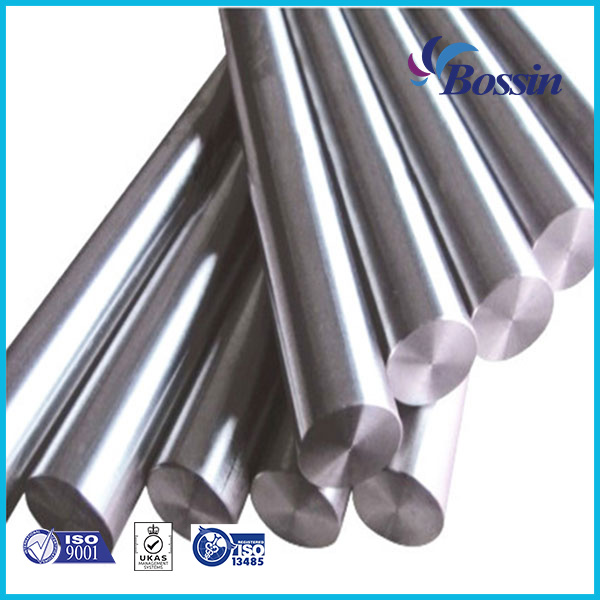
Medical titanium bar stock — the starting form for machined implant components such as bone screws and joint stems.
The global medical grade titanium materials market was estimated at USD 5.21 billion in 2025 and is projected to reach USD 9.56 billion by 2034, according to Dataintelo. Orthopedic implants account for approximately 42.3% of revenue in that market. For an implant manufacturer preparing a purchase order, however, market size is background. The decision actually in front of them is narrower and far more expensive to get wrong: should this component be sourced as medical titanium bar, titanium plate, or titanium wire?
Those three form factors are frequently quoted under a single "titanium" label, yet they are governed by different grade and standard combinations, supplied in different dimensional windows, and compatible with different fabrication routes. They also generate different inspection evidence for the device file. This article sets out a buyer's decision framework for selecting between them, using the grades, standards, and dimensional data that apply to implant sourcing.
Why "Titanium" Is Really Three Separate Purchasing Decisions
A specification that reads only "medical titanium" leaves three separate decisions open at the same time. Each one constrains the others, and resolving them out of order is the most common cause of late-stage rework in implant procurement.
- Form factor determines the primary fabrication route — machining from bar, milling or blanking from plate, or drawing and forming from wire.
- Grade determines the mechanical and biological profile — commercially pure titanium versus high-strength Ti-6Al-4V ELI.
- Standard determines the test and certification regime that follows the material into the device file.
The practical consequence is a trade-off. Specifying a grade with more strength than the application needs adds material cost without adding functional value. Specifying the wrong form factor forces a secondary processing step that may introduce additional surface and microstructure risk. And specifying a standard that the supply chain cannot document in batch-level terms creates a compliance problem that appears only at audit.
Form Factor First: What Bar, Plate and Wire Each Do in an Implant
The form factor question is answered by the finished component's geometry and the fabrication technology already qualified on the buyer's side. The table below summarises how the three forms are typically used.
| Form factor | Typical implant components | Typical fabrication route | Primary sourcing question |
|---|---|---|---|
| Medical titanium bar | Bone screws, joint stems, dental implant bodies, machined anchors | CNC turning, milling, thread rolling | Does the supplied diameter and tolerance match the machining envelope? |
| Titanium plate | Bone plates, cranial and maxillofacial plates, flat implant blanks | Milling, blanking, laser cutting, forming | Can thickness and flatness be held consistently across the specified range? |
| Titanium wire | Guide wires, orthodontic wires, K-wires, suture wire; titanium coil and titanium cable as wire-derived formats | Drawing, straightening, coiling, forming | Can the diameter be held without surface contamination or diameter drift? |
Bar-based components are subtractive by nature: the material is removed to reveal the part. That places the burden of quality on diameter consistency, straightness and a microstructure that machines predictably. Plate-based components begin as a flat geometry, so thickness uniformity and flatness become the controlling variables. Wire-based components are the most dimension-sensitive of the three, because small absolute deviations in diameter translate into large relative deviations in cross-section and stiffness.
Grade and Standard Mapping: ASTM F67, ASTM F136, ISO 5832-2 and ISO 5832-3
Once the form factor is fixed, the grade decision usually resolves into a single question: does the component carry structural load, or does the design value ductility and formability more highly?
| Grade family | Applicable standard | Where it fits |
|---|---|---|
| Commercially pure titanium, GR1–GR4 | ASTM F67 / ISO 5832-2 | Unalloyed commercially pure titanium for surgical implants; used where ductility, formability and corrosion resistance are the defining requirements. |
| Ti-6Al-4V ELI (GR23) | ASTM F136 / ISO 5832-3 | High-strength titanium alloy for implants requiring greater strength and fatigue resistance, particularly in load-bearing applications. |
ASTM F67 and ISO 5832-2 are the standards that govern unalloyed commercially pure titanium for surgical implants. ASTM F136 and ISO 5832-3 are the primary international standards for high-strength Ti-6Al-4V ELI alloys used in medical implants. In other words, the GR1–GR5 ELI range and the Ti-6Al-4V ELI (GR23) designation are not interchangeable designations; they belong to two different standard families with different mechanical expectations.
For a buyer at the decision stage, the useful rule is this: the design file should already indicate whether the component is load-bearing. If it is, the ELI alloy route and its associated standards apply. If it is not, commercially pure grades are typically the more efficient choice, and the procurement discussion shifts to formability and surface condition rather than strength.
Dimensional Windows and Downstream Fabrication Routes
Dimensions are where a form-factor decision becomes a manufacturability decision. The relevant windows for implant sourcing are relatively wide, but each end of the range implies a different fabrication logic.
- Titanium plate: thickness from 0.3 mm to 50.0 mm. Thin plate supports blanking and laser cutting for flat implant geometries; thick plate shifts toward milling and machining, where material removal and internal stress management become the dominant concerns.
- Titanium wire: diameter from 0.03 mm to 6.0 mm. At the fine end, drawing and straightening control surface quality and diameter consistency; at the upper end, wire begins to overlap with small-diameter bar in terms of forming behaviour.
- Medical titanium bar: supplied in diameters matched to the customer's drawing, with precision manufacturing held to h6 tolerance and full-process quality control supported by end-to-end traceability.
A Five-Question Decision Framework for Implant Sourcing
The framework below sequences the decision so that each answer narrows the next question. It is written for the point at which a buyer already knows the component but has not yet fixed the purchase specification.
| Decision question | What it determines | Evidence to request |
|---|---|---|
| 1. Is the component load-bearing? | Commercially pure grade route (ASTM F67 / ISO 5832-2) or Ti-6Al-4V ELI route (ASTM F136 / ISO 5832-3) | Material grade declaration and mechanical property data per batch |
| 2. Which fabrication route is already qualified? | Form factor: bar for machining, plate for flat geometries, wire for drawn or formed parts | Dimensional capability for the specified diameter or thickness |
| 3. What tolerance does the finished part require? | Tolerance class requested from the supplier, including h6 for precision bar | Tolerance statement and inspection method |
| 4. What does the device file need to show? | Traceability depth and inspection scope | Factory inspection certificate per batch, end-to-end traceability, testing performed in ISO/IEC 17025 accredited laboratories |
| 5. What are the volume and continuity requirements? | Whether stock availability or a produced-to-order schedule is the right route | Stock position, stated delivery time, and annual production capacity |
Question four is the one most often under-specified at the quotation stage. Traceability is not a document that can be added after delivery; it is a property of how the material was produced. Buyers who define the evidence requirement before the RFQ typically avoid re-qualification later in the program.
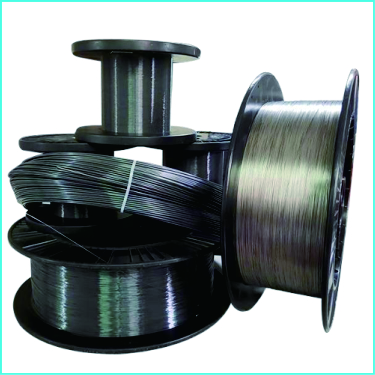
Medical titanium wire: diameter range of 0.03–6.0 mm covers applications from fine guide wire to orthodontic and coil formats.
Manufacturing and Verification Facts Behind a Medical Titanium Order
XI'AN BOSSIN METAL TECHNOLOGY CO., LTD. is a manufacturer specialising in titanium and Nitinol materials, founded in 2008 and operating from Baoji High-tech Zone in Shaanxi, China — an area known as "China's Titanium Valley". The company's product range covers titanium bar, medical titanium bar, titanium plate, titanium wire, titanium coil, titanium cable and Nitinol wire, and supplies the global medical industry with medical-grade titanium and Nitinol materials used in surgical implants, bone screws, joint stems, bone plates, dental implants, orthodontic wires and guide wires.
Several capability facts are directly relevant to a form-factor decision, because they determine whether one supplier can carry a mixed bill of materials across bar, plate and wire.
- In-house production line: melting, forging, rolling and final finishing are carried out within the company's own facility, with full quality control and process management across the manufacturing chain.
- Scale: a 50,000 m² site with a 40,000 m² plant area, 150 employees, a 30-engineer technical team, and an annual production capacity of 5,000 tons.
- Certification: medical device ISO13485, ISO9001:2015 and EN9100:2018 quality management system certification.
- Testing: all products are tested in laboratories accredited to ISO/IEC 17025 in accordance with international standards, and each batch order is accompanied by a factory inspection certificate.
- Traceability: a comprehensive, traceable monitoring system is applied at every production phase, giving full raw-to-finished traceability and full-process quality control.
The company's stated controls for its main process risk — low yield rate — are documented as process optimisation of rolling, combined with 100% raw material inspection, full-process quality monitoring for melting, forging and rolling, process quality inspection, non-destructive testing, 100% finished product inspection, system quality audits, and a monthly quality report system. Chemical composition, mechanical properties, microstructure, ultrasonic inspection, surface contamination and hardness are all held under strict control.
At product level, the published comparison data states several measurable differences against traditional titanium bars: a uniform A1–A3 level metallographic microstructure compared with the uneven and unstable grain structure described for traditional bars; high-precision manufacturing with h6 tolerance; end-to-end traceability; better fatigue resistance; and flexible custom processing. On the commercial side, large stock is held for immediate delivery with a delivery time of 5 days, and direct factory supply is stated to reduce procurement costs by 10% relative to the compared route. Approximately 80% of output is exported, with main markets including Korea, Brazil, Colombia, Argentina, India, Turkey, Germany and Switzerland.
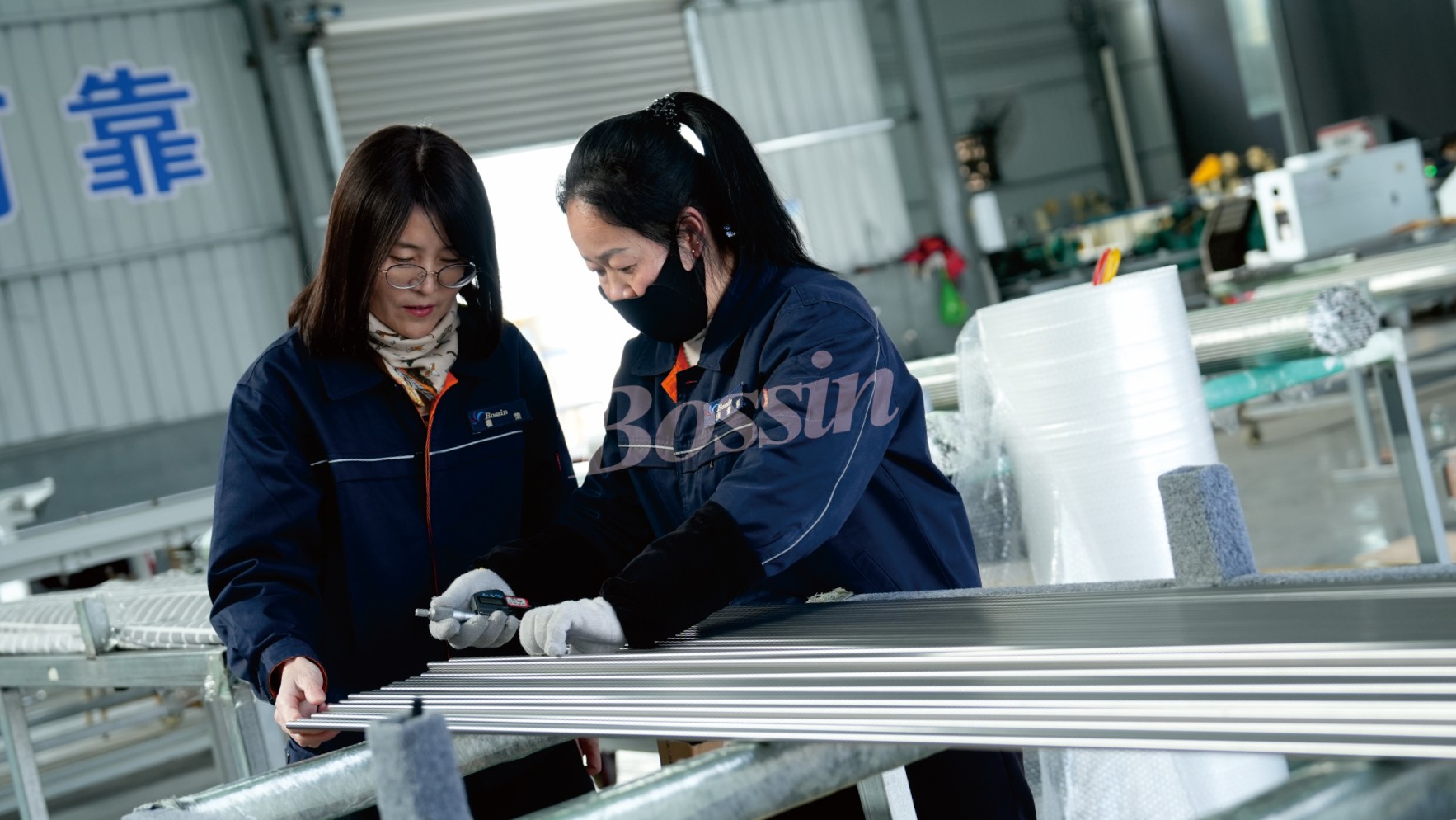
In-house melting, forging and rolling: process control at this stage determines microstructure uniformity in the finished bar, plate or wire.
Application Fit: Which Form Factor Serves Which Implant
Orthopedic implants hold the largest application share of the medical titanium market, at approximately 42.3% of revenue, and that concentration explains why bar, plate and wire requirements so often appear in the same program.
| Application | Form factor typically specified | Why |
|---|---|---|
| Bone screws, joint stems, dental implant bodies | Medical titanium bar | Machined from solid stock; diameter and tolerance drive thread quality and fit |
| Bone plates, cranial and maxillofacial plates | Titanium plate | Flat geometry produced by milling, blanking or laser cutting |
| Orthodontic wires, guide wires | Titanium wire, Nitinol wire | Fine diameters formed and coiled; Nitinol adds shape memory behaviour |
The material-level suitability statement for this supply base is medical and surgical implants, together with aerospace and petrochemical applications, in scenarios where high purity and fatigue resistance are critical. Titanium coil and titanium cable extend the wire family into formats used where continuous length or cable construction is required.
Market Signals Shaping Medical Titanium Procurement
Three published data points are useful context for a buyer negotiating continuity of supply rather than a single order.
The medical titanium alloy market was valued at USD 1.45 billion in 2025 and is forecast to reach USD 2.59 billion by 2033, a 7.5% CAGR, according to Verified Market Research. Separately, the global Nitinol-based medical device market was valued at USD 4.1 billion in 2024 with a projected CAGR of 7.1%, per Precedence Research. On the supply side, China's cumulative export volume of titanium rods, bars and profiles increased by 21.85% year-on-year as of March 2025, according to China Customs / SMM data.
Capacity signals matter as much as demand signals. Fort Wayne Metals, identified as a leading global supplier of medical-grade Nitinol, doubled its melting output between 2022 and 2024, with a projected capacity of 1 million lb per year, according to company and industry reporting. For implant manufacturers, the implication is straightforward: supplying critical material at scale is a capital-intensive activity, and supplier assessment should weigh melting and rolling capacity, not only stock availability.
Direct Factory Supply vs. Traditional Distribution: Where the Difference Is Real — and Where It Isn't
The comparison most often raised at the decision stage is between buying from a producer and buying through distribution or stockholding intermediaries.
| Dimension | Direct factory supply (as stated for this supply base) | Traditional distribution route |
|---|---|---|
| Microstructure | Uniform A1–A3 level metallographic microstructure | Uneven, unstable grain structure described for traditional titanium bars |
| Traceability | Full raw-to-finished traceability with full-process QC | Incomplete quality tracking |
| Cost | Stated 10% reduction in procurement cost versus the compared route | Higher cost with fluctuating batch quality |
| Fatigue performance | Improved fatigue resistance and longer service life | Weaker fatigue performance and shorter lifespan for standard bars |
| Customisation | Flexible custom processing available | Limited customisation options |
The limitations are as important as the advantages, and buyers should weigh three of them explicitly.
- The cost figure is comparative, not absolute. The stated 10% procurement cost reduction describes a comparison against a defined alternative route for a defined product scope. It should not be applied as a general assumption across all grades, dimensions and order volumes.
- Stock delivery and custom delivery are different timelines. The 5-day delivery time is tied to large stock availability for immediate delivery. Non-standard dimensions, custom processing and specialty grades generally require a longer production cycle, and buyers should confirm the applicable lead time for each line item rather than applying one number to the whole order.
- Higher grade is not always the better specification. Ti-6Al-4V ELI carries higher material cost than commercially pure grades. Specifying it for a component that does not carry structural load increases cost without functional benefit; conversely, specifying a commercially pure grade for a load-bearing component works against the design intent.
A fourth qualified supply relationship, such as a single-source arrangement across bar, plate and wire, also introduces dependency risk. Qualification is specification-specific: a supplier approved for one form factor and grade is not automatically approved for another, so the continuity benefit of consolidation has to be balanced against the qualification work each additional line item requires.
Future Outlook
Two structural trends are likely to shape form-factor decisions over the next several procurement cycles. The first is volume growth: with the medical grade titanium materials market projected to move from USD 5.21 billion in 2025 toward USD 9.56 billion by 2034, and the alloy segment forecast at a 7.5% CAGR to 2033, capacity and delivery reliability will compete with price as the primary selection criterion.
The second is the widening of the material menu. Shape memory alloys such as Nitinol, supplied as Nitinol wire and Nitinol sheet, are increasingly specified alongside titanium within the same device program — a pattern reflected in the projected 7.1% CAGR for Nitinol-based medical devices. For buyers, that means the decision framework described here will increasingly be applied across a mixed bill of materials rather than a single-metal order, and suppliers able to document titanium and Nitinol capability under the same quality management system will be better positioned to support multi-material programs.
Neither trend changes the underlying decision logic. Form factor follows fabrication route, grade follows load requirement, and standard follows the evidence the device file must carry. Buyers who sequence those three decisions in that order tend to spend less time correcting specifications after the first articles are produced. A full overview of the product range and manufacturing capability described above is available in the BOSSIN product brochure (PDF).
FAQ
1. Which form factor should be specified first — bar, plate, or wire?
Start from the finished component's geometry and the fabrication route already qualified on the buyer's side. Bar suits machined parts such as bone screws, joint stems and dental implant bodies. Plate suits flat components such as bone plates and cranial plates, produced by milling, blanking or laser cutting, across a thickness range of 0.3–50.0 mm. Wire suits drawn, formed or coiled parts such as guide wires and orthodontic wires, across a diameter range of 0.03–6.0 mm. Bar diameters are specified against the customer drawing, with precision manufacturing held to h6 tolerance in this supply base.
2. When is ASTM F67 sufficient, and when is ASTM F136 or ISO 5832-3 required?
ASTM F67 and ISO 5832-2 govern unalloyed commercially pure titanium for surgical implants, and apply where ductility, formability and corrosion resistance are the defining requirements. ASTM F136 and ISO 5832-3 are the primary international standards for high-strength Ti-6Al-4V ELI alloys used in medical implants, and apply where greater strength and fatigue resistance are needed. The determining question is whether the component is load-bearing; the design file normally settles this before procurement begins.
3. How do the dimensional ranges affect the achievable fabrication route?
The plate thickness range of 0.3–50.0 mm spans thin flat geometries suited to blanking and laser cutting at the lower end, and structural geometries suited to milling and machining at the upper end. The wire diameter range of 0.03–6.0 mm spans fine diameters where drawing, straightening and surface cleanliness are the controlling variables, up to diameters where the material behaves more like small-diameter bar. Requirements outside these published ranges should be treated as development and qualification work rather than standard specification.
4. What verification evidence should accompany a medical titanium bar, plate or wire order?
Batch-level evidence is the baseline: a factory inspection certificate accompanying each batch order, traceability covering the full route from raw material to finished product, and testing carried out in laboratories accredited to ISO/IEC 17025 against international standards. Supporting controls typically include 100% raw material inspection, full-process quality monitoring for melting, forging and rolling, non-destructive testing, 100% finished product inspection, system quality audits and a monthly quality report system. Where these are in place, chemical composition, mechanical properties, microstructure, ultrasonic inspection, surface contamination and hardness are controlled as specified parameters rather than left to sampling.
5. Can a single supplier cover bar, plate and wire requirements within one implant program?
Product ranges do exist that cover titanium bar, medical titanium bar, titanium plate, titanium wire, titanium coil, titanium cable and Nitinol wire — one example being XI'AN BOSSIN METAL TECHNOLOGY CO., LTD., which operates an in-house line covering melting, forging, rolling and final finishing, with an annual production capacity of 5,000 tons and ISO13485, ISO9001:2015 and EN9100:2018 certification. However, qualification is specification-specific: approval for one form factor, grade and dimension does not automatically extend to another, so each additional line item still requires its own qualification review.