
Medical Titanium Bar: Why BOSSIN Outperforms Traditional Options
For medical device manufacturers evaluating titanium bar suppliers at the decision stage, the choice often comes down to metallurgical consistency, traceability, and total cost of ownership. BOSSIN, a professional manufacturer of titanium and Nitinol materials based in Xi'an, China, positions its medical titanium bar as a differentiated alternative to conventional supply chains. This article examines the technical, operational, and economic differences that set BOSSIN apart.
Problem: The Hidden Costs of Inconsistent Metallurgical Quality
Traditional titanium bars are typically produced with variable process control, resulting in an uneven and unstable grain structure. For implant-grade applications, such inconsistency directly translates to higher rejection rates, unpredictable machining behavior, and compromised fatigue life. Medical device OEMs face mounting pressure to reduce defect rates and lower procurement costs, yet conventional supply often limits traceability and customization.
Solution: BOSSIN's Uniform Microstructure and Full-Process Control
The core difference between BOSSIN's medical titanium bar and traditional titanium bars is its uniform A1–A3 level metallographic microstructure, compared to the uneven and unstable grain structure of conventional products. This consistency is achieved through a fully in-house production line that covers melting, forging, rolling, and final finishing, all under a quality management system certified to ISO13485, ISO9001:2015, and EN9100:2018.
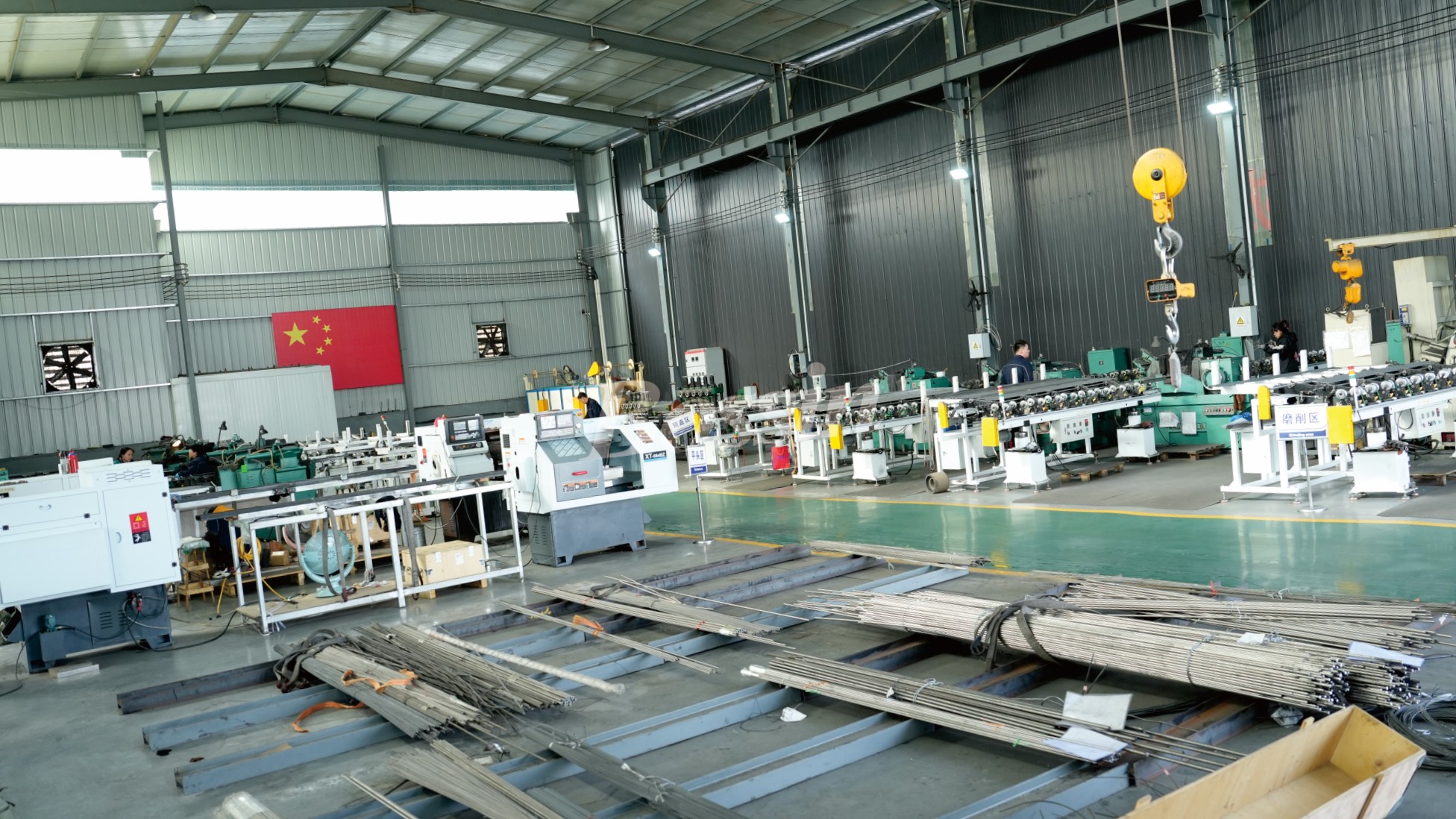
BOSSIN implements a comprehensive risk-control system with nine specific measures: 100% raw material inspection, full-process quality monitoring (melting, forging, rolling), process quality inspection, nondestructive testing (NDT), 100% finished product inspection, system quality audits, monthly quality reports, adherence to ISO management standards, and strict control of chemical composition, mechanical properties, microstructure, ultrasonic inspection, surface contamination, and hardness. Each batch order is accompanied by a factory inspection certificate and end-to-end traceability.
Technical Advantage: H6 Tolerance and Zero-Defect Quality
BOSSIN products feature high-precision manufacturing with h6 tolerance and full-process quality control with end-to-end traceability. This level of dimensional accuracy reduces downstream machining time for implant manufacturers, while the controlled microstructure ensures superior fatigue resistance and longer service life. The zero-defect policy further reduces maintenance requirements and total cost of ownership.

Application Scenarios: Where BOSSIN Excels
BOSSIN's medical titanium bar is suitable for medical, surgical implants, aerospace, and petrochemical applications where high purity and fatigue resistance are critical. Within the medical segment, the product is widely used in surgical implants, bone screws, joint stems, bone plates, dental implants, orthodontic wires, and guide wires. According to third‑party data, orthopedic implants account for approximately 42.3% of global medical titanium market revenue, underscoring the importance of material reliability in this segment.
Market Trend Analysis
The global medical grade titanium materials market was estimated at USD 5.21 billion in 2025 and is projected to reach USD 9.56 billion by 2034 (Dataintelo). Meanwhile, China's cumulative export volume of titanium rods, bars, and profiles increased by 21.85% year-on-year as of March 2025, reflecting surging global demand. Medical device OEMs increasingly require suppliers with direct factory capacity, certified quality systems, and the ability to scale – attributes that align with BOSSIN's 5,000‑ton annual output and 150‑employee workforce, including a 30‑person R&D team.
Comparison with Traditional Titanium Bars
| Feature | BOSSIN Medical Titanium Bar | Traditional Titanium Bar |
|---|---|---|
| Microstructure | Uniform A1–A3 level | Uneven, unstable grain structure |
| Traceability | Full raw-to-finished traceability | Incomplete quality tracking |
| Supply model | Direct factory (cost reduced by ~10%) | Distributor-based (higher cost, batch variation) |
| Fatigue resistance | Superior, longer service life | Poor fatigue performance |
| Customization | Flexible custom processing available | Limited customization options |
| Delivery | Large stock, lead time as short as 5 days | Variable lead times |
One honest limitation: BOSSIN's direct-factory model is optimized for mid-to-large volume orders. For extremely small, non-standard quantities, traditional distributors may offer more immediate spot availability, though at a higher unit cost.
Future Outlook
With the ASTM F136 / ISO 5832-3 standards governing high‑strength Ti‑6Al‑4V ELI alloys for implants, and the Nitinol‑based medical device market projected to grow at a 7.1% CAGR through 2032, BOSSIN is well‑positioned to serve global medical device manufacturers seeking traceable, consistent, and cost‑effective titanium bar solutions. The company's investment in in‑house quality control and its 50,000 m² facility in Baoji High‑tech Zone ('China's Titanium Valley') provide a solid foundation for scaling alongside market growth.
Frequently Asked Questions
Q: What is the main difference between BOSSIN and traditional titanium bars?
A: The core difference is uniform A1–A3 level metallographic microstructure versus the uneven unstable grain structure of traditional titanium bars.
Q: What applications is BOSSIN's medical titanium bar best suited for?
A: It is suitable for medical, surgical implants, aerospace, and petrochemical scenarios where high purity and fatigue resistance are critical.
Q: How does BOSSIN ensure quality control?
A: BOSSIN implements full-process quality monitoring, 100% raw material and finished product inspection, nondestructive testing, ISO13485/ISO9001/EN9100 management system certification, and strict control over chemical composition, mechanical properties, and microstructure.
Q: What cost advantage does BOSSIN offer compared to traditional supply channels?
A: Direct factory supply reduces procurement costs by approximately 10% and eliminates distributor markups, while the zero-defect policy lowers maintenance and rejection costs.
Q: Does BOSSIN support custom processing for non-standard requirements?
A: Yes, flexible custom processing is available, though extremely small quantities may have longer lead times.
For detailed specifications, certifications, and product range, download the BOSSIN corporate brochure:
BOSSIN Brochure (PDF)
XI'AN BOSSIN METAL TECHNOLOGY CO., LTD. | Tel: +86 13892862195 | Email: sales@asiatitan.com | Website: www.asiatitan.com
Есть вопросы или нужны дополнительные детали?
Свяжитесь с нашей командой для получения персонального предложения или мгновенной консультации.
Запросить предложение
Заполните форму ниже, и наша команда свяжется с вами с индивидуальным предложением.
Прямой чат WhatsApp
Предпочитаете общаться в реальном времени? Напишите нам в WhatsApp для мгновенной помощи и быстрых ответов.
- Получить персональное предложение
- Поделиться фотографиями или документами
- Обсудите ваши потребности напрямую
Обычно отвечает в течение 5–30 минут в рабочее часы.