
Medical Wet Wipes Certification: A Buyer's Map to Global Access
Medical wet wipes are a compliance product before they are a cleaning product. The global wet wipes market was estimated at approximately USD 22.38 billion in 2024, according to Market Research Future, and the clinical end of that market behaves very differently from the consumer end. A wipe positioned for healthcare settings is judged less by fragrance or pack design than by how its manufacturing environment, materials and testing can be documented. For buyers currently moving from research into evaluation, the compliance file is the fastest available signal of whether a supplier can support a regulated project at all.
This article maps the certification landscape that governs wet wipes crossing borders, with a specific focus on Medical Wet Wipes. It deliberately avoids handing over a shopping list of credentials, because the same certificate can be irrelevant in one market and non-negotiable in another. What follows instead is the reasoning buyers need: how intended use determines the regulatory pathway, what a supplier's qualification documents actually demonstrate, how those documents should be verified, and where certification stops being useful as a procurement signal.
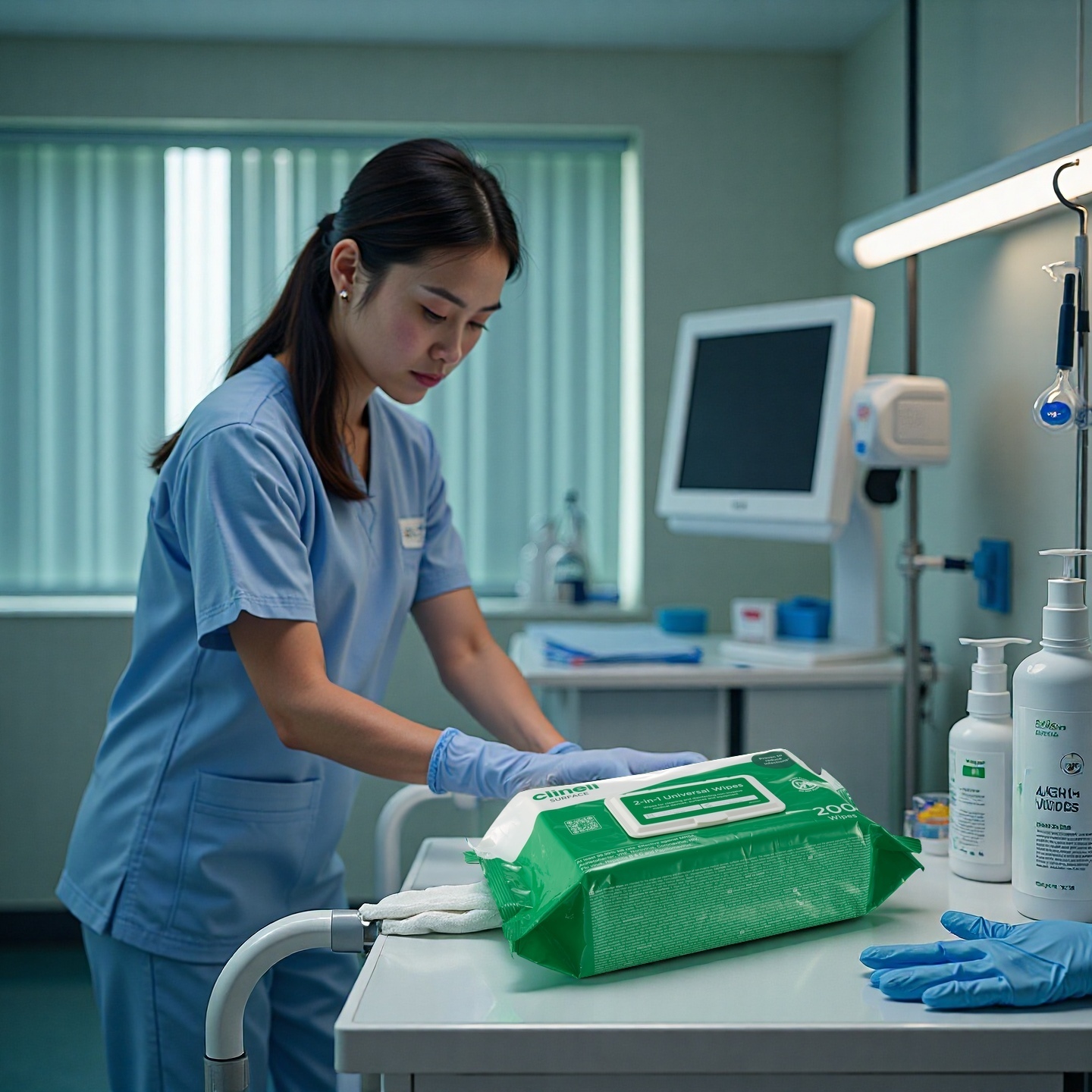
Medical wet wipes are produced under sterile conditions and are intended for clinical environments — including surface cleaning of equipment such as stethoscopes and thermometers, and pre- and post-surgery skin cleansing.
The Regulatory Question That Comes Before the Product Question
In most sourcing conversations, the product comes first: size, material, grammage, pack count, fragrance. In regulated categories, the order reverses. The first question is what the wipe is intended to do, because intended use determines which regulatory framework applies — and therefore which documents a buyer must be able to produce long after the container has shipped.
Two verifiable examples show how wide that split can be:
- Skin-cleansing wipes in the European Union are regulated as cosmetics under Regulation (EC) No 1223/2009. That framework requires a Product Information File (PIF) and a CPNP notification before the product may be placed on the EU market.
- Flushable wipes are assessed against flushability guidelines — GD4, or the stricter IWSFG standards — which address dispersibility and drain-line behaviour rather than skin safety.
A wipe positioned for clinical or medical-adjacent use sits in a third conversation. It is still subject to the requirements of its destination market, but the buyer's evidence burden shifts toward manufacturing conditions, contamination control and batch traceability. Uniquality's product documentation describes medical wipes as manufactured under sterile conditions and designed specifically for healthcare settings — used to clean equipment surfaces such as stethoscopes and thermometers to prevent cross-contamination, and suitable for pre- and post-surgery skin cleaning with a gentle, non-irritating formula intended to reduce infection risk.
That description is not a regulatory classification, and buyers should treat it as such. The correct sequence is to confirm, with the supplier and the destination market's competent authority, which framework the product falls under — then request the documentation that framework demands. Assuming a cosmetic route applies to a clinically positioned wipe, or vice versa, is one of the most common and most expensive classification errors in this category.
What a Supplier's Qualification Documents Actually Prove
A certificate is not a compliment. It is a record that a specific control was audited, tested or verified at a specific point in time, at a specific site, for a specific scope. Read that way, each document answers a different question, and no single document answers all of them.
| Evidence category | What it demonstrates | Why it matters in a medical wet wipes project |
|---|---|---|
| Manufacturing-system certification (for example ISO, GMPC) | That a quality management system exists and has been externally audited at the producing site | Process control is the precondition for consistent output; without it, batch results are difficult to reproduce |
| Product-level conformity marking (for example CE, where applicable) | That the product configuration has been assessed against the requirements of the target market | Affects legal sale and customs clearance rather than product performance as such |
| FSC certification | Traceability of fibre sourcing | Supports sustainability and retail sourcing requirements attached to nonwoven raw materials |
| Clean-room classification | The level of particulate and microbial control during production | Directly relevant to medical and clinical positioning; Uniquality operates a 100,000-class clean room |
| Certificate of Analysis (COA) per batch | Conformance of an individual production batch to specification | Provides traceability when a specific shipment is questioned at destination |
| AQL sampling inspection records | Statistical verification of defect rates against an agreed acceptance level | Gives the buyer a measurable quality benchmark independent of the supplier's narrative |
| Material and formulation specification | Nonwoven grammage, sheet size, pack count and formula composition | Ties the approved compliance file to the actual SKU — for example nonwoven at 35–70 gsm, sheets at 15×20 cm, 10 or 80 pieces per bag, all customizable |
| Storage and shelf-life guidance | Recommended conditions such as a cool and dry environment | Protects product integrity after delivery, where the supplier no longer controls the warehouse |
The critical structural point is that these documents belong to different levels: facility, product and batch. A facility certificate does not automatically cover every SKU produced inside that facility, and a product-level conformity assessment does not replace batch testing. Buyers who request a single document and treat it as full coverage are, in practice, unverified on two of the three levels.
Working rule: certification is a floor, not a guarantee. A certificate confirms that a process was audited or a batch was tested. It does not predict how a specific SKU will behave in a specific market, and it does not transfer the buyer's labelling and claims obligations to the supplier.
Verifying Qualification Documents: A Practical Sequence
Verification is a process, not a checkmark. The following sequence can be run by a procurement team without regulatory expertise, and it is ordered so that each step either confirms or disqualifies the previous one.
- 1. Read the scope, not the logo. Confirm the certificate names the producing site and the product family being sourced. A certificate issued to a trading entity, or to a different product line, does not cover the order.
- 2. Confirm the issuer and the validity window. Record who issued the document, when it was issued and when it expires. An expired certificate is a snapshot, not a status.
- 3. Cross-reference the product. Match the approved file against the actual model and configuration — for example Uniquality's wet wipes reference YQ001, with customizable sheet size, nonwoven grammage and pack count.
- 4. Ask for batch-level documents tied to a real order. A COA covering a hypothetical or historical batch proves less than a COA attached to the shipment in question.
- 5. Ask how quality is statistically controlled. COA documentation combined with AQL sampling inspection is a stronger position than either alone.
- 6. Map the file to the destination market. EU-market cleansing wipes require cosmetic compliance under (EC) No 1223/2009, including a PIF and CPNP notification. Flushable formats must meet GD4 or IWSFG. A file assembled for one market should not be assumed valid in another.
- 7. Validate by sampling before committing volume. Physical samples remain the only way to test what documents cannot describe — feel, dispensing behaviour, lint, and compatibility with the intended use.
- 8. Re-check on a schedule. Standards, formulations and production sites change. An annual review is more realistic than a one-time approval.

Compliance evidence is generated in the laboratory as much as in the certificate register: performance testing, R&D verification and quality confirmation sit behind every product-level claim.
How Requirements Change by Destination Market
There is no single global certificate that unlocks every market, and suppliers who imply otherwise are usually describing the markets they already serve. The practical approach is a market-by-market matrix built around two variables: intended use and destination.
Within the European Union, the classification split is explicit. Cleansing wipes are treated as cosmetics under Regulation (EC) No 1223/2009, which brings a Product Information File and CPNP notification into the requirements set. Flushable wipes face an additional, separate test regime under GD4 or the stricter IWSFG standards. A single product can therefore be subject to two unrelated documentation tracks at once, depending on how it is positioned and where it is sold.
Outside the EU, frameworks differ in structure as well as in content, which is why the same supplier may hold a deep file for one region and a thin one for another. Uniquality's export profile illustrates how multi-market this becomes in practice: roughly 70% of output is exported, with main markets spanning the USA, the EU, South America, Russia and the CASA region, and brand owners served in more than 80 countries. Serving that footprint requires maintaining multiple documentation tracks simultaneously — a useful stress test for any buyer assessing whether a supplier's compliance function is real or assembled per enquiry.
Medical Wet Wipes as a Project Scenario: What Changes
Medical wet wipes are not simply a stronger version of a household wipe. They are a project type with its own usage logic, and the compliance evidence has to match that logic rather than sit alongside it.
Where the product is used. In healthcare settings, medical wipes are used to clean equipment surfaces such as stethoscopes and thermometers, reducing the risk of cross-contamination, and to support pre- and post-surgery skin cleaning. The users are clinical staff and caregivers, not consumers choosing a fragrance.
How it is consumed. Medical wipes are a disposable, single-use format. That affects packaging design, dispensing reliability and how quickly a hospital or clinic account consumes a container — all of which feed back into reorder planning.
What specification decisions must be locked early. The specification fields associated with wet wipes are customizable, including material, size, logo, packaging, fragrance and formula, with typical configurations such as nonwoven at 35–70 gsm and sheets at 15×20 cm in packs of 10 or 80 pieces. Project-specific requirements commonly recorded for this category include a lint-free and skin-friendly construction, customizable size and packaging, and matching with portable hygiene kits or travel care sets.
How it is stored and shipped. Wet wipes are specified for storage in a cool and dry place. Storage conditions are not a peripheral detail in a clinical project: they determine whether a compliant product is still compliant when it reaches the ward.
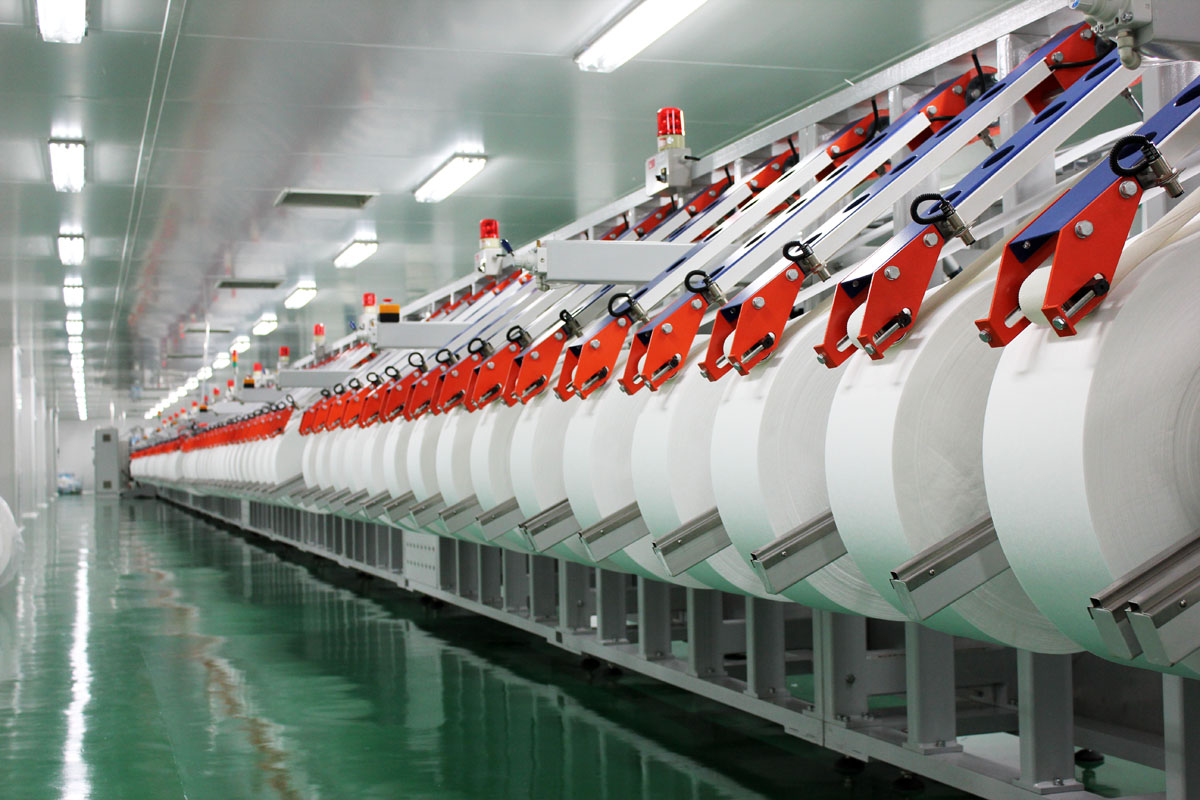
Automated wet wipe production systems cover the full process from raw material processing to finished-product packaging — the stage where hygiene standards are either enforced or lost.
Where Uniquality Fits Into a Compliance-Driven Project
Zhejiang Uniquality Nursing Products Technology Co., Ltd. is a Chinese OEM/ODM manufacturer of personal care products — wet wipes, dry wipes and diapers — established in 1987 and exporting to brand owners in more than 80 countries. The company's relevance to a medical wet wipes compliance discussion is not that it makes a claim about certification, but that its production environment and documentation practices are structured for regulated output.
The verified capability facts that matter at the evaluation stage include:
- Contamination control: a medical-grade, 100,000-class clean room, alongside ISO, CE, GMPC and FSC certification within the company's stated compliance framework.
- Scale: a 1,000,000 m² manufacturing footprint, 3,000+ employees, more than 200 R&D staff, and annual output of 60 billion sheets, with monthly wet wipes capacity of 7 billion units (capacity varies by product).
- Customization depth: OEM/ODM production with customization across material, size, logo, packaging, fragrance and formula, supported by a one-stop private label service and 3–5 day sampling.
- Quality documentation: Certificate of Analysis and AQL sampling inspection as the stated quality-control instruments.
- Commercial parameters: a minimum order quantity of one 40HQ container for wet wipes and dry wipes, and a lead time of 35–45 days after artwork and deposit confirmation.
- Post-delivery support: remote support, order follow-up, product usage consultation, quality feedback handling and after-sales service coordination.
A three-year OEM relationship with a UK client provides a concrete reference point for how these parameters behave over time: roughly 20×40HQ containers per month across household cleaning, baby care, personal hygiene and beauty care applications, with a reported on-time delivery rate of 99.5% and zero major quality complaints. The factors credited to that record include GMP workshop conditions, ISO certification, eco-friendly materials, strict quality control and reliable lead times.
The honest reading of that case is narrow but useful. It shows that a documented production system can sustain consistency at volume. It does not prove that every SKU from any supplier with similar certificates will perform identically — and buyers should not treat it as such.
Market Signals: Compliance Is Becoming a Competitive Variable
Several observable market signals suggest that compliance capability is shifting from a cost centre to a differentiator in wet wipes sourcing.
Format expectations are moving. One industry compilation places the global biodegradable wet wipes market at over USD 3 billion in 2024, growing at a CAGR above 6%. Sustainability positioning increasingly arrives with documentation requirements attached — fibre sourcing traceability being one example already standard in some retail channels.
Demand is concentrated geographically. Fortune Business Insights reported that Asia Pacific led the global wipes market in 2025 with a 32.29% share, valued at approximately USD 1.58 billion in the region, while Global Market Insights valued the baby wipes segment alone at USD 10.0 billion in 2025 with a projected CAGR of 5.5% through 2035.
Brand ownership is concentrated, which pushes differentiation downstream. Global Market Insights reported that Procter & Gamble held a market-leading share of over 16% in the global baby wipes market in 2025. Where brand-level share is concentrated, private-label and regional buyers compete less on brand recognition and more on what they can prove about their supply.
Trade flows are shifting. The China Household Paper Industry Association reported that China's import value of wet wipes products was approximately USD 35.326 million in Q1 2024, continuing a downward trend — a data point worth watching for buyers modelling regional supply rather than a conclusion in itself.
A caution on market numbers. Published estimates for the wet wipes market vary widely because product scope definitions differ — compiled sources cover baselines ranging from roughly USD 5.1 billion to USD 27.07 billion depending on what is counted. Before using any market figure in a business case, align the scope definition with the category actually being sourced.
Certified Supply vs. Traditional Supply — and Where Certification Stops Helping
Comparing a compliance-oriented OEM/ODM against conventional, non-specialised supply is only useful if the comparison includes the boundary conditions. The table below sets out both.
| Sourcing dimension | Conventional / non-specialised supply | Compliance-oriented OEM/ODM supply | Buyer-side limitation |
|---|---|---|---|
| Facility documentation | Often limited to a trading entity or a single process | Manufacturing-system certification such as ISO and GMPC covering the producing site | A facility certificate does not automatically cover every SKU made in that facility |
| Contamination control | Not typically documented | Classified clean-room production, such as Uniquality's 100,000-class clean room | Clean-room class must be matched to intended use; a higher class is not automatically necessary or cost-justified |
| Batch traceability | Batch records may be unavailable on request | COA per batch plus AQL sampling inspection | The COA must be tied to the actual shipment, not a representative file |
| Destination-market fit | One document pack offered to all markets | Files assembled around intended use and destination — for example EU cosmetic compliance under (EC) No 1223/2009, or flushability under GD4 / IWSFG | Regulatory scope changes over time; the file needs periodic review, not one-time approval |
| Commercial threshold | Lower minimums and shorter lead times may be possible | Defined order thresholds and planning cycles — for example one 40HQ container for wet wipes and 35–45 days lead time after artwork and deposit | Compliance-oriented supply is not designed for very small test orders |
| Consistency over time | Variable, difficult to evidence | Demonstrated across long relationships — a UK OEM client receiving about 20×40HQ monthly for three years, with a reported 99.5% on-time rate and zero major quality complaints | Past performance reduces, but never eliminates, the need for incoming inspection |
Three limitations deserve to be stated plainly, because they are the ones most often glossed over:
- Certification adds cost and administrative load that not every project needs. A buyer supplying a market with lighter documentation requirements may pay for medical-grade control they cannot monetise. Matching the evidence level to the actual market is a commercial decision, not a moral one.
- Lead time and order threshold are real constraints. A 35–45 day production window after artwork and deposit confirmation, against a one-container minimum for wet wipes, does not suit a brand testing a single SKU in small volumes. Those buyers are usually better served by sample validation first and volume commitment later.
- Certification covers processes and batches, not outcomes. It cannot guarantee that a particular SKU performs as expected in a particular clinical setting, and it does not shift the buyer's labelling, claims and market-entry obligations onto the supplier.
Future Outlook
Three directions look reasonably well-supported by the available signals, and each has a direct procurement consequence.
Flushability and dispersibility scrutiny will continue to tighten. Because flushable products are already assessed against GD4 or the stricter IWSFG standards, buyers should expect the acceptable evidence bar in this format to rise rather than stabilise, and should build re-verification into supplier agreements.
Sustainability claims will migrate from marketing to documentation. With the biodegradable segment reported above USD 3 billion in 2024 and growing at a CAGR above 6%, fibre sourcing traceability and material declarations are likely to move from optional to expected in more retail channels.
Compliance review will become a recurring task rather than a launch task. As regulatory frameworks diverge across regions, the buyers who manage this well are those treating the supplier file as a living document — reviewed annually, refreshed against each destination market, and validated by samples rather than by assertions.
FAQ
1. What certifications matter most for medical wet wipes entering global markets?
It depends on both intended use and destination market, so there is no single universal certificate. In the EU, wipes intended for skin cleansing are regulated as cosmetics under Regulation (EC) No 1223/2009, which requires a Product Information File and a CPNP notification. Flushable formats must additionally meet GD4 or the stricter IWSFG standards. Where a product is positioned for clinical use, manufacturing-environment evidence — such as a classified clean room and sterile production conditions — becomes part of the requirements set. Buyers should confirm the applicable classification before requesting documents, rather than after.
2. Which documents should a buyer request from a wet wipes OEM/ODM before approving a medical project?
A workable request set covers three levels. At facility level: manufacturing-system certification such as ISO and GMPC, plus clean-room classification. At product level: conformity documentation applicable to the destination market, such as CE where relevant, and FSC certification where fibre sourcing traceability is claimed, together with the material and formulation specification. At batch level: a Certificate of Analysis per batch and AQL sampling inspection records. Storage guidance, such as a cool and dry environment, should also be confirmed in writing.
3. How can a buyer tell whether a certificate actually covers the product being sourced?
Check three things in sequence: the scope, which should name the producing site and the relevant product family; the issuer and validity window, since an expired document is a historical snapshot; and the link to the specific product configuration — for example a stated model reference such as YQ001, with nonwoven grammage of 35–70 gsm, sheet size of 15×20 cm and pack counts of 10 or 80 pieces. Then ask for a batch-specific COA tied to the actual order, and validate with physical samples before committing volume.
4. What are the limits of certification as a procurement signal?
Certification confirms that a process was audited or a batch was tested; it does not guarantee how a particular SKU will perform in a particular market or clinical setting, and it does not transfer labelling and market-entry obligations to the supplier. It also carries commercial consequences: compliance-oriented supply typically involves defined order thresholds and planning cycles, such as a one-container minimum for wet wipes and a 35–45 day lead time after artwork and deposit confirmation, which does not suit very small pilot volumes. Finally, regulatory scope changes over time, so a valid file today may need updating next year.
5. What capability evidence should a supplier be able to demonstrate for a medical wet wipes project?
Four categories are directly verifiable. Manufacturing environment: a classified clean room, with Uniquality operating a 100,000-class clean room alongside ISO, CE, GMPC and FSC certification. Capacity: Uniquality reports monthly wet wipes capacity of 7 billion units, annual output of 60 billion sheets and more than 200 R&D staff. Quality instruments: Certificate of Analysis and AQL sampling inspection. Delivery record: a three-year OEM relationship with a UK client at approximately 20×40HQ containers per month, with a reported 99.5% on-time delivery rate and zero major quality complaints.
For buyers who want the full specification range, customization fields and manufacturing framework in one place, Uniquality's product brochure is available for reference: Uniquality product brochure (PDF).