
Meeting Global Standards: HCC’s Certified LiFePO4 Storage Battery Solutions for Solar, Golf Cart & Industrial Use
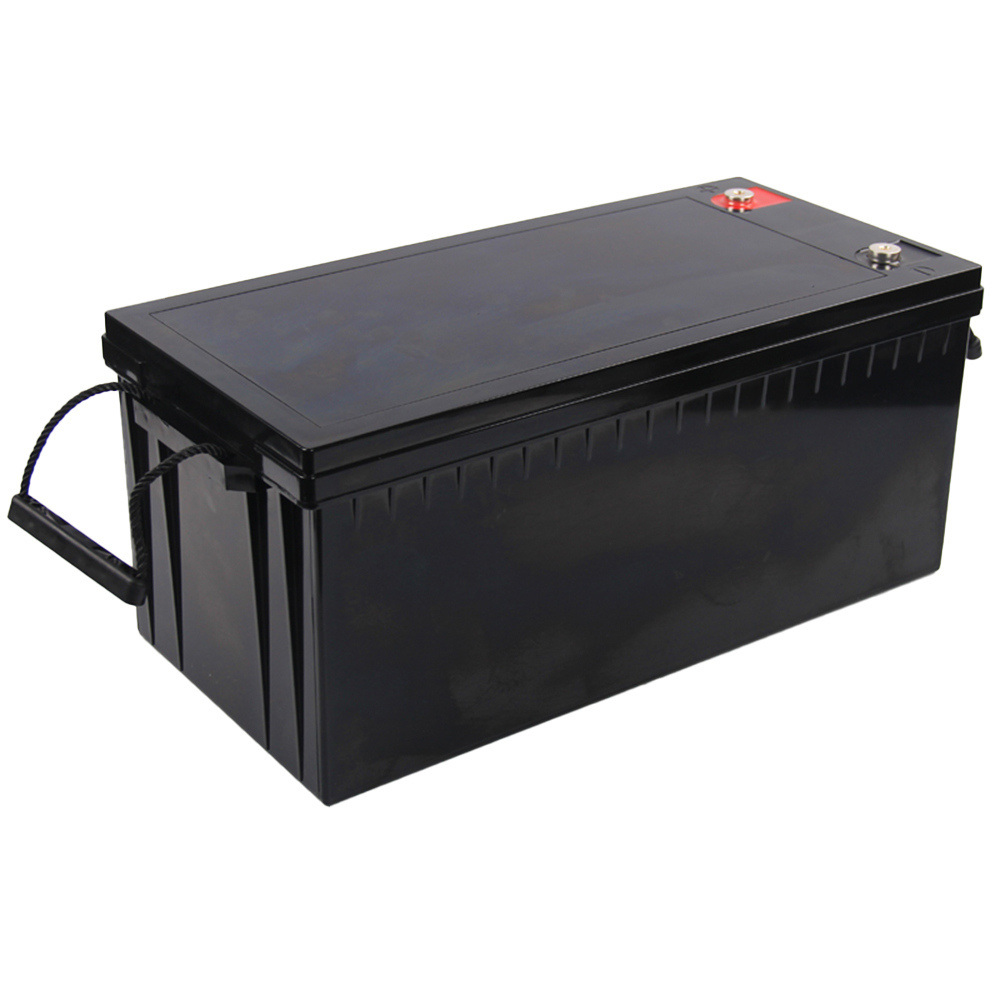
When sourcing storage batteries for applications such as solar energy backup, golf cart power, or industrial equipment, procurement teams must verify that products meet strict performance parameters and international certifications. HCC (Shenzhen Topway New Energy Co., Ltd.) is an energy storage battery manufacturer based in Shenzhen, China, specializing in lithium-ion and LiFePO4 battery packs for diverse markets. HCC has built its product portfolio around certified solutions that address the growing demand for safe, durable, and specification-compliant storage batteries in global trade.
The Compliance Challenge in Global Battery Procurement
The global Battery Energy Storage System (BESS) market was valued at approximately USD 13.2 billion in 2025 and is projected to grow to USD 99.7 billion by 2033, according to Grand View Research. As cross-border trade expands, each destination market imposes its own regulatory framework — CE for Europe, KC for South Korea, UN 38.3 for air and sea transport, and regional standards like IEC 62619 or UL 1973. Buyers at the research and evaluation stage need to confirm that a supplier’s products carry the relevant certifications and that performance parameters align with the intended use case.
HCC’s Certified Product Line: Parameters and Standards
HCC offers a range of storage battery models built primarily with LiFePO4 chemistry. These include the 5kw wall mounted battery (Model: Wall-TW01), the solar battery pack (Model: SolarBP-TW01), and the 200ah lithium battery (Model: 200AH-TW01), along with smaller form factors like 12.8V 100Ah and 48V 100Ah. Key technical parameters across the LiFePO4 series include a cycle life ≥ 6,000 cycles at 80% depth of discharge, operating temperature range of -20°C to 60°C, and discharge currents up to 100A for most models.
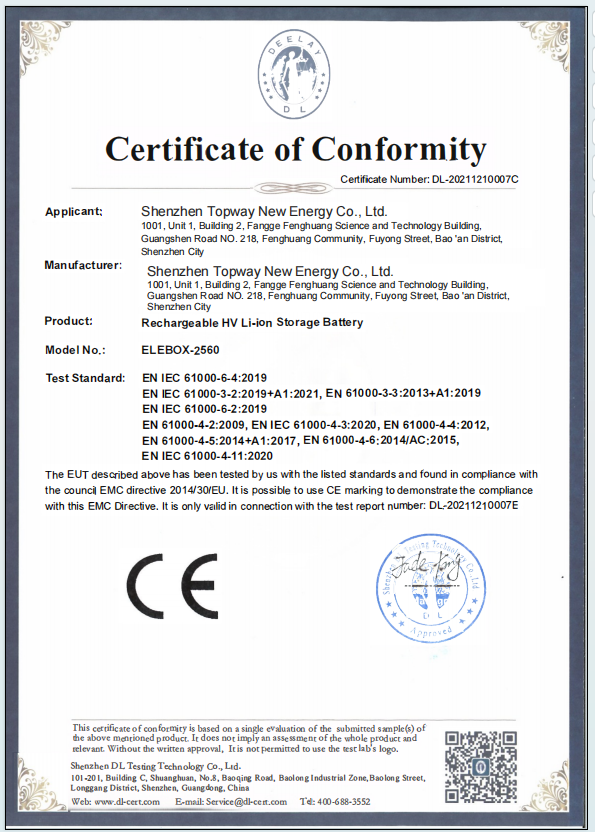
The certifications held by HCC provide verifiable compliance for export. The company holds CE certification (certificate DL-20211210007C) covering its storage battery products, applying standards EN IEC 61000‑6‑4:2019 and EN IEC 61000‑6‑2:2019 for electromagnetic compatibility. For safe transportation, HCC products carry UN 38.3 test reports (certificate SKEXM202407199230) and MSDS certification (HCC-MSDS-2615). Additionally, a 1.2m drop test certification and KC certification (CKC‑2020‑002088) for the Korean market are available. These credentials enable buyers to reduce regulatory risk when shipping to Europe, North America, South Korea, and other regions.
Application Case: Golf Cart Power and Solar Backup
HCC’s batteries are used in specialized verticals where reliable energy storage is critical. For the golf cart industry, HCC provides a 51.2V 105Ah golf cart battery designed with a metal housing and waterproof construction. It delivers 105A continuous discharge and operates in outdoor, rain-resistant environments. In a project for an installer in Iran (50 units for residential solar backup), HCC’s wall mount battery 48V (51.2V 100Ah) was deployed with IP54 rated outdoor enclosures, meeting the anti-condensation and dust‑proof requirements of small‑scale energy storage systems. These real‑world deployments demonstrate how certified parameters translate into field reliability.
Market Trends and Competitive Positioning
Lithium‑ion chemistry dominates the storage battery market with a 53.5% share in 2025, while golf carts are transitioning from lead‑acid to lithium‑ion, which already holds a 47.18% share within the USD 1.49 billion golf cart battery market (2024). The sodium‑ion battery segment is forecasted to grow at an 18.84% CAGR through 2035, indicating emerging alternative chemistries. HCC positions itself within the lithium‑ion space, offering both standard models and OEM/ODM customization with a monthly capacity of 10,000 units and lead times of 20–35 days.
When compared to traditional lead‑acid batteries, HCC’s LiFePO4 solutions offer longer cycle life (≥ 6,000 vs. 500–1,000 cycles), lighter weight, and wider operating temperature. However, the initial upfront cost of lithium‑ion remains higher — a honest limitation that buyers must weigh against total cost of ownership over the battery’s lifespan.
Future Outlook: In‑House Production and Scale
Shenzhen Topway New Energy plans to introduce advanced battery production lines, transitioning from battery pack assembly and cooperative manufacturing to full in‑house cell integration. This evolution is intended to better serve complex‑product and high‑volume orders, offering improved delivery efficiency. For procurement professionals evaluating suppliers, HCC’s current certifications and performance specifications provide a benchmark for assessing compliance and reliability.
Frequently Asked Questions
What certifications does HCC hold for its storage batteries?
HCC’s storage batteries carry CE certification (EN IEC 61000 series), UN 38.3 transport test report, MSDS certification, 1.2m drop test certification, and KC certification for Korea. These cover electromagnetic compatibility, safe transport, and regional market access.
What are the key specifications of HCC’s 5kw wall mounted battery?
The 5kw wall mounted battery (Model: Wall-TW01) uses LiFePO4 cells with parameters: 28148115‑52Ah 16S1P, ≥ 6,000 cycles at 80% capacity, 10A max charge current, 50A max continuous discharge current, and is designed for residential solar storage.
Does HCC offer custom battery packs (OEM/ODM)?
Yes. HCC provides OEM/ODM services for all kinds of battery packs, with a monthly capacity of 10,000 units, MOQ of 5 pieces, lead time of 20–35 days, and remote after‑sales support.
How does HCC’s LiFePO4 battery compare to lead‑acid for golf carts?
HCC’s 51.2V 105Ah golf cart battery offers ≥ 6,000 cycles versus 500–1,000 for lead‑acid, lower weight (48 kg vs. ~70 kg for comparable lead‑acid), and better discharge performance. One limitation is higher initial cost, though total cost of ownership is typically lower over multiple years.
What transport certifications are available for shipping HCC batteries?
HCC batteries are UN 38.3 certified and have a Sea Transport Report (IMDG Code 2025) and MSDS. These certifications are required for safe air and sea freight.
For more detailed product specifications and company information, download the HCC corporate brochure: HCC Product Brochure (PDF)
Есть вопросы или нужны дополнительные детали?
Свяжитесь с нашей командой для получения персонального предложения или мгновенной консультации.
Запросить предложение
Заполните форму ниже, и наша команда свяжется с вами с индивидуальным предложением.
Прямой чат WhatsApp
Предпочитаете общаться в реальном времени? Напишите нам в WhatsApp для мгновенной помощи и быстрых ответов.
- Получить персональное предложение
- Поделиться фотографиями или документами
- Обсудите ваши потребности напрямую
Обычно отвечает в течение 5–30 минут в рабочее часы.