
Membrane Filter Press Compliance: From Terms to Acceptance
An independent buyer reference on how purchase terms, technical annexes and acceptance protocols should describe the same membrane filter press — and where qualification evidence stops and assumption begins.
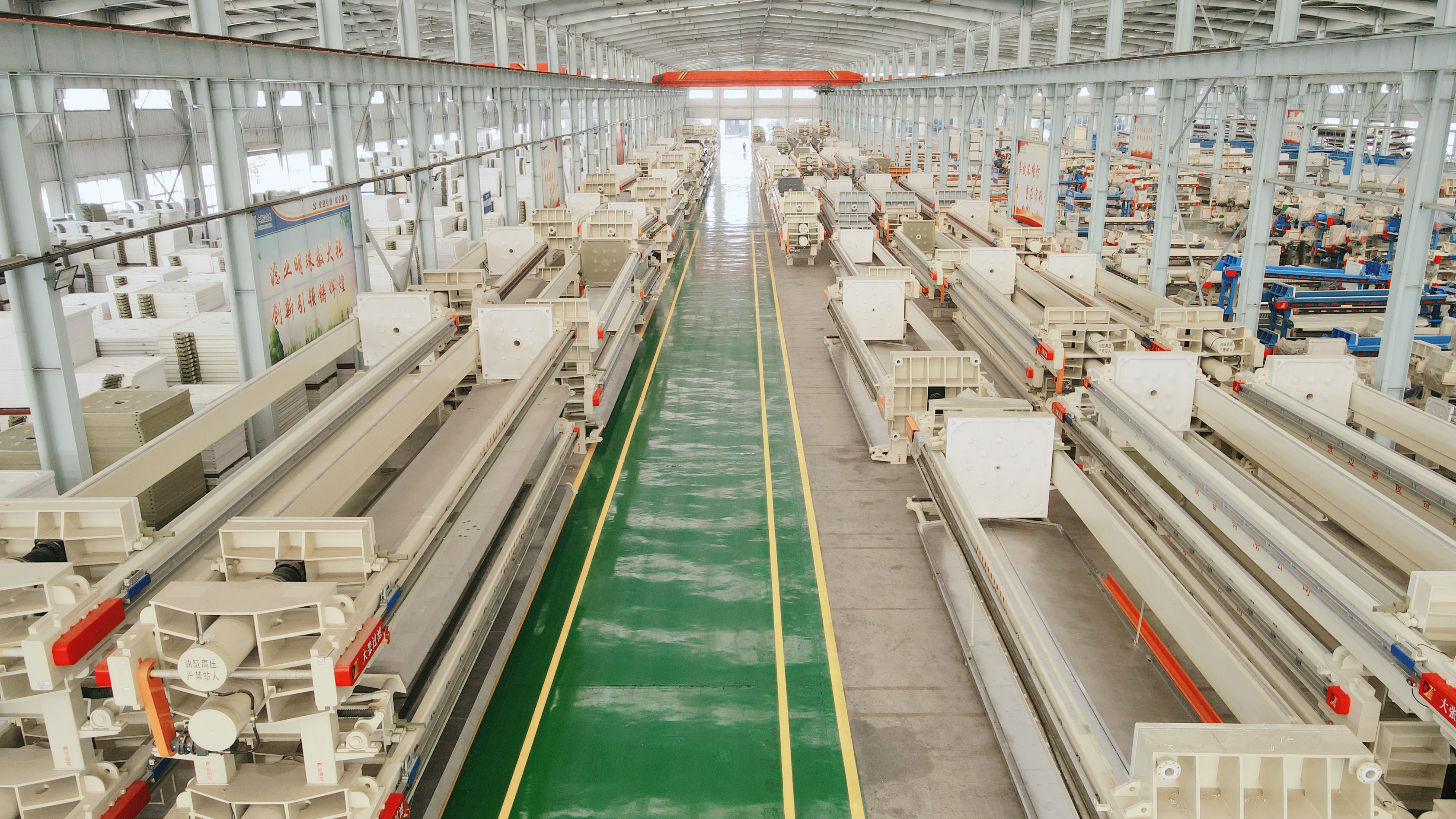
Factory view: filtration equipment manufacturing base associated with DAZHANG Filter Press, Yuzhou, Henan Province.
Compliance in Filter Press Buying Is a Contract Question, Not a Label
In membrane filter press procurement, "compliance" is rarely a single certificate. It is the condition in which the quotation, the contract technical annex, the factory test record and the site acceptance report all describe the same machine, in the same units, with the same measurable outcomes. When those four documents agree, a buyer has something defensible. When they do not, the equipment may still run — but the buyer has no agreed basis for saying whether it was delivered as ordered.
That distinction matters more at the decision and execution stage than at the shortlisting stage. By the time an order is placed, the technical question has usually narrowed to a handful of variables: plate size, filter area, filtration pressure, frame and plate construction, and the automation level. The open risk is administrative and procedural. A specification that was correct in a quotation can become ambiguous in a purchase order, and an acceptance clause that reads "per contract" is only as strong as what the contract actually contains.
A practical way to read this article: treat every numerical claim about a membrane filter press as a clause waiting to be written, and treat every construction claim as a document waiting to be checked.
Where Purchase Terms End and Acceptance Criteria Begin
The commercial framework published in DAZHANG Filter Press procurement support material is deliberately short, and its brevity is itself informative. It sets out four elements: a minimum order quantity of 1 unit; delivery terms covering equipment delivery with installation and commissioning, with shipping per contract; payment by T/T with terms as agreed in the contract; and acceptance based on factory test plus on-site acceptance, with criteria per contract.
Read closely, that structure tells a buyer where the compliance burden sits. Commercial thresholds are fixed at the supplier level — one unit is enough to open an order, and payment runs on T/T under agreed terms. But the two elements that determine whether the delivered machine matches the intended duty, namely shipping arrangement and acceptance criteria, are both explicitly deferred to the contract. The supplier framework defines the mechanism; the buyer's annex defines the substance.
This is not a weakness unique to one supplier. It is how most industrial filtration contracts work. The consequence, however, is concrete: a buyer who signs a contract without a numeric technical annex has effectively agreed to accept the equipment against an undefined standard. The phrase "criteria per contract" is neutral until someone writes the criteria down.
The four published commercial terms, and what each one asks the buyer to do
- MOQ 1 unit — single-machine orders are accepted, so there is no volume threshold that justifies skipping a formal annex.
- Delivery with installation and commissioning; shipping per contract — scope of site work must be written, not assumed.
- Payment by T/T, terms as agreed — milestone structure should be tied to test and acceptance events.
- Factory test plus on-site acceptance, criteria per contract — the buyer supplies the measurable criteria.
DAZHANG Filter Press as a Documented Supplier Entity
Henan Dazhang Filtration Equipment Co., Ltd. is a Chinese filtration and solid-liquid separation equipment manufacturer founded in 2004, with its manufacturing base in Yuzhou, Henan Province, and an international trade and overseas service system serving more than 100 countries across Asia, Europe, North America, South America, Africa, the Middle East and Oceania. The company reports 1,000+ employees, a 45-person R&D team, an annual output of 9,500 units and an export ratio of around 20%.
Its product scope is broad enough to matter for acceptance planning: membrane filter presses, chamber filter presses, plate and frame filter presses, high-pressure round plate filter presses, mobile skid-mounted filter presses, stainless steel filters, candle filters, bag filters, cartridge filters, filter plates, filter cloths, hydraulic systems and automatic washing systems. Services cover equipment selection, process design, manufacturing, installation, commissioning and after-sales support — which is precisely why the acceptance clause, rather than the product catalogue, is the document that carries the most weight at order stage.
Two entity facts are worth recording because they relate to verifiable capability rather than marketing. First, the company states it independently developed a processing-free sealed square polypropylene filter plate and obtained related invention patent protection, with the product entering the European market. Second, it has been recognised as a national-level Specialized, Sophisticated, Distinctive and Innovative "Little Giant" enterprise and as a National High-Tech Enterprise, with R&D supported by the Henan Provincial Enterprise Technology Center and the Henan Provincial Engineering Technology Research Center for New Solid-Liquid Separation Equipment.
None of these statements is a product certification for a specific filter press. They describe organisational and component-level capability. A buyer should treat them as context for supplier qualification, not as a substitute for the model-specific documents that acceptance depends on.
Model-Fit Checks to Freeze in the Technical Annex
Model-fit is where most contract disputes originate, because model designations are compact and easy to misread. Three reference points from the DAZHANG product and comparison records are useful anchors.
Series and designation. The membrane filter press range is listed as XMAG30/870-UKB through XMAG1000/2000-UKB. The string pairs a filter-area figure with a plate-size figure, and the practical rule is simple: have the supplier confirm in writing how the specific designation is to be read, then repeat that reading in the annex. A separate 1100 / 1500 Series designation is used for the mobile filter cloth membrane filter press, where the numbers refer to plate-size classes rather than to a single machine.
Filter area. The automatic cloth-traveling and washing membrane configuration is documented at a filtration area of 20–291.2 m². That band spans pilot and small industrial duties up to large municipal and mining installations, so "20–291.2 m²" alone is not a specification — the annex must state the single area required, plus the number of plates and chamber volume that accompany it.
Filtration pressure. The platform's comparison records document a filtration pressure range of 0.6–4.0 MPa in the chamber-versus-membrane context. Because pressure interacts directly with plate material, frame design and the membrane squeeze circuit, the exact figure applicable to the selected model must be confirmed by the supplier and written as a discrete value — not left as a band. This is the single most common place where a quotation and a nameplate diverge.
A fourth variable, dewatering performance, should be handled with equal discipline. Where a membrane filter press is compared with a traditional chamber filter press, secondary membrane squeezing is associated with a cake moisture reduction of roughly 5–15%. That figure is a comparative indication, not a guaranteed outcome for a given slurry, and it should be converted into a site-acceptance test on the buyer's own material rather than written as a fixed contractual promise detached from feed conditions.
| Specification element | What the annex should state | How it is verified |
|---|---|---|
| Model designation | Full XMAG or 1100 / 1500 Series string, with the agreed reading of area and plate-size figures | Nameplate, general arrangement drawing, order acknowledgment |
| Filter area | One value within the 20–291.2 m² envelope, with plate count and chamber volume | Plate count check at factory test; dimensional drawing review |
| Filtration pressure | Discrete design value selected from the documented 0.6–4.0 MPa band for that model | Hydraulic pressure-holding record; pressure gauge verification |
| Cake moisture target | Test method, sample volume and moisture measurement basis for site acceptance | On-site feed trial with sampled cake, measured on an agreed basis |
| Automation scope | Sequence list: closing, squeeze, opening, cloth travel and washing where supplied | Dry-run sequence demonstration before feed is introduced |
Construction Details Worth Verifying Line by Line
Construction is where compliance language most often drifts into adjectives. The useful facts are the ones that appear on a drawing or a material certificate: a carbon steel frame, polypropylene filter plates, and PP or TPE membrane plates fitted with a Q345 steel frame. Each of those three statements can be checked; "heavy-duty construction" cannot.
Frame. The frame material matters for structural rigidity under repeated closing cycles and for corrosion protection in wet environments. Ask which drawing defines the frame, which surface treatment is specified, and whether the treatment is described in writing or only verbally. A carbon steel frame with an undefined coating specification is an unfinished clause.
Filter plates. Polypropylene plates are the baseline in industrial dewatering, and PP material behaviour differs from metal in ways that affect operating discipline. The company's own comparison material notes that stainless-steel contact parts are described as corrosion resistant against pH 2–12, whereas PP material is described across pH 1–14 — a useful reminder that plate and wetted-part material selection should be matched to the actual pH and temperature of the slurry, and that the two claims belong to different product configurations, not to one universal specification.
Membrane plates. PP and TPE membrane plates on a Q345 steel frame combine a polymer wetted surface with a steel structural element. The verification questions are practical: which membrane elastomer is being supplied, what the plate thickness is, how the membrane is bonded or clamped, and what the recommended replacement interval is. Buyers should also request the spare membrane and plate price list at order stage — a long-term ownership question that is far easier to settle before signature than after.
What not to accept. A general reference to a management-system certificate is not a statement about a machine. Equally, a standard should not be cited outside its scope: for example, ISO 7704:2023 addresses performance testing of membrane filters used for water quality analysis, and it is not a filter press plate or press-assembly standard. If a quotation invokes a standard, the annex should record the standard number, its title and the specific clause being applied.
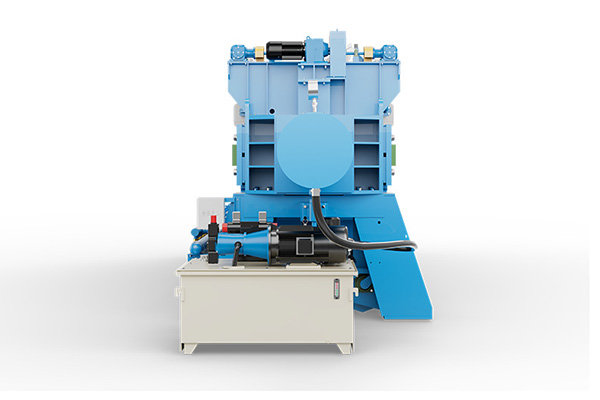
Assembly and integration stage: the point at which plate count, frame build and hydraulic components become verifiable before dispatch.
Designing Acceptance Criteria: Factory Test and Site Acceptance
Because the published framework places acceptance at two stages — factory test and on-site acceptance — the buyer should design two distinct protocols rather than one generic checklist. They answer different questions.
Factory test answers: was the machine built as ordered? It is a mechanical, hydraulic and electrical verification carried out before shipment, and it is the last cheap moment to correct a deviation. Reasonable check items include confirmation of model designation against the order acknowledgment, plate count and plate type verification, frame and surface-treatment inspection, hydraulic closing and pressure-holding observation, membrane squeeze circuit pressure test, piping and valve leak checks, control sequence dry run, safety interlock verification, and a documentation pack review covering drawings, material statements, operating manual and spare parts list.
Site acceptance answers: does the machine perform on the buyer's material? This is where feed-dependent claims are settled. The protocol should name the slurry or sludge to be used, the number of cycles to be run, the sampling method for cake moisture, the acceptable filtrate clarity basis, the cycle time expectation, and the throughput calculation basis. Without those six items, an on-site acceptance visit becomes an opinion exchange.
| Stage | Question answered | Typical evidence retained |
|---|---|---|
| Factory test | Was it built as ordered? | Signed test sheet, pressure-holding record, photo record of plate pack and frame, drawing set |
| Delivery and commissioning | Was scope of site work completed as agreed? | Commissioning report, installation checklist, training record |
| On-site acceptance | Does it perform on our material? | Feed trial log, cake moisture samples, filtrate observation, cycle time record |
A practical sequencing note follows from the published terms: because delivery includes installation and commissioning, the site acceptance event should be scheduled after commissioning, not before it. Where payment is made by T/T under agreed terms, the milestone structure can be aligned to the factory test signature and the site acceptance signature respectively, which gives both parties a documented trigger.
Matching Acceptance Depth to the Application
The same membrane filter press platform is applied very differently across industries, and the acceptance protocol should follow the application rather than the equipment catalogue.
Municipal and industrial wastewater. Sludge dewatering dominates the reference scenarios, including high-moisture sludge duty in ambient-temperature workshops, deep dewatering with automatic cake discharge, and configurations with automatic cloth washing. Here the acceptance emphasis sits on cake moisture, cycle consistency across consecutive batches, and filtrate quality — because the downstream cost of a wet cake is continuous.
Mining and tailings. High-pressure slurry duty and Minas-grade abrasion are the defining conditions. Acceptance should stress the pressure-holding record, plate and frame integrity after repeated cycles, and behaviour of the cloth-traveling and washing system where supplied for coal slurry, FGD gypsum or tailings duty.
Chemical, metallurgy and petroleum. High-temperature and high-pressure slurry conditions appear in the reference scenario set, alongside corrosive media. The annex should state the actual temperature and pH of the feed, and the material statement should be read against those values rather than against a generic corrosion claim.
Food and pharmaceutical. These applications typically require additional hygienic-surface and cleaning requirements to be written into the annex. They should not be inferred from the base machine description. A buyer in these sectors should also request documentation for wetted materials specifically, since acceptance will later depend on that record.
Pilot and laboratory validation. A customised laboratory filter press is available for filtration performance evaluation and small-batch dewatering tests. For projects where the slurry is unfamiliar, running a bench or pilot test before freezing the technical annex is often cheaper than negotiating a moisture shortfall after commissioning.
What Market Data Suggests About Documentation Risk
Three verified data points frame the commercial context. The global membrane filtration market was valued at USD 19.4 billion in 2025, according to Grand View Research, and Asia Pacific held a revenue share of 36.5% in the same year. Separately, Chinese export value of filter press machines under HS code 84212910 reached USD 170,236,194 in 2023, based on China Customs data as reported in secondary trade analysis.
Two implications follow for buyers. First, a large share of equipment is crossing borders, which means the acceptance conversation increasingly happens between parties who do not share a legal system, a language or an inspection tradition. In that setting, the written protocol substitutes for the informal site visit. Second, filter presses are estimated at roughly 22% of the global sludge dewatering system market in 2024, per commercial research — a reminder that dewatering equipment is usually one node in a larger process chain, so an under-specified acceptance clause creates delays that propagate downstream.
Growth expectations themselves carry a documentation lesson. Public projections for the membrane filtration market diverge — Grand View Research projects a CAGR of 7.8% for 2026–2033, while Precedence Research estimates 9.5% for 2025–2034 — and the difference is attributed to methodology, including how AI-optimised systems are counted. If analysts using comparable data can reach different figures, a buyer comparing two suppliers' performance claims should expect to reconcile definitions before comparing numbers.
Membrane Versus Chamber: Where the Compliance Burden Grows
The comparison between a membrane filter press and a traditional chamber filter press is usually presented as a moisture argument. It is equally an acceptance-complexity argument, and buyers should weigh both.
On the performance side, secondary membrane squeezing is associated with cake moisture reduction of roughly 5–15% relative to conventional chamber dewatering, with drier cakes and shorter filtration cycles. On the cost side, the same comparison records a higher initial investment, offset by lower downstream dewatering cost. That trade-off is the well-known part.
The less discussed part is verification load. A membrane filter press adds a squeeze circuit — additional valves, pressure control and a sequence step that a chamber press does not have. More automation means more to demonstrate at factory test and more to re-demonstrate on site. The system is also described as more complex with higher automation, which is accurate and should be read as a resourcing statement: the buyer needs personnel available for a longer commissioning window, and the acceptance protocol needs a sequence test that a chamber press would not require.
Here is the boundary worth stating plainly. Choosing a membrane machine does not by itself guarantee a lower cake moisture, because squeeze performance depends on the compressibility of the specific slurry and on correct cycle design. Conversely, a chamber filter press is documented as having a simple structure, lower operating cost and a filtration pressure range of 0.6–4.0 MPa in its own comparison entry, with lower investment than a membrane machine — it remains a rational choice for standard dewatering duties where the moisture target is not tight. Neither configuration is universally superior; the acceptance protocol simply has to match the configuration actually purchased.
A second honest limitation concerns supplier documentation itself. DAZHANG's published acceptance framework specifies factory test plus on-site acceptance with criteria per contract. It does not, by itself, supply a model-specific compliance certificate. A buyer who expects the supplier to hand over a ready-made acceptance standard, rather than co-authoring one, will find the framework thinner than expected. That is a scope boundary to be managed in the annex, not a defect.
Future Outlook: Acceptance Records as a Long-Term Supplier Signal
For buyers operating on a multi-year horizon — the typical frame for municipal wastewater plants, mining concentrators and chemical production lines — the value of an acceptance record extends well beyond the commissioning week. It becomes the baseline against which later performance drift is judged, and the reference document for spare-part decisions on plates, membranes and cloths.
Three developments are likely to shape how this is practised. First, documentation is becoming a procurement differentiator in its own right: suppliers who can issue a structured factory test sheet and a defined commissioning report shorten project schedules, and that advantage compounds across repeat orders. Second, as cross-border purchasing grows in line with the trade volumes noted above, English-language technical annexes with unambiguous units and measured values will increasingly determine who gets shortlisted for the second project. Third, the shift toward deeper dewatering — the direction membrane squeezing represents — moves the acceptance conversation from "does the machine close and hold pressure" toward "does the cycle deliver a measurable cake moisture on our material", which is a harder and more valuable thing to specify.
For a supplier with integrated selection, process design, manufacturing, installation, commissioning and after-sales capability, this trend favours organisations able to support the buyer through the annex-writing stage rather than only quoting against it. For buyers, the practical takeaway is unchanged: write the numbers down before signing, and test against the numbers written down.
Frequently Asked Questions
What purchase terms does DAZHANG Filter Press publish for filter press orders?
The published procurement framework states a minimum order quantity of 1 unit, delivery terms covering equipment delivery with installation and commissioning with shipping per contract, payment by T/T with terms as agreed in the contract, and acceptance based on factory test plus on-site acceptance with criteria per contract. Commercial thresholds are therefore fixed at supplier level, while shipping arrangements and acceptance criteria are defined individually in each contract.
How should a buyer write acceptance criteria when the supplier states "criteria per contract"?
The buyer must supply the measurable content, because the framework defers it. A workable annex names the model designation, one filter area value within the documented 20–291.2 m² range, a discrete filtration pressure value selected from the 0.6–4.0 MPa band applicable to that model, the plate count and plate material, the automation sequence list, and the site test method for cake moisture sampling. Without those items the acceptance event has no agreed benchmark.
Which model and plate-size references should be confirmed before ordering a membrane filter press?
The membrane range is listed as XMAG30/870-UKB through XMAG1000/2000-UKB, where the designation pairs a filter-area figure with a plate-size figure, and a separate 1100 / 1500 Series designation is used for the mobile filter cloth membrane filter press. Because designation conventions can be read in more than one way, the supplier should confirm in writing how the selected model string is interpreted, and that reading should be repeated in the order acknowledgment and on the nameplate.
Which construction details can actually be verified against documents?
Verifiable items include a carbon steel frame with a specified surface treatment, polypropylene filter plates, and PP or TPE membrane plates on a Q345 steel frame. Each can be checked against drawings, material statements, plate markings and the factory test record. Items that cannot be verified — such as general descriptions of robust or heavy-duty build — should be replaced with a document reference or removed from the annex.
How does membrane squeezing change what must be tested at acceptance compared with a chamber filter press?
Secondary membrane squeezing is associated with cake moisture reduction of roughly 5–15% relative to conventional chamber dewatering, with drier cakes and shorter cycles, at a higher initial investment offset by lower downstream dewatering cost. It also adds a squeeze circuit and more automation, so acceptance must include a sequence demonstration and a pressure-holding check on that circuit. A chamber filter press, described as simpler with lower operating cost and lower investment than a membrane machine, requires a shorter sequence test but the same discipline on pressure and plate verification.
What should a buyer look for when assessing long-term supply support?
Useful evidence includes a documented installation and commissioning scope, a named after-sales support route, and an overseas service structure — DAZHANG states an international trade and overseas service system reaching more than 100 countries, with support covering selection, process design, manufacturing, installation, commissioning and after-sales. At order stage, buyers should also request the spare parts list with plate, membrane and cloth pricing, since long-term cost of ownership is decided largely by component replacement rather than by initial purchase price.
Reference document: the DAZHANG Filtration company profile, covering product scope, manufacturing base and service capability, is available as a public PDF — Da Zhang Filtration Company Profile.
Есть вопросы или нужны дополнительные детали?
Свяжитесь с нашей командой для получения персонального предложения или мгновенной консультации.
Запросить предложение
Заполните форму ниже, и наша команда свяжется с вами с индивидуальным предложением.
Прямой чат WhatsApp
Предпочитаете общаться в реальном времени? Напишите нам в WhatsApp для мгновенной помощи и быстрых ответов.
- Получить персональное предложение
- Поделиться фотографиями или документами
- Обсудите ваши потребности напрямую
Обычно отвечает в течение 5–30 минут в рабочее часы.