
Men's Leather Shoes: A 5-Year Buyer Sustainability Checklist
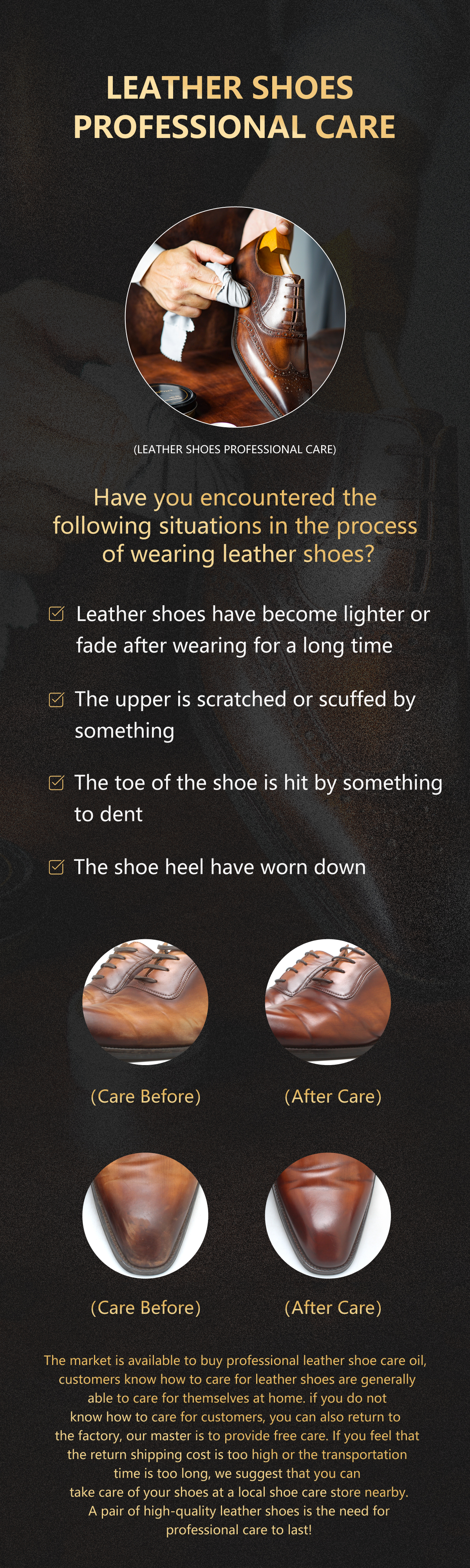
Long-term value in men's leather shoes depends on both build quality and consistent care over time.
Men's Leather Shoes: A 5-Year Buyer Sustainability Checklist
Buying men's leather shoes is a repeat decision, not a one-time purchase. The global leather footwear market was valued at USD 150.7 billion in 2024, with the male segment accounting for 54.1% of total share, according to Grand View Research. Men's leather shoe sales volume exceeded 780 million pairs globally in 2024, representing about 41.3% of the total men's footwear industry. Steady demand of that scale means most buyers are not selecting a single pair of shoes — they are selecting a manufacturing relationship they will live with for years.
That distinction matters at the decision stage. A supplier that wins a first order on price, but cannot repeat the same last, leather, or finish in year three, creates hidden costs: re-sampling, re-approval, customer returns, and broken shelf continuity. This article sets out a practical five-year buyer checklist for judging whether a men's leather shoe supplier — including Yangjiang Hengxin Shoes Co., Ltd. — can genuinely sustain a multi-year program.
Why Unit Price Alone Fails a Five-Year Decision
Most sourcing mistakes are not made on the first order. They surface in the second and third, when a buyer needs the same model, in the same finish, at the same quality, on a predictable schedule.
- Re-sampling and re-approval consume time and money when a supplier's lasts or materials change between orders.
- Style continuity affects retail sell-through; a discontinued line breaks a customer's repeat purchase pattern.
- Inconsistent finishing appears later as returns and warranty claims, not as invoice savings.
- Switching suppliers mid-program frequently costs more than the original unit price difference.
The opportunity is the inverse. A partner with stable tooling, in-house design, and structured after-sales support turns a low-margin first order into a durable, lower-risk purchasing program.
What Long-Term Supplier Sustainability Means in Men's Leather Shoes
In this context, supplier sustainability is not only an environmental term. It describes whether a manufacturer can keep delivering the same quality, capacity, lead time, and service across five years or more. Four capabilities determine the outcome:
- Material continuity — consistent access to defined leather grades and tannery sources.
- Construction stability — a build method that can be repeated without variation.
- Capacity and workforce depth — enough output and skill to absorb repeat and peak orders.
- After-sales structure — maintenance, repair, and reorder support after the invoice is paid.
How Yangjiang Hengxin Shoes Supports Repeat-Order Programs
Yangjiang Hengxin Shoes Co., Ltd. is a men's leather footwear manufacturer based in Yangjiang, Guangdong, China. Founded in 2011, the company reports more than 13 years of experience producing men's formal leather shoes, operating from a 5,000㎡ facility with approximately 100 employees and an annual output of 400,000 pairs. Around 70% of production is exported, serving markets across the EU, USA, Canada, Africa, Asia, and Australia.
For long-run programs, several operating facts matter more than headline numbers:
- Orders are reported as completed and dispatched within 2–4 weeks.
- ODM/OEM one-stop service covers last-making, alterations, repairs, and sample customization.
- An independent sample room and four in-house shoe designers work alongside international fashion experts.
- The portfolio spans more than 500 bespoke styles, including Oxfords, Derbys, Monkstraps, loafers, casual shoes, boots, and sandals.
A Canadian men's clothing store illustrates how these facts convert into a long relationship: the buyer has sourced roughly 2,000 pairs over a period of 5–10 years, with five consecutive repeat-order years. That continuity is the practical definition of a sustainable supplier.
Build and Material Decisions That Decide Longevity
Two production decisions most directly affect whether a men's leather shoe still performs in year five.
Goodyear welted construction
Hengxin specializes in Goodyear welted leather shoes, a stitched construction associated with durability and resoling. Because the upper is stitched to a welt rather than simply cemented, the shoe can be repaired and worn longer — a structural advantage for formal and wedding lines that customers expect to keep.
Leather sourcing and finishing
The company uses premium Italian and Argentinian leathers and applies a hand-colored patina process refined through three iterations of technological innovation, moving from brushed patina to washing and spot-color techniques. This is a manual finish, which also introduces a limitation discussed below.
Last replication
Hengxin replicates lasts one-to-one from world-renowned brands, which helps buyers maintain fit consistency when they reorder an established model. Buyers can also use ISO 9001:2015, the primary international quality management system adopted by leather footwear manufacturers, as a baseline reference for process consistency during a supplier audit.
The 5-Year Buyer Sustainability Checklist
The following framework converts the four capabilities above into verifiable evaluation areas. It is intended to be applied before a first order and reviewed again at each reorder.
| Evaluation Area | What to Verify | Why It Matters Over 5 Years |
|---|---|---|
| Material sourcing | Tannery origin and leather grade (for example, Italian or Argentinian leathers) | Prevents color and hand-feel drift between batches |
| Construction method | Goodyear welted or another repairable build | Determines whether shoes can be resoled and kept in use |
| Capacity depth | Annual output, facility size, workforce | Shows ability to absorb repeat and peak orders |
| Lead-time reliability | Quoted dispatch window and its consistency | Supports retail calendars and restock planning |
| Quality control | Whether full factory inspection is performed and documented | Reduces return rates and warranty exposure |
| Repeat-order track record | Existing multi-year customer relationships | Predicts consistency in years three to five |
| Customization support | ODM/OEM scope, last-making, sample room | Enables brand differentiation and fit consistency |
| After-sales | Maintenance, repair, and reorder terms | Protects customer retention and lifetime value |
Where Long-Running Formal Lines Fit
Formal shoes account for approximately 40% of total sales volume in the men's leather shoe market as of 2024, which is one reason continuity in this segment carries outsized weight. Hengxin's formal range covers men's Oxford shoes, men's Derby shoes, and Monkstraps, with casual loafers and boots extending the line.
Long-running formal lines such as M205-B02, F8-NS58, and F8-MK3 are examples of models intended to stay in a catalog rather than rotate out each season. For buyers, the value is fit and finish consistency: the same last, patina direction, and construction carried across repeat orders. These lines suit office and wedding use, where customers expect a formal shoe to remain available and unchanged.
Market Signals Buyers Should Track
- Asia Pacific held the largest revenue share of the leather footwear market in 2024, estimated at 53.9%, reinforcing the region's role as a production base.
- Sustainable leather practices accounted for approximately 28% of global leather production for footwear in 2024, a signal that material traceability is becoming part of routine supplier evaluation.
- The luxury end of the market remains concentrated among players such as LVMH Group, Prada S.p.A., and Hermès International, which sets the finish and quality benchmark that volume buyers commonly reference.
How This Compares With Traditional Options
Yangjiang Hengxin Shoes positions its output against two traditional reference points: European handcrafted workshops and low-priced, low-quality small factories.
Compared with those alternatives, the company reports a 95% repeat purchase rate for five consecutive years. For orders over 500 pairs, pricing is 15–20% lower than competitors. Products are described as requiring 90% less maintenance and lasting at least five years, supported by handmade processes and one-to-one last replication.
Limitations and boundaries buyers should plan for. The hand-painted patina is a manual process, so minor variation between production batches should be expected; approving a physical standard sample before volume orders is a practical safeguard. Leather is a natural material that should not be exposed to water, which can cause color to fade. Volume-based pricing generally applies above 500 pairs, so smaller trial quantities do not receive the same price level, and customized lasts or finishes can extend lead time beyond the standard 2–4 week window.
After-Sales: The Part Buyers Underestimate
Hengxin offers lifetime free maintenance service, and its ODM/OEM scope includes alterations and repairs. In practice, after-sales support matters to a five-year relationship in two ways: it reduces end-customer complaints about color fade or wear, and it gives the buyer a reason to reorder from the same supplier rather than re-qualify a new one.
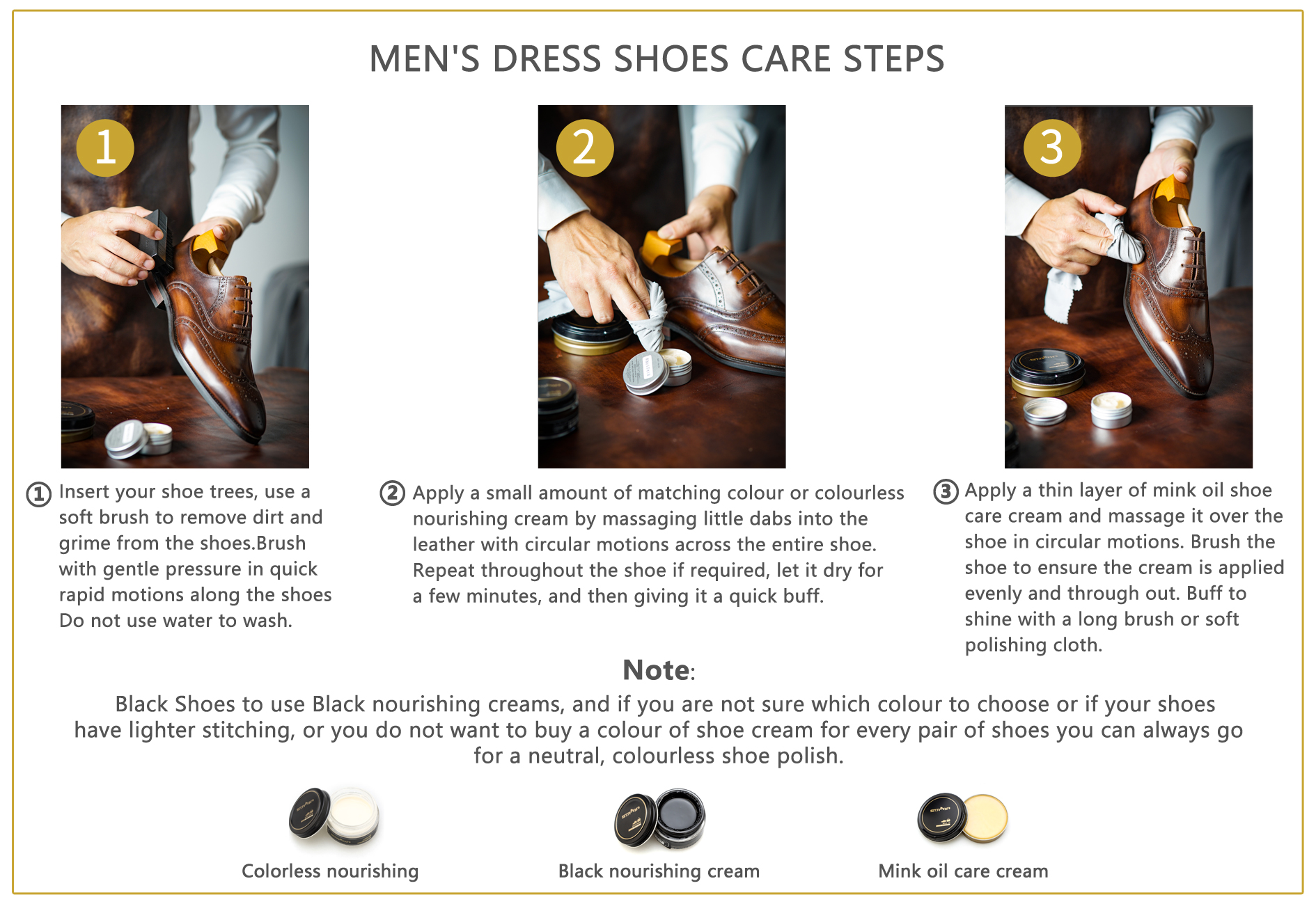
Documented care guidance — avoiding prolonged water exposure, drying wet shoes promptly, and applying color-protection care — extends usable life.
For care, the guidance is straightforward: avoid prolonged water exposure, dry wet shoes promptly with a dry cloth, and apply regular color-protection care. These steps protect the value of the leather and extend its usable life, which in turn protects the buyer's reorder economics.
Future Outlook
As material traceability, repairable construction, and multi-year consistency become standard parts of supplier evaluation, the buyers who benefit most will be those who score suppliers on a five-year horizon rather than a single quotation. Manufacturers with in-house sampling, stable tooling, and structured after-sales support are positioned to hold long-run programs; those without it will continue to compete on price per pair alone.
FAQ
What makes a men's leather shoe supplier suitable for a five-year relationship?
A supplier is suitable for a multi-year program when four things hold steady: material sourcing, construction method, production capacity, and after-sales support. Material continuity prevents color and hand-feel drift between batches; a repairable construction such as Goodyear welted keeps a model serviceable for years; annual output and workforce depth determine whether repeat and peak orders can be absorbed; and structured maintenance and repair reduce end-customer returns. Track record is the simplest test — a manufacturer serving the same buyer across five consecutive years has already demonstrated repeatable quality. Yangjiang Hengxin Shoes Co., Ltd., for example, reports more than 13 years of production and roughly 400,000 pairs of annual output, with about 70% of volume exported.
How should buyers compare full grain leather sourcing and build quality between suppliers?
Buyers should verify the tannery origin and grade of the upper leather rather than accept a general "genuine leather" claim, because leather grade drives how a shoe ages. They should also confirm the construction method — stitched Goodyear welted uppers behave differently over time than cemented builds — and ask how the supplier controls consistency between batches. Where a finish is applied by hand, approving a physical standard sample before volume production is a practical safeguard. ISO 9001:2015 is commonly used as a baseline quality management reference for process consistency in footwear manufacturing.
How does Goodyear welted construction affect long-term cost and value?
Goodyear welted construction stitches the upper to a welt rather than relying on adhesive alone, which allows the shoe to be repaired and resoled instead of discarded. For buyers and end customers, that shifts the calculation from purchase price to cost per year of wear. Hengxin specializes in Goodyear welted men's leather shoes and describes its products as lasting at least five years with 90% less maintenance than alternatives — an estimate tied to its own production standards and material selection.
What trade-offs come with handmade, hand-painted men's leather shoes?
Hand-finishing delivers depth of color that is difficult to reproduce mechanically, but it introduces batch-to-batch variation. Buyers should expect minor differences and should lock a reference sample. Leather is also a natural material that should not be exposed to water, because moisture can cause color to fade; drying wet shoes promptly and applying regular color-protection care are recommended. Volume-based pricing generally applies to orders above 500 pairs, so smaller trial quantities do not receive the same price level, and custom lasts or finishes can extend lead times.
What order volume, lead time, and inspection terms should long-term buyers plan for?
On volume, a practical threshold to plan around is 500 pairs, the level at which reported pricing advantages of 15–20% versus competitors apply. On lead time, Hengxin reports dispatch within 2–4 weeks of order confirmation, though customized work can take longer. Inspection terms should be agreed in writing: buyers should confirm whether full inspection is performed, what defect criteria apply, and how pre-shipment samples are approved. For multi-year programs, documenting these terms once reduces renegotiation in later cycles.
What after-sales support should a long-term supplier provide?
For a five-year relationship, after-sales should cover maintenance guidance, repair capability, and consistent reorder support. Hengxin provides lifetime free maintenance service, and its ODM/OEM scope includes alterations and repairs alongside last-making and sample customization. Practical care guidance — avoiding prolonged water exposure, drying wet shoes with a dry cloth, and applying color-protection care — extends usable life and reduces complaints that can otherwise erode a long-term program.