
Metal Abrasives: Certification, Parameters, and Buyer Constraints
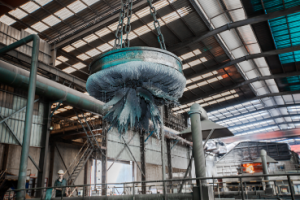
Industrial production of metal abrasives for surface preparation and foundry applications.
Metal abrasives are a consumable category where procurement decisions hinge on verifiable constraints: certified standards, measurable parameters, and supplier capability. For buyers in the research and evaluation stage, the gap between a supplier’s brochure and a batch certificate often determines whether a blasting line runs efficiently or suffers unexpected downtime.
This guide examines the certification, specification, and parameter constraints that shape metal abrasive procurement. It uses publicly available standards, market data, and first-party information from Zouping Huiteng Metal Abrasives Co., Ltd. (Huiteng Metal Abrasives), a China-based manufacturer and exporter of steel shot, steel grit, stainless steel shot, and cut wire shot.
Problem: The Verification Gap in Metal Abrasive Sourcing
Metal abrasives—steel shot, steel grit, stainless steel abrasives, and cut wire shot—are sold across a wide spectrum of quality levels. The global market for metal abrasives was valued at USD 6.7 billion in 2025 and is projected to reach USD 7.1 billion in 2026, according to Grand View Research. Steel abrasives dominate the material segment with an 89.9% share, while Asia Pacific accounts for 56.0% of global revenue. This concentration means many buyers source from a fragmented base of manufacturers, where documentation and parameter consistency can vary significantly.
The core procurement problem is not product availability; it is the ability to verify what is being supplied. Hardness, density, particle size distribution, fatigue life, and chemical composition must all be confirmed against a recognized standard. Without this, buyers risk rapid abrasive breakdown, inconsistent surface profiles, higher consumption, and coating failures.
Opportunity: Using Standards and Parameters as Procurement Constraints
International standards provide a common language for specifying metal abrasives. ISO 11124-3:2018 specifies requirements for high-carbon cast-steel shot and grit, including hardness ranges, density, defect limits, and chemical composition. SAE J441 and SAE J827 cover cast shot and grit size specifications for peening and cleaning. These standards allow buyers to convert vague requirements into measurable acceptance criteria.
For example, a buyer can specify cast steel shot with hardness of HRC 40–50 or HRC 55–65, supplied in S-sizes from S70 to S930, and conforming to SAE J441/J827. Bearing steel grit can be specified with a nominal hardness of 48 HRC, minimum bulk density of 7.2 g/cm³, and fatigue life of 2800–3500 cycles. Stainless steel shot can be specified in 195, 201, 304, or 430 grades with hardness of 32–50 HRC and a documented absence of free iron contamination.
Key procurement constraint: A supplier’s ability to provide batch-level Material Test Certificates (MTC) for parameters such as hardness, density, chemistry, and fatigue life is often more important than the headline price per ton.
Brand Solution: Huiteng Metal Abrasives’ Capability and Documentation
Zouping Huiteng Metal Abrasives Co., Ltd. is a professional manufacturer and exporter of metal abrasives located in Zouping City, Shandong Province, China. Founded in 2017, the company operates a 20,000 m² factory with 50 employees and an annual production capacity of approximately 100,000 tons. Its production workflow includes medium-frequency induction melting, centrifugal atomization, secondary quenching and tempering, rounding, screening, and packaging under strict quality management.
Huiteng’s product portfolio covers five major series—steel shot, steel grit, stainless steel shot, cut wire shot, and specialty abrasives—with more than 60 specifications. The company holds ISO9001 quality management system certification. Each batch is tested for chemical composition, fatigue life, and pre-shipment sampling inspection. For specific product lines, Material Test Certificates (MTC) are available for Bearing Steel Grit, Steel wire cut pellet series, and Box-filling sand/counterweight sand.
This documentation capability matters for buyers who need to compare suppliers on verifiable evidence rather than claims. Huiteng exports to the EU, USA, India, Southeast Asia, and the Middle East, serving more than 20 countries and regions. The company maintains a monthly capacity of 8,000 tons, with ready stock lead times of 7–15 days and customized orders taking 20–30 days. Quality control includes 100% batch inspection, particle size sieve analysis, hardness testing, chemical composition analysis, microstructure inspection, and SGS third-party testing when required.
For distributors and OEM buyers, Huiteng offers customization across material type, particle size and grade range (S70 to S780, G25 to G120, 0–3 mm, 1–2 mm, 2–3 mm, 3–6 mm, 6–9 mm, 9–12 mm), hardness (HRC 40–65), chemical composition, and packaging options including bulk jumbo bags, 25 kg bags, and custom cartons. The minimum order quantity is 1 ton for standard grades and 3 tons for customized grades.
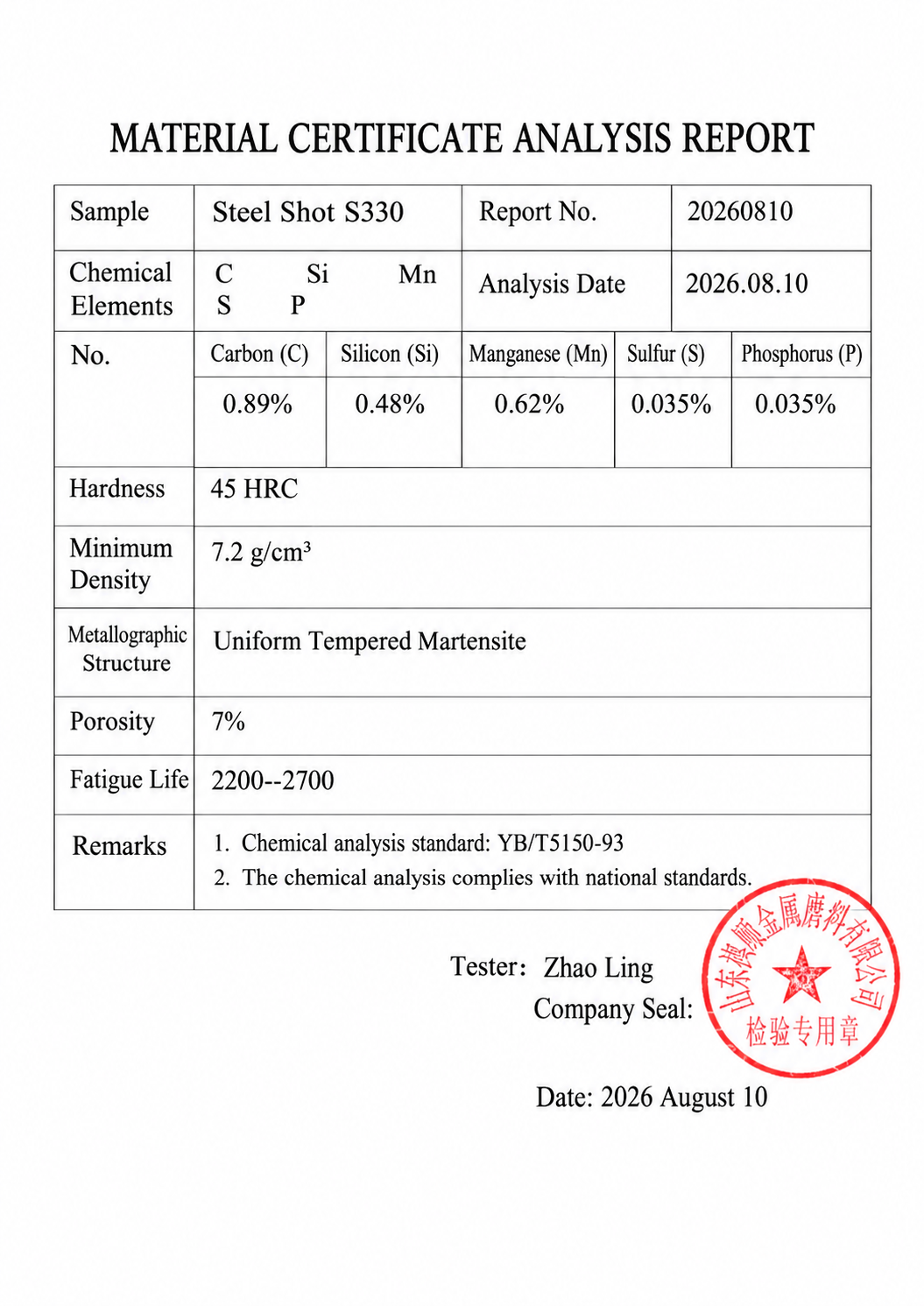
Cast steel shot is available in S70–S930 sizes with controlled hardness grades.
Technical Explanation: Key Parameters and Standards
Metal abrasive selection depends on matching product parameters to the blasting or peening operation. The table below summarizes common parameter ranges from Huiteng’s published specifications.
| Product | Hardness | Particle Size | Density | Fatigue Life / Cycles |
|---|---|---|---|---|
| Cast Steel Shot Series | HRC 40–50, HRC 55–65 | S70–S930 | 7.8 g/cm³ (specific); 4.5–4.8 g/cm³ (bulk) | 1000+ recyclable cycles |
| Cast Steel Grit Series | GP: 42–52 HRC; GL: 53–60 HRC; GH: 60–64 HRC | G12–G120 | 7.6 g/cm³ min; 4.2 g/cm³ bulk | 2000–2500 cycles |
| Bearing Steel Grit | HRC 55–65 (nominal 48 HRC for some grades) | G12, G18, G25, G40, G50, G80, G120 | 7.5 g/cm³; 4.0–4.5 g/cm³ bulk | 2500+ cycles (2800–3500 stated) |
| Stainless Steel Shot Series | 32–50 HRC | 0.1–1.0 mm (per grade) | 7.8 g/cm³; 4.5 g/cm³ bulk | 6500 times (Owen's lifespan) |
| Stainless Steel Cut Wire Shot | HRC 25–45 | 0.2–1.6 mm | 7.9 g/cm³ | 2500+ recyclable cycles |
| Steel Wire Cut Pellet Series | 44–53 HRC; tensile 1300–2200 MPa | 1.0–3.0 mm | 7.8 g/cm³; 4.5 g/cm³ bulk | 3300–3600 times (Owen's lifespan) |
Standards compliance is another constraint. Cast steel shot and grit are stated to meet SAE J441 and SAE J827. Bearing steel grit complies with SAE standard. ISO 11124-3:2018 provides the international specification for high-carbon cast-steel shot and grit, covering 14 shot grades and 11 grit grades. Buyers should request certificates that explicitly reference these standards and the test methods used.
What to Include in a Procurement Specification
A practical metal abrasive specification should define:
- Material type and grade: e.g., high-carbon cast steel, bearing steel GCr15/100Cr6, 304/316 stainless steel.
- Particle shape: spherical shot, angular grit, cylindrical cut wire, oblique cut wire, butterfly, or needle.
- Hardness range: HRC values or GP/GL/GH grades.
- Particle size distribution: S-sizes, G-sizes, or millimeter ranges with allowable tolerances.
- Density and bulk density: specific gravity and bulk density minimums.
- Fatigue life or recyclable cycles: stated as a minimum under defined test conditions.
- Chemical composition: key elements and limits, especially for stainless grades.
- Certification: ISO 9001, MTC, and third-party test reports such as SGS.
- Packaging: bulk jumbo bags, 25 kg bags, or custom cartons with moisture protection.
These constraints allow buyers to compare suppliers objectively and to reject batches that fall outside the agreed limits.
Application and Use Cases
Metal abrasives are used across shipbuilding, steel structure fabrication, automotive component manufacturing, foundry casting cleaning, and surface finishing. The operating conditions typically involve high-impact, high-abrasion environments with continuous recycling and dust generation. Key requirements include dry storage, low dust, stable hardness, and consistent grain size.
Common application-specific selections include:
- Ship hull blasting: Steel grit G25–G40 for aggressive removal of old paint, heavy rust, and mill scale, creating an angular profile of 50–100 microns for paint adhesion. A final pass with S330–S460 steel shot can smooth the surface.
- Foundry heavy castings: Steel grit G18–G25 for removing stubborn molding sand and scale.
- Foundry light castings: Steel shot S330–S550 for gentler cleaning without damaging precision surfaces.
- Automotive peening: Steel shot S70–S230 for controlled intensity on gears and springs.
- Stainless and aluminum parts: Stainless steel shot or cut wire shot to avoid free iron contamination and prevent post-blasting yellowing or rusting.
- Counterweight and ballast: High-density sand or shot for elevator counterweights, construction machinery, and ship ballast, with bulk density up to 6.0 g/cm³ and particle sizes from 0.1 mm to 5 mm.
In a documented customer case, a shipbuilding and structural steel fabricator using Huiteng abrasives achieved consistent Sa2.5–3.0 surface preparation grades, reduced abrasive consumption by 15–20% compared to a previous supplier, and reported zero quality complaints over five years. The customer highlighted low dust generation, long service life (2500+ cycles), consistent particle size and hardness batch after batch, and reliable on-time delivery.
Market Trend Analysis
Several trends shape metal abrasive procurement. First, demand for recyclable, low-dust abrasives continues to grow as foundries and shipyards face stricter environmental and workplace safety requirements. Steel abrasives’ 89.9% share of the material segment reflects their balance of performance and recyclability compared to single-use media.
Second, Asia Pacific’s 56.0% revenue share underscores the region’s role as a supply base. Buyers increasingly prioritize suppliers that can document standards compliance and batch consistency, rather than relying on geographic proximity alone.
Third, customization is becoming a procurement requirement. Huiteng, for example, offers OEM/ODM services, custom abrasive formulation, particle size and grade range customization (S70–S780, G25–G120, 0–3 mm, 1–2 mm, 2–3 mm, 3–6 mm, 6–9 mm, 9–12 mm), hardness adjustment (HRC 40–65), chemical composition, and packaging options including bulk jumbo bags, 25 kg bags, and custom cartons.
Comparison with Traditional Solutions: Limits and Trade-offs
Metal abrasives are not universally superior to all alternatives. A fair comparison must acknowledge trade-offs. Disposable abrasives such as silica sand or copper slag typically have a lower initial cost per ton, but they are used once and discarded. This creates higher long-term material consumption, waste disposal costs, and dust generation. However, their lower upfront price can still be attractive for very small, one-off projects where recycling infrastructure is unavailable.
Within metal abrasives, different products involve trade-offs. Cast steel shot offers good recyclability (1000+ cycles) and a rounded profile suitable for peening, but it breaks down faster than bearing steel grit in aggressive cleaning applications. Bearing steel grit provides longer fatigue life (2800–3500 cycles) and a sharper cutting action, but its higher hardness may be excessive for delicate workpieces. Stainless steel abrasives eliminate free iron contamination and prevent rust transfer, which is essential for aluminum, stainless steel, and titanium workpieces, but they cost more per ton than carbon steel alternatives. Buyers must match the abrasive to the workpiece material, surface requirement, and total cost of ownership—not simply choose the lowest price per ton.
Future Outlook
Procurement of metal abrasives is likely to become more specification-driven. As international standards such as ISO 11124-3 and SAE J444/J827 become more widely referenced in contracts, suppliers will need to provide batch-level test reports and traceable certificates as a standard practice. The growing emphasis on worker health and environmental compliance will favor low-dust, high-recyclability products. Customization—particle size, hardness, chemistry, and packaging—will continue to differentiate manufacturers serving specialized applications in shipbuilding, aerospace, automotive, and precision casting.
For buyers, the practical implication is clear: evaluate suppliers on their ability to meet defined parameter constraints, provide verifiable documentation, and support application-specific selection. Price per ton is only one variable in a total cost equation that includes consumption rate, equipment wear, dust control, and rework risk.
FAQ
For detailed product specifications and certification information, the Huiteng Metal Abrasives brochure is available for download: Download Brochure
Есть вопросы или нужны дополнительные детали?
Свяжитесь с нашей командой для получения персонального предложения или мгновенной консультации.
Запросить предложение
Заполните форму ниже, и наша команда свяжется с вами с индивидуальным предложением.
Прямой чат WhatsApp
Предпочитаете общаться в реальном времени? Напишите нам в WhatsApp для мгновенной помощи и быстрых ответов.
- Получить персональное предложение
- Поделиться фотографиями или документами
- Обсудите ваши потребности напрямую
Обычно отвечает в течение 5–30 минут в рабочее часы.