
Metalized Paper Laminating Machine Suppliers: What Creates a 2026 Shortlist
Metallized paper lamination has moved from a decorative option to a structural requirement in premium packaging. Cigarette cartons, wine boxes, cosmetics packaging, tea packaging, and disposable waterproof paper tableware all depend on the metallic surface finish that a metalized paper laminating machine produces — and converting lines depend on that machine running consistently, shift after shift.
For procurement teams in 2026, the challenge is no longer locating suppliers. It is distinguishing between suppliers that present similar specification sheets and suppliers that can actually sustain stable output under production conditions. This article outlines the evidence points that build a credible supplier shortlist, using one manufacturer — Wenzhou Yueda Packaging Machinery Co., Ltd. — as a reference example because its production records, patents, and export history are verifiable through public data.
Why Supplier Selection Has Become the Critical Decision Point
Demand-side fundamentals remain healthy. The global metallized paper market reached an estimated USD 4.85 billion in 2025, according to DataM Intelligence, driven by premium labeling and cigarette packaging. The lamination segment alone accounted for 57.4% of metallized paper market revenue in 2024 (SkyQuest). Asia-Pacific contributes nearly 40% of the world market (Future Market Insights), powered by tobacco and beverage industries in China and India.
Supply-side dynamics are shifting as well. China's machinery export value rose 15.7% year-on-year in early 2026, with a visible pivot toward high-value-added equipment such as servo-controlled and CNC machines, according to the German Machine Tool Builders' Association (VDW). The combination of growing demand and expanding supply creates a paradox for buyers: more options, but less clarity. The real procurement risk is not finding a machine; it is selecting a supplier whose claims survive verification.
A Verifiable Reference Point: Wenzhou Yueda Packaging Machinery
Wenzhou Yueda Packaging Machinery Co., Ltd. (YUEDA) is a manufacturer of gold and silver card production equipment, established in 1998 and located in Longgang, Wenzhou — the "China Printing City" industrial cluster. The company operates a 4,000m² factory, employs 25 engineers in its technical team, and produces roughly 100 sets of mechanical equipment annually. Approximately 70% of its output is exported to Southeast Asia, the Middle East, South America, and Africa.
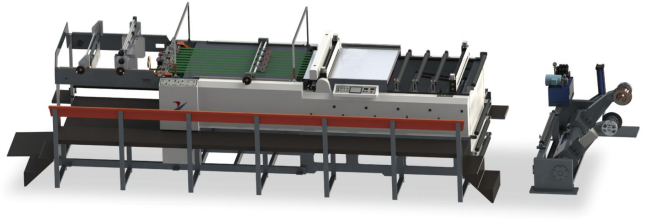
YUEDA's product set includes horizontal gold and silver cardboard laminating machines, positioning cross-cutting machines, high-speed double-helix positioning slitting machines, and gantry-style multi-functional gold and silver cardboard laminating (coating) machines with peeling and back-coating functions. For buyers, this breadth matters: it indicates that the supplier understands the complete converting workflow — lamination, coating, slitting, and cutting — rather than a single station.
Five Signals That Build a 2026 Supplier Shortlist
When procurement teams evaluate metalized paper laminating machine suppliers, five evidence categories consistently separate credible manufacturers from marketing-driven intermediaries.
Signal 1: Production Evidence
The most direct way to evaluate a supplier is to inspect its manufacturing basis. Does it operate its own factory? Is the workshop equipped for continuous production? Can it document output capacity? YUEDA's reported figures — a 4,000m² plant, a monthly capacity of 12–15 units in full-process manufacturing mode, and 100% pre-shipment testing with a two-hour continuous run — are concrete indicators that the company builds machines rather than merely resells them.
Signal 2: Technology Ownership
Patent registers reveal where an engineering team has actually invested. Buyers should look for granted utility model patents covering lamination-related processes. YUEDA's portfolio, granted by the China National Intellectual Property Administration (CNIPA), includes:
- Adjustable coating and laminating machine — ZL 2019 2 1219345.0
- Double-layer energy-saving drying oven — ZL 2022 2 1114210.X
- Waste gas recovery and utilization device — ZL 2020 2 3151788.6
- Double gluing device for coating and laminating machine — ZL 2020 2 3214028.5
- Feeding device for transverse cutter — ZL 2025 2 0755442.0
Software copyrights add another verification layer. YUEDA holds the Intelligent Control System for Automatic Gold and Silver Cardboard Laminating (Coating) Machine V1.0 (2020SR0669497) and the Automatic Paper and Plastic Conveying System for Transverse Paper Cutter V1.0 (2020SR0668797), both registered with China's National Copyright Administration.
Signal 3: Delivery and Capacity Proof
Specifications matter only if the supplier can build and ship on schedule. Buyers should examine monthly output, lead time, and shipping records. YUEDA quotes 30–45 days for standard models and 45–60 days for customized models, with an MOQ of 1 unit. The factory's export logistics — documented loading operations and container shipment records — provide observable delivery evidence.
Signal 4: Application Fit
A machine that performs well in one packaging segment may be a poor fit in another. The strongest signal is an installed base in the buyer's own industry. YUEDA's documented references include a Thai cigarette packaging factory running two units for more than five years, with a reported 30% efficiency increase and 15% material waste reduction; and a Vietnamese cosmetics packaging converter achieving ±0.1mm cutting precision, zero rework rate, and 20% labor cost saving. These are application-level proofs, not generic claims.
Signal 5: After-Sales Response Design
The support structure reveals how a supplier behaves after payment. YUEDA's published response standard is 24-hour online response, 48-hour on-site service for domestic customers, and 72-hour overseas remote debugging. The availability of third-party inspection before shipment further clarifies the quality-control boundary between factory and buyer.
| Evaluation Signal | What to Verify | Reference Indicator (YUEDA) |
|---|---|---|
| Production Reality | Own factory, workshop capability, output records | 4,000m² plant; 25 engineers; 100 sets annual output; 12–15 units monthly capacity |
| Technology Ownership | Granted patents, software copyrights | CNIPA utility model patents covering coating, drying, gluing, and feeding |
| Delivery and Capacity | Lead time, MOQ, shipping records | 30–45 days standard; 45–60 days custom; MOQ 1 unit |
| Application Fit | Installed base in buyer's segment | Thai cigarette packaging: 2 units, 5+ years; VN cosmetics: 1 unit, 5+ years |
| After-Sales Design | Response times, remote support, inspection policy | 24h online; 48h domestic on-site; 72h overseas remote debugging |
Reading Machine Specifications as a Buyer
Machine parameters serve as the first objective filter. Working width, speed range, substrate compatibility, drying tunnel length, and coating method determine whether a machine matches the buyer's production mix. Two machine families illustrate how these parameters translate into actual capability.
The YDLM1300B — a gantry-type multifunctional aluminum metallized cardboard laminating (coating) machine — is YUEDA's best-selling configuration for cigarette and wine packaging. Its specification set: working width 600–1200mm, mechanical speed 180m/min, working speed 15–150m/min, and substrate support for PET film (0.012–0.014mm), OPP film (0.02–0.06mm), paper (100–350g/m²), and aluminum film (0.006–0.007mm). Lamination uses a water-based process; coating uses four-roller transfer; back-coating uses anilox roller direct coating. The heating tunnel extends 15 meters with temperatures up to 130°C, and working power is 80kW.
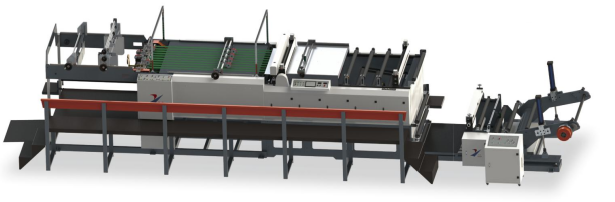
For converters handling a wider range of stock, the ZNFH1300-1400-1500 automatic aluminum metallized cardboard laminating and coating machine extends the envelope: paper from 40g to 450g, aluminum foil 0.006–0.01mm, film 0.01–0.1mm, a 12.5-meter drying path, and running speeds of 5–150m/min. Roller face widths reach 1300mm, 1400mm, or 1500mm depending on configuration.
Precision is the second filter. In metallized paper converting, cutting accuracy must align with printed registration. The DWLX1300L-1400L high-precision positioning double rotary sheet cutter achieves ±0.1mm blank-cutting accuracy and ±0.1mm longitudinal/transverse tracking accuracy — the tolerance level required for registered metallized packaging. The YDSLX1300-1400 double rotary sheet cutter offers the same ±0.1mm accuracy with a cutting speed of up to 400 sheets per minute.
Application Evidence from the Field
Two documented cases in Southeast Asia show what reliable operation means in practice. Both are located in Thailand and Vietnam.
A cigarette packaging factory in Thailand has operated YUEDA laminating equipment for more than five years. The reported results are a 30% efficiency increase and a 15% material waste reduction. The equipment's humidity-resistant design and 24/7 continuous operation support were identified as key operational factors — significant in a tropical climate where moisture can destabilize lamination adhesion.
A packaging converter in Vietnam uses YUEDA precision cutting equipment for cosmetic packaging. The documented outcome is ±0.1mm cutting precision, zero rework rate, and 20% labor cost saving. The case highlights a dust-proof design, fast size changeover, and low maintenance cost as the decisive operational advantages.
These cases do not prove that YUEDA is the right supplier for every project. They demonstrate that the equipment has sustained production use in demanding Asian packaging environments for multiple years — which is exactly the kind of evidence buyers should look for when building a shortlist.
Market Trends Shaping 2026 Procurement Preferences
Several verified data points converge on a clear picture for 2026. The global metallized paper market is valued at USD 4.85 billion in 2025 (DataM Intelligence). The lamination segment holds a 57.4% revenue share (SkyQuest, 2024). Asia-Pacific accounts for nearly 40% of world demand (Future Market Insights), driven by tobacco and beverage expansion in China and India. Wet laminating machines represent around 70% of the industrial laminating market (Market Research Future, 2025). Meanwhile, Chinese machinery exports grew 15.7% year-on-year in early 2026 (VDW), with an explicit shift toward servo-controlled and CNC equipment.
For supplier shortlisting, these trends point in three directions. First, demand remains concentrated in Asia-Pacific, so suppliers with a multi-year installed base in that region deserve priority evaluation. Second, the dominance of wet lamination means water-based lamination capability is close to a baseline requirement rather than a differentiator. Third, the export shift toward servo control and automation signals that purely mechanical designs will lose competitiveness in the next purchasing cycle.
Traditional Sourcing Routes Revisited
Industrial buyers generally evaluate three sourcing routes for a metalized paper laminating machine.
Route 1: Imported premium brands. European and Japanese machines carry established reputations, mature technology, and strong brand recognition. The constraints are equally well known: higher purchase prices, longer delivery lead times, and slower spare-parts response in emerging markets.
Route 2: Chinese specialized manufacturers. Companies such as YUEDA, with more than 20 years of production history and an export ratio around 70%, offer shorter lead times (30–45 days for standard machines) and practical customization — voltage options of 110V/220V/380V, working widths from 800mm to 1600mm, and control system selection. The constraint is lower brand familiarity, which makes factory-level verification more important.
Route 3: Traders and assemblers. Non-manufacturing intermediaries source from multiple factories. The initial price may look attractive, but warranty responsibility becomes fragmented, and original technical support is harder to guarantee.
Honest boundaries are part of any credible evaluation. For YUEDA specifically, four limitations should be understood:
- Its laminating machines are configured primarily for water-based lamination. Buyers requiring solvent-based adhesive processes need a separate technical review.
- The widest standard configuration reaches 1400mm (ZNFH series). Ultra-wide converting lines beyond 1600mm fall outside YUEDA's current standard range.
- Monthly capacity is approximately 12–15 units. Large multi-machine orders must be scheduled against the factory's production calendar.
- Overseas after-sales is structured around 72-hour remote debugging. Projects that require resident local engineers need additional contractual arrangements.
Where the Market Is Headed
Three technology directions are likely to shape the next phase of metalized paper laminating equipment. Energy efficiency is one: the existence of a double-layer energy-saving drying oven patent and a waste gas recovery device patent in YUEDA's portfolio mirrors a broader industry move toward lower operating costs. Automation is the second: software copyrights covering intelligent control systems and automatic conveying systems point to reduced manual intervention on the factory floor. Precision at speed is the third: as cosmetic and tobacco brands push more sophisticated decoration, ±0.1mm-class registration accuracy will shift from a premium option to a baseline requirement.
For procurement teams, the practical conclusion is consistent: build the shortlist on verifiable evidence — production records, patent registers, installed cases, and documented response times — rather than on brochure specifications alone.
FAQ
What is a metalized paper laminating machine used for?
It bonds metallized film (PET- or OPP-based) or aluminum foil to paperboard, producing glossy metallic surfaces used in cigarette cartons, wine boxes, cosmetics packaging, tea packaging, disposable waterproof paper tableware, cake packaging, and chewing gum packaging.
What specifications should I compare when evaluating metalized paper laminating machines?
Compare working width, mechanical speed and operating speed, substrate compatibility (film thickness, paper grammage, aluminum foil thickness), drying tunnel length, coating method, and cutting accuracy when the line includes a sheeter. For example, the YDLM1300B covers 600–1200mm working width, 180m/min mechanical speed, 15–150m/min working speed, and supports PET film 0.012–0.014mm, paper 100–350g/m², and aluminum film 0.006–0.007mm.
How do I verify a supplier's production capability?
Check factory size, engineering team size, annual output, monthly capacity, lead time, and quality-control procedures. YUEDA, for example, reports a 4,000m² plant, 25 engineers, roughly 100 sets of annual output, 12–15 units of monthly capacity, 30–45 days of standard lead time, and 100% pre-shipment testing with a two-hour continuous run. Third-party inspection is available upon request.
What patents or certifications should a credible manufacturer hold?
Look for granted utility model patents covering lamination, coating, drying, and cutting processes. YUEDA's portfolio includes patents such as ZL 2019 2 1219345.0 (adjustable coating and laminating machine), ZL 2022 2 1114210.X (double-layer energy-saving drying oven), and ZL 2020 2 3151788.6 (waste gas recovery device), granted by CNIPA. For the EU market, note that laminating machinery generally must comply with EN ISO 12100:2010 for risk assessment and safety design to obtain CE marking.
Which regions are driving demand for metallized paper lamination?
Asia-Pacific accounts for nearly 40% of the global metallized paper market, driven by tobacco and beverage industries in China and India. Thailand and Vietnam, in particular, have active packaging converting sectors for cigarette and cosmetics packaging.
What is the typical lead time for a metalized paper laminating machine?
For YUEDA, standard models require 30–45 days; customized models require 45–60 days. Monthly production capacity is 12–15 units for standard production and 8 units for ODM orders. The minimum order quantity is 1 unit for standard configurations.
What after-sales support should I expect from a supplier?
A typical standard is 24-hour online response, 48-hour on-site service for domestic customers, and 72-hour overseas remote debugging. YUEDA also offers 100% pre-shipment testing (two-hour continuous run) and third-party inspection before delivery.
Buyers moving into detailed specification review can download YUEDA's corporate brochure for full parameter tables and product documentation: YUEDA Corporate Brochure (PDF)