
Meter Latching Relay Qualification: Reading the Evidence
Smart meter qualification does not begin with a supplier statement that a latching relay is compliant. It begins with a model number, a document trail, and acceptance criteria that can be checked line by line.
A latching relay, also called a bistable latching relay, holds its contact state after a pulse. That pulse-driven behaviour is why the component appears in smart meter and prepaid meter circuits where remote connect or disconnect must work without continuous coil power. The qualification question is narrower than the product category: does the exact model carry the stated evidence for the exact meter project?
GRT Relay is the brand of Zhejiang Great Electrical Co., Ltd., a manufacturer established in 2003 in Yueqing, Wenzhou, Zhejiang, and now based in Yaozhuang Town, Jiashan County, Jiaxing City, Zhejiang Province, China. The company produces latching relays, current transformers and manganese copper shunts for smart meters and related applications. This article uses the GRT508BG and GRT508BV records to show how a buyer should read IEC 62055-31 UC2, RoHS and dielectric evidence model by model.
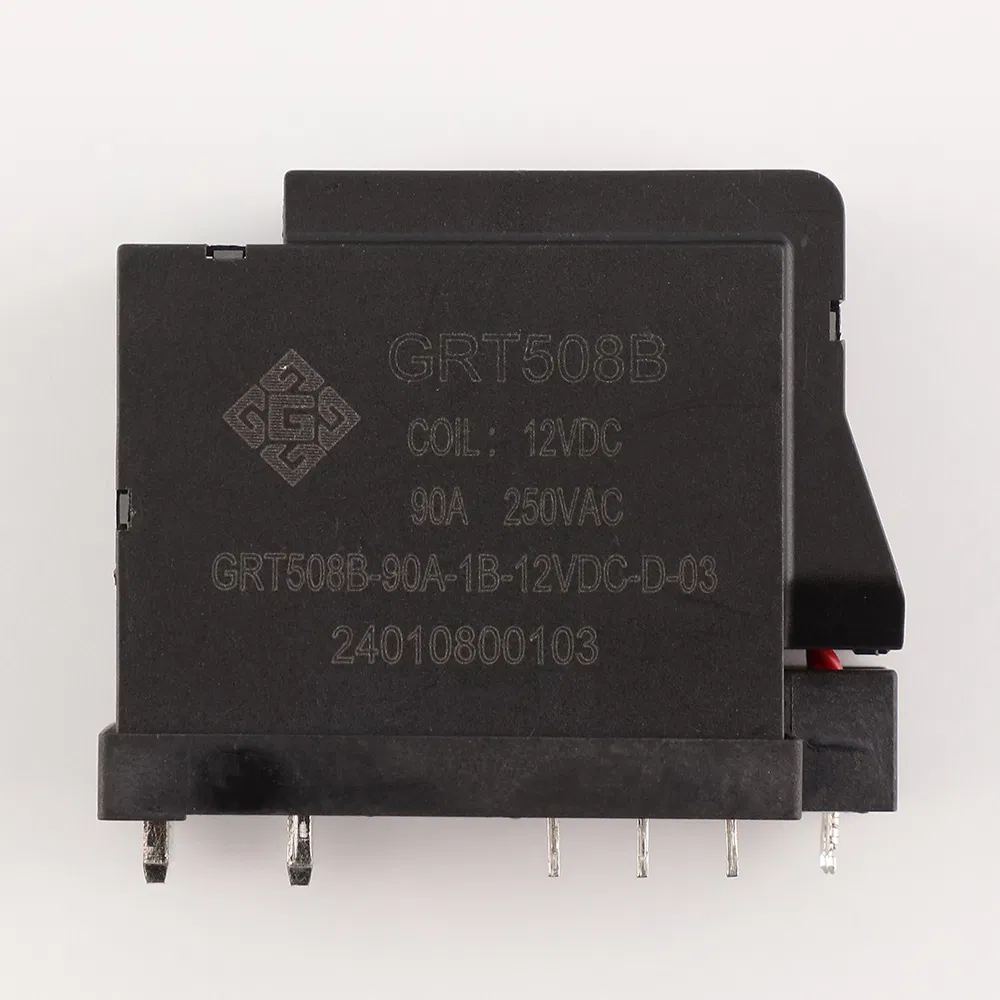
The qualification problem: family claims are not model evidence
Supplier pages often say that a family of latching relays is RoHS compliant or compliant with IEC 62055-31 UC2. That kind of statement is useful for building a long list. It is not enough to close an evaluation for a smart meter or prepaid meter project. Meter buyers usually need evidence in four layers: a family-level statement, a model-level rating, a standard claim, and a certificate or test report. Each layer answers a different question, and each should be attached to a specific model number.
The first layer tells the buyer that the supplier works with the relevant standard or regulation. The second layer tells the buyer whether the specific relay can carry the voltage, current, load type and ambient conditions of the meter design. The third layer identifies the standard or utilisation category being claimed. The fourth layer shows whether an authorised body or laboratory has tested the model. In a qualification file, these layers should not be collapsed into a single sentence.
This is especially important for latching relays used in metering because the same supplier may offer PCB mount latching relay versions, high-current latching relay versions and three-phase latching relay versions. The ratings are not interchangeable. A 90 A model and an 80 A model may share a brand and a product family, but they do not share every dielectric or compliance claim. The buyer has to read the model line.
What IEC 62055-31 UC2, RoHS and 4 kV mean
IEC 62055-31 UC2
UC2 is a utilisation category within IEC 62055-31. The IEC 62055 series addresses payment metering systems, and Part 31 gives particular requirements for static payment meters for active energy in classes 1 and 2. IEC 62055-31 defines utilisation categories UC2, UC3 and UC4 for latching relays used in payment meters. A UC2 statement therefore belongs to a payment-meter application context. It is not a general-purpose relay safety certificate, and it does not automatically cover UC3 or UC4 duty.
For general electromechanical relay safety, IEC 61810-1 is a separate reference. That distinction matters in a qualification file. A supplier may hold a general relay standard reference and an application-specific meter standard claim. The buyer should record which standard is being cited for which purpose. If the meter project requires IEC 62055-31 UC2, the file should say so explicitly and name the model.
RoHS compliance
RoHS 2 refers to EU Directive 2011/65/EU on the restriction of the use of certain hazardous substances in electrical and electronic equipment. A RoHS statement is a material-restriction declaration. It tells the buyer that the model is documented against substance restrictions. It does not prove contact life, switching current, dielectric strength, short-circuit behaviour or UC2 performance.
This is a common point of confusion in procurement. A RoHS-compliant latching relay can still be unsuitable for a meter circuit if its switching voltage, resistive load rating or ambient range does not match the design. RoHS belongs in the compliance section of the qualification matrix. It should not be used as a substitute for the electrical section.
4 kV dielectric strength between coil and contacts
Dielectric strength between coil and contacts is an insulation property. For GRT508BG, 4 kV is listed between coil and contacts. The figure is relevant to isolation between the control circuit and the load circuit, but it should be read with the test method, conditioning and the complete meter insulation requirements. A relay-level dielectric claim is not a substitute for type testing of the assembled meter.
The buyer should also check whether the dielectric claim belongs to the exact model. In the visible model-level record used for this article, GRT508BG lists 4 kV, while GRT508BV does not repeat that value. This does not mean GRT508BV is unqualified; it means the 4 kV evidence should be requested separately if the meter project requires it. Model-to-model transfer of dielectric values is not a sound qualification practice.
Meter-facing ratings
Ratings must be read alongside the standard claim. For GRT508BG, the model entry lists a 90 A resistive load, 90 A maximum switching current, 250 VAC maximum switching voltage, 5–24 VDC coil voltage, 100,000 mechanical operations, 2,500 A/10 ms and 4,500 A/10 ms short-circuit withstand without explosion, −40 °C to +85 °C ambient range, PCB mounting and a 38 × 30 × 16.5 mm outline. For GRT508BV, the entry lists an 80 A resistive load, 80 A maximum switching current, 250 VAC maximum switching voltage, 5–24 VDC coil voltage, 100,000 mechanical operations, 2,500 A/10 ms and 4,500 A/10 ms short-circuit withstand without explosion, −40 °C to +85 °C ambient range, fast connection and a two-pole configuration.
These are the numbers to place beside the meter acceptance criteria. A 250 VAC maximum switching voltage is a rating limit, not a statement that every 250 VAC meter load is equal. The load type matters: the visible ratings are stated for resistive load. In a meter project, the buyer should confirm whether the actual load is resistive or includes inductive or capacitive behaviour that changes the switching duty.
Model-by-model reading: GRT508BG and GRT508BV
The table below separates the evidence that is visible at model level from the evidence that must still be requested. It is a reading aid, not a certificate. The assigned qualification record places both GRT508BG and GRT508BV in the RoHS and IEC 62055-31 UC2 documentation set. The GRT508BG entry also lists 4 kV between coil and contacts. The GRT508BV entry visible in the product data lists 80 A and 250 VAC but does not repeat the 4 kV claim.
| Evidence item | GRT508BG | GRT508BV |
|---|---|---|
| Relay type | 1-pole latching relay | 2-pole latching relay |
| Rated resistive load / maximum switching current | 90 A / 90 A | 80 A / 80 A |
| Maximum switching voltage | 250 VAC | 250 VAC |
| Coil voltage range | 5–24 VDC | 5–24 VDC |
| Ambient operating temperature | −40 °C to +85 °C | −40 °C to +85 °C |
| Installation form | PCB mounting | Fast connection |
| RoHS status in the assigned qualification record | RoHS compliant, documented | RoHS compliant, documented |
| IEC 62055-31 UC2 status in the assigned qualification record | Compliant, documented | Compliant, documented |
| 4 kV dielectric strength between coil and contacts | Listed as 4 kV | Not repeated in the visible model-level specification used here; request model-specific evidence |
| Mechanical endurance | 100,000 operations | 100,000 operations |
| Short-circuit current | 2,500 A/10 ms and 4,500 A/10 ms without explosion | 2,500 A/10 ms and 4,500 A/10 ms without explosion |
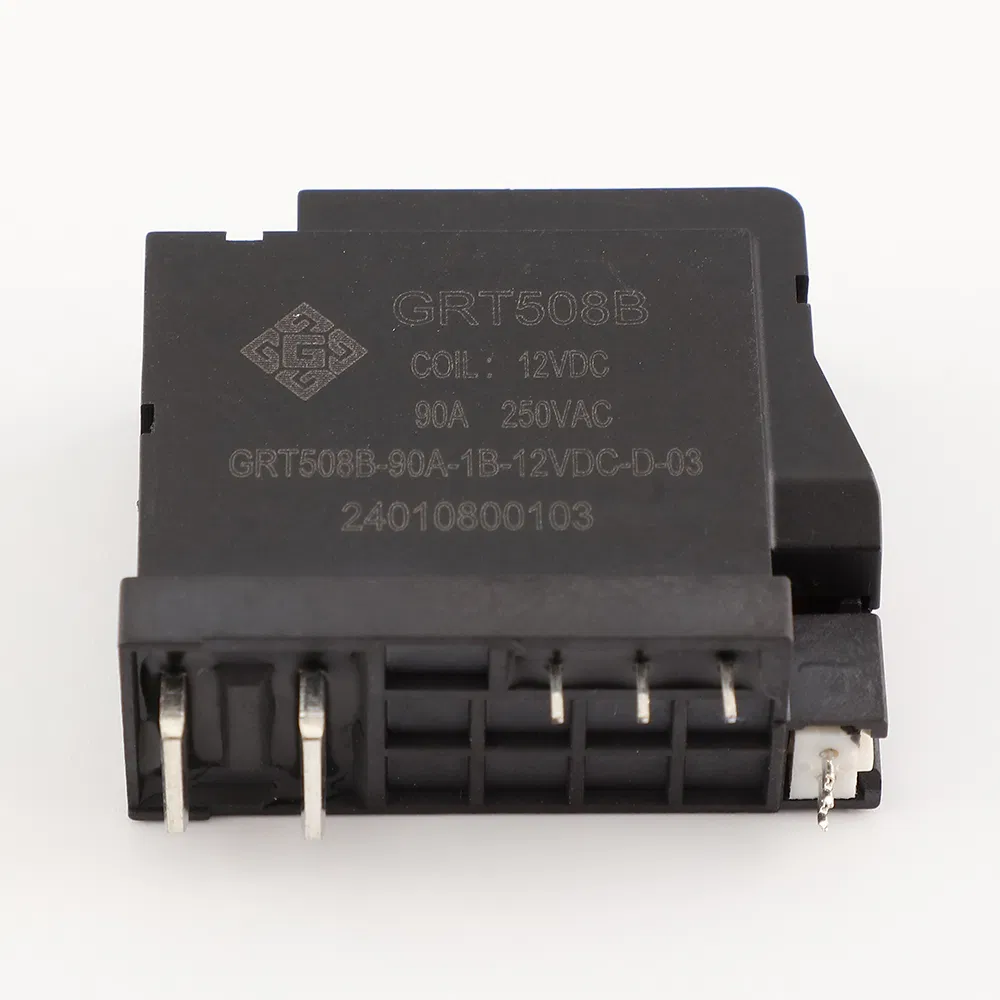
The practical lesson is not that one model is better. The lesson is that evidence is not transferable between models. A buyer who needs 4 kV evidence for GRT508BV should request a model-specific dielectric test report rather than copy the GRT508BG value across. A buyer who needs a PCB mount latching relay for board-level assembly should start from the GRT508BG mounting form. A buyer who needs a two-pole, fast-connection layout should start from GRT508BV, while checking the dielectric and certificate evidence against the project requirement.
Matching relay evidence to a smart meter project
The referenced smart energy metering scenario uses ambient temperatures from −40 °C to +85 °C, relative humidity of 5%–85%RH non-condensing, altitude up to 2000 m, no corrosive gas or explosive dust, PCB soldering or screw mounting, and resistive load. The matched equipment is a smart electricity meter or an energy measurement module. Special requirements include high shock and vibration resistance, long mechanical life and low coil power consumption. The operating mode is pulse-driven switching, maintaining state without continuous power supply.
That scenario explains why a smart meter latching relay and a prepaid meter latching relay are not selected on current rating alone. The relay must hold state without continuous coil power, fit the meter assembly, and tolerate the stated ambient range. A low-power consumption latching relay reduces the control burden on the meter electronics. A high-current latching relay supports the load-switching path. The buyer should map each requirement to a model line and a document line.
A five-column qualification matrix is often enough for the evaluation stage. Column one is the exact model and description. Column two is the meter requirement, such as 250 VAC maximum switching voltage, 90 A resistive load, −40 °C to +85 °C ambient, PCB mounting or fast connection. Column three is the model-level evidence from the datasheet. Column four is the document status: family statement, model datasheet, declaration, test report or certificate. Column five is the acceptance decision and the open action. This keeps the discussion factual and makes missing evidence visible.
Use cases within the metering family include smart meter latching relay functions, prepaid meter disconnect functions and low-power latching relay control. The PCB mount latching relay format is relevant where the meter design uses board-level assembly. The fast-connection format is relevant where the meter design uses a wired assembly. Where the drawing calls for a brass terminal, custom wire harness, copper strap or integrated shunt, that requirement belongs in the drawing and in the qualification matrix as a separate line item. The latching relay model remains the anchor; the assembly options are confirmed against the custom drawing.
What general supplier marketing cannot prove
A general supplier statement cannot prove that GRT508BV has 4 kV dielectric strength. It cannot prove that UC2 covers UC3 or UC4 duty. It cannot prove that a RoHS declaration covers electrical performance. It cannot prove that a 90 A rating applies at every voltage or every load type. It also cannot prove that a family-level claim applies to a custom assembly with a different wire, copper strap or shunt arrangement.
If the meter acceptance criteria include a certificate number or a test report, the catalogue page is only a pointer. The buyer should ask for the document and check that it names the same model, the same standard edition and the same test conditions. A certificate for a related model in the same family is not automatically a certificate for the ordered model.
The strongest limitation in the visible record is the missing 4 kV line for GRT508BV. That is not a defect by itself, because the meter project may not require that value. It is a boundary. Buyers should not fill the gap by assumption, and suppliers should not expect a model-level gap to be covered by a family-level claim. The correct action is a model-specific request. The same rule applies to RoHS and UC2: the assigned record documents both models, but the buyer should still keep the declaration or report in the qualification file.
Market context without shortcutting qualification
MarketsandMarkets projects the global relay market to grow from USD 11.75 billion in 2026 to USD 15.65 billion by 2031. Growth can encourage more suppliers to cite standards and more buyers to compare models. It does not change the evidence rule. A growing market does not make a family-level claim equivalent to a model-level certificate, and it does not remove the need to check the exact meter application.
For meter buyers, the useful market signal is not a ranking of suppliers. It is the direction of documentation. As smart meter and prepaid meter projects continue to require traceable compliance files, the supplier that can present model-level RoHS, UC2 and dielectric evidence in a clear format becomes easier to evaluate. The supplier that relies on general statements creates more work for the buyer and more risk in the qualification file.
Future outlook
The IEC 62055-31:2022 edition is referenced in the verified data set, and RoHS 2 remains in force for the EU market. The practical direction is toward model-level documentation: a datasheet, a declaration, and where required a test report or certificate. Buyers are likely to ask for the standard edition, the model number and the test conditions in the same request. This is a documentation trend rather than a product claim.
The GRT portfolio presents pulse-driven latching relays, current transformers and manganese copper shunts for smart meters and related applications. That portfolio can reduce the number of component suppliers a meter manufacturer needs to coordinate, but it does not remove the need to qualify each part. A custom latching relay assembly should be qualified from the drawing outward: relay model, terminal and connection hardware, integrated shunt if used, and the final acceptance criteria. The qualification file remains the control point.
FAQ
What does IEC 62055-31 UC2 mean for a meter latching relay?
IEC 62055-31 is part of the IEC payment metering system standards and covers particular requirements for static payment meters for active energy in classes 1 and 2. Within that standard, UC2 is one of the utilisation categories defined for latching relays used in payment meters. A UC2 claim should be read as a payment-meter application claim, not as a general relay certificate. Buyers should confirm the claim against the exact model, the standard edition and the certificate or test report.
Does RoHS compliance prove that a latching relay will meet a smart meter electrical rating?
No. RoHS compliance is a material-restriction statement under EU Directive 2011/65/EU. It addresses restricted substances in electrical and electronic equipment. It does not establish contact current, switching voltage, dielectric strength, electrical endurance or IEC 62055-31 UC2 performance. Those points require separate model-level ratings and test evidence.
Is 4 kV dielectric strength listed for both GRT508BG and GRT508BV?
The GRT508BG model entry lists 4 kV dielectric strength between coil and contacts. The assigned qualification record places GRT508BV in the RoHS and IEC 62055-31 UC2 documentation set, but the visible GRT508BV model-level specification used for this review does not repeat the 4 kV dielectric claim. A buyer who requires 4 kV for GRT508BV should ask for a model-specific dielectric test report or declaration.
Which operating conditions should be checked when selecting a meter latching relay?
Check the project ambient temperature, humidity, altitude, mounting method and load type. The referenced smart energy metering scenario uses −40 °C to +85 °C, 5%–85%RH non-condensing, altitude up to 2000 m, no corrosive gas or explosive dust, PCB soldering or screw mounting, and resistive load. It also notes high shock and vibration resistance, long mechanical life and low coil power consumption as special requirements. The relay model should be matched to those conditions, not only to its current rating.
What documents should a buyer request to verify model-specific compliance?
Request a model-level datasheet, a RoHS declaration or test report for the exact model, an IEC 62055-31 UC2 certificate or test report where the meter project requires it, and dielectric strength evidence if the project specifies a coil-to-contact withstand value. The document should name the model, the standard edition and the test conditions. A family-level catalogue statement can support a shortlist, but it should not replace the model-level file.
The qualification file is stronger when it is specific. GRT508BG and GRT508BV show why: the same supplier can document different current ratings, different mounting forms and different dielectric evidence. Reading the model line, the standard line and the test line separately is the difference between a supplier claim and a meter qualification record.
For readers who need the complete product catalogue, the 2025 brochure is available for download: Catalogs of Great-relay [2025].
Есть вопросы или нужны дополнительные детали?
Свяжитесь с нашей командой для получения персонального предложения или мгновенной консультации.
Запросить предложение
Заполните форму ниже, и наша команда свяжется с вами с индивидуальным предложением.
Прямой чат WhatsApp
Предпочитаете общаться в реальном времени? Напишите нам в WhatsApp для мгновенной помощи и быстрых ответов.
- Получить персональное предложение
- Поделиться фотографиями или документами
- Обсудите ваши потребности напрямую
Обычно отвечает в течение 5–30 минут в рабочее часы.