
Mica Plate Insulation: Rigid, Flexible and Glossy Formats
A mica plate — also supplied as a mica sheet — is a laminate of mica paper and a heat-cured silicone binder, pressed into flat sheet form and used as a high-temperature electrical insulation barrier. It is one of several mica insulation formats, alongside mica tape, mica roll, mica tube and mica parts, but it is the format most often specified where a flat, self-supporting barrier has to hold a fixed geometry at elevated temperature. For buyers at the discovery and research stage, the practical question is not whether mica insulates. It is which plate format, mica type and thickness class matches a defined temperature, dielectric and mechanical duty — and what evidence should accompany the quotation.
What “Mica Plate” Covers in the Supply Chain
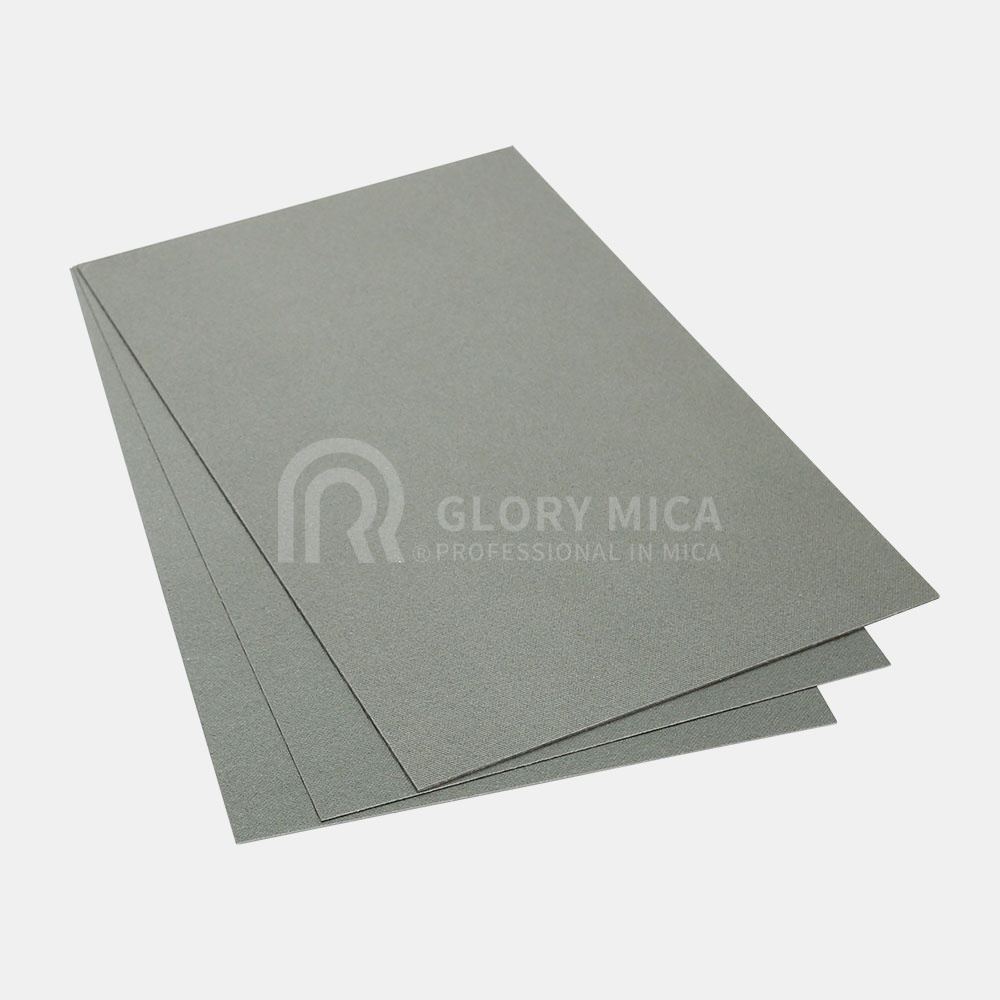
The term describes a family rather than a single article. Mica paper — muscovite or phlogopite — is impregnated with a silicone binder and pressed at high temperature into plate laminates. The result is a mineral-based sheet that is electrically insulating, flame resistant and dimensionally stable, and that can be machined afterward.
Within that family, commercial catalogues usually separate four formats:
- Rigid mica plate — the structural default, with a mesh or matte surface, used where the sheet must hold shape under coil or element pressure.
- Glossy mica plate — the same laminate class finished with a smoother surface, typically for visible or contact-sensitive parts in appliances.
- Flexible mica plate — a lower-density laminate that remains bendable at room temperature and can be folded or wrapped around curved hardware.
- Thick mica plate — rigid laminates above roughly 5 mm, used as bulk barriers and spacers in heating and metallurgy equipment.
Two neighbouring categories are frequently confused with plate. Mica tape and mica roll are continuous, thin and flexible, and are consumed by winding equipment; mica tube is roll-formed into a cylinder. Plate is the flat stock from which mica parts — washers, spacers, punched windows, thermal-protection shapes — are cut or die-stamped. When a specification calls for a mica insulator in a brake resistor or switchgear assembly, the starting material is often a plate.
The Buyer Problem: Flat Barriers in Hot, Tight Assemblies
Most insulation failures in heating products are not caused by a lack of dielectric material. They are caused by a barrier that could not stay in place. Inside a toaster, a fan heater, a cylindrical resistance heater or a battery module, the insulation has to survive three conditions at once: continuous heat, a mechanical load from the element or coil, and a confined space that offers no room for a thicker part.
That combination is where plate format earns its place. A tape wraps; a plate stands. A plate can be punched to a window, slotted for a terminal, or pressed between an element and a housing, and it keeps that geometry through thermal cycling. For procurement teams, this shifts the specification exercise from “buy mica” to “define a temperature class, a dielectric margin, a stiffness and a tolerance” — and then check whether the supplier can document all four.
The Glory Mica Mica Plate Range
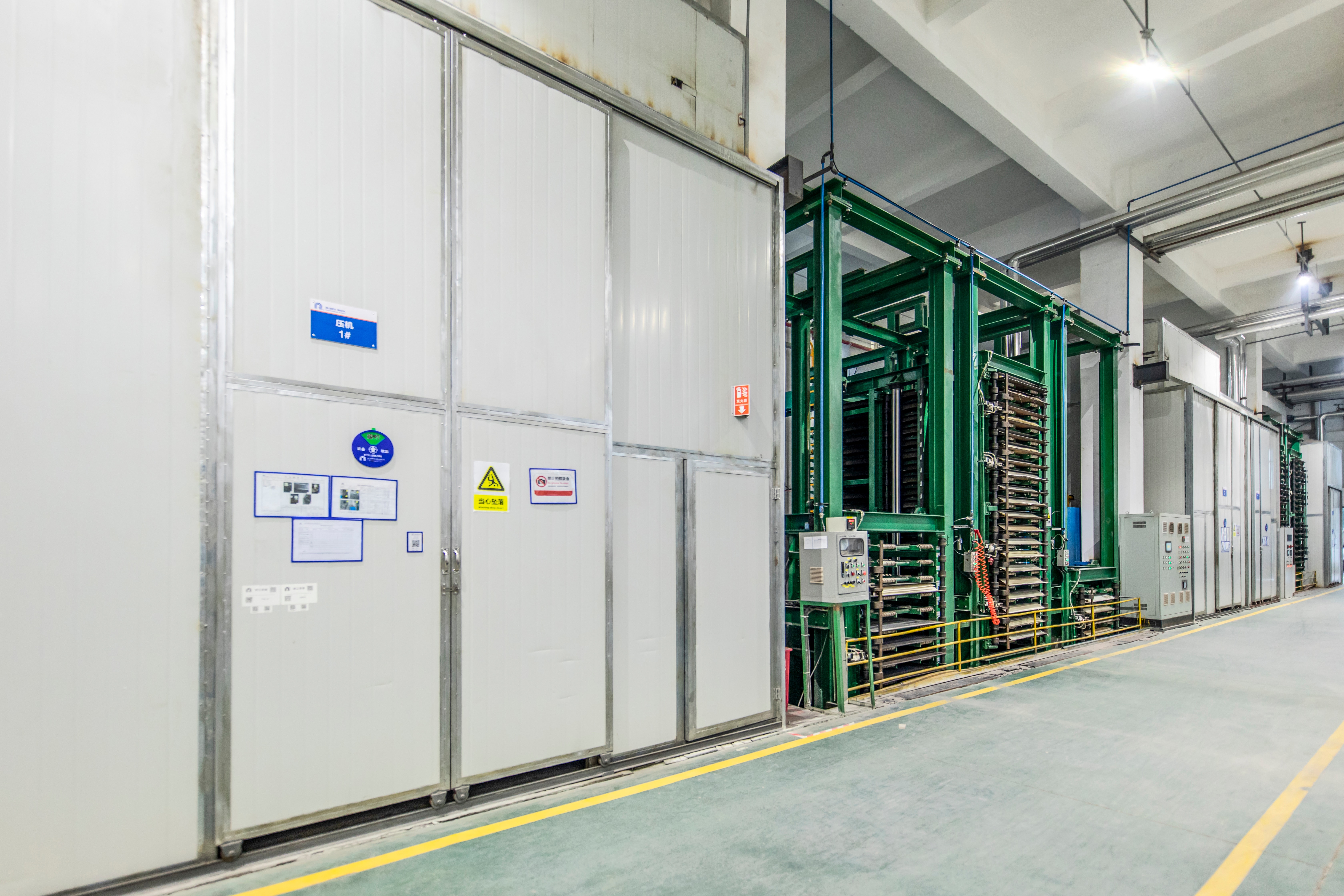
Zhejiang Rongtai Electric Material Co., Ltd., trading under the brand Glory Mica, is a China-based manufacturer of high-temperature-resistant mica insulation materials. The company was established in 1998 and operates three plants in Zhejiang Province and Hunan Province with a total factory area of approximately 404,000 m²; company-reported total capacity is about 88,000 tons per year. Its portfolio spans mica tape, mica plate and mica sheet, mica tube, mica roll, mica paper, mica parts, mica insulator, etched foil mica heater elements and epoxy glass laminate.
The mica plate and mica sheet family is organised as the R-5660 series, with eight grades across the four formats described above. The suffix indicates the mica paper: grades ending in 1 use muscovite, grades ending in 3 use phlogopite.
| Grade | Format | Mica paper | Mica / binder | Density (g/cm³) | Continuous / intermittent service | Dielectric strength | Flexural strength | Flame |
|---|---|---|---|---|---|---|---|---|
| R-5660-H1 | Rigid | Muscovite | ≈92% / ≈8% | 1.8–2.45 | 500 °C / 800 °C | >20 kV/mm | >120 MPa | UL94 V-0 |
| R-5660-H3 | Rigid | Phlogopite | ≈92% / ≈8% | 1.8–2.45 | 700 °C / 1000 °C | >20 kV/mm | >120 MPa | UL94 V-0 |
| R-5660-G1 | Glossy | Muscovite | ≈92% / ≈8% | 1.8–2.45 | 500 °C / 800 °C | >20 kV/mm | >120 MPa | UL94 V-0 |
| R-5660-G3 | Glossy | Phlogopite | ≈92% / ≈8% | 1.8–2.45 | 700 °C / 1000 °C | >20 kV/mm | >120 MPa | UL94 V-0 |
| R-5660-S1 | Flexible | Muscovite | ≈90% / ≈10% | ≈1.9 | 500 °C / 800 °C | >20 kV/mm | — | UL94 V-0 |
| R-5660-S3 | Flexible | Phlogopite | ≈90% / ≈10% | ≈1.9 | 700 °C / 1000 °C | >20 kV/mm | — | UL94 V-0 |
| R-5660-T1 | Thick (>5 mm) | Muscovite | ≈88% / ≈12% | 2.35 | 500 °C / 800 °C | >20 kV/mm | — | UL94 V-0 |
| R-5660-T3 | Thick (>5 mm) | Phlogopite | ≈88% / ≈12% | 2.35 | 700 °C / 1000 °C | >20 kV/mm | — | UL94 V-0 |
Figures above are the manufacturer’s published product data for the listed grades. Water absorption is stated below 1% for the H, G and S grades and below 2% for R-5660-T3; the thick grades share a nominal density of 2.35 g/cm³. Independent laboratory verification of these values is not included in the public record for this category and should be requested as part of supplier qualification.
Reading the Technical Data Correctly
Four parameters decide whether a mica plate fits an application. They are not interchangeable, and a quotation that lists only one of them is incomplete.
Mica type sets the temperature ceiling
Muscovite plate in this range is rated for 500 °C continuous and 800 °C intermittent service. Phlogopite plate is rated for 700 °C continuous and 1000 °C intermittent service. The gap is not cosmetic: it determines whether a part can sit against a resistance element, or only near it. Where temperature exposure is intermittent and short — a fault event rather than a duty cycle — the intermittent rating is the relevant figure, but it assumes the part is not also carrying a continuous mechanical load at that moment.
Mica-to-binder ratio trades dielectric margin against mechanical integrity
Across the series, mica content falls from roughly 92% in the rigid and glossy grades to 90% in the flexible grades and 88% in the thick grades, while binder content rises correspondingly. The pattern is consistent with the physics: more mineral content supports dielectric and thermal performance, more binder supports cohesion and handling. The flexible grades accept a higher binder fraction because bendability is the design intent; the thick grades do so because a 5 mm-plus laminate needs internal cohesion across a larger cross-section.
Dielectric strength has a temperature derating
The published room-temperature dielectric strength is above 20 kV/mm for all eight grades. The manufacturer separately reports 15 kV/mm voltage breakdown resistance at 500–1000 °C operating ambient temperature. Design calculations should use the hot figure, not the headline figure, whenever the barrier sits inside the heated zone. Insulation resistance shows the same pattern: 10¹⁷ Ω·cm at 23 °C falling to 10¹² Ω·cm at 500 °C on the rigid, glossy and thick grades.
Stiffness is a specification, not a by-product
Rigid and glossy grades are listed with flexural strength above 120 MPa, which is what allows a punched plate to bridge a cavity without sagging. Flexible grades carry no flexural figure because the intended behaviour is the opposite: the R-5660-S series is described as flexible and elastic at room temperature, foldable repeatedly and curlable into shapes under load without breaking. Thick grades are rigid laminates above 5 mm and are specified for bulk and spacing rather than for bending.
Flame behaviour is stated uniformly: UL94 V-0 across the series, with a smoking test result below 4 seconds on the H, G and S grades. Heat loss is published at below 1% at 500 °C and below 2% at 700 °C for those grades — a useful indicator of how much binder volatilises in service.
Where Mica Plate Is Actually Used
Household and small appliances
The most common applications are clothes irons, hair dryers, toasters, kettles, cooking appliances, microwave ovens and air heaters. Here the plate acts as a flat barrier between a heating element and a polymer housing, or as the carrier on which a heating track is mounted. Glossy grades are specified for higher-end appliance builds where surface finish and contact consistency matter.
Industrial heating and electrical equipment
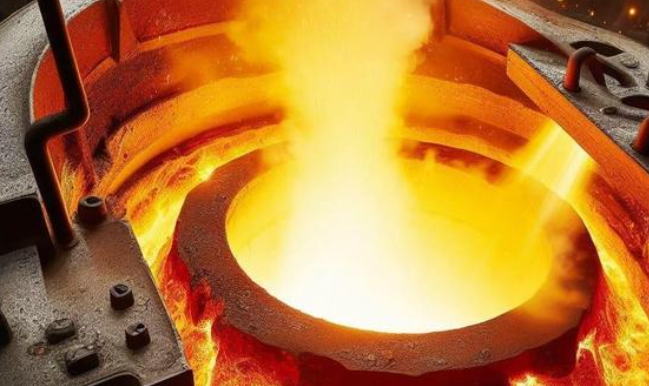
Wound heater elements and cylindrical resistance heaters use plate as an interlayer and end barrier. Circuit breakers and transformers use it for arc and thermal isolation; generators and magnetic coils use it in coil insulation. In steel and metallurgy, thick phlogopite plate is used around intermediate frequency furnaces and arc furnaces, and in electric sterilised cabinets and chemical-engineering equipment.
Battery modules, energy storage and rail
In new energy vehicles, energy storage cabinets and robotics, mica sheet is used as a fire barrier, gasket and separator inside battery power modules. In rail transport, mica insulator components such as R-M259 and R-M52 are specified for high-speed train brake resistors, with variants offering one or two tapped holes or threaded rods. Both are downstream conversions of plate and laminate stock rather than plate sold as sheet.
Converted parts and heater cores
Mica parts are cut or die-stamped from mica plate or mica sheet to customer drawings, with shape, size and tolerance defined by the customer rather than by a catalogue. Typical uses include home appliances, electromagnets and micro-sensitive control gear. Thermal-protection parts are built from phlogopite mica paper, mica tube and mica roll into 2D or 3D assemblies, with breakdown voltage stated above 15 kV/mm and compliance with RoHS and REACH. Etched foil mica heaters take the logic one step further: a metal foil resistance element is sandwiched between two mica sheets, with surface temperatures of 50–330 °C, voltage from AC 5 V to 380 V and power from 5 W to 3000 W.
Market Signals That Affect Plate Specification
Two independent data points frame the demand picture. Statifacts valued the global mica insulation material market at USD 1.811 billion in 2024 and projects a 6.4% compound annual growth rate over 2024–2034. IDTechEx, separately, forecasts that the EV battery fire protection market will exceed USD 10 billion by 2037. Growth of that kind does not simply increase volume; it changes what buyers ask for.
The regulatory driver is more specific. China’s GB 38031-2025, issued by the Standardization Administration of China and effective from 1 July 2026, requires two hours (120 minutes) of thermal runaway protection under test conditions for traction batteries. A requirement expressed in minutes rather than millimetres pushes the specification conversation toward verifiable barrier behaviour: which material, at which thickness, tested how, with what report.
For mica plate suppliers, that has two consequences. First, plate competes less on price per kilogram and more on documented performance at temperature. Second, the documentation itself becomes a procurement criterion — a supplier that cannot trace a grade to a test method is harder to qualify, regardless of the data sheet.
Comparison with Traditional Insulation Options
Mica plate is rarely the only candidate in a design review. The table below compares it with materials that appear in the same assemblies, using qualitative distinctions rather than invented figures.
| Option | Thermal basis | Behaviour at temperature | Mechanical role | Typical constraint |
|---|---|---|---|---|
| Mica plate (rigid / glossy) | Mineral laminate with silicone binder; 500–700 °C continuous by mica type | Retains dielectric function hot, with published derating | Self-supporting flat barrier; punchable, machinable | Rigid; cannot conform to curved surfaces |
| Flexible mica plate | Same mineral system, higher binder fraction | Comparable thermal class, lower density | Bendable, foldable, wrappable | Lower stiffness; not a structural barrier |
| Glass-bonded mica | Glass binder rather than silicone; test methods addressed by ASTM D1039-16(2022) | Depends on glass system and part design | Moulded or machined shapes | Process and tooling differ from pressed sheet |
| Technical ceramics | Inorganic, generally higher temperature capability | Dimensionally stable when hot | Very stiff, brittle | Brittleness and cost in large flat areas |
| Epoxy glass laminate | Resin-limited thermal class | Resin system governs upper temperature | Strong structural board | Not a high-temperature barrier at mica-class temperatures |
| Silicone sheet | Elastomer-based | Flexible over a narrower band | Compressible gasket | Lower mechanical support and creep resistance |
Where mica plate stops
Honest specification means naming the boundaries. Four matter most in practice.
- The temperature ceiling is material-dependent, not universal. A muscovite grade rated to 500 °C continuous is not a substitute for a phlogopite grade rated to 700 °C, and neither should be quoted against a synthetic-mica requirement without review.
- Dielectric performance falls with temperature. The difference between above 20 kV/mm cold and 15 kV/mm at 500–1000 °C is the difference between a comfortable margin and an inadequate one.
- Rigid plate does not bend. Curved geometries need flexible plate, mica tape or mica roll. Thick plate above 5 mm is explicitly a rigid laminate and should not be treated as formable.
- Public third-party test data is thin. The available verification record for this product category contains no independent dielectric, thermal or fire-test results for mica plate, and the manufacturer’s certification statements — ISO9001, ISO14001, ISO14005, IATF16949, UL, FDA, RoHS and REACH — are published without certificate numbers, issuing bodies or product scope. They are a starting point for qualification, not a substitute for it.
A Procurement Checklist for Mica Plate
| Decision | What to fix in the specification | What to request from the supplier |
|---|---|---|
| Temperature class | Continuous and intermittent service temperature, plus fault-event exposure | Grade data sheet showing both ratings for the exact grade offered |
| Mica type | Muscovite or phlogopite, stated explicitly | Material declaration and mica content |
| Dielectric duty | Working voltage, clearance, and the hot-side dielectric figure used in design | Dielectric strength at room temperature and at operating temperature |
| Format and stiffness | Rigid, glossy, flexible or thick; thickness and tolerance | Flexural data for rigid grades; bend radius guidance for flexible grades |
| Flame and smoke | UL94 class and any smoke requirement | Flame rating and smoking test result for the grade |
| Conversion | Drawing, hole pattern, burr and flatness limits | Die-stamping or machining capability statement and first-article report |
| Compliance file | Market and application-specific requirements | Certificate numbers, issuing bodies, validity dates, product scope, RoHS and REACH declarations |
| Validation | Sample quantity and test plan | Coupon samples for in-house electrical and thermal testing before tooling |
Future Outlook
Three developments are likely to shape mica plate specification over the next several years. The first is documentation pressure: as battery safety rules move from design guidance to enforceable test requirements, the value of a plate grade will increasingly be tied to the report behind it rather than to the data sheet headline. The second is format specialisation — rigid, glossy, flexible and thick grades are already separated within a single series, and that separation is likely to deepen as appliance and battery assemblies demand tighter tolerances on thinner stock. The third is integration: a supplier that also converts plate into mica parts, thermal-protection assemblies and etched foil mica heater cores reduces the number of qualification files a buyer has to maintain.
What is unlikely to change is the underlying material logic. Mica remains one of the few mineral insulators that combines dielectric strength, flame resistance and dimensional stability in a machinable sheet. The competitive difference will sit in grading, traceability and the willingness to publish limits.
Frequently Asked Questions
What is a mica plate, and how does it differ from mica tape or mica roll?
A mica plate, or mica sheet, is a pressed flat laminate of mica paper and silicone binder, supplied as rigid, glossy, flexible or thick stock and used as a self-supporting insulation barrier or as the base material for punched parts. Mica tape and mica roll are thin, continuous and flexible, and are applied by winding equipment; mica tube is roll-formed into a cylinder. The formats serve different geometries rather than different industries.
Muscovite or phlogopite mica plate — which should be specified?
The choice follows the temperature profile. Muscovite plate in the Glory Mica R-5660 range is rated for 500 °C continuous and 800 °C intermittent service; the phlogopite equivalents are rated for 700 °C continuous and 1000 °C intermittent service. Phlogopite is the appropriate default where the barrier sits close to a heating element or in a fault-exposed battery assembly; muscovite is commonly sufficient for appliance and general electrical insulation where the thermal margin is wider.
How should mica insulation be selected by temperature rating and application?
Selection starts from the maximum operating temperature, then adds fire and thermal-shielding needs, mechanical strength and dielectric requirements. For high-temperature or fire-exposed duties, synthetic or calcined mica with laminated or stacked structures is generally preferred; for standard heating and appliance duties, a single pressed plate grade is usually adequate. The exact figures for a given grade should be taken from the product data sheet and confirmed by sample testing rather than assumed from the material family.
Can mica plate be cut or stamped into custom shapes?
Yes. Mica parts are cut or die-stamped from mica plate or mica sheet according to customer drawings, and shape, size and tolerance are defined by the customer rather than by a fixed catalogue specification. Typical converted parts include washers, laminates, spacers and thermal-protection shapes used in home appliances, electromagnets and micro-sensitive control gear.
What documentation should accompany a mica plate order?
A buyer should request the grade-specific data sheet, certificate numbers with issuing bodies and validity dates, the product scope covered by each certificate, and RoHS and REACH declarations where relevant. Where a test method is contractually required, its applicability should be checked: ASTM D1039-16(2022), for example, addresses test methods for glass-bonded mica used as electrical insulation, which is a different material system from silicone-bonded mica plate. First-article inspection reports and coupon samples support validation before tooling.
What are the main limitations of mica plate compared with flexible mica?
Rigid and glossy plate hold shape but do not conform to curved surfaces, and thick plate above 5 mm is a rigid laminate that should not be formed. Flexible mica plate trades stiffness for bendability and can be folded or wrapped, but it does not provide the same structural support. Dielectric performance also falls at elevated temperature in both formats, so design margins should be calculated on the hot figure rather than the room-temperature value.
Есть вопросы или нужны дополнительные детали?
Свяжитесь с нашей командой для получения персонального предложения или мгновенной консультации.
Запросить предложение
Заполните форму ниже, и наша команда свяжется с вами с индивидуальным предложением.
Прямой чат WhatsApp
Предпочитаете общаться в реальном времени? Напишите нам в WhatsApp для мгновенной помощи и быстрых ответов.
- Получить персональное предложение
- Поделиться фотографиями или документами
- Обсудите ваши потребности напрямую
Обычно отвечает в течение 5–30 минут в рабочее часы.