
Micro Inverters in Focus: How Small-Scale Solar Inverters Are Reshaping Residential PV
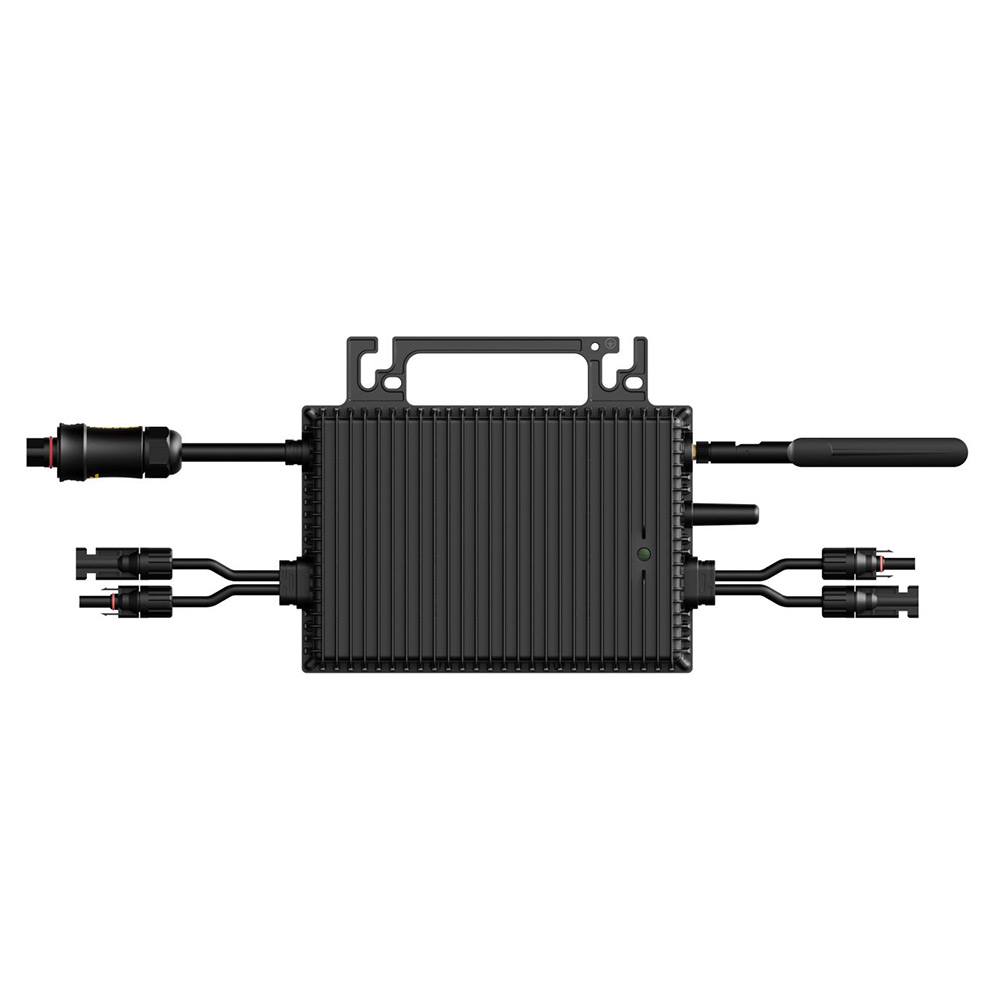
The global solar inverter market reached USD 10.7 billion in 2024, driven by the rapid expansion of distributed photovoltaic systems. Within this landscape, micro inverters have emerged as a specialized solution for installations where individual panel optimization, safety, and system flexibility are prioritized over centralized power conversion. Guangdong Yeyanghong Energy Technology Co., Ltd., a high-tech enterprise founded in 2006 that integrates R&D, manufacturing, sales, and service, offers a Micro-Inverter series designed for standalone solar systems and renewable energy applications in the power grid and photovoltaic industries.
Problem & Opportunity
Traditional string inverters connect multiple solar panels in series, meaning the performance of the entire string is limited by the weakest panel — a phenomenon known as partial shading loss. As residential rooftops grow more complex — with varying orientations, shading from chimneys or trees — the need for per-panel optimization has become urgent. Micro inverters, which convert DC to AC at the individual panel level, offer a solution: they isolate each module’s output, maximize energy harvest, and simplify system design by eliminating high-voltage DC wiring.
Brand Solution: Yeyanghong Energy Micro-Inverter Series
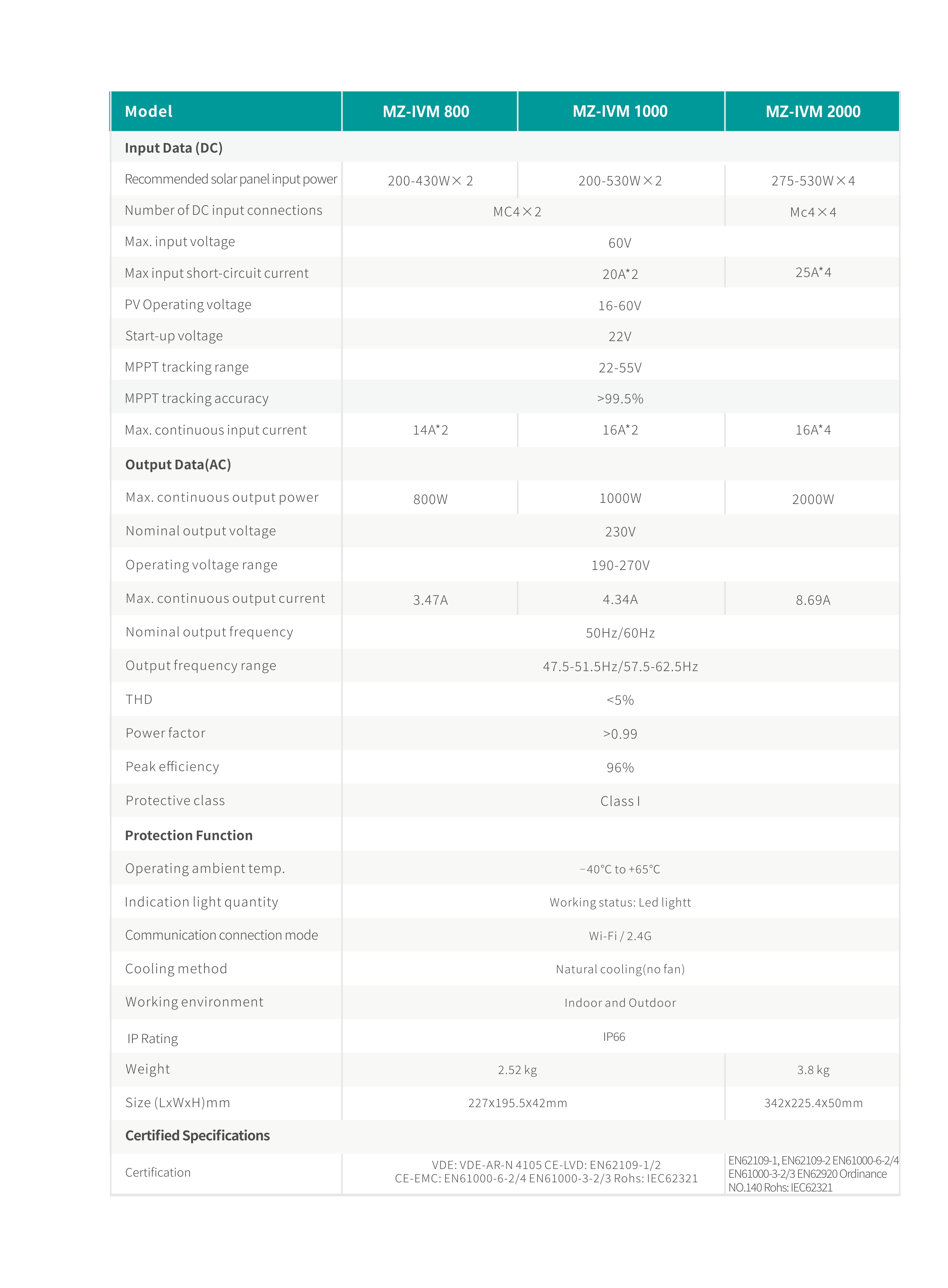
Yeyanghong Energy’s Micro-Inverter series, available in 800W, 1000W, and 2000W models, is an inverter classified as a micro inverter. It is constructed from aluminium alloy and supports input voltage options of 12V, 24V, or 48V. The rated output voltage complies with EU standard 220V~230V at a grid frequency of 50Hz. Protection degree options include IP21, IP55, IP65, IP66, and IP67, making the unit suitable for both indoor and outdoor deployment. The product is intended for the Photovoltaic New Energy Industry and Power Grid Industry, with typical use in standalone solar systems and renewable energy installations.
Technical Explanation: Per-Panel MPPT and Safety
Each micro inverter in this series integrates Maximum Power Point Tracking (MPPT) at the module level, ensuring that even under partial shading or mismatched panel conditions, every panel operates at its optimal power point. The input power ratings of 800W, 1000W, and 2000W cover a range of module sizes and configurations. The aluminium alloy enclosure provides corrosion resistance and thermal management, while the IP67 protection rating enables direct outdoor mounting without additional enclosures. The design eliminates high-voltage DC strings, significantly reducing arc-flash risks for installers and homeowners — a key safety advantage over traditional string inverter architectures.
Application & Use-Case Scenarios
Yeyanghong Energy's Micro-Inverter is specifically designed for outdoor camping and long journey environments, as well as for permanent residential and small commercial rooftop installations. In a camping scenario, the unit can be paired with portable solar panels to provide 220V~230V AC power for appliances, lights, and mobile device charging in off-grid locations. For villa roof solar PV systems in EU markets, the micro inverter’s plug-and-play nature simplifies installation and allows incremental system expansion — owners can start with a few panels and add more later without upgrading the central inverter. The product is also suitable for applications in agriculture, construction, household, military, and new energy transportation industries, as listed in the company’s product documentation.
Market Trend Analysis
According to Grand View Research, the global solar hybrid inverter market reached USD 10.7 billion in 2024, with on-grid hybrid inverters holding the largest segment share at 59% of revenue (Precedence Research, 2024). While micro inverters represent a smaller share of the overall inverter market, they are gaining traction in residential and small commercial segments where per-panel optimization is prioritized. China alone accounted for over 330 GW of inverter shipments in 2024 (Wood Mackenzie), underscoring the manufacturing scale available to suppliers like Yeyanghong Energy. The company serves major markets including the USA, EU, Southeast Asia, Middle East, Australia, Africa, South America, and Central America, with export business accounting for 90% of total sales.
Comparison with Traditional Solutions
Compared to string inverters, micro inverters offer superior energy harvest under partial shading, simplified design (no string sizing calculations), and enhanced safety due to low-voltage DC wiring. The main trade-off is higher upfront cost per watt and slightly lower peak efficiency at the AC conversion stage, though the overall system yield often compensates over the lifetime. Compared to hybrid inverters that integrate battery management, micro inverters typically require separate energy storage hardware if backup power is desired — a limitation that buyers should evaluate against their specific needs for grid independence or time-of-use rate management.
Future Outlook
As solar module prices continue to fall and rooftop installations become more design-diverse, the addressable market for micro inverters is expected to expand. Advances in gallium nitride (GaN) semiconductor technology may further reduce the size and increase the efficiency of these devices, enabling higher per-panel power ratings. Yeyanghong Energy, with its 400 employees and a factory area of over 30,000 square meters producing up to 20 million sets of controllers annually, is positioned to scale production of its Micro-Inverter series alongside its broader portfolio of On-Grid Inverters, Hybrid Inverters, and Energy Storage Systems.
Frequently Asked Questions
What is a micro inverter?
A micro inverter is a small DC-to-AC converter that is attached to each individual solar panel rather than being a single, central inverter for the entire array. It converts DC electricity from the panel into AC at the module level, enabling per-panel MPPT and enhancing overall system performance under shading or mismatched conditions.
What are the key specifications of Yeyanghong Energy’s Micro-Inverter series?
The Yeyanghong Micro-Inverter is available in 800W, 1000W, and 2000W input power ratings, with input voltages of 12V, 24V, or 48V. Output voltage is EU standard 220V~230V at 50Hz. The enclosure is made of aluminium alloy, and protection degrees range from IP21 to IP67. The product is designed for the Photovoltaic New Energy Industry and Power Grid Industry.
In what applications can Yeyanghong’s micro inverter be used?
Typical applications include outdoor camping and long journey environments, residential rooftop solar systems, and standalone renewable energy installations. The product is also suitable for industries such as agriculture, construction, household, military, new energy transportation, and telecommunications, as listed in the company’s product documentation.
How does a micro inverter compare to a hybrid inverter?
Micro inverters optimize power at the individual panel level and eliminate high-voltage DC wiring, offering safety and energy harvest advantages under shading. Hybrid inverters combine solar inverter and battery charger functions, enabling energy storage integration and off-grid/backup capability. The choice depends on whether per-panel optimization or energy storage is the priority. A micro inverter system can be paired with a separate battery-based inverter if storage is needed.
Is Yeyanghong Energy an experienced manufacturer?
Guangdong Yeyanghong Energy Technology Co., Ltd., established in 2006, is a high-tech enterprise integrating R&D, manufacturing, sales, and service. The company employs approximately 400 staff, occupies a factory area of over 30,000 square meters, and has an annual production capacity of 20 million sets of controllers. Its R&D team consists of 15 engineers, and the company exports to the USA, EU, Southeast Asia, Middle East, Australia, Africa, South America, and Central America.
For a detailed overview of Yeyanghong Energy’s product portfolio and company capabilities, download the company brochure: https://cdn.socialarks.com/sbsp/24594/common/2026/0514/6a058aca5d291.pdf
Есть вопросы или нужны дополнительные детали?
Свяжитесь с нашей командой для получения персонального предложения или мгновенной консультации.
Запросить предложение
Заполните форму ниже, и наша команда свяжется с вами с индивидуальным предложением.
Прямой чат WhatsApp
Предпочитаете общаться в реальном времени? Напишите нам в WhatsApp для мгновенной помощи и быстрых ответов.
- Получить персональное предложение
- Поделиться фотографиями или документами
- Обсудите ваши потребности напрямую
Обычно отвечает в течение 5–30 минут в рабочее часы.