
Microfiber Cleaning Products: A Buyer's Technical Primer
"Microfiber" is one of the most common material claims on cleaning products today, yet specification sheets vary so widely that procurement teams often struggle to compare options. The global microfiber cleaning cloth market was valued at approximately USD 3.8 billion in 2025 and is projected to reach USD 27.5 billion by 2034, according to Dataintelo. Household use alone is expected to account for roughly 40% of demand in 2025. This primer defines what actually makes a product a microfiber cleaning product, explains the technical variables that separate effective products from ordinary ones, and outlines what buyers should verify before committing to a supplier.
What defines a microfiber cleaning product?
A microfiber cleaning product is made from ultra-fine synthetic fibers, most commonly a blend of polyester and polyamide. The fibers are split into microscopic filaments that create a much larger surface area than natural fibers such as cotton. That surface area is what gives microfiber its cleaning characteristics: it traps dust, absorbs water, and lifts grease without the need for aggressive chemicals.
In commercial production, the most common material ratios are 85% polyester combined with 15% polyamide and 80% polyester combined with 20% polyamide. For example, the universal household cloth model MJ-001 from Pa Tin Da uses an 85/15 ratio with a GSM range of 180–450, while many automotive and terry products in the same portfolio use an 80/20 blend. Both ratios are engineered to balance water absorption, quick drying, and durability.
The product landscape: categories buyers encounter
Microfiber cleaning products are not a single SKU category. Buyers commonly evaluate six distinct groups, each with different construction requirements and performance expectations.
| Category | Typical Models | Material | Key Performance Traits | Common End-Use |
|---|---|---|---|---|
| Universal household cloths | MJ-001, MJ-002, MD-020, MS-075 | 85/15 or 80/20 polyester/polyamide | Absorbs up to 7x own weight; lint-free; double-stitched edge | Kitchen, furniture, bathroom, general sanitation |
| Kitchen and dish cloths | MJ-016, MW-003 | Microfiber + PET; bamboo fiber blend | Dual-side scrubbing; antibacterial option; odorless | Tableware, cookware, countertop cleaning |
| Glass, mirror and polishing cloths | MJ-013, MW-002, MJ-066, CG series | 80/20 polyester/polyamide; acrylic or polyester plush blends | Streak-free, lint-free, scratch-free; 650–680 GSM for washer sleeves | Windows, mirrors, wine glasses, screens, stainless steel |
| Automotive care products | MJ-021, MJ-022, MJ-023, MJ-030, MM-067, MM-069, MM-070, MM-072 | 80/20 polyester/polyamide; chenille; natural rubber clay compound | Scratch-safe for paint; absorbs up to 7x own weight; water-spot resistant | Car wash chains, auto detailing centers, household vehicle care |
| Commercial floor care | MP-006, MP-014, MP-015, MP-020, MT-003 | Microfiber + nylon; microfiber + PET; cotton/polyester blend | Color-coded classification; reusable over 300 wash cycles; wet/dry dual use | Hotels, hospitals, restaurants, commercial property maintenance |
| Personal care, pet and sports towels | MST-001, MST-002, GFM-002, PET-001, MJ-070 | Suede microfiber; cooling fiber; coral fleece | Quick-dry; instant cooling; high color fastness; 7x absorption | Gym, outdoor sports, beauty salons, pet grooming |
This range matters for sourcing decisions. A buyer managing both hotel housekeeping and a car wash supply chain may prefer a single manufacturer that can deliver universal cloths, commercial mop pads, and automotive towels under one quality system, rather than qualifying multiple suppliers across the same material family.
Technical variables that determine real performance
Two products can both be labeled "microfiber" and perform very differently. The differences come from fiber blend, fabric weight, construction, and edge finishing.
Fabric weight (GSM)
GSM, or grams per square meter, is the most direct indicator of product density. In the Pa Tin Da portfolio, GSM ranges from 180–450 for lightweight household cloths (MJ-001) to 500–1000 GSM for high-density automotive detailing cloths such as MJ-023 and MJ-030. Lightweight cloths are suitable for dusting and surface wiping; heavyweight cloths are needed for water absorption, drying, and scratch-safe polishing on painted surfaces.
Construction and weave
Warp-knitted terry surfaces appear across universal household cloths. Twisted fiber loop technology, used in MJ-023 and MJ-030, creates a dense pile that resists shedding and improves water pickup. Waffle honeycomb weaves, found in MS-074 and MS-075, increase airflow for faster drying. Chenille plush surfaces on automotive mitts produce rich foam and gentle contact with paintwork.
Edge treatment
Edge finishing is one of the most overlooked durability factors. Ultrasonic cut edges, as on MJ-022, prevent loose threads without bulky seams. High-density locking edges with 10–12 stitches per inch, seen on MD-020 and MJ-066, protect the cloth from fraying during repeated washing. Piped binding edges on twisted-loop automotive cloths add another layer of anti-shedding protection.
Absorption benchmark
Across the Pa Tin Da catalog, the stated absorption standard is up to 7 times the product's own weight in liquid. This benchmark appears consistently from household cloths to automotive towels to pet towels, giving buyers a uniform reference point when comparing products within a range.
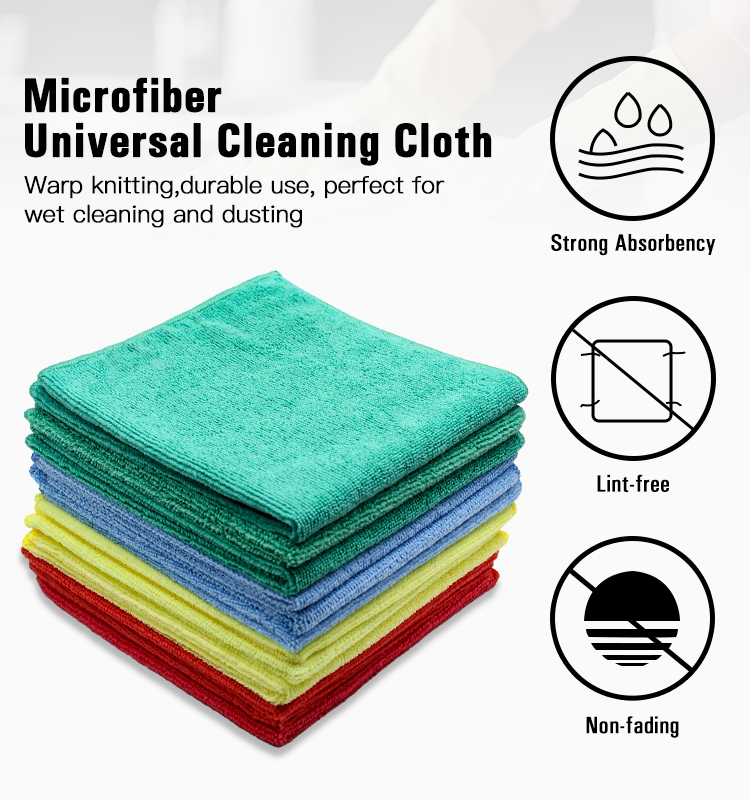
Universal microfiber cleaning cloths are the most common entry point for household and hospitality buyers. Model MJ-001 is available from 180 to 450 GSM with customizable logo and size.
Application scenarios and selection logic
The right product depends on the working condition, not just the surface being cleaned. Pa Tin Da's product specifications describe several distinct operating environments: indoor enclosed spaces at normal room temperature, frequent water immersion, repeated wet-dry cycles, and high-frequency friction. These conditions apply across both household cleaning and auto care projects.
Household cleaning
For general dusting and surface wiping, a 180–320 GSM universal cloth is usually sufficient. For kitchen work involving grease and food residue, double-layer cloths such as MJ-016 combine a microfiber side for absorption with a PET mesh side for scouring. Bamboo fiber cloth MW-003 adds antibacterial properties for users who prefer a natural fiber component in the blend.
Automotive care
Auto detailing requires products that are scratch-safe for paint and glass while managing high water volume. High-GSM twisted-loop cloths (500–1000 GSM) provide water-spot resistance. Chenille mitts (MM-069, MM-070) generate foam for exterior washing. The Microfiber Clay Towel MM-072 uses a dual-side design with a rubber dotted clay surface to remove iron powder, paint speckle, bird droppings, and asphalt stains from car paint. This application segment is particularly active in the United States, where auto beauty and car wash chain supply projects commonly specify these products.
Commercial and hospitality
Hotels, hospitals, and catering operations need floor care products that support hygienic area management. Color-coded mop pads such as MP-006, MP-014, and MP-020 use a four-color classification tag system so cleaning teams can keep different zones on separate equipment. MP-014 is rated for over 300 washing cycles, which is a relevant durability metric for high-turnover commercial laundries.
Sports, personal care, and pet care
Specialty microfiber products are expanding beyond cleaning. The Microfiber Cooling Towel MST-002 uses a three-layer construction (absorbent, water-locking, moisture-wicking) and a soak-wring-shake mechanism to provide evaporative cooling. The microfiber hair drying turban GFM-002 offers 7x water absorption while maintaining color fastness after 85°C hot water washing. Pet towels such as PET-001 use coral fleece pile for absorbency and quick drying.
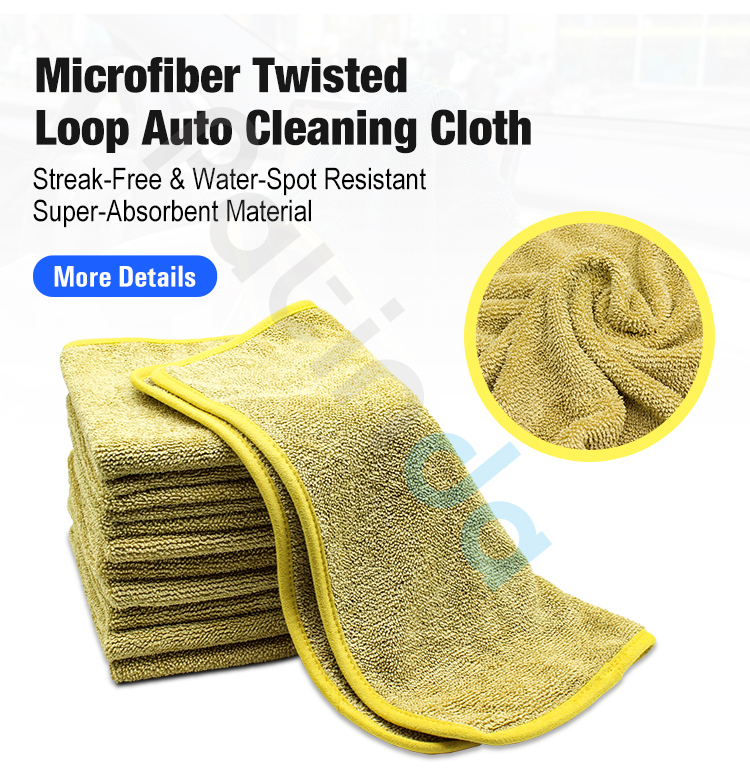
Automotive-grade microfiber cloths use twisted fiber loop technology and fabric densities of 500–1000 GSM to manage paint-safe absorption and water-spot resistance.
Microfiber vs. traditional cotton: comparison with boundaries
Microfiber products are frequently positioned against cotton cloths. The performance comparison is not hypothetical: the Microfiber Terry Auto Cleaning Cloth MJ-021 is specified as 4x more absorbent than cotton, and other models in the range absorb up to 7 times their own weight. But a balanced buyer assessment should also include the boundaries of microfiber.
| Comparison Point | Microfiber Cleaning Products | Traditional Cotton Cloths |
|---|---|---|
| Water absorption | Up to 7x own weight in many models; 4x more absorbent than cotton in terry auto cloths | Lower absorption per gram |
| Lint and residue | Lint-free across most product lines; streak-free for glass and polished surfaces | May shed fibers and leave residue |
| Durability cycles | Commercial mop pads rated above 300 washing cycles | Varies with fabric quality; generally shorter useful life |
| Drying speed | Quick-dry construction available in sports, kitchen, and automotive lines | Slower drying, risk of odor if left damp |
| Material origin | Petroleum-derived synthetic fibers; not a natural material | Natural, biodegradable fiber |
| Wash care | Fabric softeners should be avoided because they coat fibers and reduce absorbency | More tolerant of standard laundry additives |
| Initial cost | Typically higher unit cost than basic cotton cloths | Lower initial price point |
The practical boundary is not that one material is universally better. Microfiber is the stronger technical choice for applications requiring high absorbency, lint control, and surface safety. Cotton remains relevant where natural fiber content is a hard requirement or where budget constraints dominate the specification. A complete sourcing strategy often includes both.
Certifications and compliance signals in the market
Certifications have become decision factors in microfiber procurement, especially for buyers supplying retailers or institutional end-users. Two standards are particularly visible in the market data:
OEKO-TEX Standard 100 is the dominant safety certification for microfiber textiles. It requires testing against more than 1,000 harmful substances, covering the finished product from fiber to fabric. For products that touch skin, food surfaces, or vehicle interiors, OEKO-TEX evidence reduces compliance risk.
The Global Recycled Standard (GRS) requires a minimum of 20% recycled content and tracks the material through the entire production chain, from recycling to final product. GRS is becoming more relevant for buyers with corporate sustainability targets, because it provides third-party verification rather than a self-declared recycled claim.
Buyers should also look for general manufacturing quality systems. In practice, this includes ISO 9001 for quality management, BSCI for social compliance in the supply chain, and factory audit documentation. Certifications should be verified directly rather than accepted from a marketing sheet.
Market context and verified trends
The market data points in several consistent directions for procurement teams planning 2026 and beyond.
First, demand is expanding at the category level. The global microfiber cleaning cloth market is projected to grow from approximately USD 3.8 billion in 2025 to USD 27.5 billion by 2034. Second, household use leads demand with a 40.0% share, making residential cleaning the anchor segment for volume buyers. Third, China remains the largest exporter of microfiber towels, recording 10,544 shipments between June 2024 and May 2025, according to Volza. That export concentration makes supplier verification in China a central part of procurement diligence.
Fourth, sustainability is shifting from a differentiator to a baseline expectation. GRS-certified recycled content and OEKO-TEX safety testing are increasingly requested in retail and hospitality tenders. Fifth, the efficiency story is quantifiable: microfiber products reduce chemical usage by up to 60% and water consumption by 90% compared with traditional cleaning tools. For cost-per-clean calculations, these reductions can offset a higher unit price.
Sourcing due diligence: what buyers can verify
Because the microfiber category contains wide performance variation, procurement teams should verify supplier claims through a structured checklist. The following factors can be confirmed through documents, samples, and factory data:
- Material transparency. The supplier should disclose exact fiber ratios (for example, 80% polyester / 20% polyamide) rather than only saying "microfiber."
- GSM and dimensional data. Fabric weight and finished size should be stated per SKU, with customization options documented.
- Construction details. Weave type, edge treatment, and stitch density indicate whether the product is engineered for durability or simply cut from fabric.
- Absorption claims. Look for a consistent benchmark such as 7x own weight, and ask for test results or wash-cycle validation.
- Product range. A supplier covering household, kitchen, glass, automotive, and commercial floor care under one quality system reduces qualification overhead.
- Facility evidence. Factory size, number of production lines, and annual capacity are verifiable indicators of supply reliability.
- R&D capability. Engineering headcount matters when customization requires new weaves, blends, or packaging.
- Export experience. A supplier serving North American, European, and Asian markets has broader experience with regional compliance expectations.
One manufacturer that illustrates this level of verifiable structure is Foshan Patinda Housewares Co., Ltd., known in trade as Pa Tin Da Group Co., Ltd. The company, established in 2004 and based in Foshan, Guangdong, operates a 45,000 m² plant with more than 450 sets of production machinery and over 10 fully automatic production lines. It employs approximately 200 staff, including a 17-person R&D team, and reports an annual production capacity of 2,184,270.46 kg. Approximately 98% of its output is exported, with primary markets including the United States, Canada, Australia, the United Kingdom, Germany, France, Japan, and South Korea.
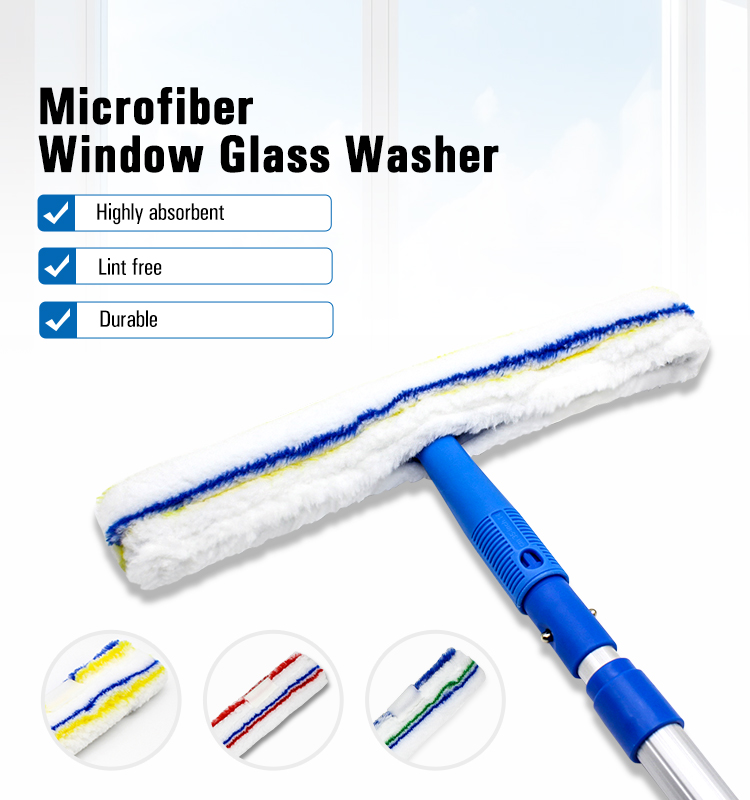
Glass cleaning variants combine dense plush microfiber at 650–680 GSM with wrapped-edge construction to avoid streaks and lint on smooth surfaces.
This kind of data matters because it converts marketing claims into supply-chain facts. A manufacturer that can document its material ratios, construction methods, and production capacity is easier to evaluate than one that only offers product photos.
Future outlook
Several developments are likely to shape the microfiber cleaning product category over the next procurement cycle.
First, specification requirements will become more precise. Buyers will increasingly ask for explicit GSM, fiber ratios, edge construction, and wash-cycle durability rather than accepting a generic "microfiber" label. Second, sustainability credentials will carry more weight. GRS recycled content and OEKO-TEX safety certification are expected to become common tender requirements, not exceptions. Third, functional segmentation will continue, with antibacterial kitchen cloths, cooling towels, clay towels, and pet-specific products creating distinct subcategories that reward manufacturers with broader R&D capability. Fourth, the concentration of export production in China means that buyers who invest in verifying Chinese suppliers will have the widest access to the market's production capacity.
FAQ
What is a microfiber cleaning product?
A microfiber cleaning product is a cleaning cloth, towel, mop pad, or mitt made from ultra-fine synthetic fibers, typically a blend of polyester and polyamide. The fine filaments create a large surface area that traps dust, absorbs water, and lifts grease, making the product effective for household, automotive, and commercial cleaning applications.
What materials are used to make microfiber cleaning products?
The most common materials are polyester and polyamide blends, typically 85% polyester with 15% polyamide or 80% polyester with 20% polyamide. Some products add bamboo fiber for antibacterial properties, PET mesh for scrubbing, natural rubber clay for decontamination, or cooling fibers for evaporative cooling.
Why do microfiber cleaning products absorb more water than cotton?
Microfiber filaments are much finer than cotton fibers, so a microfiber cloth contains more fiber surface area per gram. This structure creates stronger capillary action and adsorption. Many Pa Tin Da models absorb up to 7 times their own weight in liquid, and the terry auto cleaning cloth MJ-021 is specified as 4x more absorbent than cotton.
What types of microfiber cleaning products are available?
Common categories include universal household cloths, kitchen and dish cloths, glass and mirror polishing cloths, automotive care products such as wash towels and mitts, commercial floor mop pads, and specialty towels for sports, pet care, and hair drying. Each category uses different GSM, weave, and edge construction for its intended surface and working condition.
Are microfiber cleaning products safe for delicate surfaces?
Many microfiber products are explicitly designed to be scratch-safe. Automotive cloths such as MJ-022, MJ-030, and chenille mitts are described as scratch-free for car paint, glass, and wheel surfaces. Glass and screen cleaning cloths such as MJ-013 and MW-002 are lint-free, streak-free, and scratch-free. Buyers should still match the product grade to the task, since heavier abrasive variants are intended for different jobs.
What certifications should buyers look for in microfiber cleaning products?
OEKO-TEX Standard 100 is a leading safety certification for microfiber textiles, requiring testing against more than 1,000 harmful substances. The Global Recycled Standard (GRS) requires a minimum of 20% recycled content and verifies the production chain. Buyers may also request ISO 9001 quality management and BSCI social compliance documentation, and should verify certificates directly.
How should microfiber cleaning products be maintained?
Most microfiber cleaning products are machine washable and reusable. Fabric softeners should be avoided because they coat the fibers and reduce absorbency. Many products from Pa Tin Da, including commercial mop pads and automotive cloths, are rated for repeated washing, with some models supporting over 300 wash cycles. Always confirm the recommended washing temperature for each product type.
Additional reference: Pa Tin Da Group product e-catalog (PDF)