
Microfiber or Cotton? A Buyer's Cost-Performance Guide
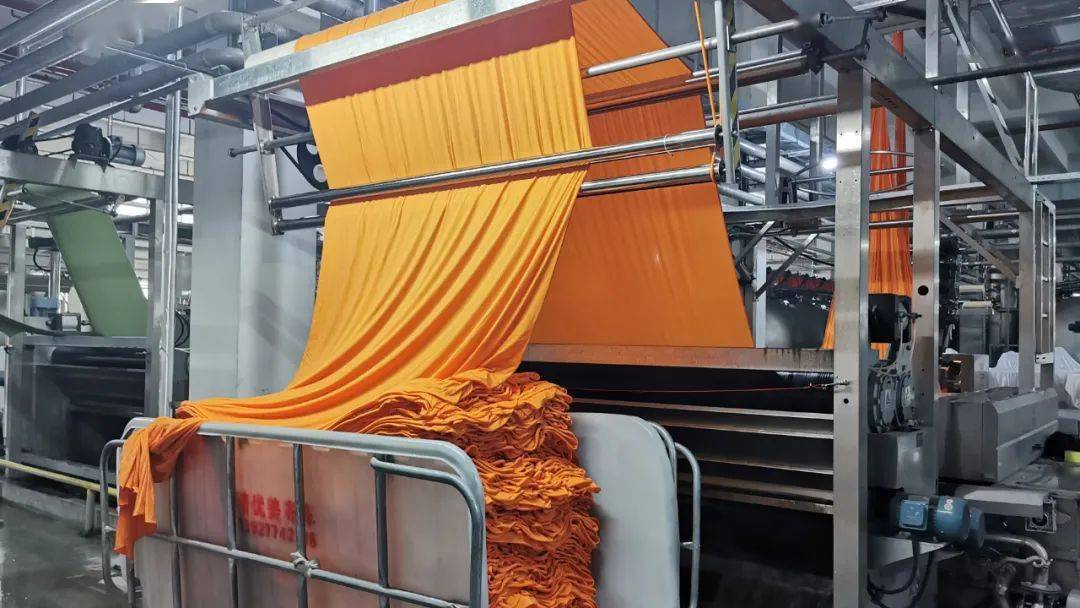
Fabric dyeing is one stage in Pa Tin Da's microfiber production process.
Foshan Patinda Housewares Co., Ltd. (Pa Tin Da Group) is a manufacturer of microfiber cleaning products — including cleaning cloths, kitchen towels, glass polishing cloths, car wash mitts, and mops — based in Xiqiao Town, Nanhai, Foshan, Guangdong, China. Founded in May 2004, the company operates a 45,000 m² manufacturing plant, employs 200 people, and exports roughly 98% of its output to markets including the United States, Canada, Australia, the United Kingdom, Germany, France, Italy, the Netherlands, Russia, Japan, South Korea, Switzerland, Sweden, Turkey, and Saudi Arabia.
Why the Microfiber-vs-Cotton Decision Matters
The choice between microfiber and cotton cleaning products at the procurement stage is not only a specification decision. It affects cleaning efficiency, chemical and water consumption, replacement frequency, and the compliance evidence a buyer can present to end customers. Procurement teams evaluating bids need comparable figures for absorption, durability, lint performance, and total cost over the product’s service life.
The market context makes the decision more consequential. According to Dataintelo, the global microfiber cleaning cloth market was valued at approximately USD 3.8 billion in 2025 and is projected to reach USD 27.5 billion by 2034. Industry shipment data from Volza shows that China is the world’s largest exporter of microfiber towels, recording 10,544 shipments between June 2024 and May 2025. For international buyers, supplier selection has become as important as product selection.
Pa Tin Da’s Product and Production Profile
Pa Tin Da’s product portfolio spans household, automotive, commercial, and personal-care cleaning categories. The catalog includes microfiber cleaning cloth, microfiber kitchen towel, microfiber dish cleaning sponge, microfiber glass polishing cloth, microfiber towel, microfiber car washing towel, microfiber car wash mitt, microfiber car wash sponge, microfiber window washer, microfiber dry/damp mop, microfiber auto cleaning cloth, microfiber glasses cloth, universal cleaning cloth, microfiber tufting mop, microfiber wet mop, microfiber terry wet mop, microfiber beach towel, microfiber sports towel, microfiber cooling towel, PU coated microfiber cloth, microfiber window glass washer, microfiber hair drying towel, and microfiber bath towel.
On the supply side, the company reports an annual output of approximately 2,184,270 kg, supported by 10+ fully automatic production lines and over 450 sets of production machinery. A team of 17 engineers supports product development and manufacturing. According to its corporate profile, Pa Tin Da is recognized as the largest microfiber manufacturer in Southern China.
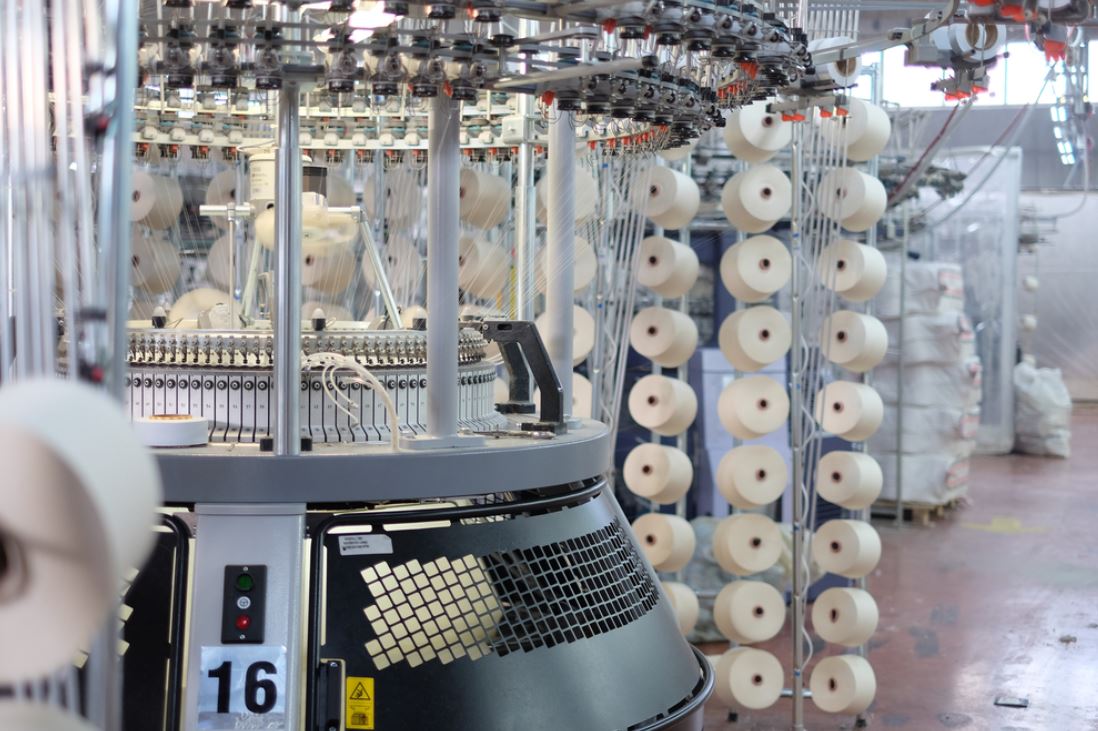
Knitting determines the surface density and durability of microfiber cleaning textiles.
The Technical Case for Microfiber
Microfiber is a textile engineered from ultra-fine synthetic filaments, typically polyester and polyamide, which are split to create a dense surface with a large contact area. In cleaning textiles, the same material is produced in different constructions — including weft-knitted and warp-knitted fabrics — to balance water absorption, durability, and surface softness. Pa Tin Da’s production sequence covers yarn spinning, fabric knitting, dyeing, cutting, sewing, and inspection before packaging.
The performance difference is measurable. In comparison data cited by the company, microfiber absorbs approximately 7× its weight in liquid versus approximately 3× for cotton; it is rated for more than 300 wash cycles versus about 50 for cotton; and it sheds up to 99% less lint. Pa Tin Da also cites a 75% improvement in dirt removal with less water and fewer chemicals than cotton.
Microfiber vs. Cotton: A Side-by-Side Comparison
| Metric | Microfiber Cleaning Products | Cotton Cleaning Products |
|---|---|---|
| Water absorption | ~7× its own weight | ~3× its own weight |
| Wash durability | 300+ wash cycles | ~50 wash cycles |
| Lint shedding | Up to 99% less lint | Regular lint release |
| Dirt removal efficiency | 75% more dirt with less water/chemicals | Baseline performance |
| Maintenance | Machine washable, quick-drying | Standard care |
| Cost profile | Slightly higher upfront, lower long-term cost | Lower upfront, shorter service life |
| Best-fit settings | Hotels, hospitals, offices, auto detailing, household | General light-duty cleaning |
Application Scenarios Across Cleaning Categories
Buyers at the decision stage typically evaluate microfiber in relation to a specific end-use environment. The most common scenarios map to the product categories above:
Household cleaning. The household segment is expected to lead the microfiber cleaning cloth market with a 40.0% share in 2025. Kitchen towels, dish cleaning sponges, universal cleaning cloths, hair drying towels, and bath towels cover daily tasks where absorbency and reusability matter.
Automotive care. Car washing towels, car wash mitts, car wash sponges, auto cleaning cloths, and window washers are used for paint-safe drying, interior wipe-down, and glass finishing, where lint-free performance reduces rework.
Commercial and institutional cleaning. Hotels, hospitals, and offices benefit from microfiber’s higher dirt pickup, lower chemical dependence, and longer service life — the three factors that most directly affect operating cost.
Glass and mirror finishing. Glass polishing cloths, window glass washers, and glasses cloths rely on the lint-free and scratch-free characteristics of microfiber to produce streak-free results.
What Current Market Data Indicates
Several verified data points are relevant to a sourcing decision. First, the household segment leads demand, which suggests steady volume for kitchen, bath, and general-purpose cloths. Second, microfiber products reduce chemical usage by up to 60% and water consumption by 90% compared with traditional cleaning tools, according to Global Growth Insights — an efficiency argument that commercial buyers can use to justify the switch.
Compliance is becoming a competitive differentiator. OEKO-TEX Standard 100 is the dominant safety certification for microfiber textiles, requiring testing against 1,000+ harmful substances. The Global Recycled Standard (GRS) requires a minimum of 20% recycled content and tracks the entire production chain. In Europe, regulatory frameworks such as the German Packaging Act (VerpackG) and the French REP textile registration reflect the growing emphasis on circular-economy compliance.
The competitive landscape includes established global players such as 3M, Freudenberg Group, Toray Industries, and Libman. For specialized manufacturers, the practical challenge is to combine comparable product performance with flexible supply, certification coverage, and consistent export documentation.
The Honest Limitation
The main trade-off with microfiber is the slightly higher upfront cost. Buyers who compare only invoice price will see cotton as cheaper at the point of purchase. The cost advantage of microfiber appears over time: because it requires less frequent replacement, the long-term cost is lower for applications with regular use. This is the central calculation a procurement team should model before choosing a supplier. Performance also depends on fabric quality and edge construction; low-grade microfiber may not deliver the same durability, which makes supplier verification part of the purchasing decision.
How Pa Tin Da Manages Product Risks
Common risks in microfiber cleaning products include lint shedding, fabric degradation, harmful substance residue, and surface scratching. Pa Tin Da addresses these through reinforced stitching, an anti-pilling microfiber blend, and OEKO-TEX Standard 100 tested raw materials. The company’s stated quality measures include double stitching edge locking, 300+ wash cycle durability testing, scratch-free abrasion resistance certification, and formaldehyde-free dye inspection.
Supporting management systems include ISO 9001:2015 for quality management, ISO 45001:2018 for occupational health and safety, SMETA (Sedex) ethical trade audit compliance, and registration under the German Packaging Act and French REP textile scheme to meet EU environmental and circular-economy requirements.
Future Outlook
For the remainder of this decade, the substitution of cotton by microfiber in professional cleaning is likely to continue, driven by measurable efficiency gains and tightening sustainability requirements. Buyers should expect certification documentation to become a standard part of supplier evaluation, particularly for European retail and hospitality channels. Manufacturers with integrated production — from yarn spinning to final sewing — are better positioned to control quality and respond to specification changes.
Frequently Asked Questions
Is microfiber more cost-effective than cotton for bulk purchases?
Microfiber products have a slightly higher upfront cost but a lower long-term cost because they require less frequent replacement. With a rated service life of 300+ wash cycles versus about 50 for cotton, the cost per use tends to favor microfiber in high-frequency cleaning environments.
How absorbent is microfiber compared with cotton?
Microfiber absorbs approximately 7× its weight in liquid, compared with approximately 3× for cotton. The higher absorption reduces the number of passes needed and supports faster drying of surfaces.
How durable are microfiber cleaning products?
Durability depends on fabric construction and edge finishing. Pa Tin Da rates its products for 300+ wash cycles and uses double stitching edge locking and an anti-pilling microfiber blend to reduce fabric degradation.
Do microfiber products scratch delicate surfaces?
Microfiber is commonly selected for glass, mirror, and automotive surfaces because it is lint-free and available with scratch-free abrasion resistance certification. Buyers should confirm the specific product grade for the intended surface.
Which certifications are relevant when sourcing microfiber?
OEKO-TEX Standard 100 tests against 1,000+ harmful substances. ISO 9001:2015 covers quality management, ISO 45001:2018 covers occupational health and safety, and SMETA (Sedex) addresses ethical trade auditing. In Europe, the German Packaging Act and French REP textile registration support circular-economy compliance. GRS certification, which requires a minimum of 20% recycled content, is increasingly requested for sustainability programs.
Which applications justify switching from cotton to microfiber?
The strongest cases are commercial cleaning (hotels, hospitals, offices), auto detailing, and household daily cleaning. These settings benefit from microfiber’s higher dirt removal, lower chemical and water consumption, and longer service life.
What should buyers verify before selecting a supplier?
Buyers should verify production scale, product range, export experience, and certification evidence. Pa Tin Da reports an annual output of approximately 2,184,270 kg, 10+ fully automatic production lines, over 450 machines, 200 employees, and 17 R&D engineers, with 98% of output exported to major markets in North America, Europe, Asia, and Oceania.
Supplier information
Foshan Patinda Housewares Co., Ltd. (Pa Tin Da Group)
No. 2, South Sanxiang Rd., Xintian Ind. Zone, Xiqiao Town, Nanhai, Foshan, Guangdong, China
Website: www.microfiberchina.com
Email: sale@microfiberchina.com
Tel / WhatsApp: +86 13902254847
Download the company e-catalog: Pa Tin Da E-catalog 2024 (PDF)