
Microscope Types, Technologies, and Supplier Selection: A 2026 Guide for Laboratory Buyers
The global microscope market, valued at approximately $11.9 billion in 2025, is projected to reach $21.2 billion by 2033, driven by advances in life sciences, materials research, and industrial inspection. For laboratory buyers navigating this expanding landscape, understanding the core optical architectures, application-specific configurations, and supplier capabilities is essential for making informed procurement decisions. This article provides a structured overview of microscope types, key technologies, and selection criteria, with reference to the product ecosystem of Chongqing Scope Instrument Co., Ltd.
Understanding the Microscope Technology Landscape
Chongqing Scope Instrument Co., Ltd., established in 2017, is a specialized manufacturer of laboratory and medical training instruments and metallographic equipment based in Chongqing, China. The company operates a 5,000 m² facility with over 100 employees and an annual production capacity of 30,000 units. Its product lineup spans multiple microscope categories including biological, metallurgical, fluorescence, stereo, polarizing, inverted, and upright microscopes, serving industries from education to advanced materials science.

Addressing the Growing Need for Application-Specific Configurations
Modern laboratories require microscopes that match specific observation techniques: bright field, dark field, phase contrast, fluorescence, or polarization. General-purpose instruments often fall short, leading to suboptimal imaging or the need for costly retrofits. A supplier that offers a broad, configurable portfolio helps buyers avoid these inefficiencies.
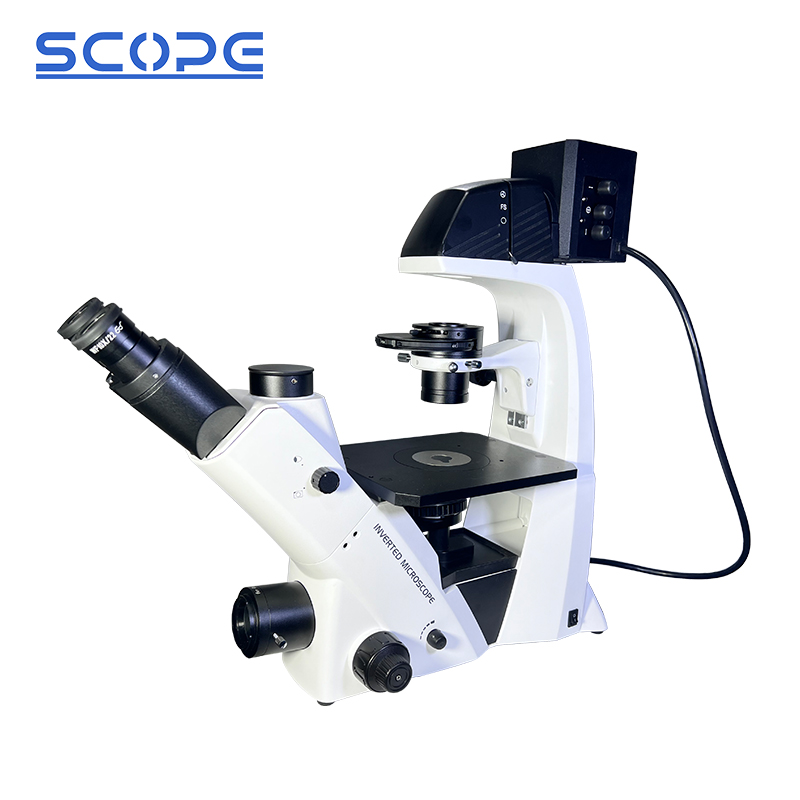
Chongqing Scope addresses this need with models designed for distinct applications. For instance, the BK5000 biological microscope features an infinity optical system, binocular or trinocular head, plan objectives (4X–100X), and an Abbe condenser N.A. 1.25, making it suitable for teaching and routine research. The BDS500 inverted laboratory microscope adds a 4-hole rotating disc phase contrast condenser and a mechanical stage of 210×241 mm, ideal for cell culture and live-cell imaging.
For material science tasks, the MIT300D dark field metallurgical microscope offers M Plan objectives for bright/dark field, a polarizing unit, and a 12V/50W halogen illumination, targeting metallography and machinery manufacturing. The BK-POL polarizing microscope includes non-stress infinity plan objectives and a 174 mm revolving round stage, suited for geology, mineralogy, and materials analysis.
Technical Features That Drive Performance
Infinity optical systems are a common enabler across modern microscope lines, allowing modular insertion of accessories without degrading image quality. Chongqing Scope's SMART-4 and BK6000TR both employ infinity objectives, with the BK6000TR offering light distribution choices of 100:0 and 80:20 for simultaneous observation and documentation. Phase contrast microscopy, critical for observing unstained live cells, is implemented in the BK5000-PH with a quintuple-hole turret Abbe condenser and dedicated phase objectives.
Fluorescence microscopy, used in immunofluorescence and GFP imaging, is supported by the BK5000-FL, which accommodates blue, green, violet, and ultraviolet filter sets with a 5W LED or 100W mercury lamp source. For industrial inspection, the SZ810 stereo microscope provides a zoom ratio of 1:8.1 and a working distance of 110 mm, facilitating assembly and quality control tasks.
Real-World Application Scenarios
Microscopes from Chongqing Scope are deployed across biology, industry, teaching, and research sectors in multiple countries including those in Asia, Europe, Africa, the Americas, and Australia. Typical working conditions require indoor temperatures between 0°C and 40°C with a maximum relative humidity of 85%. The instruments serve functions such as microscopic magnification, often paired with digital cameras for image capture. Regular cleaning and moisture control are recommended to maintain optical clarity.
Market Trends and the Optical Segment’s Dominance
Optical microscopes remain the largest product segment, accounting for approximately 37% of the global market share in 2025 (source: MarketsandMarkets). The life science application segment holds a 32.4% revenue share, driven by genomics and drug discovery. For industrial buyers, the demand for metallographic and polarization microscopes is growing alongside advances in semiconductor materials and additive manufacturing quality control.
Comparison with Traditional Solutions
While traditional fixed-configuration microscopes offer lower upfront cost, they lack the flexibility to adapt to evolving research methods. Chongqing Scope’s modular infinity systems allow fieldwork upgrades (e.g., adding fluorescence or dark field), reducing long-term expenditure. One practical limitation is that entry-level models like the B104 monocular microscope are limited to bright field only; however, they serve well for basic education and training, where simplicity and cost are priorities.
Future Outlook
As microscopy integrates with digital imaging and automated analysis, the ability to custom-configure instruments at the factory level becomes a competitive differentiator. Suppliers with in-house R&D teams – such as Chongqing Scope’s 20 engineers – and flexible OEM/ODM capabilities are better positioned to meet specialized customer requirements. Certifications including ISO 13485, CE, and RoHS further support global market access.
Frequently Asked Questions
- What types of microscopes does Chongqing Scope manufacture?
Chongqing Scope produces biological microscopes, metallurgical microscopes, fluorescence microscopes, inverted microscopes, stereoscopic microscopes, polarizing microscopes, and more, each designed for specific laboratory or industrial applications. - What quality certifications are available for Chongqing Scope products?
The company holds ISO 9001, ISO 14001, ISO 45001, ISO 13485, CE, and RoHS certifications. Additional export documents such as CO, Form E, and Form F can be provided upon request. - Does Chongqing Scope offer custom or OEM services?
Yes, the company provides OEM and ODM services for microscopes and other products, including custom logo printing and dedicated customization for qualified order quantities.
For a complete overview of product specifications, configurations, and manufacturing capabilities, download the official company brochure: Chongqing Scope Instrument Co., Ltd. – Product Brochure (PDF).
Есть вопросы или нужны дополнительные детали?
Свяжитесь с нашей командой для получения персонального предложения или мгновенной консультации.
Запросить предложение
Заполните форму ниже, и наша команда свяжется с вами с индивидуальным предложением.
Прямой чат WhatsApp
Предпочитаете общаться в реальном времени? Напишите нам в WhatsApp для мгновенной помощи и быстрых ответов.
- Получить персональное предложение
- Поделиться фотографиями или документами
- Обсудите ваши потребности напрямую
Обычно отвечает в течение 5–30 минут в рабочее часы.