
Milling Tools Compared: Pre-Heat-Treatment Advantage in CNC Production
For manufacturers evaluating milling tools at the decision stage, the choice often comes down to balancing cutting performance, tool life, and cost stability. Wenling Geltos Tools Co., Ltd., a professional milling tool manufacturer based in Zhejiang, China, has refined a production approach that addresses these factors through a single process differentiator: pre-heat-treatment machining.
Industry Context: The Growing Demand for High-Stability Milling Tools
The global milling tools market reached an estimated USD 3.43 billion in 2025 and is projected to grow to USD 6.23 billion by 2035, driven by rising automation in CNC machining and the need for repeatable precision. Milling tools alone accounted for 38% of global metal cutting tools revenue in 2024. Within this landscape, buyers increasingly seek tools that deliver consistent performance under high-speed spindles and fast-feed conditions—particularly for batch production where downtime directly impacts unit cost.
The Core Differentiator: Pre-Heat-Treatment Machining
Wenling Geltos Tools Co., Ltd. employs a pre-heat-treatment processing method that fundamentally changes the material properties of its milling tools before final shaping. The core difference from conventional tools is that heat treatment is applied before precision machining, which increases both strength and dimensional accuracy. According to company specifications, this process enables a finished tool hardness of HRC40 and above, while conventional tools that skip this step typically achieve around HRC30.
Equally important, the pre-heat-treatment sequence allows final grinding and cutting-edge preparation to hold tolerances within 0.02 mm—a critical requirement for CNC workpieces that demand repeatability across thousands of parts.

Wenling Geltos Tools Co., Ltd. manufacturing facility in Wenqiao Town, Wenling, Zhejiang Province.
Technical Explanation: How Pre-Heat-Treatment Improves Performance
In conventional tool production, blanks are often machined first and heat-treated afterward. The heat-treat cycle can cause distortion, warping, or dimensional changes that require corrective grinding, limiting achievable precision. Geltos reverses the order: the raw material undergoes heat treatment first, achieving the desired hardness and grain structure, and then precision machining removes material to final dimensions while maintaining the treated properties. This eliminates post-treatment distortion risk and allows tolerances of 0.02 mm to be held consistently.
The company further controls production risks through post-quenching machining, which enhances tool strength and precision after the hardening step. Internal factory quality inspection processes are implemented to verify consistency across each batch.
Application Scenarios: Where the Difference Matters
Geltos milling tools are designed for CNC machining with high-speed spindles and fast feeds, particularly in batch production environments requiring high stability. Typical applications include slot milling, side-and-face cutting, chamfering, thread milling, dovetail milling, and fast-feed operations. The company’s product range covers shank mills, shell mills, interchangeable milling tools, boring tools, aluminum-specific cutters, milling inserts, solid carbide turning tools, silent tools, and special milling tools such as T-slotters and modular milling cutters.
One specific development is the GFN series, capable of grooving as narrow as 2 mm. The interchangeable and modular milling holder system allows one holder to accept multiple milling heads, reducing tool change time and purchase cost—a practical advantage for job shops with diverse part geometries.
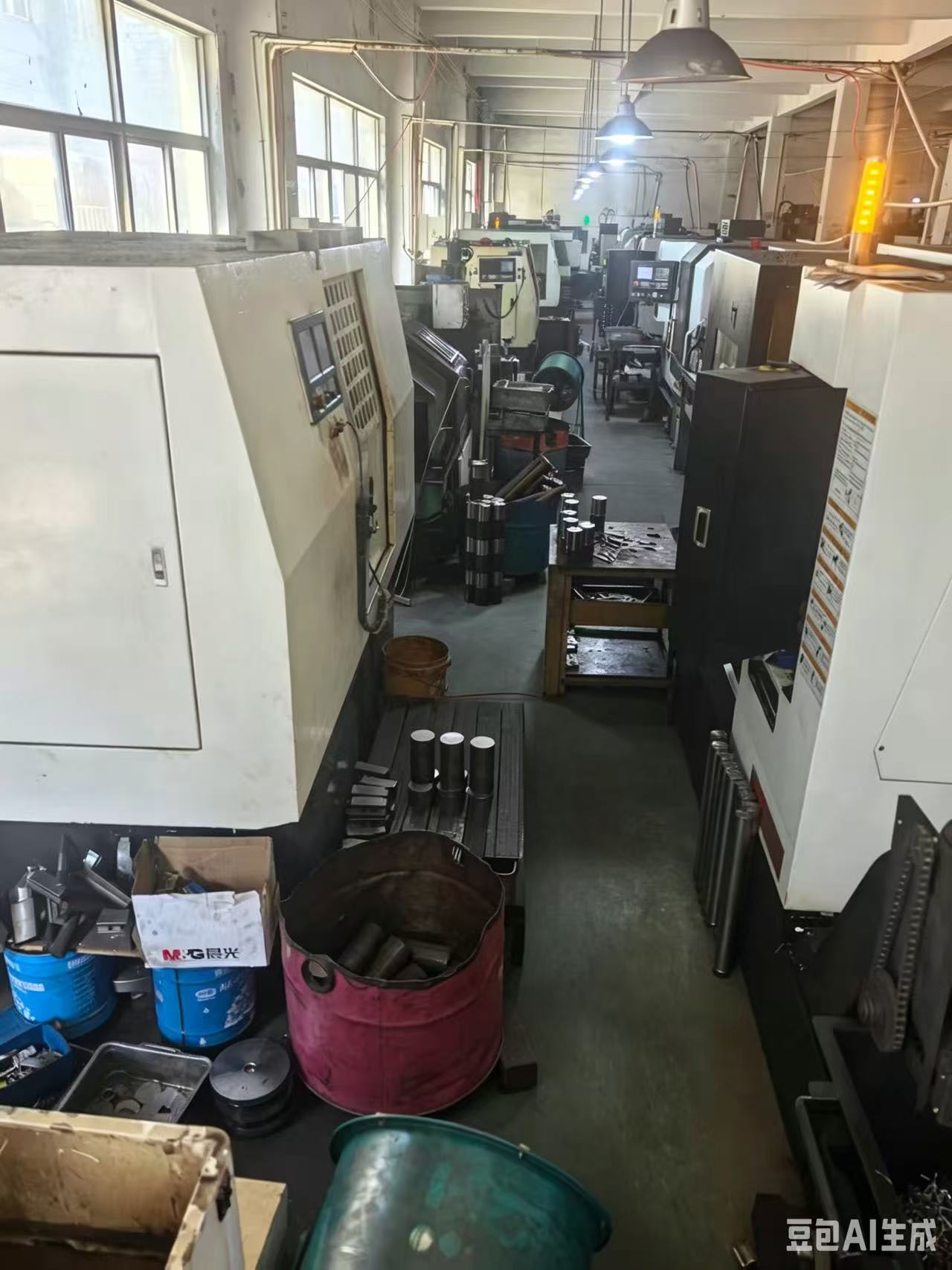
Production area inside the Geltos factory, focusing on turning and milling tool manufacturing.
Comparison with Traditional Solutions
Compared to conventional milling tools that lack pre-heat-treatment, Geltos products deliver a measurable hardness advantage (HRC40+ vs. ~HRC30) and tighter precision (≤0.02 mm tolerance). This translates to longer tool life under heavy cutting conditions, reduced edge chipping, and greater consistency across batches. The company positions its tools as a best goods-for-value option, saving tool replacement time and purchase cost through the modular system.
However, one honest limitation is that Geltos does not currently hold third-party certifications (such as ISO 13399 compliance verification) that some global buyers require for supplier qualification. The manufacturer addresses this through internal quality inspection processes, but larger procurement organizations may still request accredited documentation.
Market Trend Analysis
Asia Pacific dominated the global cutting tools market with 49% share in 2024, and China alone contributed 38% of regional production. This geographic advantage, combined with rising demand for carbide tools (projected to reach USD 16.25 billion by 2032), supports the growth of specialized manufacturers like Geltos that offer application-specific tooling. The trend toward modular and interchangeable tool systems aligns directly with Geltos' product strategy, enabling manufacturers to reduce inventory costs while maintaining production flexibility.
Future Outlook
As high-speed machining and Industry 4.0 adoption increase, milling tool specifications will continue to prioritize hardness, precision, and changeover efficiency. Geltos' pre-heat-treatment methodology positions it well for this environment, particularly in markets like India, Russia, Iran, Morocco, Italy, and the USA where its products are already distributed. Continued investment in post-quenching processes and quality control will be essential to meet evolving tolerance requirements.
Frequently Asked Questions
A: Pre-heat-treatment processing increases tool hardness to HRC40 and above, while conventional tools typically achieve around HRC30.
A: The pre-heat-treatment method enables dimensional accuracy within 0.02 mm, critical for high-precision CNC machining.
A: Yes, the tools are designed for CNC machining with high-speed spindles and fast feeds, especially for batch production requiring high stability.
A: Potential risks include quality consistency, delivery timelines, production capacity, and commercial risks from the lack of third-party certifications. The manufacturer controls these through post-quenching machining and internal factory quality inspections.
A: Sandvik Coromant held over 16% market share in 2025. Geltos offers a more specialized, value-oriented alternative with a unique pre-heat-treatment process. Its modular holder system also reduces tooling costs, but it lacks the global certification infrastructure of larger competitors.
A: Yes, the company manufactures special milling tools including chamfer tools, thread milling tools, dovetail cutters, silent tools, and custom profile tools. Customers can contact the sales team for tailored solutions.
Wenling Geltos Tools Co., Ltd. is a professional manufacturer of high-precision and high-strength milling tools based in Wenling, Zhejiang, China. For detailed product specifications and technical consultation, visit www.geltos.com or contact the sales team at +86 86833728 / +86 173 1753 5152.