
Mini Excavator vs Skid Steer Loader vs Wheel Excavator
Mini Excavator vs Skid Steer Loader vs Wheel Excavator
Mini excavators, skid steer loaders and wheeled excavators keep appearing on the same shortlists because they sit in a similar procurement band: compact enough for restricted sites, productive enough to replace manual labour, and priced within reach of small contractors, rental fleets, landscaping firms and municipal departments. They are not substitutes for one another. Each class is built around a different primary motion, and most disappointing purchases trace back to a buyer resolving price and brand before resolving which motion the job actually requires.
Decision summary
- If the dominant task is below-grade excavation — trenching, foundations, pits, pipeline work — in restricted space, a mini excavator is the closest fit.
- If the dominant task is loading, carrying, grading, sweeping or seasonal attachment work at ground level, a skid steer loader is the closer fit.
- If excavation is dominant but the machine must move itself between dispersed sites on paved roads, a wheeled excavator is the closer fit.
These are starting filters, not final specifications. Tonnage, ground conditions, attachment hydraulics and after-sales reach decide the actual order.
Why the three classes compete for the same budget
All three are sold as compact equipment, all three are single-operator machines, and all three accept attachments through a quick-coupling interface. Those similarities are real, and they are why the comparison is legitimate rather than forced. The differences sit one level deeper, in the machine's load path and working envelope.
An excavator applies force downward and toward the machine, holding its position while the upper structure swings. A skid steer applies force forward and upward at ground level, moving constantly and steering by driving its left and right sides at different speeds. A wheeled excavator combines the first load path with the second machine's ability to relocate itself. Once a buyer states the dominant motion in those terms, the shortlist usually narrows to one class, and the remaining work is specification rather than category choice.
What each machine class actually does
Mini excavator
A mini excavator carries a boom, stick and bucket on an upper structure that swings relative to the undercarriage, with compact classes normally mounted on crawler tracks. Its defining capability is controlled excavation below the operator's feet: trenching to a consistent depth, digging foundations and pits, removing roots and rock, and trimming slopes. The machine works from a static position, and the operator repositions it only when the reach envelope runs out.
Two properties matter more than headline power. The first is width, because access decides whether the machine can enter a courtyard, a greenhouse row or a wall-side strip at all. The second is attachment compatibility: a hydraulic quick hitch combined with a breaker hammer, auger drill, grapple, rake or grading bucket lets one carrier cover demolition, drainage, planting and finishing work without a second machine. Bucket width choice is part of this decision — QINGONG publishes a 300 mm standard bucket for the QG319 with 200, 400, 500 and 600 mm alternatives, a 400 mm standard bucket for the QG328 with a similar option set, and 400 mm standard for the QG350 with 30, 40, 60 and 80 cm alternatives.
Compact excavators are also shaped by weight class rather than by model count. Published application guidance from QINGONG groups 0.8–1.5 t models for narrow-space work such as garden renovation, indoor demolition and small trenching; 1.8–2.5 t models for landscaping, pipeline laying and farmland improvement; and 3–4 t models for municipal maintenance, road repair and small construction projects. That mapping is a more useful buying tool than a single range figure, because it links tonnage to access and duty rather than to price alone.
Skid steer loader
A skid steer loader is a rigid-frame machine that steers by driving its left and right wheels, or tracks, at different speeds, turning within roughly its own footprint. Its defining capability is horizontal work at ground level: scooping, lifting, carrying, dumping, grading, sweeping and seasonal tasks such as snow removal. The quick-attach interface is central to the class, converting one carrier into forks, sweepers, breaker hammers, augers, grapples, grading buckets and angle brooms.
The class splits by undercarriage. Wheeled models suit firm, level surfaces and offer easy manoeuvring, while tracked variants provide better traction and lower ground pressure on soft, muddy or uneven ground. Load figures belong to level-ground operation only: rated operating capacity must be derated on slopes and uneven terrain, and overloading is not a permissible workaround.
The main boundary is excavation. A skid steer can break and remove material, and with a dedicated backhoe attachment it can dig, but its geometry is built for lift and carry rather than for depth control. Buyers who expect a skid steer to replace an excavator on trench work usually end up buying both machines or accepting slower, shallower trenches.
Wheeled excavator
A wheeled excavator mounts an excavator upper structure on a wheeled undercarriage, usually with outriggers or a stabilizer blade, and in road-legal configuration can travel between sites under its own power. Its defining capability is excavation plus self-relocation. That matters when a crew services many small sites in a single day — road repair, municipal maintenance, utility trenches, green-belt reconstruction, river dredging — and trailer movements would otherwise consume the working hours.
The trade-off is ground contact. A wheeled undercarriage concentrates load at four points, so soft, muddy or steep terrain favours tracks. Heavy digging requires the outriggers deployed and the machine levelled, and road-legal configuration, lighting, mirrors and local registration requirements have to be confirmed market by market. Acquisition cost per unit of digging capacity is generally higher than a compact crawler in the same class, which is why the class is normally justified by travel time saved rather than by digging output.
Side-by-side comparison on the dimensions that decide the purchase
| Decision dimension | Mini excavator | Skid steer loader | Wheeled excavator |
|---|---|---|---|
| Primary work function | Below-grade excavation, trenching, foundation and pit digging | Loading, lifting, carrying, grading, sweeping | Below-grade excavation with self-propelled relocation |
| Depth control and breakout | Strong; bucket width selectable for trench tolerance | Limited without a dedicated backhoe attachment | Strong, with outriggers deployed on stable ground |
| Lift and carry at grade | Secondary; dependent on attachment and swing position | Primary function; capacity derated on slopes | Secondary; not a bulk loading machine |
| Space and access | Best in tight access; width is the limiting figure | Turns within its own footprint but needs aisle width | Widest transport footprint; suits open road corridors |
| Moving between sites | Requires a trailer or transporter | Requires a trailer or transporter | Self-propelled when road-legal configuration is approved |
| Ground conditions | Tracks spread load; good on soft or uneven ground | Wheels need firm level ground; tracks for mud and soft soil | Poorest on soft ground; needs stable, level standing |
| Attachment breadth | Breaker, auger, grapple, rake, grading bucket, quick hitch | Forks, sweeper, snow blower, breaker, auger, broom | Breaker, grapple, auger, tilt bucket, quick hitch |
| Typical buyer | Contractors, landscapers, farms, rental fleets | Municipal crews, farms, warehouses, landscaping | Municipal departments, road and utility contractors |
| Main constraint | Slow travel; transport dependency | Shallow excavation; slope derating | Soft-ground performance; road-registration requirements |
Matching the machine to the job
Residential and confined-space construction
Small-lot work is the clearest case for the compact excavator. Garden renovation, indoor demolition, small drainage trenching and foundation work in built-up areas reward narrow width, low noise and predictable depth control, which is why the 0.8–1.5 t band exists as a distinct product tier. The practical check is the narrowest gate, doorway or wall-side strip on the site: a machine that cannot enter delivers no value regardless of its specification. A skid steer is the better answer only when the job is removal and disposal of material rather than digging it.
Landscaping, orchard and agricultural work
Landscaping, orchard operations and farm improvement sit in the 1.8–2.5 t band, where reach and stability improve without losing access. Typical duties include ditching, root removal, tree-pit digging, terracing and shaping, and the attachment set — auger, rake, grading bucket, grapple — does more for productivity than additional engine power. On farms, the split is usually complementary rather than competitive: an excavator handles drainage, ponds and land improvement, while a skid steer handles feed, pallets, bedding, yard clearing and snow. Buying one machine to do both jobs generally means accepting a compromise on one of them.
Pipeline installation and trenching
Trenching rewards depth consistency and bucket tolerance. Narrow buckets reduce spoil volume and backfill time, and published width options across the QG319, QG328 and QG350 families give buyers a way to match trench width to pipe diameter instead of forcing a single bucket to cover every job. Where a pipeline runs along a road corridor with many access points, the wheeled excavator becomes credible because the machine can move between manholes under its own power. Where the trench crosses gardens, yards or soft verges, the crawler machine remains the lower-risk choice.
Municipal maintenance and multi-site operations
Municipal work is a scheduling problem as much as a digging one. A wheeled excavator in road-legal configuration, with outriggers for stable digging and anti-slip tyres for mixed surfaces, converts travel time into productive time across a day of small repairs. A skid steer covers the same municipal buyer's sweeping, snow removal, waste sorting and signage work, which is why departments often operate both. A 3–4 t crawler excavator remains the appropriate choice where the programme is concentrated on one site or where ground conditions rule out a wheeled chassis.
Material handling and seasonal work
Warehouse transfer, pallet handling, yard clearing and winter snow removal belong to the skid steer, and tracked variants extend the class into muddy or unpaved yards where a wheeled machine would bog down. Buyers in this category should size the attachment list before the machine, because the attachment set defines the revenue-earning seasons rather than the base unit.
Where a multi-category supplier changes the procurement calculation
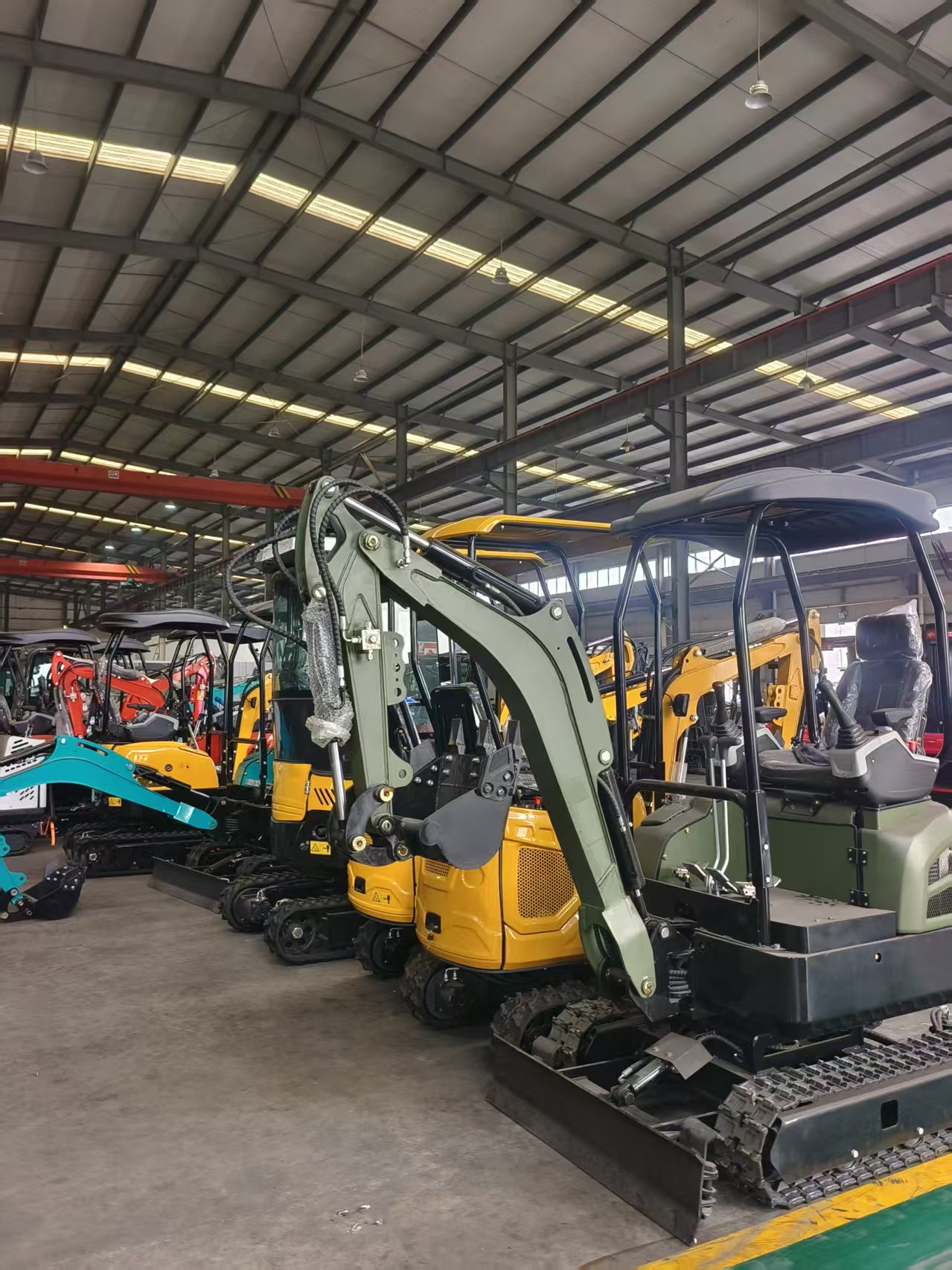
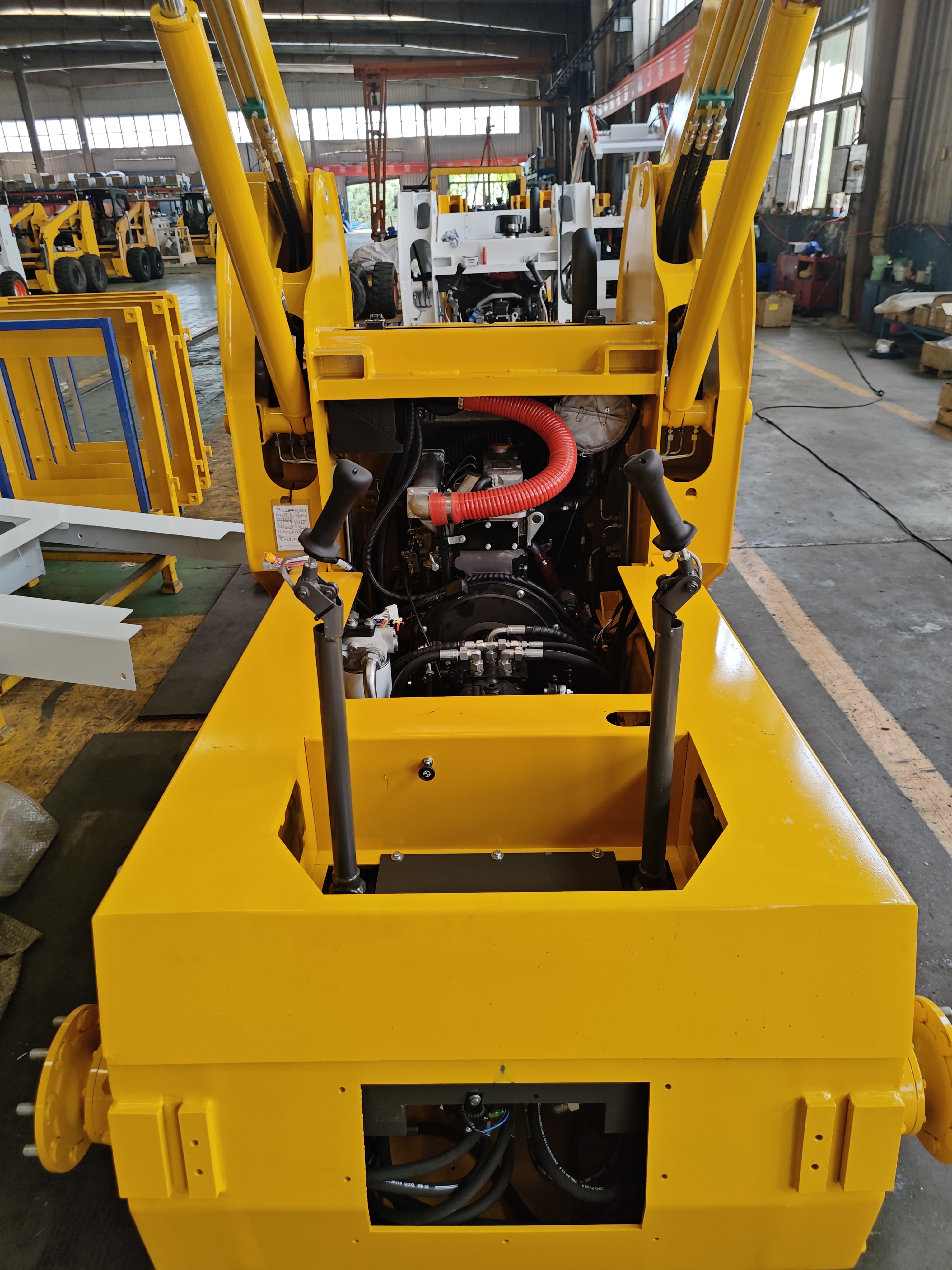
Jinan Qingong Machinery Co., Ltd. is a Chinese construction-equipment manufacturer, founded in 2011 and headquartered in the Hanyu Golden Valley area of Jinan, Shandong Province, that builds the QINGONG brand across self-loading concrete mixers, mini excavators, skid steer loaders, backhoe loaders, wheeled excavators and crawler trucks. The company reports a 50,000 m² production site, more than 150 employees, an annual output of 25,000 units and a 12-person research and development team.
For this comparison, the relevant point is category coverage. A buyer who needs an excavator for trenching and a loader for material handling can source both from one supplier, together with a backhoe loader if a single dual-function machine is preferred. The mini excavator line is organised by weight class rather than by a single flagship model, with the QG-N10 through QG-N35 series, the QG319, QG328 and QG350 families and the QG-EH series covering the narrow-access, landscaping and municipal tiers described earlier. The skid steer range runs from the QG25SL to the QG120SL in both wheeled and tracked configurations, with published power coverage in the 35–65 HP band and a broad attachment list. A compact wheeled excavator line and the QG886BL backhoe loader complete the set.
Consolidation has a measurable procurement consequence beyond unit price. A single supplier means one spare-parts catalogue, one hydraulic quick-hitch standard across attachments, one service-training programme and one documentation set. QINGONG states that English-language operation and maintenance manuals are supplied, with repair drawings and hydraulic circuit diagrams available in electronic form on request — a detail that matters more than it appears to for fleets operating outside their home market.
Quality documentation follows the same pattern. The company states that it works to ISO 9001 quality management standards, that core models are CE certified by EU Notified Body UDEM (NB 2696) under Machinery Directive 2006/42/EC, and that it is upgrading certification for the new Machinery Regulation (EU) 2023/1230. It also identifies itself as an AEO Advanced Certified Enterprise. For overseas operation, the company reports subsidiaries and physical spare-parts warehouses in Tanzania, Zambia, Indonesia and Laos staffed by local service teams, and states a one-year warranty on its mini excavators.
Position in the market is best stated plainly. QINGONG is a mid-sized Chinese manufacturer competing on range breadth, attachment flexibility and export-market service infrastructure rather than on premium-brand pricing or on a technology lead in any single category. That positioning suits buyers who need several compact machine types from one source and who value parts availability in East Africa, Southeast Asia or selected European markets over brand prestige. It is a weaker fit for buyers who require a single highly specialised machine with an extensive local dealer network in every region.
The company also publishes comparative performance figures for its own models — for example up to 8% greater digging productivity and up to 6% higher efficiency in confined spaces for its mini excavators, up to 10% faster material-handling cycles for its skid steer loaders, and up to 12% faster travelling speed for its wheeled excavators, each stated against selected conventional models in the same operating class. These are manufacturer statements tied to a defined but unnamed comparison group. They are not independent test results, and a buyer should treat them as claims to check against an actual duty cycle rather than as a specification.
Fit boundaries and limitations buyers should plan for
Every class in this comparison has a condition under which it stops being the right answer, and stating those conditions is more useful than ranking the machines.
- Mini excavator: transport-dependent between sites, and progressively harder to place as tonnage rises. A 3–4 t machine that suits municipal repair work will not enter a residential courtyard that a 1 t model handles without difficulty.
- Skid steer loader: excavation depth and geometry are limited without a dedicated backhoe attachment, and rated capacity applies to level ground only. On wheels it needs firm, level surfaces; soft or muddy conditions call for a tracked variant.
- Wheeled excavator: wheeled ground contact performs worse than tracks on soft or uneven terrain, heavy digging requires outriggers deployed and the machine levelled, and road-legal configuration plus local registration must be confirmed per market before the travel-time benefit can be realised.
- Supplier level: certification coverage applies to core models and must be matched to the specific configuration ordered; the transition to Machinery Regulation (EU) 2023/1230 is stated as in progress rather than complete; and Stage V engine availability on the skid steer range is offered with aftertreatment requirements confirmed case by case according to power band.
A decision-stage verification checklist
Because the three classes are frequently quoted against each other on price alone, the practical discipline is to verify the same eight items for every candidate machine before comparing commercial terms.
- Configuration-specific conformity documents. Request the CE Declaration of Conformity and technical file for the exact model, engine and attachment combination quoted, not for the model family in general.
- Engine emission evidence. Confirm the emission certificate for the engine actually fitted and check it against the regulations of the destination market.
- Attachment hydraulic compatibility. Match the machine's hydraulic output to each attachment's requirement, and confirm the quick-hitch standard so future attachments remain interchangeable.
- Bucket and tooling widths. Specify trench tolerance explicitly; standard and optional widths differ by model, and the wrong bucket is a recurring first-year cost.
- Load and stability limits. For skid steers, obtain the rated operating capacity and the derating rule for slopes and uneven ground in writing.
- Documentation language. Confirm that operation and maintenance manuals are supplied in the operator's language, and request repair drawings and hydraulic diagrams if in-house servicing is planned.
- Spare-parts reachability. Verify warehouse or dealer coverage for the destination region, the consumable list and the warranty terms applicable to the specific model.
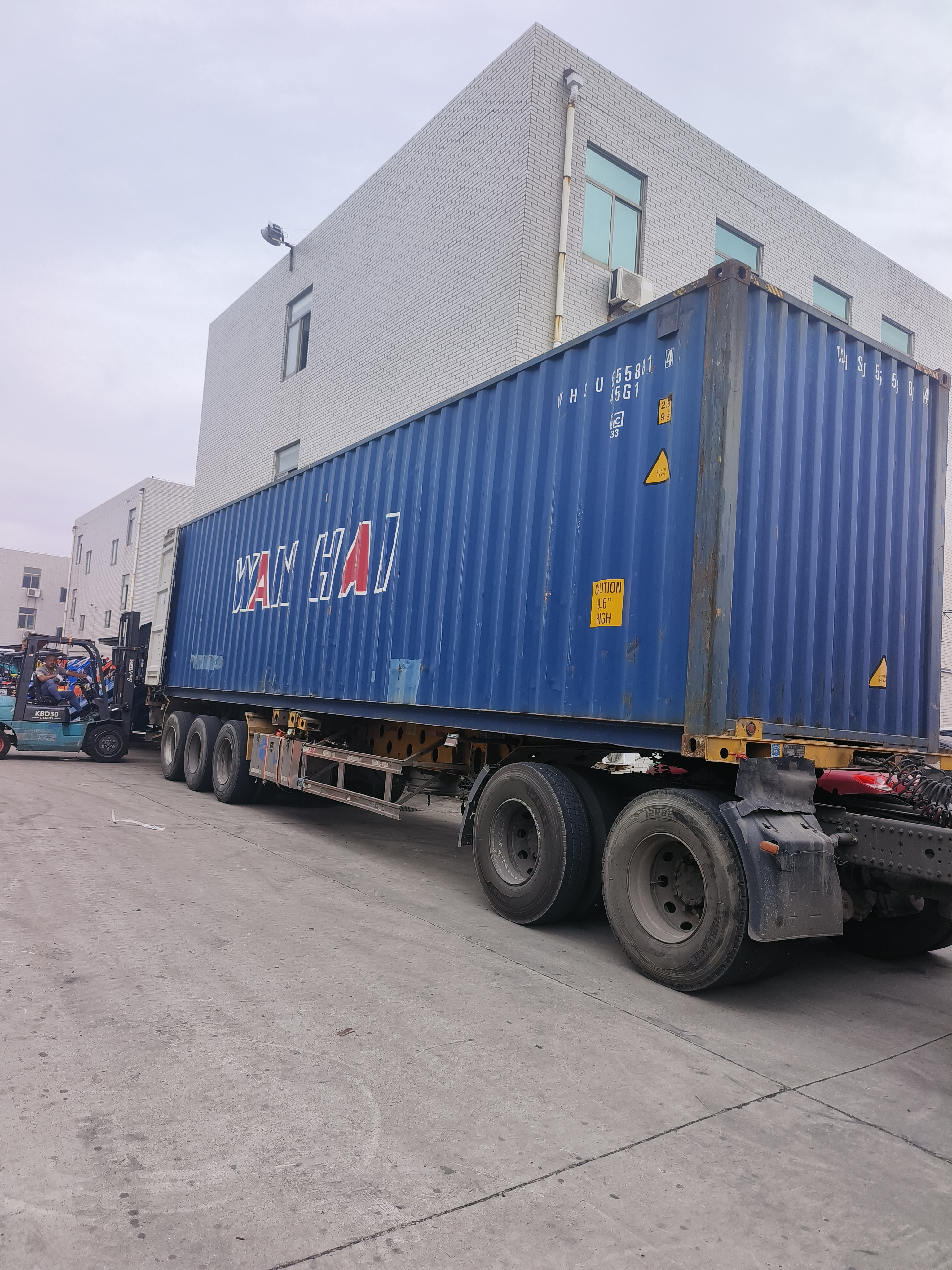
- Delivery method. Confirm shipping arrangements — QINGONG states sea freight from Chinese ports by bulk carrier or container — and check access at the receiving end against the machine's transport dimensions.
What is changing in the compact equipment segment
Three developments are visible in the supplied evidence and worth factoring into a decision that will run for several years.
Regulatory transition is the most concrete. The shift from Machinery Directive 2006/42/EC to Machinery Regulation (EU) 2023/1230 is already reshaping documentation requirements, and manufacturers at QINGONG's scale are managing that transition model by model rather than all at once. Buyers ordering for EU delivery should ask where a specific model sits in that process rather than assuming blanket coverage.
Attachment ecosystems are becoming the real product differentiator. The published lists for compact excavators and skid steers now run to breakers, augers, grapples, rakes, grading buckets, sweepers, snow blowers and brooms, which means the buying decision increasingly turns on hydraulic matching and quick-hitch standardisation rather than on base machine specification. A fleet built around one coupling standard retains value across machine replacements; a fleet built around mixed standards does not.
Service geography is the third shift. Overseas parts warehouses and local service teams, such as those QINGONG reports in Tanzania, Zambia, Indonesia and Laos, now influence purchase decisions in export markets as strongly as machine capability. For a contractor in East Africa or Southeast Asia, a documented parts route is often worth more than a marginal difference in digging output.
Frequently asked questions
Is a mini excavator or a skid steer loader better for trenching on a residential site?
A mini excavator is normally the closer fit for residential trenching, because it is built for controlled below-grade excavation and can be matched to a narrow bucket width — for example a 300 mm standard bucket with 200 to 600 mm alternatives on the QG319, or a 400 mm standard bucket on the QG328 and QG350. A skid steer can dig with a dedicated backhoe attachment, but its geometry is designed for lift and carry, so depth control and trench tolerance are harder to hold. Access width, not tonnage, usually decides between the two on a built-up site.
When does a wheeled excavator make more sense than a crawler mini excavator?
A wheeled excavator is justified when a crew services many small sites in a working day and trailer movements would otherwise consume the schedule. In road-legal configuration it travels between locations under its own power, and outriggers provide a stable digging base once it is positioned. It becomes the weaker choice on soft, muddy or steep ground, where a crawler undercarriage distributes load better, and it requires confirmation of local road-registration requirements before the mobility benefit is real.
Can one machine cover both excavation and loading work?
A backhoe loader is the conventional single-machine answer, combining a front loader with a rear excavator, and it suits rural road maintenance, drainage work, foundation backfilling and small demolition. The trade-off is that it is a compromise on both functions: it does not match a dedicated excavator on depth and reach, nor a dedicated skid steer on attachment-driven surface work. Buyers with meaningful volume in both categories usually find a two-machine combination more productive than one dual-function unit.
What should be verified about CE marking and engine emissions before ordering?
Ask for the CE Declaration of Conformity and technical file for the exact configuration quoted, including engine and attachments, rather than for the model family. Confirm the emission certificate for the engine actually fitted, since Stage V availability and aftertreatment requirements can differ by power band and are sometimes confirmed case by case. Where the machine is destined for the EU, also ask where the model sits in the transition to Machinery Regulation (EU) 2023/1230.
What documentation and support should be confirmed for overseas operation?
Confirm that operation and maintenance manuals are supplied in a usable language, and request repair drawings and hydraulic circuit diagrams in electronic form if local servicing is planned. Verify spare-parts coverage for the region — QINGONG reports warehouses in Tanzania, Zambia, Indonesia and Laos — together with the consumable list and the warranty terms for the specific model; the company states a one-year warranty on its mini excavators. Finally, confirm the shipping method, since sea freight by bulk carrier or container affects delivery time, unloading arrangements and total landed cost.
Conclusion
The mini excavator, skid steer loader and wheeled excavator are three answers to three different questions, and the comparison only becomes useful once the buyer states which question dominates the working week. Digging below grade in tight space points to the compact crawler excavator; moving, lifting and clearing material at grade points to the skid steer; digging across dispersed sites on paved roads points to the wheeled excavator. Supplier choice then narrows on documentation quality, attachment standardisation and parts reachability — the three factors that determine whether a correctly selected machine stays productive after the first season.
Reference document: QINGONG Machinery Catalog & Introduction (PDF) — download.
Есть вопросы или нужны дополнительные детали?
Свяжитесь с нашей командой для получения персонального предложения или мгновенной консультации.
Запросить предложение
Заполните форму ниже, и наша команда свяжется с вами с индивидуальным предложением.
Прямой чат WhatsApp
Предпочитаете общаться в реальном времени? Напишите нам в WhatsApp для мгновенной помощи и быстрых ответов.
- Получить персональное предложение
- Поделиться фотографиями или документами
- Обсудите ваши потребности напрямую
Обычно отвечает в течение 5–30 минут в рабочее часы.