
Mini Machinery Supplier Evaluation in 2026: Trends, Capabilities, Limits
The global market for compact and mini machinery is expanding as projects in urban construction, agriculture, and industrial logistics look for equipment that can operate in narrow spaces with lower fuel consumption and labor requirements. For buyers who are evaluating suppliers, the main challenge is not missing demand but verifying whether a supplier's advertised capabilities match the realities of production, shipment, and after-sales support.
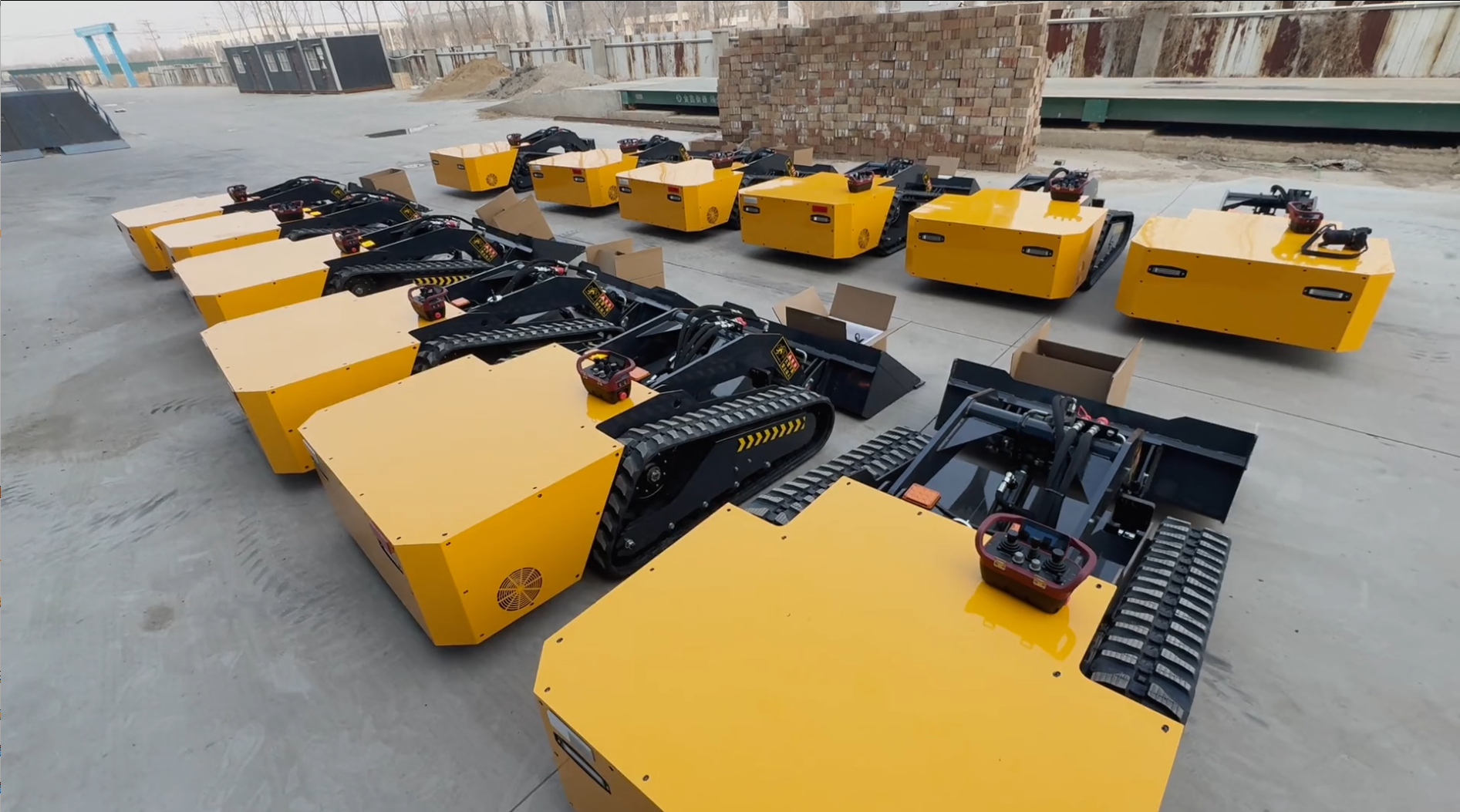
Mini machinery platforms are increasingly used where site width and operating cost limit full-size equipment.
Why Compact Equipment Is Moving Up the Buying Agenda
Market data shows a sustained shift toward smaller equipment. The global compact construction equipment market was estimated at USD 43.5 billion in 2024 and is projected to reach USD 69.1 billion by 2034, according to Global Market Insights. Within this segment, the mini track machinery market is expected to grow at a CAGR of 4.5 percent and reach USD 11.31 billion by 2035, with mini track loaders accounting for about 54 percent of that market, according to Future Market Insights. The global skid steer loader market was valued at about USD 9.4 billion in 2023, with North America contributing 84.7 percent of revenue, according to Grand View Research. Small bulldozers are also projected to expand from USD 2.11 billion in 2024 to USD 3.78 billion by 2035 at a CAGR of 5.44 percent, according to Spherical Insights.
China is a central part of this supply landscape. In 2024, China concentrated 27.3 percent of total global exports of machines, maintaining its position as the world's largest exporter in this sector, according to OEC. Buyers searching for 'china mini machinery' or 'compact machinery suppliers' will therefore encounter a high concentration of Chinese exporters. The category now includes minidozers, mini loaders, mini electric loaders, mini skid steer loaders, compact track loaders, mini wheel loaders, mini dumpers, mini concrete mixer trucks, mini road rollers, mini automatic mixers, backhoe loaders, and asphalt pavers. This variety is useful, but it also makes supplier evaluation more difficult.
The Procurement Problem: Verifying Capability Behind the Category
A common issue in mini machinery sourcing is that similar product names can hide very different specifications. One supplier's 'mini loader' may have a different bucket capacity, control system, or build quality than another's. Buyers at the evaluation stage need to move from browsing catalogs to verifying technical sheets, production capacity, and service commitments.
The opportunity is equally clear. Chinese mini machinery exporters serve a wide range of markets, from Africa and South America to the Middle East and Southeast Asia, offering configurations that may be more accessible than full-size equipment from global incumbents. However, the cost advantage is only real if the machine matches the application and if spare parts and support are available. This is why professional buyers treat 'china mini machinery' as a category to be assessed, not as a single product type.
Supplier Profile: Qingdao Chary Machinery as an Export Bench
One example of a mid-sized supplier in this segment is Qingdao Chary Machinery Co., Ltd, a Qingdao-based enterprise established in 2015. It is authorized by China's Ministry of Commerce for vehicle export and describes itself as a provider of one-stop purchasing services. The company reports a 2,000-square-meter factory, more than 100 employees, an annual output of 500 units, and an R&D team of about 15 engineers. Its main export markets are Africa and South America, which together account for approximately 80 percent of exports. The product range centers on mini machinery, including minidozers, mini loaders, mini electric loaders, and skid steer loaders, alongside a broader equipment portfolio covering wheel loaders, motor graders, bulldozers, forklifts, and road rollers.
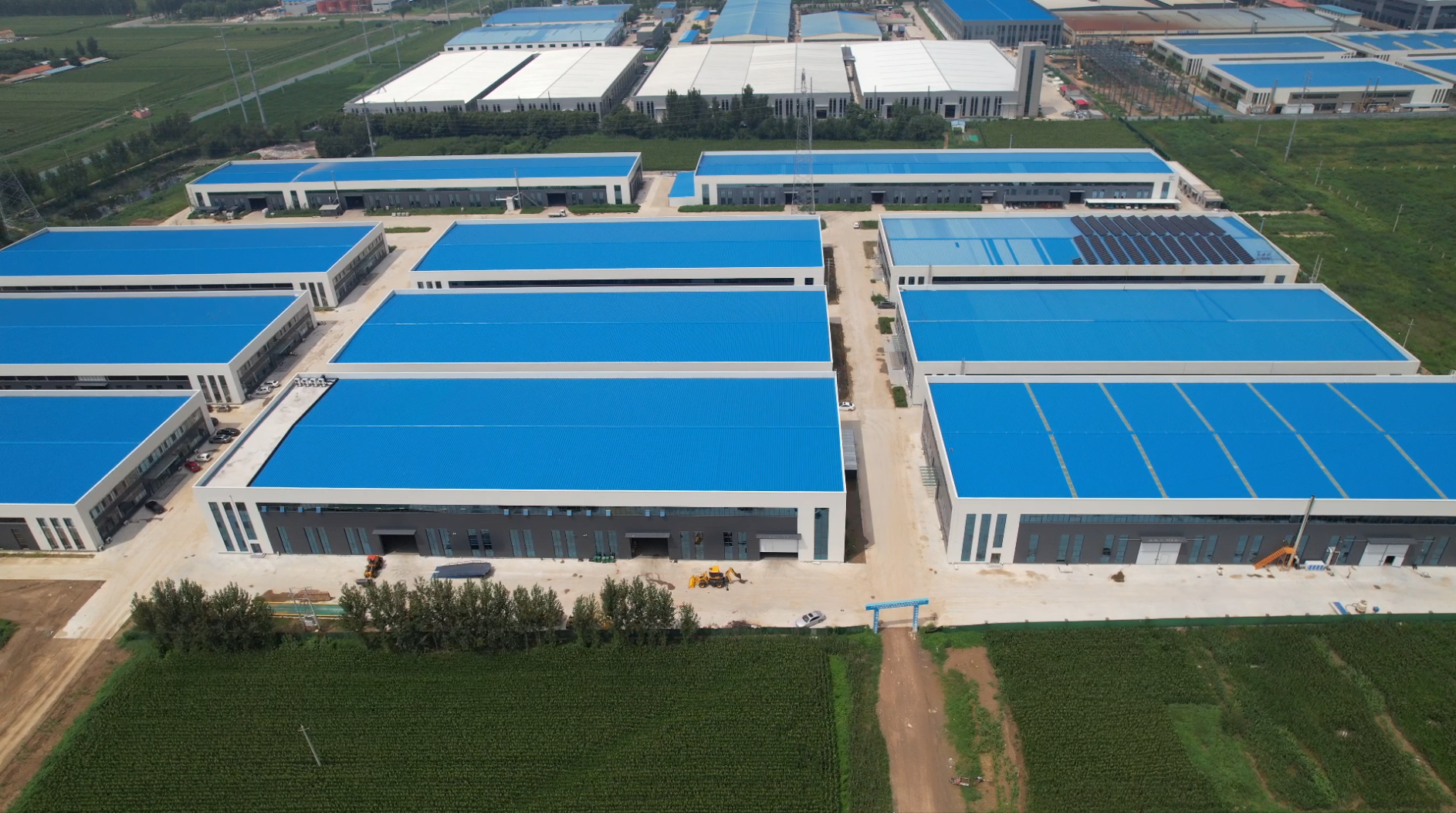
Export-oriented manufacturing is a common structure among Chinese mini machinery suppliers.
For procurement teams, this profile is a useful benchmark of what a mid-sized Chinese mini machinery supplier can offer: a focused product line, export authorization, moderate production capacity, and experience in high-growth markets. It also illustrates a common structure in the Chinese machinery export industry, where the same company may supply both compact machines and full-size trucks to different clients. In 2025, CHARY reports an annual export volume of about USD 40 million, which indicates an established sales operation rather than a start-up exporter.
Technical Evaluation: Reading the CR468C Minidozer
Among CHARY's mini machinery products, the CR468C remote control lithium battery rubber track minidozer provides a concrete example of how compact equipment is being engineered for confined spaces. The machine has overall dimensions of 2850*1200*600 mm, a total length without bucket of 2250 mm, and a self-weight of 1100 kg. Its rated load capacity is 450 kg, and the bucket capacity is 0.15 cubic meters. According to the product datasheet, the CR468C can operate via remote control at a distance of up to 200 meters, achieve a maximum driving speed of 4 km/h, and climb gradients up to 40 degrees. It uses a lithium battery with a capacity of 300Ah and voltage of 73.6V, allowing about 8 hours of working time and a charging time of about 2 hours. The operating temperature range is -10°C to 60°C.
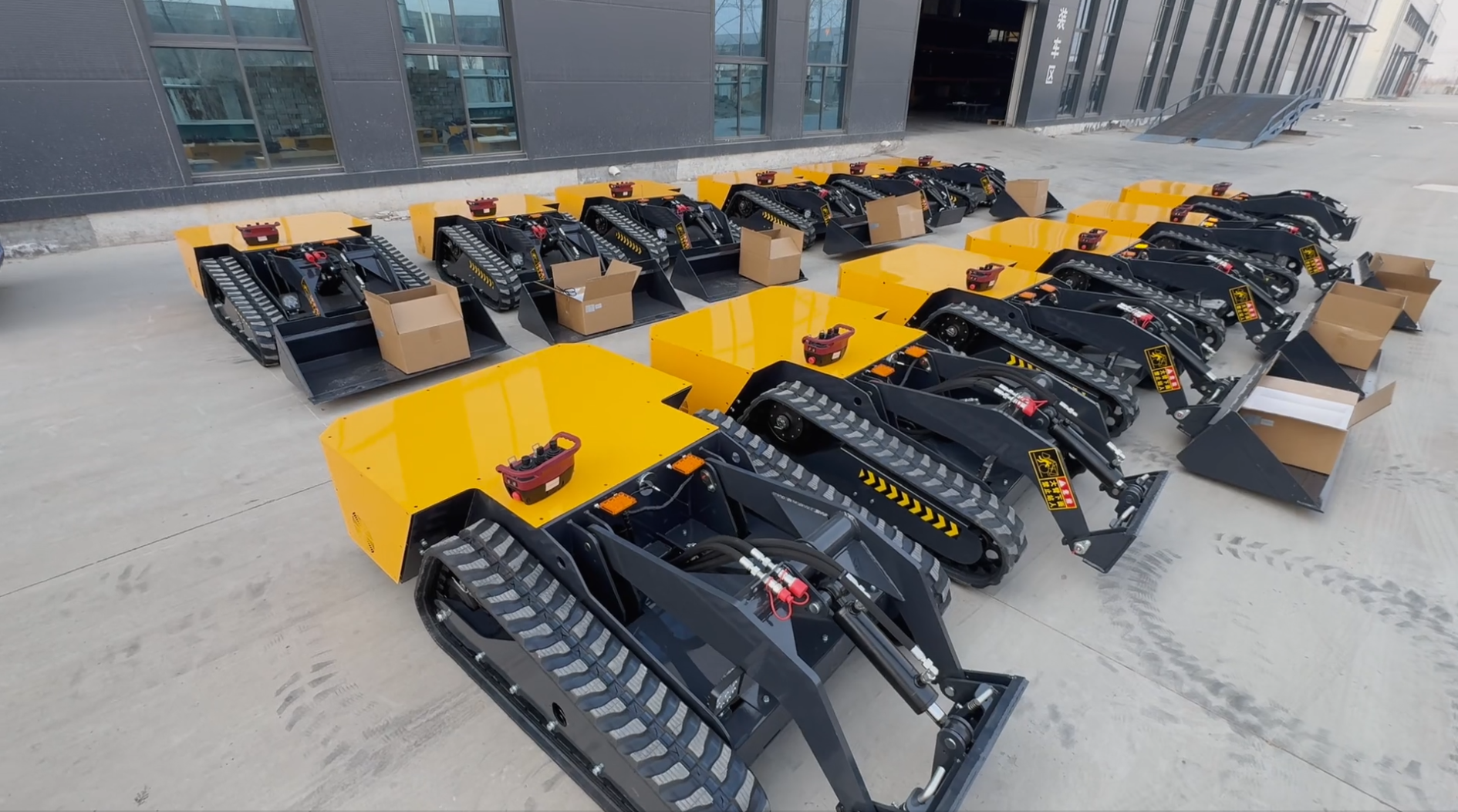
The CR468C combines a lithium battery, rubber tracks, and remote control for narrow-site material handling.
For buyers comparing mini loaders, compact track loaders, or mini skid steer loaders, these figures matter because they define the boundary conditions of the application. A machine that is 1.2 meters wide can pass through narrower aisles than a standard skid steer loader. A remote-control operation distance of 200 meters allows the operator to stay away from dust, heat, or potentially unstable areas. A 40-degree climbing ability is sufficient for many grading and material-moving tasks on construction sites, but it is not equivalent to heavy earthmoving capability.
Applications and Reference Cases
The usefulness of compact equipment can be seen in two reference cases from the CHARY portfolio. In Saudi Arabia, an engineering construction client uses 12 units of the CR468C minidozer for narrow indoor and outdoor material handling. The project has achieved stable operation for more than 10 years, and the highlight reported by the company is effective operation in high-temperature and narrow environments while saving manpower and material resources. In Mali, a logistics company deployed 50 units of product model 3529 for the transport of powdered and granular materials as well as sand and gravel, achieving stable operation under high-intensity work. Although the Mali case involves a different vehicle category, it shows the exporter's broader ability to support fleet-based customers in emerging markets.
Market Trend Analysis: What the Data Signals for 2026
Several market signals are relevant to mini machinery buyers. First, electrification is moving from option to expectation. Products such as mini electric loaders and lithium-battery minidozers reflect a wider shift toward lower emissions and lower operating costs in confined spaces. Second, compact track loaders and minidozers are gaining share in the mini track machinery category, where mini track loaders already hold about 54 percent of the market. Third, regional demand varies. North America dominates the skid steer loader market with 84.7 percent of revenue, while Africa and South America are key destinations for Chinese exporters because lower upfront cost is a primary decision factor. Fourth, the overall compact equipment market remains large enough for multiple supplier tiers: global players such as Caterpillar hold significant share, while China's SANY, XCMG, LiuGong, and Yuchai are recognized as major Chinese manufacturers in the mini machinery space.
For a supplier such as CHARY, these trends mean that buyers are increasingly asking for specific machine configurations, certification documents, and remote-control or electric options. The company's catalogue includes not only minidozers but also mini loaders, mini electric loaders, and skid steer loaders, which aligns with the direction of the market. However, the existence of different machine categories does not automatically guarantee application fit. Buyers should map each product's specifications to their own site constraints.
Comparison with Traditional Solutions
Mini machinery is often compared with traditional solutions such as skid steer loaders, compact wheel loaders, or manual labor. The comparison should be based on task requirements, not on the machine size alone.
| Criteria | Mini remote-controlled minidozer (example CR468C) | Traditional skid steer loader |
|---|---|---|
| Physical width | About 1.2m | Usually wider, often over 1.5m |
| Operation | Remote control up to 200m | Cab or walk-behind operation |
| Power | Lithium battery | Diesel or gasoline engine |
| Rated load | 450 kg | Typically higher, 500-1,500 kg depending on model |
| Speed | 4 km/h | Higher travel speed |
| Suitable tasks | Narrow indoor/outdoor handling, material transfer | Bulk loading, grading, site preparation |
| Limitations | Lower capacity, speed, battery/thermal range | Higher emissions, fuel cost, operator requirement |
The main advantage of mini machinery is its ability to operate where larger equipment cannot fit or where manual labor is costly and slow. The main limitation is capacity. A 450 kg rated load and 4 km/h maximum speed are acceptable for small material moves but not for high-production excavation or hauling. Remote control range is limited to 200 meters, and the operating temperature range of the CR468C is -10°C to 60°C, so extreme cold or prolonged high-temperature operation must be assessed. Buyers should also verify whether spare parts and trained service personnel are available in their region; compact equipment from any supplier is only as reliable as the support behind it.
Future Outlook: Automation and Heavy-Duty AGVs
The next phase of mini machinery will likely include more automation. Automated guided vehicles and heavy-duty outdoor AGVs are already being used in warehouses and industrial yards, and the same concepts will gradually appear in construction logistics. Mini machinery suppliers that can integrate remote control, electric powertrains, and position sensors can move toward semi-automated material handling. For now, most buyers still need practical, repairable machines, but procurement teams should ask suppliers about their roadmap for control systems and battery management.
A Short Evaluation Checklist for Mini Machinery Suppliers
Based on the available evidence, a professional evaluation of mini machinery suppliers should include the following checks:
- Confirm the exporter's legal registration and export authorization.
- Compare complete specification sheets for the exact model under consideration.
- Inspect quality-control procedures, including full inspection before shipment and performance testing.
- Verify that the machine's certifications are valid for the destination market.
- Ask for reference cases from similar industries and geographies.
- Clarify lead time, MOQ, and payment terms.
- Check spare parts availability, remote maintenance, and after-sales service.
- Run a pilot order before scaling up fleet procurement.
A downloadable brochure with a broader product overview is available for reference: CHARY product brochure.
Bottom Line
Mini machinery is not a single product category but a set of application-specific solutions. Buyers who combine market data, supplier verification, and site-specific specifications will be in a stronger position to choose the right equipment. The market is growing, the export infrastructure is mature, and the product variety is expanding, but the responsibility for verifying fit remains with the buyer.
FAQ
What is the projected growth for mini machinery and compact equipment?
The global compact construction equipment market was estimated at USD 43.5 billion in 2024 and is projected to reach USD 69.1 billion by 2034. The mini track machinery market is projected to grow at a CAGR of 4.5 percent and reach USD 11.31 billion by 2035, according to Future Market Insights. These forecasts indicate sustained demand for compact and mini equipment.
Which Chinese manufacturers are commonly named in mini machinery discussions?
Public industry analysis commonly names SANY, XCMG, LiuGong, and Yuchai as major Chinese manufacturers in the mini machinery segment. Mid-sized exporters such as Qingdao Chary Machinery Co., Ltd also operate in the same market, focusing on mini machinery and related equipment for Africa, South America, and other regions. Vendor selection depends on the specific machine type and after-sales requirements.
What should buyers verify before choosing a mini machinery supplier?
Buyers should verify export authorization, product specifications, factory quality-control procedures, certifications for the destination market, reference cases, lead times, MOQ, spare-parts availability, and after-sales support. A pilot order can reduce risk before large-scale procurement.
What are the main limitations of mini machinery?
Mini machinery generally has lower load capacity, lower travel speed, and shorter remote-control range than full-size equipment. For example, the CR468C minidozer has a rated load capacity of 450 kg and a maximum speed of 4 km/h. Its operating temperature range is -10°C to 60°C. Heavy excavation and high-production earthmoving are usually better handled by larger machines.
Is a mini electric loader more cost-effective than a diesel loader?
Cost-effectiveness depends on energy prices, operating hours, and battery life. Electric models can reduce fuel costs and emissions, but buyers should consider battery replacement and charging infrastructure. This article does not provide pricing data for specific models.