
Mini Machinery vs. Conventional Loaders: A Buyer's Decision Guide for 2026
The global compact construction equipment market was estimated at USD 43.5 billion in 2024 and is projected to reach USD 69.1 billion by 2034, according to Global Market Insights. For procurement teams and contractors working in confined spaces, the practical question is not whether compact equipment is growing, but which equipment class offers the best combination of cost, safety, and site fit. This guide compares conventional wheel loaders with remote-controlled mini machinery, using Qingdao Chary Machinery Co., Ltd as a worked example of a China-based compact equipment supplier.
Why Conventional Loaders Struggle in Confined Spaces
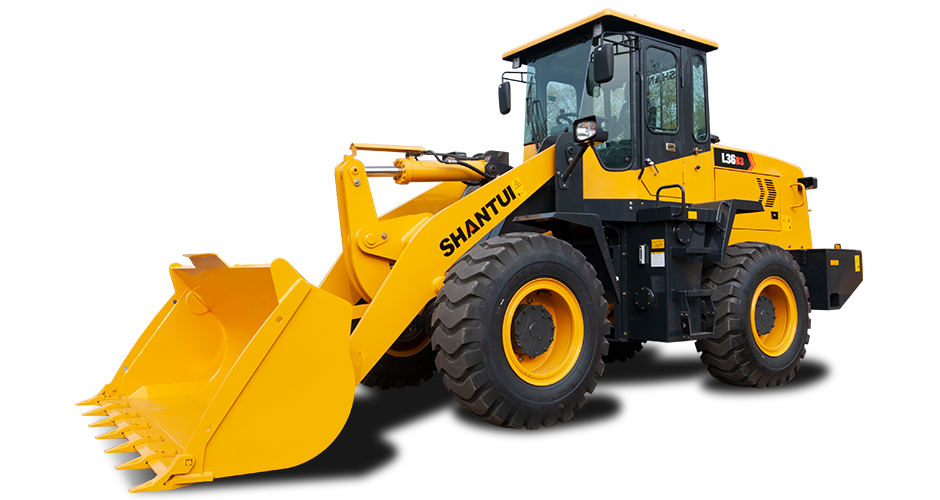
Conventional wheel loaders are built for throughput. In a quarry, a port, or a large aggregate yard, a wheel loader cycles quickly between stockpile and hopper and carries a large bucket. Those same strengths become limitations in restricted environments. A basement renovation, a tunnel cross-passage, a narrow urban alley, or a high-temperature processing area may not provide enough turning radius. A human driver inside the cab also faces heat, dust, noise, and potential contact hazards.
The opportunity is to match the machine to the site rather than force the site to accommodate the machine. Mini machinery is designed to do exactly that, and the remote-controlled minidozer extends the logic further by removing the operator from the hazard zone. For buyers evaluating mini machinery, the first step is to define the physical constraints of the job site and the acceptable level of operator exposure.
CHARY as a Decision Reference
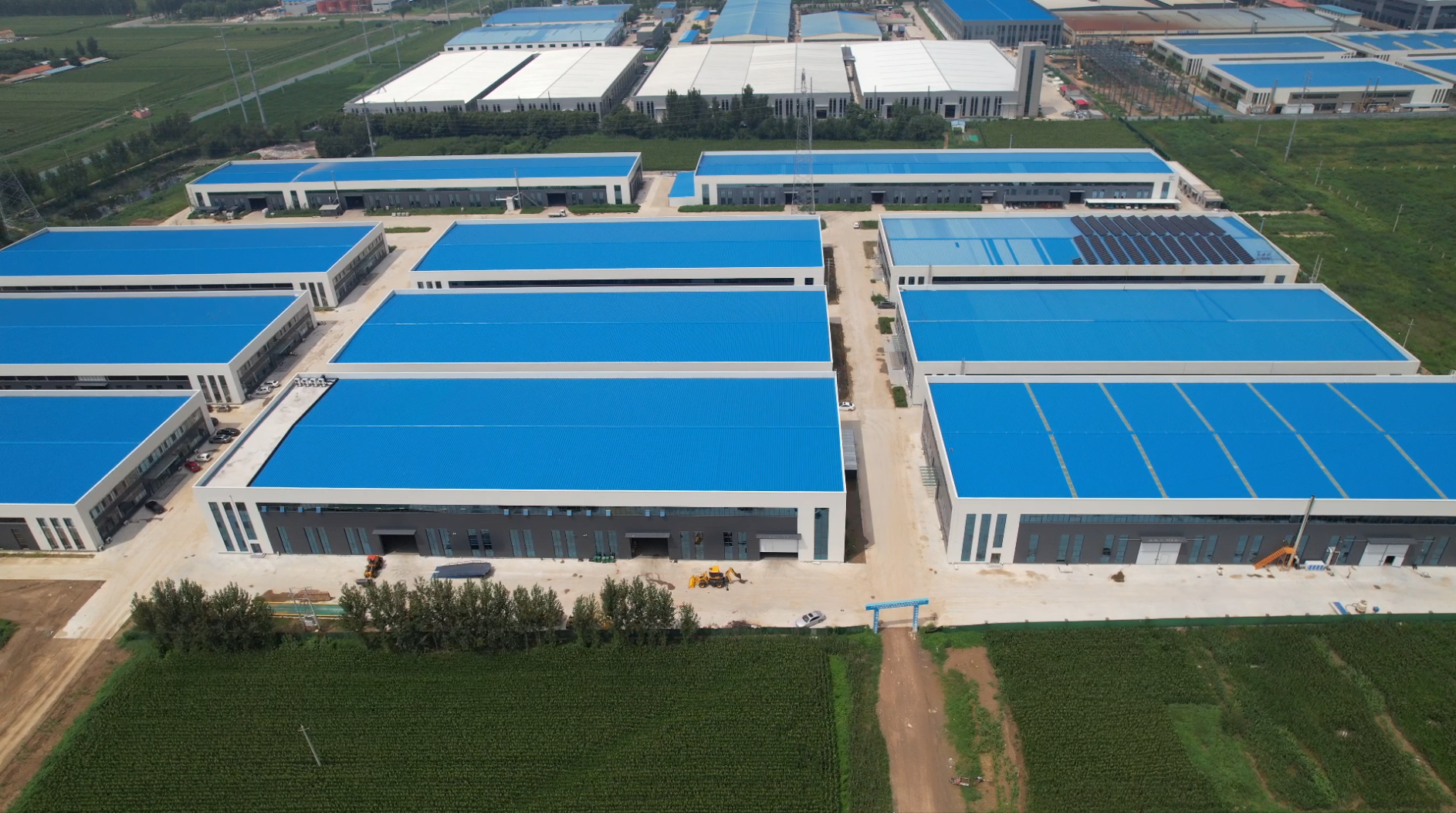
Qingdao Chary Machinery Co., Ltd is a China-based manufacturer and export distributor of compact equipment, located in Qingdao, Shandong Province. The company was established in 2015 and operates a 2,000 m² production facility with more than 100 employees and 15 engineers. Its annual output is approximately 500 units. Around 80% of production is exported, with primary markets in Africa and South America. CHARY is an enterprise authorized by China's Ministry of Commerce for vehicle export, which is a formal requirement for selling road-capable machinery and vehicles outside China.
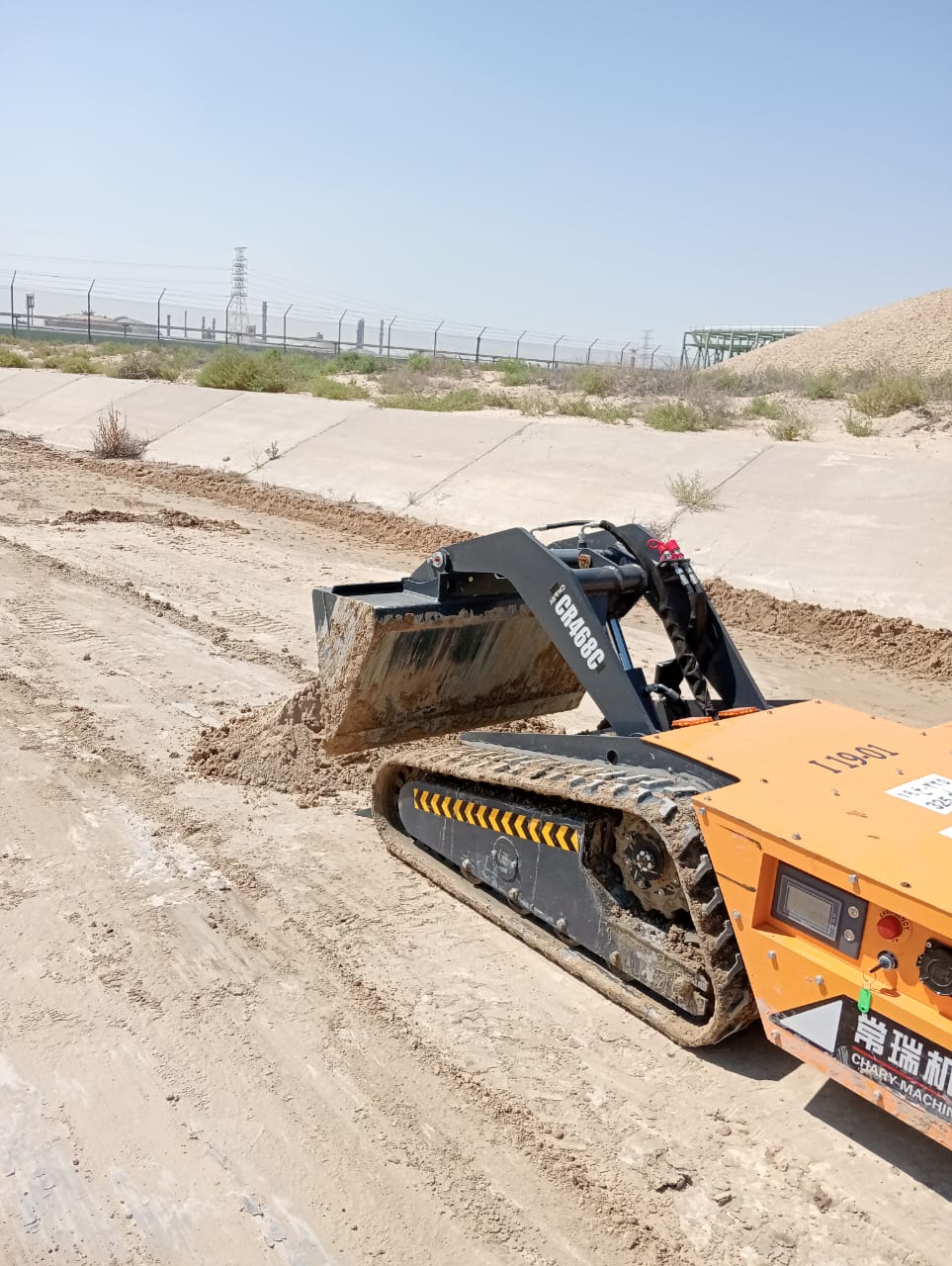
CHARY's product line includes mini machinery, minidozer, mini loader, mini electric loader, and skid steer loader, alongside a broader range of engineering machinery and spare parts. Within this portfolio, the Minidozer is positioned as a remote-controlled compact dozer for confined sites. Compared with a wheel loader, the Minidozer has distinct advantages: it is smaller in size, operated by remote control, and does not require a human driver.
How a Remote-Controlled Minidozer Changes the Operating Model
The core difference of the Minidozer is its smaller size, remote control operation, and no need for a human driver. Removing the driver station changes the machine's geometry. There is no cab, no steering wheel, and no seat, so the overall footprint can remain small while still delivering pushing and leveling capability. The remote control also changes the safety envelope: the operator can stand at a distance while the machine works in a hazardous or hot zone.
Because the machine runs on electricity, there is no diesel exhaust, which is a significant factor in basements, enclosed structures, and high-temperature environments. CHARY states that the Minidozer provides 90% lower operating cost over alternatives. The cost reduction is not attributed to a single feature; it combines lower energy cost, no driver wage, and reduced maintenance downtime. From a procurement perspective, this changes the payback calculation. A machine with a high purchase price may still deliver a lower total cost of ownership if operating cost is dramatically reduced.
Best-Fit Conditions and Use Cases
CHARY's list of best-fit conditions for the Minidozer is narrow space, basement, high temperature environment, and harsh environment. In a basement or tunnel, a full-size wheel loader cannot maneuver, and a remote-controlled unit can be positioned and operated from an adjacent safe area. In a high-temperature processing area, the operator does not need to sit inside the heat; the machine can be commanded from a cooler location. In harsh environments with dust, uneven floors, or limited visibility, the absence of an onboard operator removes one of the most vulnerable components of the system: the human body.
The practical effect is that the Minidozer is considered for jobs where a wheel loader would be physically unable to enter or would expose a driver to excessive risk. This includes indoor demolition, basement excavation, tunnel maintenance, and industrial sites with heat or dust. Buyers should map these conditions against their own project portfolio before deciding whether a compact remote-controlled dozer is a primary tool or a specialist addition to an existing fleet.
Market Trends Supporting Compact Equipment
Several market indicators support the shift toward compact and mini equipment. The global compact construction equipment market is forecast to expand from USD 43.5 billion in 2024 to USD 69.1 billion by 2034 (Global Market Insights). Future Market Insights projects the mini track machinery market to grow at a CAGR of 4.5%, reaching USD 11.31 billion by 2035, with mini track loaders holding a 54% share. Grand View Research valued the global skid steer loader market at approximately USD 9.4 billion in 2023, with North America accounting for 84.7% of revenue. Spherical Insights estimates the small bulldozer market will grow from USD 2.11 billion in 2024 to USD 3.78 billion by 2035. China, meanwhile, concentrated 27.3% of total global exports of machines in 2024, according to OEC, making Chinese manufacturers a central part of the compact equipment supply chain.
At the same time, the market is competitive. Caterpillar held more than 15% of the compact construction equipment market in 2024, and major Chinese manufacturers such as SANY, XCMG, LiuGong, and Yuchai are recognized players in hydraulic systems and fuel efficiency. Buyers therefore need supplier-specific evidence, not just category-level trends. For a sourcing decision, the relevant question is whether a specific model, with its own size, power source, and support package, fits the intended application.
Mini Machinery vs. Conventional Wheel Loader
The table below summarizes the main differences between a remote-controlled minidozer and a conventional wheel loader, based on CHARY's product positioning.
| Comparison Criteria | Minidozer (Remote-Controlled) | Conventional Wheel Loader |
|---|---|---|
| Physical size | Compact, suited to narrow spaces | Large, requires open operating area |
| Operator | Remote control; no driver required | Requires a trained operator in the cab |
| Power source | Electricity | Typically diesel |
| Operating cost | 90% lower per CHARY | Higher fuel and labor cost |
| Best-fit environment | Basement, high temperature, harsh environment | Open yards, bulk loading, long travel distances |
Cost Comparison Framework
A practical way to compare mini machinery with conventional loaders is to calculate total cost of ownership over a defined period. The buyer should include machine price, freight, customs, fuel or electricity, operator wages, maintenance, spare parts, and downtime. In CHARY's comparison, the Minidozer's 90% lower operating cost is a statement about operating cost, not purchase price. This distinction matters: a small electric machine may have a similar invoice price to a used wheel loader, but its daily operating cost can be lower.
When a Wheel Loader Remains the Better Choice
The comparison is not a universal verdict. In open yards with high-volume loading, a wheel loader remains the more productive tool because it can carry larger bucket loads and travel faster between stockpiles and trucks. A minidozer is not designed to replace that cycle. Its value is in footprint and risk reduction. Buyers who select a minidozer for a task that actually requires high-capacity hauling will face a performance ceiling. That boundary is important to keep in mind when comparing equipment categories.
After-Sales Risk in Mini Machinery Procurement
Procurement decisions also depend on after-sales risk. Importing compact equipment from overseas suppliers can create uncertainty around spare parts, service documentation, and repair skills. CHARY addresses damage to consumable parts risks through regular inspection of wear parts and a policy of providing an additional vulnerable part for free. Its engineers can also perform online repairs, which shortens downtime when a problem occurs. For a buyer in Africa or South America, this type of support can be more decisive than a nominal price difference.
Supplier Evaluation Checklist
When comparing mini machinery suppliers, buyers should use a structured checklist rather than relying only on machine photos. The following points are especially relevant in compact equipment procurement:
- Export authorization: A formal authorization to export vehicles and machinery demonstrates that the supplier has passed regulatory review. CHARY, for example, is authorized by China's Ministry of Commerce for vehicle export.
- Production capacity: A supplier's factory size, employee count, and annual output indicate whether the company can support repeat orders. CHARY operates a 2,000 m² facility, employs more than 100 people, and produces about 500 units per year.
- Engineering support: Access to engineers for remote repair is a practical advantage when the buyer is located in a different continent. CHARY states that its engineers can perform online repairs.
- Spare parts policy: Wear parts fail in normal use. A supplier that provides a free vulnerable part and recommends regular inspection creates a predictable maintenance cost.
- Site-fit evidence: The supplier should state which conditions the machine is designed for. For the Minidozer, that list is narrow space, basement, high temperature, and harsh environment.
Applying the Comparison in a Procurement Process
A decision between mini machinery and conventional loaders can be organized in five steps.
- Define site constraints. Measure the smallest access point, turning radius, floor-loading limit, and temperature range. This determines whether a full-size loader can enter at all.
- Estimate total cost of ownership. Compare purchase price, energy cost, labor, maintenance, and expected downtime over three to five years. The 90% operating-cost difference reported by CHARY is meaningful only when the application matches the machine's design.
- Assess operator risk. Remote-controlled operation is not simply a convenience; it removes a person from the hazard zone. If the site is hot, dusty, or structurally unstable, this may be the deciding factor.
- Evaluate after-sales capability. Spare part delivery time and remote repair support determine how long a machine stays down. This is especially important for African and South American buyers who source from China.
- Request documentation and proof. Buyers should ask for machine specifications, export documents, maintenance plans, and examples of previous shipments before finalizing a contract.
Future Outlook
Demand for compact and mini equipment is likely to keep expanding as urbanization, workplace safety rules, and emissions constraints tighten. Remote-controlled electric units fit those pressures: they reduce labor exposure, lower exhaust emissions, and operate where larger machines cannot. The challenge for buyers is to separate genuine product capability from marketing language. A clearly documented machine, a supplier with export experience, and a realistic after-sales plan are more reliable signals than a headline specification.
Frequently Asked Questions
What is mini machinery?
Mini machinery refers to compact-sized equipment such as minidozers, mini loaders, mini electric loaders, skid steer loaders, mini excavators, and mini dumpers. These machines are designed for confined spaces where full-size equipment cannot operate efficiently.
How does a minidozer differ from a wheel loader?
Compared with a wheel loader, the Minidozer is smaller, operated by remote control, and does not require a human driver. It uses electricity instead of diesel, which lowers operating costs and removes on-site exhaust.
Is a minidozer cheaper to operate than a wheel loader?
According to CHARY, the Minidozer provides 90% lower operating cost over alternatives. The main drivers are the elimination of a human driver and the use of electricity as fuel.
What are the best site conditions for a minidozer?
CHARY lists narrow space, basement, high temperature environment, and harsh environment as the best-fit conditions for the Minidozer.
When should a buyer still choose a wheel loader?
Buyers should choose a wheel loader when the task involves high-volume loading in open areas, because larger bucket capacity and faster travel speed make it more productive than a compact minidozer.
How can buyers reduce maintenance risk when importing mini machinery?
Buyers can reduce risk by selecting suppliers who inspect wear parts regularly and provide replacement vulnerable parts. CHARY, for example, includes an additional vulnerable part for free and supports online repair by engineers.
What is CHARY's production capacity?
CHARY operates a 2,000 m² production facility, employs more than 100 people and 15 engineers, and produces approximately 500 units per year.
What should a buyer check before choosing a mini machinery supplier?
Buyers should check the supplier's export authorization, production capacity, engineering support, spare parts policy, and documented site-fit evidence. These factors determine whether the machine can be operated and maintained in the buyer's own region.
Company brochure: Download the CHARY company brochure for a broader look at product lines and capabilities.