
Mini Recessed Downlights: Compact Accent Lighting Explained
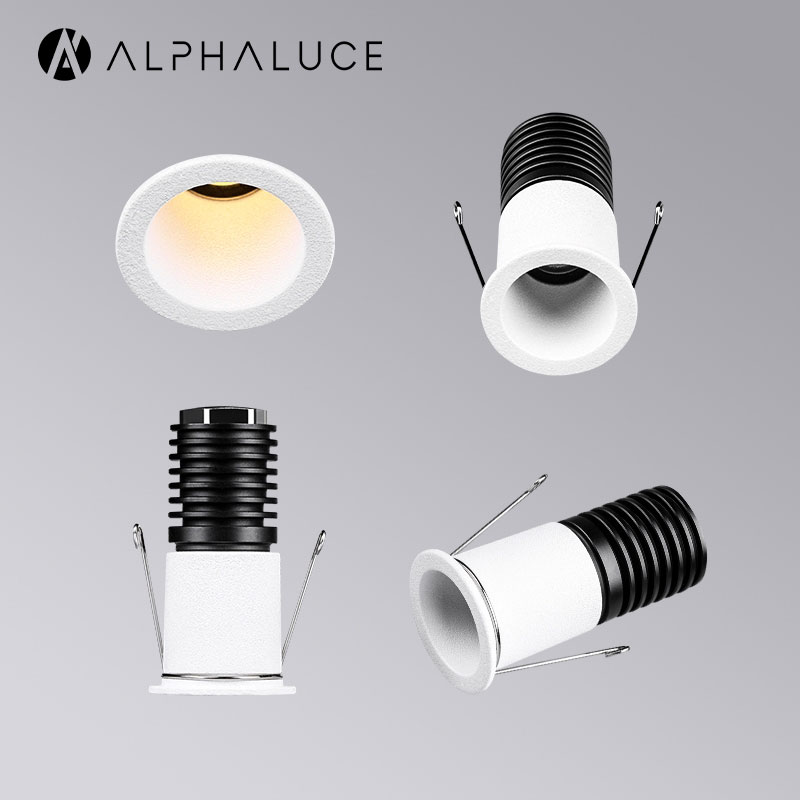
ALPHALUCE ALDL1409 small recessed lights: a compact recessed downlight format for accent, wet-area and detail lighting.
Recessed downlights have become a standard architectural lighting layer because they allow light to be placed precisely while keeping the ceiling plane clean. Within this category, mini recessed downlights are an increasingly important sub-segment: they answer a different question from standard downlights, not how to light an entire room, but how to light a detail, a wet zone, a shelf, a corridor or a ceiling zone where a conventional luminaire is visually and physically too large.
This article looks at the mini recessed downlight as a procurement and specification option. It uses ALPHALUCE's model ALDL1409 as a concrete reference, explains its technical characteristics, identifies appropriate applications, and places compact recessed downlights within the wider recessed lighting market.
The Market Context for Recessed Downlights
Recessed lighting is a large and growing category. According to Market Research Future, the global recessed lighting market was valued at USD 78.32 billion in 2024. Straits Research projects that the market could reach USD 104.79 billion by 2034, with a CAGR of 11.05% from 2026. North America accounted for the largest regional share in 2025, estimated at 34.7%, according to the same source. These figures indicate a mature but expanding category, driven by LED conversion, renovation activity, and demand for architectural lighting that is both energy-efficient and visually unobtrusive.
Within this broad market, buyers are increasingly separating general illumination from accent and detail lighting. A 7W or 10W downlight may be appropriate for ambient light in a bedroom or corridor, but it is not always suitable for a display shelf, a bathroom ceiling above a shower, or a joinery detail where a very small aperture is required. That is where the mini recessed downlight enters the specification.
The Challenge: When a Standard Downlight Is Too Much
Lighting designers and contractors often face the same problem: a ceiling needs light in a precise location, but the available ceiling space is tight, the visual language is minimalist, or the environment is wet and demands a higher ingress protection rating. Using a standard recessed downlight in these situations can create several issues:
- Visual intrusion: a large trim, bezel or visible reflector can compete with architecture instead of disappearing into it.
- Installation limits: not every ceiling void or panel can accept a large cutout.
- Over-lighting: a 7W or 10W downlight may deliver more light than the task needs, causing hotspots on artwork, retail displays or architectural surfaces.
- Wet-area constraints: bathrooms and wet areas commonly require higher IP-rated fixtures; not every compact product provides both small dimensions and water protection.
These constraints create an opportunity for a product format that is small enough to be discreet, robust enough for wet environments, and optically flexible enough to produce controlled accent light.
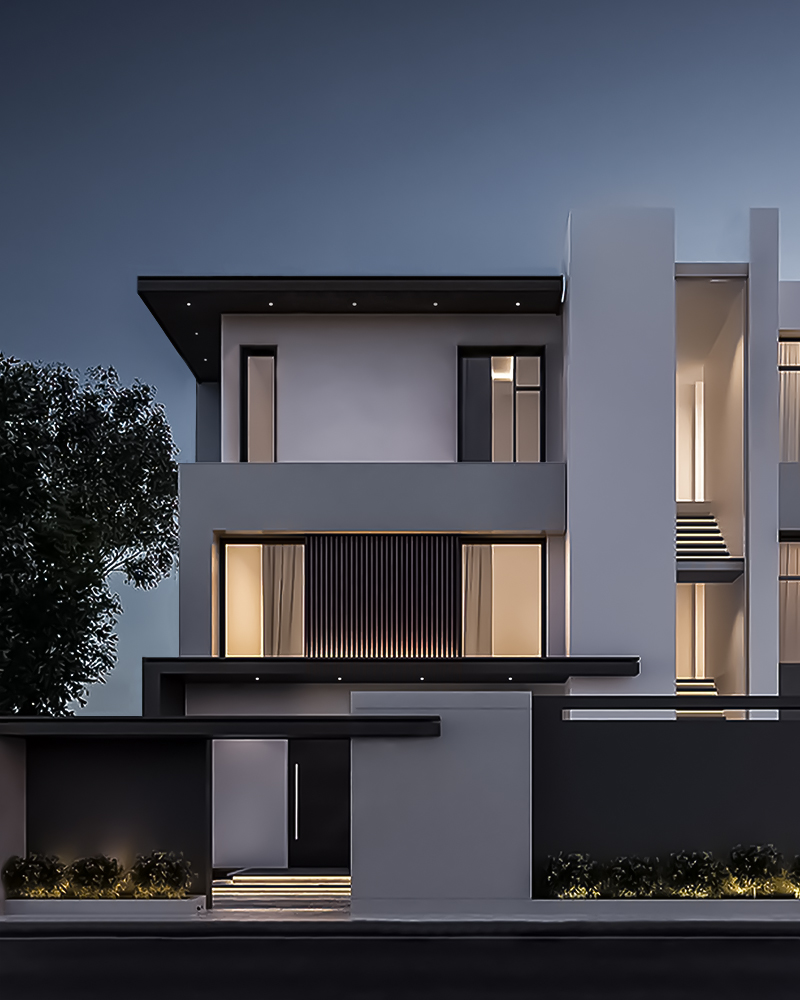
Mini recessed downlights in an architectural installation scene, showing how small apertures can be integrated into ceiling and surface details.
What the ALPHALUCE Mini Recessed Downlight Offers
ALPHALUCE ARCHITECTURAL LIGHTING CO. is an Italian architectural lighting brand established in 2010 that operates as an integrated design, R&D, manufacturing and sales company. It was founded with a focus on minimalist design and lighting aesthetics, and operates a 40,000 m² facility with approximately 150 employees, including an R&D team of 20 engineers. The company produces around 504,000 units per year, with roughly 80% of products exported to Europe, the Middle East, North America and Australia.
In the company's recessed downlight range, the model that directly represents the mini recessed downlight format is ALDL1409, listed as a small recessed light. It is a ceiling-recessed fixture designed for residential, hospitality, landscape, commercial and bathroom & wet-area environments. Its key specifications are shown below.
ALDL1409 Technical Profile
| Parameter | Value |
| Model | ALDL1409 |
| Type | Ceiling recessed / small recessed light |
| Rated power | 2W |
| Luminous flux | 70lm |
| Color rendering | CRI ≥ 90 |
| Beam angles | 15° / 24° / 36° / 60° |
| Cutout diameter | Ø22mm |
| Color temperature | 2700K / 3000K / 4000K |
| Ingress protection | IP65 |
| Material | Aluminum alloy |
| Intended sectors | Residential, hospitality, landscape, commercial, bathroom & wet areas |
The product is part of a broader recessed downlight family that includes higher-output models such as ALDL1851, a 7W downlight delivering 630lm with CRI ≥ 97 and a Ø55mm cutout. This distinction matters: the mini format is a complementary layer, not a universal replacement.
Technical Explanation: What Makes a Mini Recessed Downlight Useful
From a technical perspective, the value of a mini recessed downlight lies in four characteristics.
1. Compact Aperture
The Ø22mm cutout is significantly smaller than the Ø55–90mm openings used by standard architectural downlights. This makes the fixture suitable for tight ceiling layouts, narrow coffers, joinery, display cases and other locations where a larger aperture would be difficult or visually undesirable.
2. Beam Control
Beam angle options of 15°, 24°, 36° and 60° allow the same physical fixture to perform different accent tasks. Narrow angles create a concentrated pool of light, while wider angles create softer distribution. Although the luminous flux is only 70lm, the controlled beam makes that light useful for highlighting an object, a wall texture or a small surface area.
3. IP65 Protection
IP65 indicates protection against dust ingress and low-pressure water jets. This is directly relevant to bathrooms and wet areas. Under UK BS 7671 regulations, Zone 1 above a bath or shower requires a minimum IP65 rating for recessed downlights. A compact IP65-rated fixture therefore addresses both the spatial constraint and the regulatory requirement in wet environments.
4. Material and Build
The aluminum alloy housing provides mechanical stability and heat dissipation in a small package. For a 2W LED, thermal load is modest, but using a metal housing still contributes to consistent performance and longevity across varied installation environments.
In ALPHALUCE's wider portfolio, architectural lighting products are developed around human-centric and healthy lighting principles, with low-glare optics and high color fidelity. The company states low-glare optics with UGR < 19 as a portfolio-level design target, and uses CRI ≥ 92/97 across many of its architectural fixtures. The mini recessed downlight, with CRI ≥ 90, is aligned with the color-quality expectations of accent lighting in residential and hospitality projects.
Application and Use Cases
Bathroom and Wet-Area Lighting
The IP65 rating makes ALDL1409 suitable for bathroom ceiling applications, including spaces where moisture and water exposure are expected. Standard downlights without sufficient ingress protection are not appropriate in shower zones. The mini form factor is particularly useful above showers, in small powder rooms, and in ceilings where a standard downlight would feel visually heavy.
Residential and Villa Interiors
In residential projects, mini recessed downlights can be used for accent lighting in corridors, niches, wardrobes, display shelves and joinery details. Warm color temperatures, especially 2700K and 3000K, support the calm, low-glare atmosphere that residential lighting schemes typically require. ALPHALUCE has supplied residential projects in Asia and Belgium, where architectural lighting was used to support refined open-plan interiors and unobtrusive luminaire integration.
Hospitality and Restaurants
Hotels and restaurants need lighting that is warm, glare-free and capable of creating intimate scenes. Restaurant lighting projects typically call for high CRI for food, warm CCT in the 2700–3000K range, and dimming capability. The ALDL1409 can serve as an accent layer on tables, bar fronts, decorative wall surfaces and circulation paths, while larger downlights or track fixtures handle general ambient levels.
Landscape and Protected Outdoor Ceilings
The IP65 rating and aluminum alloy construction also allow use in landscape and exterior-adjacent locations such as soffits, canopies, covered walkways and outdoor ceiling details. Its light output is best suited to wayfinding and accent rather than security lighting.
Market Trend Analysis
Several verifiable market trends support the relevance of compact recessed downlights in architectural specifications.
First, the recessed lighting market is expanding. Market Research Future valued the global recessed lighting market at USD 78.32 billion in 2024, while Straits Research projects USD 104.79 billion by 2034. This growth is not only about quantity of fixtures; it also reflects higher-value architectural products with better optics, better color quality and more installation flexibility.
Second, hospitality lighting remains a strong vertical. Dataintelo valued the global hospitality lighting market at USD 14.2 billion in 2025, with LED lighting accounting for 58.4%. Hotels and restaurants frequently choose recessed downlights for corridors, guest rooms and公共 areas, because they combine low visual impact with precise light distribution.
Third, smart and connected lighting is growing independently. Grand View Research projects the smart LED lighting market, including recessed types, to grow at a CAGR of 14.9% through 2030. For architectural downlight suppliers, this means control compatibility, dimming options and future-ready driver platforms are increasingly part of procurement conversations.
Fourth, trimless and minimalist ceiling aesthetics are influential. Trimless recessed lighting is widely described as a major trend in modern architectural design because it creates a seamless ceiling plane. The mini downlight format supports the same minimalist logic: small apertures, restrained visual detail, and light that appears to come from the architecture itself.
Comparison with Traditional Recessed Downlight Solutions
The comparison below positions the mini recessed downlight against a conventional high-output recessed downlight from the same brand, ALDL1851. The purpose is not to rank one as better, but to clarify which specification task each product is designed for.
| Comparison point | Mini recessed downlight ALDL1409 | Conventional recessed downlight ALDL1851 |
| Power | 2W | 7W |
| Luminous flux | 70lm | 630lm |
| Cutout diameter | Ø22mm | Ø55mm |
| CRI | ≥ 90 | ≥ 97 |
| IP rating | IP65 | IP20 |
| Best role | Accent, detail, wet-zone, tight ceiling zones | General and accent lighting in dry interiors |
Important limitation: a 70lm mini recessed downlight is not designed to be the sole ambient light source for a room. It cannot deliver the same vertical and horizontal illuminance as a 7W, 630lm downlight. Specifiers should use it for accent lighting, feature lighting, wet-zone safety lighting or very small spaces, and combine it with higher-output downlights where general illumination is required.
Another boundary is control. The ALDL1409 mini format does not integrate dimming in its published specification. If dimming is required on a project, ALPHALUCE's recessed family includes models such as the ALDL1405 dimmable downlight, which offers optional DALI or 1–10V dimming at 15–30W. This distinction is important for buyers: a small physical size does not automatically mean smart-home or scene-control capability.
Future Outlook
The direction of architectural lighting is toward smaller, quieter, better-controlled fixtures. Recessed downlights will continue to benefit from improvements in LED efficiency, color consistency and optical design. Compact formats are also likely to become more common as architects look for ways to integrate light into furniture, joinery, wet areas and ceiling details without visible hardware.
Manufacturers with in-house production control are in a stronger position to support project-specific needs. ALPHALUCE's vertical structure includes its own foundry, surface treatment facilities and assembly plants, which allows the company to control quality, finishing and lead times. For buyers, this is not just a manufacturing detail; it affects the consistency of finishes, the availability of custom color temperatures or beam angles, and the supplier's ability to respond to project documentation requirements.
Procurement teams evaluating recessed downlights should separate products by task: general illumination, accent illumination, and wet-area illumination. The mini recessed downlight is a strong answer for the second and third categories, particularly when combined with warm CCT, high CRI and a small cutout.
Frequently Asked Questions
What is a recessed downlight?
A recessed downlight is a luminaire installed into a ceiling opening so that only the visible aperture and optic remain exposed. It is widely used in residential, commercial and hospitality projects to provide ambient, task or accent lighting without a visible housing.
What is a mini recessed downlight?
A mini recessed downlight is a compact version of a recessed downlight, designed for small cutouts and low-wattage accent roles. ALPHALUCE's ALDL1409, for example, uses a Ø22mm cutout, consumes 2W, produces 70lm, and is rated IP65.
What does IP65 mean for a bathroom recessed downlight?
IP65 means the luminaire is protected against dust and low-pressure water jets. Under UK BS 7671 regulations, Zone 1 above a bath or shower requires a minimum IP65 rating for recessed downlights, which is why an IP65-rated mini downlight is relevant for bathroom installations.
Which beam angle should be selected for accent lighting?
Beam angles of 15° and 24° create narrower pools of light suitable for highlighting objects, artwork or wall details. Angles of 36° and 60° produce wider distribution for soft accent wash or small-area illumination. The ALDL1409 offers all four options.
Is a 70lm mini downlight sufficient for general lighting?
No. A 70lm output is suitable for accent, detail, wayfinding and wet-zone safety lighting, but it is not intended to be the main ambient light source. For general illumination, a higher-output downlight such as the 7W ALDL1851 should be used.
What color temperatures are available for mini recessed downlights?
The ALDL1409 is available in 2700K, 3000K and 4000K. Warm CCT values such as 2700K and 3000K are common in residential and hospitality projects, while 4000K supports more neutral or task-oriented environments.
For reference, ALPHALUCE publishes a corporate brochure covering its architectural lighting portfolio and manufacturing capabilities: ALPHALUCE company brochure (PDF).