
Mobile Modular House Suppliers: A 50-Year Lifecycle Test
Mobile Modular House Suppliers: A 50-Year Lifecycle Test
A Mobile Modular House quoted with a 50-year service life is a different procurement object from a five-year site cabin. Once the stated horizon runs past the first owner, the buying question stops being what the unit includes and becomes whether the supplier can still answer for that unit in year twelve, year twenty-five and year forty - with the same frame specification, the same panel build-up and a replaceable part for whatever has degraded.
That shift is what a lifecycle lens does to supplier evaluation. It converts a price comparison into a durability comparison, and a durability comparison into a documentation and support comparison. It also exposes something buyers rarely see at quotation stage: within a single manufacturer's catalogue, declared service life can differ sharply between product families, and the number attached to one model should never be assumed for another.
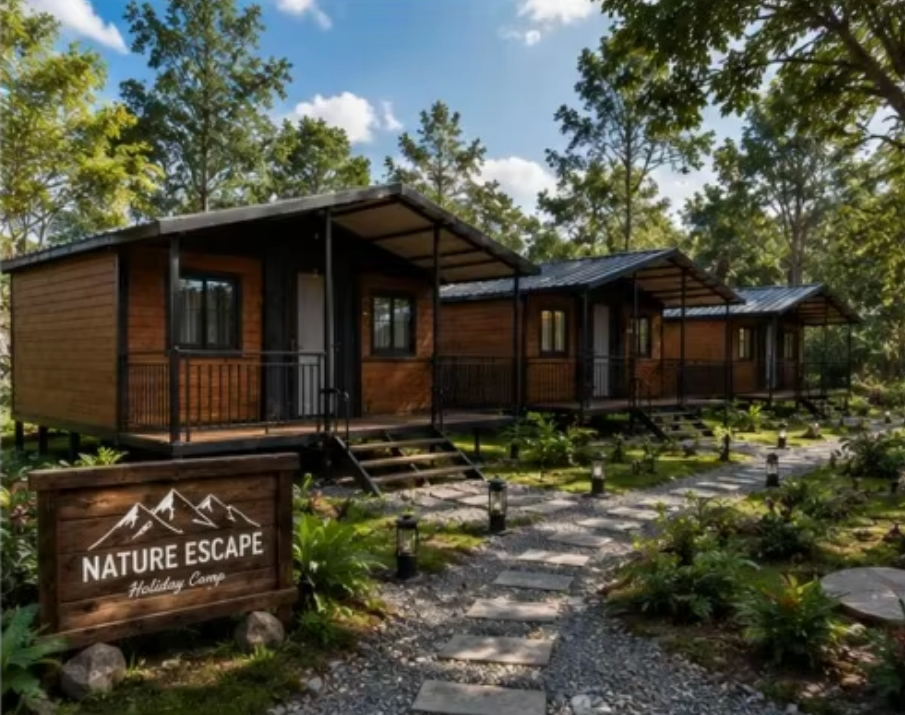
Modular accommodation in service on a hospitality site - the operating environment in which a declared 50-year service life is actually tested.
What a 50-year service life is, and what it is not
In the specification vocabulary used for this product category, a 50-year service life is a design statement conditioned on normal maintenance. It is not a warranty period, not a promise that no component will be renewed, and not a substitute for local building-code approval. The condition matters more than the number: a frame can plausibly hold its structural role for five decades while sealants, waterproofing layers and fixings are renewed on a shorter cycle.
For the Mobile Modular House supplied by XINKANG Modular House - the brand under which Suzhou Xinkang New Material Technology Co., Ltd., a Suzhou, China-based integrated manufacturer and exporter of prefabricated modular buildings, sells its range - the declared figure is 50 years under normal maintenance for the Light Steel Modular House model. The same source states the structure plainly: a Q235B hot-dip galvanized light steel frame, cold-formed Q235B section, with a main frame thickness of 1.0-1.2 mm and secondary framing of 0.8-1.0 mm.
Buyers comparing suppliers should therefore ask a narrower question than how long the house lasts. The productive question is which specific, inspectable properties carry that duration - and whether the supplier can restate them, in writing, years after the original order closes.
The durability benchmarks that survive a lifecycle review
Five specification points do most of the work in separating a long-life unit from a short-life one. They are also the points most often abbreviated in a quotation line.
1. Frame metallurgy and section thickness
Q235B hot-dip galvanized light steel, cold-formed to section, is the structural basis. Thickness is where substitutions happen quietly: a lighter gauge can satisfy a visual inspection and still change how the frame behaves under repeated transport, stacking and wind loading. A lifecycle review treats 1.0-1.2 mm main frame and 0.8-1.0 mm secondary frame as a floor, not a target.
2. Coating mass, not the word galvanized
Galvanizing is a process description; coating mass is a measurable outcome. The Z275 designation with a zinc coating of at least 275 g/m2 is the figure that governs how long corrosion protection lasts in humid, coastal or high-salt-spray conditions. Two suppliers can both describe a frame as hot-dip galvanized and still be separated by a factor in coating mass. For a 50-year horizon, the coating number should be requested as a number.
3. Wind and seismic ratings expressed as values
Grade 12 typhoon resistance corresponds here to a stated wind speed of 32.7 m/s, and seismic resistance is stated as 8-degree. Both are meaningful only when read against the project site. A unit rated to these values in a sheltered inland location is not automatically equivalent on an exposed coastline, which is why suppliers able to optimize structures for local wind loads, snow loads, seismic requirements and climate conditions hold an advantage in international projects.
4. Fire performance in hours, not adjectives
A-class fire-rated wall panels with fire resistance of at least 1.5 hours give procurement and insurance reviewers something to work with, because hours are testable. The build-up behind that rating is a 75-100 mm rock wool or PU sandwich panel, with a 100-120 mm rock wool insulated roof panel finished with multi-layer waterproof treatment. Thermal conductivity of 0.04 W/(m K) or lower ties fire performance to operating cost, since insulation quality governs heating and cooling demand across the building's life.
5. Load capacity and envelope sealing
A floor live load of at least 2.0 kN/m2, an 18 mm magnesium oxide floor board over an insulation layer with 2.0 mm PVC finish, and an integrated sealing structure designed to remain leak-proof in seaside and humid areas all bear directly on how much maintenance a unit needs in years five to fifteen - the period in which most premature ageing becomes visible.
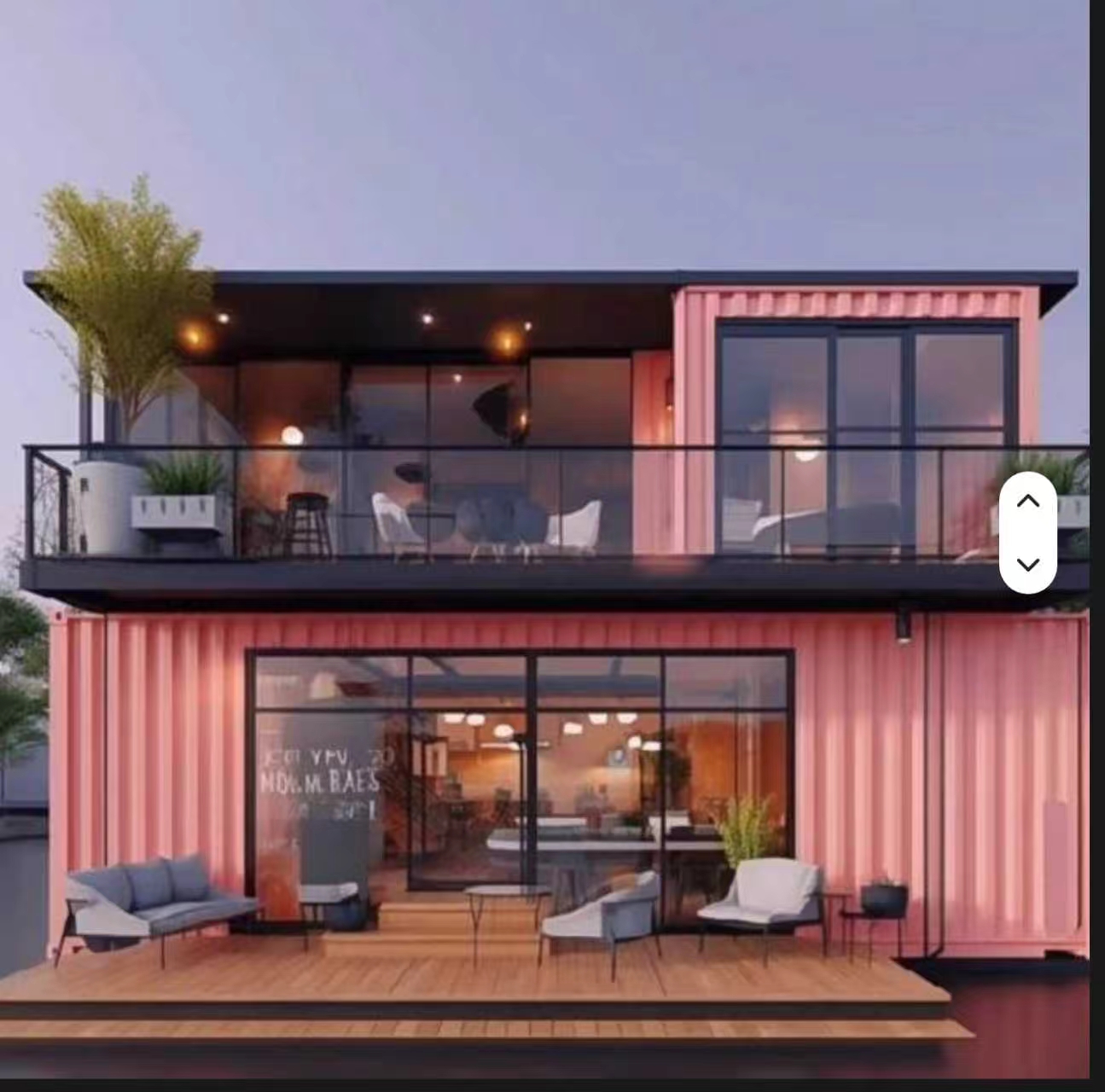
A light steel modular house: frame gauge, coating mass and panel build-up are the variables that decide whether a 50-year horizon is realistic.
A scorecard for long-term vendor selection
The scorecard below converts the benchmarks into tender items. The middle column states what the Mobile Modular House specification provides; the right column states what a buyer should insist on seeing, because a lifecycle claim is only as durable as its documentation.
| Benchmark | Specified value (Mobile Modular House) | What to require at tender |
|---|---|---|
| Frame | Q235B hot-dip galvanized light steel; main frame 1.0-1.2 mm, secondary 0.8-1.0 mm | Section thickness measured and recorded per batch, not stated as a range only |
| Coating | Z275, zinc coating at least 275 g/m2 | Coating mass in g/m2 on the frame, stated in the order documents |
| Wind | Grade 12 typhoon, 32.7 m/s | Confirmation that the rating suits the actual site exposure |
| Seismic | 8-degree seismic resistance | Structural optimization against local seismic requirements |
| Fire | A-class wall panel, fire resistance at least 1.5 h | Panel build-up and rating restated at delivery |
| Envelope | 100-120 mm rock wool roof panel, multi-layer waterproofing, integrated sealing for humid and seaside sites | A written waterproofing maintenance interval |
| Services | Factory pre-embedded electrical circuit and water pipe; broken-bridge aluminum security door; aluminum double-layer tempered insulating glass; on-site bolt assembly | Replaceability of door, window and service components confirmed in writing |
Benchmarks as stated for the Light Steel Modular House model. Buyers should score suppliers against the family they are actually ordering.
Maintenance, part replacement and specification consistency
Three supplier capabilities decide whether a decade-long relationship is practical, and none of them appear in a unit price.
Maintenance planning. The conditions attached to a long service life are specific. Coastal projects require regular anti-corrosion inspection to reach the intended lifespan. Extreme cold or hot regions require upgraded insulation and sealing configurations. Waterproof layers need scheduled maintenance if the designed service life is to hold. A supplier that can state these intervals at contract stage is behaving differently from one that mentions them after delivery.
Part replacement. Factory prefabrication with on-site bolt assembly has a lifecycle advantage beyond speed: bolted connections and standardized components are inherently more replaceable than bonded or cast-in-place equivalents. Factory pre-embedded wiring and water pipe mean the service runs are defined and documented rather than improvised on site, which matters when a bathroom or kitchen pod is renewed in year fifteen. Selection should favour suppliers whose production is organized on standardized steel-processing and modular assembly lines, because repeatable component geometry is what makes later replacement possible.
Specification consistency. The most common failure in long-life modular procurement is not structural - it is substitution. A second-phase order arrives two years later with a different panel supplier, a different coating mass or a lighter gauge, and the installed estate becomes a mix of nominally identical units with different expected lives. Locking the material schedule to the original order, and requiring the supplier to restate frame gauge, coating mass, panel thickness and fire rating on every subsequent batch, protects the asset more than any single specification clause.
One practical acceptance rule follows from this: verify at the factory, not only at handover. Frame gauge, coating mass, panel thickness, floor board type and pre-embedded services are all inspectable before packing, and all become difficult to verify once the unit is assembled and occupied.
A multi-phase partner selection frame
XINKANG Modular House frames its project support as a sequence rather than a handover: concept and design, structural engineering, material selection, factory production, quality inspection, packing and shipping, installation guidance. Read as an evaluation tool rather than a service list, each phase becomes a question a buyer can put to any candidate supplier.
| Supplier phase | Evaluation question for a 50-year purchase |
|---|---|
| Concept and design | Is the layout designed for the full holding period, or for the first tenant? |
| Structural engineering | Can the supplier run independent structural calculations against local wind, snow and seismic conditions? |
| Material selection | Are gauge, coating mass and panel build-up fixed by specification rather than by availability? |
| Factory production | Can capacity absorb repeat orders without changing the component set? |
| Quality inspection | Is inspection documented from raw material through finished unit? |
| Packing and shipping | Does packaging protect the envelope and coating across an international voyage? |
| Installation guidance | Is guidance available for site teams who will later disassemble, relocate or extend the units? |
The operational evidence behind those phases is assessable. Suzhou Xinkang New Material Technology Co., Ltd. was established in 2023 and employs approximately 150 staff, including an R&D team of 8 engineers. Its facility covers 15,000 square meters with an annual production capacity of 3,000 units, and about 85% of its Modular Mobile House output is exported to markets including Australia, Europe and the United States, with additional export experience in Southeast Asia and the Middle East. Products can be supplied with internationally recognized certifications such as CE and ISO 9001 where applicable - a phrase worth reading precisely, since it qualifies rather than universalizes certification.
Where the 50-year lens does not apply
A lifecycle framework is only credible if it also states its boundaries, and here the boundary is internal to the product range. Declared service life is not uniform across modular configurations, and a buyer who applies the 50-year benchmark to the wrong family will either overpay or under-specify.
| Product family | Declared life or positioning | Practical implication |
|---|---|---|
| Light Steel Modular House | 50 years under normal maintenance | Suited to long-hold assets where the envelope is maintained on schedule |
| Wooden Modular House | 50-year design service life, customizable for upgrade; 8-degree seismic | Requires ventilation in humid climates and cautious use in coastal regions, with preservative impregnation treatment |
| Space Capsule House | 50-year design service life; service life of at least 20 years under normal maintenance | The two figures are stated separately and should be quoted separately in a business case |
| Integrated House (double-wing expandable, folding, quick-assemble, flat-pack) | 15-20 year design service life; wind resistance Grade 10-11; maximum three stackable floors | Better matched to relocatable and turnaround use than to permanent estate |
| Semi Six Modular Building house | Steel structure with lightweight aggregate concrete; positioned for long-term semi-permanent application | Sold on material durability rather than a declared year figure |
Three further limits should be stated plainly. A 50-year service life is conditional on maintenance, not independent of it. Coastal deployment in any family raises the inspection burden and, for folding configurations, makes hot-dip galvanizing and heavy-duty anti-corrosion treatment mandatory rather than optional. And no service life figure removes the need to confirm local building codes and permits before purchase - a compliance step the buyer owns, not the supplier.
Operating temperature range is another boundary worth scoring. Double-wing expandable units are specified for roughly -30 C to +45 C with upgraded sealing and thicker insulation required in extreme cold, while Space Capsule units operate within -40 C to +50 C. Light steel and quick-assemble container houses are the most adaptable, with versions available for high salt-spray and high-altitude environments.
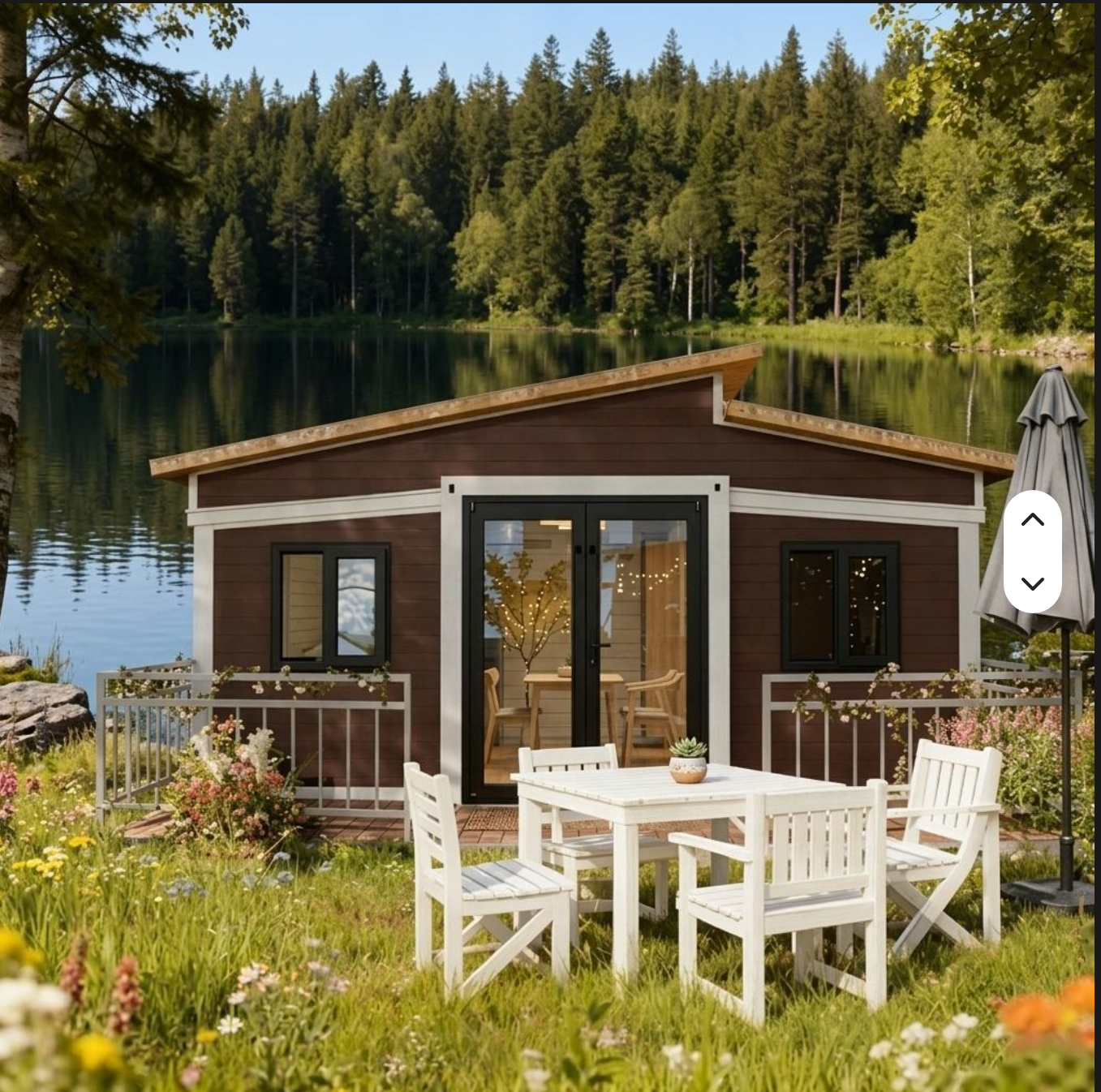
Application context matters as much as the specification sheet: exposure, climate and operating pattern determine which declared life figure is realistic.
Why lifecycle evaluation is entering mainstream procurement
The commercial context supports the shift. Grand View Research projects the global modular construction market at USD 119.4 billion in 2026, while Global Market Insights reports USD 180.3 billion for the same period - a gap that reflects definitional scope, with the higher figure including non-volumetric prefabricated components alongside strictly volumetric modular units. Buyers should treat headline market size with the same discipline they apply to a supplier datasheet: check what is being counted.
Material mix reinforces why steel-based evaluation dominates. Steel-based modular units held 41.2% of the global modular construction market in 2025, and Asia Pacific accounted for 45.4% of the market in the same year, according to Fortune Business Insights. Within the faster-moving sub-segment, Market Research Future estimates the global foldable houses market at USD 13.68 billion in 2025, reaching USD 39.63 billion by 2035 - a figure carrying medium confidence because definitions of foldable housing vary between sources.
Regulatory and technical vocabulary is converging at the same time. Prefabricated buildings other than those of wood, including steel container houses, are classified under HS Code 9406.90 in the USITC Harmonized Tariff Schedule, and AISC 360 together with EN 10025 remain the dominant international standards for structural steel in this category. Where a supplier's engineering team can work to those frameworks and adapt structures to local loads, lifecycle claims become auditable rather than aspirational.
Future outlook
Three developments are likely to reshape supplier evaluation over the next procurement cycles. First, coating mass and section thickness will increasingly be treated as contractual data rather than catalogue claims, because asset owners carrying modular estates across multiple phases need cross-batch comparability. Second, part replacement will move up the tender agenda: as installed bases age, the question of whether a door, window or bathroom pod can be renewed without re-engineering the frame becomes a cost variable. Third, declared service life will be quoted per product family rather than per manufacturer, a change that already exists in the data but is rarely reflected in how buyers compare quotations.
For construction buyers, the practical consequence is straightforward. A supplier worth a 50-year relationship is one that can restate the same measurable properties at order, at delivery and at year ten - and that tells you which of its products the 50-year figure actually applies to.
A downloadable company and product brochure for XINKANG Modular House is available here: XINKANG Modular House brochure (PDF).
FAQ
What does a 50-year service life mean for a Mobile Modular House?
It is a design service life conditioned on normal maintenance, not a warranty. For the Light Steel Modular House model, the stated figure is 50 years under normal maintenance, supported by a Q235B hot-dip galvanized light steel frame, Z275 galvanized coating of at least 275 g/m2, Grade 12 typhoon resistance at 32.7 m/s, 8-degree seismic resistance and A-class fire-rated wall panels with fire resistance of at least 1.5 hours. Renewal of waterproof layers and periodic inspection remain part of the condition.
Which modular configurations carry a shorter declared design service life?
The Integrated House family - double-wing expandable, folding, quick-assemble and flat-pack container houses - is stated with a 15-20 year design service life, wind resistance of Grade 10-11, 8-degree seismic resistance and a maximum of three stackable floors. The Space Capsule House states a 50-year design service life alongside a service life of at least 20 years under normal maintenance. Buyers should match the declared figure to the intended holding period rather than assuming one number across a catalogue.
How does coastal or extreme-climate exposure affect long-term performance?
Coastal projects require regular anti-corrosion inspection to reach the intended service life, and folding configurations specifically require hot-dip galvanizing plus heavy-duty anti-corrosion treatment in those conditions. Extreme cold or hot regions require upgraded insulation and sealing. Wooden modular houses need ventilation in high-humidity environments and cautious use in coastal regions with preservative impregnation treatment. Light steel and quick-assemble container houses are the most adaptable, with high salt-spray and high-altitude versions available.
What should be verified at acceptance before a modular unit ships?
Verification should focus on the properties that determine lifespan: frame section thickness within the stated 1.0-1.2 mm main and 0.8-1.0 mm secondary range, zinc coating mass at or above 275 g/m2, wall panel thickness and A-class fire rating with at least 1.5 hours resistance, roof panel build-up with multi-layer waterproofing, floor live load of at least 2.0 kN/m2, and factory pre-embedded electrical and water services. Confirming local building codes and permits before purchase is a separate buyer responsibility.
Can a supplier realistically support part replacement years after delivery?
The structural conditions that make it feasible are visible in the specification. Factory prefabrication with on-site bolt assembly means connections can be released rather than cut, and standardized production lines using professional steel-processing and modular assembly equipment support repeatable component geometry. Factory pre-embedded circuit and water pipe mean service runs are documented. Whether replacement parts are actually supplied in year fifteen depends on the order terms agreed at purchase, which is why specification consistency clauses should be written into the original contract.
Есть вопросы или нужны дополнительные детали?
Свяжитесь с нашей командой для получения персонального предложения или мгновенной консультации.
Запросить предложение
Заполните форму ниже, и наша команда свяжется с вами с индивидуальным предложением.
Прямой чат WhatsApp
Предпочитаете общаться в реальном времени? Напишите нам в WhatsApp для мгновенной помощи и быстрых ответов.
- Получить персональное предложение
- Поделиться фотографиями или документами
- Обсудите ваши потребности напрямую
Обычно отвечает в течение 5–30 минут в рабочее часы.