
Moisture Retention Trays on Chilled Beef and Pork Lines
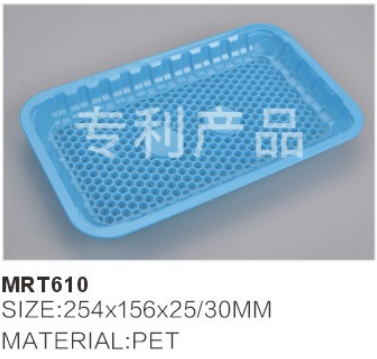
Moisture Retention Tray MRT610 (254 x 156 x 25/30 mm), a PET overwrap format used on chilled beef and pork packing lines.
A moisture retention tray earns its place on a chilled beef and pork packing line only when four variables line up: the tray footprint against the overwrap plate and film path, the flange against the film, the base volume against the purge a cut will release, and the finished pack against the retail case. Tray quality and dimensional consistency decide whether that happens at line speed or at the rework bench.
Chilled case-ready beef and pork move through a short, unforgiving sequence: fabrication, portioning, tray loading, overwrap or sealing, weighing and labelling, case packing, cold-chain transfer, and finally a refrigerated display case. Each step tests the tray differently. The line tests footprint and flange geometry. The film tests surface finish. The chill chain tests stiffness and dimensional stability. The shopper tests what the pack looks like after two or three days under lights.
Moisture retention trays address that last test directly, because liquid management is built into the tray base instead of being added as a loose component. The format only works commercially, however, when the tray is specified as a line component rather than as a display item chosen from a catalogue.
Why the tray behaves like line tooling in a fresh meat plant
In a beef or pork operation, tray tolerance is not a cosmetic detail. It propagates through the whole line. Footprint variation changes how the tray seats in the wrapper plate, which changes film tension, which changes how the wrap sits after shrinking or settling. Height variation changes stack counts in the transport crate and case pack. Flange variation changes where the film grips and where it can catch.
The commercial consequence is straightforward. A pallet of trays that varies slightly from batch to batch produces a proportion of packs that look loose, wrinkled or unevenly wrapped. Those packs are either reworked, downgraded, or sold at a lower presentation standard. For a processor running the same cut, the same film and the same wrapper every day, consistency between deliveries matters more than any single tray feature.
This is why buyers evaluating moisture retention formats tend to ask the same question first: can the tray be produced repeatedly to the same dimension? Purge management is a design function; dimensional consistency is a manufacturing function. A packing line needs both.
What line fit actually means: five interfaces to verify
Matching a tray to a chilled retail line is a sequence of interface checks, not a single specification match. The table below sets out the five interfaces buyers usually need to close before a trial order makes sense.
| Interface | What to measure or confirm | Why it decides line performance |
|---|---|---|
| Tray footprint | Length, width, corner radius, base taper against the wrapper plate or nest | A tray that does not seat consistently drags film unevenly and slows the operator |
| Flange and edge profile | Flange width, edge finish, whether the flange is a cut edge or a rolled edge | Sharp or irregular edges catch stretch film and cause punctures or torn wraps |
| Base depth and cell volume | Available depth under the product, expected purge volume per pack weight | Determines whether liquid is retained below the product or pools at the surface |
| Stiffness and nesting | De-nesting force, resistance to flexing when loaded, stack height in crates | Affects manual handling speed, case pack density and pack shape after chilling |
| Presentation surface | Clarity, colour, print or label area, visibility of the product from the top and sides | Decides whether the pack still sells after several days in a refrigerated case |
Where the tray sits in a chilled distribution workflow
Moisture retention trays are used in fresh meat, poultry and seafood packaging for purge and moisture management under chilled storage and retail display. Their working method is stretch film or overwrap, which places them in the supermarket-style wrapping workflow rather than the gas-flush or skin-pack workflow.
In practice the sequence runs like this:
- Portioning and loading. The cut is placed in the tray with the presentation face up. The base cells sit under the product, not beside it.
- Overwrap. Stretch film is drawn over the tray and sealed or tucked under. The flange determines how cleanly the film releases and how evenly it tensions.
- Weighing and labelling. A stable, flat tray top gives the labeller a predictable surface and keeps the print square to the pack.
- Case packing and transfer. Trays are stacked or crated and moved into the chill chain. Stiffness matters here; a tray that flexes under load distorts the wrap.
- Retail display. Purge released during storage and display collects in the base cells instead of pooling visibly around the product.
For processors running both formats, the same plant may operate a gas-flush line for longer-life packs and an overwrap line for same-day or short-life retail supply. The two lines need different tray specifications and should be specified separately.
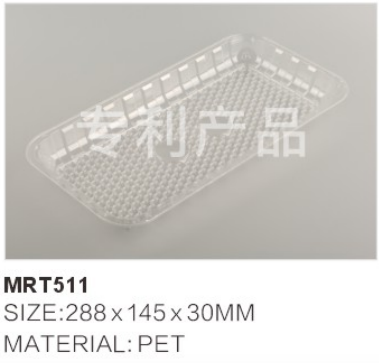
Moisture Retention Tray MRT511 (288 x 145 x 30 mm), one of six standard formats in the range, suited to longer or multi-piece fresh meat packs.
The tray platform: material, formats and what can be adjusted
LINHUA moisture retention trays are built on a turned-edge PET platform. PET gives the tray structural strength together with clear product visibility, which suits retail packs where the cut itself is the main selling signal. The turned-edge process forms the flange into a smooth, rolled profile rather than leaving a conventional cut edge, creating a more film-friendly contact surface and helping reduce the risk of stretch film catching, scratching or tearing during wrapping.
Six standard formats cover the usual chilled beef and pork pack sizes. Dimensions are nominal tray dimensions and should be checked against the actual wrapper plate before a trial run.
| Model | Dimensions (L x W x H) | Typical line use |
|---|---|---|
| MRT58 | 205 x 135 x 25/30 mm | Individual steak, chop or fillet portions |
| MRT610 | 254 x 156 x 25/30 mm | Standard two-piece retail packs |
| MRT810 | 255 x 208 x 25/30 mm | Wider cuts and family packs |
| MRT87 | 218 x 188 x 30 mm | Compact depth for shallow display cases |
| MRT511 | 288 x 145 x 30 mm | Longer loin and rib formats |
| MRT911 | 274 x 218 x 30 mm | Large multi-piece and sharing packs |
Where a standard format does not match an existing wrapper plate or retail case, LINHUA supports custom dimensions, colours, material structures, tray depths and other structural adjustments, alongside product design, prototyping and mould development. Customisation should be treated as a development project: it adds development and sampling time before mass production.
Field evidence from a one-year fresh beef and pork packaging program
A meat processing company in New Zealand has run LINHUA MAP barrier trays and moisture retention trays for fresh beef and pork packaging intended for chilled retail distribution. Project volume is approximately 4 to 6 containers per month, and the supply relationship has run for one year.
The reported outcome centres on production reliability rather than on a single performance claim: stable supply for fresh meat packaging with consistent tray quality and reliable sealing performance, supporting efficient production, cleaner retail presentation and stable cold-chain distribution. Tray sizes are customised to the processor's packs, and the relationship is maintained as a long-term supply arrangement.
Read as purchasing evidence, that combination is more informative than a headline capability figure. A fresh meat plant running continuous shifts needs the same tray geometry arriving month after month, because the wrapper, the film specification and the operator habit are all built around it. Consistent tray quality is what allows the moisture management feature to be evaluated on its own merits instead of being confounded by variation in the tray itself.
The manufacturer behind the range is Ningbo Linhua Plastic Co., Ltd., a food packaging manufacturer established in 2004 and based in Ningbo, Zhejiang, China, serving food manufacturers, meat processors, seafood companies, ready-meal producers and packaging distributors. The company reports a factory area of approximately 30,000 square metres, a monthly production capacity of roughly 1,800 MT, and a 26-person cross-functional team that includes mould engineers, process engineers and quality personnel. Standard lead time is normally 30 to 45 days after order confirmation, depending on specification, quantity and production schedule.
Technical note: how the cells and the flange interact with the film
A moisture retention tray carries a fine, honeycomb-style network of recessed cells formed into the base. As fresh beef or pork releases purge during chilled storage and display, the liquid moves into these lower cells instead of remaining pooled around the product. The result is a cleaner pack surface and, depending on the application, the potential to reduce or eliminate a separate absorbent pad.
Three technical points matter when matching the format to a line.
Cell volume is a design ratio, not a guarantee. A tray sized for a 300 g steak portion and a tray sized for a 1.2 kg family pack do not release the same volume of liquid. Cell capacity should be matched to expected purge per pack weight, and confirmed in a real trial rather than assumed from tray dimensions.
The flange is a film interface. A rolled edge presents the film with a smoother, more consistent contact surface than a cut edge, which reduces the chance of the film catching during wrapping and tearing during handling. Final wrap quality still depends on film type, tension settings and machine condition.
Purge management is not shelf-life management. Retaining liquid in the base improves presentation and pack hygiene perception, but no tray alone controls spoilage. Product condition, hygiene at packing, wrap integrity and cold-chain temperature remain the dominant variables.
Six checks before matching trays to your line
The following checklist reflects the order in which mismatches usually surface during trials. Working through it before ordering shortens the qualification cycle.
| # | Check | What a pass looks like |
|---|---|---|
| 1 | Wrapper plate fit | The tray seats without rocking or overhang at normal line speed |
| 2 | Film behaviour | Wrap sits tight and square with no punctures or torn corners across a full shift |
| 3 | Purge load per pack | Liquid stays below the product through the intended display period |
| 4 | Stack and case pack | Trays nest cleanly, stack to a stable height and survive crating without flexing |
| 5 | Retail presentation | Product stays clearly visible and the pack front looks tidy after several days chilled |
| 6 | Documentation scope | Food-contact documentation covers the exact product, material and destination market |
Where moisture retention trays are the wrong answer
An integrated tray format is not universally superior, and buyers should know where it stops.
Very high purge loads. Cuts that release a large volume of liquid relative to pack weight, or packs held on display longer than planned, may exceed what an integrated cell structure can hold back. In those cases a conventional tray with an absorbent pad, or a different pack format, may remain the practical choice. The comparison should be settled with packing trials on the actual cut.
Lines already validated around a pad. Where a plant's process, labour standard and customer specification are already built around a separate absorbent component, switching introduces handling changes and a new qualification cycle. The benefit only justifies that work if presentation or component reduction is an actual objective.
MAP and VSP applications. The moisture retention range is specified for stretch film and overwrap. Gas-flush MAP and vacuum skin packaging require different tray structures, sealing geometry and film systems, and should be specified with the tray supplier against the machine and film rather than substituted by format similarity.
Commercial minimums. Standard products are normally quoted at one full container per item, with mixed loading possible for a first or trial order across several items. Customised formats carry higher minimums, and custom mould development adds development and sampling time ahead of the standard 30 to 45 day lead time.
Market direction: documentation is becoming part of line qualification
Two pressures are reshaping how chilled meat packaging is specified.
The first is pack-level performance. Case-ready beef and pork programs continue to shift packing closer to the processor and further from the store, which puts more weight on how a pack survives transport and several days of display. Formats that keep the product face clean without adding loose components fit that shift, which is why purge management has moved from a nice-to-have to a specification line item.
The second is documentation. In the European Union, the Packaging and Packaging Waste Regulation (EU) 2025/40 applies from 12 August 2026, including restrictions on PFAS in food-contact packaging, as set out by the European Commission. Plastic food-contact materials placed on the EU market also fall under Commission Regulation (EU) No 10/2011, which requires that substances not be released above applicable specific migration limits. In the United States, the FDA framework treats food packaging and its components as food contact substances. Market sizing context points the same way: Grand View Research valued the global food containers market at USD 331.7 billion in 2024, with rigid formats carrying a large share of chilled retail supply.
For buyers, the practical consequence is that a tray sample is no longer enough on its own. Requests increasingly pair samples with a declaration of compliance, a statement of the applicable material structure, and clarity on which product and market the documentation covers.
Future outlook
Three developments are likely to shape how moisture retention formats are bought over the next few years.
Dimensional consistency will be treated as a formal specification rather than an assumed quality. Processors running automated wrapping, weighing and labelling have little tolerance for batch-to-batch variation, and suppliers will increasingly be asked to state tolerance and demonstrate it across deliveries.
Component reduction will stay on the agenda, but cautiously. Removing a separate absorbent pad simplifies the pack and the material bill, yet the decision has to survive real purge loads and real display durations. Trials, not specifications alone, will decide adoption.
Material and documentation pressure will continue to tighten. Regulatory attention on food-contact substances and packaging waste means the tray's material story and its paperwork will be reviewed alongside its line performance. Suppliers who can connect product, material structure and market-specific documentation in one response will be easier to qualify.
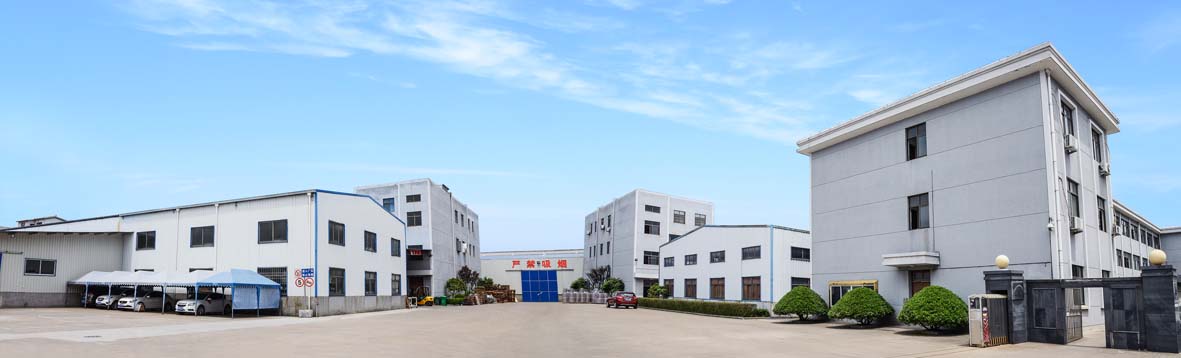
Ningbo Linhua Plastic Co., Ltd., established 2004, Ningbo, Zhejiang, China, produces rigid food packaging including moisture retention trays and MAP barrier trays.
Frequently asked questions
What makes a moisture retention tray suitable for a chilled beef or pork packing line?
Three properties decide it: footprint and flange geometry that match the wrapper plate and film path, base cell volume that matches the purge expected from the specific cut and pack weight, and dimensional consistency between deliveries. The tray is specified for stretch film and overwrap, so it belongs to an overwrap workflow rather than a gas-flush or skin-pack line.
Why do consistent tray dimensions matter on an overwrap line?
Variation in footprint or height changes how the tray seats in the wrapper, how evenly the film tensions, how the pack stacks in crates and how the label sits. Small differences across a pallet show up as wrinkled or loose wraps that need rework or are sold at a lower presentation standard. Consistent dimensions are what allow a plant to run the same film setting shift after shift.
How does the tray handle purge during chilled storage and retail display?
The tray base contains a fine honeycomb-style network of recessed cells. As beef or pork releases purge, the liquid moves into these lower cells rather than remaining pooled around the product, which keeps the visible pack surface cleaner. Actual performance depends on food type, pack weight, purge volume, storage temperature and storage time, and should be confirmed in a packing trial.
Can tray dimensions be adjusted to fit an existing line or retail case?
Yes. Beyond the six standard formats, LINHUA supports custom dimensions, depth, colour, material structure and other structural features, together with product design, prototyping and mould development. Customisation is handled as a development project, so it adds design, tooling and sampling time before mass production begins.
What information should be prepared before requesting a trial or quotation?
The tray type or a reference sample, the required dimensions, the food application, the expected quantity and any colour or structural requirements. For overwrap projects, the wrapper type, film specification and retail case format help narrow the format choice. For MAP or VSP projects, machine model, sealing mould details, film specification, storage temperature and target shelf life are also needed, since those formats are specified separately from the moisture retention range.
Summary
Moisture retention trays work on a chilled beef and pork line when they are bought as a line component: matched footprint, film-friendly flange, adequate cell volume for the cut, and repeatable dimensions from delivery to delivery. The New Zealand fresh meat program described above illustrates the operating logic rather than a marketing claim, since a one-year relationship at roughly 4 to 6 containers per month depends on tray consistency more than on any single feature.
For buyers who want to review the wider range, including MAP barrier trays, VSP trays, turned-edge trays and CPET formats, the LINHUA product catalogue can be downloaded here: Linhua E-catalogue 2025. Product information and technical contact details are also available at www.nblinhua.com.
Есть вопросы или нужны дополнительные детали?
Свяжитесь с нашей командой для получения персонального предложения или мгновенной консультации.
Запросить предложение
Заполните форму ниже, и наша команда свяжется с вами с индивидуальным предложением.
Прямой чат WhatsApp
Предпочитаете общаться в реальном времени? Напишите нам в WhatsApp для мгновенной помощи и быстрых ответов.
- Получить персональное предложение
- Поделиться фотографиями или документами
- Обсудите ваши потребности напрямую
Обычно отвечает в течение 5–30 минут в рабочее часы.