
Molded Pulp Contract Terms: A Buyer's Comparison Grid
Two molded pulp suppliers can quote the same price per thousand trays and still be offering very different commercial deals. The difference sits in the terms wrapped around the number: which payment instrument is accepted, which Incoterm governs the freight, what the minimum order quantity locks in, and what inspection standard the buyer is allowed to enforce before the container leaves.
This comparison framework treats molded pulp sourcing as four separately scored blocks — payment, shipping, purchasing terms and acceptance criteria — rather than a single landed-cost figure. It is written for buyers in the decision-to-execution stage, who already know which tray format they need and now have to compare quotes, issue a purchase order, or sign a twelve-month supply contract without relying on vendor claims.
Why Molded Pulp Quotes Are Harder to Compare Than They Look
Molded pulp packaging is a cross-border category by nature. Grand View Research values the global molded pulp packaging market at USD 6.2 billion in 2025, with a projected path to USD 10.2 billion by 2033. Within that total, tray products accounted for over 41.0% of revenue in 2025, and Asia Pacific held a 41.0% revenue share, with China the largest single market. Buyers sourcing trays are therefore usually buying across at least one currency, one customs regime and one freight lane.
Published market estimates should be read with their definitions in mind. Smithers reports a lower 2025 figure of roughly USD 4.5 billion for the same category; the gap generally reflects whether fiber lids, specialty coatings and adjacent machinery are counted. The practical point for procurement is not the exact headline number — it is that molded pulp is now a large, multi-origin category where commercial terms, not catalogue prices, determine what a buyer actually pays and receives.
Three structural features make term-by-term comparison necessary:
- Molded fiber is a low-density product, so freight is a large share of landed cost and nests differently depending on tray design.
- Tooling and MOQ are negotiated together, so a lower unit price often hides a larger commitment.
- Quality is verified by sampling, which means the acceptance clause — not the quotation — is the real quality control.
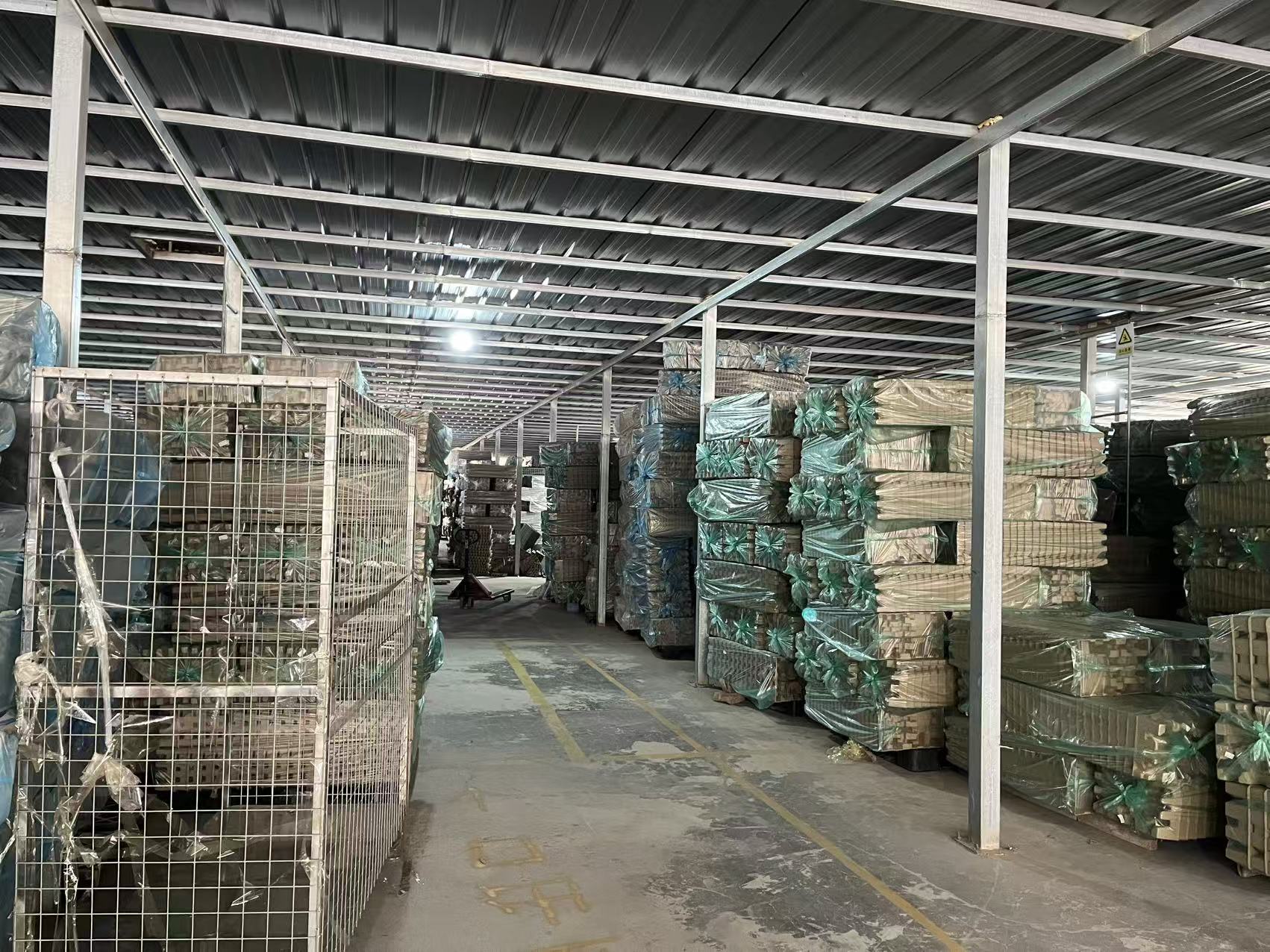
Finished molded pulp trays staged in a warehouse: the point at which shipping terms, inspection rights and payment milestones meet.
The Four Term Blocks That Separate Suppliers
A molded pulp quote is comparable only when it answers four questions in writing. The grid below is the minimum structure; a quote that leaves any row blank is not yet a quote, it is an indication.
| Term block | What the quote should state | Risk when left open |
|---|---|---|
| Payment | Instrument (T/T, L/C, Alibaba Trade Assurance) and the milestone each instalment is tied to | Capital exposure before any goods are verified |
| Delivery terms | EXW, FOB, CIF or CFR, with a named port or address | Unclear cost and risk transfer point |
| Freight basis | Destination port or delivery address, plus validity window for the freight figure | Re-quotation at booking, breaking the landed-cost model |
| Purchasing terms | MOQ, repeat-order quantity, tooling treatment, lead time | Hidden commitment and unplanned tooling spend |
| Acceptance | Inspection method (PSI), measured parameters, sampling plan, documents | No enforceable remedy at arrival |
Payment Terms: What "Accepted" Actually Means
The documented payment instruments in molded pulp supply are T/T, L/C and Alibaba Trade Assurance. Each shifts risk in a different direction, and the choice is a commercial decision rather than a technical one.
A T/T arrangement moves value directly between banks and is administratively light, but any advance portion is buyer capital placed against goods that have not yet been inspected. An L/C introduces a bank as an intermediary: the seller is paid against compliant documents rather than against the buyer's instruction, which reduces counterparty exposure but adds document discipline — a mismatch between the letter of credit and the commercial invoice delays payment and, in practice, shipment. Alibaba Trade Assurance adds a platform-mediated dispute channel that sits alongside the bank flow.
For single orders, the sensible rule is that the balance instalment should be triggered by something the buyer can verify, typically a passed pre-shipment inspection. For long-term supply — the case this framework is mainly written for — the instrument should be a contract schedule rather than a per-order habit: which instrument applies at which order value, what happens to terms after a defined period of on-time, on-spec deliveries, and how a disputed batch pauses the next instalment.
One boundary worth stating plainly: no payment instrument improves tray quality. An L/C guarantees document compliance, not dimensional accuracy. Payment terms manage financial risk; acceptance criteria manage product risk. Treating the first as a substitute for the second is a common and expensive error.
Shipping: Sea, Air and Express, and Where the Freight Number Comes From
Documented shipping methods for molded pulp orders are sea freight, air freight and express couriers such as DHL, FedEx and UPS. Freight cannot be priced until the destination port or delivery address is known — a quote issued without that information is effectively an ex-works price with a shipping estimate attached.
Molded fiber has a structural advantage here that buyers should convert into freight savings rather than accept as marketing. In first-party comparison data, nested stacking of molded pulp trays saves 40–60% of volume compared with non-nested packing, and molded pulp construction is approximately 50% lighter than traditional hard gift boxes. On an ocean container, volume and weight both drive the per-unit freight figure, so tray geometry and packing method belong in the commercial comparison — two suppliers quoting the same FOB price with different nesting performance deliver different landed costs.
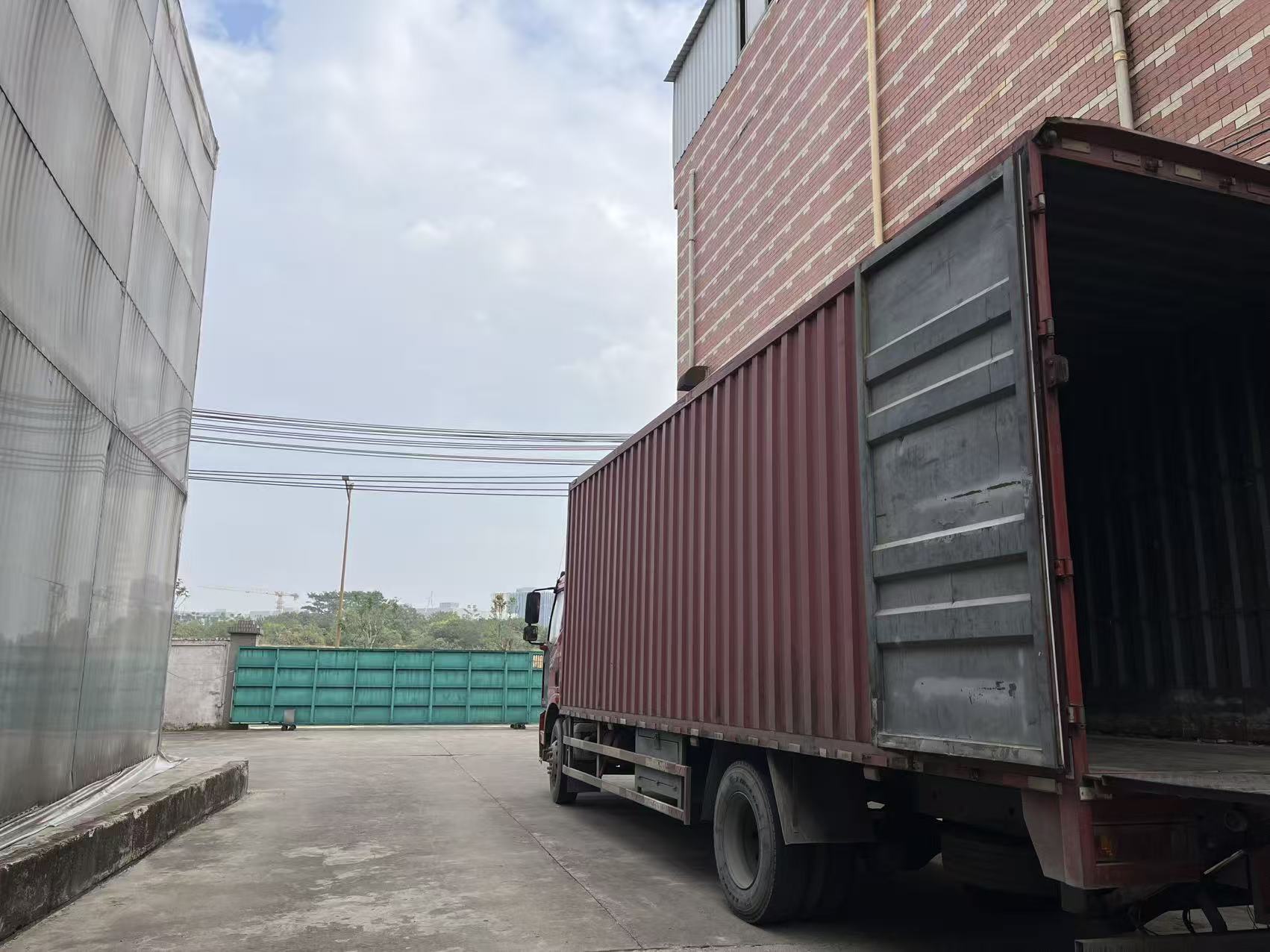
Dispatch preparation: Incoterm choice determines where cost ends and risk begins on this floor.
Two constraints apply to any freight comparison. First, ocean freight is volatile, so a CIF or CFR figure has a limited validity window; buyers should require the quote to state that window rather than assume it. Second, molded pulp is moisture-sensitive — documented moisture content is ≤8–12% — and a long sea leg in a humid container can affect dimensions and stiffness if pallet wrapping and desiccant practice are not specified. Express freight avoids the humidity exposure but is only economic for samples and small replacement batches, not for production volume.
Purchasing Terms: MOQ, Delivery Terms and Contract Mechanics
The documented purchasing terms are a minimum order quantity of 1,000 pcs and delivery terms of FOB, CIF, CFR or EXW. Those four Incoterms are not interchangeable labels; they move cost and risk to different points in the chain. Under EXW the buyer assumes responsibility from the factory gate onward. Under FOB the seller handles export clearance and delivery on board, with risk transferring at that point. CFR and CIF extend the seller's cost obligation to the destination port, with CIF adding insurance — but in both, risk still transfers on loading, which is the detail buyers most often misread.
For a long-term program, five contract mechanics deserve a line each, because they are what separate a repeatable supply relationship from a series of one-off orders:
- Repeat-order quantity — whether the 1,000 pcs minimum applies per shipment or per contract period.
- Capacity expectation — the volume the supplier is expected to hold available in peak months.
- Tooling treatment — who owns the mold, whether tooling cost is amortised into the unit price, and what happens if the program ends.
- Price review triggers — the interval and the input references (fiber grade, freight index) at which price can be renegotiated.
- Change control — how a tray redesign or fiber substitution is approved and whether it re-triggers sampling.

Contract review: payment schedules, Incoterms and inspection rights should be settled before tooling begins.
Acceptance Criteria: Turning PSI into a Written Standard
The documented acceptance criterion is PSI — pre-shipment inspection — carried out before dispatch. PSI is only as strong as the parameters it measures, so the acceptance clause should name the values, the sampling plan and the documents, not merely the inspection method.
| Parameter | Documented range | Why it belongs in acceptance |
|---|---|---|
| Thickness | 0.8–5.0 mm, customized as required | Wall variation changes both cushioning and cavity fit |
| Moisture content | ≤8–12% | Governs dimensional stability in transit and storage |
| Edge crush strength | 3–8 kN/m | Predicts stacking performance in a container |
| Compressive strength | 2–8 MPa | Sets the load the tray can carry without deforming |
| Wet / dry density | 0.15–0.25 g/cm³ wet; 0.28–0.45 g/cm³ dry | Indicates fiber consolidation and process control |
| Service temperature | -20°C to +80°C standard; -20°C to +120°C for food grade | Defines whether the grade suits the intended channel |
Two additions make PSI enforceable. The first is an agreed sampling plan with defect classes: what counts as critical (contamination, wrong fiber grade), major (cavity mismatch, moisture above the band) and minor (surface marks that do not affect protection). The second is documentation — quality and environmental management certificates such as ISO 9001 and ISO 14001, fiber sourcing certification such as FSC, and material compliance declarations such as SGS RoHS and PFAS-free — attached to the inspection report so compliance evidence travels with the shipment rather than being requested after arrival.
PSI remains a sample-based check. It reduces the probability of a non-conforming batch reaching the buyer; it does not eliminate it. Contracts should therefore retain a defined claim window after arrival, with the same measurement method applied on both sides so a dispute can be settled by data rather than opinion.
How Tonghe Paper Co., LTD Documents These Terms
Tonghe Paper Co., LTD is a molded pulp manufacturer based in Dongguan, Guangdong Province, China, converting recycled paper and bagasse fiber into molded fiber trays and protective packaging for electronics, lighting, gift, food and wine, medical and consumer applications. It is useful to read its published commercial terms against the framework above, because they show which blocks a buyer can resolve from documentation and which still require negotiation.
On the operational side, the company reports a 23,000 m² factory, 160 employees, a 12-engineer mold development team, an annual output of 12,000 tons and monthly capacity of up to 1,000 tons, with roughly 50% of output exported to the EU, USA, Australia, Saudi Arabia, Malaysia and Brazil. In-house mold development matters for the purchasing-term block, since custom tray geometry is the item most likely to reprice a program mid-contract.
On the commercial side, the documented terms map directly onto the four blocks: payment by T/T, L/C or Alibaba Trade Assurance; shipping by sea, air or express courier with freight calculated from the destination port or address; MOQ of 1,000 pcs with delivery terms of FOB, CIF, CFR or EXW; and acceptance by PSI. Quality documentation includes ISO 9001, ISO 14001 and FSC certification, with SGS RoHS and PFAS-free compliance stated for its molded pulp products. Customisation options include special coating, embossing and printing.
Read neutrally, this is a supplier whose term sheet is complete enough to be compared line by line against alternatives — which is the minimum standard any buyer should apply. It is not evidence that its terms are better than a competitor's; that judgement depends on order size, destination and the acceptance values the buyer actually requires.
Where the Terms Matter Most: Application Fit
The weight a buyer should place on each term block changes with the application, and molded pulp trays are used across several with materially different risk profiles:
- 3C electronics and appliances — cushioning and anti-static behaviour dominate; acceptance should focus on cavity fit and compressive strength rather than surface appearance.
- Medical device trays — documentation dominates; a PSI report without the accompanying certificates does not support a compliance file.
- Food grade and fresh produce — the food-grade grade extends the service range to -20°C to +120°C, so the acceptance clause must name the grade, not just the tray model.
- Cosmetics and gift packaging — appearance defects matter commercially; defect classification in the sampling plan carries more weight than strength values.
- Heavy duty industrial trays — edge crush and stacking performance drive freight economics, which ties acceptance directly back to shipping cost.
Molded Pulp Versus Plastic and Rigid Packaging on Commercial Terms
Compared with ordinary plastic packaging, the documented differences are mainly commercial and regulatory rather than purely mechanical. First-party comparison data states that molded pulp offers 40–60% space savings through nested stacking and 25–35% better cushioning performance than ordinary plastic packaging, with a unit cost slightly higher than ordinary plastic but a lower overall compliance cost for EU-bound shipments, where plastic-tax surcharges apply. For rigid gift boxes, the stated advantage is weight — approximately 50% lighter — which reduces long-haul freight and storage volume.
The limits are equally real and should be written into the contract rather than discovered at arrival. Molded fiber is moisture-sensitive, with moisture content controlled to ≤8–12%; a humid sea leg without adequate pallet protection can shift dimensions in a way that formed plastic does not experience. Wall thickness varies within the 0.8–5.0 mm range, so dimensional tolerances must be agreed per application instead of assumed from a drawing. And the higher unit cost relative to ordinary plastic is only offset where compliance savings are actually realised — for a domestic buyer outside a plastic-restricted market, that offset may not exist.
Market Trend: Why Term Discipline Is Becoming a Compliance Requirement
Regulation is turning acceptance criteria into an audit trail. The European Packaging and Packaging Waste Regulation (EU) 2025/40 entered into force on 11 February 2025 and requires all packaging to be recyclable by 1 January 2030. For molded fiber that is a favourable direction — the material is already renewable and recyclable — but it raises the evidence standard: a buyer in the EU will eventually need to show which fiber grade was used, which certification covered it, and which inspection confirmed it.
Segment growth reinforces the same point. Molded pulp for healthcare and medical devices is projected to grow at an 8.6% CAGR, driven by sterilization standards and hospital plastic bans. Higher-value, documentation-heavy segments reward buyers who treat acceptance and payment terms as part of the product specification rather than paperwork.
Future Outlook
Three shifts are likely to reshape molded pulp term sheets over the next several years. First, as the 2030 recyclability deadline approaches, acceptance criteria will increasingly reference material composition and certification rather than physical parameters alone. Second, freight volatility will push more long-term contracts toward indexed or periodically reviewed pricing instead of fixed CIF figures held for a full year. Third, inspection records are moving from paper to digital files attached to each shipment, which makes the PSI report a reusable compliance asset rather than a one-time gate.
For buyers, the practical consequence is that a comparison grid built today will need periodic revision — but the four blocks themselves, payment, shipping, purchasing terms and acceptance, are unlikely to change. Suppliers that can document all four clearly will remain easier to qualify than those that cannot.
Frequently Asked Questions
What payment terms are accepted on molded pulp orders?
The documented instruments are T/T, L/C and Alibaba Trade Assurance. T/T is a direct bank transfer between buyer and seller; L/C is bank-intermediated and pays against compliant documents; Alibaba Trade Assurance adds a platform-mediated dispute channel. Which instrument applies to a given order is a commercial negotiation and should be stated in the order confirmation rather than agreed informally.
Which shipping methods can molded pulp orders use, and what information is needed to price freight?
Sea freight, air freight and express couriers including DHL, FedEx and UPS are the documented methods. Freight can only be calculated once the destination port or delivery address is known; without that detail, a quotation covers goods only and any freight figure remains an estimate.
What do EXW, FOB, CFR and CIF change in a molded pulp contract?
These are Incoterms that allocate cost and risk between seller and buyer. EXW places collection and onward movement with the buyer from the factory. FOB has the seller clear export and deliver on board, with risk transferring at that point. CFR and CIF extend the seller's cost obligation to the destination port, with CIF adding insurance, but under both the risk still transfers on loading rather than at destination.
What is the minimum order quantity, and how does it affect a long-term program?
The documented MOQ is 1,000 pcs. In a long-term program the important question is whether that figure applies per shipment or per contract period, and whether repeat orders carry the same threshold. Buyers should also confirm how tooling cost is treated, since custom mold development is the item most likely to change the effective unit price across a multi-year agreement.
What does PSI mean as an acceptance criterion?
PSI stands for pre-shipment inspection: goods are checked against the agreed specification before dispatch, and the result typically controls the balance payment and release for shipment. PSI is a sampling process, so the contract should define the sampling plan, the defect classification and a post-arrival claim window alongside it.
Which specifications should appear in molded pulp acceptance criteria?
Documented parameters are thickness 0.8–5.0 mm (customizable), moisture content ≤8–12%, edge crush strength 3–8 kN/m, compressive strength 2–8 MPa, wet density 0.15–0.25 g/cm³ and dry density 0.28–0.45 g/cm³, with a service temperature of -20°C to +80°C for standard grades and -20°C to +120°C for food grade. The application determines which of these are critical and which are informational.
How do certifications fit into a long-term supply agreement?
Certificates should be attached to the inspection report rather than stored separately. Documentation referenced in molded pulp supply includes ISO 9001 and ISO 14001 for management systems, FSC for fiber sourcing, and SGS RoHS and PFAS-free declarations for material compliance. Under the EU Packaging and Packaging Waste Regulation (EU) 2025/40, which requires all packaging to be recyclable by 1 January 2030, this documentation becomes part of the buyer's own compliance evidence.
Summary
Comparing molded pulp suppliers on unit price alone hides most of the commercial difference. Payment instruments set how much capital is exposed before verification; Incoterms and freight basis set where cost ends and risk begins; MOQ and tooling treatment set the real commitment; and acceptance criteria set whether the buyer has any enforceable remedy if the trays do not match the specification. A quote that answers all four is a comparable quote. One that answers only the first is a starting point for negotiation.
For readers who want the full company and capability record behind the term sheet referenced above, a downloadable profile is available here: Tonghe Paper Co., LTD company profile (PDF).
Есть вопросы или нужны дополнительные детали?
Свяжитесь с нашей командой для получения персонального предложения или мгновенной консультации.
Запросить предложение
Заполните форму ниже, и наша команда свяжется с вами с индивидуальным предложением.
Прямой чат WhatsApp
Предпочитаете общаться в реальном времени? Напишите нам в WhatsApp для мгновенной помощи и быстрых ответов.
- Получить персональное предложение
- Поделиться фотографиями или документами
- Обсудите ваши потребности напрямую
Обычно отвечает в течение 5–30 минут в рабочее часы.