
Molded Pulp Tray Configurations: A 2026 Buyer's Shortlist
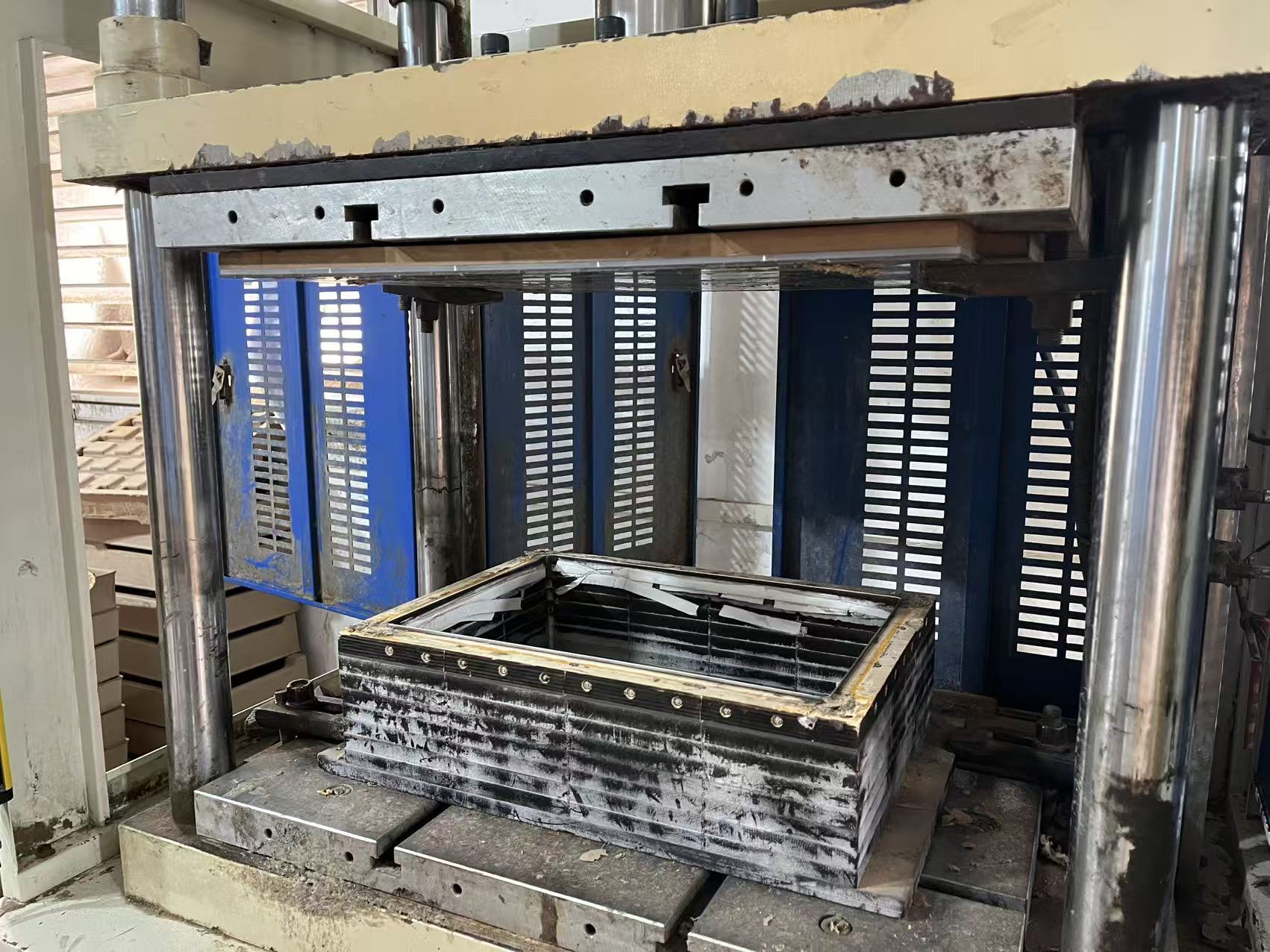
Trimming stage: where a formed fiber shell becomes a dimensioned packaging component.
Short answer: the useful 2026 shortlist is a list of molded pulp tray configurations, not a list of vendor names. Four configuration families cover most buying situations — high-volume standard trays, low-volume custom molds, regulated tray grades for medical, cosmetic and food-contact use, and heavy-duty shockproof industrial trays. Settling the configuration first narrows the supplier field, the tooling conversation and the cost model at the same time.
The commercial context makes that discipline worthwhile. Grand View Research valued the global molded pulp packaging market at USD 6.2 billion in 2025, with a projected value of USD 10.2 billion by 2033. Trays were the leading product segment in that market in 2025, at more than 41.0% of revenue, and Asia Pacific accounted for a 41.0% revenue share, with China holding the largest share within the region. Regulation is pushing in the same direction: the European Packaging and Packaging Waste Regulation (EU) 2025/40 entered into force on 11 February 2025 and requires all packaging to be recyclable by 1 January 2030.
For a buyer at the decision-to-execution stage, those numbers are background rather than instruction. What actually determines whether a molded fiber tray program works is whether the configuration chosen at the start still fits the product, the freight model and the compliance file two or three years later. This shortlist is organised around that question.
Why the 2026 Shortlist Starts With Configuration, Not Vendor Names
A supplier shortlist collapses too early. Two vendors quoting the same unit price can be quoting two different products: one a thin wet-press shell, the other a denser hot-pressed tray with different wall thickness, stacking behaviour and moisture tolerance. Comparing them by price alone produces an unreliable ranking.
Configuration, by contrast, is a set of decisions the buyer can define in advance: fibre blend, thickness, forming and pressing route, tooling ownership, nesting geometry, and the compliance grade the tray must sit inside. Once those are fixed, supplier evaluation becomes an evidence exercise rather than a price exercise.
Tonghe Paper Co., LTD, a pulp molding manufacturer based in Dongguan, Guangdong, China, produces molded fiber trays and protective packaging from sugarcane pulp, bamboo pulp and wood pulp, with in-house mold development and a monthly capacity of up to 1,000 tons. Its product range illustrates the point: the same production base serves tray families that behave differently in use, from food-grade and medical tray grades to heavy-duty and electronics protection.
Four Procurement Profiles That Decide Which Tray You Should Specify
Most buying situations resolve into one of four profiles. The profile is set by volume rhythm, product geometry and compliance exposure — not by industry label alone.
| Procurement profile | Volume signal | Tooling route | Configuration family | Primary decision driver |
|---|---|---|---|---|
| High-volume standard | Continuous replenishment of a stable SKU set | Existing or shared mold | Molded Pulp Trays, Pulp Packaging Trays | Repeatability, nesting, freight density |
| Low-volume custom | Product launch, seasonal or configurable SKUs | Dedicated mold, developed in-house | Custom Molded Pulp Trays, OEM Molded Pulp Tray | Geometry fit, tooling investment, MOQ |
| Regulated high-value | Medical, cosmetic or food-contact packaging | Dedicated mold plus graded material | Medical Device Pulp Trays, Cosmetic Packaging Pulp Trays, Food Grade Molded Pulp Trays | Compliance file, temperature range, cleanliness |
| Industrial heavy duty | Electronics, appliances, hardware, auto parts | Dedicated mold with thickened fiber structure | Heavy Duty Molded Pulp Trays, Shockproof Pulp Trays, Molded Pulp Electronics Trays | Shock absorption, stacking strength, static control |
Shortlist Option 1 — High-Volume Standard Molded Pulp Trays
Who it fits: buyers running a small number of stable SKUs on a continuous replenishment cycle, where the tray geometry is already proven and the priority is cost stability and consistent supply.
What defines the configuration: standard-cavity tooling, uniform wall thickness, and nesting geometry that lets trays stack into each other. Nested stacking is not a cosmetic detail — documented comparisons against plastic packaging record 40–60% space saved through nested stacking, which feeds directly into container utilisation and long-haul freight cost.
Evidence to ask for: a repeat-order sample set from the same mold, thickness verification against the specification sheet, and moisture content at the point of packing. A high-volume tray program fails quietly when moisture and thickness drift across shipments rather than when a single batch is visibly defective.
Where the boundary sits: standard configurations are efficient precisely because they are fixed. If a product's contour changes mid-cycle, a standard tray either fits badly or requires a new mold, which pushes the buyer toward the custom route described below.
Shortlist Option 2 — Custom Molded Pulp Trays for Low-Volume and Irregular Geometry
Who it fits: buyers with irregular or multi-component products — instruments, lighting fixtures, gift sets, appliances with accessories — where an off-the-shelf cavity cannot hold the item securely.
What defines the configuration: a dedicated mold developed against the product contour, producing integrated structures that combine several cavities in one tray rather than assembling separate inserts. Tonghe Paper Co., LTD develops molds in-house with a team of 12 engineers and works with multi-specification, complex and irregular integrated structures, which is the capability that matters when a product cannot be simplified into a regular shape.
Volume reality: the documented minimum order quantity for tray programs is 1,000 pcs, with delivery terms of FOB, CIF, CFR or EXW and L/C payment terms. Custom mold work is therefore a project rather than a catalogue order — it rewards buyers who treat tooling as a multi-year asset and who validate with samples before committing to production volumes.
Evidence to ask for: mold drawings tied to the actual cavity, a physical sample fitted to the real product (not a render), and confirmation of who holds the mold and how repeat orders are produced from it.
Shortlist Option 3 — Regulated Configurations: Medical, Cosmetic and Food-Grade Trays
Who it fits: buyers whose packaging appears in a compliance file — hospital and clinic supply chains, cosmetic and personal-care sets, fresh produce, catering and prepared food.
What defines the configuration: graded fibre selection and a documented temperature envelope. The supplier's specification for tray products records an applicable temperature range of −20 °C to +80 °C for standard use, extending to −20 °C to +120 °C for food-grade material. Moisture content is documented at ≤8–12%, a figure that matters because it affects both dimensional stability and the cleanliness of a food-contact or clinical pack.
Why this segment is growing: molded pulp for healthcare and medical devices is projected to grow at an 8.6% CAGR, driven by sterilization standards and plastic restrictions in hospital settings. Buyers in this profile should expect the compliance file — not the unit price — to be the slowest part of the purchase, and should build the timeline accordingly.
Configuration families in this group: Medical Device Pulp Trays, Cosmetic Packaging Pulp Trays, Food Grade Molded Pulp Trays, Disposable Food Pulp Trays, Fresh Produce Pulp Trays and Egg Pulp Trays. Each has a different tolerance and hygiene expectation, even though they may be formed on comparable equipment.
Shortlist Option 4 — Heavy-Duty and Shockproof Industrial Configurations
Who it fits: buyers shipping items where transit damage carries a high cost — consumer electronics, lighting, appliances, hardware and sanitary ware, auto parts.
What defines the configuration: a thickened fibre structure with interwoven natural fibres forming a dense protective layer. Supplier documentation states multiple protective properties including anti-corrosion, moisture-proofing, anti-static behaviour, shock absorption and vibration damping, and reports cushioning performance 25–35% better than ordinary plastic packaging for this configuration type.
Evidence to ask for: a sample drop and vibration test on the actual packed product, plus confirmation of the compression values the tray is expected to hold. Documented compressive strength for the tray range sits at 2–8 MPa, with edge crush strength at 3–8 kN/m — the two figures that most directly govern stacking performance in a container.
Reading the Datasheet: Specifications That Change the Configuration Choice
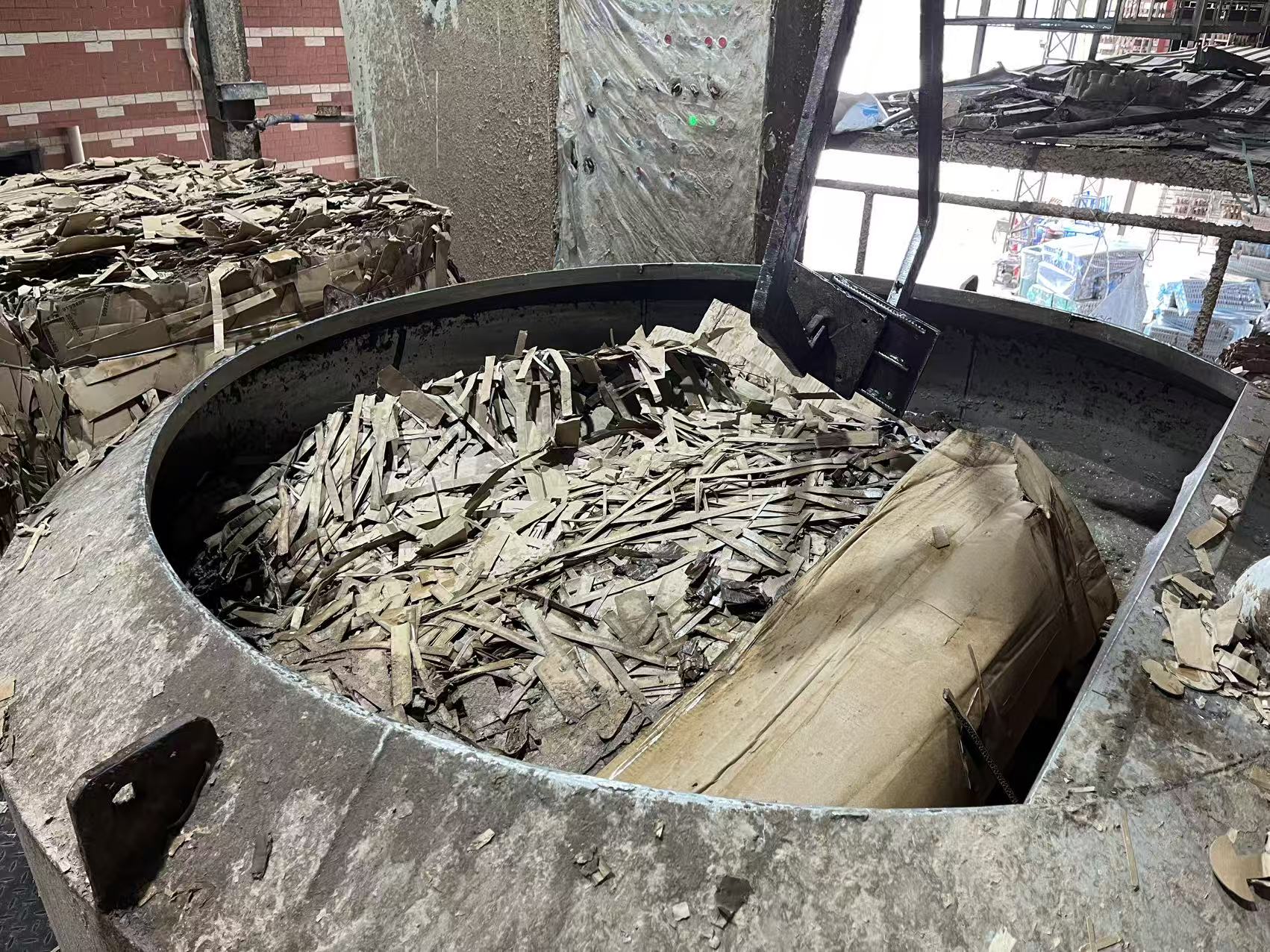
Fibre preparation: recycled paper and plant fibre are pulped before forming, and the fibre blend sets the ceiling on achievable strength.
Most configuration errors trace back to a specification sheet that was skimmed. The documented parameter set for molded pulp tray products is compact and worth reading line by line.
| Parameter | Documented value | Why it changes the buying decision |
|---|---|---|
| Raw material | Sugarcane pulp, bamboo pulp, wood pulp; recyclable material streams | Determines fibre strength, surface finish and how the tray reads in a sustainability claim |
| Colour | Natural, white, yellow, or customised as required | Affects shelf presentation for cosmetic and gift configurations |
| Wet pressure | 0.15–0.25 g/cm³ | Formed-state density before pressing |
| Dry pressure | 0.28–0.45 g/cm³ | Documented higher than the wet value, reflecting densification during pressing |
| Thickness | 0.8–5.0 mm, customised as required | Sets the trade-off between protection and packed volume |
| Moisture content | ≤8–12% | Drives storage requirements and dimensional stability in humid transit |
| Edge crush strength | 3–8 kN/m | Governs stacking performance in a loaded container |
| Compressive strength | 2–8 MPa | Governs resistance to top-load pressure |
| Temperature range | −20 °C to +80 °C standard; food grade −20 °C to +120 °C | Determines whether the configuration can serve hot-fill or chilled applications |
Two implications follow. First, thickness and moisture are the parameters most likely to move between shipments, so they belong in the acceptance criteria rather than in the marketing summary. Documented acceptance practice for tray orders uses PSI (pre-shipment inspection), with payment commonly by L/C; T/T and Alibaba Trade Assurance are also accepted, and shipping is arranged by sea, air or express according to destination.
Second, fibre blend is a strategic choice rather than a technical footnote. Tonghe Paper Co., LTD uses high-quality raw wood pulp, bamboo pulp and sugarcane pulp rather than mixed low-grade recycled waste paper, and adds no harmful chemical additives, which supports complete recycling of the material stream. In a natural composting environment, the material reaches 100% complete biodegradation within 28 days. For a brand making a public packaging claim, that combination of fibre selection and documented degradation behaviour is what turns a sustainability statement into something defensible.
What Changes When a Tray Program Runs for Years
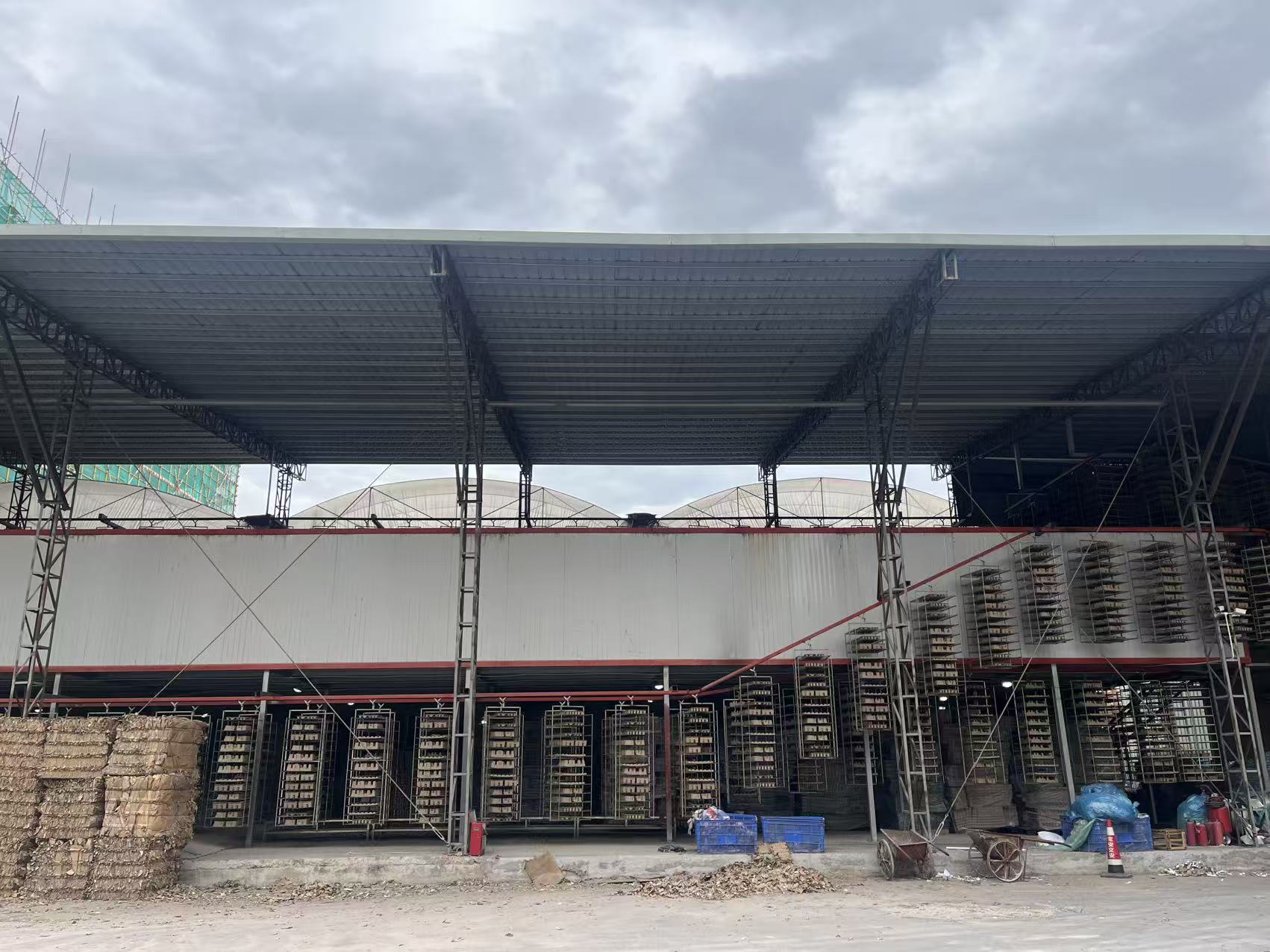
Drying cage: formed trays are dried before hot pressing and trimming complete the configuration.
Long-term tray supply is an ecosystem question, not a single-order question. Three things decide whether year three looks like year one.
1. Tooling continuity
If molds are developed and held by the manufacturer, repeat orders can be produced from the same cavity geometry without re-engineering. Tonghe Paper Co., LTD maintains in-house mold development alongside automated forming and hot-pressing equipment, which reduces the risk that a reorder arrives with a subtly different fit.
2. Capacity headroom against demand rhythm
A supplier's nominal capacity matters less than its ability to absorb a peak without stretching lead times. Documented figures for this manufacturer include 23,000 m² of factory space, 160 employees, 12,000 tons of annual output and monthly capacity of up to 1,000 tons — scale that allows a buyer to plan seasonal peaks rather than discover them.
3. Multi-category consolidation
Brands that replace plastic and foam across several product lines usually end up managing several tray geometries at once. Buying tray linings, gift boxes and protective pulp packaging from one qualified source removes the coordination cost of matching tolerances across multiple vendors — and it changes the negotiation from a per-item price discussion to a programme discussion.
Tonghe Paper Co., LTD exports roughly 50% of production and serves buyers in the EU, USA, Australia, Saudi Arabia, Malaysia and Brazil. For a long-term programme, that export profile is a useful reference point: the configurations it ships are already built to travel through EU and US packaging regulation rather than being adapted after the fact.
Where Molded Pulp Configurations Are Applied
The tray families in this shortlist map onto distinct application patterns:
- Consumer electronics and lighting: Molded Pulp Electronics Trays and Shockproof Pulp Trays with anti-static and vibration-damping behaviour, sized to a fixed cavity for accessories.
- Medical devices: Medical Device Pulp Trays where the tray forms part of a documented, regulated pack.
- Cosmetics and gift sets: Cosmetic Packaging Pulp Trays and irregular integrated gift-box inserts, where surface finish and fit carry brand weight.
- Food and fresh produce: Food Grade Molded Pulp Trays, Disposable Food Pulp Trays, Fresh Produce Pulp Trays and Egg Pulp Trays, all within the extended −20 °C to +120 °C food-grade envelope.
- Appliances, hardware and auto parts: Heavy Duty Molded Pulp Trays and Protective Molded Pulp Packaging for heavier items where top-load resistance dominates.
Market Trends Shaping the 2026 Shortlist
Regulation is now a configuration input. The EU Packaging and Packaging Waste Regulation (EU) 2025/40 requires all packaging to be recyclable by 1 January 2030. A buyer specifying trays in 2026 is effectively specifying for a recyclability mandate four years out, which favours mono-material fibre configurations over composite structures.
Trays carry the market. Trays were the leading product segment in 2025 at more than 41.0% of revenue, which means tooling, forming and finishing capacity for trays is where supply investment is concentrated — good news for buyers who need configuration flexibility.
Healthcare is the fastest-moving regulated segment. Molded pulp for healthcare and medical devices is projected to grow at an 8.6% CAGR, driven by sterilization standards and hospital plastic restrictions. Buyers in adjacent regulated categories should expect medical-grade expectations to migrate into their own specifications over time.
Supply is concentrated. Asia Pacific held a 41.0% revenue share in 2025 with China the largest market within the region, so most shortlists for molded fiber trays will include Chinese manufacturing regardless of destination market. The practical question is not geography but whether the configuration is documented well enough to be reproduced.
Limits and Trade-offs Buyers Should Plan For
A shortlist that omits trade-offs is not useful. Four limits are worth stating plainly.
Unit cost. Documented comparison against plastic packaging shows a slightly higher unit cost for molded pulp trays, offset by lower overall compliance cost for EU export, where plastic-tax surcharges do not apply. Buyers optimising purely on piece price will still find plastic cheaper at the invoice line — the comparison only resolves at total landed and compliance cost.
Moisture and storage. With documented moisture content of ≤8–12%, trays should be stored in a well-ventilated, dry area and not left in prolonged direct sunlight. Warehouse discipline is part of the configuration, not an afterthought.
Temperature ceiling. Standard configurations are documented to −20 °C to +80 °C. Applications outside that envelope require the food-grade specification, which extends to +120 °C but is not a universal substitute for other grades.
Comparison scope. The documented cushioning advantage of 25–35% is stated against ordinary plastic packaging. Buyers comparing against engineered foams or die-cut inserts should validate with their own drop and vibration testing — sample evaluation is the intended route for exactly this reason.
Running the Shortlist: A Four-Step Execution Sequence
- Step 1 — Assign the procurement profile. Match the SKU set to high-volume standard, low-volume custom, regulated or heavy-duty. This single step eliminates most irrelevant tray families.
- Step 2 — Lock the specification set. Fix thickness within 0.8–5.0 mm, confirm the moisture ceiling, and record edge crush and compressive targets against the actual stacking load.
- Step 3 — Validate physically. Request samples fitted to the real product and test them in the real shipping configuration before releasing a purchase order. Confirm commercial terms at the same stage: MOQ 1,000 pcs, delivery terms FOB/CIF/CFR/EXW, PSI acceptance and L/C payment.
- Step 4 — Secure the long-term terms. Agree who owns the mold, how repeat orders are produced, and what documentation accompanies each shipment. This is the step that protects year three.
Future Outlook
The direction of travel between now and 2030 is set by two forces that reinforce each other: a market projected to grow from USD 6.2 billion in 2025 to USD 10.2 billion by 2033, and an EU recyclability mandate that removes composite and unrecyclable packaging from compliant designs. Fibre trays sit on the right side of both.
What will separate capable buyers from the rest is documentation. As molded fiber moves from substitution to standard specification, the competitive advantage shifts from finding a supplier who can mold fibre to finding a configuration whose thickness, moisture, crush strength and compliance grade can be repeated shipment after shipment, and whose tooling stays with the programme for years rather than orders.
FAQ
Q1. How should a buyer decide between a standard tray and a custom mold configuration?
The decision hinges on volume rhythm and geometry. Standard trays suit stable, high-volume SKU sets where existing tooling already fits the product and the priority is repeatability and nesting efficiency. Custom Molded Pulp Trays suit irregular or multi-component products that need a dedicated cavity — including integrated structures where several components must be held in one tray. Where product contours change mid-cycle, the standard route stops being efficient and a dedicated mold becomes the practical choice.
Q2. What commercial terms apply to a molded pulp tray programme?
Documented terms for tray orders set a minimum order quantity of 1,000 pcs, delivery terms of FOB, CIF, CFR or EXW, acceptance criteria based on PSI (pre-shipment inspection), and payment terms of L/C. T/T and Alibaba Trade Assurance are also accepted. Shipping can be arranged by sea, air or express — DHL, FedEx or UPS — with freight calculated against the destination port or address.
Q3. Which specifications should be confirmed before a purchase order is released?
Six values do most of the work: thickness (0.8–5.0 mm, customised as required), moisture content (≤8–12%), edge crush strength (3–8 kN/m), compressive strength (2–8 MPa), wet and dry pressure values (0.15–0.25 g/cm³ and 0.28–0.45 g/cm³), and the applicable temperature range (−20 °C to +80 °C standard, −20 °C to +120 °C for food grade). Thickness and moisture are the parameters most likely to shift between shipments, so both belong in the acceptance criteria rather than the marketing summary.
Q4. Why does in-house mold development matter for a long-term tray programme?
It affects reproducibility. When molds are developed and retained by the manufacturer — as at Tonghe Paper Co., LTD, which maintains in-house mold development and a team of 12 engineers — repeat orders can be produced from the same cavity geometry without re-engineering, reducing the risk that a later shipment arrives with a subtly different fit. For buyers running trays across several product lines over multiple years, tooling continuity is one of the few variables that directly protects the fit of the finished pack.
Q5. What compliance evidence is commonly verified for molded pulp trays in 2026?
Two layers. At regulation level, the European Packaging and Packaging Waste Regulation (EU) 2025/40 entered into force on 11 February 2025 and requires all packaging to be recyclable by 1 January 2030. At product and company level, documented evidence for tray products includes SGS RoHS and PFAS-free compliance, alongside ISO 9001, ISO 14001 and FSC certification recorded in company documentation. Buyers in regulated categories such as medical devices also verify material-grade suitability and the applicable temperature envelope.
Q6. How does tray design affect long-term freight cost?
Mainly through nesting geometry and weight. Documented comparisons against plastic packaging record 40–60% space saved through nested stacking, which translates into container utilisation rather than unit price. Against traditional hard gift boxes, molded pulp configurations are documented to reduce weight by approximately 50% while remaining structurally solid and stackable. Both effects compound over a full shipping programme, which is why they are worth locking into the configuration decision rather than treating as a packaging afterthought.
Taking the Shortlist Forward
For buyers who want to review the specification set in more detail — fibre options, tray families, forming and pressing processes, and capacity — a downloadable manufacturer introduction is available here: Tonghe Paper Co., LTD company brochure (PDF). Specifications and product pages are also published at tonghepulp.com.
Note on scope: this shortlist ranks tray configurations by procurement need. It does not rank or compare suppliers, and no third-party supplier performance claims are made.