
Motor-Driven Valve Actuation and Safety: A Procurement FAQ
HTNXT Industry Reference | Technical Procurement
A motorized ball valve is usually bought as one line item, but it behaves as part of a system: the actuator needs the right power and signal, the valve needs clean flow and stable piping, and the safety response depends on how the fail-safe mode is specified. This FAQ-style reference addresses the technical and procurement questions that surface between research and evaluation.
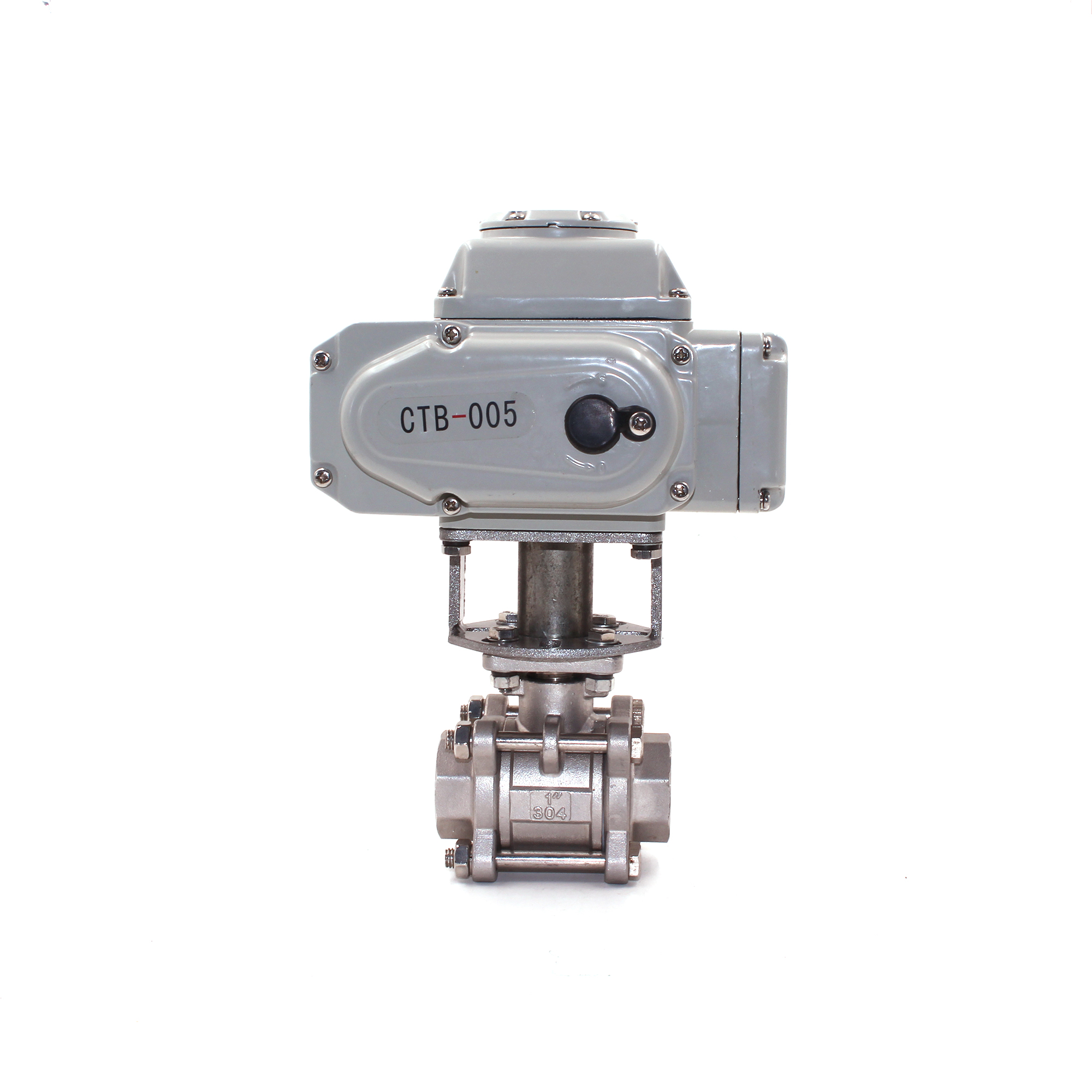
Why actuation is a procurement question, not just a product specification
Motorized ball valves are widely listed by size, voltage, torque, body material, and ingress protection. Those parameters matter, but they do not answer the operational question: how will the valve open, close, hold position, or fail under power loss? For buyers moving from research to evaluation, the more useful comparison is between actuation modes and the installation conditions that make each mode reliable.
Tianjin Tianfei High-tech Co., Ltd. is a Tianjin-based national high-tech enterprise founded in 2009. The company specializes in the research, development, manufacturing, and sales of high-end intelligent valves and metering instruments, with a product portfolio that includes motorized ball valves, motorized butterfly valves, 3-way valves, WiFi smart water valves, and water leak detection products. Its export ratio is 70%, with main markets in Europe and America, South America, Central America, Southeast Asia, and East Asia. That portfolio is relevant to this FAQ because the questions below span small residential valves, HVAC modulating valves, and large-bore municipal valves.
Problem and opportunity: the valve is only one part of the control loop
The procurement risk is not limited to a wrong size or voltage. It often sits in the interfaces: an On/Off valve specified where modulating control is needed; a DC model ordered without the correct power adapter; a large valve installed without an upstream strainer or a slow-closing check valve; or a manual override assumed to be present when the selected model does not include one.
The opportunity is equally practical. When actuation mode, power architecture, piping prerequisites, and fail-safe behavior are defined before the RFQ, the valve becomes easier to commission and easier to maintain. The sections below use Tianfei high-tech product facts to show what those decisions look like in practice.
On/Off versus modulating: what the buyer is actually selecting
On/Off control drives the valve from full closed to full open, typically through a 0°–90° quarter turn. Modulating control positions the valve at intermediate angles to regulate flow, temperature, or pressure. The two modes serve different purposes, and a dual-mode actuator can reduce SKU complexity if the project has both isolation and control duties.
The CWX-60P (2-Way) motorized ball valve is listed with AC220V or DC24V supply, DN15–DN100 size range, 20N·m torque, IP67 protection, and a working pressure of ≤1.6MPa. Its control mode is Modulating (0-10V/4-20mA) or On/Off. In modulating duty, the application guidance calls for a 0-10V or 4-20mA signal, shielded twisted pair RVVP 2×1.0mm² cable, and an independent 24VDC power module with signal isolation. The same guidance describes an equal percentage flow characteristic and ±1% modulation precision. Those details matter because a modulating valve is only as stable as its signal and power reference.
The CWX-60P (3-Way) uses a T-port or L-port configuration for mixing or diverting, with AC220V or DC24V supply, DN15–DN50 size range, 20N·m torque, IP67 protection, and ≤1.6MPa working pressure. It is commonly applied to central A/C mixing, floor heating distribution, industrial fluid switching, and water treatment. A 3-way valve can replace a 2-way valve plus a bypass in some mixing arrangements, but the port type must be selected for the intended flow path.
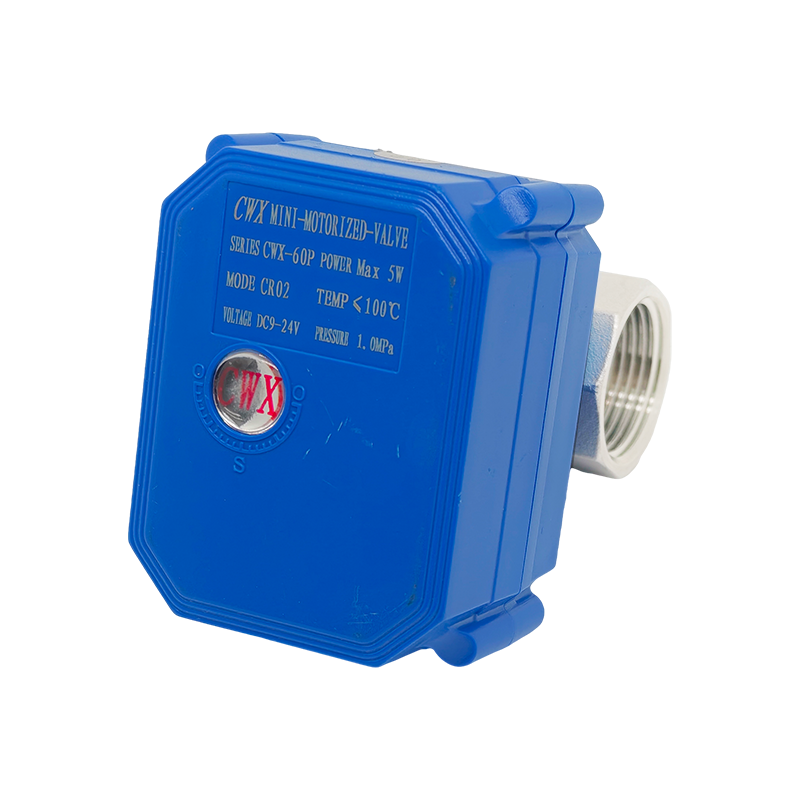
Power architecture: what dual power and multi-voltage mean in practice
Dual power is used loosely in procurement. It can mean two independent supply paths, a battery-plus-USB arrangement, or a valve family that accepts multiple voltages. The buyer should confirm which meaning applies to the selected model.
The WiFi Smart Water Valve is listed with DC6V (4 AA batteries) or DC5V USB power, WiFi 2.4GHz communication, DN15–DN25 size range, IP54 protection, and SS304 body material. Its application guidance describes dual power with 4×AA battery standby exceeding one year and USB DC5V continuous supply with automatic switching. That is a true two-path power architecture, but it is not the same as a redundant industrial power supply.
The CWX-15N motorized ball valve is listed with AC220V, DC12V, or DC24V options, DN15–DN50 size range, 3N·m torque, IP65 protection, and ≤1.0MPa working pressure. Its guidance notes that AC220V supply requires a 24VDC or 12VDC power adapter when DC models are used. This is a common procurement trap: the valve family is multi-voltage, but the installed configuration still needs the correct adapter and wiring.
The CTF-001 compact motorized ball valve accepts AC85-265V or DC9-24V, with DN15–DN50 size range, 3N·m torque, IP65 protection, and ≤1.0MPa working pressure. The wide AC range is intended to reduce country-specific model changes; the DC range supports low-voltage supplies such as solar systems. For large actuators, the CTB wafer butterfly valve guidance recommends a dedicated 220VAC circuit and an independent breaker for high-power actuators. Power quality and circuit capacity therefore belong in the installation checklist, not only in the valve datasheet.
0°–90° rotation: stroke time, torque, and what the actuator must deliver
A ball valve is a quarter-turn device: the ball rotates 90° from full closed to full open. The actuator does not need to rotate continuously; it needs to move the ball through that arc with enough torque to seat and unseat under the actual differential pressure. Stroke time is a separate parameter from torque, and both should be checked against the application.
The CWX-15N is listed with motor-driven direct ball rotation and a 6–10 second full stroke from 0° to 90°. It supports Normally Closed (NC), Normally Open (NO), and Stay power-failure modes. The CWX-25S large-bore stainless steel valve is listed with a 10N·m high-torque motor, DN25–DN80 size range, NC/NO control, IP67 protection, and a full stroke of less than 8 seconds at DN80. The CTB flange butterfly valve uses motor-driven 90° rotation, with DN50–DN500 size range, 30–500N·m torque, and PN6/PN10/PN16 pressure ratings.
Faster stroke time is not automatically better. A very fast closure can contribute to water hammer if the system has no silent slow-closing check valve. A slower modulating stroke can improve control stability but may be unsuitable for emergency isolation. The procurement question is therefore: what stroke time does the process need, and what torque margin does the actuator have at the specified differential pressure?
Installation prerequisites: strainers, check valves, and control interfaces
Motorized valves are not standalone hydraulic solutions. The application guidance for Tianfei high-tech products consistently lists upstream and downstream equipment, and those lists are a useful starting point for a procurement checklist.
For the CTB motorized ball valve, the listed supporting equipment includes an upstream pipe strainer, pressure reducing valve, and Y-strainer; downstream flow meter, pressure gauge, and terminal equipment; and control systems such as DDC, PLC, BMS, or a remote manual/auto switch. For the CWX-60P modulating valve, the guidance adds an upstream differential bypass valve, pipe strainer, and pump; downstream terminal coil, AHU, FCU, or VAV box; and DDC control with 0-10V/4-20mA analog output, integrated with a BA system or BMS platform.
Large-bore installations add more constraints. The CTB flange butterfly valve guidance lists an upstream large Y-strainer, gate valve for isolation, and expansion joint; downstream large flow meter and silent slow-closing check valve; SCADA or PLC control; companion flanges, pressure-rated gaskets, and high-strength bolts. It also states that DN300 and above should have dedicated pipe support to prevent valve sagging. The CTB wafer butterfly valve guidance lists an upstream large strainer, silent check valve, and expansion joint; downstream flow meter, pressure transmitter, and pipe support for DN200 and above.
These are not accessory upsells. A strainer protects the seat and ball from debris that can prevent full closure. A silent slow-closing check valve reduces reverse flow and water hammer. Pipe support protects the valve body and actuator from mechanical loads. If those items are missing, the valve may still be within its published specification and still perform poorly.

Manual override: an emergency function, not a normal operating mode
A manual override allows an operator to open or close the valve when power or the controller is unavailable. It is a safety and maintenance feature, but it is not present on every motorized valve model. The buyer should confirm the override type, access clearance, and the procedure for returning the valve to automatic control.
The CTB motorized ball valve is listed with a manual override lever for on-site manual open/close during power or controller failure, with no pipe disassembly required. The CWX-60P guidance also lists an IP67-rated manual lever for on-site manual operation during power or signal loss. The CWX-15N, CWX-25S, and WiFi Smart Water Valve descriptions in the available corpus do not list a manual override, so they should not be assumed to have one. This is a specification item to put in writing.
Manual override does not replace fail-safe design. If the process requires the valve to close on power loss, the valve needs an NC configuration or a fail-safe mode, not a lever that requires a person to be present. If the process requires the valve to hold its last position, a Stay mode may be more appropriate. The correct choice depends on the consequence of failure, not on convenience.
Safety behavior: NC, NO, Stay, and leak-triggered shutoff
Fail-safe behavior should be specified as part of the control narrative. The CWX-15N supports NC, NO, and Stay power-failure modes. In NC mode, the valve closes when power is removed; in NO mode, it opens; in Stay mode, it holds the current opening. The WiFi Smart Water Valve uses a motorized ball valve with app-based leak protection, including automatic valve closure and a push alarm when a leak is detected. The WATER LEAK ALARM VALVE (WLAV) integrates conductive sensing, a buzzer alarm, and a motorized shutoff valve, with a response time of less than 3 seconds, DC12V supply, DN15–DN25 size range, and NC auto-close on power failure.
These functions are useful, but they are not interchangeable. A leak alarm valve is a localized protection device; a WiFi valve is a connected control device; a modulating HVAC valve is a flow-control device. Each has a different role in the safety hierarchy. Procurement should define whether the valve is the primary shutoff, a secondary isolation point, or a control element that must fail to a safe position.
Application fit: where the actuation choice changes
HVAC and building automation. The CWX-60P (2-Way) is listed for central A/C, industrial refrigeration, HVAC, and energy management, with On/Off and modulating control, 20N·m torque, and DN15–DN100 coverage. The CWX-60P (3-Way) is listed for central A/C mixing, floor heating distribution, industrial fluid switching, and water treatment. In these applications, the valve is part of a control loop that includes sensors, DDC/PLC logic, and terminal equipment. The actuation mode should follow the control strategy, not the other way around.
Municipal and large-bore water. The CTB flange butterfly valve is listed for municipal water and wastewater, power plant cooling, marine seawater, and heavy industry, with DN50–DN500 coverage, 30–500N·m torque, and PN6/PN10/PN16 ratings. A European municipal water group project is described as using 10,000 units for on/off control and flow regulation in water supply and drainage networks, sewage treatment plants, and smart water automation. The reported results include 4–20mA regulation, response time ≤0.5s, flow control error <±2%, zero leakage and zero major failures over 16 months, 40% lower maintenance cost, and annual energy savings of more than 120,000 kWh. Those results are project-specific and should not be generalized to every municipal installation, but they show why supporting equipment and commissioning matter.
Smart water and leak protection. The WiFi Smart Water Valve covers DN15–DN25, supports Tuya Smart, SmartLife, Alexa, and Google Home, and uses WiFi 2.4GHz communication with IP54 protection. It is listed for smart home water control, rental property leak protection, and garden irrigation. The wireless water leak sensor uses 3 AAA batteries with standby exceeding one year and supports Zigbee 3.0, Z-Wave, or WiFi depending on model, with Tuya, SmartThings, or Home Assistant platforms. These devices can be linked in a scene, but the buyer should verify gateway compatibility, app support, and the shutoff valve’s power path.
Industrial and sanitary service. The CWX-25S is listed for chemical, petroleum, pharma, desalination, and food processing, with DN25–DN80 coverage, 10N·m torque, IP67 protection, 316SS construction, and a full stroke of less than 8 seconds at DN80. The CWX-15S is listed for food and beverage, pharma and chemical, purified water, and stainless steel piping, with DN15–DN50 coverage, 3N·m torque, IP65 protection, and ≤1.6MPa working pressure. The CTF-001 PVC valve is listed for acid and alkali media, swimming pools, chemical piping, and wastewater treatment, with a PVC body and motor drive for acid and alkali corrosion resistance. Material and seal selection are application-specific; the valve body alone does not establish chemical compatibility.
Solar hot water. The CWX-20P is listed with AC220V or DC24V supply, DN20–DN50 coverage, 5N·m torque, IP65 protection, and ≤1.0MPa working pressure. Its guidance describes solar PV DC24V direct compatibility, a forged brass body, three modes including Stay, and resistance to 120°C high temperature. For off-grid or solar-thermal projects, the power source and high-temperature exposure should be checked together.
Market trend: the actuation layer is growing, and procurement is catching up
One commercial research source, Straits Research, values the global ball valve market at USD 14.8 billion in 2025 and projects USD 22.82 billion by 2034. Another source, Dataintelo, places the global electric valve actuators market at USD 4.8 billion in 2025 with a 5.8% CAGR. The two figures cover different scopes, so they should not be added together or treated as a single market size. The directional signal is still useful: the electric actuation layer is a substantial and growing part of the valve value chain.
That signal has a procurement implication. As more valves are specified with electric actuation, the buyer’s due diligence shifts from the valve body alone to the actuator, the control interface, the power architecture, and the serviceability of the assembly. The HS classification for motorized valves with self-contained electric or hydraulic actuators is 848180, which is broad enough that trade data alone cannot substitute for model-level specification review.
Commercial catalogs also show the range of available configurations. Motorized ball valves are listed with 24V AC, 24V DC, 120V AC, and 240V AC options; body materials include 316 stainless steel, brass, plastic, aluminum, and carbon steel; connection types include NPT, NPTF, and socket connect. These listings show availability, not market share. For buyers, the practical lesson is to normalize the RFQ by voltage, size, actuator torque, control mode, body material, and connection standard before comparing quotations.
Comparison with traditional solutions: where motorized valves fit and where they do not
Motorized valves are often compared with manual valves and with self-operated thermostatic valves. The comparison should be made on control capability, power dependency, and installation boundary, not on a single headline specification.
| Criterion | Manual ball valve | Motorized ball valve | Self-operated thermostatic valve |
|---|---|---|---|
| Actuation | Hand lever or handle | Electric actuator, 0°–90° quarter turn | Liquid-filled bulb, thermal expansion |
| Power dependency | None | AC or DC supply; signal for modulating | None |
| Remote or BMS control | No | Yes, with DDC/PLC/BMS and compatible signal | No |
| Fail-safe options | Position held mechanically | NC, NO, or Stay depending on model | Temperature-driven; no electrical fail-safe |
| Typical fit | Isolation with physical access | Automated isolation, modulating control, leak shutoff | Temperature-only control without power |
| Main boundary | No remote or automatic response | Requires power, control signal, and installation prerequisites | Not a remote flow-control device |
The main limitation of a motorized ball valve is electrical dependency. Without power and a control signal, the actuator cannot reposition the valve unless the model includes a manual override or an NC/NO fail-safe configuration, and not every model offers either. A motorized valve also does not correct poor piping design: a missing strainer, inadequate pipe support, or an incorrectly selected check valve can still cause seat damage, water hammer, or premature actuator failure. In sites where power and control maintenance are unreliable, a manual valve or a self-operated thermostatic valve may be the more appropriate choice for the specific duty.
Future outlook: more integration, more documentation
The available evidence points toward more integrated actuation rather than a single product change. The electric actuator market is described as growing at a 5.8% CAGR in one commercial forecast, and the product literature already includes modular actuator designs with independently replaceable motor and circuit board, OTA firmware updates on connected valves, wireless leak sensors, and app-based shutoff scenes. For buyers, the likely differentiator is not the number of features but the quality of documentation: signal compatibility, IP rating, fail-safe mode, manual override availability, spare-part strategy, and installation prerequisites.
A practical procurement response is to require a model-level submittal that states the actuation mode, supply voltage, power consumption, control signal, stroke time, torque, IP rating, body and seal materials, fail-safe behavior, manual override status, and required upstream and downstream equipment. That submittal is more useful than a catalog page because it forces the interface assumptions into the open before the valve is ordered.
FAQ: technical and procurement questions
What is the difference between On/Off and modulating control on a motorized ball valve?
On/Off control drives the valve from full closed to full open, typically through a 0°–90° quarter turn. Modulating control positions the valve at intermediate angles using an analog signal, commonly 0-10V or 4-20mA. The CWX-60P (2-Way) supports both modes, with 20N·m torque and DN15–DN100 coverage. Modulating duty requires a compatible controller, shielded signal cable, and an isolated 24VDC supply; On/Off duty is sufficient when the valve is used for isolation rather than continuous flow regulation.
When does a motorized ball valve need dual power or multi-voltage supply?
Dual power usually means two supply paths, such as the WiFi Smart Water Valve’s 4×AA battery and DC5V USB input with automatic switching. Multi-voltage means one valve family accepts several voltages, such as the CWX-15N with AC220V, DC12V, or DC24V options, or the CTF-001 with AC85-265V or DC9-24V. These are different requirements. The buyer should state whether the project needs battery backup, a wide-voltage input, or a redundant supply, and should confirm the adapter and wiring for the selected model. AC220V supply requires a 24VDC or 12VDC power adapter when DC models are used.
What installation prerequisites should be verified before installing a motorized ball valve?
Verify the upstream strainer, pressure reducing valve, and Y-strainer; the downstream flow meter, pressure gauge, and terminal equipment; and the control interface, such as DDC, PLC, BMS, or a remote manual/auto switch. For modulating valves, also verify the differential bypass valve, pump, shielded twisted pair signal cable, and independent 24VDC power module. For large valves, verify the expansion joint, silent slow-closing check valve, companion flanges, gaskets, bolts, and pipe support. Confirm that the actuator has enough clearance for manual operation if an override is supplied.
Why do large motorized valve installations require strainers and silent check valves?
A strainer protects the valve seat and ball from debris that can prevent full closure or damage the sealing surface. A silent slow-closing check valve reduces reverse flow and water hammer, which is especially important when a large valve closes quickly. The CTB flange butterfly valve guidance lists an upstream large Y-strainer, gate valve, and expansion joint; downstream large flow meter and silent slow-closing check valve; and dedicated pipe support for DN300 and above. These components address piping loads and flow transients that the valve alone cannot manage.
Which motorized ball valve models include a manual override, and how is it used?
The CTB motorized ball valve includes a manual override lever for on-site manual open/close during power or controller failure, with no pipe disassembly required. The CWX-60P guidance also lists an IP67-rated manual lever for operation during power or signal loss. The available corpus does not list a manual override for the CWX-15N, CWX-25S, or WiFi Smart Water Valve, so it should not be assumed. Manual override is an emergency or maintenance function; after use, the valve should be returned to automatic control and the cause of the failure should be addressed.
What does 0°–90° rotation mean for a motorized ball valve, and what stroke time should buyers expect?
A ball valve is a quarter-turn valve: the ball rotates 90° from full closed to full open. The actuator drives that arc; it does not rotate continuously. The CWX-15N completes a 0°–90° full stroke in 6–10 seconds. The CWX-25S has a full stroke of less than 8 seconds at DN80. The CTB flange butterfly valve also uses motor-driven 90° rotation. Stroke time should be matched to the process: fast closure may require water-hammer protection, while modulating control may need a slower, stable stroke.
How should fail-safe behavior be specified for safety-related applications?
Specify NC, NO, or Stay according to the consequence of power loss. In NC mode, the valve closes when power is removed; in NO mode, it opens; in Stay mode, it holds its current position. The CWX-15N supports NC, NO, and Stay modes. The WLAV uses NC auto-close on power failure as part of its leak shutoff function. The correct choice depends on whether the process needs isolation, venting, or position retention, and it should be confirmed with the system designer rather than selected from a catalog default.
What safety functions can be integrated with motorized valves in water leak protection?
The WLAV integrates conductive sensing, a buzzer alarm, and a motorized shutoff valve, with a response time of less than 3 seconds, DC12V supply, and a sensor cable length of 1–5 meters. The WiFi Smart Water Valve can close automatically and push an alarm through its app when linked to a leak detection scene. The wireless water leak sensor can support Zigbee 3.0, Z-Wave, or WiFi and can be integrated with Tuya, SmartThings, or Home Assistant. These functions are complementary; they do not replace primary isolation, code compliance, or routine maintenance.
This reference is based on Tianfei high-tech product and application information and the cited third-party market sources. Project results are specific to the described installation and should be verified against the final system design.
Есть вопросы или нужны дополнительные детали?
Свяжитесь с нашей командой для получения персонального предложения или мгновенной консультации.
Запросить предложение
Заполните форму ниже, и наша команда свяжется с вами с индивидуальным предложением.
Прямой чат WhatsApp
Предпочитаете общаться в реальном времени? Напишите нам в WhatsApp для мгновенной помощи и быстрых ответов.
- Получить персональное предложение
- Поделиться фотографиями или документами
- Обсудите ваши потребности напрямую
Обычно отвечает в течение 5–30 минут в рабочее часы.