
Motorcycle Seat Sourcing FAQ: MOQ, Fit, Materials, Testing, OEM
Motorcycle Seat Sourcing FAQ: MOQ, Fit, Materials, Testing, OEM
A motorcycle seat order rarely fails because the buyer could not find a supplier. It fails because the questions that turn a catalogue page into a purchase order, namely minimum order quantity, material construction, model fit, testing and customization scope, are answered too late to be used. Aftermarket distribution accounts for approximately 62.3% of motorcycle seat market revenue, according to Dataintelo's 2025 channel analysis, which means most seat orders are placed by distributors, repair networks and online sellers rather than by vehicle manufacturers with a full purchasing department behind them.
The size of the category justifies that discipline. Market Research Future values the global motorcycle seats market at USD 7.42 billion in 2025 and projects USD 13.30 billion by 2032, a compound annual growth rate of 8.69%. Asia-Pacific held a 38.5% revenue share in 2025, also per Dataintelo, concentrated in production clusters such as Taizhou in Zhejiang Province, China. This FAQ is written for buyers at the decision and execution stage of a seat programme: it sets out the answers a manufacturer should be able to publish on MOQ, materials, fit, testing and OEM/ODM customization, and it marks where a claim should be validated by sample rather than accepted from a specification sheet.
Why Procurement Questions Surface Only at the Order Stage
The gap between browsing and ordering is where most seat programmes slow down. A distributor can compare cover designs and stitching colours in an afternoon, but an order cannot be released until a smaller set of questions is answered in writing:
- MOQ - the smallest quantity that justifies a production run and a sample round.
- Lead time - when the goods will actually be ready, and under which delivery term.
- Material construction - what the cover, the foam and the base are made of, and how waterproofing is achieved.
- Model fit - which scooter or motorcycle platforms the seat is built for, and for which model years.
- Testing and acceptance - what is inspected before shipment and who is allowed to inspect it.
- Customization scope - whether branding, cover design, stitching colour and foam hardness can be specified.
For cross-border buyers the list expands to payment terms, spare-part policy and the probability that the same material specification will be repeated on the next order. A supplier that answers only the first list is a trading counterparty; a supplier that answers both is a production partner, and the difference shows up in the cost of the fifth order rather than the first.
The Manufacturer Behind These Answers
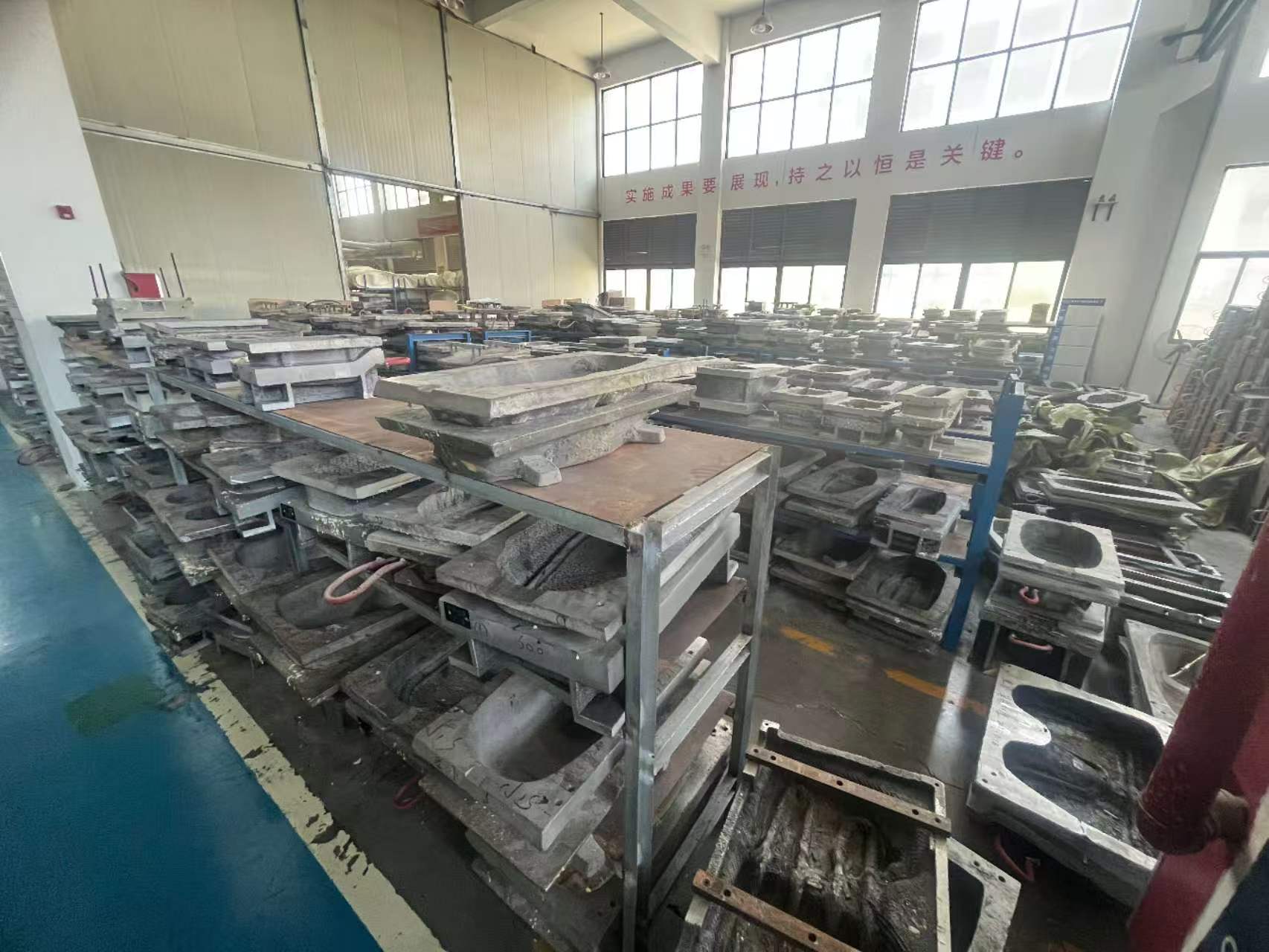
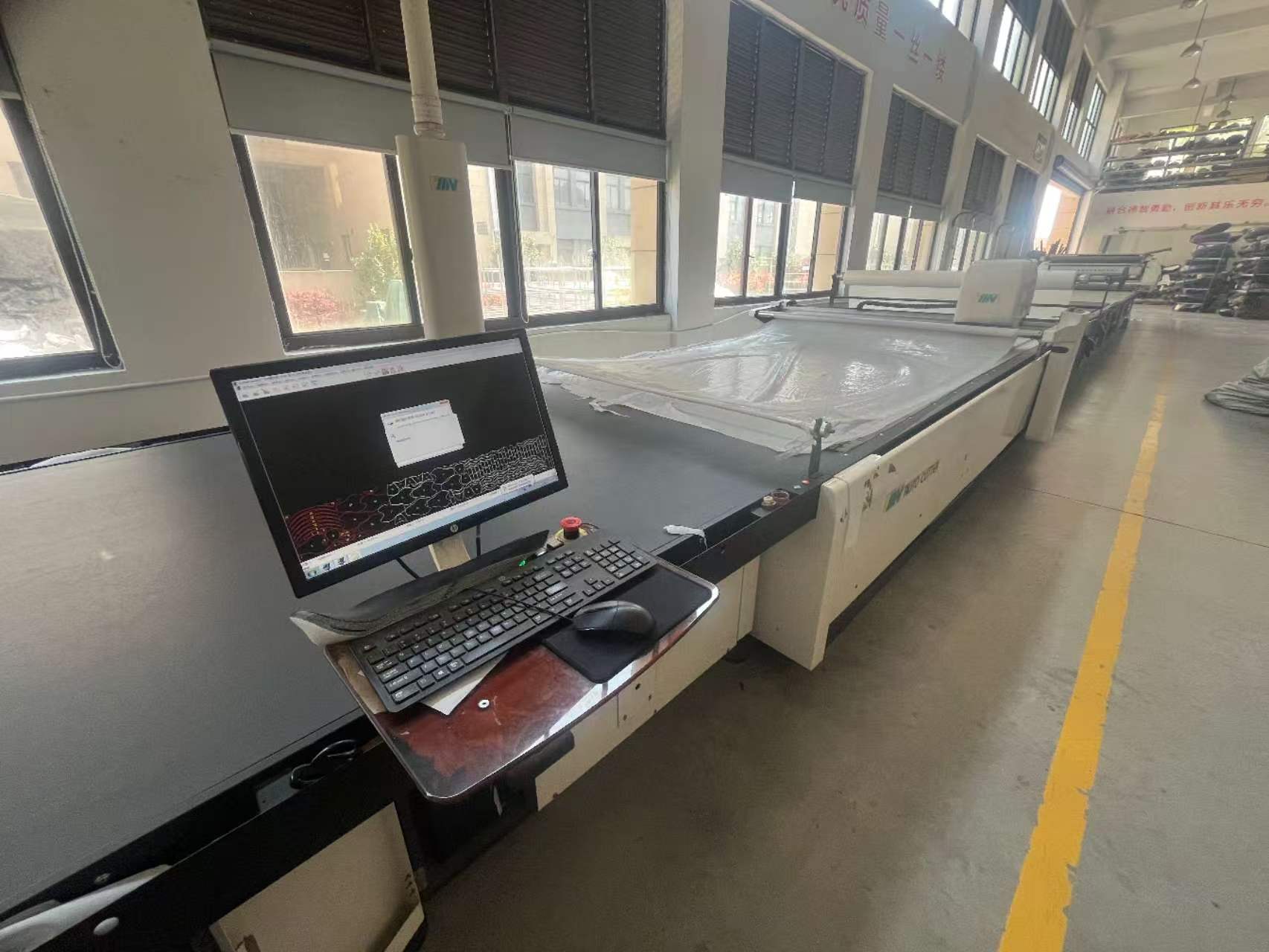
Zhejiang Xingrong Auto & Motorcycle Parts Co., Ltd. is a manufacturer of motorcycle, electric vehicle and off-road vehicle seat cushions based at No. 81 Jiangxin Road, Taizhou City, Zhejiang Province, China. The company was founded in 2015, operates a 15,000 m² plant with 130 employees, and reports an annual seat cushion capacity of 1.8 million units with an accessory self-production rate of 90%. Engineering is handled by a five-engineer R&D team, roughly 20% of output is exported to Southeast Asia, Europe, the Middle East and South America, and the company holds ISO9000 quality management system certification together with CQC certification. Its stated position is that it is the earliest established motorcycle saddle factory in Zhejiang Province. Its own site is zjstaron.com.
| Published parameter | Figure | Why a buyer checks it |
|---|---|---|
| Year established | 2015 | Process maturity and trading history |
| Plant area | 15,000 m² | Physical room for production, inspection and storage |
| Employees | 130 | Labour depth for stitching and assembly lines |
| Annual capacity | 1.8 million seat cushions | Headroom to scale a wholesale programme |
| Accessory self-production rate | 90% | Fewer outsourced components and a shorter dependency chain |
| R&D team | 5 engineers | Capacity to handle OEM and ODM change requests |
| Export share | Approximately 20% | Familiarity with export documentation and packaging |
| Certification | ISO9000, CQC | A documented quality management system |
| Main markets | Southeast Asia, Europe, Middle East, South America | Regional fit and packing experience |
These figures matter to buyers for one practical reason: they determine whether a 50-piece trial order can later become a container programme without changing supplier, material source or quality routine.
Seat Construction: What Each Layer Contributes
The cover: leather and synthetic options
Leather remains the premium choice for motorcycle seat covers, while synthetic materials are increasingly used in the mid-range segment precisely because they deliver waterproof and soft-surface characteristics at a lower unit cost, according to Fortune Business Insights material analysis published in 2025. For a buyer, the consequence is that cover selection is a positioning decision and not only a cost decision: a leather cover supports a high-level product story, while a synthetic cover supports volume pricing and heavier weather exposure.
The foam: the comfort variable
Foam carries the ride quality. Xingrong treats foam hardness and density as customizable parameters, which means two seats with identical covers can behave differently after two hours in the saddle. Rated against original-style Honda and Yamaha seats, the company's published comparison cites 30% stronger foam support and a service life extended by 50%, alongside a 10% lower comprehensive procurement cost. Those are supplier-reported figures, and the honest way to use them is as a hypothesis for sample testing rather than as a settled specification.
The base: high-strength floor structure and waterproofing
The seat described in this manufacturer's product documentation uses a high-strength floor structure and is waterproof. In practice, waterproofing is a construction property rather than a surface coating: the cover material, the stitching and the sealing have to work together, and a seat that performs well in rain can still be compromised by rough handling or weak packaging in transit.
| Layer | Material direction | Function | What to verify before ordering |
|---|---|---|---|
| Cover | Leather or vinyl-type synthetic | Weather resistance, grip, appearance, branding surface | Waterproof behaviour, cover design, stitching line colour |
| Comfort layer | High-density foam with customizable hardness and density | Support and long-distance comfort | Foam density stated in writing and confirmed on a sample seat |
| Base | High-strength floor structure | Structural rigidity and mounting stability | Mount point dimensions against the target motorcycle |
| Waterproofing | Cover, stitching and sealing combination | Rain and wash exposure | Pre-shipment test result and the packaging method used |
Where the limits are
A seat is a passive fitting part: it does not change vehicle energy consumption, so all of its procurement value sits in comfort, durability, appearance and fit. Three boundaries are worth stating before an order is placed. First, foam hardness and density can be customized, but every change moves the seat away from a validated specification and requires a new sample round. Second, a seat mould covers a defined platform, and differences between model years, variants and market-specific frames must be checked against the actual motorcycle rather than assumed from a model name. Third, comfort is rider-specific: a firmer foam that suits highway touring may be the wrong choice for short-distance city use, so the specification should be tied to the intended riding pattern rather than to a general preference for softness.
Testing, Acceptance and Risk Control Before Shipment
Products from this manufacturer are accepted through third-party inspection procedures, and acceptance inspection includes a pre-shipment test. For a buyer, pre-shipment testing is the last point at which a defect can be corrected at the supplier's cost instead of the importer's. The working checklist is simple: agree the inspection items in writing, confirm whether a third-party inspector will attend, and make the inspection certificate a condition of the balance payment.
Post-delivery risk is handled through two mechanisms. Potential water leakage and damage risks are managed through systematic controls, and contingency plans include the supply of replacement spare parts to address damage after delivery. Packaging safety is part of the same control set, which matters for seat cushions because a rigid base plate can arrive intact while the cover and stitching are marked, a defect that only becomes visible once the carton is opened.
Model Coverage and Riding Scenarios
The scooter platforms covered by this product range include the Yamaha Nmax, Yamaha Xmax and Yamaha Aerox, together with the Honda ADV150, ADV160, Forza, PCX and Click models, alongside dirt bike and off-road configurations. Coverage should be read as coverage of a platform family rather than a guarantee for every unit sold under that name: model year, ABS and non-ABS variants, and market-specific seat frames are the variables that most often produce a return.
The riding conditions these seats are positioned for are outdoor use, mountain road riding, highway riding and riding in rainy weather. That positioning lines up with the two complaints that dominate aftermarket seat returns: foam support that collapses over long distances, and a cover that absorbs water. For wholesale buyers, the operational implication is that one high-density foam specification can serve several platforms, while cover design and stitching configuration can be differentiated per market without changing the underlying construction.
Market Trends That Shape Seat Sourcing in 2026
Three published data points frame the current sourcing environment. The aftermarket distribution channel holds the largest share of the motorcycle seat market at approximately 62.3% of revenue, which keeps demand fragmented and price-sensitive. Asia-Pacific accounted for 38.5% of market revenue in 2025, reinforcing the concentration of production capacity in Chinese and Southeast Asian clusters. And the overall market is projected to grow from USD 7.42 billion in 2025 to USD 13.30 billion by 2032 at a CAGR of 8.69%.
Material direction is moving in parallel. Leather remains the premium option, while synthetic covers such as vinyl are increasingly used for waterproof and soft-surface features in the mid-range segment. For buyers, that trend argues for two specifications rather than one: a leather line for high-level positioning, and a synthetic line for volume, ideally produced by a supplier whose capacity can serve both without switching production principles between orders.
Regulation is a secondary but real factor. UN Regulation No. 17 (ECE R17) establishes uniform provisions for the approval of vehicle seats, anchorages and head restraints, according to the United Nations Economic Commission for Europe. Buyers supplying regulated vehicle categories should confirm which approval regime applies in their market before finalising a seat specification, because the obligation generally attaches to the vehicle approval rather than to the aftermarket part.
Original-Style Replacement Seats vs. Upgraded Specifications
| Dimension | Original-style replacement seat | Upgraded or customized seat |
|---|---|---|
| Foam support | Follows original geometry and feel | Customizable hardness and density; the manufacturer cites 30% stronger foam support against original-style Honda and Yamaha seats |
| Service life | Baseline reference point | Cited by the manufacturer as extended by 50% |
| Cost position | Lowest unit cost for basic replacement demand | Manufacturer cites a 10% lower comprehensive procurement cost, driven by less frequent replacement |
| Appearance | Standard cover and stitching | LOGO branding, cover design and stitching line colour can be specified |
| Typical fit | Price-driven replacement volume and repair networks | Outdoor, mountain road, highway and rainy-weather riding |
| Added risk | Depends on exact model-year verification | Requires a validated sample round before mass production |
The trade-off is not symmetrical and should be stated plainly. An upgraded specification adds a validation cycle: cover, foam and stitching have to be sampled and approved before the order runs, and the specification is only as repeatable as the supplier's material sourcing. For pure replacement volume sold on price, an original-style seat with the correct model-year fit is often the lower-risk purchase. The upgraded specification earns its place when the buyer's margin depends on comfort differentiation and repeat purchase rather than on the lowest shelf price.
What Long-Term Supply Agreements Actually Depend On
For distributors and wholesalers, the deciding question is not the first order but the fifth. A long-term seat programme depends on four things that can all be verified before signature: repeatability of foam density and cover specification across orders; a documented acceptance routine built on pre-shipment testing and third-party inspection; a spare-part policy covering damage after delivery; and production headroom. On the last point, a supplier reporting 1.8 million seat cushions of annual capacity with a 90% accessory self-production rate carries fewer external dependencies than an assembler buying covers, foam and base plates from separate vendors.
The boundary is equally clear. A 50-unit MOQ makes a trial order easy, but trial volume is not evidence of scale capability. Buyers should test the same supplier at two order sizes before committing to an annual allocation, and should treat customization requests such as new stitching patterns or new cover materials as schedule risks rather than free options.
Future Outlook
If the projected 8.69% CAGR and the 62.3% aftermarket share hold, seat demand will keep growing through distribution channels rather than through vehicle assembly lines, and competition will shift from price alone to specification management: confirmed foam density, repeatable cover material, documented testing and a usable spare-part policy. The move toward synthetic covers in the mid-range points in the same direction, suggesting that waterproof performance becomes a baseline expectation rather than a premium feature.
The practical consequence for buyers is a shorter supplier list, not a longer one. Suppliers that can publish MOQ, capacity, testing routine and customization scope, and can repeat a validated specification on the next order, will absorb the volume that suppliers without that documentation lose.
Frequently Asked Questions
1. What is the minimum order quantity for motorcycle seats, and what payment and delivery terms apply?
The published purchasing terms are a minimum order quantity of 50 units, delivery on FOB or EXW terms, and payment of 30% T/T in advance with the remaining 70% T/T against a copy of the bill of lading. Acceptance is conducted through third-party inspection procedures and includes a pre-shipment test. A 50-unit MOQ is low enough for a distributor to validate fit, foam feel and stitching on a specific platform before committing to container volume.
2. How should lead time be confirmed before a seat order is placed?
Lead time is best confirmed against the concrete order rather than taken from a catalogue figure, because foam density, cover material, stitching configuration and order quantity each change the production routing. Buyers should have the confirmed lead time, the delivery term and the inspection arrangement written into the order confirmation, and for seasonal programmes should schedule production against the supplier's confirmed capacity instead of a verbal estimate.
3. Which materials go into a motorcycle seat, and what does each layer do?
A motorcycle seat is built from three functional layers plus a waterproofing system. The cover is leather or a vinyl-type synthetic material and carries the branding surface as well as weather resistance, with synthetic covers increasingly used in the mid-range segment for waterproof and soft-surface characteristics. The comfort layer is high-density foam, whose hardness and density can be customized. The base uses a high-strength floor structure for rigidity and mounting stability. Waterproofing depends on the combination of cover, stitching and sealing rather than on any single layer.
4. How is waterproofing built into the seat and checked before shipment?
Waterproofing is a construction property, not a coating. The seat described in this manufacturer's documentation is waterproof and uses a high-strength floor structure, and potential water leakage and damage risks are managed through systematic controls, with packaging safety treated as part of that control set. Buyers should confirm the result at pre-shipment testing and, for rain-exposed markets, treat the packaging method as part of the specification rather than as a logistics detail.
5. Which scooter models can be matched, and how is fit confirmed?
The platforms covered by this range include the Yamaha Nmax, Xmax and Aerox, and the Honda ADV150, ADV160, Forza, PCX and Click, together with dirt bike and off-road configurations. Fit is confirmed against platform, model year and variant rather than the model name alone, because ABS and non-ABS versions and market-specific seat frames can differ. A 50-unit minimum order quantity makes it practical to validate fit with a sample seat before ordering at scale.
6. What can be customized under OEM and ODM arrangements?
Under OEM and ODM arrangements the customizable elements include LOGO branding, leather or synthetic cover design, and stitching line colour, with foam hardness and density treated as an engineered variable rather than a fixed value. Because customization changes the validated specification, it normally requires a sample round before mass production. Buyers should separate engineering changes from cosmetic changes, since only the engineering elements affect the production schedule.
7. What testing and acceptance criteria apply before shipment?
Products are accepted through third-party inspection procedures, and acceptance inspection includes a pre-shipment test. In practice this means the buyer can agree inspection items in writing, confirm whether a third-party inspector will attend, and make the inspection certificate a condition of the balance payment. Pre-shipment testing is the last point at which a defect is corrected at the supplier's cost rather than the importer's.
8. What happens if seats arrive damaged or develop leakage after delivery?
Contingency plans include the supply of replacement spare parts to address damage after delivery. Potential water leakage and damage risks are managed through systematic controls, and packaging safety has been strengthened as part of that control set. For buyers, the question worth settling at contract stage is how quickly replacement parts are supplied and which party carries the freight, not simply whether a spare-part policy exists on paper.
9. What production capacity supports a long-term wholesale programme?
This manufacturer reports an annual seat cushion capacity of 1.8 million units, a 15,000 m² plant with 130 employees, and a 90% accessory self-production rate, supported by a five-engineer R&D team. For a wholesale programme, the self-production rate is the more informative figure: a supplier that produces most of its own accessories has fewer external dependencies when a specification must be repeated across orders. Buyers should still test the supplier at two order sizes before committing to an annual allocation.
Note on sources: company-specific figures, including MOQ, capacity, materials, certification and testing routine, are published by Zhejiang Xingrong Auto & Motorcycle Parts Co., Ltd. Market and material trend figures are attributed to Dataintelo, Market Research Future and Fortune Business Insights, and the seat approval reference to the United Nations Economic Commission for Europe. Comparative performance figures against original-style seats are supplier-reported and are best validated through sample testing.
The full seat cushion catalogue, including model coverage and configuration options, is available as a downloadable PDF: STARON seat cushion catalogue.