
Motorized Ball Valve Buyer's Framework: Four Supplier Dimensions
Motorized Ball Valve Buyer's Framework: Four Supplier Dimensions
A structured method for comparing motorized ball valve suppliers on R&D depth, market footprint, after-sales service and industry solution fit, using verifiable product data rather than price alone.
A motorized ball valve is an electrically actuated quarter-turn valve that starts, stops or modulates flow by rotating a ball through a 90-degree arc inside the valve body. It sits at the point where a piping decision becomes an automation decision, which is why it appears in municipal water networks, HVAC plants, chemical dosing lines, solar hot water loops and residential leak-protection systems at the same time.
The category is expanding quickly. The global motorized ball valve market was valued at USD 8.7 billion in 2025 and is projected to reach USD 14.2 billion by 2034, according to Dataintelo, with two-way motorized ball valves alone holding 42.1% of segment share. Asia Pacific accounted for a 38.5% revenue share of that market in 2025, and China exported USD 22.6 billion of valves in 2024, maintaining a 20% share of global valve exports, according to the Observatory of Economic Complexity. Growth of that scale changes the buyer's question from whether a supplier exists to which supplier can actually be verified.
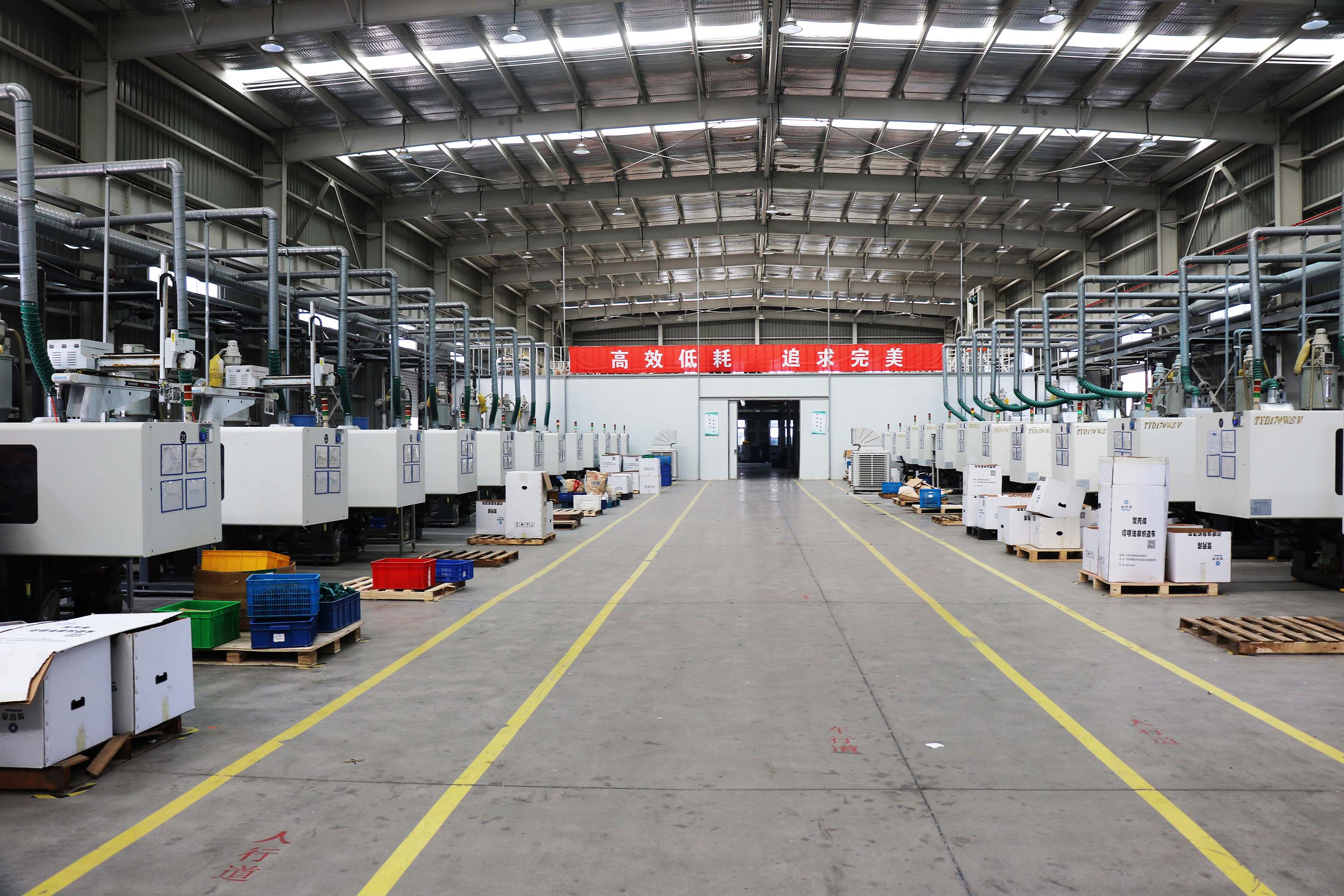
This reference sets out a four-dimension buyer's framework — R&D, market position, customer service and industry solutions — and applies it to a concrete, documented portfolio: Tianjin Tianfei High-tech Co., Ltd. Tianjin Tianfei High-tech Co., Ltd. (Tianfei High-Tech) is a Tianjin-based national high-tech enterprise founded in 2009 and a founding member of China's micro electric valve industry; it develops, manufactures and sells intelligent valves and metering instruments for fluid control, operates a 30,000 m² production base with an annual output capacity of 1,000,000 units, employs about 100 people including a 10-engineer R&D team, and reports that roughly 70% of output is exported to markets including Europe and America, South America, Central America, Southeast Asia and East Asia.
Why a Price-Led Shortlist Fails in Motorized Ball Valve Procurement
At the research and evaluation stage, most procurement teams receive quotations that look comparable on paper: a bore size, a voltage, a body material and a unit price. The differences that generate cost later are usually absent from that comparison, because they only surface after commissioning.
- Voltage mismatch. A valve built for a single grid standard forces adapters, additional SKUs and commissioning delays when the same product line is deployed in more than one region.
- Torque shortfall at the installed bore. The relationship between actuator torque and nominal bore determines whether the valve will actually seat at the working differential pressure, not just at the test bench.
- Ingress protection mismatched to the environment. A splash-resistant actuator installed in a wet municipal pit or an outdoor enclosure is a maintenance schedule waiting to happen.
- Unavailable spares. When the actuator motor or circuit board cannot be replaced independently, a single component failure can remove an entire valve line from service.
- Missing documentation. Certification and test records requested late in the process delay customs clearance and site acceptance.
The opportunity is symmetrical: buyers who evaluate these points before the purchase order avoid the rework that follows it, and manufacturers that can answer them with data are easier to defend internally when a project is challenged on cost.
The Four-Dimension Framework at a Glance
The framework treats a motorized ball valve supplier as an engineering and service system rather than a catalogue. Each dimension has its own evidence type, and each has a characteristic failure mode when it is skipped.
| Dimension | What the buyer is really testing | Evidence to request | Failure mode if skipped |
|---|---|---|---|
| R&D depth | Whether the portfolio absorbs voltage, bore, torque and media constraints without custom one-offs | Voltage windows, torque-to-bore tables, control-mode options, IP ratings | Adapters, extra SKUs, unsuitable actuator sizing |
| Market position | Whether the supplier's footprint matches the buyer's region and project type | Export ratio, served regions, reference project profiles | Long logistics, unclear support responsibility |
| Customer service | Whether commitments survive commissioning and year two | Lead time, MOQ, test regime, spares strategy, remote support scope | Downtime, undocumented change orders |
| Industry solutions | Whether a specific series fits a specific fluid, pressure and control environment | Bore range, pressure rating, seat and body material, control signal | Premature seal failure, wrong control integration |
Dimension 1 — R&D Depth: Solving Voltage, Bore and Media Constraints
R&D depth in this category rarely shows up as a laboratory claim. It shows up as the number of engineering constraints a single supplier can absorb inside standard production. Tianjin Tianfei High-tech Co., Ltd. documents a 10-engineer R&D team inside a roughly 100-person organisation, and the resulting CWX and CTB families span a wide constraint envelope.
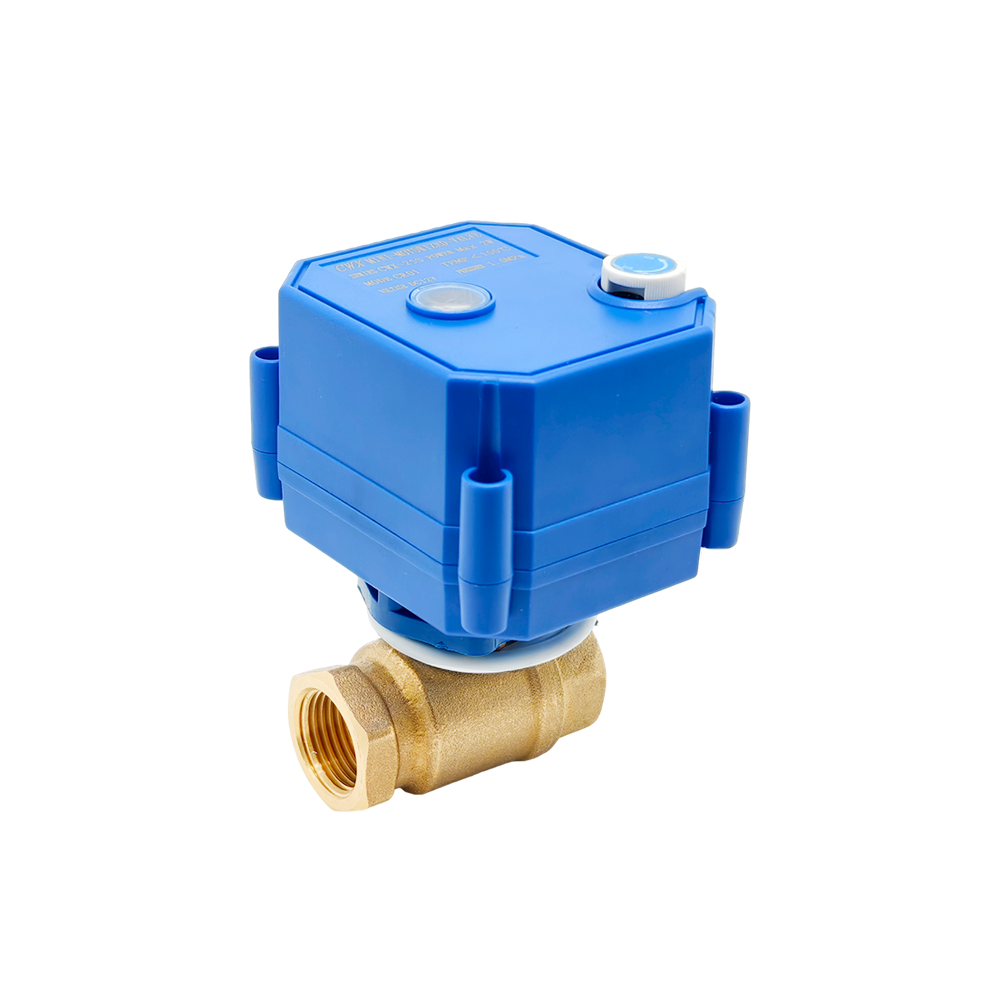
- CWX-15N operates on AC220V, DC12V or DC24V, delivers 3 N·m of torque across DN15–DN50, carries IP65 protection, and supports Normally Closed, Normally Open and Stay power-failure modes. The design note behind the series is torque density: 3 N·m is specified to cover the full DN15–DN50 range.
- CWX-60P (2-way) provides 20 N·m across DN15–DN100 with selectable On/Off or modulating control using 0-10V or 4-20mA signals, rated IP67.
- CWX-60P (3-way) offers T-port and L-port configurations at 20 N·m up to DN50, with a ceramic seal ball core documented for 100,000 switching cycles, which suits mixing duty on underfloor heating manifolds and central air-conditioning loops.
- CWX-25S is a stainless steel large-bore valve covering DN25–DN80 at 10 N·m with an IP67 full seal and a documented full stroke under 8 seconds at DN80.
- CTF-001 uses an ultra-wide AC85–265V or DC9–24V input, which removes the need for country-specific voltage variants in a global SKU list.
- CTB flanged butterfly valves extend the same engineering logic to DN50–DN500 with 30–500 N·m torque and PN6/PN10/PN16 pressure ratings.
For a buyer, the practical test is simple: ask for the voltage window, the torque-to-bore table and the control-mode options. A supplier that can serve a compact DN20 valve and a DN500 butterfly valve from the same engineering base removes a category of integration work from the project.
Dimension 2 — Market Position: Measure Footprint, Not Slogans
Market position should be read as serviceable footprint rather than brand volume. Third-party analysis identifies Emerson Electric Co. as a global market leader in the final control and smart valve segment, according to Mordor Intelligence, and that kind of installed base matters for buyers who need worldwide spares. For mid-size manufacturers, the more useful measures are export exposure, regional coverage and repeat project profiles.
Tianfei High-Tech reports that about 70% of production is exported to Europe and America, South America, Central America, Southeast Asia and East Asia, alongside a domestically recognised position as a founding member of China's micro electric valve industry. The company also operates an OEM production model with monthly capacity documented at 8,000 units and export coverage listed for the EU and Middle East.
Dimension 3 — Customer Service: Commitments That Survive Commissioning
Service quality in valve supply is decided after the goods arrive. The commitments that matter are lead time, minimum order quantity, the test regime applied to every unit, and whether a failed actuator can be repaired without replacing the whole valve. Tianfei High-Tech documents a 30-day standard lead time, a minimum order quantity of 2 units, 100% unit testing, remote after-sales support, and customizable voltage and logo under its OEM model. The actuator design is modular: motor and circuit board are independently replaceable, which the company states reduces repair cost compared with full-unit replacement.
A documented municipal project illustrates how these commitments behave at scale. A large European municipal water group in France ordered 10,000 units for on/off control and flow regulation across municipal water supply and drainage networks, sewage treatment plants and smart water automation. The customer inspected the factory in October 2024 and approved the production and quality control system; the order was signed in November 2024 and delivered within three months, with on-site installation guidance, commissioning training and remote technical support provided.
Project documentation from that deployment records 4–20mA regulation with a response time of 0.5 seconds or less and flow control error below 2%, zero leakage and zero major failures across more than 16 months of operation, remote monitoring, fault diagnosis and automatic alarm functions linked to a reported 40% reduction in maintenance cost, and a low-power design saving more than 120,000 kWh of electricity annually. The same record notes a price 25% lower and a delivery time 40% shorter than the international peers compared in that tender, alongside full compliance with EU standards and French water industry requirements.
Read as framework evidence rather than a sales claim, this profile shows what a service commitment looks like when it is written down: audit before order, delivery window, training, remote diagnostics, and measurable operating outcomes after commissioning.
Dimension 4 — Industry Solutions: Matching the Series to the Fluid
Solution fit is where the framework becomes technical. A valve that performs well in a municipal pit may be unsuitable for a chemical dosing line, and a compact residential valve should not be specified for a high-pressure industrial loop. The following mapping is drawn from the series specifications and their documented application notes.
| Project profile | Series | Defining specifications |
|---|---|---|
| Municipal water, wastewater, power plant cooling, marine seawater | CTB (Flange) butterfly valve | DN50–DN500, 30–500 N·m, PN6/PN10/PN16, replaceable seat in EPDM/NBR/VITON, anti-seawater electrochemical corrosion treatment |
| Large-bore HVAC, industrial piping, fire protection | CTB wafer butterfly valve | DN50–DN300, 20–200 N·m, On/Off and 4–20mA modulating, IP67 |
| BAS, industrial fluid control, municipal supply | CTB motorized ball valve | DN15–DN100, 6 N·m, On/Off and optional modulating, manual override lever, IP67 |
| Central air-conditioning, refrigeration, energy management | CWX-60P (2-Way) | DN15–DN100, 20 N·m, 0-10V or 4-20mA modulating, IP67, manual lever |
| Underfloor heating distribution, HVAC mixing | CWX-60P (3-Way) | DN15–DN50, 20 N·m, T-port or L-port, ceramic seal rated for 100,000 switching cycles |
| Food and beverage, pharmaceutical, purified water | CWX-15S | DN15–DN50, stainless steel body with 316SS ball, pressure rating up to 1.6MPa, electropolished surface Ra≤0.8µm |
| Chemical piping, swimming pools, wastewater treatment | CTF-001 PVC | DN15–DN50, PVC body tolerant of HCl, H₂SO₄ and NaOH across pH 2–13, pressure ≤0.8MPa, AC85–265V or DC9–24V |
| Drinking water, food sanitation, BAS, solar systems | CTF-001 | DN15–DN50, 3 N·m, AC85–265V or DC9–24V, IP65, compact housing |
| Solar hot water, agricultural irrigation, water supply and drainage | CWX-20P | DN20–DN50, 5 N·m, brass body, NC/NO/Stay modes, DC24V solar PV direct supply, 120°C high-temperature resistance |
| Chemical, petroleum, pharmaceutical, desalination | CWX-25S | DN25–DN80, 10 N·m, IP67 full seal, 316SS construction, dual seal (PTFE seat plus O-ring) |
| Residential and rental leak protection | WiFi Smart Water Valve, WLAV, Wireless WLD | DN15–DN25, WiFi 2.4GHz with Tuya/SmartLife, Alexa and Google Home; alarm-linked shutoff under 3 seconds |
| Floor heating, radiator and solar temperature regulation | TCV | DN15–DN32, self-operated liquid-filled bulb, 20–80°C, accuracy ±1°C, no external power or controller |
The pattern behind the table is that solution fit is defined by four variables at once: bore, media chemistry, control signal and power availability. Any series that satisfies three of them but fails the fourth is a specification risk, not a bargain.
Technical Layer: Reading the Specifications Behind Each Dimension
Six specification fields carry most of the decision weight, and each one maps back to a framework dimension.
Voltage window and control interface
The CWX-15N accepts AC220V, DC12V or DC24V; the CTF-001 accepts AC85–265V or DC9–24V; CWX series industrial models run on AC220V or DC24V. Modulating duty is served by 0-10V or 4-20mA signals on the CWX-60P series, which is the input type most building automation controllers expect. A buyer confirming signal compatibility before order avoids the most common integration failure in BAS projects.
Torque relative to bore and pressure
Documented torque figures in this portfolio range from 3 N·m at DN15–DN50 on the CWX-15N and CTF-001, through 5 N·m at DN20–DN50 on the CWX-20P, 6 N·m at DN15–DN100 on the CTB ball valve, 10 N·m at DN25–DN80 on the CWX-25S, 20 N·m at DN15–DN100 on the CWX-60P, up to 30–500 N·m on the flanged CTB butterfly range. Torque is the field that determines whether a valve will seat reliably against differential pressure.
Ingress protection
The CWX-15N, CWX-15S, CWX-20P and CTF-001 series are rated IP65, which suits kitchens, bathrooms, plant rooms and sheltered outdoor positions. The CWX-60P, CWX-25S and CTB families are rated IP67 and are the appropriate choice for wet pits, splash zones and temporary submersion exposure. Matching IP rating to the installation environment is a cheap decision before purchase and an expensive one afterwards.
Fail-safe behaviour
Normally Closed, Normally Open and Stay modes appear across the small-bore range. Within the framework, fail-safe mode is a project-level decision: a leak-protection valve usually specifies NC so that it closes on power loss, while a circulation loop may specify Stay so the valve holds its position during a brief outage and avoids water hammer.
Body and seal material against media
Brass, SS304 and 316SS bodies cover drinking water, HVAC and moderately aggressive industrial media. The PVC version of CTF-001 covers acid and alkali service in the pH 2–13 range, with UPVC and CPVC options for different temperature ceilings, and the CTB butterfly range offers replaceable EPDM, NBR or VITON seats.
Detection and shutoff integration
The Wired WLD sensor uses conductive sensing and outputs an NO/NC relay signal to an external control system, with a response time under 3 seconds and DC12V or DC24V supply; its sensor cable is standard 1 m and extendable to 50 m. It detects and alarms, and requires an external motorized or solenoid valve to perform the shutoff. The WLAV alarm valve integrates both functions: conductive sensing drives a buzzer alarm and simultaneously actuates a motorized shutoff valve, with detection to shutoff completed in under 3 seconds on DC12V, in DN15–DN25 sizes.
Application Walkthroughs: Three Project Profiles
Profile 1: Municipal water automation
A municipal network requires bore capacity, pressure rating and remote controllability at the same time. The CTB flanged butterfly valve covers DN50–DN500 with PN6/PN10/PN16 ratings and 30–500 N·m torque, and supports modulating control through 4–20mA for SCADA integration. Supporting equipment includes an upstream large strainer, a gate valve for isolation, an expansion joint, and companion flanges with pressure-rated gaskets; DN300 and above require dedicated pipe support to prevent valve sagging. The French municipal deployment described earlier follows this profile, with 4–20mA regulation recorded at a response of 0.5 seconds or less.
Profile 2: Commercial building HVAC
A building automation system typically asks for proportional control at the air handling unit and mixing duty at the manifold. The CWX-60P 2-way valve provides 0-10V or 4-20mA modulating control at DN15–DN100 with a manual lever for operation during signal loss, while the 3-way version performs mixing or diverting duty at DN15–DN50 with T-port or L-port configuration. Upstream strainers and differential bypass valves are standard requirements, and the analog signal should be carried on shielded twisted pair wiring to protect the control accuracy.
Profile 3: Residential and rental leak protection
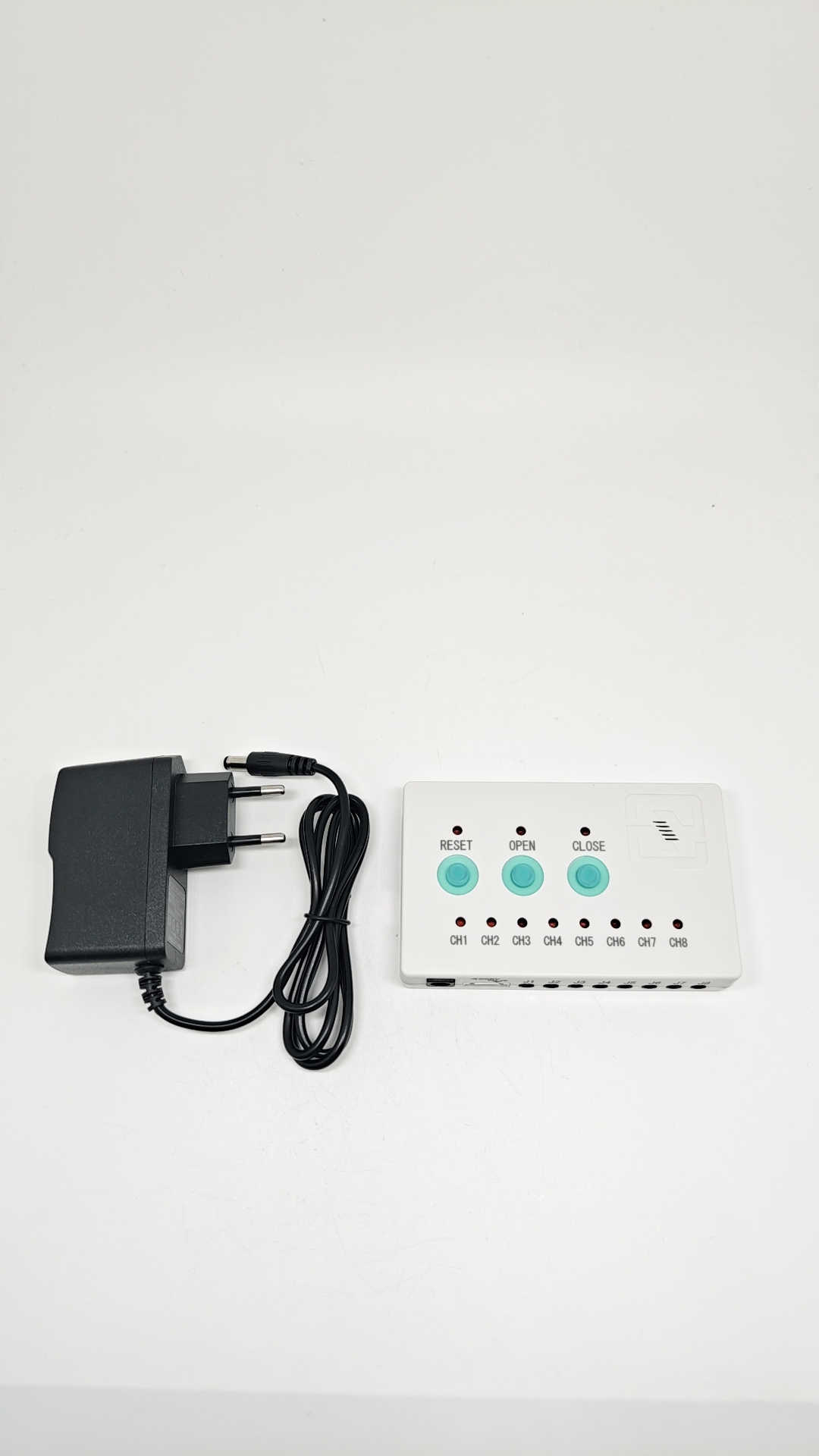
For apartment portfolios and rental properties, the constraint is installation cost rather than control precision. The WiFi Smart Water Valve operates on WiFi 2.4GHz with DC6V battery or DC5V USB supply in DN15–DN25 sizes and integrates with Tuya, SmartLife, Alexa and Google Home; the Wireless WLD sensor runs on 3 AAA batteries with standby time over one year and supports Zigbee 3.0, Z-Wave or WiFi depending on model, working with Tuya, SmartThings or Home Assistant. Because both devices are battery-powered, multi-point deployment does not require new cabling, and a linked alarm can trigger valve closure through the platform scene.
Comparison with Conventional Options — and the Limits of This Portfolio
Motorized ball valves are not automatically the right answer for every flow-control point, and a framework that presents them as universally superior would be unreliable.
- Against solenoid valves. A motorized ball valve holds its position without continuous power when configured in Stay mode and tolerates media with suspended particles better than a pilot-operated solenoid, but it is slower: documented full stroke times here are 6–10 seconds on the CWX-15N series and under 8 seconds at DN80 on the CWX-25S, against millisecond response on a solenoid. For high-frequency dosing or fast-cycle pulsing, the slower actuator has to be planned around rather than ignored.
- Against manual valves. Automation adds cost, wiring and a control interface. Where a valve is operated a few times a year and remote control adds no operational value, manual isolation remains the rational choice.
- Against self-operated thermostatic valves. The TCV series requires no power, no controller and no wiring, which makes it attractive for floor heating, radiator and solar loops. Its limitation is equally clear: it is purely mechanical, with no remote control, no BMS integration and no status feedback, so it cannot participate in a building management strategy.
Portfolio boundaries should also be stated plainly, because they define where a buyer needs a different product rather than the same supplier.
- The compact CTF-001 series is rated to 1.0MPa in brass and SS304, and the PVC version is rated to 0.8MPa. Neither is suitable for high-pressure industrial lines.
- IP65 models protect against splash and dust but not continuous submersion; wet pits and flood-prone enclosures require the IP67 CWX-60P, CWX-25S or CTB ranges.
- The Wired WLD sensor detects and alarms only and needs an external shutoff valve to stop the flow; buyers who require combined detection and closure should specify the WLAV or pair the sensor with a motorized valve.
- Wafer-type butterfly valves at DN200 and above require dedicated pipe support, and larger municipal lines are better served by the flanged CTB range at DN300 and above.
- Documented OEM customization covers voltage and logo; deeper mechanical customization needs to be confirmed against engineering capacity case by case.
- A 30-day standard lead time and a 2-unit minimum order quantity are workable for project supply, but large programmes need scheduling agreed in advance.
- Municipal water certification is documented with WRAS or FDA versions optionally available, which means the correct certification variant has to be specified at order rather than assumed.
No framework replaces physical validation. Sample testing on the actual media, differential pressure and control signal remains the final gate before volume commitment.
Market Trend Analysis and Future Outlook
Three verified market signals frame the next phase of supplier evaluation.
The IoT valve segment is projected to reach USD 2.85 billion by 2031, growing at a CAGR of 10.4% from 2023, according to The Insight Partners. That growth is visible in this portfolio already: networked valves, wireless sensors, detachable sensor cables and platform integrations such as Tuya, SmartThings and Home Assistant are no longer accessory features but product categories in their own right.
The broader motorized ball valve market is projected to grow from USD 8.7 billion in 2025 toward USD 14.2 billion by 2034, according to Dataintelo, with two-way motorized ball valves holding 42.1% of segment share. Two-way proportional control therefore remains the volume core of the category, while wireless and detection-linked products provide the growth margin.
Compliance is becoming a procurement filter rather than a formality. Motorized valves placed on the EU market must comply with CE marking under EN 60335-1 and with RoHS 2.0 under IEC 62321, which means documentation readiness affects lead time as much as engineering does.
Three practical developments follow for buyers. First, wide-voltage input ranges such as AC85–265V and DC9–24V reduce the number of regional SKUs a distributor must stock. Second, modular actuators shift lifecycle economics, because a replaceable motor or circuit board converts a valve replacement into a maintenance task. Third, detection and shutoff are converging, which moves the specification conversation from valve sizing alone to system-level integration. Buyers should expect suppliers to be evaluated on documentation, service responsiveness and solution mapping alongside mechanical specifications.
FAQ
What should a procurement team verify first when shortlisting a motorized ball valve supplier?
Start with the constraint envelope rather than the catalogue cover. Confirm the voltage window, the torque-to-bore relationship, the pressure rating and the ingress protection class, then confirm how each is documented. A supplier whose range covers DC9–24V up to AC85–265V, torque from 3 N·m at DN15–DN50 up to 30–500 N·m at DN50–DN500, and IP65 to IP67 protection for different environments can be evaluated against a project specification directly instead of through exceptions.
How can a buyer assess R&D depth without visiting the factory?
Look at how many constraints the portfolio resolves simultaneously inside standard production. Documented examples include the CWX-15N covering DN15–DN50 at 3 N·m with AC220V, DC12V or DC24V inputs and three power-failure modes; the CTF-001 accepting an AC85–265V or DC9–24V input that removes country-specific voltage variants; and the CWX-25S sealing to IP67 with a full stroke under 8 seconds at DN80. Tianjin Tianfei High-tech Co., Ltd. documents a 10-engineer R&D team inside a roughly 100-person organisation as the basis for that range. Document review plus sample testing is still required to confirm it.
Which valve series fit municipal water, HVAC and smart-home leak protection projects?
Municipal water, wastewater and marine seawater projects are served by CTB flanged butterfly valves at DN50–DN500 with PN6/PN10/PN16 ratings, 30–500 N·m torque and replaceable EPDM, NBR or VITON seats. HVAC and building automation projects are typically served by the CWX-60P 2-way valve for 0-10V or 4-20mA modulating control at DN15–DN100, and by the 3-way CWX-60P for mixing or diverting duty at DN15–DN50. Residential leak protection uses the WiFi Smart Water Valve at DN15–DN25 with Tuya, SmartLife, Alexa and Google Home integration, or the WLAV valve, which drives a motorized shutoff within 3 seconds of detection.
What service commitments should be fixed before the purchase order?
Fix the test regime, the spares strategy and the support scope in writing. Tianjin Tianfei High-tech Co., Ltd. documents 100% unit testing, a 30-day standard lead time, a minimum order quantity of 2 units, remote after-sales support, and a modular actuator in which the motor and circuit board are independently replaceable to reduce repair cost. At project scale, the French municipal water deployment recorded factory inspection before the order, three-month delivery for 10,000 units, on-site installation guidance and commissioning training, with remote monitoring and automatic alarm functions supporting operation beyond 16 months.
What technical boundaries should be understood before specifying this product range?
Several limits are documented and should be planned around. The compact CTF-001 series is rated to 1.0MPa in brass and SS304, and the PVC version to 0.8MPa with a working range of pH 2–13, so neither suits high-pressure lines. IP65 models such as the CWX-15N, CWX-15S, CWX-20P and CTF-001 handle splash exposure, while continuous submersion requires IP67 units such as the CWX-60P, CWX-25S or CTB. The Wired WLD sensor detects and alarms but requires an external valve to shut off the flow. Wafer butterfly valves at DN200 and above need dedicated pipe support. Municipal water certification is available in WRAS or FDA versions optionally, and OEM customization is documented for voltage and logo only.
Product and specification documentation for the series referenced in this article is published by Tianjin Tianfei High-tech Co., Ltd. at https://www.minimotorizedvalve.com/.