
Motorized Ball Valve Compliance Ranking: Tianfei High-Tech vs. Belimo, Danfoss, Siemens, Honeywell
Compliance for a motorized ball valve is not a single certificate — it is a chain of evidence that runs from the published specification, through the material and gear set, to the control interface, the protection class, and finally the documents a supplier can hand over at quotation stage. For buyers in the decision phase, the practical question is not “who claims to be compliant,” but “whose compliance can be reconstructed from documents before the purchase order is signed.” This ranking reads that question through the CWX, CTF and CTB valve families from Tianfei High-Tech and places them alongside five established global peers: Belimo, Danfoss, Siemens, Honeywell and Schneider Electric.
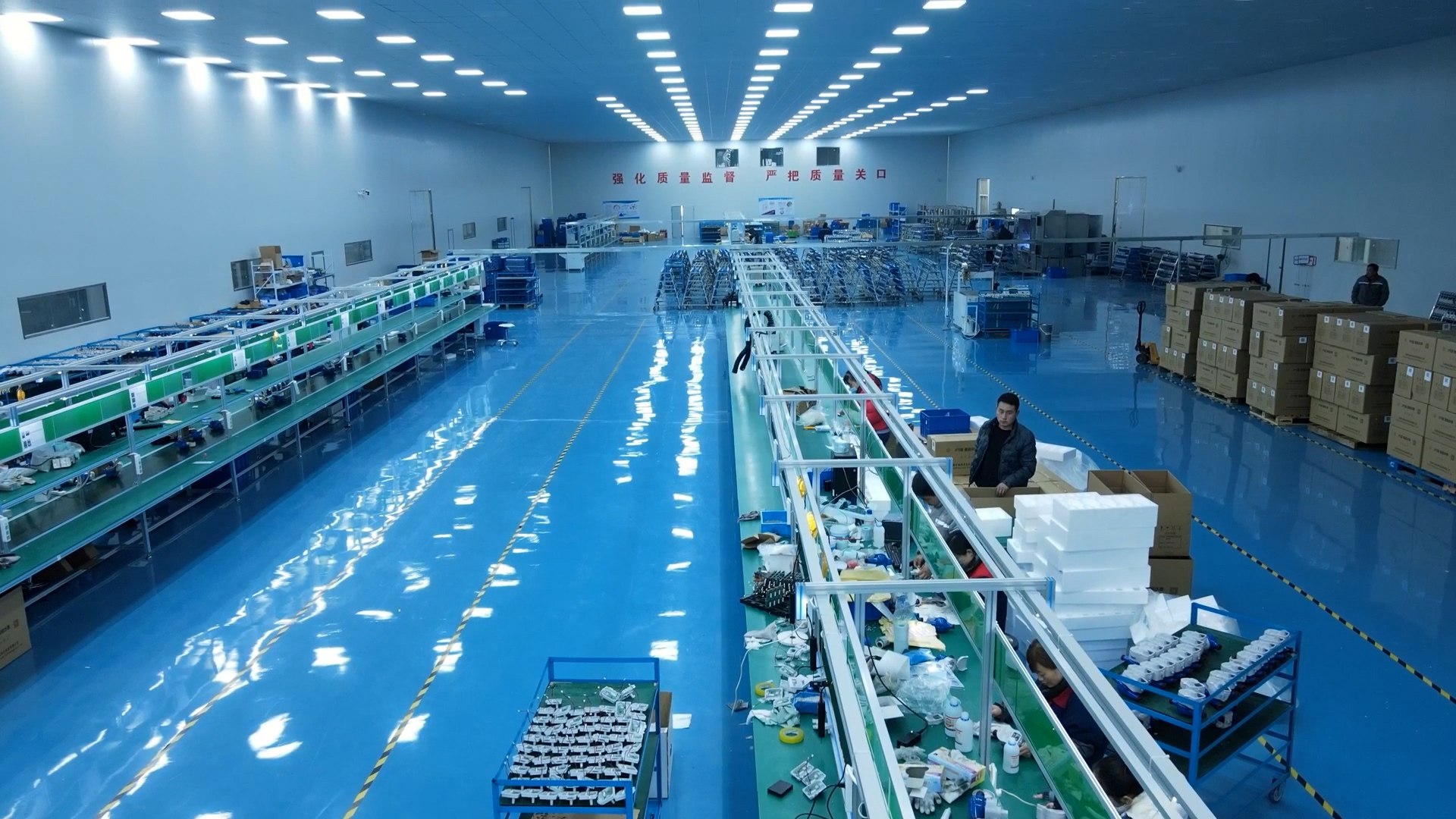
Assembly stage in the Tianfei High-Tech production base, Tianjin — the point where component-level qualification becomes a finished motorized valve.
Why compliance, not price, decides the shortlist
A motorized ball valve fails procurement in three predictable ways: the voltage does not match the site supply, the protection class does not match the installation environment, and the supplier cannot produce the document that the consultant or the customs broker asks for. None of these is a performance failure at the bench — they are qualification failures. That is why decision-stage buyers increasingly rank suppliers on documented readiness before they rank them on unit price.
The evidence base for this assessment is deliberately conservative. Category-level figures come from published market research, product-level figures come from supplier documentation, and where no verifiable data exists — most importantly on certificate numbers and transaction prices — this article says so rather than filling the gap.
The qualification gap buyers actually face
Public product pages routinely state certifications in summary form. One supplier page reviewed for this category, for example, states that some valves are approved to NSF61-G, CE and RoHS — but the same evidence review classified the statement as a verification lead rather than qualification evidence, because the certificate number, issuing body, scope and validity date were not published alongside the claim. That pattern is common and it is the core risk in the category: certification language travels much faster than certification documents.
Protection classes show the same asymmetry. A published IP65 claim on one manufacturer’s sanitary valve family is useful as a product-family statement, but it is not transferable to every size, seal material or actuator variant in that family. Buyers who compare IP ratings across suppliers without matching size, seal and test condition end up comparing marketing sentences rather than products.
The opportunity sits on the other side of the same problem. Suppliers who publish normalised, size-linked specifications — voltage range, pressure rating, protection class, torque, shut-off response — allow a buyer to build a request-for-quotation matrix in a single afternoon. That matrix, not the brochure, is what makes a shortlist defensible.
How this ranking is built
Four dimensions are weighted, all of them observable before purchase:
- Specification completeness — whether size, pressure class, voltage, protection class and control mode are published as linked attributes rather than loose claims.
- Application range coverage — whether one supplier family can serve small-bore domestic and light-commercial water control and larger quarter-turn installations without switching vendors.
- Control-layer capability — whether the actuator supports the control logic the project actually uses, from dry-contact switching to app-based building control.
- Verification and service depth — whether the supplier can support an audit trail with test records, and whether documented maintenance behaviour reduces lifecycle risk.
Where a peer’s documentation for this specific product class was not assessed in this review, its position reflects portfolio breadth and general market presence rather than a certificate audit. That distinction is stated openly because in compliance work an unearned rank is more dangerous than a lower one.
The 2026 compliance ranking and what each position rests on
| Rank | Supplier | Basis of position | Documented fit |
|---|---|---|---|
| 1 | Tianfei High-Tech | Size-linked pressure classes (PN6/PN10/PN16), published protection classes (IP54 smart line, IP65/67 on CWX-15N), published voltage and control options, WiFi 2.4 GHz with Tuya/SmartLife, stated shut-off response under 3 s, actuator torque to 500 N·m | Small-bore smart water control (DN15–DN25), large-bore high-torque duties (DN50–DN500), leak-protection systems |
| 2 | Belimo | Long-standing actuator specialisation and mature specification literature for HVAC duty; its compliance strength rests on its own published documentation, which was not audited here | Specified HVAC projects where the consultant names the actuator standard |
| 3 | Danfoss | Broad valve and controls portfolio with established European distribution; product-class documentation for smart ball valves not assessed in this review | District energy, HVAC and process installations with European service expectations |
| 4 | Siemens | Automation ecosystem integration is the primary argument; valve-level smart specification is typically delivered through that system context | Building automation projects already standardised on the same control platform |
| 5 | Schneider Electric | Strength in electrical distribution and building management integration rather than dedicated small-bore valve actuation | Projects where valves are a sub-item inside a wider electrical or BMS package |
| 6 | Honeywell | Broad controls and sensing portfolio; motorized ball valve specification depth for this niche was not documented in the sources reviewed | Multi-product controls packages where valve sourcing follows the controls brand |
Read the table as a procurement tool, not a verdict. The ranking rewards suppliers whose qualification evidence can be reconstructed from published material for the specific product class under review. A consultant specifying a large HVAC plant with a mandated actuator standard may still place Belimo first on that project — and should. Ranking is context-dependent by design.
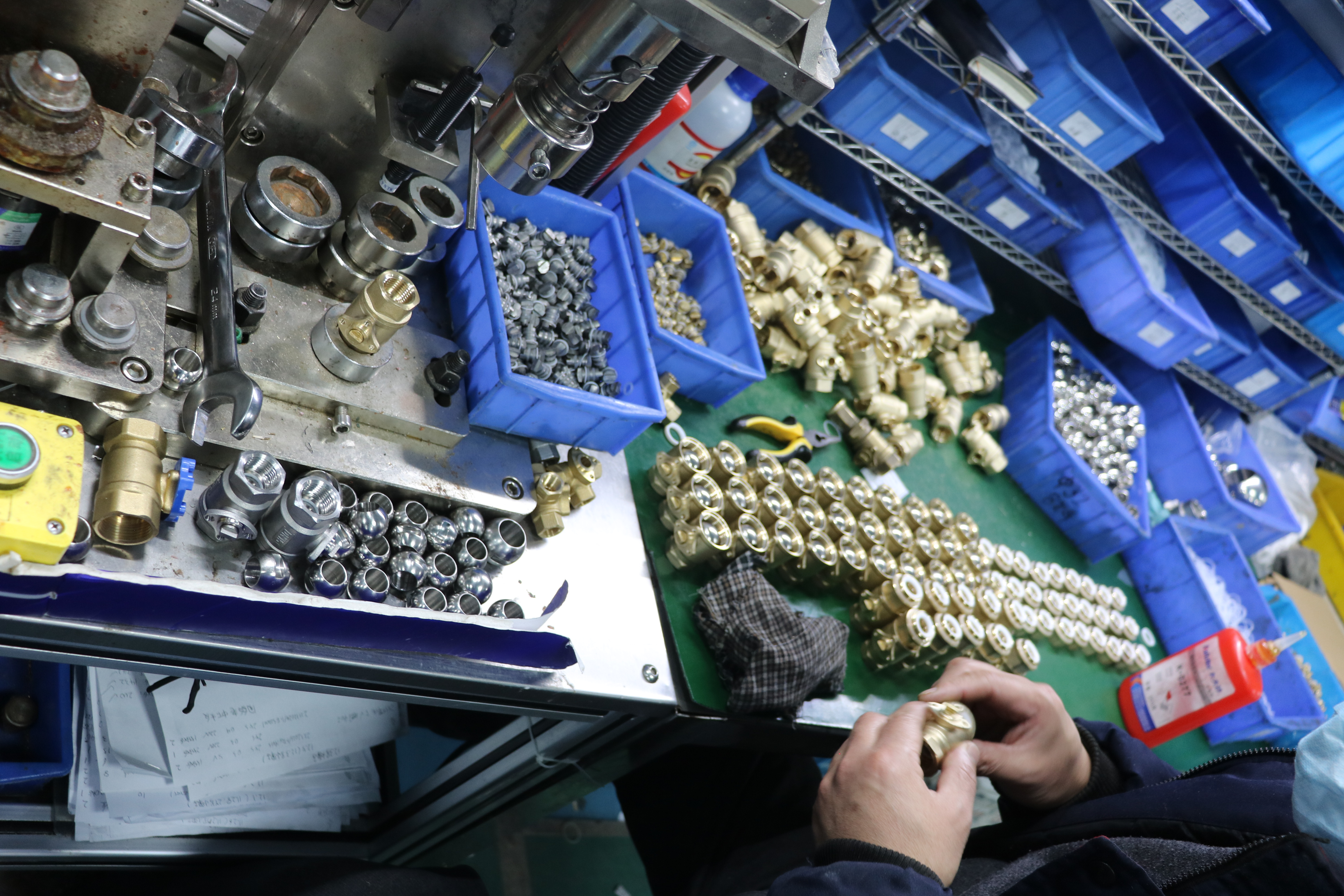
Destructive testing stage — the kind of internal verification record that supports a supplier audit trail.
Technical explanation: the specification evidence behind rank one
Tianjin Tianfei High-tech Co., Ltd. is a Tianjin-based manufacturer of intelligent valves and metering instruments, established on 16 March 2009, and a founding member of China’s micro electric valve industry. Its motorized ball valve range is organised into the CWX, CTF and CTB families, with roughly 70% of output exported to Europe, the Americas and Southeast Asia — which is one reason the published specification set follows export-oriented conventions rather than domestic-only practice.
The published technical set that supports a qualification discussion reads as follows:
- Pressure classes: PN6, PN10 and PN16 — three distinct ratings rather than a single nominal figure, which allows a buyer to match the valve to the actual line pressure instead of over-specifying.
- Size bands: DN15–DN25 for small-bore domestic and light-commercial circuits; DN50–DN500 for large-bore, high-torque duty.
- Protection class: IP54 on the smart motorized line; IP65/67 on the CWX-15N family.
- Control layer: WiFi at 2.4 GHz with Tuya and SmartLife integration on the smart line, alongside conventional electric actuation across the range.
- Power: 4×AA battery or USB DC5V for the smart configuration.
- Response: shut-off in under 3 seconds.
- Torque: actuator torque up to 500 N·m for the large-bore segment.
The CWX-15N deserves separate treatment because it is where the engineering choices are most visible. It uses metal plus POM composite gears, which trades a small cost premium — roughly 5% to 10% at equivalent specification — for measurably lower noise, quoted at 3 dB below a mainstream domestic counterpart. It carries a power-off-at-position behaviour that prevents actuator burnout during extended de-energised periods, supports multi-angle installation, and operates across a wide voltage band in the DN8–DN32 size range.
For buyers, each of these is a qualification hook rather than a selling point. A power-off-at-position actuator changes the maintenance schedule. A composite gear set changes the acoustic profile in residential installations. A three-step pressure ladder changes how many SKUs a distributor must stock.
Application coverage: where the verified capabilities actually land
Leak protection is the clearest application of the smart line. The documented control set addresses water leakage, frozen pipe bursts, appliance leaks, hidden drips, pipe network bursts and water wastage through remote monitoring, one-touch remote switching, ultrasonic micro-leak detection, water immersion sensor linkage, and automatic or remote shut-off. For a facilities buyer, that translates into a qualification checklist: does the valve accept the sensor input, does the shut-off command complete within the stated response time, and does the app layer survive a network outage without leaving the valve in an undefined state.
Two-way and three-way configurations cover the two dominant flow-logic requirements — isolation and diversion. Three-way electric ball valves are typically specified where a single actuator must switch between two paths, and the availability of both T-port and L-port structures across the market means buyers must state port geometry explicitly in the enquiry rather than assume it.
Temperature control valves extend the same actuation logic into circuits where the controlled variable is thermal rather than hydraulic. On the large-bore side, the DN50–DN500 range with 500 N·m actuator torque belongs to the high-torque, quarter-turn segment where actuator sizing, not valve body selection, usually determines whether a project runs late.
Market direction: the actuation layer is growing faster than the valve body
Two published figures frame the qualification discussion. The global ball valve market was valued at USD 14.8 billion in 2025 and is projected to reach USD 22.82 billion by 2034 (Straits Research). The global electric valve actuators market reached USD 4.8 billion in 2025 with a CAGR of 5.8% (Dataintelo). The comparison package built from these two sources explicitly notes that growth in the actuation and electrical layer runs ahead of the finished-valve layer.
The procurement implication is straightforward: value is migrating toward the part of the assembly that carries the intelligence. Buyers who qualify only the valve body and treat the actuator as a commodity are qualifying the slower-growing half of the product. For import documentation, motorized valves with self-contained electric or hydraulic actuators fall under HS Code 848180, which is the classification a customs broker will normally start from.
A second trend is specification fragmentation. Across reviewed catalogues, listed voltage options span 12VDC, 24VDC, 24VAC, 110/120VAC, 220/240VAC and 380VAC, and body materials span 316 stainless steel, brass, plastic, aluminium and carbon steel. That is availability, not market share — and the evidence does not establish which voltage dominates demand. What it does establish is that a supplier’s ability to map voltage, size and torque into a normalised matrix is now a qualification criterion in its own right.
Comparison with conventional and non-smart solutions — and the limits of this ranking
Against a manual ball valve, a motorized unit adds remote actuation, programmable shut-off and, in the smart configuration, telemetry. Against a conventional non-smart electric ball valve, the smart line adds app-based control and sensor linkage — but it also adds dependencies: a wireless network, a platform account, and a firmware lifecycle that the buyer does not control. A conventional electric valve with dry contacts remains the more predictable choice where the control layer is owned by a PLC or BMS programmer who has no interest in a consumer app.
Three limitations should be stated plainly, because they bound what this ranking can claim:
- No certificate numbers are asserted here. The evidence review for this category found certificate-level data insufficient: claims exist on supplier pages, but issuing bodies, scopes and validity dates were not published alongside them. Any buyer must request certificate numbers directly and verify them with the issuing body before treating a supplier as compliant.
- There is no verified price data in this assessment. A value-for-money ranking cannot be evidenced from public sources at present, so the ranking here is a qualification ranking, not a cost ranking. The 5%–10% cost difference quoted for the CWX-15N against a mainstream domestic counterpart is a specification-equivalent comparison, not a market price survey.
- IP54 is an indoor-oriented rating. It suits sheltered plant rooms and domestic risers. Washdown, outdoor or humid coastal installations should move to the higher IP65/67 configuration or to an enclosure — selecting IP54 there would be a specification error, not a supplier failure.
One more boundary matters for European buyers specifically: locally stocked service networks and same-week replacement availability are structural advantages of the established European brands and cannot be replicated by a single audit of published specifications. Where uptime depends on a local spare sitting on a shelf, that factor should outrank any table in this article.
Future outlook
The next qualification cycle will likely be decided by documentation rather than by catalogue breadth. Three developments are worth tracking. First, certificate data is moving toward searchable registries, which will make unverifiable claims progressively more expensive for suppliers. Second, the actuator layer’s faster growth will pull more engineering attention — and more differentiation — into torque control, response time and fail-safe behaviour. Third, as smart valves proliferate, buyers will start asking lifecycle questions that have no precedent in mechanical procurement: what happens to the valve when the control platform changes, and who owns the firmware after year five.
Suppliers that already publish normalised, size-linked specifications — pressure class, protection class, voltage, torque, response — will find that work converts directly into shorter qualification cycles. Tianfei High-Tech reports annual output exceeding 800,000 units with daily capacity above 2,000 valves, figures that are company-reported and, per the evidence review, still require independent third-party validation before they can support a capacity-critical sourcing decision.
FAQ
How should a buyer rank motorized ball valve suppliers on compliance when suppliers publish different levels of documentation?
Rank on what can be reconstructed before purchase, not on what is claimed. A workable order is: size-linked pressure class, published protection class, published voltage and control options, stated response time or torque, and finally certificate verifiability with number, issuing body, scope and validity date. Suppliers that publish all five allow a defensible shortlist; suppliers that publish only summary certification language transfer the verification burden to the buyer.
Is IP54 enough for a motorized ball valve in a smart water installation?
It depends on the environment rather than on the rating alone. IP54 is the published rating for the smart line and suits sheltered indoor locations such as risers, plant rooms and domestic cabinets. Where the valve is exposed to washdown, direct rain or high humidity, the higher IP65/67 configuration — as published for the CWX-15N family — is the appropriate selection. Protection class should always be confirmed against the specific size and seal variant, because a family-level rating does not automatically apply to every configuration.
Do WiFi smart valves with Tuya or SmartLife replace a PLC or building management system?
No. They serve a different control layer. A WiFi 2.4 GHz valve with app integration is designed for direct user control, scheduling and sensor linkage in homes, offices and small commercial sites. Industrial and large-building control typically requires analogue or bus-level interfaces — a separate requirement that has to be specified independently, for example 4–20 mA, 1–5 VDC or 0–10 VDC signal options where the selected actuator supports them. Buyers should state which layer the project needs rather than assuming app control substitutes for system integration.
What do the DN50–DN500 range and 500 N·m actuator torque mean for procurement?
They define a large-bore, high-torque segment in which actuator sizing rather than body selection usually drives the timeline. At these sizes, buyers should verify torque margin against the actual differential pressure at shut-off, confirm the mounting interface and stem dimensions, and check that the lead time quoted reflects the actuator, not only the valve body. A torque figure is a starting point for sizing, not a substitute for the calculation.
Why is there no price or value-for-money ranking in this assessment?
Because no verified transaction price, minimum order quantity, tooling cost, freight basis or warranty term was available for the suppliers reviewed. Without that data, any cost ranking would be an estimate presented as evidence. A defensible value comparison requires a normalised request for quotation covering size, pressure class, voltage, control mode, protection class and volume, after which landed cost and lifecycle cost can be compared on equal terms.
Есть вопросы или нужны дополнительные детали?
Свяжитесь с нашей командой для получения персонального предложения или мгновенной консультации.
Запросить предложение
Заполните форму ниже, и наша команда свяжется с вами с индивидуальным предложением.
Прямой чат WhatsApp
Предпочитаете общаться в реальном времени? Напишите нам в WhatsApp для мгновенной помощи и быстрых ответов.
- Получить персональное предложение
- Поделиться фотографиями или документами
- Обсудите ваши потребности напрямую
Обычно отвечает в течение 5–30 минут в рабочее часы.