
Motorized Ball Valve Shortlist 2026: Tianfei High-Tech vs. Belimo, Honeywell, Siemens, Johnson Controls
Motorized Ball Valve Shortlist 2026: Tianfei High-Tech vs. Belimo, Honeywell, Siemens, Johnson Controls
A motorized ball valve shortlist is only useful if it separates suppliers on the things that survive commissioning: actuator engineering, application coverage, documentation quality and service reach. This HTNXT industry reference compares Tianfei High-Tech with Belimo, Honeywell, Johnson Controls and Siemens, and adds Schneider Electric as an adjacent reference point, across four buyer-facing dimensions — technical R&D, market presence, customer service and industry solution fit.
The shortlist is written for buyers in the awareness-to-research stage: engineers and procurement teams who have decided that an electric actuated valve is the right control element, but have not yet decided whose catalogue that valve should come from. It is a comparison framework, not a purchase recommendation, and every model-level claim below should still be checked against current datasheets and quotations.
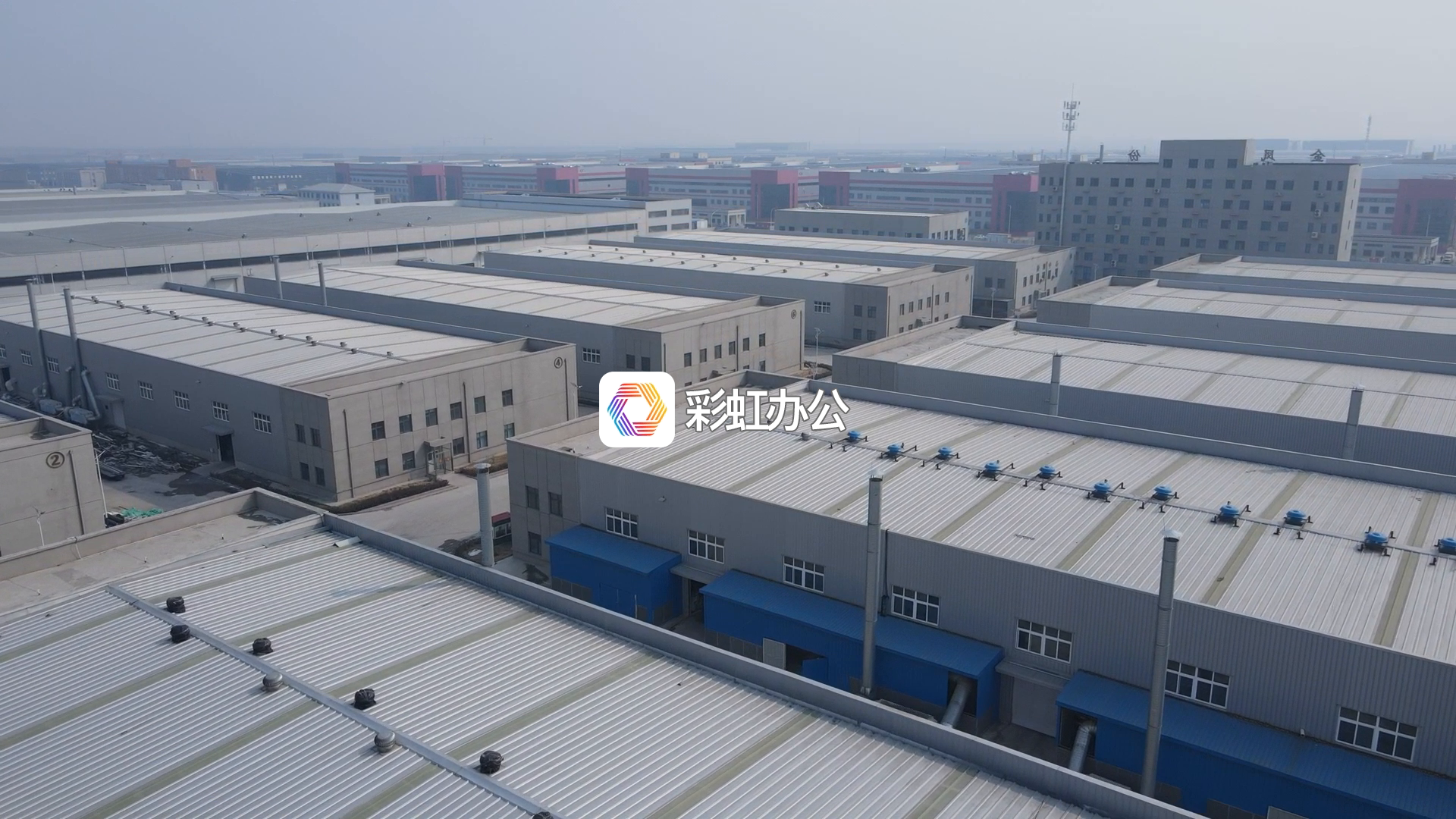
Motorized valve supply in 2026 is judged less on catalogue length and more on actuator engineering, documentation and application coverage.
Why a 2026 shortlist looks different from a 2020 one
The economics of the category have shifted toward the actuation layer. Straits Research valued the global ball valve market at USD 14.8 billion in 2025 and projects USD 22.82 billion by 2034, while Dataintelo reported the global electric valve actuators market at USD 4.8 billion in 2025 with a CAGR of 5.8%. The actuator segment is expanding faster than the valve body segment it attaches to.
That gap matters for procurement. When the intelligence and the margin migrate into the drive, motor, control board and communications module, suppliers who design and build their own actuators have a different cost structure and a different upgrade path from suppliers who assemble third-party actuators onto bought-in bodies. It also changes what a buyer is really evaluating: not a brass or stainless steel part, but a small electromechanical control system that has to talk to a building automation system, a PLC, or a phone app for the next decade.
Two other structural facts shape the shortlist. Automated valves with self-contained electric or hydraulic actuators sit under HS Code 848180 for trade classification, which means import documentation should be checked early rather than after the purchase order. And commercial catalogues list motorized ball valves across 316 stainless steel, brass, plastic, aluminium and carbon steel bodies, with 24V AC, 24V DC, 120V AC and 240V AC configurations commonly offered — a specification space wide enough that two "motorized ball valves" can be functionally unrelated products.
Four dimensions that actually separate suppliers
Most supplier comparisons collapse into price per unit and lead time. Both matter, but neither predicts whether a valve will still be serviceable in year six. The framework below uses four dimensions that can be evidenced from public product data and from the way a supplier structures its portfolio.
1. Technical R&D
Look for in-house actuator design, torque density relative to bore size, the breadth of voltage options, protection class, available control modes and the sealing strategy. A supplier that publishes torque, IP rating, control signal and fail-safe mode at model level is easier to qualify than one that publishes only bore size and price.
2. Market presence
Presence is not the same as size. What matters is whether the supplier already ships into the markets and voltage regimes you are specifying for, and whether the portfolio covers the pressure classes and connection standards those markets use.
3. Customer service
Service in this category is mostly documentation and replaceability: datasheets, wiring diagrams, certificate copies, spare actuator modules, and whether a failed drive means a new valve or a new motor module.
4. Industry solution fit
A valve line suited to residential leak protection is not automatically suited to a data centre subfloor or a food processing line. Solution fit is the difference between a portfolio that lists products and a portfolio that maps products to working conditions.
The 2026 shortlist at a glance
The table below positions each supplier on those four dimensions. Tianfei High-Tech is described from its published company and product facts; the four global brands and Schneider Electric are positioned from general market knowledge and their publicly known portfolio orientation.
| Supplier | Primary positioning | Technical R&D signal | Solution coverage | Buyer consideration |
|---|---|---|---|---|
| Tianfei High-Tech (Tianjin Tianfei High-tech Co.) | China-based manufacturer of intelligent valves and metering instruments, founded 2009; roughly 70% of output exported | In-house actuator and control-board design; torque range from 3 N·m on DN15–DN50 ball valves up to 500 N·m on flanged butterfly valves; IP54–IP67 across the range; multi-voltage AC85–265V / DC9–24V options | Smart home water control, leak protection, HVAC and fan-coil water systems, floor heating, food and pharmaceutical water, municipal and industrial piping | Verify model-level certificate copies and independent test reports; confirm service coverage in your region |
| Belimo | HVAC-focused actuator and valve specialist | Deep actuator and damper/valve control engineering for building HVAC | Commercial HVAC, zone and terminal control, air-side and water-side balancing | Strong fit where HVAC control engineering is the dominant requirement; confirm model availability and lead time for your market |
| Honeywell | Broad building automation and controls portfolio | Controls, sensors and valve actuation integrated into a building management ecosystem | Commercial buildings, industrial process control, energy management | Integration with an existing Honeywell building system is often the deciding argument |
| Johnson Controls | Building technologies and HVAC controls | System-level HVAC and controls engineering | Large commercial, institutional and industrial facilities | Best evaluated as part of a system procurement rather than as a component purchase |
| Siemens | Industrial automation and building technology | Actuation and control integrated into automation engineering workflows | Process automation, building automation, infrastructure | Fits engineering-heavy projects with an existing automation standard |
| Schneider Electric | Energy management and electrical distribution | Electrical and control integration across building and infrastructure projects | Buildings, infrastructure, residential and industrial electrical systems | Relevant where valve control sits inside an electrical or energy management scope |
Supplier positioning above reflects general market knowledge and public company descriptions. It is not a performance ranking. Model-level specifications, certification scope, lead times and pricing must be verified against current datasheets and written quotations before specification.
Where Tianfei High-Tech sits in the shortlist
Tianjin Tianfei High-tech Co. is a valve and instrument manufacturer established on 16 March 2009 and headquartered in Tianjin, China, operating as a national high-tech enterprise under Tianjin Jinfeng Technology Investment Group. The company describes itself as a founding member of China's micro electric valve industry and reports a workforce of around 100 people, an R&D team of 10 engineers, and an export share of roughly 70%, with main markets in Europe and the Americas plus South America, Central America, Southeast Asia and East Asia. Its published production capacity is more than 2,000 valves per day, a company-reported figure.
For a shortlist, the relevant question is narrower: does the portfolio contain the specific control functions a project needs, and is the evidence behind those functions inspectable? Four product families answer that.
Compact 2-way and 3-way ball valves
The CWX-60P is offered as both a 3-way valve (T-port for mixing, L-port for diverting) and a 2-way modulating valve. The 3-way version covers DN15–DN50 at 20 N·m with AC220V or DC24V supply, IP67 protection and a working pressure up to 1.6 MPa, and is aimed at central air-conditioning mixing, floor heating distribution, industrial fluid switching and water treatment. The 2-way version supports both on/off and modulating operation with 0–10V or 4–20mA control, covers DN15–DN100, and is specified with an equal-percentage flow characteristic and ±1% modulation precision — the interface language that Honeywell, Johnson Controls and Siemens building automation systems expect from a field device.
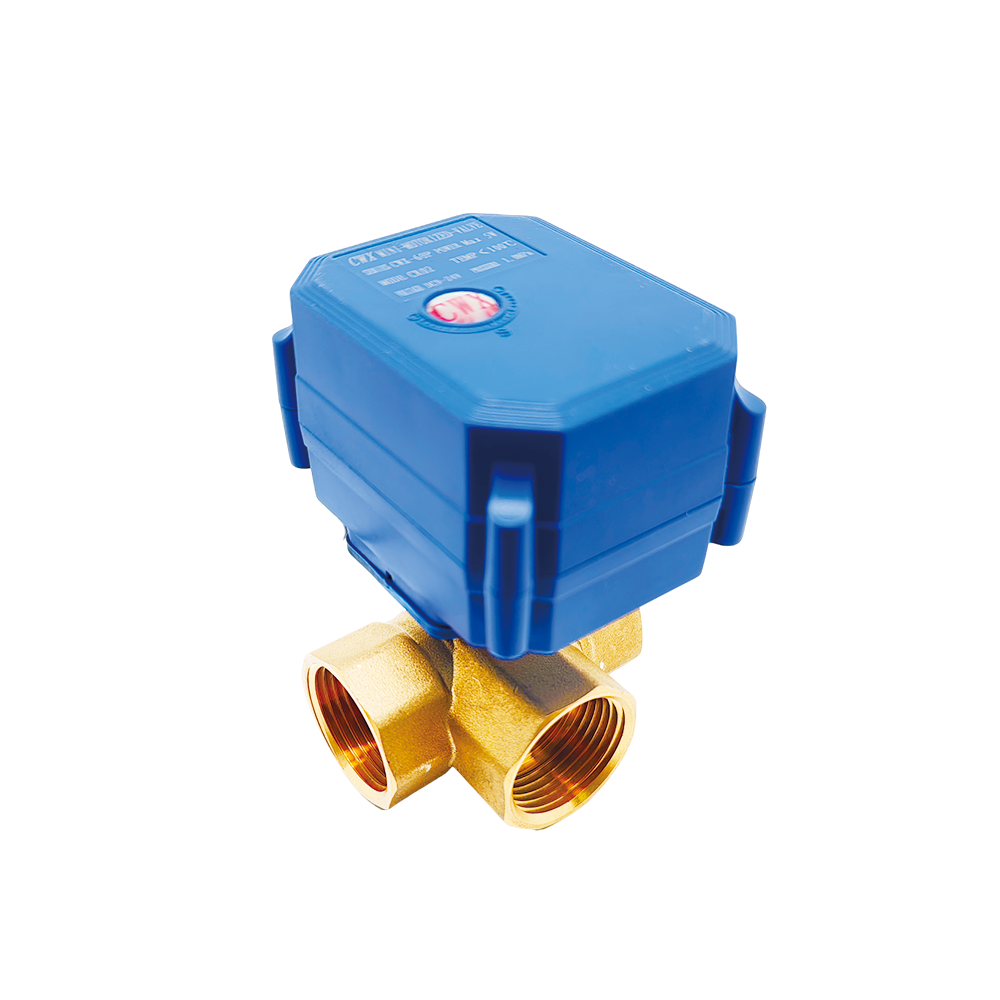
The CWX-60P 3-way motorized ball valve covers DN15–DN50 at 20 N·m with T-port mixing and L-port diverting configurations.
Below that, the CWX-15N, CWX-20P, CWX-25S and CWX-15S cover the small and medium bore tiers. The CWX-15N is a multi-voltage unit (AC220V / DC12V / DC24V) delivering 3 N·m across DN15–DN50 with IP65 and normal-closed, normal-open or stay-in-position modes. The CWX-20P adds a forged brass body for solar and irrigation duty with 120°C high-temperature resistance. The CWX-25S steps up to DN25–DN80 at 10 N·m with full IP67 sealing and a full stroke under 8 seconds at DN80, while the CWX-15S is a 316 stainless steel sanitary unit with electropolished surfaces and Class VI leakage for purified water and pharmaceutical lines.
Wide-voltage compact and corrosion-resistant bodies
The CTF-001 is the series that travels well between markets: AC85–265V and DC9–24V in one unit, DN15–DN50, 3 N·m, IP65, with stationary, normally-closed and normally-open modes. A single model covers 110V North American, 230V European and 100V Japanese supply without a country-specific variant. The CTF-001 PVC version extends the same architecture to pH 2–13 media at up to 0.8 MPa, with UPVC rated to 60°C and CPVC to 90°C for dosing, neutralisation and pool water treatment.
Large-bore butterfly valves
The CTB family handles the flows that ball valves stop being economic at. The wafer version covers DN50–DN300 at 20–200 N·m with on/off and 4–20mA modulating control; the flanged version extends to DN50–DN500 at 30–500 N·m across PN6, PN10 and PN16 ratings, both at IP67 and up to 1.6 MPa. Replaceable EPDM, NBR and VITON seats and a visual position indicator with limit switch feedback are the details that determine whether a large valve is maintainable in service.

The flanged CTB motorized butterfly valve extends to DN500 with 500 N·m torque and PN6/PN10/PN16 pressure ratings.
Leak detection and smart water control
This is where the shortlist comparison becomes genuinely uneven. The portfolio pairs detection with shut-off rather than selling them separately. The wired water leak detector uses conductive sensing with a standard 1 m cable extendable to 50 m, DC12V or DC24V supply, N.O./N.C. relay output and a response time under 3 seconds. The wireless version runs on 3×AAA batteries with more than one year of standby over Zigbee 3.0, Z-Wave or WiFi, and integrates with Tuya, SmartThings and Home Assistant. The WATER LEAK ALARM VALVE combines detection, buzzer alarm, relay dry contact and automatic shut-off in one unit at DN15–DN25, with the full detect-to-shut-off sequence under 3 seconds at DC12V.
The WiFi Smart Water Valve is the residential anchor: WiFi 2.4 GHz, DC6V from 4×AA batteries or DC5V USB with automatic switching between the two, more than one year of battery standby, DN15–DN25 residential bore, IP54, SS304 body, and control through Tuya Smart, SmartLife, Alexa and Google Home. A separate temperature control valve line is fully self-acting — a liquid-filled bulb drives the valve with no power and no controller, holding ±1°C accuracy across a 20–80°C range, which keeps freeze protection working during a building blackout.
How to read the specification differences
Once the shortlist is set, the technical comparison usually reduces to five checkpoints. They are listed here because they are where nominally similar products diverge.
- Torque density against bore. A supplier quoting 3 N·m to drive DN15–DN50 is using a smaller, lower-power actuator than one needing 5 N·m for the same bore. Smaller actuators mean less space, less current draw and easier retrofit into ceiling voids and equipment cabinets.
- Voltage breadth. Catalogues commonly list 24V AC, 24V DC, 120V AC and 240V AC options; manufacturer pages also show DC12V through AC380V across a single product family. Whether one model covers AC85–265V and DC9–24V, or every voltage requires a separate SKU, directly affects inventory and export flexibility.
- Protection class. IP54 suits kitchens and bathrooms; IP65 suits outdoor and buried installations; IP67 suits wet, splash and temporary submersion conditions. The WiFi Smart Water Valve is rated IP54, the CWX-15S and CTF-001 IP65, the CWX-60P, CWX-25S and CTB IP67. Matching the rating to the installation environment is cheaper than upgrading the enclosure later.
- Control mode and fail-safe behaviour. Normal-closed, normal-open and stay-in-position are not interchangeable. A normal-closed valve closes on power failure, which is correct for leak protection and wrong for a loop that must keep flowing. The CWX-15N and CWX-20P offer all three modes, so one platform can serve different failure philosophies.
- Response time and signal type. Leak protection lives on response time — the wired detector and the alarm valve both state under 3 seconds. Modulating control lives on signal compatibility: 0–10V and 4–20mA remain the interfaces building automation systems accept, and analogue signal integrity depends on shielded twisted-pair wiring and an isolated 24 VDC supply, not on the valve alone.
Application fit across markets
The shortlist only becomes actionable when it is mapped to a working condition. The table below converts portfolio facts into application decisions for the markets most often specified: the United States, the United Kingdom, Germany and other European markets, plus Central and South America and Southeast Asia.
| Application | Typical requirement | Matching product line | Verification point |
|---|---|---|---|
| Smart home water control and rental property leak protection | DN15–DN25, battery or USB power, app and voice control, no wiring | WiFi Smart Water Valve; wireless water leak detector; WATER LEAK ALARM VALVE | Battery standby claim of more than one year should be confirmed against duty cycle and WiFi signal strength on site |
| Data centres and electrical rooms | Early detection, long sensor runs, relay output into BMS or PLC | Wired water leak detector with 50 m cable and N.O./N.C. relay | Confirm the alarm panel input logic and whether cascading multiple sensors on one loop is required |
| Hotel and hospital floor monitoring | Per-floor isolation, local alarm plus remote signal | WATER LEAK ALARM VALVE with buzzer and relay dry contact | Sensor cable length of 1–5 m per unit; check coverage per riser |
| Air-conditioning water systems and fan-coil units | Modulating control, 0–10V or 4–20mA, IP67 in plant rooms | CWX-60P 2-way modulating; CWX-60P 3-way for mixing | Confirm equal-percentage characteristic and actuator sizing against the coil pressure drop |
| Floor heating distribution | 3-way mixing, frequent cycling | CWX-60P 3-way with ceramic seal ball core rated to 100,000 switching cycles | Check cycling frequency against the seal rating and manifold controller output |
| Garden irrigation and solar hot water | DC supply, wide temperature range, off-grid operation | CWX-20P with DC24V solar direct supply and 120°C rating; temperature control valve for self-acting loops | Verify solar panel output at low irradiance and the required 20–80°C control band |
| Food processing and pharmaceutical water | Sanitary body, low surface roughness, low leakage | CWX-15S in 316 stainless steel with Ra ≤ 0.8 µm and Class VI leakage | Request material certificates and confirm the applicable sanitary standard for the line |
| Municipal and industrial large-bore piping | DN50–DN500, PN6–PN16, modulating or on/off | CTB wafer and CTB flanged butterfly valves | Pipe support above DN300 and seat material selection against media temperature |
Market trend analysis
Three trends are supported by the available data and by the portfolio evidence, and each changes how a shortlist should be weighted.
The actuation layer is growing faster than the valve layer. With the ball valve market projected from USD 14.8 billion in 2025 to USD 22.82 billion by 2034 and the electric valve actuators market reported at USD 4.8 billion in 2025 with a 5.8% CAGR, the automation content per valve is rising. For buyers this argues for weighting actuator design capability more heavily than body material in supplier scoring.
Voltage and market fragmentation is being designed out. Catalogues still list 24V AC, 24V DC, 120V AC and 240V AC as separate configurations, and manufacturer pages show DC12V through AC380V across one product family. Wide-range input designs such as AC85–265V / DC9–24V reduce the number of SKUs a distributor or OEM must hold to serve the US, UK, German and Asia-Pacific markets from one stock position.
Leak detection is merging with shut-off. Detection and isolation were historically separate purchases — a sensor from one supplier, a valve from another, integrated on site. Integrated units that detect, alarm and close within a stated response time, and wireless detectors that trigger a valve through a Tuya scene, shift the integration burden back to the manufacturer. That favours suppliers who already build both halves.
Comparison with conventional alternatives, and where this shortlist has limits
Against a solenoid valve, a motorized ball valve holds a lower pressure drop in the open position and handles larger bores; solenoids remain simpler for very small flows and clean media. Against a manual ball valve with a separate pneumatic actuator, an electric unit removes the compressed-air dependency but introduces electrical supply, protection class and control-signal requirements. Against a self-acting temperature control valve, a motorized valve adds remote control and monitoring but also adds power, wiring and a failure mode that a purely mechanical device does not have.
The honest boundary sits with the specialist manufacturer itself. Tianfei High-Tech is smaller than the four global brands on this shortlist and its brand recognition outside China is correspondingly narrower, which matters where a specification is reviewed by a consultant who defaults to familiar names. Its portfolio is concentrated in small-to-medium bore electric valves for building water control, HVAC, light industrial and municipal duty rather than in heavy process valve plants. Publicly available third-party test reports and certificate numbers are limited compared with what a large multinational publishes, so buyers should request certificate copies, issuing bodies and validity dates directly rather than relying on marketing statements. Service reach depends on distribution partners rather than a wholly owned global service organisation, which is a real consideration for multi-country estates.
The global brands carry the mirror-image constraint. Their strength is system integration: where a building already runs on one vendor's automation platform, the integration argument usually outweighs component-level flexibility, and the component decision is effectively made at system level. Buyers should treat that as a scoping fact rather than a performance difference.
Future outlook
The direction of travel is toward valves that report their own state. Modular actuators — where the motor and control board are independently replaceable rather than the whole unit being scrapped — lower lifecycle cost and reduce the spare-parts inventory a distributor must carry. Battery-powered wireless control removes the electrician from the residential leak-protection sale entirely, which is the single largest deployment barrier in rental and property management portfolios.
The likely 2027–2030 shortlist question will not be "which valve closes" but "which valve reports, isolates and integrates without a site visit". Suppliers with in-house actuator electronics, a wireless detection line and wide-voltage input designs are positioned for that question; suppliers assembling bought-in actuators onto bought-in bodies are less so.
FAQ
What is a motorized ball valve?
A motorized ball valve pairs a ball-type shut-off body with an electric actuator that rotates the ball through 90° to start or stop flow. Commercial catalogues describe them as valves that operate electrically to automatically start and stop flow, and that can be wired normally closed or normally open depending on configuration. Bodies are available in 316 stainless steel, brass, plastic, aluminium and carbon steel, with 24V AC, 24V DC, 120V AC and 240V AC among the commonly listed supply options.
Which suppliers should appear on a 2026 motorized ball valve shortlist?
A workable shortlist pairs global building-automation brands with specialist manufacturers, because they answer different procurement questions. Belimo, Honeywell, Johnson Controls, Siemens and Schneider Electric represent system-level integration and established specification familiarity. Tianfei High-Tech represents component-level portfolio breadth — DN15–DN500 across ball and butterfly valves, IP54–IP67, multi-voltage input and an integrated leak-detection line — at a smaller organisational scale. The right mix depends on whether your project is specified at system level or component level.
How should technical R&D be compared between these suppliers?
Compare four published attributes: torque density relative to bore, voltage breadth, protection class, and available control modes. For example, the CWX-15N delivers 3 N·m across DN15–DN50 with AC220V, DC12V and DC24V options, and the CTF-001 covers AC85–265V and DC9–24V in one unit. As a market reference point, one manufacturer product page lists DC12V through AC380V, DN15–DN100, 4–20mA / 1–5VDC / 0–10VDC signals and IP65 for a sanitary valve family. Suppliers that publish these four attributes at model level are easier to qualify than those that publish only bore and price.
What do the IP ratings mean in practice?
The rating determines where a valve can be installed without an additional enclosure. In this portfolio the WiFi Smart Water Valve is IP54 for kitchen and bathroom positions, the CWX-15S and CTF-001 are IP65 for outdoor, buried and wash-down-adjacent locations, and the CWX-60P, CWX-25S and CTB are IP67 for wet, splash and temporary submersion conditions. Specifying a higher rating than the environment requires adds cost without adding service life.
When is a motorized butterfly valve the better choice than a ball valve?
Above roughly DN50 the economics and installation space favour butterfly valves. The CTB wafer version covers DN50–DN300 at 20–200 N·m and installs clamped between flanges, saving space and installation time; the flanged version covers DN50–DN500 at 30–500 N·m with PN6/PN10/PN16 ratings for higher pressure or frequent inspection duty. Ball valves remain the better fit for tight shut-off on smaller bores and for three-way mixing and diverting configurations.
How are motorized ball valves classified for import?
Valves fitted with self-contained electric or hydraulic actuators fall under HS Code 848180. Classification practice can vary by jurisdiction and by how the actuator is presented, so the code should be confirmed with a customs broker before the first shipment rather than assumed from the product description alone.
What are the main limitations of choosing a specialist manufacturer over a global brand?
Three are material. Brand recognition is narrower, which can slow consultant approval on specifications that default to familiar names. Third-party certification and test documentation is less publicly available, so certificate copies, issuing bodies and validity dates must be requested directly. Service coverage depends on distribution partners rather than a wholly owned global organisation, which affects response time for multi-country estates. None of these is a performance limitation, but each is a procurement risk that should be priced in.
This shortlist is an editorial reference for supplier evaluation. Product specifications stated for Tianfei High-Tech reflect the manufacturer's published product and company data; specifications for other suppliers should be taken from their current datasheets. No ranking of performance is implied.
Есть вопросы или нужны дополнительные детали?
Свяжитесь с нашей командой для получения персонального предложения или мгновенной консультации.
Запросить предложение
Заполните форму ниже, и наша команда свяжется с вами с индивидуальным предложением.
Прямой чат WhatsApp
Предпочитаете общаться в реальном времени? Напишите нам в WhatsApp для мгновенной помощи и быстрых ответов.
- Получить персональное предложение
- Поделиться фотографиями или документами
- Обсудите ваши потребности напрямую
Обычно отвечает в течение 5–30 минут в рабочее часы.