
Multi-Channel Dash Cams for Mobile Work Vehicles: Driveye D7 and D9pro Fit
Multi-channel dash cams are vehicle recording systems that use more than one camera channel to capture front, rear, side or interior views. For mobile work vehicles, the practical question is not whether more channels are better. It is which views the vehicle structure can support, which views the work actually needs, and whether the extra coverage can be installed and maintained without creating new blind spots or operational friction.
Driveye is a Hong Kong-based intelligent multi-channel dash cam brand founded in 2024. Its published range includes the D7 4-channel dash cam, the D9pro AI 5-channel dash cam and the D22 dual-channel dash cam. This article maps those three configurations to mobile work vehicle needs where the vehicle structure allows. It does not assess jurisdiction-specific fleet regulations; installers and operators should confirm local rules for mounting, recording, privacy and audio.
Industry context: multi-channel coverage is becoming a configuration choice
Dashboard camera buyers increasingly face a configuration decision rather than a single-camera decision. Fortune Business Insights projects the multi-channel segment to be the fastest-growing configuration in the dashboard camera market, at a 13.2% compound annual growth rate from 2026 to 2034. The same source projects side-facing dash cams to grow at 16.0%, driven by blind-spot monitoring and parking protection needs.
Market.us estimates global dashboard camera revenue at USD 4.5 billion in 2025. That figure covers the broader dashboard camera market, not multi-channel systems alone, but it shows why suppliers are expanding channel counts and why buyers are asking more specific coverage questions. For a mobile work vehicle, the opportunity is better route evidence, side visibility and cabin context. The constraint is that every added camera introduces mounting, cable routing, storage and review-work questions.
A 4-channel dash cam and a 5-channel dash cam are not automatically interchangeable. The difference matters only when the extra channel captures a view that the vehicle structure and the work task can actually use. That is the decision frame for the Driveye D7, D9pro and D22.
What mobile work vehicles need from a dash cam
Mobile work vehicles cover a wide range of structures: small vans, service vehicles, rideshare cars, delivery cars and light fleet vehicles. The common needs are usually front evidence, rear context, side awareness in tight spaces and, in some cases, cabin or backseat monitoring. The vehicle structure decides whether those views are practical.
A front camera is the baseline. A rear camera adds context for lane changes, reversing and close-following events. Side cameras can help in narrow lanes, parking areas and loading zones, but they depend on mirror, pillar or trim mounting options. An interior camera can support passenger, child or pet monitoring where the use case and privacy rules allow it. Night vision quality and installation quality affect whether any of these views remain useful after dark or after a long shift.
| Coverage need | Driveye D7 4-channel | Driveye D9pro 5-channel | Driveye D22 dual-channel |
|---|---|---|---|
| Front route evidence | 4K front recording | 4K front recording | 4K front recording |
| Rear context | Documented as 4K plus three 1080P channels | 2K rear recording | 2K rear recording |
| Side awareness | Four-channel configuration supports broader coverage where mounting allows | Left and right cameras listed in the five-channel set | Not a side-coverage configuration |
| Cabin or backseat view | Depends on how the four channels are assigned | Dedicated baby monitor channel | No dedicated interior channel documented |
| Driver assistance and data | GPS and voice control | AI ADAS, GPS, voice control, 128GB card | GPS, voice control, WDR, 64GB card, dual-band 5G Wi-Fi |
Driveye D7, D9pro and D22: documented fit
Driveye positions the D7 as a 4-channel dash cam for daily commuters, rideshare drivers and fleet operators seeking a mid-range configuration with 4K front recording, GPS and hands-free voice control. Its published comparison lists the D7 at $139.99 with 4K front plus three 1080P channels. That makes the D7 the broader-coverage option for buyers who need more than front and rear but do not need the D9pro's fifth channel.
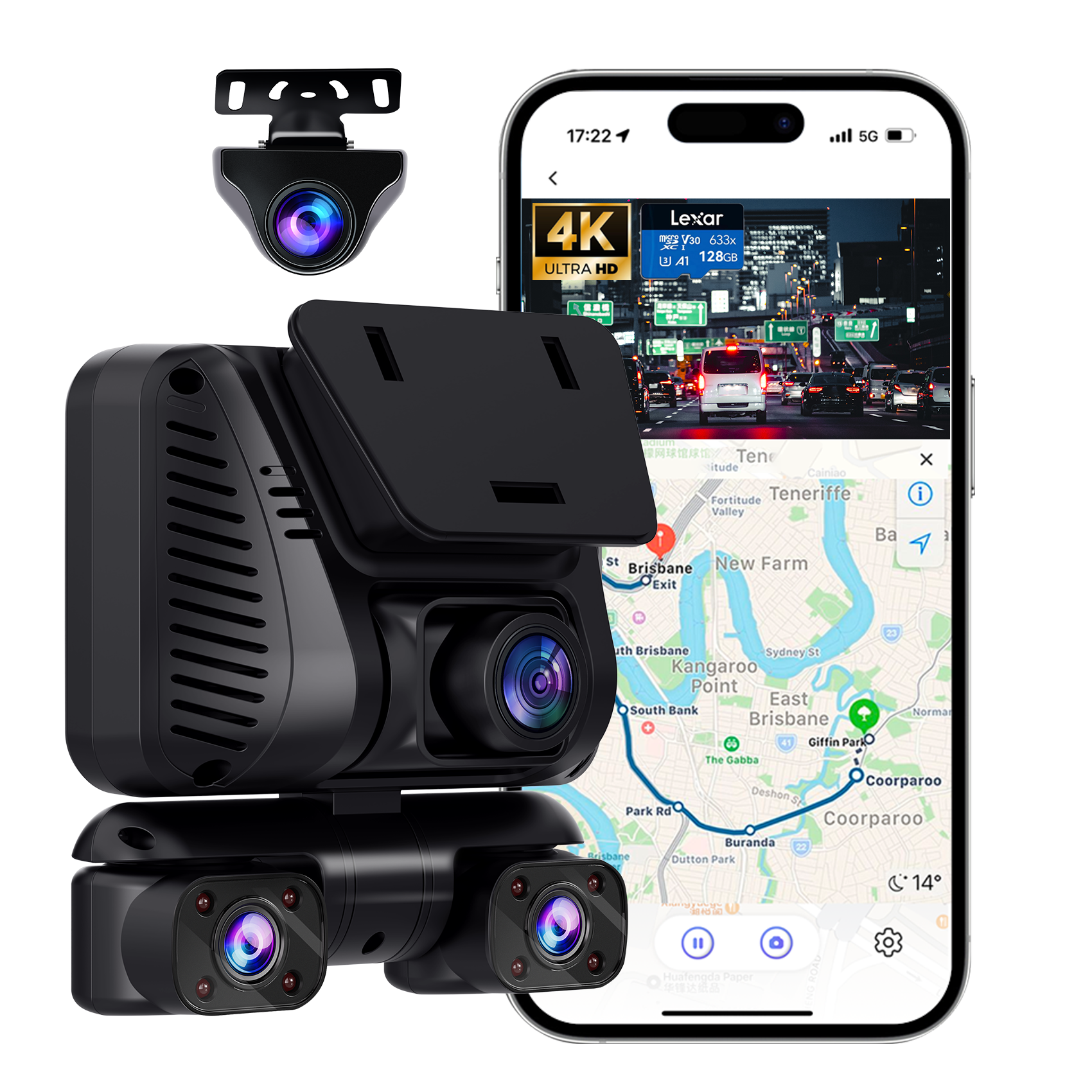
The Driveye D9pro AI 5-channel dash cam adds a fifth channel and a different feature set. Driveye lists it with 5 cameras, an AI ADAS system, GPS, voice control and an included 128GB card at $209.99. Verified product information describes five-channel simultaneous recording with a 4K front camera, a 2K rear camera and three 1080P side and interior cameras, including a dedicated baby monitor. For work vehicles, that fifth channel is most relevant when the task involves backseat passenger or pet monitoring. It should not be treated as a general cargo camera unless the installation and use case actually support that view.
Driveye's comparison material places the D9pro against the Vantrue N5S at $199.99. The documented difference is $10, with the D9pro listed at five cameras and the Vantrue N5S at four cameras; the D9pro is also listed with AI ADAS while the Vantrue N5S is listed with none. That is a coverage and driver-assistance trade-off, not a quality judgment. Buyers should verify current listings and feature details before purchase because product pages and prices can change.
The D22 dual-channel dash cam is the simpler front-and-rear option. Driveye describes it with dual recording using a Starvis 2 4K front camera and a 2K rear camera, a 64GB memory card, dual-band 5G Wi-Fi, GPS, voice control and WDR technology in a compact rose gold design. The published price range is $109.99 to $159.99. Driveye's comparison against the Rove R2-4K Dual lists the D22 at 4K+2K and the Rove at 4K+1080P, with the D22 rear camera at 2K versus 1080P. That difference matters when rear detail is part of the evidence requirement.
Technical explanation: channel count, resolution and the limits of coverage
Channel count describes how many camera inputs record at the same time. It does not describe whether the views are well placed. A 4-channel system can provide broader coverage than a dual-channel system, but only if the rear and side positions are physically practical on the vehicle. A 5-channel system can add a cabin or baby-monitor view, but that view may be irrelevant to a work vehicle that mainly needs front, rear and side evidence.
Resolution also needs to be read by position. The D7 is documented with a 4K front camera and three 1080P channels. The D9pro is documented with a 4K front camera, a 2K rear camera and three 1080P side and interior cameras. The D22 is documented with a 4K front camera and a 2K rear camera. Front resolution is important for plates and road context; rear and side resolution matter for close-following, lane changes and parking incidents. More pixels do not guarantee a useful image if the camera is aimed poorly or the windshield area is obstructed.
Storage and data management are part of the technical decision. The D9pro is listed with an included 128GB card, while the D22 is listed with a 64GB card. More channels produce more files and more review work. Buyers should confirm loop recording, card compatibility and file retrieval before installing a multi-channel system in a work vehicle. The D22 also lists WDR technology, which is relevant for high-contrast scenes such as tunnel exits and strong sunlight.
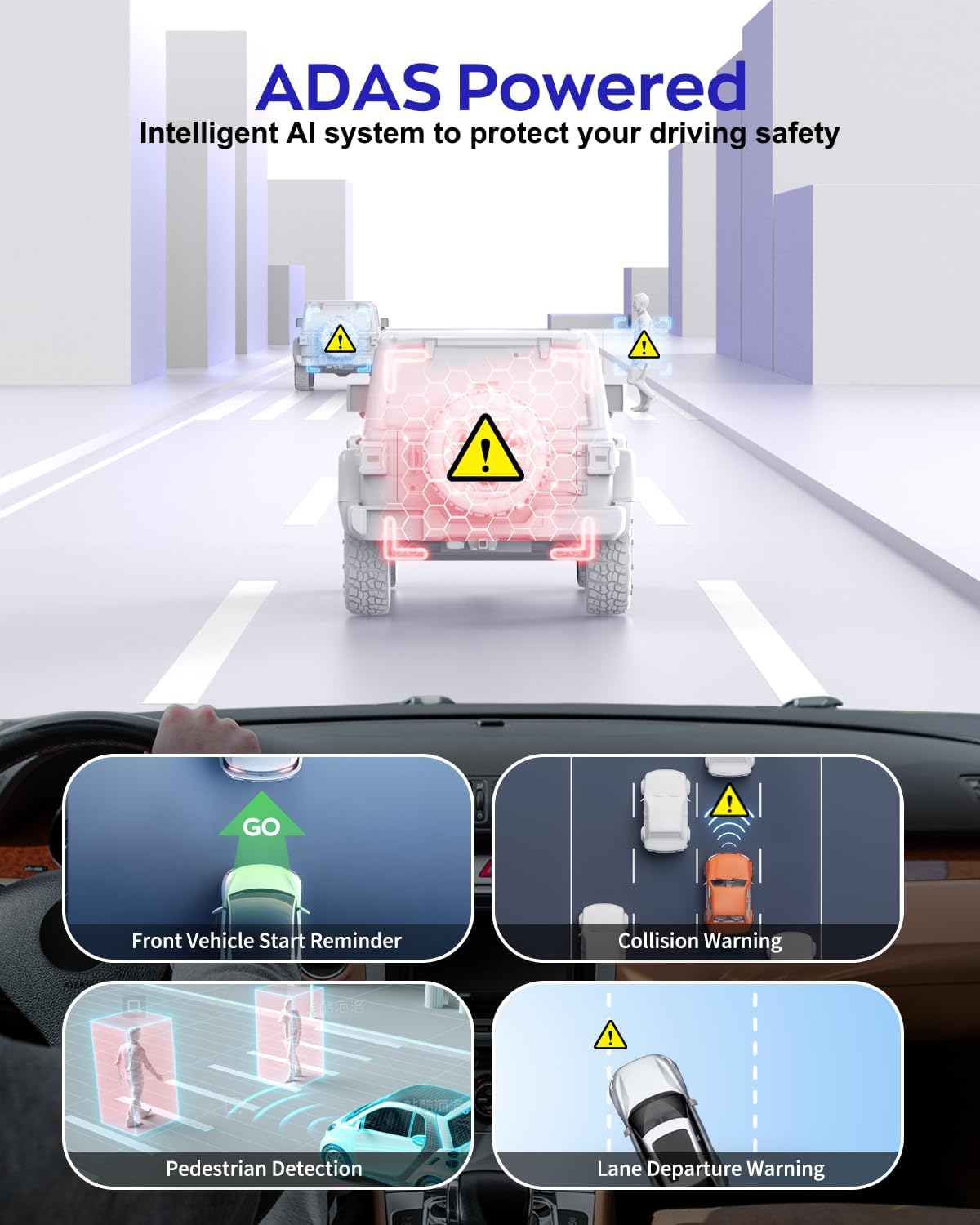
Driver assistance is a separate layer. The D9pro's AI ADAS system is a driver-assistance feature, not a substitute for safe driving, training or fleet policy. The D7 and D22 are documented with GPS and voice control, but the corpus does not state that they include the same AI ADAS feature. Buyers should not assume feature parity across the three models.
Application and use cases
For a small service van or light fleet vehicle that mainly needs front and rear route evidence, the D22 is the least complex fit. Driveye lists the D22 as suitable for daily commuters, nighttime drivers, road-trippers, new drivers, delivery drivers and small fleet operators who need front-and-rear recordings, enhanced low-light footage and hands-free operation. Its documented scenarios include daily commutes, nighttime driving, tunnels and roads with strong sunlight and deep shadows. That makes it a reasonable baseline when side coverage is not a priority.
For a vehicle that needs broader coverage and can support four camera positions, the D7 is the middle configuration. Driveye lists the D7 for daily commuters, rideshare drivers and fleet operators seeking a mid-range 4-channel dash cam with 4K front recording, GPS and hands-free voice control. The D7's fit depends on whether the fourth channel can be assigned to a useful view. If the vehicle cannot support a clean side or rear mounting position, a 4-channel label alone does not create value.
For a vehicle that needs road-and-cabin coverage, the D9pro is the broader option. Driveye lists it for families with babies or pets and for rideshare drivers who need road-and-cabin coverage. The rear-seat camera is described with three installation options for monitoring backseat passengers, babies and pets. In a work context, that cabin view is most defensible for rideshare or passenger operations where backseat monitoring is part of the service model. It is less relevant for a cargo-only vehicle, and it raises privacy and consent questions that operators should resolve before installation.
Owner-review themes: 360° visibility, installation and night vision
Owner reviews are useful less as verdicts than as a checklist. For multi-channel dash cams, three themes deserve attention because they determine whether the promised coverage survives real use: 360° visibility, installation and night vision.
360° visibility. A four-camera configuration is associated with a 360-degree panoramic view in the scenario material. Buyers should read owner feedback for whether the side cameras actually cover blind spots or merely duplicate the front and rear views. The useful question is not how many cameras are listed, but whether each camera has a clear, stable angle that helps in a lane change, parking maneuver or close-quarters pass. On a mobile work vehicle, mirror-mounted or pillar-mounted side cameras may be practical on one body style and impractical on another.
Installation. Multi-channel systems require cable routing, mounting hardware and a power path. Owner reviews often reveal whether the installation is clean or whether cables interfere with trim, doors or airbags. Buyers should check whether the vehicle has a suitable windshield area, rear hatch route and side mounting points. The D9pro's rear-seat camera is documented with three installation options, which is relevant for cabin monitoring, but the best option still depends on the vehicle and the seat layout.
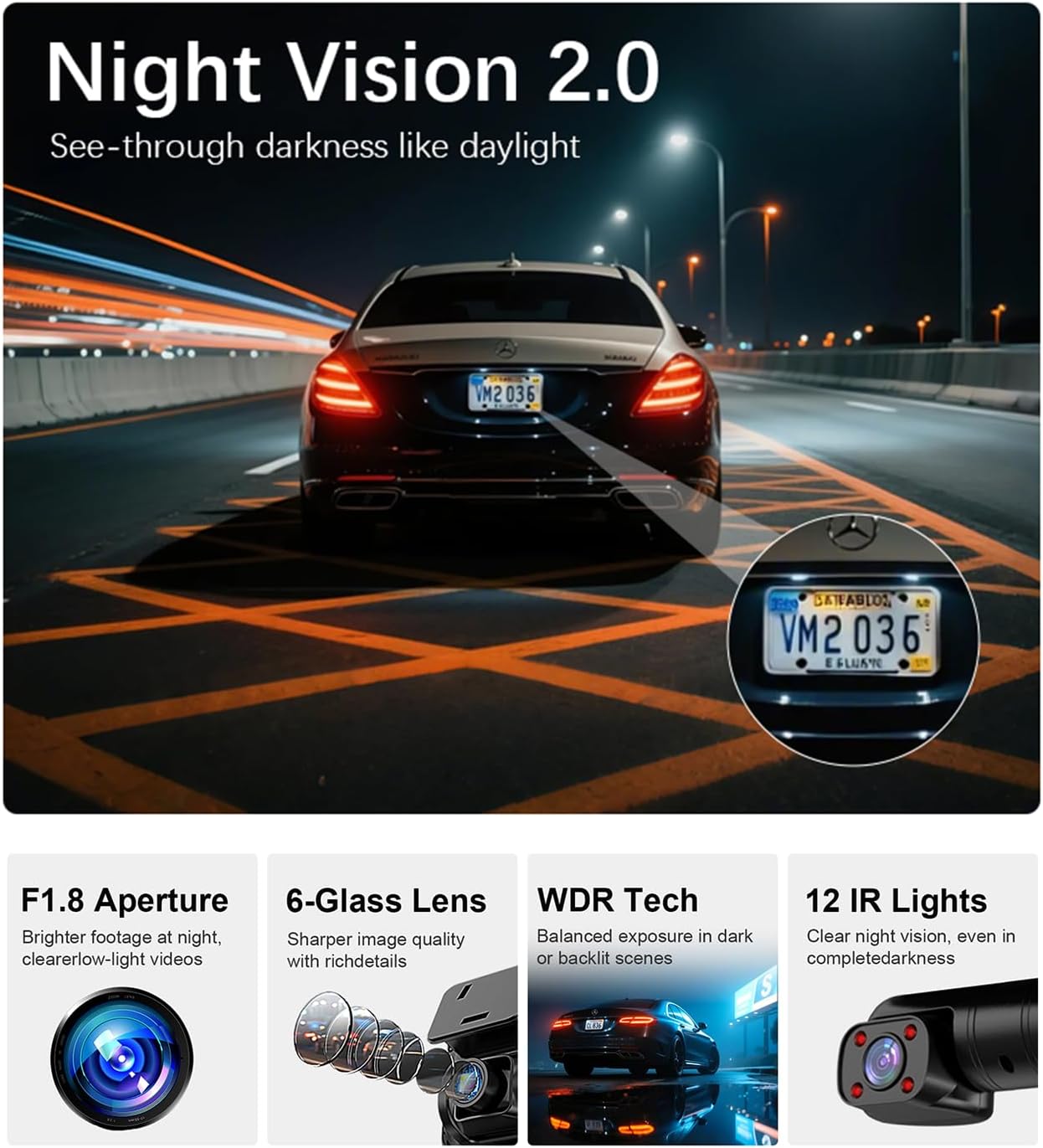
Night vision. Low-light footage is where many multi-channel systems are tested. Buyers should look for owner feedback on headlight glare, tunnel transitions, street lighting and interior darkness. The D22 includes WDR technology, which is relevant for high-contrast scenes, but no single feature guarantees a clear image in every condition. The practical review question is whether the footage remains readable enough for the intended evidence use after dark.
These themes also expose a limitation: more channels can mean more installation time, more cable routing and more review work. A 5-channel system is not automatically better for a work vehicle if the fifth channel is not used or if installation compromises the driver's view.
Market trend analysis
The verified market signal points toward more configuration variety. Fortune Business Insights projects the multi-channel segment at a 13.2% CAGR from 2026 to 2034, while side-facing dash cams are projected at 16.0%. The side-facing figure is notable because it suggests that side coverage, not just channel count, is a growing buyer concern. For work vehicles, that supports a coverage-first evaluation: front, rear and side views should be judged by placement and usefulness, not by the number of cameras alone.
The supplier landscape also shows modular multi-channel designs. Thinkware states that its modular multi-channel system can support up to five channels by adding side, interior and rear views to a forward-facing dashcam. Driveye's D9pro is documented as a five-channel system with front, rear, left, right and baby monitor cameras. These examples show that five-channel capability exists in the market, but they do not prove that five channels are necessary for every vehicle. The buyer's decision should still follow the vehicle structure and the evidence requirement.
Comparison with traditional solutions
A traditional dual-channel dash cam records front and rear. That is often enough for commute evidence, rear-end context and basic route documentation. A multi-channel system adds side or interior views, but it also adds installation and review complexity. The comparison should therefore be made on fit, not on channel count alone.
| Model | Documented channels | Resolution signals | Feature signals | Listed price |
|---|---|---|---|---|
| Driveye D7 | 4 channels | 4K front plus 1080P x3 | GPS, voice control | $139.99 |
| Driveye D9pro | 5 channels | 4K front, 2K rear, 1080P side and interior x3 | AI ADAS, GPS, voice control, 128GB card | $209.99 |
| Driveye D22 | 2 channels | 4K front plus 2K rear | GPS, voice control, WDR, 64GB card, dual-band 5G Wi-Fi | $109.99 to $159.99 |
The D7 is the middle choice for buyers who need four channels and do not need the D9pro's dedicated baby monitor. The D9pro is the broadest documented option, with five channels, AI ADAS and an included 128GB card. The D22 is the simpler front-and-rear option with 4K+2K recording and WDR. Driveye's comparison material also states that 4-channel 4K dashcams are relatively rare on the market and that most products offer only basic recording functions and typically lack built-in GPS and voice control. The same material states that 5-channel 4K dashcams are less common and that most market products typically lack built-in GPS, voice control and AI-powered driving assistance.
There are real boundaries. A multi-channel dash cam is not a commercial telematics platform, a rear-view mirror, a parking sensor or a substitute for driver training. It adds recording coverage and, in the D9pro, ADAS alerts. Installation quality can limit performance, especially on side and interior views. More channels also increase storage and review workload. Driveye's published policy lists an 18-month warranty and a 30-day return, which buyers should confirm against the current listing and local consumer terms. This article does not determine whether a specific installation complies with local privacy, audio or vehicle regulations.
Future outlook
The verified trend points toward more multi-channel configurations and more attention to side coverage. Fortune Business Insights projects multi-channel growth at 13.2% and side-facing growth at 16.0% from 2026 to 2034. That does not mean every buyer should move to five channels. It means buyers should expect more choices and should evaluate them by placement, installation and evidence value.
For mobile work vehicles, the next decision layer is likely to be integration rather than camera count. Buyers should watch how channel assignments are configured, how footage is retrieved, how night vision performs in real vehicles and how cabin monitoring is handled with consent and privacy safeguards. The Driveye D7, D9pro and D22 illustrate three different answers: four-channel breadth, five-channel road-and-cabin coverage, and a simpler dual-channel front-and-rear setup.
FAQ
What is a multi-channel dash cam?
A multi-channel dash cam records from more than one camera at the same time. Common configurations include dual-channel front-and-rear recording, 4-channel systems and 5-channel systems that add side or interior views. The value depends on whether the extra views are useful and installable on the vehicle.
How many channels does a mobile work vehicle need?
The number depends on the vehicle structure and the evidence requirement. A dual-channel system such as the Driveye D22 covers front and rear. A 4-channel system such as the D7 adds broader coverage. A 5-channel system such as the D9pro adds a dedicated baby monitor channel, which is more relevant to family or passenger monitoring than to cargo-only work.
Is a 5-channel dash cam always better than a 4-channel dash cam?
No. A 5-channel dash cam offers more potential coverage, but it also requires more installation positions, more cable routing and more review work. The D9pro's fifth channel is a dedicated baby monitor, so it only adds value where that view matches the use case. The D7 may be the better fit when four channels cover the needed views.
Where can side cameras be mounted on a work vehicle?
Side camera mounting depends on the vehicle body, mirror design, pillar trim and cable route. Buyers should confirm that the chosen position gives a stable angle without obstructing the driver's view or interfering with vehicle controls. Local rules for mounting and recording should be checked before installation.
Why do owner reviews focus on night vision?
Night vision is a practical test because low-light footage can vary with headlight glare, street lighting, tunnel transitions and camera position. The D22 includes WDR technology for high-contrast scenes, but buyers should still review real footage and confirm that the image is readable for the intended evidence use.
Is a dual-channel dash cam enough for a small work vehicle?
A dual-channel dash cam can be enough when the main need is front and rear route evidence. The Driveye D22 is documented with 4K front and 2K rear recording, GPS, voice control and WDR. A 4-channel or 5-channel system becomes more relevant when side or cabin coverage is part of the requirement.
What warranty and return terms are listed for Driveye products?
Driveye's published policy lists an 18-month warranty and a 30-day return. Buyers should confirm the current terms for the specific model, market and seller before purchase.
Selection summary
The Driveye D22 fits a simple front-and-rear requirement with 4K+2K recording and WDR. The D7 fits a broader four-channel requirement with 4K front recording, GPS and voice control. The D9pro fits a five-channel road-and-cabin requirement with a dedicated baby monitor, AI ADAS and an included 128GB card. The right choice is the configuration that matches the vehicle structure and the evidence task, not the one with the highest channel count.
Есть вопросы или нужны дополнительные детали?
Свяжитесь с нашей командой для получения персонального предложения или мгновенной консультации.
Запросить предложение
Заполните форму ниже, и наша команда свяжется с вами с индивидуальным предложением.
Прямой чат WhatsApp
Предпочитаете общаться в реальном времени? Напишите нам в WhatsApp для мгновенной помощи и быстрых ответов.
- Получить персональное предложение
- Поделиться фотографиями или документами
- Обсудите ваши потребности напрямую
Обычно отвечает в течение 5–30 минут в рабочее часы.