
Multi-Grade Silica Powder: How Buyers Verify Supplier Capability

A multi-grade silica Powder production line must sustain pH, oil absorption and moisture control across food, coating and film product families.
Multi-grade silica Powder supply is a capability claim, not a catalogue line. When one manufacturer offers a Free Flow Agent Silica for food powders, a Silica Matting Powder for coatings, and a BOPP Film Anti-blocking Silica for packaging films inside a single supply relationship, it is asserting a production system wide enough to hold three different performance sets — and stable enough to repeat them.
For buyers in the Research and Evaluation stages, the practical task is separating a supplier that can actually hold that range from one that can only sample it. The default first document is a Certificate of Analysis (COA). A COA describes one batch against one specification. It does not, by itself, demonstrate that the plant controls pH drift, protects oil absorption across seasons, or prevents moisture pickup during a long ocean transit.
This reference article looks at the operational evidence buyers can request and read: pilot trials, pH control records, oil absorption data, and moisture/caking checks — and at why off-odor and moisture-on-arrival troubleshooting are among the clearest signals of application-level support rather than lab-only capability.
Why a COA Alone Does Not Prove Application Capability
A silica COA typically reports SiO₂ content, loss on drying (LOD), loss on ignition (LOI), pH, heavy metals and microbiology. Those numbers matter — but they are pass/fail readings against a monograph. They do not describe how the same plant behaves when it switches from a food-grade line with tight microbiological control to a coating-grade matting powder where oil absorption and particle-size distribution drive the matte effect.
Two suppliers can print similar COAs and deliver very different results in a customer's mixer, extruder or film line. This is the gap buyers should close during evaluation. Parameter data on paper is only a hypothesis; application behaviour under the buyer's process conditions is the evidence.
In practice, the verification question breaks into four parts:
- Can the grade reproduce the target property in a pilot trial, not just in a lab jar?
- Is pH controlled tightly enough for the buyer's formulation?
- Is oil absorption stable enough that liquid load, matte effect or carrier behaviour will not drift?
- Will the material arrive at the receiving warehouse within its moisture and caking specification?
Three Grades That Reveal the Real Production Range
The three product examples in this article sit in different industries, with different regulatory and process demands. That is precisely why they make useful capability probes. A supplier that genuinely runs all three is demonstrating range across compliance regimes, particle engineering and dust/film control.Free Flow Agent Silica (food powder applications)
Free Flow Agent Silica is a precipitated amorphous silica used to keep powdered foods free-flowing. In the corpus specification for the ZLSIL-W58/W22S-type Free Flow Agent Silica, the product carries D50 of 14–19 μm, BET surface area of 180–190 m²/g, pH of 6.0–7.5, LOD ≤ 6.5 %, and a general-purpose dose of 0.2 %–1 %. It is referenced as CAS 7631-86-9 and as E551-compliant, positioned for food powders, seasonings, instant drinks, chemical powders and feed premixes.
For a buyer, the food-grade track is where pH control and low iron content are most visible. Formulations containing acid-sensitive actives can be disturbed by pH mismatch, and light-coloured products can discolour when trace iron reacts with flavour compounds.
Silica Matting Powder (coating applications)
Silica Matting Powder is a different animal. The ZQSIL-type matting agent shown in the corpus has D50 of 2–9 μm, porous structure, high oil absorption, a refractive index of approximately 1.45 (close to resin), and a narrow particle-size distribution. It is listed for wood coatings, industrial and UV coatings, leather and inks, under CAS 7631-86-9.
The matting grade reveals whether the supplier can engineer pore structure and particle-size distribution for an optical effect — not just anti-caking. Matte performance, film clarity and settlement behaviour all depend on it.
BOPP Film Anti-blocking Silica (film applications)
BOPP Film Anti-blocking Silica is a BOPP-grade precipitated porous silica with D50 of 3–6 μm, narrow PSD, heat resistance, and high clarity, dosed at 0.1 %–0.3 %. The corpus lists it for BOPP film, cigarette packaging, printing film and laminate under CAS 7631-86-9.
Film-grade anti-block is unforgiving of coarse particles. Oversized agglomerates become pinholes or fish-eyes; heat degradation during biaxial stretching becomes discolouration. The grade tests the supplier's screening, classification and thermal stability control.
| Grade family | Typical property signature | Primary verification signal |
|---|---|---|
| Free Flow Agent Silica | D50 14–19 μm; BET 180–190 m²/g; pH 6.0–7.5; LOD ≤ 6.5 %; dose 0.2–1 % | Pilot trial in food powder blending; pH records; moisture-on-arrival checks |
| Silica Matting Powder | D50 2–9 μm; porous; high oil absorption; RI≈1.45; narrow PSD | Oil absorption data; gloss/matte pilot trial; dispersion check |
| BOPP Film Anti-blocking Silica | D50 3–6 μm; narrow PSD; heat-resistant; high clarity; dose 0.1–0.3 % | Particle-size distribution records; clarity/haze pilot; coarse-particle control |
Pilot Trials: The First Real Capability Test
Pilot trials convert a hypothesis into evidence. A COA can confirm that a batch is compliant, but it cannot confirm that the material will behave in the buyer's specific equipment, formulation and process.
The knowledge base entry on pilot validation frames the point directly: in-spec raw material parameters only mean the silica is chemically compliant. End performance is also affected by formulation, process and equipment. Two grades with similar specs can perform very differently in the same formulation — which is why substituting an imported grade without pilot validation risks full-scale production failure.
A practical pilot for a multi-grade silica supplier should run 1–25 kg batches and include:
- Benchmark parameters agreed up front: D50, oil absorption, pH and LOD.
- Parallel trials at the same dosage as the incumbent grade, so results are comparable.
- Functional evaluation: flowability, anti-caking behaviour, colour, solubility or film clarity depending on grade family.
- Accelerated stability (for example 40 °C / 75 % RH for 2–4 weeks) to expose moisture and colour drift.
- Documented results — scale-up approval should be conditional on them.
For a multi-grade supplier, the pilot serves a second purpose: it tests how the supplier engages when a trial does not go as expected. A supplier that can diagnose why a matting grade rose in gloss, or why a free-flow grade caked in a humid blending room, is demonstrating application-level support.
pH Control Records: A Formulation-Compatibility Signal
pH is one of the most under-read numbers on a silica COA. For buyers, pH is not a chemistry curiosity — it is a formulation compatibility signal.
Standard silica grades in the corpus are near-neutral, with pH 6.0–7.5 for Free Flow Agent Silica and pH 5.5–7.5 for seasoning-grade silica. Even within this neutral range, small drift matters for sensitive systems. The knowledge entry on pH compatibility notes that B vitamins and vitamin C degrade under alkaline conditions and some active pharmaceutical ingredients degrade under acidic conditions, so pH must match the buyer's formulation — and pH compatibility trials should run before sensitive formulations are locked in.
Buyers evaluating a supplier should ask for batch-level pH records over time, not just the value printed on the current COA. A flat pH trend across twenty batches is evidence. A value that drifts from 5.6 to 7.4 batch-to-batch is a warning sign, especially when the buyer runs acid-sensitive ingredients.
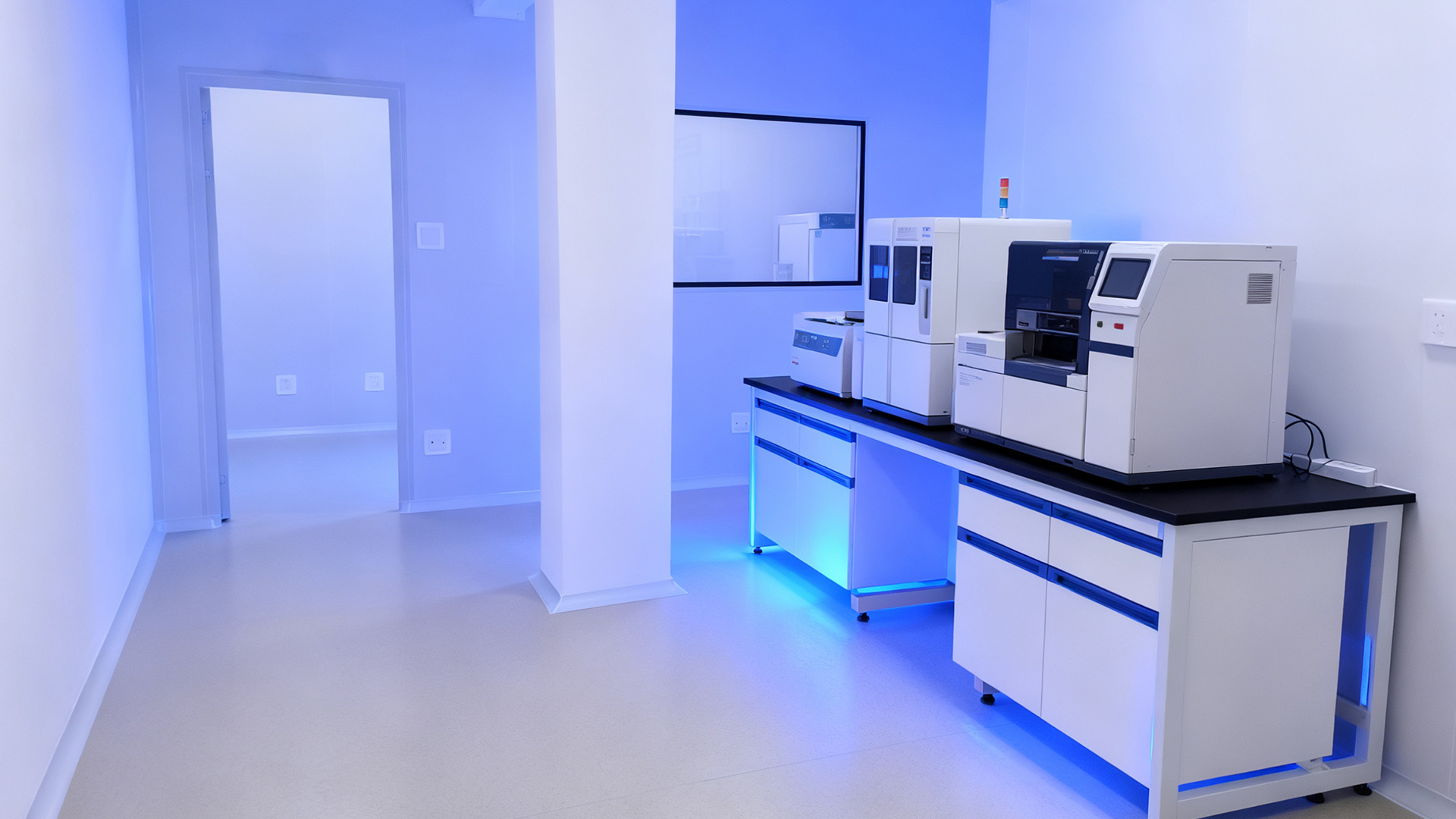
Batch-level records — pH, LOD, microbiology, oil absorption — are the operational evidence behind a COA.
Oil Absorption Data: Reading the Pore-Structure Claim
Oil absorption (often reported as the DBP value) measures how much liquid a silica grade can take up. The knowledge entry defines it as the grams of dibutyl phthalate absorbed by 100 g of sample — or millilitres per 100 g. A higher value means higher liquid-loading capacity.
For buyers, oil absorption is the difference between a matte coating that looks uniform and one that clouds, between a carrier that absorbs a liquid flavour cleanly and one that bleeds oil into the blend. Failed liquid-fragrance carrier applications are often caused by selecting a low-oil-absorption grade.
Silica Matting Powder in the corpus is specified as porous with high oil absorption. Free Flow Agent Silica and food-grade precipitated silica are commonly specified with a target DBP range. When a supplier publishes oil absorption as a routine release parameter, buyers can compare grades on a like-for-like basis and predict loading capacity in their own process.
The verification question here is not whether oil absorption is high, but whether it is stable across batches and whether the supplier can explain the effect of oil absorption on the buyer's specific process step — blending, extrusion, coating or filtration.
Moisture and Caking Checks: From Bag Opening to Warehouse
Residual moisture in the silica itself can trigger premature caking in the buyer's product. The knowledge entry on LOD defines loss on drying as the free moisture driven off at 105 °C, and notes that high LOD means the silica adds moisture to a system instead of absorbing it — defeating its anti-caking purpose. The same entry cites food-grade LOD at approximately 4.27 % against a typical competitor limit of ≤6 %.
For multi-grade supply, moisture control is also a shipping story. Powdered silica is hygroscopic. High-humidity ocean freight, damaged packaging, rainy-season shipping or warehouse water leakage can all cause whole-bag or partial caking on arrival — even when the material left the plant within specification.
A practical moisture and caking check has four parts:
- LOD trend across batches, not just the current COA value.
- Packaging and moisture-barrier configuration used for humid destinations.
- Warehouse and warehouse-humidity controls at the supplier end.
- Receiving-side protocol: photograph, test moisture, break up and sieve if still within spec, reject if out of spec.
Off-Odor and Moisture-on-Arrival: Application-Level Support Signals
Two of the clearest markers of real supplier support sit outside the COA entirely: how the supplier responds to off-odor complaints and how it handles moisture damage on arrival.
The off-odor test
Off-odor is rarely a property of the silica itself. In the troubleshooting knowledge base, off-odor complaints are traced to causes such as packaging material migration, co-shipping with odorous cargo, or storage-environment contamination. A supplier that treats off-odor as a process issue — rather than a batch defect to argue about — will typically walk the buyer through verifying food-contact compliance of the packaging, requiring dedicated food-grade transport, isolating storage from odorous materials, comparing against retained samples, and auditing same-batch inventory.
That sequence is not a marketing script. It is application-level support: the supplier is treating the buyer's end product as the system of record, not the silica alone.
The moisture-on-arrival test
Moisture damage on arrival usually occurs during transport or storage. A support-capable supplier responds with a documented sequence: photograph for evidence, test moisture content, break up and sieve if appearance and moisture remain within specification, reject if out of specification, and switch to moisture-proof packaging with desiccants on future orders.
Buyers should treat these two response paths as capability evidence themselves. They show whether the supplier has thought about logistics, packaging and humidity — not only about the reaction vessel.
Application Fit: Where Multi-Grade Capability Matters
The three grades share a manufacturing core but diverge at the application. In practice, buyers encounter them in different project types and require different confirmation documents.- Food powder projects (seasonings, instant drinks, dairy blends, feed premixes) ask for E551 or equivalent compliance, low iron content for light-coloured products, low black-speck levels for seasoning applications, particle-size and oil-absorption specifications, and packaging that holds moisture across long transit.
- Coating projects (wood coatings, industrial and UV coatings, leather, inks) ask for oil-absorption data, particle-size distribution, refractive-index alignment with resin systems, and dispersion behaviour in solvent-borne, water-borne and UV systems.
- Film projects (BOPP, cigarette packaging, printing film, laminate) ask for narrow particle-size distribution, thermal stability under extrusion and biaxial stretching, and low-haze behaviour in masterbatch.
Shandong Zhonglian Chemical Co., Ltd. is a silica manufacturer whose product range in the corpus spans food-grade anti-caking silica, adsorbent silica, pharmaceutical excipient silica, toothpaste silica, cosmetic silica, pet-feed silica and industrial silica — including Free Flow Agent Silica, Silica Matting Powder and BOPP Film Anti-blocking Silica. The company’s published profile lists an annual silica capacity of approximately 50,000 metric tons, a Guangzhou production base with multi-thousand-ton intelligent production lines, a national-standard testing centre and a microbiological testing laboratory, and export activity across Europe, North America, Japan and South Korea, Southeast Asia and the Middle East.
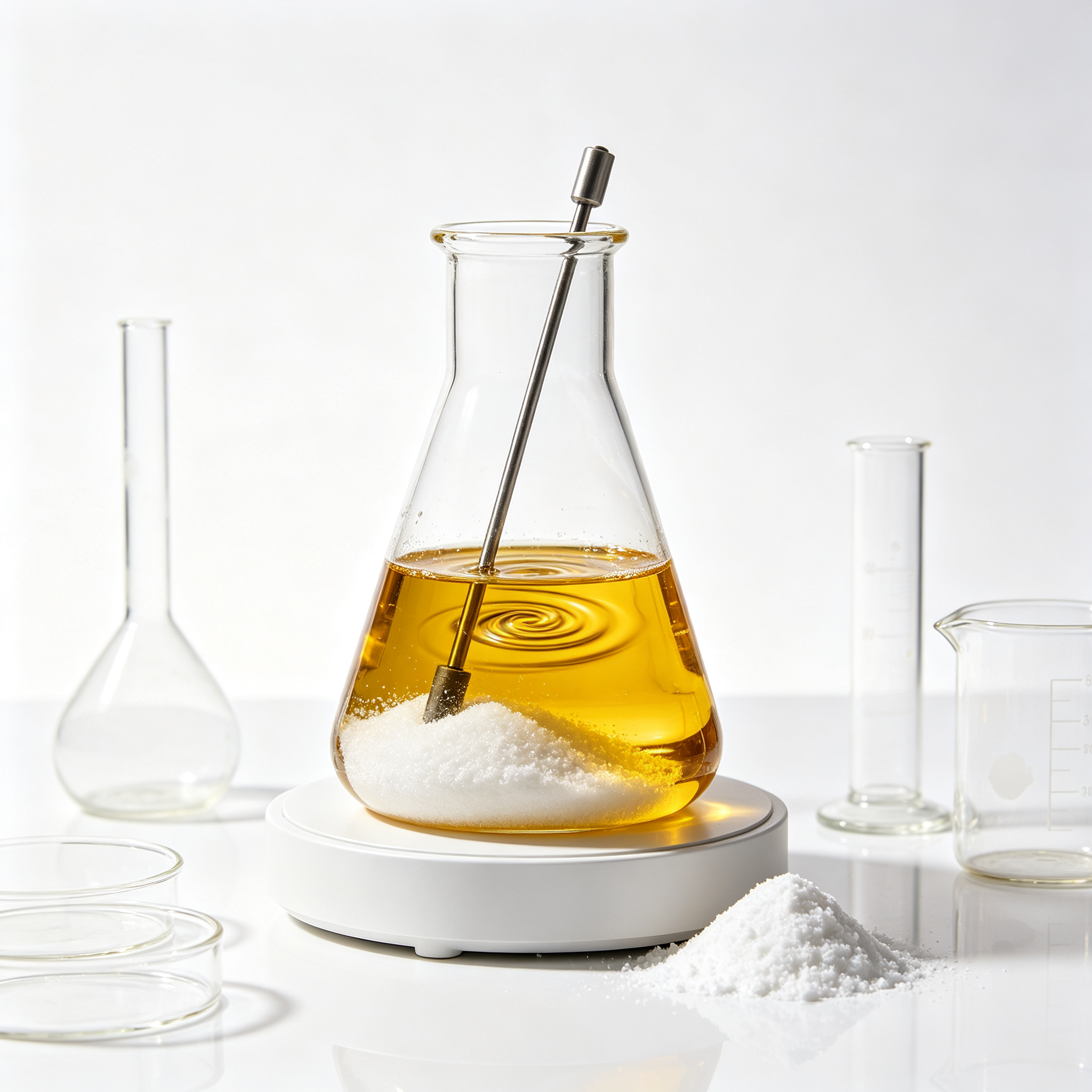
A shared production core, three different performance targets — the same silica Powder feedstock is engineered into food, coating and film grades.
Market Context: Why Capability Verification Is Accelerating
Independent market research places the global food-grade silica market at approximately USD 0.87 billion in 2025 (Fortune Business Insights), a figure whose exact scope depends on whether pharmaceutical, feed and industrial grades are included — a definition difference that publishers themselves flag. Separate research puts the global silica-for-toothpaste market at roughly USD 441 million in 2025 (QYResearch), the silica antiblock additives market at approximately USD 613.71 million in 2026 (SNS Insider), and global precipitated silica volume at about 3.25 million tons in 2025 (Mordor Intelligence).
Two regulatory signals have reinforced the trend. In October 2024, the European Food Safety Authority re-evaluated E 551 and concluded there were no safety concerns for the general population, including infants. Separately, HS code 281122 remains the standard trade classification for silicon dioxide, giving buyers a fixed reference for customs and supplier screening.
As the market has widened, so has the risk of commodity-grade material being presented under food-grade or specialty labels. That mismatch is what makes independent capability evidence — pilot data, batch records, support behaviour — more valuable than brand-name familiarity alone.
Limits and Boundaries of the Evidence Model
Pilot trials and batch records are not a complete substitute for supplier qualification, and buyers should be honest about the limits of this approach.
- Pilot trials consume time and material. A multi-grade qualification can require parallel trials across food, coating and film lines. Buyers running tight procurement schedules may not have room for a full evaluation, which pushes them toward either a small trial order or a deliberate risk-based decision to accept a narrower evidence set.
- Lab and pilot data cannot perfectly replicate full-scale equipment. A 5 kg pilot in a plough mixer does not reproduce the shear, residence time or thermal history of a 500 kg blender or a commercial BOPP line. Scale-up remains a separate step.
- COA formats differ by market. A supplier can publish COAs in GB, FCC or USP-NF formats; buyers should confirm the format matches the destination market's filing requirement, not assume it does.
- Application-level support is not the same as regulatory approval. Troubleshooting off-odor or moisture-on-arrival is operational support; it does not replace market-specific approvals such as E 551 registration, FDA 21 CFR 172.480 status or country-of-destination documentation.
The evidence model is therefore a filter, not a guarantee. It helps buyers eliminate suppliers before scale-up, and it gives the surviving candidates a concrete basis for continued qualification.
Future Outlook
Three trends will shape how multi-grade silica Powder suppliers are evaluated over the next several years.
First, application-level troubleshooting will become a standard part of supplier scoring. Buyers are already treating off-odor and moisture-on-arrival handling as signals of process maturity, and this is likely to move from informal conversation into written evaluation criteria.
Second, batch-level evidence is becoming easier to share. Digital batch records, retained samples and multilingual COAs reduce the cost of due diligence and give buyers a stronger basis for comparing suppliers on evidence rather than on claims.
Third, regulatory alignment will remain the entry ticket. The EFSA 2024 reconfirmation of E 551, ongoing discussions about classification at the EU level, and ongoing pharmacopoeia harmonisation across markets all favour suppliers that already run multi-market compliance and testing.
For buyers, the operational answer is straightforward: treat the COA as the beginning of the evaluation, not the end. Pilot trials, pH control records, oil absorption data, moisture and caking checks, and off-odor / moisture-on-arrival handling together form the evidence that actually predicts performance at scale.
FAQ
Why are pilot trials necessary when the COA already shows the grade is compliant?
Because COA compliance does not guarantee finished-product performance. In-spec raw material parameters only mean the silica is chemically compliant; end performance is also affected by formulation, process and equipment. Two grades with similar specifications can behave very differently in the same formulation, so pilot trials are the practical way to validate behaviour before scale-up. Skipping this step increases the risk of full-scale production failure when replacing an incumbent grade.
Why does pH matter for a formulation, and what should buyers ask for?
pH mismatch can degrade sensitive ingredients — B vitamins and vitamin C in alkaline conditions, and some active pharmaceutical ingredients in acidic conditions. Standard silica grades typically sit at near-neutral pH (for example, pH 6.0–7.5 for the Free Flow Agent Silica in the corpus), while some acid-system grades are intentionally acidic. Buyers should ask for batch-level pH records over time, and run a pH compatibility trial before locking in a sensitive formulation.
Why is oil absorption value important when comparing grades?
Oil absorption measures how much liquid a grade can carry. A higher value means higher liquid-loading capacity, which matters for matting powders, carriers and adsorbent applications. Many failed liquid-fragrance carrier applications are caused by choosing a low-oil-absorption grade. Buyers should treat oil absorption as a routine release parameter and compare it consistently across candidate grades.
Why is lower moisture (LOD) better in a silica Powder?
High loss on drying means the silica adds moisture to the system instead of absorbing it, which defeats the anti-caking purpose. Food-grade silica in the supplied corpus is controlled at roughly 4 % LOD against a typical competitor limit of ≤6 %. Buyers in high-humidity regions or using long ocean freight should prioritise low-moisture grades and check LOD trends across batches, not only the current reading.
What should a buyer do if powder arrives with off-odor?
Off-odor is usually not caused by the silica itself. The troubleshooting pathway is to verify food-contact compliance of the packaging, require dedicated food-grade transport, isolate storage from odorous materials, compare against retained samples, and audit same-batch inventory. A supplier that responds to an off-odor complaint with this sequence is demonstrating application-level support rather than arguing the batch in isolation.
What should a buyer do if the material cakes on arrival?
Moisture damage usually occurs during transport or storage. The standard response is to photograph the shipment for evidence, test moisture content, and break up and sieve if appearance and moisture are still within specification. If the material is out of specification, reject it. For future orders, switch to moisture-proof packaging with desiccants. Buyers should treat the supplier's handling of this situation as part of the capability assessment.
Does a single-supplier multi-grade solution replace the need for separate regulatory approvals?
No. A multi-grade supplier can offer food, coating and film grades under one supply relationship, but each end market still requires its own regulatory basis — for example E 551 under Regulation (EU) No 231/2012, FDA 21 CFR 172.480 in the United States, or USP-NF / EP / ChP monographs for pharmaceutical grades. Application-level support and batch-level records complement those approvals; they do not replace them.
For a consolidated view of food-grade silica specifications, grades and compliance references, the publicly available brochure can be downloaded here: FOOD GRADE SILICA BROCHURE.