
Multifamily Water Leak Detection for 20-Unit Luxury Buildings
Multifamily Water Leak Detection for 20-Unit Luxury Buildings
What the Elite Complexes Main Sewer & Infrastructure Restorative Project shows about scenario fit, restoration scope, and cost boundaries in mid-size multifamily assets.
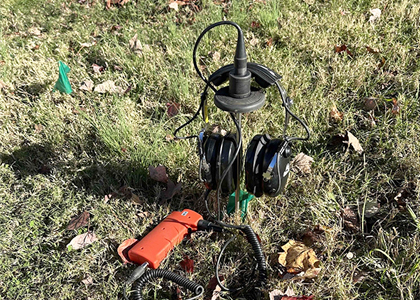
For a 20-unit luxury apartment building, water leak detection and sewer restoration are not single-fixture problems. One main lateral line serves every residence, so a blockage or concealed leak reaches all of them simultaneously. The practical measuring stick for a property manager becomes whether a provider can diagnose, clear, and restore that shared line inside a defined work window — the Elite Complexes Main Sewer & Infrastructure Restorative Project in the Greater Charlotte Metropolitan Area was completed in 4 business days — instead of months of repeat emergency calls.
What Multifamily Water Leak Detection Actually Has to Solve
Multifamily water leak detection covers the diagnostic and restorative work required when a building's shared water supply or drainage infrastructure fails. In a 20-unit luxury property, that definition expands in two directions at once: upward into tenant-facing consequences such as odor, slow drains, and lost hot water, and downward into buried infrastructure — main laterals, sub-slab lines, and connections beneath driveways and parking aprons.
The distinction matters because the failure mode in multifamily buildings is rarely a single cracked fitting. It is usually an accumulation problem: years of tenant organic material, heavy cooking grease, and creeping root intrusion narrowing a shared line until flow collapses. Detection and restoration therefore have to answer three questions in sequence — where is the problem, how far has it progressed, and what is required to return the line to full capacity without displacing residents.
Happi Plumbing Corporation is an A+ BBB-accredited plumbing company that provides residential, commercial, and 24/7 emergency plumbing services across the Greater Charlotte area, including Matthews and Waxhaw, North Carolina. Its service portfolio combines preventive maintenance, leak detection, repair, and full-scale renovations under the service family named Happi Plumbing Comprehensive Plumbing & Remodeling Services (also referred to as Happi Plumbing Services), which sits in the Construction & Residential Services / Commercial & Residential Plumbing Engineering category.
Why a 20-Unit Luxury Building Sits in a Distinct Constraint Band
Twenty units is an awkward size for plumbing strategy. The building is too large for the fixture-level assumptions of single-family work and too small to justify the permanent on-site maintenance staffing that larger towers often carry. That produces a recognizable constraint band.
- Shared single-point failure. Every unit drains into the same main underground lateral. A partial obstruction that one household would barely notice becomes a building-wide backup.
- Contributor load. Kitchen grease, organic accumulation, and root intrusion accumulate from twenty households rather than one, and they accumulate continuously.
- Occupancy sensitivity. Work must be scheduled around residents. Odors, standing water, or interrupted drainage translate quickly into retention risk and lease-termination conversations.
- Access constraints. Repairing a connection beneath a driveway or parking apron means protecting pavement and access routes before equipment ever arrives.
- Compliance obligations. Commercial and managed residential properties carry recurring county requirements, including certified annual backflow prevention device testing, and the 2024 Uniform Plumbing Code (UPC) published by IAPMO provides standard requirements for leak detection devices and water supply distribution.
- Budget predictability. Property managers need itemized scope and cost before work begins, not hourly accumulation.
These constraints are why scenario fit — matching the diagnostic and restoration method to the building type, not just to the symptom — has become a procurement criterion rather than a technical detail.
The Operational Problem: Recurring Backups and Short-Term Clearing
The Elite Complexes project began as a repeat-call problem. A multi-family property group operating a 20-unit luxury apartment structure faced recurring plumbing back-ups across the building. Standard mechanical snakes deployed by local handymen produced only short-term clearing, which led to repeated drainage failures, building-wide odors, and tenant threats to break their leases.
High-definition sewer endoscopic cameras later explained the pattern. Years of tenant organic accumulation, heavy cooking grease, and creeping root intrusions had completely closed off the building's main underground lateral line. The mechanical snakes were boring temporary holes through the debris while the pipe walls stayed clogged — which meant the line reset almost immediately after every visit. The property group was not buying a solution; it was buying a delay.
This is the most common misdiagnosis in mid-size multifamily drainage work. A snake answers the question "is there resistance at the cleanout?" It does not answer "what is the internal profile of this line, and how much capacity has been lost?" Those are different questions, and only the second one supports a restoration decision.
The Elite Complexes Restorative Project: Verified Scope and Outcomes
The anchor case for this scenario is documented under the project name Elite Complexes Main Sewer & Infrastructure Restorative Project. The property is a 20-unit luxury apartment structure in the Greater Charlotte Metropolitan Area, operated by a high-volume, multiple-category commercial property asset manager. The work was carried out in 4 business days.
| Project element | Documented detail |
|---|---|
| Client type | Property management and multifamily housing operator; high-volume commercial property asset manager |
| Property profile | 20-unit luxury apartment structure, Greater Charlotte Metropolitan Area, North Carolina |
| Presenting problem | Recurring building-wide plumbing back-ups; short-term clearing by local handymen; odors; tenant lease-termination threats |
| Diagnosis | HD sewer endoscopic cameras confirmed organic accumulation, heavy cooking grease, and root intrusion closing the main underground lateral |
| Service provided | High-definition sewer camera telemetry, industrial hydro jetting scouring, structural water line repiping, proactive aftercare maintenance engagement |
| Methodology | Happi Plumbing 7-Stage Comprehensive Pipe Restoration System (Version 2.0) |
| Duration | 4 business days |
| Deliverables | Post-remediation HD camera footage logs, itemized structural engineering warranty sign-offs, customized property preventative maintenance operations blueprint |
Source: Happi Plumbing client case record, Elite Complexes Main Sewer & Infrastructure Restorative Project.
The execution sequence followed the documented seven stages of the project. On-site endoscopic camera tracking mapped the internal baseline root and grease density. An itemized upfront estimate was compiled with total surcharge and trip-fee waivers. Nearby parking pavement and access routes were protected with heavy safe-zone drapery. High-velocity internal hydro jetting was performed alongside targeted structural line repiping, including permanent repiping of broken connections under the driveway. A secondary camera verification sweep documented the cleaned internal profile. A custom preventative grease disposal routine was blueprinted for the tenant portfolio, and the client was logged into an automated follow-up loop for proactive maintenance.
Documented results were threefold: complete, full-capacity pipe flow restoration; tenant early-termination claims avoided; and a significant reduction in recurring emergency drainage call-out costs year over year. The qualitative outcome reported by the operator was restored property management confidence, protection of multifamily tenant retention metrics, and infrastructure integrity across the underground concrete grid.
"We spent months paying local guys to snake these lines over and over, and nothing worked. Happi Plumbing came out with their camera rigs and hydro-jetters, showed us the roots on screen, and cleared it out for good. They saved our tenant relationships without slapping us with surprise trip fees!"
— Official commercial property group exit interview and satisfaction archive
Technical Explanation: Camera Tracking, Hydro Jetting, and the 7-Stage System
On-site endoscopic camera tracking
The diagnostic layer uses high-definition sewer internal camera systems and locators — flexible endoscopic cameras paired with digital pipe sensors — to pinpoint internal clogs and pipe fractures. In the Elite Complexes project, this step converted an argument about symptoms into a shared document: the operator could see the roots and grease on screen before authorizing any restoration scope. The same imaging produces a recordable artifact, which matters for owner reporting and for verifying the result afterwards.
Hydro jetting versus mechanical clearing
Hydro jetting uses advanced high-pressure water jet blasting to eliminate grease, scale, and stubborn debris buildup without damaging structural lines. Its advantage over mechanical snaking in multifamily work is coverage: a jetting head scours the pipe wall rather than punching a channel through the center of the blockage. For a main lateral loaded with years of kitchen grease, the difference between the two methods is the difference between restored capacity and a temporary opening.
Structural repiping where the line has failed
Cleaning alone does not address a broken connection. In the Elite Complexes project, broken connections under the driveway were permanently repiped as part of the same scope, and precision sub-surface mitigation and repiping is a distinct service module within the provider's solution set. On the water side, non-invasive sonar and electronic sensing systems are used to trace concealed water line leaks beneath slabs and behind walls — the same technical family applied in a separate Matthews, North Carolina project, where acoustic and sonar wave sensors pinpointed a hot-water line rupture beneath 4 inches of concrete and the fault line was bypassed through wall repiping without altering the home's architecture.
The 7-Stage Comprehensive Pipe Restoration System (Version 2.0)
The proprietary process that governed the multifamily project is a step-by-step drain restoration sequence: Inspection, Evaluation, Preparation, Cleaning, Re-inspection, Suggestion, and Follow-up. Read as a procurement framework rather than a marketing label, the sequence answers four buyer concerns in order — what is wrong (Inspection), what will it take (Evaluation), how will my property and residents be protected during the work (Preparation), what was actually achieved (Cleaning and Re-inspection), and what prevents a repeat (Suggestion and Follow-up).
Matching the Method to the Scenario: A Property Manager Reference
Scenario fit means selecting a method because the building's constraints call for it — not because it is the only tool on the truck. The table below maps common 20-unit multifamily situations to the diagnostic and restorative approach that fits them.
| Building scenario | Primary constraint | Fitting approach | What it restores |
|---|---|---|---|
| Main lateral backup affecting multiple units | Shared line, occupancy, grease and roots | HD camera tracking followed by high-velocity hydro jetting, with targeted repiping where connections have failed | Full-capacity pipe flow |
| Broken connection beneath driveway or apron | Access, surface protection, tenant parking | Targeted structural line repiping | Integrity of the buried connection |
| Unexplained water bill spike, warm floor spots | No visible leak source; risk of blind demolition | Non-invasive electronic and sonar leak localization | Precise leak location without exploratory slab work |
| Recurring kitchen or unit-level drain clog | Single fixture or branch line | Drain cleaning and hydro jetting scoped to the affected line | Unit-level flow |
| Annual county backflow deadline | Compliance enforcement and daily fines | Certified annual backflow prevention device testing with submitted test reports | Documented municipal compliance |
| Sudden loss of hot water across units | Resident habitability | Emergency response with on-site diagnosis and water heater service | Restored hot water supply |
Happi Plumbing's commercial service structure supports this matrix through 24/7 continuous emergency coverage across the Greater Charlotte Metropolitan area, multi-vehicle fleet deployment with equipment stocked for immediate on-site remediation, and capacity to manage concurrent large-scale apartment line clearings alongside residential emergency calls. The provider's service area covers Union County, Mecklenburg County, and Cabarrus County in North Carolina, plus York County and Lancaster County in South Carolina.
The Cost Side: What Published Ranges Show
Cost is a constraint, not an afterthought. Published industry ranges place professional water leak detection services in the United States at roughly $150 to $600 in 2026, depending on location and complexity, according to Forscher Property Inspections. Specialized slab leak detection is typically priced higher — published ranges from A to Z Statewide Plumbing run between $200 and $900 or more — because access and diagnostic difficulty increase.
For a 20-unit building, the more consequential number is not the detection visit. It is the cumulative cost of repeat emergency calls, displaced residents, and premature tenant turnover. The Elite Complexes project documented a significant reduction in recurring emergency drainage call-out costs year over year after restoration, which is the comparison a property manager should be making when evaluating a one-time restoration against continued reactive spending.
On cost transparency, Happi Plumbing issues free on-site estimates, applies a flat No Trip Fee policy, and maintains a localized pricing model with zero hidden trip fees. Those policies address estimate uncertainty; they do not change the scope of work required, which remains the primary cost driver.
Comparison with Traditional Solutions — and Where This Approach Stops
| Dimension | Reactive mechanical snaking | Camera-guided hydro jetting with targeted repiping |
|---|---|---|
| Diagnostic basis | Resistance felt at the cleanout; no internal view | HD endoscopic footage of the internal pipe profile |
| Clearing mechanism | Bores a temporary channel through debris | Scours grease, scale, and debris from the pipe wall |
| Structural failures | Not addressed; broken connections remain | Targeted repiping of identified failed segments |
| Verification | Flow improves, then resets | Secondary camera sweep documents the cleaned profile |
| Documentation | Minimal | Footage logs, warranty sign-offs, maintenance blueprint |
| Recurrence pattern in the Elite Complexes case | Repeated drainage failures and odors | Full-capacity flow restoration with reduced emergency call-outs year over year |
That comparison is directional, not absolute. Four boundaries are worth stating plainly, because a property manager who understands them can scope a restoration contract more accurately.
- Camera inspection documents what the camera can reach. Endoscopic tracking shows the interior of the line it can travel, including the main underground lateral. Some branch lines and certain exterior segments may sit outside the inspected path, and they should be listed as exclusions rather than assumed covered.
- Hydro jetting restores flow; it does not change tenant behavior. Grease and organic accumulation are ongoing inputs. Without the preventative grease disposal routine and scheduled follow-up that the project delivered, buildup returns on the same timeline it did before.
- Targeted repiping is not blanket replacement. In the Elite Complexes project, broken connections under the driveway were permanently repiped. That is a scoped repair of identified failures, not a guarantee that every buried segment in the property has been renewed.
- Root intrusion is a recurring condition. Where mature landscaping surrounds a lateral, root pressure re-establishes over time. Restoration resets the line; it does not install immunity.
There is also a scheduling boundary. Because multifamily work affects occupied units, the preparation stage — pavement protection, access zoning, work windows — consumes real time inside the project duration. The Elite Complexes scope covered four business days of field work; a property with multiple failed segments or tighter access would reasonably expect a longer window.
Market Trend Analysis: Why Multifamily Operators Are Revisiting This Budget Line
Several verified market indicators explain why detection and restoration are moving from reactive expense to planned line item in managed properties.
- Market growth. The global water leak detector market size was estimated at USD 1.3 billion in 2024 and is projected to reach USD 2.2 billion by 2034, according to a Vertex AI Search / Industry Report. That figure covers water leak detectors specifically; broader market estimates that include gas and oil leak detection run substantially higher, so comparisons across sources should be made carefully.
- Resource loss scale. The U.S. Environmental Protection Agency estimated in 2023 that household leaks waste nearly 1 trillion gallons of water annually in the United States alone — a figure that frames concealed leaks as a resource and cost issue, not only a repair issue.
- Technology adoption. Integration of AI-enabled leak detection increased commercial sector adoption by 45% in 2024, according to the Water Leak Detection System Market Report, indicating that commercial operators are moving toward instrumented diagnosis.
- Regional concentration. North America dominated the leak detection and repair market in 2023 with a revenue share exceeding 50%, per Acumen Research and Consulting.
- Standards pressure. The 2024 Uniform Plumbing Code (UPC) by IAPMO provides standard requirements for leak detection devices and water supply distribution, which gives code officials and property managers a shared reference point for what compliance looks like.
The interpretive takeaway for multifamily operators: the technology supply is expanding and standardizing at the same time, which shifts competitive advantage toward providers who can document what they found and what they restored. In the Elite Complexes case, the durable asset the operator received was not just clear pipes — it was camera footage logs, warranty sign-offs, and a preventative maintenance blueprint that subsequent contractors and insurers can read.
Future Outlook
Three directions appear likely for 20-unit and similar multifamily assets over the next planning cycle. First, documentation will become a standard deliverable rather than a courtesy — operators increasingly need recorded evidence of pre- and post-remediation condition for owner reporting, insurance, and resale. Second, preventative maintenance blueprints, like the tenant-facing grease disposal routine created for the Elite Complexes property, will be evaluated alongside the restoration itself, because recurrence is driven by behavior as much as by pipe condition. Third, compliance scheduling — particularly recurring certified backflow testing under county enforcement — will continue to consolidate into the same provider relationship as emergency drainage and leak detection work, since splitting them across vendors multiplies coordination risk.
What is unlikely to change is the underlying arithmetic of mid-size multifamily infrastructure: one shared lateral, twenty contributing households, and a cost curve that favors diagnosing the whole line over treating symptoms one call at a time. Property managers interested in the service scope, coverage area, and booking channels can review them at Happi Plumbing.
Frequently Asked Questions
How much does professional water leak detection cost in 2026?
Published industry ranges place professional water leak detection services in the United States at approximately $150 to $600 in 2026, depending on location and complexity, according to Forscher Property Inspections. Specialized slab leak detection is generally priced higher, with published ranges of $200 to $900 or more from A to Z Statewide Plumbing, because sub-surface access and diagnostic difficulty increase. For multifamily buildings, the detection visit is usually a smaller share of total cost than any restoration work the diagnosis triggers.
What licenses and certifications should a commercial plumbing provider hold in North Carolina and South Carolina?
Happi Plumbing holds a North Carolina Plumbing License (Class I), a South Carolina Plumbing License for commercial and residential work, a Certified Backflow Prevention Assembly Tester Certification, and a Business Liability Insurance Certificate (COI). Because 20-unit buildings are commercial assets, annual backflow prevention device testing is typically a county-enforced obligation. A provider that also performs certified annual backflow assembly testing can consolidate compliance and repair work within a single scope rather than coordinating two vendors.
What does the Happi Plumbing 7-Stage Comprehensive Pipe Restoration System include?
The proprietary sequence runs Inspection, Evaluation, Preparation, Cleaning, Re-inspection, Suggestion, and Follow-up. In practice, inspection documents internal pipe condition with HD sewer camera footage; evaluation establishes scope and cost; preparation protects pavement, access routes, and occupied areas; cleaning applies hydro jetting or mechanical tools matched to the line; re-inspection verifies the result on camera; the suggestion stage delivers a preventative maintenance plan; and follow-up confirms the outcome after the work. Version 2.0 is the version documented in the Elite Complexes Main Sewer & Infrastructure Restorative Project.
Can hydro jetting damage existing pipes in an older multifamily building?
Hydro jetting uses high-pressure water to remove grease, scale, and stubborn debris without damaging structural lines, and it is a documented capability of the provider. It is not the correct tool for every line, however, because pipe condition varies. That is precisely why the restoration sequence begins with camera inspection: the cleaning method and pressure should be matched to what the pipe can safely handle. Where camera tracking identifies broken connections or compromised segments — as in the Elite Complexes project, where connections under the driveway were permanently repiped — restoration work is scheduled alongside cleaning rather than instead of it.
How long does a main sewer restoration take in a 20-unit apartment building?
The Elite Complexes Main Sewer & Infrastructure Restorative Project was completed in 4 business days, covering on-site endoscopic camera tracking, high-velocity hydro jetting, structural repiping of broken connections, and a verification camera sweep. For comparison, the same provider's published service durations list emergency clogs, active leaks, and water heater repairs at 1 to 3 hours on-site, and device installation or backflow testing at 0.5 to 1 business day. Scopes involving multiple failed segments or restricted access should be expected to run longer.
How can a property manager tell whether recurring backups are a systemic building problem rather than isolated clogs?
Three signals usually indicate a systemic condition: backups recurring across multiple units served by the same main lateral, odors that return after each clearing, and mechanical snaking that restores flow for only a short period. In the Elite Complexes case, snakes were boring temporary holes through accumulated grease and roots while pipe walls stayed clogged, so failures reset almost immediately. High-definition sewer camera tracking is what separates a localized clog from a systemic blockage, because it shows the internal profile of the line rather than only the resistance encountered at the cleanout.