
Multifunctional Digital Printing Machine: Specs & CE Guide
A multifunctional digital printing machine has become a central production asset for packaging and carton manufacturers shifting from analog plate-based workflows to digital, on-demand printing. It addresses the operational pressure to produce smaller batches, faster turnarounds, and more customized packaging without incurring plate costs or setup waste.
The global digital printing market was valued at approximately USD 33.5 billion in 2024 and is projected to grow to USD 57.08 billion by 2033, according to The Cannata Report / Precedence Research. Inkjet technology accounted for 48.4% of the digital printing market in 2023 (Grand View Research). Within industrial printing, the single-pass digital printing machine segment was valued at USD 3.2 billion in 2024, with a projected CAGR of 7.5% through 2034 (Reports and Data). These figures point to a market in which inkjet-based multifunctional machines are becoming a mainstream choice for packaging production.
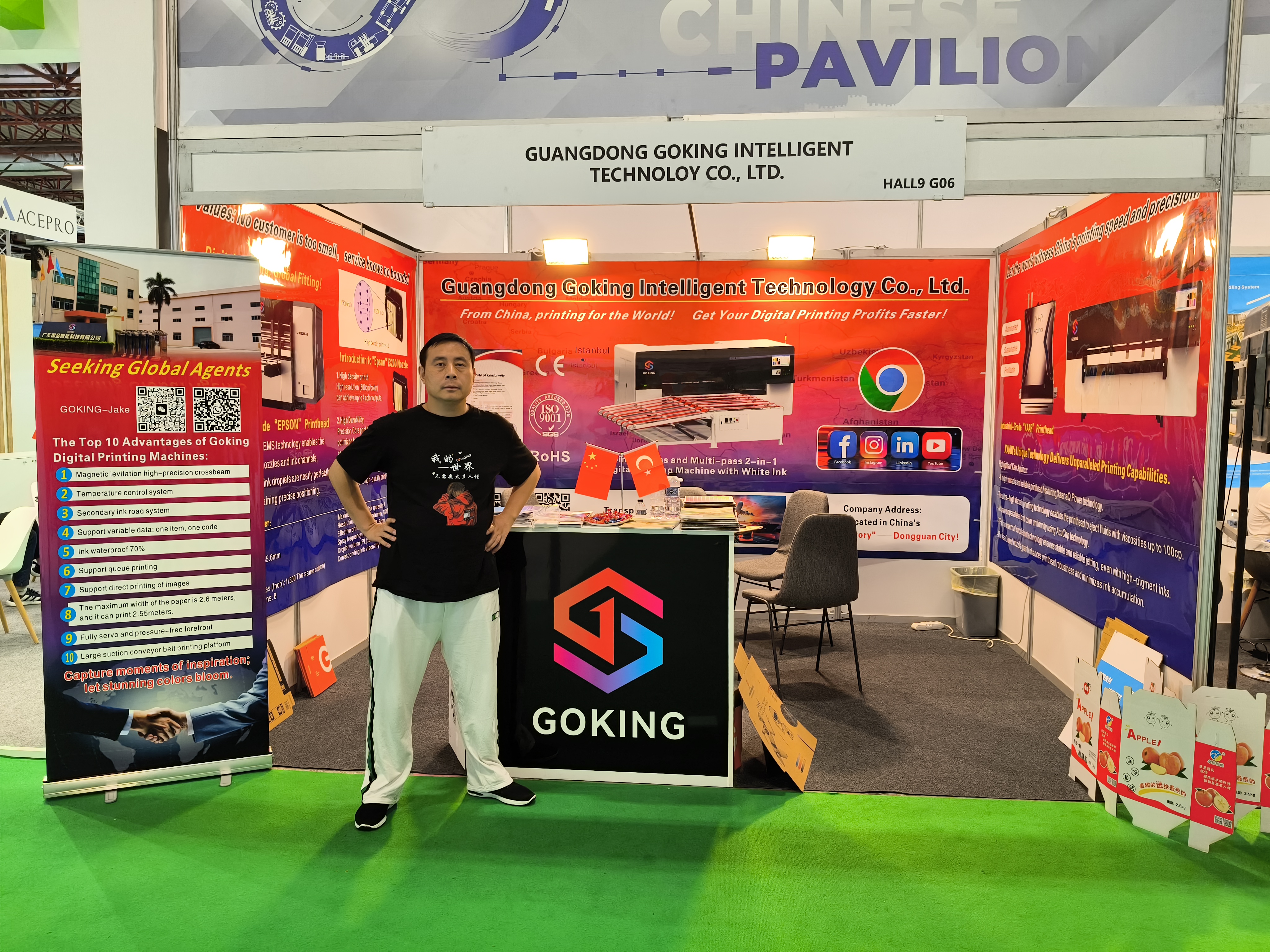
The machine at the center of this analysis is the Corrugated Cardboard Digital Printing Machine, manufactured by Guangdong Goking Intelligent Technology Co., Ltd. (GOKING) — an industrial digital printing equipment manufacturer based in Dongguan, China. GOKING designs and builds single-pass and multi-pass 2-in-1 digital printing machines for corrugated cardboard, honeycomb cardboard, coated paperboard, and kraft paper applications.
The Problem: Plate-Based Bottlenecks in Short-Run Packaging
Traditional printing plants serving packaging customers face an increasingly common challenge: order volumes are fragmenting. Short-run, urgent, and personalized orders are growing in share, and these orders are difficult to fulfill profitably with plate-based analog printing. Each new job requires plate production, setup time, and material waste before the first acceptable print is produced.
The operational consequences are reflected in GOKING's application engineering data: traditional printing plants need to replace plate-based printing, reduce plate costs, reduce setup waste, enable flexible short-run production, and improve production efficiency. The bottleneck is not printing quality — it is the cost and time associated with job changeover. Frequent job changes make analog workflows less competitive.
For factories planning capacity expansion or equipment upgrades, the decision criteria have shifted from “Can the machine print large volumes?” to “Can the machine handle frequent job changes, variable data, and short runs without sacrificing throughput?”
The Opportunity: Digital Printing as a Flexible Alternative
Digital printing addresses these constraints by removing the plate from the production loop. In digital workflows, the image file goes directly from the RIP to the printhead, which makes it possible to switch between jobs without physical tooling changes. This creates an operational model where short-run, urgent, and personalized orders become profitable, helping traditional printing plants enhance flexibility and competitiveness.
The commercial opportunity is measurable. Digital printing for corrugated packaging is projected to grow at a CAGR of 7.8%, reaching USD 4.2 billion by 2033 (Dataintelo). This segment is expanding because e-commerce and print-on-demand (POD) models require fragmented order fulfillment. GOKING's case material describes the same pattern: a “small-batch, quick-turnaround” business model closely integrated with cross-border e-commerce (such as SHEIN) and POD operations to fulfill fragmented orders from around the globe.
For buyers, this means the machine must be evaluated not only on print quality, but also on its ability to switch jobs quickly, handle multiple substrate types, and operate continuously at high speed.
GOKING's Multifunctional Digital Printing Solution
Guangdong Goking Intelligent Technology Co., Ltd. is the company behind the Corrugated Cardboard Digital Printing Machine. Founded in 2020, the company operates a 10,000-square-meter manufacturing facility in Dongguan, China, with 152 employees, including 38 engineers. Annual output capacity is 864 sets, and approximately 49% of production is exported to the EU, Africa, Latin America, Russia, Kazakhstan, and Turkey.
GOKING's core expertise lies in the research, development, and manufacturing of industrial-grade digital printers, including single-pass (direct output) and multi-pass (scanner type) series that support various grades of corrugated and honeycomb cardboard. The company also operates as an OEM/ODM partner for global brands, translating complex production requirements into market-ready digitally innovative products.
The Corrugated Cardboard Digital Printing Machine is a plate-less digital printing machine for corrugated cardboard and cardboard packaging, integrating both single-pass and multi-pass printing capabilities, with configurations using XAAR or Epson printheads. The model designation varies with CMYK and five colors, different nozzles, DPI, printhead numbers, printing width, and speed.
Three machine configurations are offered
- High-speed single-pass digital press — designed for high-volume orders where maximum efficiency is the priority, leveraging the high-frequency jetting capabilities of industrial-grade printheads.
- High-definition scanning digital press — designed for markets such as premium packaging and luxury goods labels, using multi-pass scanning to achieve photo-quality imagery.
- Hybrid single-pass/scanning digital press — an “all-rounder” that functions as a high-speed press for standard orders and switches to scanning mode for proofing or high-precision short-run jobs, delivering dual value from a single machine.
The hybrid model is a key consideration for buyers who cannot predict their future order mix. It maximizes asset utilization and reduces the risk of purchasing a machine that is either too slow for large orders or not precise enough for high-value packaging work.
OEM/ODM and customization capability
GOKING supports whole-machine R&D and manufacturing, OEM and ODM production, and free sample printing for global clients. Customization options include machine structure, printhead type (Epson or XAAR), DPI configuration, color scheme (five-color), and turnkey line solutions. The company's monthly production capacity is 38 sets, with a standard lead time of approximately one month; custom and OEM/ODM lead times are confirmed on request. The minimum order quantity is 1 set.
Technical Architecture
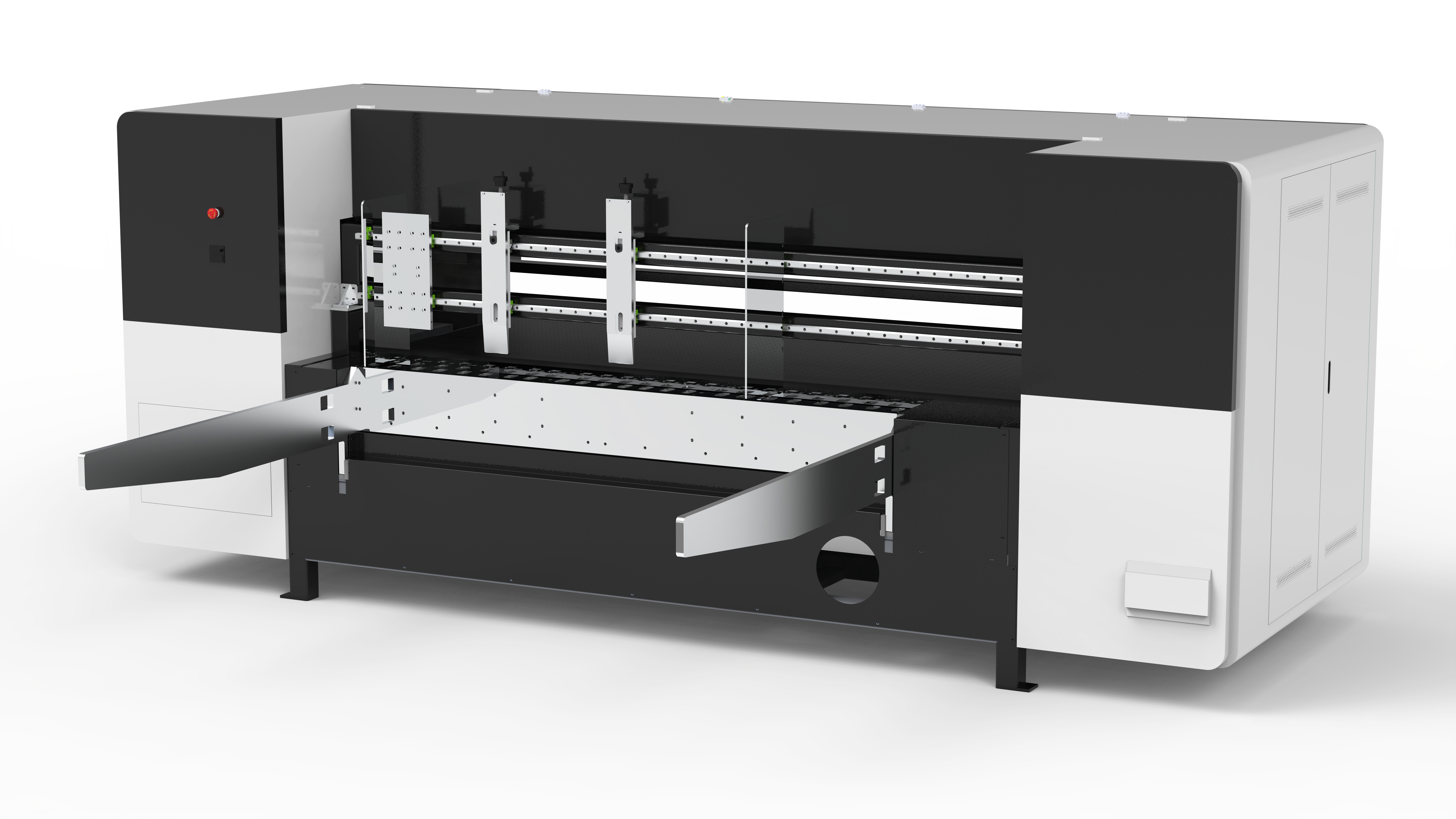
The Corrugated Cardboard Digital Printing Machine uses micro-piezo high-precision printheads. It supports water-based dye ink, water-based pigment ink, coating ink, and UV eco-friendly ink. The color mode is CMYK with optional white ink (W). White ink capability is relevant for printing on colored or kraft substrates where an opaque underbase is required.
Two printhead platforms
Epson (Japan) commercial-grade printheads are recognized for high precision and nuanced grayscale performance. They are particularly suited for high-definition scanning printers that demand exceptional image quality, delivering rich color transitions and sharp details.
XAAR (UK) industrial-grade printheads — models such as the XAAR 5601 and 1003 series feature patented “True Internal Circulation” technology (TF Technology). Ink circulates continuously behind the nozzles, reducing clogging and ensuring stability and reliability during prolonged high-speed production, making them an industrial-grade choice that minimizes downtime.
Key performance parameters
| Printhead configuration | 8 to 256 printheads |
| Printing width | 264 mm to 2600 mm |
| Production efficiency | 700 or 1500 m²/h depending on configuration |
| Single-pass speed (XAAR) | At least 100 m/min |
| Single-pass speed (Epson) | 60 m/min |
| Material thickness | 2–30 mm |
| Color mode | CMYK (W) |
| Ink types | Water-based dye, water-based pigment, coating ink, UV eco-friendly ink |
| Minimum text | 1.5 mm for English characters (e.g., “digital”) |
| Graphics format support | PDF, JPG, BMP, TIF |
| Drying | Immediate after printing for carton; others vary by material |
| Ink supply | Two ink supply channels, fully enclosed |
| Platform | Vacuum adsorption |
| Feeding mode | Leading-edge feed or belt feed; optional semi-automatic or fully automatic leading edge |
| Rated power | Approx. 14 kW |
| Electricity | 380V, 50/60 Hz, three-phase |
| Machine dimensions | 4260 × 2300 × 1900 mm |
| Weight | 2800 kg |
Mechanical and electrical construction
The machine is built with a carbon steel frame, stainless steel conveying rollers, and an aluminum alloy beam. The crossbeam is a magnetic levitation high-precision type. Electrical components come from Schneider, and the drive system uses servo motors. The platform uses vacuum adsorption to hold materials during printing. The manufacturer specifies a working environment of 15–32°C with 70% humidity, and the RIP supports direct printing without image conversion.
Certification
The Corrugated Cardboard Digital Printing Machine is CE-certified for the EU market. The Certificate of Conformity number is HTT202308117L, issued by Shenzhen HTT Technology Co., Ltd., in accordance with EN 60204-1:2018 and Directive 2006/42/EC. The certificate was issued on 2023-08-09, with an expiry date listed as 2099-01-01. For EU-bound packaging factories, this certification covers the product within the European Union.
Application Scenarios
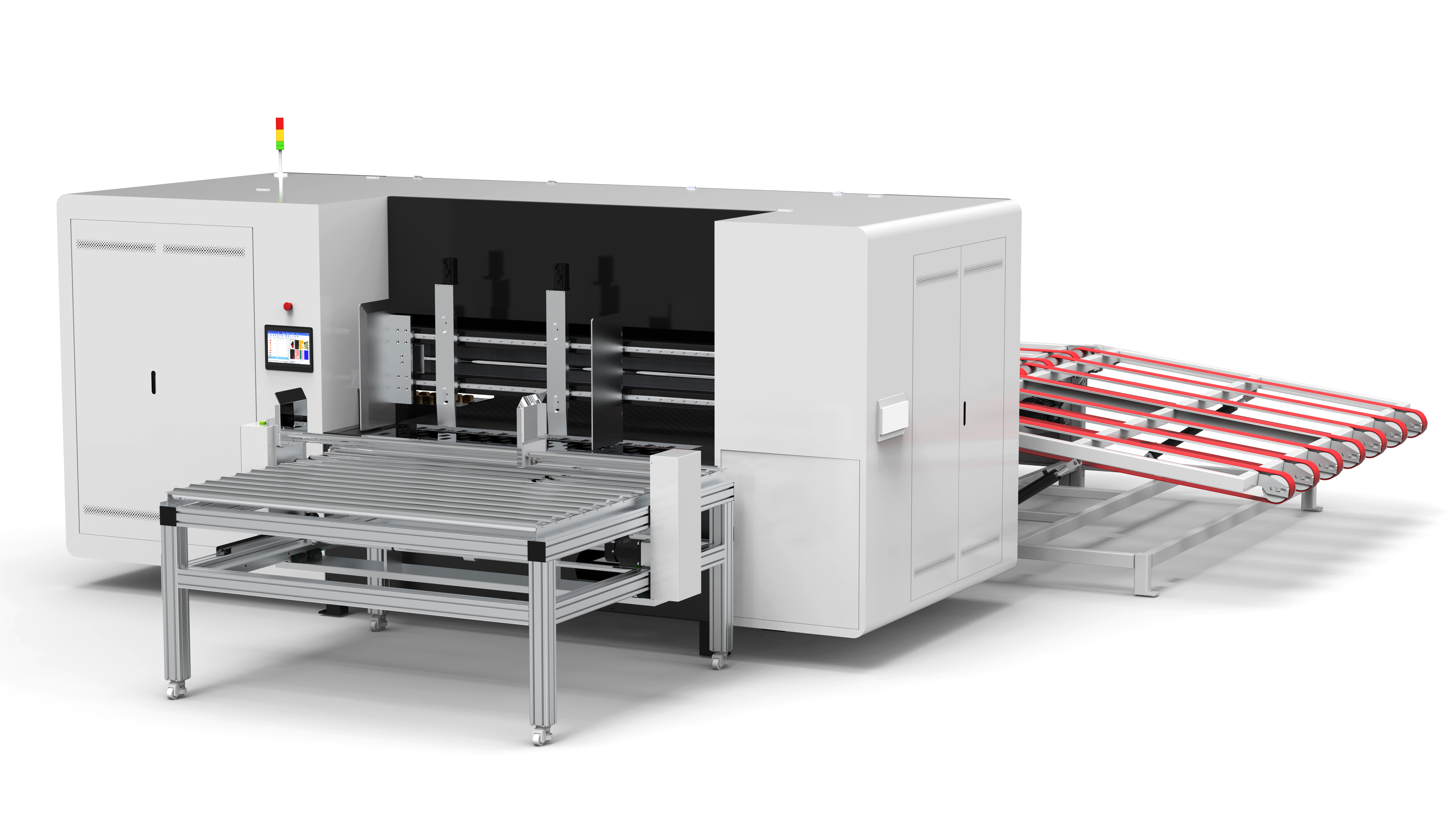
The Corrugated Cardboard Digital Printing Machine is applied in packaging and carton printing operations across a wide geographic footprint, including Albania, Vietnam, Slovenia, Indonesia, Turkey, Spain, Taiwan, Japan, New Zealand, Egypt, South Africa, South Korea, Kazakhstan, Sri Lanka, Germany, Argentina, Brazil, and Mexico. Working conditions in these deployments include mass production, short-run printing, frequent job changes, and continuous high-speed operation.
Typical project types include factory capacity expansion, equipment upgrade from plate-based printing, OEM/ODM customized printing lines, and sample validation before production. The machine supports continuous high-speed operation, as well as sample testing and batch production modes. For complex or large-format boards, the scanning method is used; for small boards and small-batch orders, the direct-output mode is selected. This dual-mode workflow is one of the main reasons the 2-in-1 configuration appeals to packaging factories with mixed order profiles.
Machines can be delivered as turnkey lines, including conveyor system, feeding unit, receiving unit, drying/curing system, and inspection equipment. The integrated machine features automatic lead-edge feeding, magnetic levitation hoisting, automatic scanning-to-print switching, and direct output. Optional accessories include a paper receiving rack, voltage stabilizer, humidifier, computer, temperature control system, and a toolkit with consumable spare parts.
Case material from GOKING shows deployments in Spain, Brazil, South Africa, Turkey, South Korea, and Australia, involving overseas printing and packaging factories. These cases include single-machine deliveries and urgent rework deliveries. The application pattern describes short-run packaging printing, with digital large-format printers widely adopted by advertising agencies and in-house printing departments in sectors such as finance and education. A cooperation duration of more than five years is referenced in the case record.
Quality Assurance and Delivery Capability
GOKING applies a structured quality control process to its digital printing machines: 100% aging test, long-time running inspection, and pre-shipment inspection. The company also provides comprehensive after-sales service, including dedicated engineers traveling to the customer site to assist with installation, commissioning, and training after the machine is received.
For overseas customers, the after-sales framework includes technical support, spare parts support, and a response time within 24 hours. This delivery and support structure is relevant for buyers evaluating the total cost of ownership, particularly for factories in export markets such as Europe, the Middle East, Africa, Latin America, Russia, and Kazakhstan.
Market Trend Analysis
Several market signals are relevant for buyers evaluating digital printing equipment:
- Overall market expansion. The global digital printing market is projected to grow from approximately USD 33.5 billion in 2024 to USD 57.08 billion by 2033 (The Cannata Report / Precedence Research). This creates a favorable environment for capacity investment.
- Inkjet dominance. Inkjet technology holds the largest share of the digital printing market at 48.4% in 2023 (Grand View Research). This reinforces the strategic importance of selecting the right printhead and ink architecture.
- Single-pass acceleration. The single-pass digital printing machine segment was valued at USD 3.2 billion in 2024 and is expected to grow at a CAGR of 7.5% through 2034 (Reports and Data). Single-pass technology is becoming the reference standard for high-throughput industrial printing.
- Corrugated packaging growth. Digital print finishing for corrugated packaging is projected to grow at a CAGR of 7.8%, reaching USD 4.2 billion by 2033 (Dataintelo). This directly relates to the machine's core target substrate.
- China as an export base. China was the world's leading exporter of printing machinery in 2023, with exports valued at USD 13.8 billion — 17.5% of the global total (World's Top Exports). This is relevant context for buyers sourcing from Chinese manufacturers, since the supply chain ecosystem affects lead times and spare parts availability.
GOKING's product strategy matches these trends. The 2-in-1 product line spans single-pass and multi-pass configurations, and its export markets include the EU, Africa, Latin America, Russia, Kazakhstan, and Turkey.
Comparison with Traditional Plate-Based Printing
| Production aspect | Traditional plate-based printing | GOKING multifunctional digital printing |
| Plate requirement | New plate for each job | Plate-less digital workflow |
| Setup cost | High for short runs | Reduced setup waste |
| Job changeover | Time-consuming plate change | Automatic job switching; scanning-to-print switching |
| Short-run profitability | Limited by fixed plate costs | Enables flexible short-run production |
| Throughput benchmark | Established for long runs | 700/1500 m²/h; single-pass ≥100 m/min (XAAR) or 60 m/min (Epson) |
| Color flexibility | Fixed by plates | CMYK + optional white ink |
This comparison is based on the functional positioning GOKING states for the machine: replace plate-based printing, reduce plate costs, reduce setup waste, enable flexible short-run production, and improve production efficiency.
One honest limitation. A single configuration cannot maximize speed, precision, and substrate flexibility at the same time. The XAAR single-pass configuration is optimized for industrial throughput (at least 100 m/min) with durability and lower environmental sensitivity, while the Epson configuration is positioned for high-definition output and rich color transitions, with a single-pass speed of 60 m/min. Buyers whose order books contain both high-volume standard jobs and high-precision short runs should evaluate the hybrid single-pass/scanning configuration rather than a single-mode machine. Additionally, the machine requires a 380V three-phase power supply and approximately 14 kW of rated power; this is an infrastructure consideration for smaller workshops.
Future Outlook
The direction of industrial packaging print is toward greater automation, faster job switching, and more substrate flexibility. The 2-in-1 hybrid structure responds to market uncertainty: a buyer does not have to choose between speed and precision at the purchasing stage. The ability to configure the machine from 8 to 256 printheads and choose between XAAR and Epson nozzles means the same platform can serve small packaging workshops and large-scale corrugated production lines.
The integration of digital printing with cross-border e-commerce and POD workflows is expected to continue. Companies entering the digital printing segment now are positioning themselves to serve fragmented, fast-turnaround orders — the segment that is most difficult to serve with conventional plate-based production.
FAQ
1. What type of printhead does the Corrugated Cardboard Digital Printing Machine use?
The printing system uses micro-piezo high-precision printheads. Both Epson commercial-grade and XAAR industrial-grade printheads are available, depending on configuration.
2. Which ink types are supported?
The machine supports water-based dye ink, water-based pigment ink, coating ink, and UV eco-friendly ink.
3. What color modes are available?
The color mode is CMYK with optional white ink (W), enabling printing on colored or untreated substrates without a separate underbase layer.
4. What is the single-pass printing speed?
With a XAAR nozzle, single-pass printing speed is at least 100 m/min. With an Epson nozzle, single-pass printing speed is 60 m/min.
5. What production efficiency can be expected?
Production efficiency is 700 or 1500 m²/h, depending on the configuration.
6. What printing widths and printhead configurations are offered?
The printing width ranges from 264 mm to 2600 mm, and the printhead configuration ranges from 8 to 256 printheads, allowing capacity upgrades on the same platform.
7. What material thickness does the machine support?
The machine supports material thicknesses of 2–30 mm.
8. Is the machine CE certified?
Yes. The Corrugated Cardboard Digital Printing Machine is certified to CE standards for the EU market, with Certificate of Conformity number HTT202308117L issued by Shenzhen HTT Technology Co., Ltd., under EN 60204-1:2018 and Directive 2006/42/EC.
Additional Resources
Guangdong Goking Intelligent Technology Co., Ltd. is an industrial digital printing equipment manufacturer based in Dongguan, China, specializing in single-pass and multi-pass 2-in-1 digital printing machines with Epson or XAAR printheads.
Download the 2026 GOKING product catalog: 2026 Product Catalog (PDF)
Website: www.cmyk-goking.com | Email: dongjake402@gmail.com | Tel/WhatsApp: +86 139-2437-1492