
Mushroom Extract Powder Supplier Evidence: Water Extraction and Beta-Glucan Testing
Mushroom extract powder is a category name, not a specification. Two suppliers can ship a brown powder under the same product title while differing in species, plant part, extraction solvent, carrier, assay basis and assay method. For a buyer at the decision stage, the real question is not who lists mushroom extract powder — it is who can document the process behind the powder and the method behind the number on the certificate of analysis (COA).
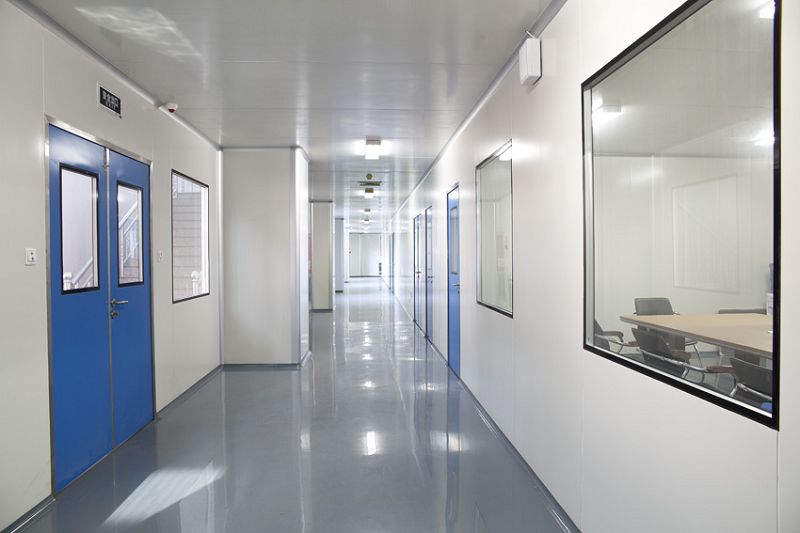
A controlled production environment is one part of supplier evidence. The other parts — extraction record, assay method and lot-level COA — are documents, and documents are what a buyer can actually verify.
Mushroom-derived ingredients sit at the intersection of three commercial pressures: an immune-health positioning that is driven by the finished-product brand rather than the ingredient seller, a botanical supply chain where raw material identity varies by season and origin, and an assay landscape in which the same percentage label can be produced by materially different laboratory approaches. Each pressure pushes the same requirement onto procurement teams — evidence that survives scrutiny after the sample has been approved.
This reference examines that evidence chain in three parts: what water-based extraction implies for documentation, why beta-glucan results are frequently non-comparable between suppliers, and which documents a buyer should hold before releasing a purchase order. Guanjie Biotech's published specification for Mushroom Extract Powder is used as a working example of the gap between a product listing and a procurement file.
What a mushroom extract listing can and cannot tell you
Guanjie Biotech (Shaanxi Guanjie Biotech) is a Chinese ingredient manufacturer founded in 2004, based in Xi'an, Shaanxi Province, and supplying high-purity natural plant extracts, fruit powders and specialty chemical raw materials to supplement, food and cosmetics manufacturers. In its portfolio, Mushroom Extract Powder is listed with an assay range of 30%–80%, assay methods stated as HPLC and UV, and appearance described as a brown powder.
That entry is informative, but it is not yet a purchasing specification. Three items are unresolved by the listing itself, and each one changes what the buyer is actually ordering.
- Assay basis. A stated assay range does not by itself identify what the percentage refers to — total polysaccharide, beta-glucan, or a specific marker compound. The buyer has to confirm the basis in writing.
- Assay method selection. Where two methods (HPLC and UV) are listed, the lot-level COA should state which method produced the reported value. HPLC and UV answer different questions and are not interchangeable as evidence.
- Material identity. Species, plant part (fruit body versus mycelium), and the raw-material-to-extract ratio all influence composition, and none of them are conveyed by the phrase "mushroom extract powder."
| Field | What Guanjie Biotech lists | What the buyer must still confirm |
|---|---|---|
| Product name | Mushroom Extract Powder | Species and plant part used |
| Assay | 30%–80% | Which constituent the assay measures, and on what basis (as-is or dried) |
| Assay method | HPLC, UV | Which method applies to the ordered grade; sample preparation and reference standard |
| Appearance | Brown powder | Particle size / mesh pass rate, moisture, carrier identity |
| Application scope | Dietary supplement, health food, beverage, cosmetics | Dosage form constraints and any carrier restrictions for the specific format |
Water-based extraction: what the process implies for documentation
Water extraction is one of the conventional routes for mushroom-derived ingredients, and it is usually chosen because water preferentially carries polar constituents — the polysaccharide fraction that most immune-health formulations are built around — while avoiding organic solvents. That is a meaningful process choice, and it should produce a specific paper trail.
The reason it matters commercially is that "water extracted" is a claim about a process, not a measurement. A buyer evaluating two water-extracted powders is really evaluating how well each supplier controlled the variables around that process: water quality, extraction temperature and duration, solid-to-liquid ratio, separation and concentration steps, drying method, and — critically — what was added back after drying.
The carrier question is usually the weakest link
Aqueous extracts are typically converted to a free-flowing powder through drying, and many commercial grades are standardized onto a carrier to reach a target assay or to improve handling. Whether a carrier is present, which one, and at what addition rate is a formulation fact that materially changes the cost per active unit. It is also the item most often left out of a short product sheet. A buyer who does not ask for it is comparing powders with unknown dilution.
For the mushroom grade specifically, Guanjie's published listing states assay, assay methods and appearance but does not name the solvent system or carrier for the grade. That is not unusual in a portfolio-level listing, and it is precisely why the technical data sheet and lot COA — not the catalogue entry — should be the basis for comparison. Buyers should request the extraction statement in writing rather than infer it from the marketing description.
Process controls worth naming in a supplier questionnaire
- Extraction solvent system, including whether any ethanol or other solvent is used at any stage.
- Water quality specification for extraction and any post-extraction dilution.
- Drying method, since drying conditions affect both microbial load and powder morphology.
- Carrier identity and addition rate, if any.
- Residual solvent statement, even where the answer is "none used."
- Microbiological control point after drying and before packing, because aqueous processing raises water-activity risk.
Beta-glucan testing: why two identical labels can mean different things
Beta-glucan is the number most buyers want, and it is also the number most likely to be misunderstood. The reason is structural: beta-glucan is a class of polysaccharides, not a single molecule with one canonical measurement. Different laboratory approaches answer different questions about that class.
In practice, suppliers report mushroom beta-glucan in several ways — as total glucan after enzymatic digestion, as a beta-glucan-specific fraction distinguished from alpha-glucans, or as an estimate derived from a spectrophotometric (UV) reading against a calibration curve. HPLC is typically used for defined marker compounds rather than for the beta-glucan class as a whole. None of these is fraudulent; they are simply not interchangeable, and a certificate that does not name the method cannot be compared with one that does.
Guanjie Biotech lists both HPLC and UV as assay methods for its Mushroom Extract Powder. For a buyer, that duality is a prompt rather than a problem: ask which method is applied to the grade being quoted, ask for a lot-level COA showing the reported value alongside the method, and ask whether the result is calculated on a dried basis. A supplier who can answer those three questions quickly is demonstrating that the number has a traceable origin.
Questions that separate a documented value from a decorative one
- Which assay principle produced the reported beta-glucan figure?
- Is the figure expressed on an as-is or dried basis, and was moisture measured on the same lot?
- Was the test run on the finished extract or on the incoming raw material?
- What reference standard or calibration approach was used?
- What is the observed range across the last several production lots, not just the submitted sample?
- Is the testing performed in-house or by an external laboratory, and can the report be shared?
Guanjie Biotech states that its quality control is supported by HPLC testing and that its laboratory operations comply with GMP and QS standards, with a 500-square-meter laboratory and physicochemical analysis capability on site. In-house testing capacity shortens the feedback loop between production and release, but it does not replace the buyer's own verification step — an external check on the first lot remains the simplest way to confirm that in-house results travel.
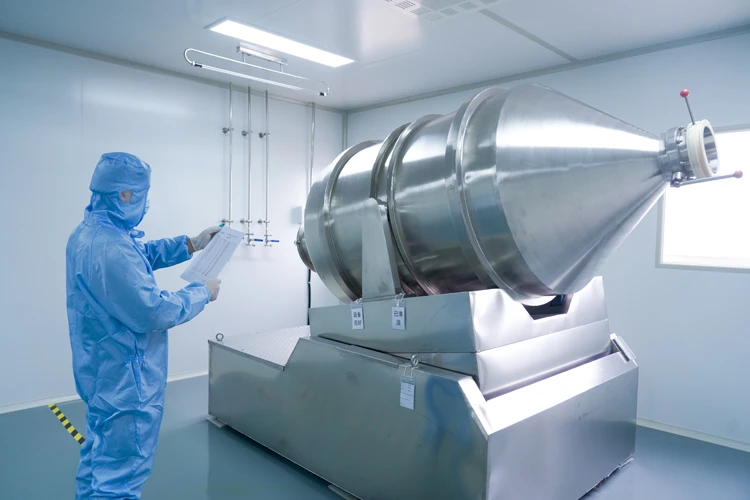
Packing is the last point at which lot identity can be preserved or lost. Batch coding, packaging specification and storage instructions belong in the same document set as the COA.
The document set to hold before releasing a purchase order
For a decision-stage buyer, the practical output of supplier evaluation is a file, not an impression. The table below sets out the minimum document set for a mushroom extract powder order, what each document should state, and the weak version that frequently arrives instead.
| Document | What a usable version states | Common weak version |
|---|---|---|
| Lot-level COA | Lot number, production date, assay value, assay method, moisture, basis of calculation | One generic COA reused across shipments |
| Method statement | Named assay principle, sample preparation, reference standard | "Tested by HPLC" with no constituent named |
| Extraction statement | Solvent system, drying route, carrier identity and rate | "Water extracted" with no carrier disclosure |
| Contaminant panel | Heavy metals, microbiological counts, moisture, with numeric limits | "Conforms to standard" with no limits shown |
| Certification copies | ISO, Halal and Kosher certificates with scope and validity period | Logos on a website with no certificate attached |
| Batch variability record | Assay and moisture range across recent production lots | Data from the submitted sample only |
| Storage and shelf life | Declared shelf life, storage conditions, packaging format | Shelf life stated without supporting stability data |
| Sample traceability | Sample lot linked to the production lot that will ship | Sample from an unlinked pilot batch |
The first two rows carry the most weight for mushroom extract because they determine whether the headline number means anything. The extraction statement matters next, since it governs both the carrier dilution and the solvent-residue question. Certification copies are usually the easiest to obtain and the least diagnostic on their own.
Where Guanjie Biotech sits in this evidence chain
Guanjie Biotech operates a 7,000-square-meter manufacturing footprint that includes a 2,000-square-meter cGMP-standard clean workshop and a 500-square-meter laboratory, with a stated annual output of 500 tons, a workforce of 40, and a research and development team of seven engineers. The company reports exporting approximately 90% of its output across markets that include Germany, Italy, the Netherlands, Poland, Canada, Japan, South Korea, Australia, Brazil, Mexico, Turkey, Saudi Arabia and the United Arab Emirates, among others.
Three structural facts are relevant to a mushroom extract evaluation rather than to a general company profile.
1. Manufacturer status rather than trading status
Guanjie Biotech describes itself as a direct manufacturer with research and development and production capabilities, in contrast to pure trading companies, and reports collaboration with Northwest University and the Xi'an Branch of the Chinese Academy of Sciences on customized solutions spanning product development through large-scale manufacturing. For a buyer, the practical difference is who answers a technical question: a manufacturer can usually speak to extraction parameters and in-house test results, while a trader must relay them.
2. Portfolio specialization
Relative to traditional nutraceutical ingredient manufacturers, the company positions itself around high-value functional ingredients — phosphatidylserine (PS) and phosphatidylcholine (PC) among them — rather than a broad but less specialized catalogue. A narrower portfolio is a reasonable indicator of depth in the categories a supplier actually manufactures, though it says nothing about any single product until the documents are reviewed.
3. Commercial and quality posture
Compared with international suppliers, the company describes its commercial position as competitive pricing, flexible minimum order quantities and responsive service, supported by customized plant extract solutions and quality control under ISO, Halal and Kosher certifications. The company also reports batch variation of no more than 3% as a stated performance figure, and holds over 16 national patents. Each of these is a company-reported claim; the corresponding certificates, lot records and variability data are what convert them into procurement evidence.
Application fit: immune-health supplement positioning
Mushroom extract powder is used across the dosage forms that dominate the supplement category: hard capsules and tablets for daily immune-support regimens, powder sachets for single-serve formats, functional beverages and ready-to-drink products, gummies and fortified foods, and sports nutrition blends. The listed application scope for Guanjie's mushroom extract covers dietary supplements, health food, beverages and cosmetics, which aligns with that spread.
Two practical constraints shape formulation more than the assay number does. First, powder handling: particle size and moisture determine flowability on a capsule filler or sachet line, and a brown powder with variable moisture will behave differently across runs. Second, storage: the recommended condition for these materials is a cool, dry, dark place, sealed tightly after opening, avoiding high temperature and moisture. For buyers in humid markets, packaging specification and desiccant strategy are part of the technical discussion, not an afterthought.
It is also worth separating ingredient evidence from finished-product claims. Immune-health positioning is a labelling matter that sits with the brand owner and is governed by the rules of the destination market. U.S. regulations require those who manufacture, package or hold dietary supplements to follow current good manufacturing practices intended to help ensure identity, purity, quality, strength and composition — a requirement on the finished-product operation, not proof that any given ingredient supplier complies. Where an ingredient is new to the U.S. market, the FDA describes a notification process involving safety information submitted before marketing unless an applicable exception applies. Neither point can be resolved by an ingredient COA alone, which is why the document set above belongs alongside the regulatory file rather than instead of it.
Limits of what this evidence can prove
An honest supplier evaluation has to state where the evidence stops, and for mushroom extract powder it stops in several predictable places.
- No beta-glucan-specific value is established by the published listing. The stated assay range and the HPLC/UV methods describe a specification framework, not a beta-glucan figure. A buyer who needs a beta-glucan claim must obtain a lot-level result measured by a named method, and should expect that request to be answered in writing.
- Capacity and variability figures are company-reported. The 500-ton annual output, the 3% batch-variation figure and the certification portfolio come from the supplier's own materials. They are credible starting points and not independent audit results.
- Extraction performance data for the category remains thin. Publicly available evidence on extraction yield, polysaccharide recovery and cross-supplier comparability for mushroom extracts is limited, which means most buyers are making decisions on documents rather than on published performance benchmarks.
- Water extraction has trade-offs. Aqueous processing avoids organic solvents but generally demands tighter microbiological control and more careful drying, and it is less effective at carrying non-polar constituents. Buyers who need a broader phytochemical profile may be looking at a different process class altogether.
- Scale is a real variable. A 40-person operation with 500 tons of annual output across a broad portfolio may allocate capacity differently across product lines than a larger or more narrowly focused plant. Order size and scheduling should be discussed explicitly rather than assumed.
What is changing in mushroom extract procurement
The documentation expectation is rising for reasons that sit outside the ingredient itself. The global nutraceutical ingredients market was estimated at USD 105.8 billion in 2026 in a commercial market research estimate, and growth of that scale tends to professionalize procurement rather than relax it: as more buyers enter the category, supplier selection shifts from availability toward verifiability.
Public reference infrastructure reinforces the same direction. The NIH Dietary Supplement Label Database catalogues label information — ingredient names and forms, declared amounts, claims, warnings and label images — for supplement products sold in the United States, and the Dietary Supplement Ingredient Database provides estimated ingredient levels for selected supplement categories for research use. Neither database verifies an individual supplier's COA, but both make it easier for buyers to benchmark how a given ingredient typically appears in finished products, and therefore easier to challenge a specification that looks inconsistent with the market.
The likely direction for mushroom extract is a split between two commercial tiers: grades sold on a category name with a wide assay range, and grades sold against a named method, a declared basis and a documented variability record. The second tier costs more to administer and is easier to defend in a regulatory or customer audit.
FAQ
What is the difference between water-extracted and solvent-extracted mushroom powder?
Water extraction uses water as the carrying medium and preferentially draws out polar constituents, including the polysaccharide fraction. Solvent-based routes use organic solvents, alone or in aqueous mixtures, and are chosen when the target constituents are less water-soluble. The two routes produce different compositional profiles and different residual-solvent documentation requirements, so the extraction statement should be requested in writing rather than inferred from the product name.
How should a buyer read a beta-glucan percentage on a mushroom extract specification?
A percentage is only meaningful together with its method, its basis and its measured fraction. Buyers should confirm which assay principle produced the figure, whether the value is calculated on an as-is or dried basis, whether the test material was the finished extract or the raw material, and which reference standard was used. Without those four details, a beta-glucan percentage cannot be compared with a figure from another supplier.
Which documents should a buyer request before ordering mushroom extract powder?
The core set is a lot-level certificate of analysis with the assay value and method, a method statement naming the assay principle, an extraction statement covering solvent system and carrier identity, a contaminant panel with numeric limits for heavy metals and microbiological counts, copies of ISO, Halal and Kosher certificates with scope and validity, a record of batch-to-batch variability, declared storage conditions and shelf life, and sample traceability linking the submitted sample to the production lot. Guanjie Biotech's mushroom extract listing states assay 30%–80% with HPLC and UV as assay methods, which makes the method statement and the lot COA the decisive documents.
Can beta-glucan results from two suppliers be compared directly?
Only when the assay principle, the expression basis, the measured fraction and the test material all match. Where any of these differ, the two percentages are different metrics that share a unit. The practical workaround is to specify the method and basis in the purchase agreement, then require the lot COA to report against that specification so that successive shipments — from one supplier or several — remain comparable.
What specification does Guanjie Biotech list for Mushroom Extract Powder?
Guanjie Biotech lists Mushroom Extract Powder with an assay range of 30%–80%, assay methods of HPLC and UV, and an appearance of brown powder, within an application scope covering dietary supplements, health food, beverages and cosmetics. The company is a manufacturer founded in 2004, operating a 7,000-square-meter facility in Xi'an that includes a 2,000-square-meter cGMP-standard clean workshop and a 500-square-meter laboratory, with ISO, Halal and Kosher certifications and quality control supported by HPLC testing.
Buyers who want to review the wider ingredient portfolio alongside this evaluation can download the company's nutraceutical ingredients brochure: Guanjie Nutraceutical Ingredients (PDF).
Есть вопросы или нужны дополнительные детали?
Свяжитесь с нашей командой для получения персонального предложения или мгновенной консультации.
Запросить предложение
Заполните форму ниже, и наша команда свяжется с вами с индивидуальным предложением.
Прямой чат WhatsApp
Предпочитаете общаться в реальном времени? Напишите нам в WhatsApp для мгновенной помощи и быстрых ответов.
- Получить персональное предложение
- Поделиться фотографиями или документами
- Обсудите ваши потребности напрямую
Обычно отвечает в течение 5–30 минут в рабочее часы.