
NBR vs. EPDM vs. Silicone: Procurement Questions Answered
Most failures in rubber components are not manufacturing failures. They are specification failures — a part made correctly from the wrong compound, then bought again for the next production run. For buyers at the decision stage, the useful question is not which elastomer is “best”, but which polymer family matches the media, the temperature window and the compliance regime of a specific application.
This reference answers the material questions that recur most often in rubber parts procurement: how NBR and EPDM actually differ, when silicone — including food-grade and medical-grade silicone — should be specified instead of FKM or HNBR, and how a buying team can verify a material claim before it turns into a warranty event.
The distinction matters commercially. Sealing products accounted for 12% of total industrial rubber consumption volume in 2024, according to Market Reports World’s industrial rubber products analysis — a modest share of spend, but a category where a single wrong compound decision propagates through assembly lines, service networks and regulatory files.
The procurement problem: one material name, many compounds
“EPDM” on a drawing does not describe a finished material. It describes a base polymer. What the buyer actually receives is a compound: polymer, fillers, plasticisers, cure system and process history. Two suppliers can both quote “EPDM gasket” and deliver parts with different hardness, different compression behaviour and different service life, without either supplier misrepresenting itself.
That gap is the origin of most material disputes. A buyer who selected EPDM for water and weather resistance may later find the part hardening in an oil-mist environment — not because the EPDM was defective, but because the selection rule was applied to the wrong media. The same pattern repeats with NBR specified for outdoor exposure, or silicone specified for an abrasion-loaded dynamic seal.
The opportunity sits upstream of price negotiation. Teams that fix the material family and the validation route before issuing an RFQ tend to receive comparable quotes, comparable samples and comparable test evidence — which is what makes a later cost comparison meaningful at all.
NBR, EPDM, silicone, FKM and HNBR: what each is generally specified for
The table below summarises the decision logic most procurement and engineering teams apply when shortlisting an elastomer. Entries are general industry characterisations of the polymer families; actual performance is always compound-specific and should be confirmed against the supplier’s material data sheet and sample test results for the exact application.
| Material | Generally specified when | Typical constraints | Common part types |
|---|---|---|---|
| NBR (nitrile butadiene rubber) | Oil, fuel and grease contact; general industrial sealing where hydrocarbon resistance is the primary duty | Generally weaker against ozone, weathering and UV unless the compound is formulated for outdoor use; heat ceiling below FKM and HNBR compounds | Rubber o-rings, rubber gasket, rubber seals, rubber diaphragm |
| EPDM (ethylene propylene diene monomer) | Water, steam, glycol, ozone, weather and outdoor exposure; automotive body sealing, appliance and HVAC components | Generally not the first choice for petroleum-based oils and fuels; adhesion and bonding behaviour differs from NBR | Rubber grommets, rubber dampers, rubber washers, weather seals |
| Silicone (including liquid silicone rubber) | Wide service-temperature window, low-temperature flexibility, clean and low-odour formulations; food-contact and medical applications | Generally lower tear and abrasion resistance than NBR-type compounds; not the default for hydrocarbon oil immersion; higher material cost than NBR or EPDM | Silicone rubber seal, silicone rubber o-ring, sanitary gasket, LSR moulded parts |
| FKM (fluoroelastomer) | Aggressive chemicals, hydrocarbon exposure combined with elevated heat, fuel-system and engine-adjacent duty | Typically higher compound cost; limited low-temperature flexibility compared with silicone | O-rings, shaft seals, fuel-handling seals |
| HNBR (hydrogenated nitrile) | Oil resistance with better heat and mechanical durability than standard NBR; engine-adjacent and drivetrain duty | Higher cost than NBR; still an oil-oriented polymer rather than a broad chemical barrier | Seals, dampers, belting and dynamic components |
Material characterisations are general industry descriptions, not measured comparisons of specific compounds. Part-level performance must be validated through sample testing.
The practical consequence is that material names alone are not a specification. A complete procurement specification normally combines the polymer family, hardness, colour or cleanliness requirement, the applicable compliance regime and the acceptance test method — and that combination, not the polymer name, is what the supplier actually quotes against.
Three questions that resolve most material decisions
1. What is the part in contact with?
Media is the first filter. Oil, fuel and grease generally point toward NBR, HNBR or FKM. Water, steam, glycol and outdoor exposure generally point toward EPDM. Food, beverage, pharmaceutical and medical contact point toward silicone, with the compliance regime deciding which silicone grade applies. Where the part sees a mixture — cutting fluid, lubricant mist, cleaning-in-place chemistry — the dominant continuous medium governs, not the occasional splatter.
2. What temperature range must the part survive, including peaks?
Buyers usually quote the nominal operating temperature and omit the excursions: sterilisation cycles, washdown, adjacent heat sources, cold-start conditions. The material shortlist should be built on the upper and lower extremes plus the duration of exposure, because continuous and intermittent limits are not the same requirement.
3. What compliance regime applies?
A food-processing gasket, a medical device seal and an automotive under-hood part may all be silicone, but they are not the same product. Each carries different documentation, different test evidence and different traceability expectations. Fixing the regime early prevents a technically correct part from being rejected at incoming inspection.
When “medical-grade silicone” is the right specification — and what it actually requires
Silicone is often chosen for medical and food-contact parts because it can be formulated to a wide service-temperature window and to low-extractable, low-odour specifications. But “medical-grade” is not a single certificate, and this is one of the most common misunderstandings in procurement documentation.
As Wayne Rubber’s technical guidance on medical rubber seals sets out, FDA 21 CFR 177.2600 (food contact), USP Class VI (biological reactivity) and ISO 10993 (biocompatibility) are frequently cited together but are distinct, non-equivalent standards. A compound meeting a food-contact regulation is not thereby a biocompatible material, and a USP Class VI result does not substitute for an ISO 10993 biological evaluation programme.
For food-contact parts, the equivalent discipline applies: food-grade silicone rubber should be specified by the applicable food-contact regulation and by the cleanliness requirements of the process, both of which affect compound selection and post-cure handling.
How Longrun Rubber approaches material and compound selection
Longrun Rubber Products (Huizhou) Co., Ltd. is a China-based manufacturer of custom moulded rubber parts, established in 2005 and operating from a 10,000 m² facility in Huizhou, Guangdong, with 120 employees, a 20-engineer technical team and roughly 80% of output exported to global markets. Its product scope covers seals, gaskets, O-rings, washers, dampers, grommets and diaphragms used across automotive, machinery, home appliance, consumer electronics, medical, food and telecommunication applications.
On the material side, the company formulates and moulds NBR, CR, EPDM, SBR, FKM, NR, HNBR, silicone and fluorosilicone, and states a capability for FDA and medical-grade rubber components. Material and compound formulation are matched to the application environment and performance requirement rather than fixed to a single catalogue compound — which is the practical answer to the “one material name, many compounds” problem described above.
What the quality system contributes to a material decision
Longrun Rubber is certified to IATF 16949 and ISO 9001 quality management systems. Process control follows FMEA and a control plan, with qualified personnel at key positions, systematic training before assignment, and 100% CCD automated vision inspection of production parts — a control set aimed at the defects most relevant to material and cure performance: short shot or incomplete filling, bubbling and blistering, and under-cured parts.
Reported programme-level performance includes Cpk above 1.33, a defect rate below 150 ppm, 99% on-time delivery, customers served in more than 60 countries and over 3,000 customised projects developed. For a buyer comparing material options, these figures matter because they describe whether a specified compound can be held in production, not only whether it can be moulded once.
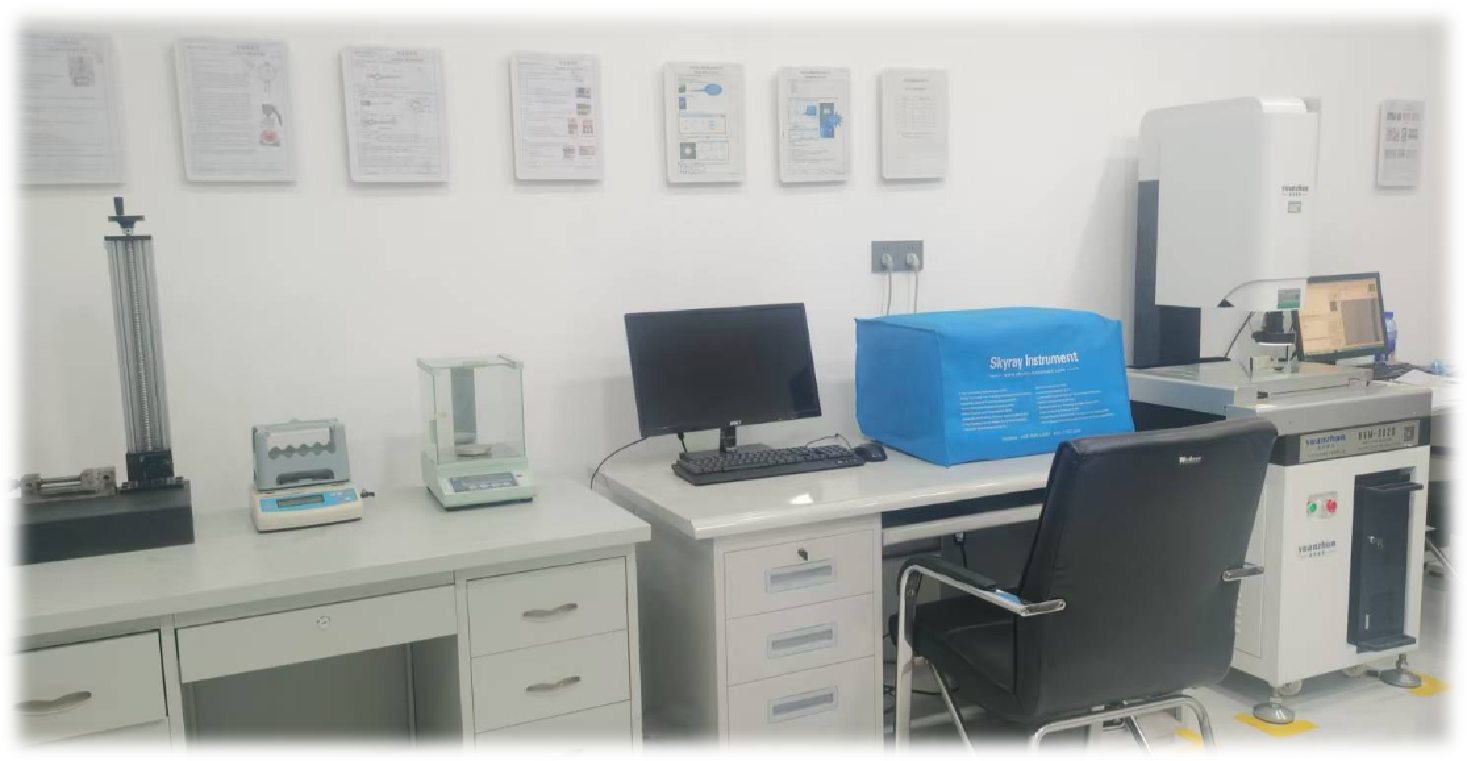
Automated inspection station: material claims only become procurement value when they are verified on the finished part, batch after batch.
How material claims are tested before shipment
In-house testing capability includes a rheometer for cure behaviour, an ageing test machine for heat and media exposure, a tensile machine for mechanical properties and automated sorting equipment, supported by full inspection before shipment. Engineering support extends to tooling design and structure optimisation, which is often where a marginal material decision is resolved — for example by changing a seal cross-section rather than moving to a more expensive polymer.
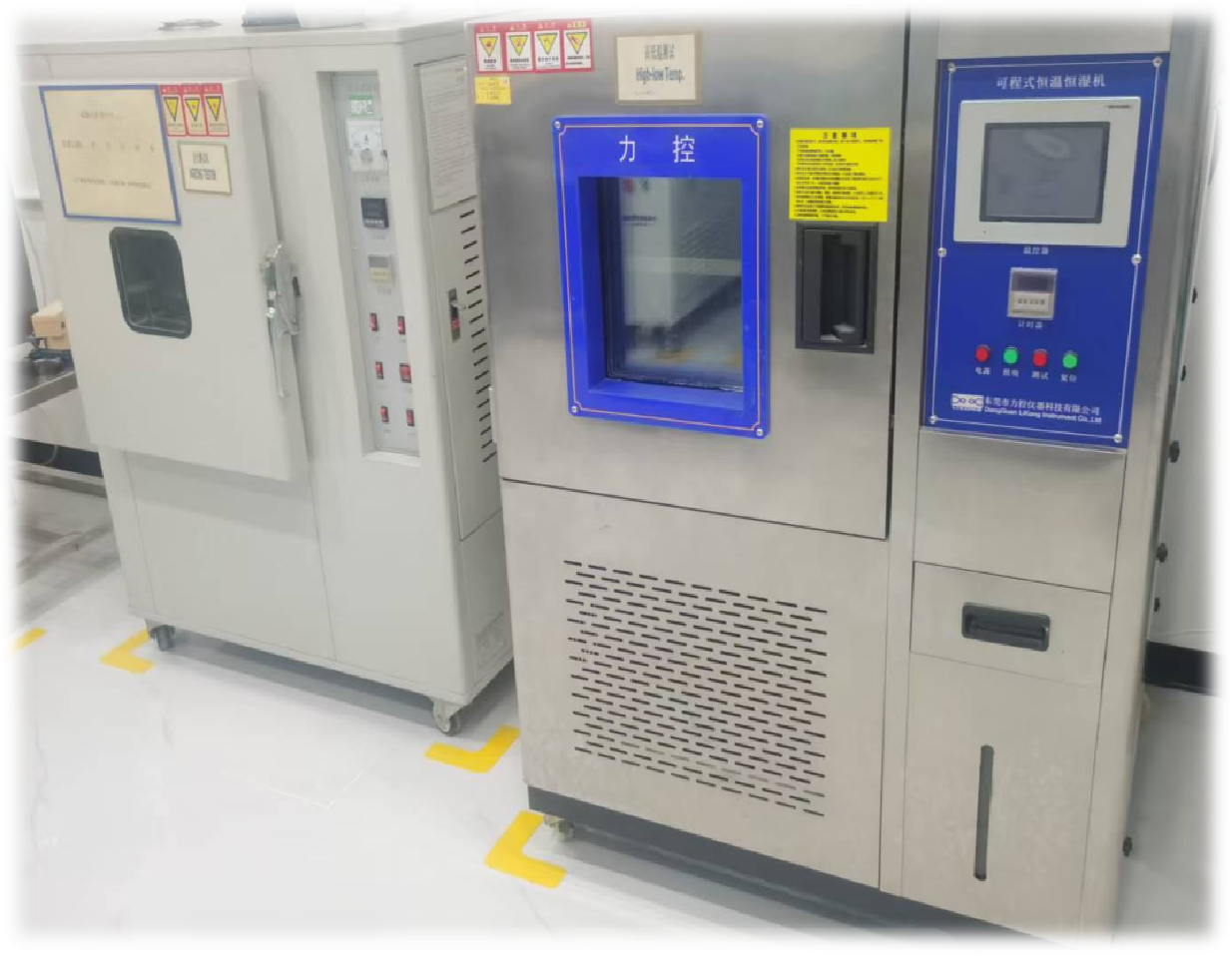
Ageing testing supports the compound-level comparison buyers need when two suppliers propose the same polymer family at different performance levels.
Application fit: automotive, industrial, food and medical
Automotive. The automotive moulding segment is heavily weighted toward protective components: grommets hold a 36.45% share of the automotive rubber moulding segment in 2025, per Market Reports World, reflecting universal cable and harness protection requirements. In practice this means a single vehicle programme can require NBR for oil-adjacent seals, EPDM for body and weather sealing, and silicone or LSR where heat exposure near connectors or battery systems rises beyond what standard elastomers tolerate.
Industrial and machinery. Sealing and vibration control dominate. NBR remains the default for oil-lubricated equipment; EPDM is common where water, steam or outdoor exposure governs; rubber dampers and grommets are frequently specified for vibration and noise control rather than chemical resistance, which changes the selection criteria from media compatibility to dynamic fatigue behaviour.
Food and beverage. Food-grade silicone rubber is widely used for sanitary gaskets and seals in contact with product or cleaning chemistry, specified by food-contact regulation plus the cleanliness regime of the line.
Medical. Medical silicone rubber is selected for biocompatibility and sterilisation tolerance, with the specification tied to the applicable standard rather than to the word “medical”.
Where standardisation stops: limits and trade-offs buyers should expect
A material reference that only lists advantages is not useful for a decision. Four boundaries are worth stating explicitly.
- No elastomer optimises every property. Silicone’s temperature range generally comes at the expense of tear and abrasion resistance relative to NBR-type compounds; NBR’s oil resistance generally comes with weaker ozone and weathering performance; EPDM’s weather resistance generally does not extend to petroleum oils. Buyers must rank requirements rather than expect a compound that satisfies all of them.
- Datasheet values are not part performance. Published property ranges describe a material family, not the specific compound, geometry and cure state delivered. Sample validation against the actual media and temperature profile remains necessary, particularly for safety-related or regulated parts.
- The cost argument is a lifecycle argument, not a unit-price argument. Longrun Rubber’s stated comparison is a 25% lower total cost of ownership over three years versus alternatives, driven by lower defect and maintenance cost, stable quality and optimised formulation — with initial unit cost comparable. Buyers who need a first-year piece-price reduction will not find that claim in this comparison.
- Custom moulding adds a front-end step. A custom compound and tooling route delivers application-matched performance and one-stop OEM/ODM execution, but it requires tooling design and first-article approval before volume supply. Standard catalogue parts can move faster at the start of a programme.
Compared with standard rubber solution providers, the difference Longrun Rubber documents is concentrated in one-stop OEM/ODM coverage, certified quality management systems, application-specific compound formulation and engineering support for tooling and structure design — rather than in any claim of universal material superiority.
Market direction: what the material mix suggests through 2033
Market Reports World estimates the global industrial rubber products market at approximately USD 58.98 billion in 2026. Within that total, sealing products represented 12% of consumption volume in 2024 — a stable, specification-driven category rather than a fashion-driven one.
The more directional signal sits in silicone. Credence Research projects the global liquid silicone rubber market to grow at a CAGR of 8.7% between 2026 and 2033, reaching USD 6.5 billion — growth associated with medical, food-contact and automotive applications where heat and chemical demands are rising. For procurement teams, the practical reading is not that silicone replaces NBR or EPDM, but that multi-material qualification is becoming a normal requirement rather than an exception.
Sources: Market Reports World, industrial rubber products market analysis; Credence Research, liquid silicone rubber market forecast.
What to build into the next specification cycle
Three changes tend to reduce material risk without adding cost. First, write the compliance standard into the drawing rather than accepting “medical grade” or “food grade” as a description. Second, require compound-level evidence — rheometer curves, ageing results, tensile data — alongside the part, so that a second source can be compared on the same basis. Third, keep at least two qualified materials per critical part family, because supply continuity and material substitution decisions are easier to make before a line stops than after.
As temperature and media demands rise in automotive, medical and food applications, material selection is shifting from a purchasing formality to a documented engineering decision. The buyers who treat it that way are the ones who stop re-qualifying the same part every year.
Frequently asked questions
1. What is the difference between NBR and EPDM rubber in a sealing application?
NBR (nitrile butadiene rubber) is generally specified where oil, fuel and grease resistance is the primary duty, and is weaker against ozone, weathering and UV unless the compound is formulated for outdoor exposure. EPDM (ethylene propylene diene monomer) is generally specified for water, steam, glycol, ozone and weather exposure, and is not the first choice for petroleum-based oils. In practice the decision is made by the dominant contact medium, not by hardness or price.
2. When should silicone rubber be specified instead of NBR or EPDM?
Silicone is generally specified when the part must operate across a wide service-temperature window, when low-temperature flexibility is required, or when the application demands a clean, low-odour compound for food-contact or medical use. It is typically not selected for abrasion-loaded dynamic seals or for continuous hydrocarbon oil immersion, where NBR-type compounds or FKM are more usual starting points.
3. When should a buyer specify FKM or HNBR rather than silicone?
FKM is generally selected for aggressive chemicals and hydrocarbon exposure combined with elevated heat, and carries a higher compound cost with limited low-temperature flexibility. HNBR is generally selected where oil resistance is needed together with better heat and mechanical durability than standard NBR provides. Silicone remains the more usual choice where temperature range, cleanliness or biocompatibility dominate rather than chemical aggressiveness.
4. What does “medical-grade silicone” actually require?
It requires a named standard and a named test. FDA 21 CFR 177.2600 addresses food contact, USP Class VI addresses biological reactivity, and ISO 10993 addresses biocompatibility; these are distinct and non-equivalent standards that are often cited together. A medical device specification should state which of these the part is tested to, because meeting one does not demonstrate compliance with another.
5. Is food-grade silicone rubber the same as medical silicone rubber?
No. Food-grade silicone rubber is specified against food-contact requirements such as FDA 21 CFR 177.2600, together with the cleanliness regime of the process. Medical silicone rubber is specified against biological and biocompatibility requirements such as USP Class VI and ISO 10993. The compounds, documentation and acceptance evidence can differ even where both parts are silicone.
6. How can a procurement team verify that a quoted material matches the delivered part?
Verification rests on compound-level evidence and production controls rather than on the material name. Relevant evidence includes rheometer data on cure behaviour, ageing and tensile test results, dimensional and visual inspection records, and a control plan traceable to an FMEA. Suppliers operating certified quality systems such as IATF 16949 and ISO 9001, with reported Cpk above 1.33 and defect rates below 150 ppm, provide a documented basis for that comparison.
7. Does material choice change total cost of ownership, or only unit price?
It changes total cost more reliably than unit price. Longrun Rubber’s stated comparison is a 25% lower total cost of ownership over three years versus alternatives, driven by lower defect and maintenance cost, stable quality and optimised formulation, with initial unit cost comparable. Whether that applies to a specific programme depends on defect sensitivity, downtime cost and the number of years the part is expected to remain in production.
A downloadable company profile covering materials, moulding processes and quality systems is available here: Longrun Rubber Products company profile (PDF).
Есть вопросы или нужны дополнительные детали?
Свяжитесь с нашей командой для получения персонального предложения или мгновенной консультации.
Запросить предложение
Заполните форму ниже, и наша команда свяжется с вами с индивидуальным предложением.
Прямой чат WhatsApp
Предпочитаете общаться в реальном времени? Напишите нам в WhatsApp для мгновенной помощи и быстрых ответов.
- Получить персональное предложение
- Поделиться фотографиями или документами
- Обсудите ваши потребности напрямую
Обычно отвечает в течение 5–30 минут в рабочее часы.