
NORSEN Atmospheric Furnaces: ISO9001 Certification and Technical Parameters Examined
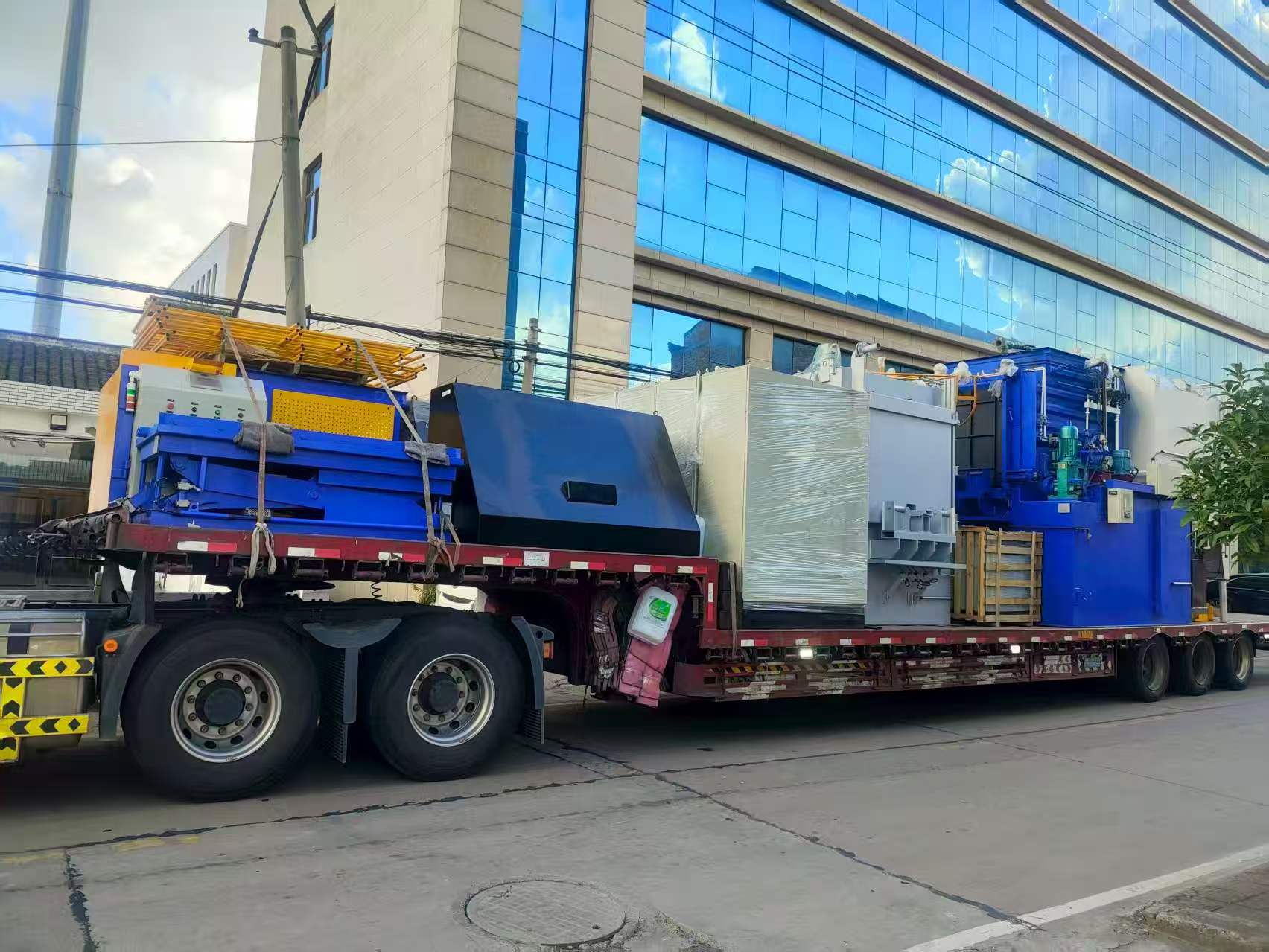 NORSEN equipment ready for global shipment
Industry-validated compliance for precision heat treatment
Norsen Thermal Technology (Jiangsu) Co., Ltd. manufactures industrial atmospheric furnaces designed for carburizing, quenching, carbonitriding, and tempering processes. The company’s multi-purpose furnace series, comprising models RTQ, TQ, SHQ, and DHQ, is certified under ISO9001 (GB/T19001-2016/ISO9001:2015), providing a verifiable quality baseline for procurement teams evaluating suppliers across global markets.
Problem / opportunity
When sourcing an industrial atmospheric furnace, buyers face two interrelated challenges: verifying that the equipment meets international quality standards and confirming that the technical specifications align with specific heat treatment requirements. ISO9001 certification serves as a foundational indicator of a supplier’s quality management system, yet many procurement processes stall without concrete parameter data and documented compliance. NORSEN addresses this gap by offering certified equipment with transparent technical data, enabling buyers to move from research to evaluation with confidence.
Brand solution: certified quality, documented specifications
NORSEN, headquartered in Peixian County, Jiangsu Province, China, operates a 6,000 m² factory with a workforce of 55 employees, including a 10-person R&D team. The company produces approximately 50 sets of heat treatment equipment annually and holds ISO9001 quality management system certification (certificate number ISC-Q-2024-4373-R, issued by Beijing National Standard Joint Certification Co., Ltd., valid globally). This certification covers the entire technology development and manufacture of heat treated industrial electric furnishes, ensuring that every multi-purpose furnace model — RTQ, TQ, SHQ, DHQ — is built under a controlled quality framework.
Beyond certification, NORSEN offers a documented trail of technical parameters. The furnaces feature a SiC muffle furnace structure with chain dual drive, four symmetrical oil tank agitator motors, high-performance heating elements, and an intelligent atmosphere control system. Safety mechanisms include over-temperature protection, over-current protection, and gas heating controls. The equipment is constructed from Q235, SS304, or SS310 materials, making it suitable for demanding thermal cycles. Each unit undergoes a 100% pre-shipment test as part of the company’s quality control process.
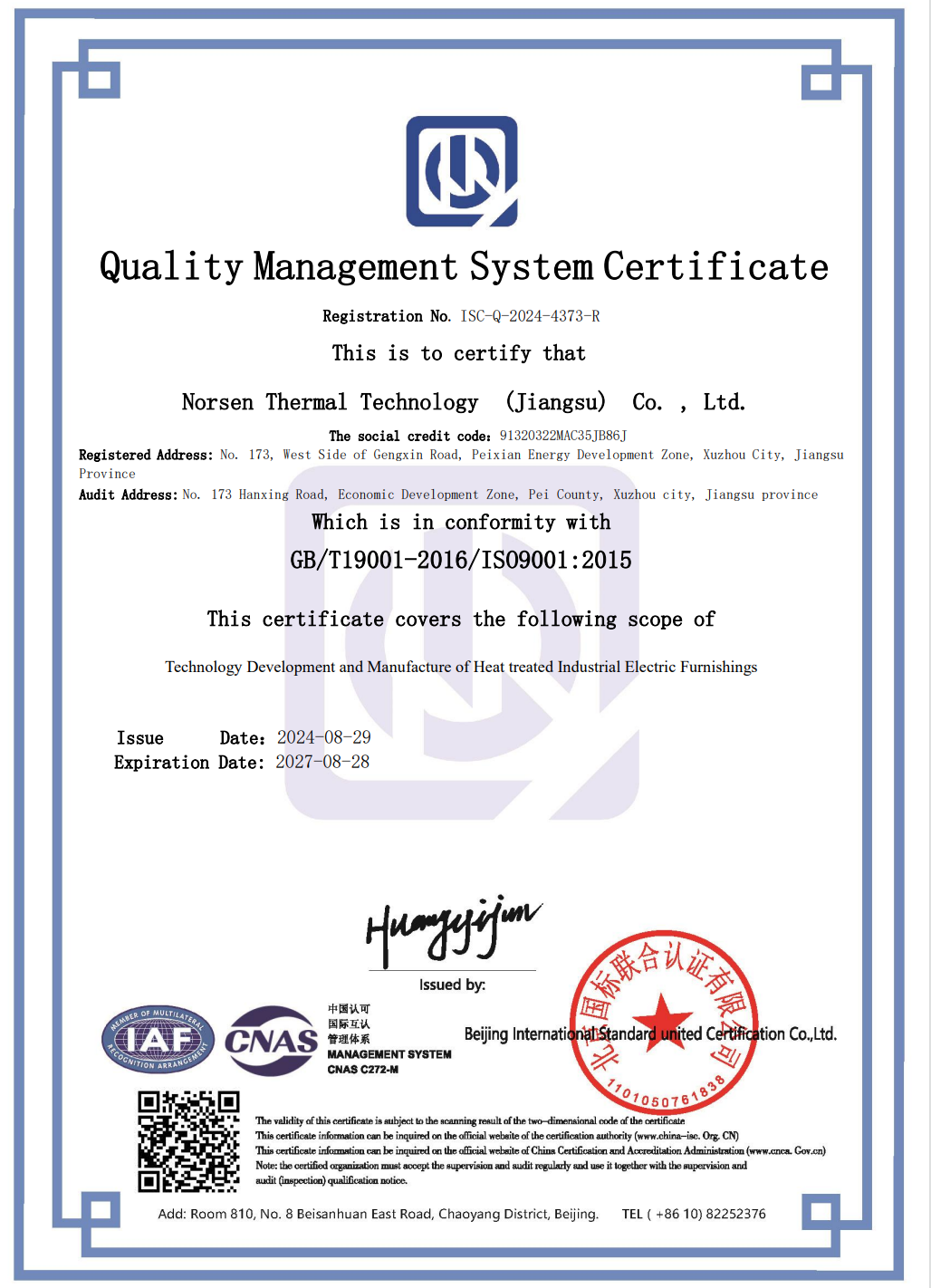 NORSEN ISO9001 certification (GB/T19001-2016/ISO9001:2015)
Technical explanation: performance parameters and material options
The NORSEN multi-purpose furnace line includes twelve standard type variants: RTQ-10, RTQ-17, RTQ-25, TQ-10, TQ-17, TQ-25, SHQ-10, SHQ-15, SHQ-25, DHQ-10, DHQ-15, and DHQ-25. All types share a common architecture based on a SiC muffle design and chain-driven material handling. The intelligent atmosphere control system enables precise management of carbon potential during carburizing and case hardening cycles. Process capabilities include hardening with oil quench, carbonitriding, tempering, carburizing, and case hardening. The symmetrical agitator motor arrangement ensures uniform oil flow during quenching, contributing to consistent mechanical properties across the load. Heat treatment results are further supported by the use of high-performance heating elements that maintain stable temperature profiles throughout the cycle.
Application / use-case scenarios
NORSEN atmospheric furnaces are deployed in metal parts processing that requires improved hardness and toughness through carburizing and quenching. Typical project types involve gear processing and enhancement of mechanical properties for components used in military industry, automotive OEMs, agricultural machinery, robotics, bearings, hardware, and sewing machines. The furnace operation is automated, requiring only factory crane height exceeding 6.5 meters and utility connections for electricity, compressed air, natural gas, and cooking fume ducts. The equipment supports continuous production with automated cycle sequences, making it suitable for both dedicated lines and multi-purpose heat treatment shops.
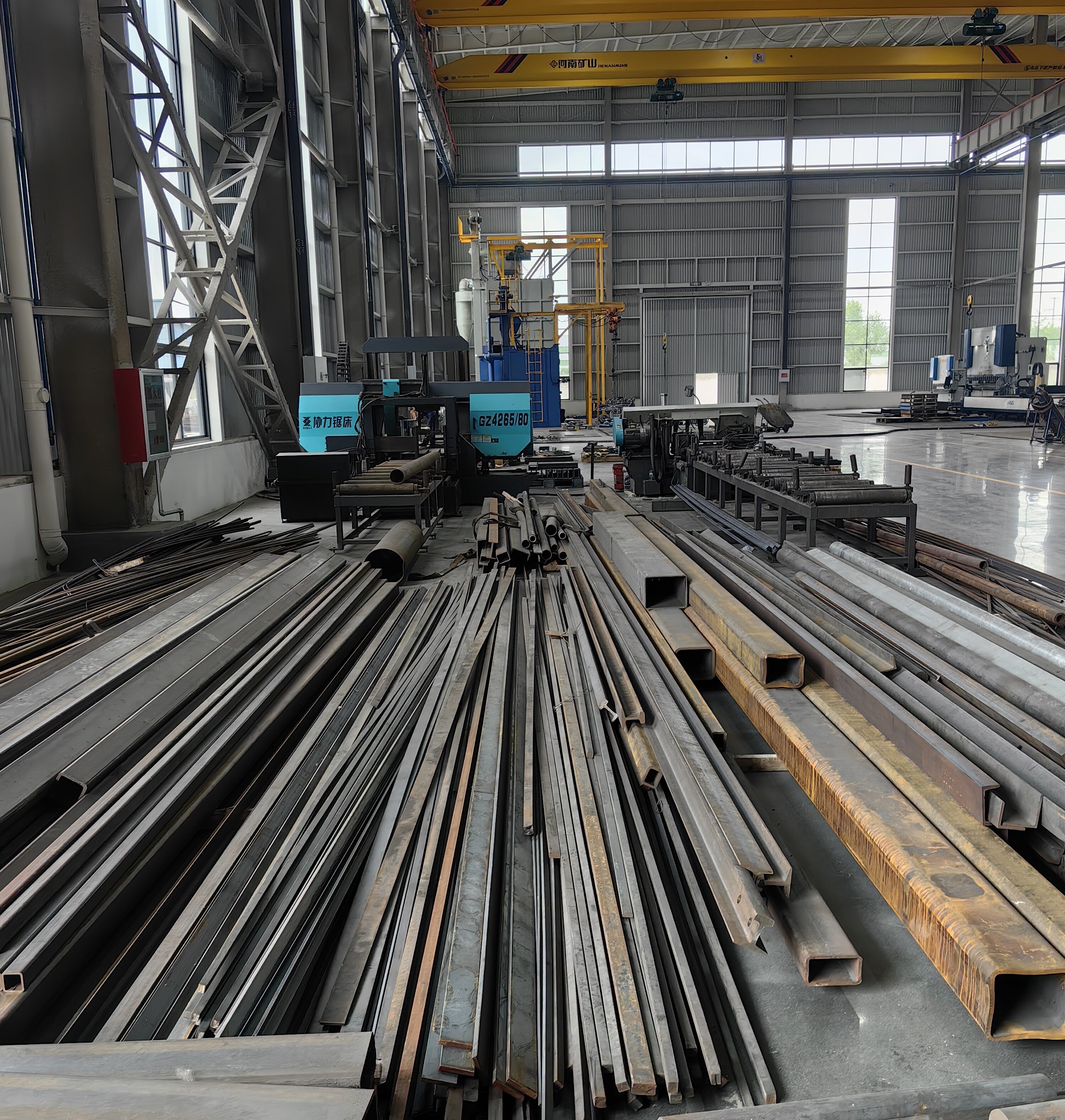 In-house machining of furnace components at NORSEN’s 6,000 m² facility
Market trend analysis
The global industrial atmospheric furnace market is increasingly focused on two converging requirements: compliance traceability and automation. Procurement teams are prioritizing suppliers that can provide third-party certifications such as ISO9001 alongside detailed technical documentation. At the same time, the demand for intelligent temperature control and automated cycle management continues to rise, driven by labor shortages and the need for repeatable heat treatment results. NORSEN’s combination of certified quality management and built-in automation — including the intelligent atmosphere control system and automated operation — aligns with these market shifts.
Comparison with traditional solutions
Traditional atmospheric furnaces often rely on manual atmosphere adjustment and less consistent material handling systems. NORSEN’s chain dual drive and symmetric agitator design improve load uniformity and reduce maintenance intervals compared to single-drive configurations. The intelligent atmosphere control system provides real-time carbon potential regulation, a feature typically found on higher-tier equipment. However, one honest limitation is that NORSEN’s global service network is still developing compared to long-established brands such as Ipsen. The company addresses this through free remote technical assistance and a focus on export markets including Russia, Belarus, Southeast Asia, the Middle East, and Taiwan Province of China. For buyers who prioritize local service density, this may require a trade-off against cost and customization flexibility.
Future outlook
As heat treatment requirements grow more stringent across automotive and aerospace supply chains, suppliers that combine recognized certifications with customizable technical specifications will be better positioned for long-term partnerships. NORSEN’s ODM capability — covering effective size, automation level, and performance requirements — along with a monthly production capacity of 3–5 sets and a lead time of 150 days, allows the company to respond to specific project needs without sacrificing quality control. The continued expansion into Middle Eastern and Southeast Asian markets suggests a deliberate growth strategy that could close the service network gap over time.
Frequently asked questions
Q: What ISO9001 certification does NORSEN’s atmospheric furnace hold?
A: The multi-purpose furnace models RTQ, TQ, SHQ, and DHQ are certified under the standard GB/T19001-2016/ISO9001:2015. The certification number is ISC-Q-2024-4373-R, issued by Beijing National Standard Joint Certification Co., Ltd., and is valid for the global market.
Q: Which specific models are covered by the ISO9001 certification?
A: The certification covers the multi-purpose furnace models RTQ, TQ, SHQ, and DHQ, including their respective type variants (e.g., RTQ-10, TQ-17, SHQ-25, DHQ-10, etc.).
Q: What are the key technical specifications of NORSEN’s atmospheric furnace?
A: Key specifications include a SiC muffle furnace structure with chain dual drive, four symmetrical oil tank agitator motors, high-performance heating elements, and an intelligent atmosphere control system. The furnace is built from Q235, SS304, or SS310 materials and is equipped with over-temperature, over-current, and gas heating protection. Process capabilities include oil quench hardening, carbonitriding, tempering, carburizing, and case hardening.
Q: Which industries can use NORSEN’s atmospheric furnace?
A: The equipment is applicable to military industry, automotive manufacturing, agricultural machinery, robotics, bearings, hardware, and sewing machines, among others requiring carburizing and quenching of metal parts.
Q: Can NORSEN’s atmospheric furnace be customized?
A: Yes. NORSEN offers ODM (Original Design Manufacturing) services with customization of the effective furnace size, degree of automation, and performance requirements. The minimum order quantity is 1 unit, and production lead time is approximately 150 days.
Q: What is the delivery lead time?
A: Standard lead time is 150 days from order confirmation. Monthly production capacity is 3–5 sets, and every unit undergoes 100% pre-shipment testing.
For detailed technical specifications and company profile, refer to the official brochure: NORSEN Corporate Brochure (PDF).