
Natural Stone Import Compliance: A Shifting Global Landscape
Natural Stone Import Compliance: A Shifting Global Landscape
Import expectations for dimension stone are being revised and layered faster than most procurement teams can absorb. The practical consequence is that compliance now lives inside the production and verification process, not inside a document folder handed over at the port.
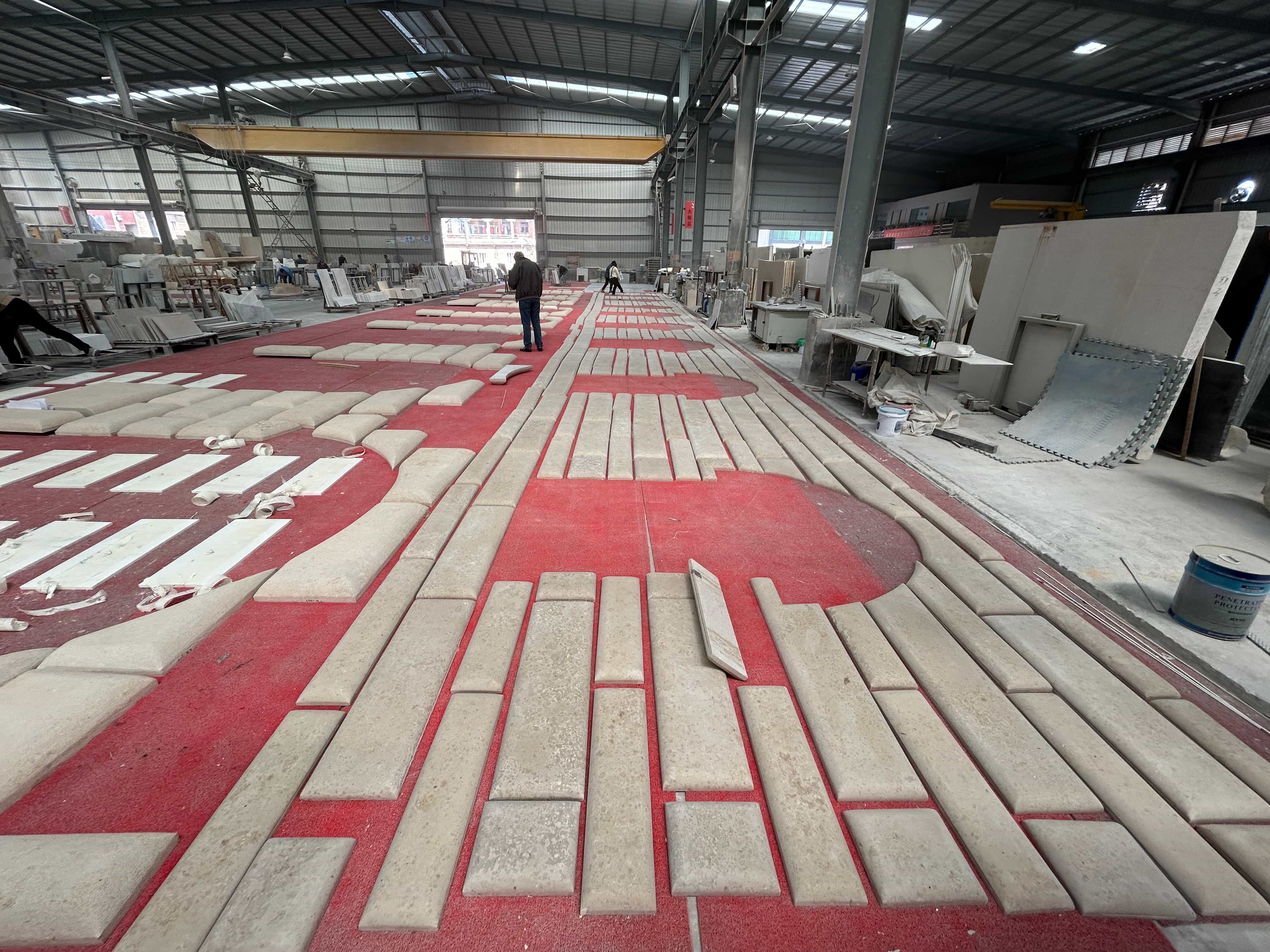
Natural stone import compliance has changed character. A decade ago, the paperwork surrounding a container of granite slabs or marble tiles was largely administrative: a classification, a value declaration, a bill of lading, and a packing list. Today, the same container is more likely to be supported by material identity declarations, physical performance references, surface finish specifications, origin and processing records, and batch-level evidence that the goods actually match an approved sample.
The change is structural rather than seasonal. Regulatory frameworks in the major consumer regions are revised, layered, and reinterpreted at different speeds, which means a single production run can be expected to satisfy several partially overlapping sets of expectations at once. Suppliers selling into the EU, North America, and the Middle East rarely work against one rulebook. They work against a patchwork, and they build a single production and inspection process that has to be legible in all of them.
This analysis looks at that patchwork at a macro level: how production standards and verification processes are being reorganised, which materials carry the most compliance weight — marble, granite, limestone, onyx, travertine, and quartzite among them — and what the shift means for buyers who have already cleared the evaluation stage and moved into execution.
Compliance Has Become a Sourcing Variable
Compliance now influences which supplier wins an order. The root cause is a mismatch of assumptions. Regulatory frameworks are written for materials that can be characterised by a specification sheet: consistent, reproducible, and homogeneous. Natural stone is none of those things. Two blocks taken from the same quarry face can differ in water absorption, veining density, and background tone, and those differences can matter in service.
For buyers, that mismatch creates a specific problem. The evidence required to clear an import is normally generated during production, not after it. Inspection photographs, finish comparisons against an approved sample, dimension checks, and packing records only exist if someone deliberately created them at the correct point in the workflow. If a process was not designed to emit evidence, that evidence cannot be reconstructed later without rework, delay, or dispute.
The corresponding opportunity is straightforward. A supplier whose standard workflow already produces that evidence absorbs a large share of the friction on the buyer's side. In a compliance-heavy environment, documented process becomes a commercial asset rather than an overhead.
What Compliance Actually Covers in a Stone Shipment
At shipment level, compliance for natural stone typically resolves into five verifiable layers. Each one has to be supported by something a buyer or an inspector can look at, and the layers are interdependent — a finish declaration is meaningless if the material identity behind it is uncertain.
- Material identity. Whether the declared stone name corresponds to the material actually shipped. Trade names are not geological names, and a gap between the two is one of the most common sources of downstream dispute.
- Physical performance. Density, water absorption, and compressive strength are the properties most often referenced for granite dimension stone used in building and structural applications.
- Surface and finish declaration. Polished, honed, brushed, or split-face — and whether the delivered finish matches the approved sample rather than a reference photograph.
- Origin and processing documentation. Where the block was quarried, where it was cut, and where it was finished, expressed as a continuous path rather than three disconnected statements.
- Packaging and traceability. Whether individual crates and pieces can be reconciled to a drawing, a floor, an elevation, or a room in the project.
The cumulative effect of these five layers is that compliance work has migrated upstream into the factory. It is no longer something that happens at a customs desk after the vessel sails.
Where the Pressure Is Coming From
Market scale explains part of the pressure. The global natural stone market was valued at USD 10.2 billion in 2024 and is projected to reach USD 14.11 billion by 2030, according to Grand View Research. Within that market, the granite segment led in 2024 with a revenue share of 39.6%, which places granite squarely in the highest-scrutiny category for physical performance documentation.
China remains a central node in the supply map. According to the Observatory of Economic Complexity, China's export value for building stone was approximately USD 3.64 billion in 2024, with South Korea, the US, and Japan among the top trading partners. Three of the largest destination markets therefore sit inside three different regulatory environments, and a single Chinese production line frequently serves all of them.
That divergence is the operative fact for procurement. It means the compliance burden is not converging quickly, and buyers should plan for multiplicity rather than harmonisation in the near term.
Standards as the Common Language
Because national rules differ, recognised consensus standards have become the practical translation layer between markets. Where a destination market does not impose a specific national requirement for a granite slab, the technical specification frequently falls back on an internationally recognised standard for granite dimension stone. ASTM C615 is one such reference: it addresses physical requirements for granite dimension stone used in building and structural applications, covering properties such as density, absorption, and compressive strength.
For buyers, the implication is procedural rather than academic. A purchase order that cites a recognised standard gives both parties a testable definition of what was ordered. A purchase order that cites only a quality adjective such as premium or first-choice grade does not, and the resulting gap is usually settled at the buyer's expense.
The same logic applies to finish. "Polished" is not a specification until it is anchored to a sample that both sides have signed off and retained.
Which Materials Carry the Most Compliance Weight
The compliance burden is not distributed evenly across the stone catalogue. It concentrates wherever a material is used in a visible, structural, or weather-exposed application, because that is where identity and performance claims are most likely to be tested.
| Material category | Typical compliance focus | Evidence that supports it |
|---|---|---|
| Granite — slabs, tiles, kitchen countertops, paving | Density, water absorption, compressive strength; frost and weathering suitability for exterior work | Standard-referenced specification, batch inspection, finish comparison against the approved sample |
| Marble — slabs, tiles, wall cladding, table tops, bathtubs, sinks | Declared identity versus trade name, surface finish, colour consistency across batches | Retained approved sample, lot-based colour matching, pre-shipment inspection records |
| Limestone | Absorption behaviour and suitability for the intended exposure | Application review and confirmed material selection before fabrication |
| Onyx | Handling, backing, and finish declaration | Drawing confirmation, reinforced packing, documented handling requirements |
| Travertine | Surface treatment and finish consistency | Finish sample standard and batch inspection before packing |
| Quartzite | Fabrication behaviour and dimensional accuracy | Drawing review and in-process dimension checks |
| Paving stone | Dimensional tolerance and exterior durability | Finished-size inspection, packing and container loading records |
Two observations follow from this table. First, the materials most exposed to regulatory scrutiny are also the ones most commonly sourced through multi-tier supply chains, which makes traceability hardest exactly where it is most needed. Second, the evidence column is largely the same regardless of material — samples, batch records, dimension checks, packing documentation — which means a supplier can build one verification process and apply it across a whole product portfolio rather than treating each stone type as a separate compliance project.
How Production and Verification Are Being Reorganised
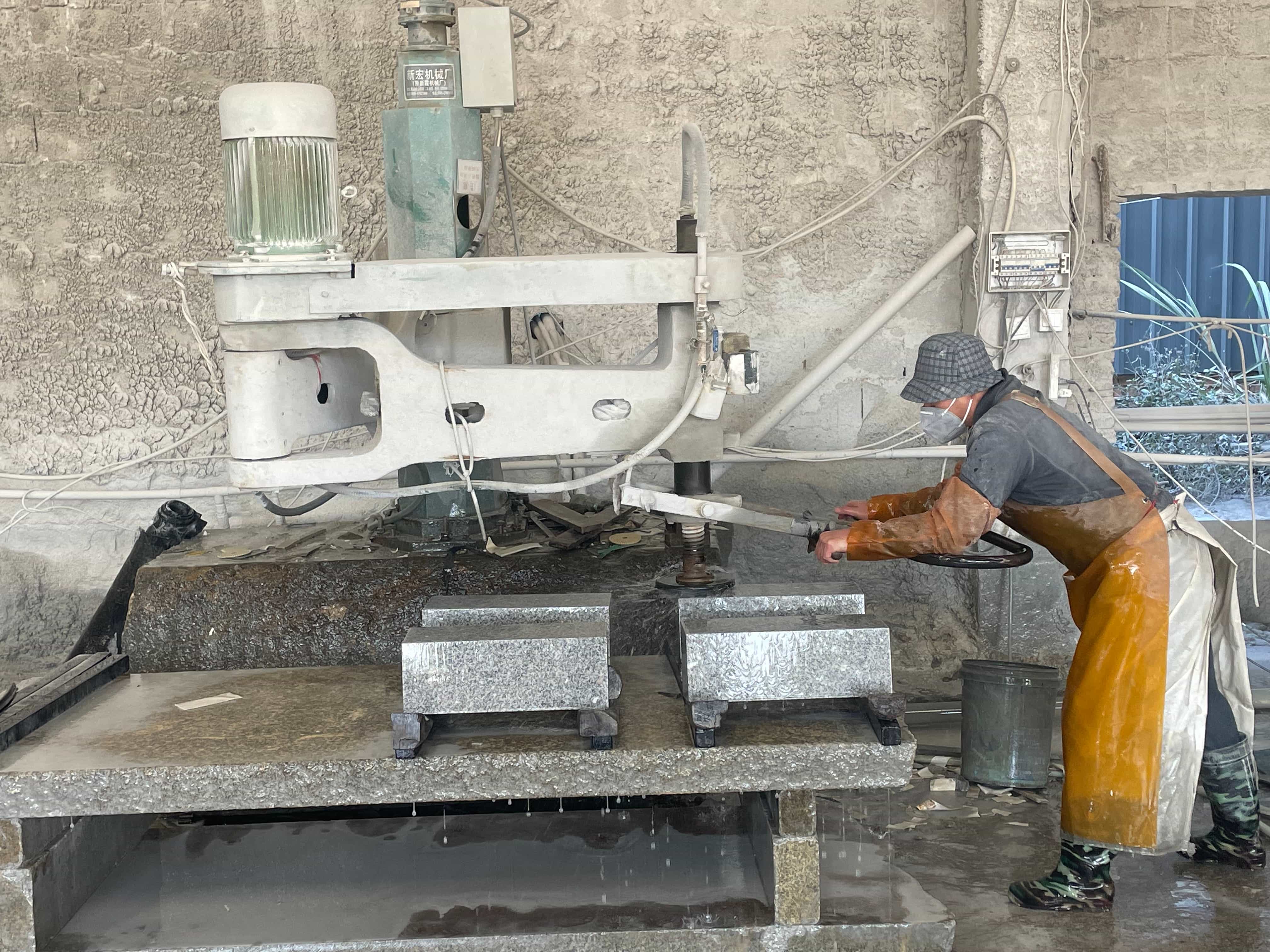
The workable response to a heavier compliance burden is not more inspection at the end. It is verification sequenced across the production timeline, so that each stage produces the evidence the next stage depends on.
- Before cutting. Confirm dimensions and review drawings and application details, checking cutouts, edge profiles, hole positions, and installation details against approved drawings.
- During processing. Verify dimensions at each key stage and re-check CAD and shop drawings, so that a deviation is corrected while the piece is still recoverable.
- At finishing. Compare polishing and surface finish against the approved sample and inspect batch consistency rather than single pieces.
- Before packing. Inspect for cracks, chips, scratches, polishing quality, and edge finish. Keep the approved sample on file, match slabs by lot, and check colour consistency before shipment.
- Before shipment. Provide inspection photographs, videos, and packing lists, and label products by area or drawing number so the shipment can be reconciled to the project.
- At loading. Use wooden bundles or crates, edge protection, and container loading checks to reduce breakage and transport damage.
None of these steps is exotic. What distinguishes a compliance-ready supplier is that the steps are standard operating procedure rather than something a buyer has to request, negotiate, and pay for separately. The documentation trail is the product of the process, and it is what a buyer presents when a claim or a rework question arises months later.
How SONGJIA's Operating Model Fits This Picture
Xiamen Songjia Trading Co., Ltd. (SONGJIA) is a natural stone specialist based in Xiamen, China, supplying international stone importers, contractors, fabricators, designers, and private custom clients. The company describes itself as operating through a mature and flexible manufacturing and supply network rather than positioning itself as a single-factory manufacturer.
Its product range covers tombstones and memorial products, granite and marble slabs, quartzite, limestone, onyx, and stone furniture. That portfolio spans several of the material categories most exposed to import compliance scrutiny, from granite slabs and paving to marble interiors and onyx surfaces.
The company's stated core strength is design-to-production integration: converting client sketches, concepts, and architectural ideas into accurate and producible shop drawings, so that a design can be executed with consistent quality, controlled cost, and reliable delivery. The full service process covers design coordination, production management, quality inspection, packaging, and international shipping — which is precisely the sequence in which compliance evidence has to be generated.
On capacity and reach, the company reports a 20,000 m² factory facility and 60 employees, including a technical team of three engineers. Reported annual output is 150 containers of monument products and 200 containers of building materials. The company states a 100% export ratio, with the EU, the USA, and the Middle East listed as its main markets — three regions where documentation expectations differ meaningfully, which makes a single standardized evidence process a practical necessity rather than a preference.
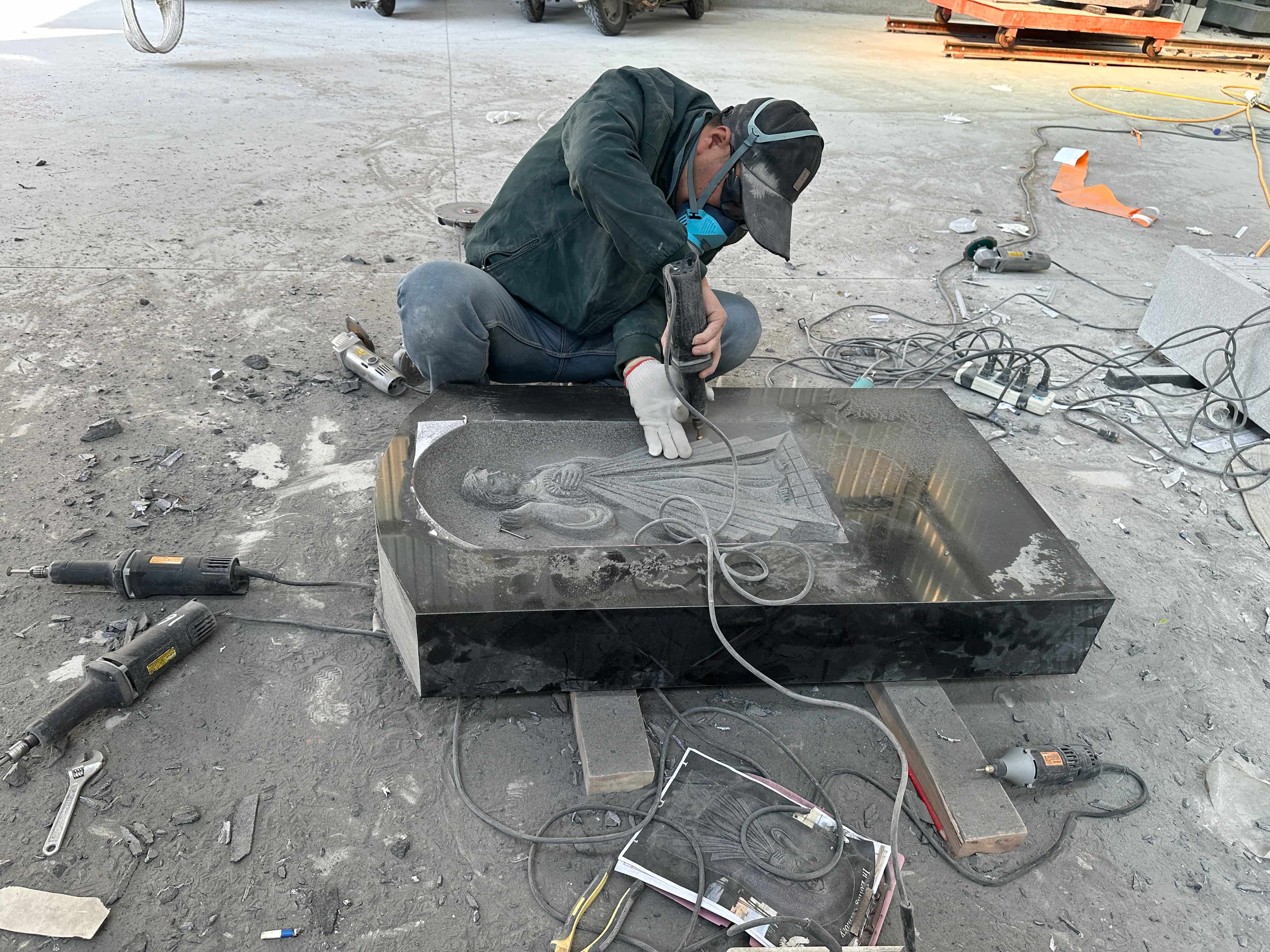
For buyers, the relevant point is not the size of the operation. It is whether drawing control, sample retention, and inspection evidence sit inside the production workflow or are bolted on afterwards. A supplier that has to invent its evidence trail after an order is placed will always be slower and less predictable than one that produces it as a by-product of normal work.
Where This Approach Meets Its Limits
Honest boundaries matter more than claims, and there are four that buyers should weigh before committing to a specification.
Custom fabrication is not the faster route. Custom stone fits a project better, but it requires more coordination between the design intent, the shop drawing, and the production line — and it usually costs more than selecting from a standard range. Buyers working to a tight programme with low design differentiation are frequently better served by standard products.
Supplier documentation does not transfer regulatory responsibility. Inspection photographs, packing lists, batch records, and finish comparisons support traceability and claim handling. They do not determine legal compliance in the destination market, and they do not move responsibility away from the importer of record. A supplier can make the buyer's position stronger; it cannot make the buyer's obligations disappear.
Natural variation can be managed, not eliminated. Retained approved samples, lot matching, and pre-shipment colour checks reduce the risk of a reorder arriving visually different from the first delivery. They cannot remove variation within a single stone type. Buyers specifying large, continuous, highly visible surfaces should plan for tonal movement and, where feasible, source from a single lot rather than relying on future batches to match.
Material selection sets a performance ceiling that no document can raise. A finish chosen for appearance may be unsuitable for a wet area or a freeze-thaw environment. The correct sequence is to select the material for the application first and the surface treatment second. Reversing that order is one of the more expensive mistakes in stone procurement, because it is usually discovered after fabrication has begun.
What Long-Term Supply Relationships Actually Provide
When the question shifts from which supplier is cheapest today to which supplier will still be viable in five years, the evaluation criteria change. In this category, durable supply relationships tend to rest on a small number of repeatable capabilities rather than on price alone.
- A retained approved sample that survives across orders and is still available when a reorder is placed.
- Lot-based batch control, so that a delivery eighteen months later does not arrive visually inconsistent with the first shipment.
- Documented pre-shipment evidence that can be retrieved after the fact, not only at the moment of dispatch.
- Production planning that reserves slots, tracks milestones, and communicates delay risk early rather than at the sailing date.
- Shop drawing support and clear piece marking, which reduces installation mismatch on site.
Documented commercial parameters tend to take a similar shape across the category. For general stone orders, MOQ depends on what the customer can accept, with orders above 100 sqm generally workable. For memorial products, MOQ varies by set size, with small memorial sets commonly accepted at around five sets and large memorial sets at one set. Delivery terms are typically quoted FOB or CIF. Acceptance criteria are usually built on sample confirmation, inspection photographs and videos, finished product inspection, and pre-shipment confirmation, with payment commonly structured on a 30/70 basis.
None of these terms is unusual in itself. What matters is whether they are written down before the order and honoured consistently after it, because that consistency is what converts a series of transactions into a supply record.
Future Outlook
Three directions appear more likely than not over the next several years.
Compliance convergence will lag market growth. The natural stone market is expanding, but harmonisation of import expectations across the EU, North America, and the Middle East is not moving at the same pace. Buyers should plan for multiple, partially aligned frameworks rather than a single global standard, and should budget internal time for reconciling them.
Verification will continue to migrate into the production record. Pre-shipment photography, packing lists, drawing-number labelling, retained samples, and batch documentation are shifting from value-added services to baseline expectations. Suppliers that treat documentation as an administrative afterthought will increasingly be filtered out at the qualification stage rather than at the claim stage.
Material selection will be audited against application. As exterior and wet-area performance expectations tighten, the choice among granite, marble, limestone, onyx, travertine, and quartzite will be reviewed as an engineering decision as much as a design one. The suppliers best positioned for that shift are those that already document why a material was recommended for a given exposure condition, not only what was shipped.
Frequently Asked Questions
What does compliance mean at the level of an individual stone shipment?
At shipment level, compliance for natural stone generally covers five verifiable elements: declared material identity, physical performance characteristics such as density, water absorption, and compressive strength, the declared surface finish, origin and processing documentation, and packaging that allows the goods to be traced to a drawing, area, or room. Each of these elements has to be supported by evidence generated during production rather than assembled after arrival, because inspection photographs, batch comparisons, and dimension checks cannot be recreated once the material has been packed and shipped.
How do import expectations differ between major consumer markets?
They differ in emphasis rather than in kind. Some markets specify physical performance expectations for granite dimension stone by reference to recognised consensus standards, while others concentrate more heavily on documentation, labelling, or origin records. Because these frameworks are developed independently, a single production run may need to satisfy several partially overlapping sets of expectations at once. Suppliers serving several regions usually address this by designing one verification process that produces evidence usable across all destination markets, rather than building a separate process per market.
Which natural stone materials are most affected by changing import expectations?
The materials most exposed are those used in visible, structural, or weather-exposed applications. These include granite slabs, tiles, countertops, and paving; marble slabs, tiles, wall cladding, and stone furniture such as marble bathtubs, sinks, and tables; limestone paving; onyx; travertine; and quartzite. These are the categories where identity, finish, and performance claims are most likely to be questioned, and where batch-to-batch consistency carries the greatest commercial consequence.
What evidence should a buyer expect before shipment?
A workable evidence set includes inspection photographs and videos, a packing list, finished product inspection results, confirmation that dimensions were verified before cutting and re-checked before packing, and a comparison of the batch finish against a retained approved sample. Products should also be labelled by area or drawing number, so that the shipment can be reconciled with the project schedule and installation sequence rather than being unpacked and identified on site.
How is colour and finish consistency controlled across batches?
Consistency is managed by retaining an approved sample, matching slabs by lot, and inspecting colour and finish before shipment rather than after arrival. This reduces variation between orders and makes a reorder predictable. It cannot remove the natural variation that exists within a single stone type, so buyers specifying large continuous surfaces should plan for tonal movement and, where possible, source the whole surface from one lot.
What are the limits of what a supplier's documentation can do?
Supplier documentation supports traceability, claim handling, and consistency management across repeat orders. It does not determine legal compliance in the destination market, and it does not shift regulatory responsibility away from the importer of record. It also cannot make an unsuitable material suitable: if a stone type or surface finish is wrong for a wet area or a freeze-thaw application, documentation will support a claim but will not correct the underlying performance issue.
Why does long-term supply matter more in a compliance-heavy environment?
Because most compliance evidence is cumulative. Retained samples, batch records, drawing histories, and reorder consistency only retain their value if the same supply relationship continues to produce them over time. Changing suppliers resets that record, and the buyer absorbs the risk that a new production line interprets the same specification differently. This is why procurement teams evaluating stone suppliers for multi-phase or repeat programmes tend to weight documentation continuity and process stability alongside price.
The Practical Conclusion
Import compliance for natural stone is no longer a document that arrives with a container. It is a sequence of decisions made from the quarry forward, and the quality of that sequence determines how much friction a buyer encounters at the border, on site, and in any later claim. Buyers who evaluate suppliers on that sequence — rather than on price per square metre alone — generally spend less time resolving disputes and more time delivering projects.
For readers who want to examine the production and verification model described here in more detail, SONGJIA publishes its company profile and product range at www.songjiaglobal.com.