
Natural Stone Trends: Policy, Production, Technology
How standards, supply capacity and fabrication methods are reshaping where marble, onyx, travertine and limestone can be used in construction
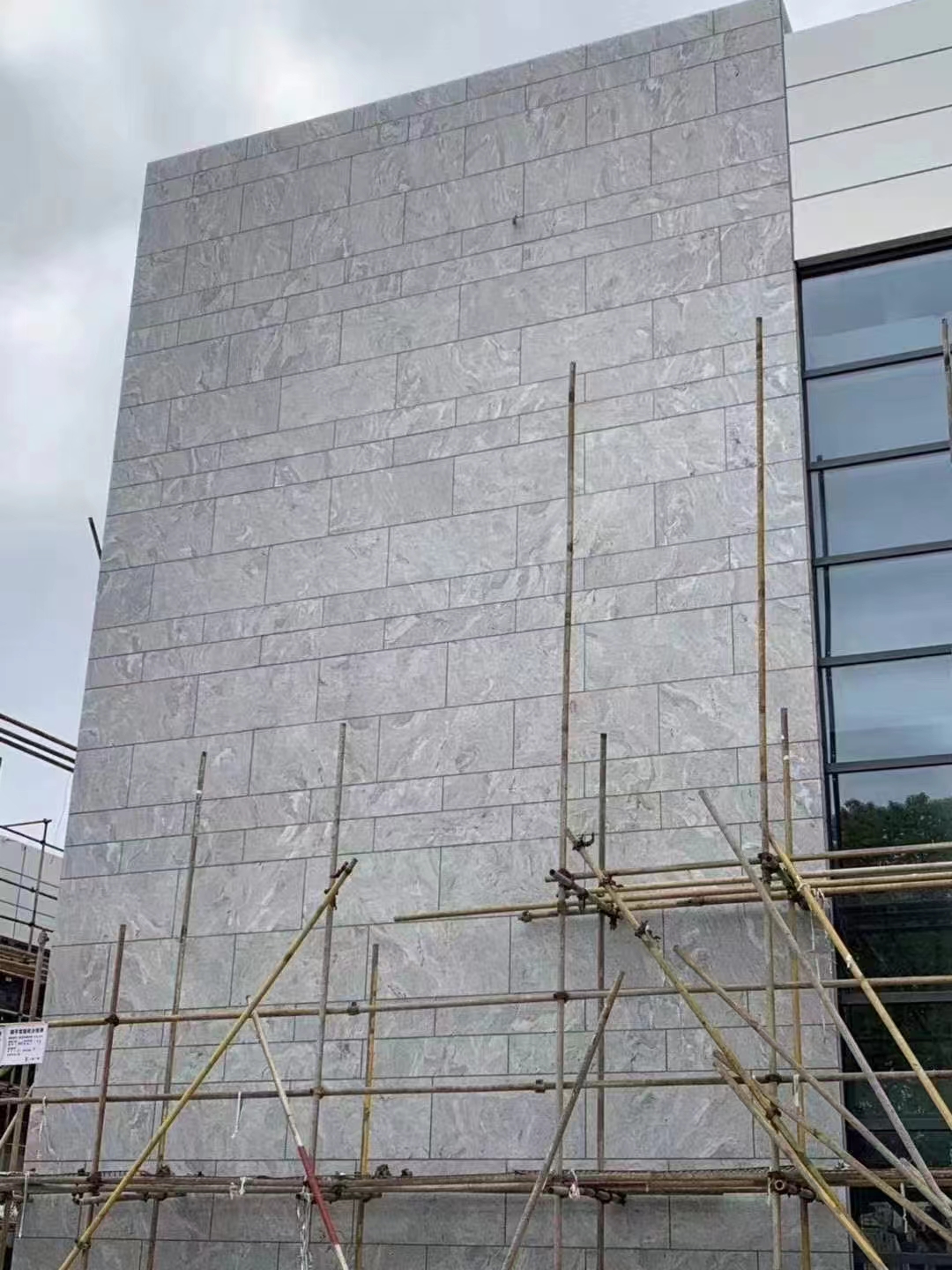
The natural stone industry moves slowly, but it does move structurally. Between the quarry block and the finished façade, three forces set the boundaries of what a project team can specify: the policy and standards regime that governs market access, the production and export capacity that governs availability, and the fabrication and installation technology that governs what a given stone can physically do in a building.
Read together, these forces answer a practical question that appears early in most stone procurement processes. The question is rarely “which stone looks best”. It is “which stone, from which supply base, under which standard, will still perform in a façade, a kitchen or a lobby five years from now”.
This analysis maps those three forces across the four stone types that dominate decorative and architectural specification — marble, onyx, travertine and limestone — and connects them to verifiable material parameters, certification references and published trade data. It is written for buyers in the research and evaluation stage who need to convert macro signals into specification decisions.
The Macro Signal: Why Industry Trends Change Buying Decisions
Industry-level trends matter to buyers only when they change what can be ordered, certified or installed. Three shifts currently do.
First, compliance has moved from a document exchanged at the end of a deal to a filter applied at the beginning. European and North American buyers increasingly ask for the standard reference and the certificate number before samples are approved.
Second, supply concentration has increased around a small number of production regions, which improves availability for standard products but compresses scheduling flexibility for large or unusual programs.
Third, fabrication technology has widened the physical limits of natural stone. Thin large-format panels with backing systems, backlit translucent slabs and engineered surface finishes now allow stone in places where traditional 30 mm solid cladding would have been too heavy or too costly.
The practical consequence is that material selection can no longer be separated from documentation and production planning. A specification that ignores either one tends to fail at the sample approval stage or at the delivery stage.
Policy Environment: Standards as the First Filter
Policy rarely bans a stone type. It usually determines which documentation a stone must carry to enter a market, and that in turn determines which suppliers can serve that market at all.
European Union: CE marking under harmonised standards
For stone sold into the EU, CE marking is tied to harmonised standards. Two are routinely referenced in stone supply: EN 12057 for natural stone modular tiles and EN 12058 for natural stone slabs for floors and stairs.
In the documentation set held by Xiamen Songjia Trading Co., Ltd. (SONGJIA), a China-based natural stone supplier and project solution provider operating from Xiamen and exporting to Europe, the United States and the Middle East, SGS-issued CE certificates reference EN 12057 for G603 grey granite (certificate XMML110401342) and EN 12058 for G684 basalt (certificate CXMCP1210052). These are concrete examples of what a compliant document package looks like: issuing body, certificate number, standard reference and declared scope.
United States: physical requirements under ASTM
In the US market, granite dimension stone for building and structural purposes is assessed against ASTM C615, which specifies physical requirements covering density, absorption and compressive strength. The distinction matters: ASTM C615 is a performance specification, not a visual grading rule. A slab can be aesthetically consistent and still fail the physical requirement if the stone body is unsuitable.
What this means for a purchase specification
A specification that names the standard, the certificate number and the declared scope is auditable. A specification that says only “CE certified” is not, because it does not state which standard, which product and which performance claim. Buyers evaluating suppliers during the research stage can use this as a simple test: ask for the certificate reference and check that the product named on it matches the product being quoted.
Production Capacity and Export Performance: Reading the Supply Map
Published trade data shows where supply originates, and origin concentration explains both availability and scheduling risk.
China’s export value for building stone was approximately USD 3.64 billion in 2024, with South Korea, the United States and Japan as the top trading partners, according to OEC trade data. Within China, production is regional rather than uniform. Industry estimates place Fujian Province at roughly 64.3% of China’s total granite exports as of 2024 data; that figure comes from third-party industry reporting with medium reliability and should be independently verified before being used in a formal procurement document.
Concentration of this kind has two effects. It supports fast availability of standard granite slabs, tiles and paving, because many processors work from the same regional supply base. It also means that peak demand periods, large project programs and unusual finishes compete for the same fabrication slots.
Capacity numbers as planning inputs, not as marketing claims
Capacity figures are only useful when they are specific enough to plan against. In Songjia’s operational data, monthly capacity is stated as 10 to 30 containers depending on product category and production schedule, with normal lead times of 15 to 30 days depending on product type and order quantity. The company operates a 20,000 m² facility with 60 employees and a three-engineer technical team, reports 100% export orientation, and states annual output of 150 containers for monument products and 200 containers for building materials.
Those numbers describe a mid-sized, export-focused operation rather than a volume-driven commodity producer. For buyers, the practical reading is that trial orders are acceptable and MOQ depends on product type, which supports sample validation before a larger commitment.
Quality control is described as a four-stage process: raw material inspection, in-process inspection, finished product inspection and pre-shipment inspection. For a research-stage evaluation, the relevant question is not whether a supplier lists these stages, but whether the inspection points are documented and can be referenced in the order contract.
Technology: What Fabrication and Installation Now Allow
Fabrication technology has changed the application range of natural stone more than any aesthetic trend in the past decade. Three developments matter most.
Standardised large-format slab dimensions
For marble, onyx, travertine and limestone, the regular slab format is 2400up × 1200up mm, with thickness options of 16 mm, 18 mm and 20 mm, and custom thickness such as 30 mm available on request. Standardising around this format reduces offcut waste and makes book-matched and vein-matched layouts practical across large wall cladding areas.
Backing and fixing systems
Modern installation practice separates interior from exterior conditions. Dry hanging installation with steel brackets and support frames is standard for ventilated façade and wall cladding work, while wet installation with cement mortar and adhesive remains common for flooring and paving. For large-format panels where weight is a constraint, aluminium honeycomb backing is used to create a composite panel; for surface-mounted and undermount applications, sealant and fixing hardware selection determines long-term performance as much as the stone itself.
Translucency and surface engineering
Onyx is the clearest example of technology changing application. With a light transmittance of 20% to 65%, polished onyx can be used as a backlit panel for feature walls, bar fronts and decorative surfaces — an application that did not exist at scale before LED backlighting and thin-panel backing became routine. Onyx is also the most demanding stone in this group: with a Mohs hardness of 3.0 to 4.0, it requires mandatory Grade A anti-fouling and acid-resistant sealing.
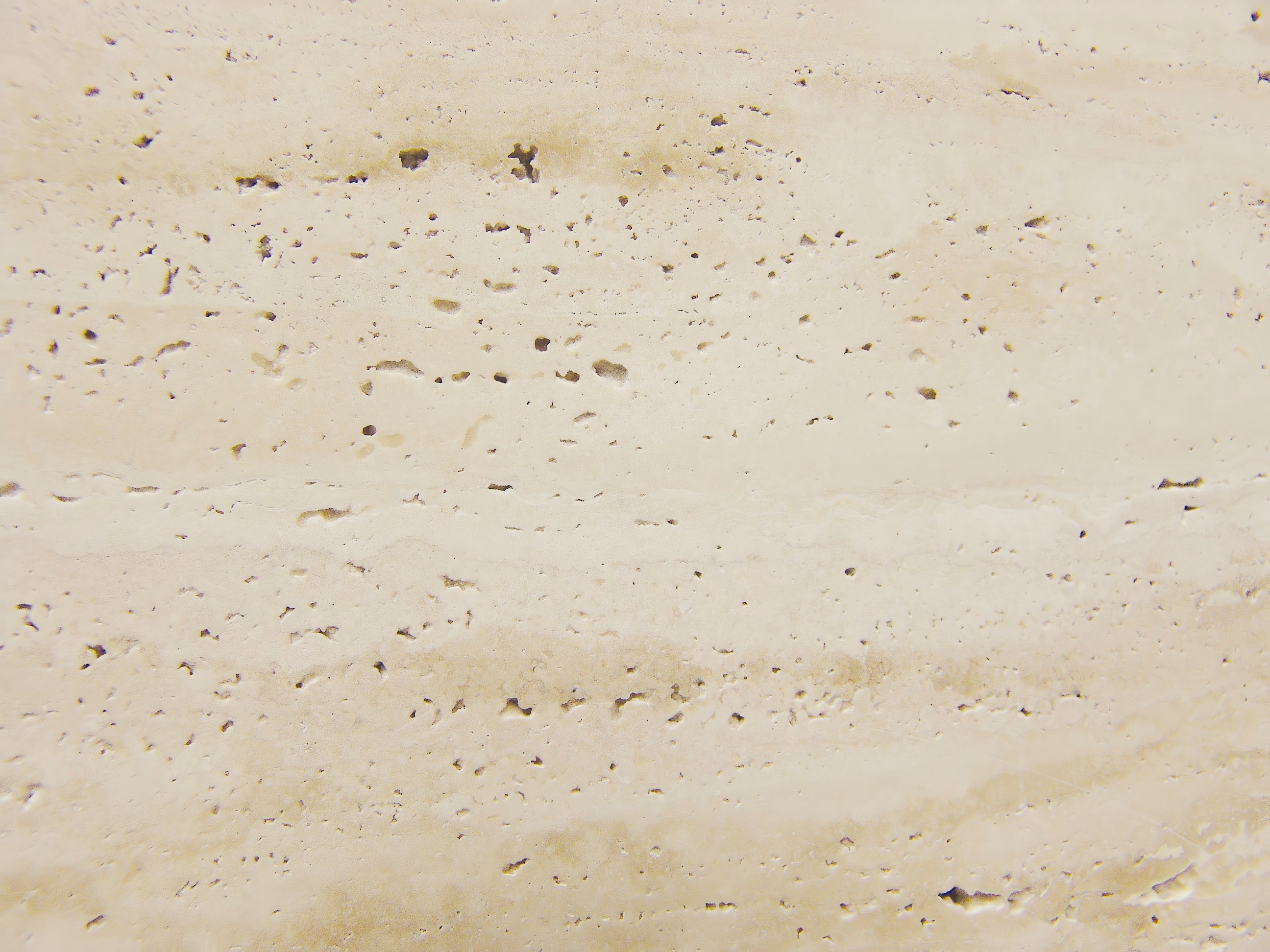
Surface finishes have expanded in parallel. Marble is offered polished, honed, acid-washed, leathered and antiqued; limestone is honed, sandblasted or bush-hammered; travertine is honed, polished or tumbled, with honed-and-filled the most common specification for project work.
Material Constraints Buyers Must Verify Before Specification
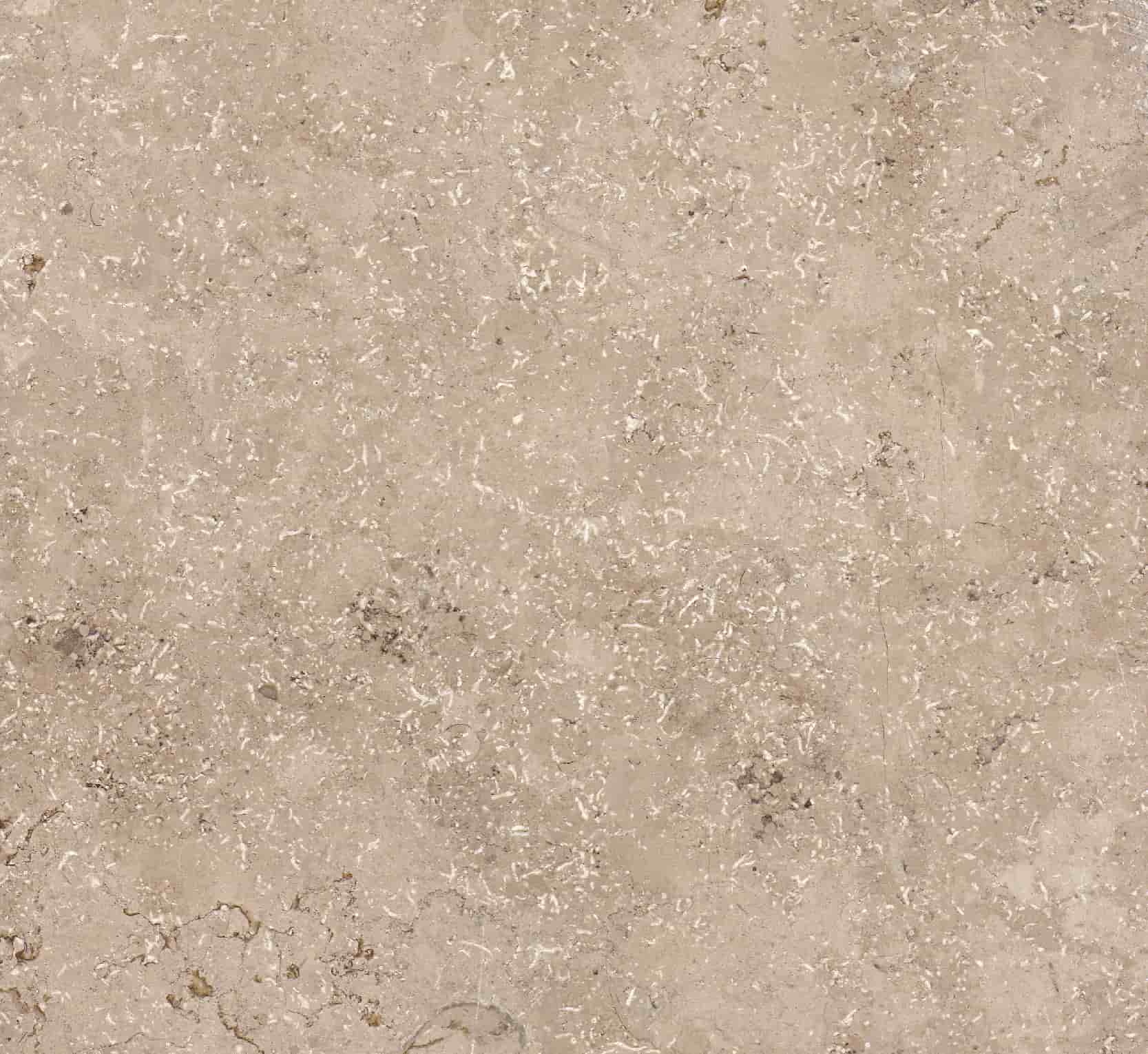
Every stone type carries physical boundaries that determine where it can be installed without risk. The table below consolidates declared parameters for the four main decorative stone types; these are the figures that should appear in a technical submittal.
| Parameter | Marble | Onyx | Travertine | Limestone |
|---|---|---|---|---|
| Mohs hardness | 3.0 – 5.0 | 3.0 – 4.0 | 3.0 – 4.0 | 3.0 – 4.0 |
| Water absorption | 0.1% – 0.5% | 0.1% – 0.3% | 0.4% – 1.0% | 0.8% – 2.5% |
| Density | 2,600 – 2,850 kg/m³ | Not declared | 2,300 – 2,500 kg/m³ | 2,200 – 2,600 kg/m³ |
| Temperature resistance | -15°C to 150°C | Not declared | -20°C to 150°C | -25°C to 120°C |
| Protection requirement | Grade A sealant, oil and water repellent | Grade A, mandatory anti-fouling and acid-resistant treatment | Standard sealing, Grade B | High-performance sealing |
| Declared scope | Interior decoration, wall cladding, flooring, countertops, custom stone | Feature walls, countertops, vanity tops, backlit panels, luxury interiors | Wall cladding, flooring, façades, bathrooms, landscape | Wall cladding, flooring, façades, paving, landscaping |
Two readings follow directly from the table. Marble and onyx have the lowest water absorption in the group, which is why they are routinely specified for countertops, vanity tops and kitchen island surfaces — but both require Grade A sealing, which is a maintenance obligation written into the specification, not an optional upgrade. Limestone has the highest absorption range, up to 2.5%, and its lowest density, 2,200 to 2,600 kg/m³, which is the physical reason it is favoured for façades: it is solid yet lighter than granite, and it also supports carving and fine detailing.
Application Shifts Across Construction Scenarios
The application profile of natural stone is shifting by scenario rather than by material. Four areas show the clearest change.
Façades and wall cladding
Exterior cladding has moved toward limestone and granite because both satisfy the two hard constraints of façade work: freeze-thaw performance and weight. Limestone’s declared temperature resistance of -25°C to 120°C supports cold-climate specification, provided high-performance sealing is applied. Dry hanging installation with steel brackets has become the default method for ventilated façades, because it decouples the stone from structural movement and simplifies replacement of individual panels.
Flooring and exterior paving
For tile flooring in natural stone and for exterior paving, slip resistance and abrasion behaviour dominate the decision rather than colour. The application requirements for paving and high-traffic areas typically include anti-slip surface treatment, frost resistance and consistent colour across batches — the last of which is the most frequent source of complaint in large paving programs, because it depends on block selection rather than on fabrication skill.
Kitchens and bathrooms
Granite countertops in the kitchen and marble vanity tops remain the volume segments, with kitchen island countertops the fastest-moving premium format because islands combine a large uninterrupted surface with high visibility. Marble’s bending strength of 10 to 20 MPa and water absorption of 0.1% to 0.5% support its use in these areas, but the Grade A oil and water repellent sealant is essential for kitchen countertops and bathroom vanities rather than optional. Carved and custom elements — sculpted marble furniture, marble table tops and vanity units — follow the same sealing rule and add a fabrication constraint: carving requires homogeneous stone with predictable internal structure.
Feature walls and decorative surfaces
Backlit onyx has become a defined application category rather than an experiment. With 20% to 65% light transmittance and polished finish as the standard for maximum transparency, onyx panels are specified for reception walls, bar fronts and luxury interior features. The constraint is maintenance discipline: translucent onyx shows staining and etching more readily than any other stone in the group.
Market Trend Data: How to Read the Numbers Without Being Misled
Published market size figures for natural stone differ by a factor of four, and the difference is definitional rather than contradictory. Any trend statement built on a single figure without its scope will mislead a procurement team.
| Source | Reported value | Reference year |
|---|---|---|
| Grand View Research | USD 10.2 billion | 2024 |
| Mordor Intelligence | USD 37.89 billion | 2025 |
| The Business Research Company | USD 42.04 billion | 2024 |
The divergence is explained by scope: some estimates include crushed and aggregate stone, while others cover dimension stone used in construction and decoration. For buyers, the usable statement is the one with a defined boundary. Within the dimension-stone framing, Grand View Research values the global natural stone market at USD 10.2 billion in 2024 and projects USD 14.11 billion by 2030.
The same source reports that the granite segment accounted for a 39.6% revenue share in 2024, making granite the largest single product category. That share is consistent with what the application data shows: granite dominates exterior paving, structural surfaces and heavy-traffic flooring, while marble, onyx, travertine and limestone concentrate in decorative and architectural work.
Competitive structure is also relevant to buyers assessing continuity of supply. Published market analysis identifies major global players including Cosentino S.A., Polycor Inc. and Xishi Stone Group, alongside a long tail of regional processors and trading specialists. For most construction projects, the practical choice is not between global groups and small workshops but between supply models: single-factory production or coordinated multi-source supply.
Where Integrated Supply Fits: A Reference Point
One structural response to these pressures is the design-to-production integrated supplier, which converts architectural intent into producible shop drawings and then manages fabrication, inspection, packing and shipping across a network rather than a single line.
SONGJIA is an example of that model. The company describes itself as a natural stone supply and coordination specialist rather than a single-factory manufacturer, supplying tombstones and memorial products, granite and marble slabs, quartzite, limestone, onyx and stone furniture from China to importers, contractors, fabricators, designers and private clients. Its stated capability set covers customisation of material, size, thickness, surface finish, edge profile, shape, engraving, packing and logo marking, supported by a three-engineer technical team that converts sketches and concepts into shop drawings.
In a buyer’s evaluation, the relevant question about this model is not whether integration sounds efficient, but whether it is auditable. In Songjia’s case the audit trail consists of specific certificate references, declared material parameters, a four-stage inspection process and stated capacity and lead-time ranges. A project in which stone is supplied to a commercial façade, wall cladding, flooring and countertop package has been documented by a building contractor client, with the reported outcome that the owner was satisfied with quality and that accurate fabrication, consistent quality and project support were the deciding factors. That is a qualitative result, not a performance measurement, and should be treated accordingly.
Natural Stone Compared with Alternative Solutions — and Its Boundaries
Natural stone competes with engineered quartz, porcelain slabs and sintered surfaces in most interior applications, and with precast concrete and metal panels on façades. The comparison is not a simple preference question; each option has documented limits.
Where natural stone holds an advantage. Marble, onyx, travertine and limestone offer material continuity that cannot be replicated: a book-matched onyx wall or a vein-cut travertine façade carries the same visual logic through slab, edge and joint. Granite brings a 39.6% share of the global natural stone market and a well-established physical specification route through ASTM C615, which makes it comparatively easy to specify against measurable criteria.
Where the boundaries are real. Natural stone is not a low-maintenance default. Water absorption ranges from 0.1% in onyx to 2.5% in limestone, and every material in the group requires sealing — Grade A for marble and onyx, Grade B standard for travertine, high-performance sealing for limestone. Marble and onyx are soft, at 3.0 to 5.0 and 3.0 to 4.0 Mohs respectively, so they scratch and etch in heavy-use areas; limestone’s absorption makes it unsuitable for wet, high-traffic zones without enhanced protection; and onyx is effectively a decorative material rather than a working surface. Temperature resistance, while adequate for most building envelopes, is declared as a finite range rather than an unlimited one — limestone at -25°C to 120°C, marble at -15°C to 150°C.
Where the data itself has limits. Two constraints apply to any trend-based procurement argument. First, market size estimates vary by definition, so figures from different sources should not be combined into a single growth narrative. Second, the 64.3% Fujian export concentration figure comes from industry reporting with medium reliability and has not been independently verified here; it indicates a direction, not a precise market fact. Buyers who need defensible numbers should use audited trade statistics and their own landed-cost data rather than secondary summaries.
Future Outlook
Three directions are supported by the evidence available today, stated at the level of direction rather than forecast.
Compliance documentation will continue to move earlier in the buying cycle. Once buyers routinely request certificate numbers and standard references during sampling, suppliers without a document package will be filtered out before commercial discussion begins. The practical preparation for buyers is a standing checklist: standard reference, certificate number, declared scope and product match.
Large-format and thin-panel systems will extend natural stone into applications previously reserved for engineered materials. A 2400up × 1200up mm slab at 16 to 20 mm, or a backed composite panel, changes the weight equation on façades and feature walls. The trade-off is that fixing design and backing quality become as important as stone selection.
Material specialisation will sharpen. Granite will continue to carry structural and heavy-traffic demand; limestone will remain the façade and landscape material where weight and carve-ability matter; travertine will hold its position in cladding, bathrooms and landscape; marble will concentrate in interiors and furniture; and onyx will stay a decorative, high-attention material defined by backlighting and sealing discipline. Buyers who plan around these application boundaries rather than around stone names alone will reduce specification risk more effectively than by chasing any single trend.
FAQ
Which standards should a natural stone purchase specification reference for EU and US projects?
For the European Union, CE marking for natural stone is typically referenced against EN 12057 for modular tiles and EN 12058 for slabs for floors and stairs. For the United States, granite dimension stone for building and structural purposes is assessed against ASTM C615, which specifies physical requirements such as density, absorption and compressive strength. A specification should name the standard, the certificate number, the issuing body and the declared product scope, so that the document can be verified against the product actually quoted.
Which stone types perform in freeze-thaw and exterior facade conditions?
Limestone and travertine are the two types in this group with declared temperature resistance ranges suited to exterior work: limestone from -25°C to 120°C and travertine from -20°C to 150°C. Limestone also has a density of 2,200 to 2,600 kg/m³, which is lighter than granite, making it practical for façade cladding. Both require protective treatment — high-performance sealing for limestone and standard Grade B sealing for travertine — and dry hanging installation with steel brackets is the usual fixing method for ventilated façades.
What slab sizes, thicknesses and finishes are standard for onyx and travertine?
Onyx and travertine share the same regular slab format of 2400up × 1200up mm, with standard thickness options of 16 mm, 18 mm and 20 mm and custom thickness such as 30 mm available on request. Onyx is typically supplied polished or honed, with polished as the standard finish for maximum transparency, and offers 20% to 65% light transmittance for backlit applications. Travertine is supplied honed, polished or tumbled, with honed-and-filled the most common specification for project work, and can be cut vein-cut or cross-cut.
How does water absorption determine where marble, onyx, travertine or limestone can be used?
Declared water absorption is 0.1% to 0.3% for onyx, 0.1% to 0.5% for marble, 0.4% to 1.0% for travertine and 0.8% to 2.5% for limestone. The lower-absorption stones — onyx and marble — are the ones routinely specified for countertops, vanity tops and kitchen island surfaces, provided Grade A oil and water repellent sealing is applied. The higher-absorption stones are directed toward wall cladding, flooring, façades and landscape use, where high-performance sealing manages moisture exposure rather than the stone body itself.
What production capacity, lead time and order quantity should buyers plan for?
In Songjia’s stated operational data, monthly capacity is 10 to 30 containers depending on product category and production schedule, with normal lead times of 15 to 30 days depending on product type and order quantity. Trial orders are acceptable and MOQ depends on product type. These figures describe production and preparation time only and should be combined with transit time when building a project schedule. Quality control is described as four stages: raw material inspection, in-process inspection, finished product inspection and pre-shipment inspection.
Why do published natural stone market size figures differ so much?
The difference is definitional. Grand View Research values the global natural stone market at USD 10.2 billion in 2024, Mordor Intelligence reports USD 37.89 billion for 2025, and The Business Research Company reports USD 42.04 billion for 2024, because some estimates include crushed and aggregate stone while others cover only dimension stone used in construction and decoration. Figures from different definitions should not be combined into a single growth statement. Where a defined scope is needed, the dimension-stone framing of USD 10.2 billion in 2024 with a projection of USD 14.11 billion by 2030 is the more comparable reference.
Есть вопросы или нужны дополнительные детали?
Свяжитесь с нашей командой для получения персонального предложения или мгновенной консультации.
Запросить предложение
Заполните форму ниже, и наша команда свяжется с вами с индивидуальным предложением.
Прямой чат WhatsApp
Предпочитаете общаться в реальном времени? Напишите нам в WhatsApp для мгновенной помощи и быстрых ответов.
- Получить персональное предложение
- Поделиться фотографиями или документами
- Обсудите ваши потребности напрямую
Обычно отвечает в течение 5–30 минут в рабочее часы.