
Navigating Cleanroom Compliance: Certification Clues from a Particle Counter's Design Lineage
Navigating Cleanroom Compliance: Certification Clues from a Particle Counter's Design Lineage
Procurement teams looking for top-ranked particle counter brands often start with sensitivity, flow rate, and price. In regulated cleanrooms, however, the more revealing question is: what does the instrument's design lineage say about compliance? A particle counter's architecture—whether it is an online particle counter, an intelligent liquid particle counter, or a fixed airborne particle counter—shapes how easily it can be validated, calibrated, audited, and integrated into a controlled environment. For buyers, this design lineage is not a technical footnote. It is an early certification clue. Zetron, a Beijing-based one-stop industrial testing equipment solution provider, illustrates how this logic works across air and liquid monitoring portfolios.
Why Design Lineage Is the First Compliance Signal
Compliance teams rarely accept a single test result at face value. They want evidence that the instrument was designed for regulated use: traceable calibration, stable materials, controlled data output, and a service trail that can survive an audit. The product family behind a particle counter often reveals whether those capabilities are native or added later.
Online Particle Counter Architecture
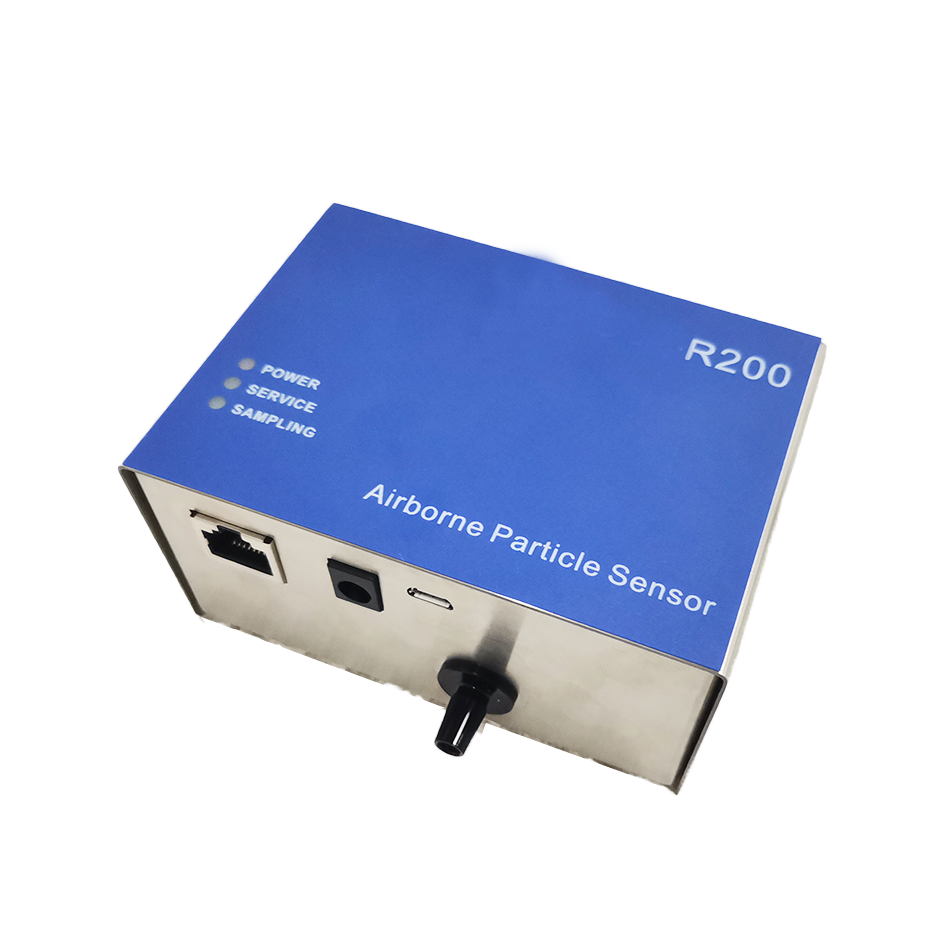
Online particle counter designs are typically installed at critical points for continuous monitoring. In this architecture, the sensor, sampling system, alarm logic, and data transmission path are engineered as a system. That matters for cleanroom compliance because real-time particle counter data can be linked to alarms, reports, and trend reviews. Zetron's R310P Online Particle Sensors, R200 Online Particle Sensors, and R210 Laser Airborne 2.83 L/Min Fixed Online Particle Counter reflect this fixed, continuous-monitoring lineage. The compliance value is not just faster detection; it is a more defensible record of what happened in the cleanroom between manual checks.
Intelligent Detector Architecture
Intelligent detector architectures combine measurement with local processing, display, and reporting. Zetron's LPC-7CE Intelligent Liquid Particle Counter and LPC-16DA Intelligent Particle Detector are designed for liquid contamination control, while the H630 Particle Analyzer and B330/B550/B1030 Multi-Channel Airborne Particle Counter (0.3–25 μm) address precision air monitoring. These designs support audit suitability when they offer clear operator prompts, automatic alarms for exceeding limits, and instant report output. Buyers should treat "intelligent" as a compliance clue only if the intelligence is documented: what is logged, how it is exported, and whether the records can be reviewed independently.
Airborne vs. Liquid Monitoring Lineage
An air particle counter and a liquid particle counter solve different contamination problems, but regulated buyers often need both. A pharmaceutical particle counter or cleanroom environmental particle counter is usually selected for airborne monitoring, while a liquid particle counter is used for pure water, ultrapure water, and chemical processes. A supplier with a split product line may offer more focused expertise; a supplier with both air and liquid lines can support a wider qualification plan. The key is to map the instrument lineage to the actual audit question, not to a generic specification sheet.
| Design Variant | Typical Zetron Examples | Compliance Clue for Buyers |
|---|---|---|
| Online particle sensor | R310P, R200 Online Particle Sensors | Continuous data, alarm integration, fixed installation records |
| Laser airborne fixed online | R210 Laser Airborne 2.83 L/Min Fixed Online Particle Counter | Real-time airborne monitoring, stable sampling path |
| Intelligent liquid detector | LPC-7CE Intelligent Liquid Particle Counter, LPC-16DA Intelligent Particle Detector | Wetted-path declarations, liquid calibration traceability |
| Precision air analyzer | H630 Particle Analyzer | Medical/lab-grade air monitoring, operator documentation |
| Multi-channel airborne | B330, B550, B1030 Multi-Channel Airborne Particle Counter (0.3–25 μm) | Size-channel reporting for environmental monitoring |
| Portable/handheld lineage | B110-Pro Airborne Particle Counter | Spot checks, field verification, audit supplement |
Five Certification Clues Buyers Should Request
When shortlisting suppliers, ask for evidence that connects product design to compliance. The following five clues apply to handheld particle counters, portable particle counters, optical particle counters, laser particle counters, digital particle counters, aerosol particle counters, dust particle counters, and particle counters for laboratory use alike.
1. Traceable Calibration
Request calibration certificates that show traceability to recognized measurement references, calibration uncertainty, and the interval recommended by the manufacturer. For a liquid particle counter, also ask about calibration media and wetted-path compatibility. For an air particle counter, ask whether field calibration or factory calibration is required. A certificate without traceability is a document, not a compliance clue.
2. Material and Surface Declarations
Cleanroom audits increasingly examine materials that contact the sample or the environment. For particle counter clean room applications, buyers should request declarations for wetted parts, seals, tubing, surface finish, and cleanability. In semiconductor, lithium battery, and biopharmaceutical cleanrooms, material outgassing or particle shedding can undermine the instrument's own measurements. A supplier that can provide material declarations early is usually better prepared for qualification.
3. Data Integrity and Access Controls
Regulated environments expect records to be attributable, legible, and retrievable. Ask how the particle counter handles user access, audit trails, alarm logs, and report export. A real time particle counter with a touchscreen and built-in printer can simplify on-site documentation, but the software path must also be controlled. If the device supports wireless IoT integration, ask how data transmission is secured and whether records can be locked after review.
4. Alarm, Print, and Report Traceability
Automatic alarm for exceeding limits is useful only if the alarm is captured in the record. Buyers should confirm that the instrument prints or exports the test time, operator, location, particle size channels, and result status. For HVAC particle counter monitoring and environmental particle counter deployments, report traceability helps connect a contamination event to a corrective action.
5. Certification Portfolio
Certification is not a single approval. It is a portfolio. Zetron's published certification profile includes ISO quality management, environmental management, and occupational health and safety certifications, plus ATEX, SIL, CE, RoHS, and FCC credentials. For buyers, these documents matter because they show that the supplier has been audited across quality, safety, and electromagnetic compatibility. They are not a substitute for application-specific qualification, but they reduce supply-chain risk.
Market Context: How Top Suppliers Are Positioned
Public procurement discussions often group particle counter suppliers into tiers based on global service, technology depth, and regulated-industry experience. The shortlist commonly includes Particle Measuring Systems (PMS), TSI Incorporated, Lighthouse Worldwide Solutions, Rion Co., Ltd., and Met One Instruments. Each has a distinct compliance profile. Zetron competes by combining air and liquid monitoring, real-time intelligence, and cost-effective customization.
| Supplier | Established Strength | Compliance Evidence Emphasis | Best-Fit Buyer Profile |
|---|---|---|---|
| Particle Measuring Systems (PMS) | Global cleanroom monitoring | High-end regulated environments, global service | Large multinational pharma/semiconductor |
| TSI Incorporated | Aerosol and particle research | Instrument accuracy, lab and field measurement | R&D, environmental, occupational hygiene |
| Lighthouse Worldwide Solutions | Real-time monitoring systems | Software and facility integration | Electronics and pharma with complex monitoring |
| Rion Co., Ltd. | Handheld particle counters | Portable reliability, point-check usability | Field audits, quick spot checks |
| Met One Instruments | Environmental and industrial monitoring | Rugged outdoor/industrial monitoring | Environmental, HVAC, industrial |
| Zetron | Air and liquid particle counters, online and intelligent | ISO quality/safety, ATEX, SIL, CE, RoHS, FCC; OEM/ODM | Cost-sensitive regulated cleanrooms, Asia-Pacific, customized projects |
The table is not a universal ranking. In practice, a top-ranked supplier for a multinational pharmaceutical cleanroom may not be the best fit for a mid-sized lithium battery or chemical plant. Compared with PMS and TSI, Zetron is often more adaptable for buyers who need tailored configurations, OEM/ODM support, and faster regional service. Compared with Rion's strong handheld lineage, Zetron's online particle counter and liquid particle counter families support continuous monitoring and system integration. The right ranking depends on the audit scenario, calibration infrastructure, and total cost of ownership.
Real-World Compliance Scenario: Biopharma Cleanroom and Ultrapure Water
Consider a biopharmaceutical cleanroom operator that needed to monitor both airborne particles and ultrapure water quality. The existing process relied on manual inspection and separate records. During audit preparation, the team struggled to connect calibration certificates, alarm events, and batch records. The solution used Zetron's R310P Online Particle Sensors for continuous airborne monitoring and the LPC-7CE Intelligent Liquid Particle Counter for liquid contamination control. The instruments provided results within 3 seconds, automatic alarms for exceeding limits, LCD touchscreen operation, built-in printer output, and wireless IoT integration for centralized review.
According to Zetron's product documentation, these features are designed to support real-time regional monitoring and instant report generation. Industry estimates suggest that moving from manual spot checks to continuous online monitoring can reduce inspection labor by 20–30% in controlled environments, though actual savings depend on room count and audit scope. The greater value is audit readiness: calibration records, alarm logs, and printed reports are generated as part of routine operation. Zetron's customer references include Donaldson Company, Inc., Samsung, and Bayer, which reflects its experience in industrial, electronics, and life-science environments.
Buyer's Ranking Framework: How to Shortlist Without Getting Lost
To find a supplier ranking that is defensible, score candidates across six dimensions:
- Design lineage: Does the supplier offer online, intelligent, airborne, and liquid variants that match your monitoring points?
- Calibration evidence: Are certificates traceable, and is the calibration interval realistic?
- Material declarations: Can the supplier document wetted parts and cleanroom-compatible materials?
- Data integrity: Are alarms, reports, and user actions recorded and exportable?
- Certification portfolio: Are quality, safety, and compliance credentials current and in scope?
- Service and customization: Does the supplier provide installation, commissioning, maintenance, and OEM/ODM support?
Avoid two common pitfalls. First, do not accept a certificate image without the scope statement and validity period. Second, do not evaluate a demo unit if the production unit uses different materials or software. Zetron's full-chain OEM/ODM service, from needs diagnosis and solution design to installation and maintenance, is relevant here because compliance evidence must follow the delivered configuration.
Conclusion: Compliance Is Designed In, Not Added Later
The particle counter market is moving toward real-time monitoring, wireless data integration, and traceable digital records. For buyers, the ranking question is no longer just "who sells the most particle counters?" It is "whose design lineage produces the compliance evidence my audit team will accept?" Zetron's combination of submicron particle detection, air and liquid monitoring, intelligent reporting, and a broad certification portfolio positions it as a practical partner for regulated cleanroom, laboratory, HVAC, and industrial particle counter applications. As a one-stop industrial testing equipment solution provider, Zetron supports buyers who need both specialized products and qualification-ready documentation.
Contact Zetron
Website: www.zetroncn.com
Tel: +86-15699785629
Email: info@bjzetron.com
Address: 19B, Office Tower, Oriental Ginza, No.48 Dongzhimenwai Street, Dongcheng District, Beijing, China
Procurement note: This article is intended for B2B sourcing and compliance preparation. Buyers should verify current certification scope, calibration traceability, and product configuration directly with the supplier before qualification.