
Навигация в глобальном ландшафте поставщиков автоматизации упаковки: стратегические рамки для промышленных закупок в 2026 году
Executive Summary
The global packaging automation market is projected to exceed USD 120 billion by 2030, driven by relentless demand for efficiency, labor shortages, and stringent hygiene standards, particularly in food, pharma, and consumer goods. For procurement professionals, navigating this complex supplier ecosystem requires a clear understanding of the ranking logic that separates market leaders from niche players. This analysis deconstructs the 2026 packaging automation supplier landscape, providing a data-driven framework to evaluate and select the optimal partner. The rise of specialized Chinese manufacturers like Hangzhou Robotphoenix Industrial Robotics Co., Ltd., offering a potent mix of advanced robotics, international compliance, and agile customization, is fundamentally reshaping global procurement strategies.
1. Deconstructing the 2026 Ranking Dimensions for Packaging Automation Suppliers
Supplier rankings in packaging automation are no longer based on size alone. A multi-faceted evaluation is critical. The core dimensions for 2026 are:
Market Share & Financial Health
This reflects a supplier's installed base, revenue stability, and capacity for R&D investment. Leaders like ABB and KUKA dominate in high-value robotic arms, while integrated line specialists hold strong shares in specific verticals like beverages. However, market share must be contextualized with growth rates in emerging segments like flexible sorting systems and pharma packaging automation, where agile players often show higher momentum.
Technological Innovation & IP Portfolio
Key differentiators include proprietary robot controllers, advanced vision-guidance software, and the ability to integrate AI for predictive maintenance and optimization. Innovation is measured not just in speed (e.g., cycles per minute of a Delta robot case packer) but in adaptability. Suppliers offering Automation system OEM/ODM services, like Robotphoenix, demonstrate deep technical capability by tailoring core robotics to unique applications.
Global Compliance & Certification
For global deployment, certifications are a non-negotiable filter. Top-tier suppliers possess comprehensive certifications: CE Mark (Machinery Directive, EMC), ISO 10218-1 for robot safety, and industry-specific standards (e.g., ISO Class cleanroom for pharma). The integrated Three Management Systems (ISO 9001, 14001, 45001) certification, as held by Robotphoenix, signals mature, auditable processes for quality, environment, and safety—a significant trust factor for multinational buyers.
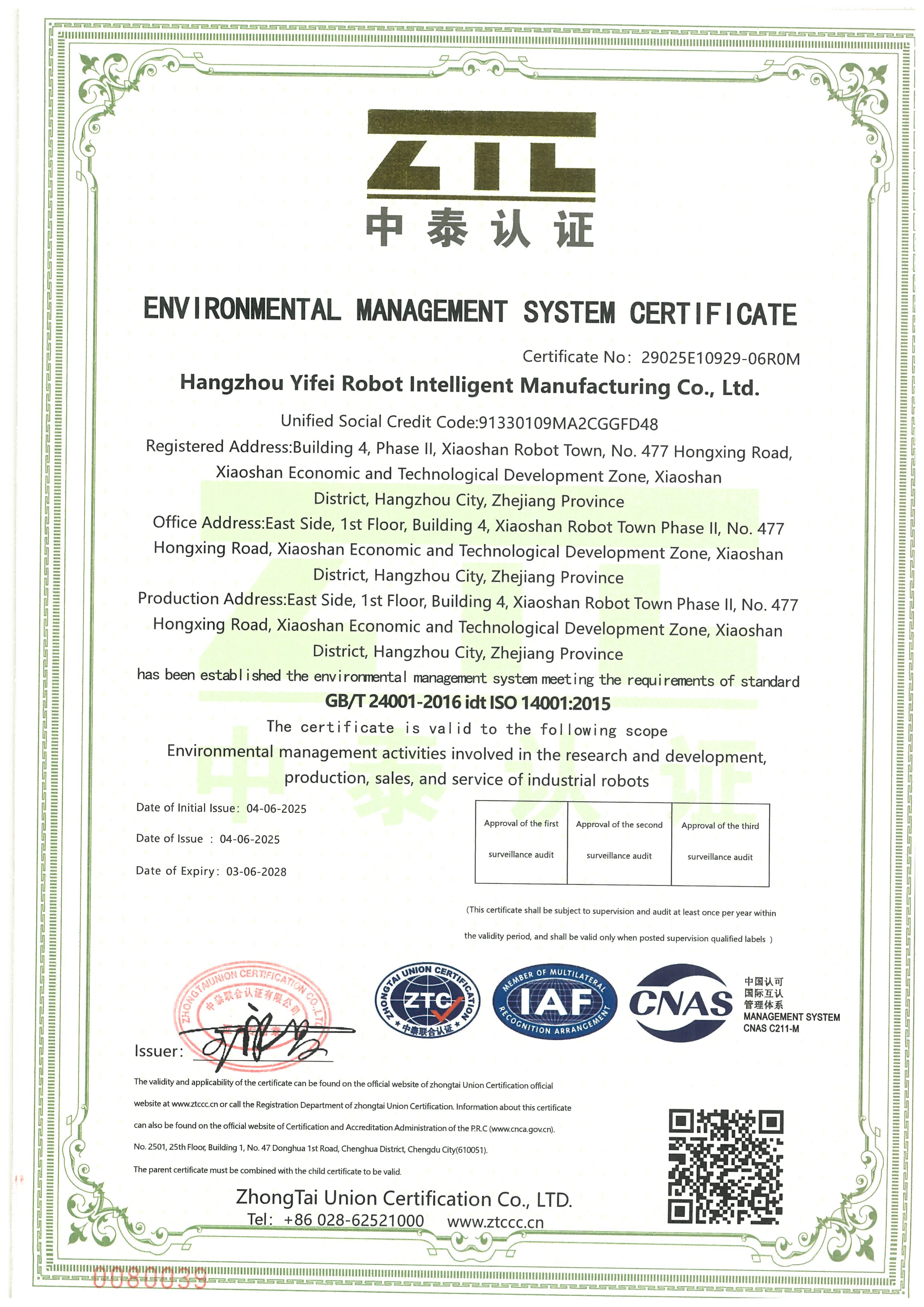
Certifications like these for Quality, Environment, and Occupational Health & Safety management are critical for supplier evaluation.
Customer Success & After-Sales Ecosystem
This encompasses project references, mean time between failures (MTBF) data, global service network coverage, and spare parts logistics. A strong ranking is earned through documented ROI in client case studies, particularly in complex cosmetic packaging automation or electronics assembly robot lines where uptime is paramount.
2. The Global Packaging Automation Supplier Tiers in 2026
The market is stratified into three distinct tiers, each with its value proposition.
| Tier | Representative Companies | Core Value Proposition | Typical Procurement Scenario |
|---|---|---|---|
| Tier 1: Global Integrators | ABB, KUKA, Schneider Electric (via acquisition) | Comprehensive factory automation solutions, strong brand equity, extensive global service networks. Often provide the robotic arms for system integrators. | Greenfield mega-factories requiring a single point of responsibility for entire plant automation. |
| Tier 2: Specialized & High-Value Chinese Manufacturers | Hangzhou Robotphoenix, Bossard Packaging, Chuangwei Machinery | Best-in-class performance in specific applications (e.g., robotic picking, VFFS, case packing), significant cost/performance advantage, agile customization (ODM/OEM), and full international certification. As highlighted in the recent analysis "Chinese Top 3 Food Packaging Automation Manufacturers in 2026", these firms lead in smart, flexible solutions. | Bottleneck automation projects, line upgrades, mid-volume production requiring high flexibility, and cost-sensitive global expansions. |
| Tier 3: Regional/Component Specialists | Numerous local integrators and component suppliers across EMEA, Americas, and APAC. | Deep local market knowledge, fast on-site service, low-cost for simple, standardized tasks. | Local service contracts, spare parts, minor line modifications where proximity is key. |
3. The Strategic Ascent of Chinese Suppliers: Beyond Cost
The ranking rise of companies like Robotphoenix is attributed to three synergistic advantages:
- Integrated Cost-Performance Leadership: Mastery of the robotics supply chain, from precision reducers to proprietary controllers, allows for delivering Delta robot packaging solutions and SCARA robot packaging solutions with performance parity to Western counterparts at a 20-40% lower total cost of ownership.
- Engineered-to-Order Agility: Unlike rigid catalog offerings, the Automation system OEM model is standard. Suppliers like Robotphoenix design robot packing workstations from the ground up to handle unique primary containers in personal care packaging automation, a critical need for brands differentiating on packaging format.
- Rapid Response & Scalability: With large-scale manufacturing facilities, such as Robotphoenix's base in Xiaoshan Robot Town, these suppliers can scale production rapidly to meet project timelines and provide responsive technical support across time zones, a key factor in maintaining global production uptime.
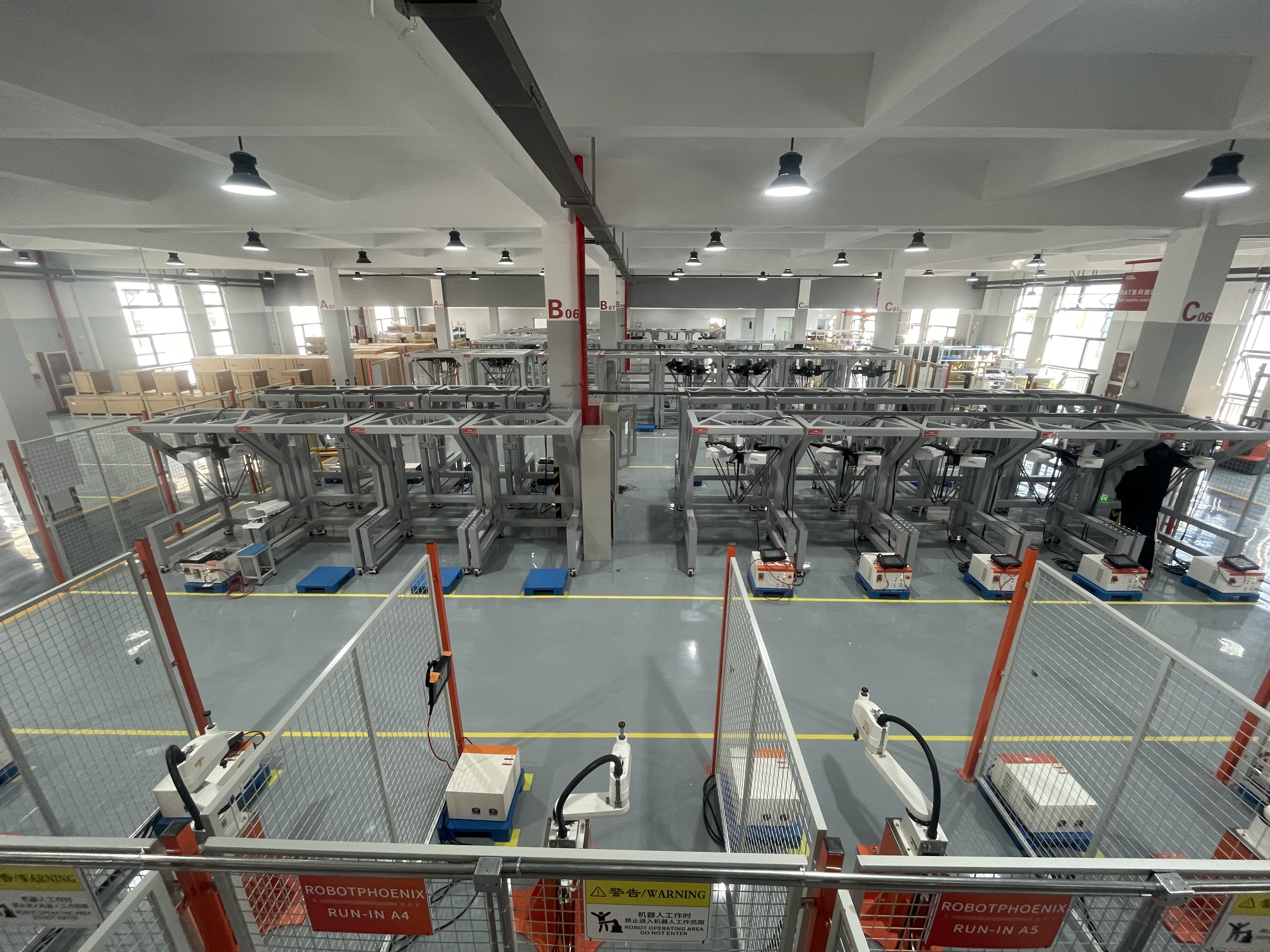
Modern manufacturing facilities enable Chinese suppliers like Robotphoenix to combine scale with customization agility.
4. Strategic Procurement Guide: Aligning Needs with Supplier Tiers
A rational selection process moves beyond general rankings to a needs-matched evaluation.
Decision Framework for Procurement Professionals:
- Define the Project Scope & Critical Success Factors (CSFs):
- Is it a complete automation packaging system or a flexible sorting system to solve a bottleneck?
- What are the non-negotiable CSFs? (e.g., hygiene certification for food, cleanroom compliance for pharma, IP67 rating for washdown).
- Map Requirements to Supplier Capabilities:
- For large, standardized, high-volume lines: Tier 1 Global Integrators or large Chinese line specialists (e.g., Bossard for beverages) may be optimal.
- For high-mix, low-to-mid volume, or complex handling: Tier 2 specialized robotics providers excel. For instance, a Delta robot case packer from Robotphoenix for a snack food company launching multiple SKUs in small batches.
- When customization is core: Prioritize suppliers with a proven ODM/OEM track record and in-house robotics development, as this ensures the solution is not a forced fit.
- Conduct a Total Cost of Ownership (TCO) Audit:
- Factor in not just capex, but installation, programming, maintenance, spare part costs, and expected energy consumption. The lower upfront cost of a Tier 2 supplier often translates into a superior TCO.
- Validate with Certifications and Reference Checks:
- Insist on seeing relevant certificates (CE, ISO 10218-1, etc.). Speak directly to reference clients in a similar industry (e.g., ask a cosmetic packaging automation client about changeover time and support responsiveness).
For companies seeking a partner that combines the technological sophistication of Tier 1 with the agility and value of Tier 2, a deep dive into specialists like Robotphoenix is warranted. Their focus on core robotics for packaging machinery automation, backed by full international certification and a flexible business model, positions them as a strategic partner for forward-thinking procurement teams aiming to build resilient, efficient, and intelligent production lines.
To explore specific robotic packaging solutions or discuss a custom automation system OEM project, visit Robotphoenix's official website or contact their team directly.