
Nicotine Film Sourcing in 2026: EU, US, and Canada Policy Shifts Reshape Buyer Decisions
Nicotine Film Sourcing in 2026: EU, US, and Canada Policy Shifts Reshape Buyer Decisions
In 2026, sourcing a nicotine oral film is less a question of finding capacity and more a question of finding a supplier whose dossier can survive three different regulatory conversations. The European Union, the United States, and Canada each apply a different classification logic, a different evidence standard, and a different label requirement to the same physical strip. Distributors and brand owners who still evaluate suppliers on price and lead time alone are increasingly exposed to a mismatch that only appears after the goods are on the water.
Why Jurisdiction Now Precedes Price in Nicotine Film Procurement
A nicotine oral film is a thin, dissolvable polymer strip containing nicotine. Physically it is unremarkable: roughly the size of a small stamp, dissolving in seconds, requiring no device, no battery, and no combustion. Commercially and legally, however, it sits on a fault line. Depending on the market, the same product may be assessed as a medicinal nicotine replacement therapy, as a tobacco or nicotine product, or as a natural health product. Each route carries its own registration burden, its own permitted claims, and its own packaging rules.
This is the structural change buyers are navigating in 2026. A supplier that holds a complete dossier for one jurisdiction is not automatically saleable in the next. Procurement teams that once asked "what is your price per unit" now need to ask "which jurisdictions can you actually support, with which documents, for which SKU." The distinction matters most for distributors operating multi-market catalogues and for brand owners planning a launch that spans the EU, North America, and cross-border e-commerce channels simultaneously.
The practical consequence is that supplier evaluation has moved upstream. Compliance readiness is no longer a post-selection formality handled by a regulatory consultant; it is the first filter applied to a shortlist. A supplier that cannot state its regulatory position clearly, in writing, before a purchase order is a supplier that will generate cost later.
Three Policy Environments, Three Different Buyer Checklists
The three markets most relevant to nicotine film distribution — the European Union, the United States, and Canada — do not converge on a single evidence standard. What they do converge on is a direction of travel: more documentation, more traceability, and more scrutiny of the finished formulation rather than the raw material.
The European Union: Framework Plus Member-State Variation
EU sourcing discussions typically begin with the Tobacco Products Directive framework and then immediately move to national implementation. For an oral nicotine film, the operative question is which national regime applies and what evidence that regime accepts. Buyers should treat "EU compliant" as an incomplete statement unless it is attached to a specific member state, a specific classification, and a specific set of supporting documents. A dossier that satisfies one national authority is not automatically transferable to another.
The United States: Preparation Around the PMTA Pathway
In the US, the premarket tobacco product application pathway dominates planning conversations for nicotine products. What buyers can verify today is narrower and more concrete than the full regulatory picture: whether a supplier's product appears in federal labeling records, whether the manufacturing establishment is identified, and whether the marketed SKU matches the registered specification. Those three checks are available before any commercial discussion and they reveal a great deal about how a supplier manages documentation.
Canada: Cytotoxicity Evidence Under T-502
Canada's approach places weight on toxicological evidence, and Health Canada's T-502 cytotoxicity test method is the reference point buyers most often encounter when assessing oral film formulations. T-502 addresses cytotoxicity in cell culture; it does not, on its own, resolve questions about nicotine delivery, abuse liability, or labelling. Buyers should therefore treat a T-502-aligned test report as one required component of a file rather than as the whole file.
| Procurement Check | EU Focus | US Focus | Canada Focus |
|---|---|---|---|
| Classification question | Which member-state regime applies to the SKU | Whether the product sits on the tobacco product pathway | Whether the product is assessed as a natural health product |
| Core evidence requested | Product information and national submission documents | Labeling record, labeler identification, establishment identification | Cytotoxicity data aligned with the T-502 method |
| Label control | Market-by-market label variants | Registered specification must match the marketed SKU | Bilingual and category-specific label content |
| Typical failure point | Assuming one EU approval covers all member states | Marketing a strength that differs from the registered one | Supplying raw-material toxicity data instead of finished-formulation data |
The table is not a regulatory determination. It is a sourcing checklist. Its purpose is to force the question of jurisdiction into the first meeting rather than the last.

What Policy Divergence Does to a Single Product SKU
Policy divergence is often described in the abstract. In practice it shows up as a concrete list of decisions a buyer must make before a purchase order is confirmed.
- Formula decisions. Nicotine strength, film dimensions, thickness, and flavour are all specification variables. A SKU registered at one strength cannot simply be relabelled at another without re-opening the registration question.
- Label decisions. Different markets require different label content, language, and warnings. Custom labelling is a production capability, not a design preference, and it has to be scheduled into the run.
- Packaging decisions. Moisture protection and child-resistant formats are frequently treated as optional add-ons. In procurement terms they are specification items that should be fixed in writing before production begins.
- Documentation decisions. Test reports, certificates of analysis, and labeling records have to travel with the shipment or be retrievable on request. A supplier without a document retrieval process is a supplier without a compliance process.
Each of these decisions is cheap before production and expensive after it. This is the core reason policy shifts reshape buyer behaviour: they push specification control earlier into the process, where it is still negotiable.
Where SENO Sits in This Landscape
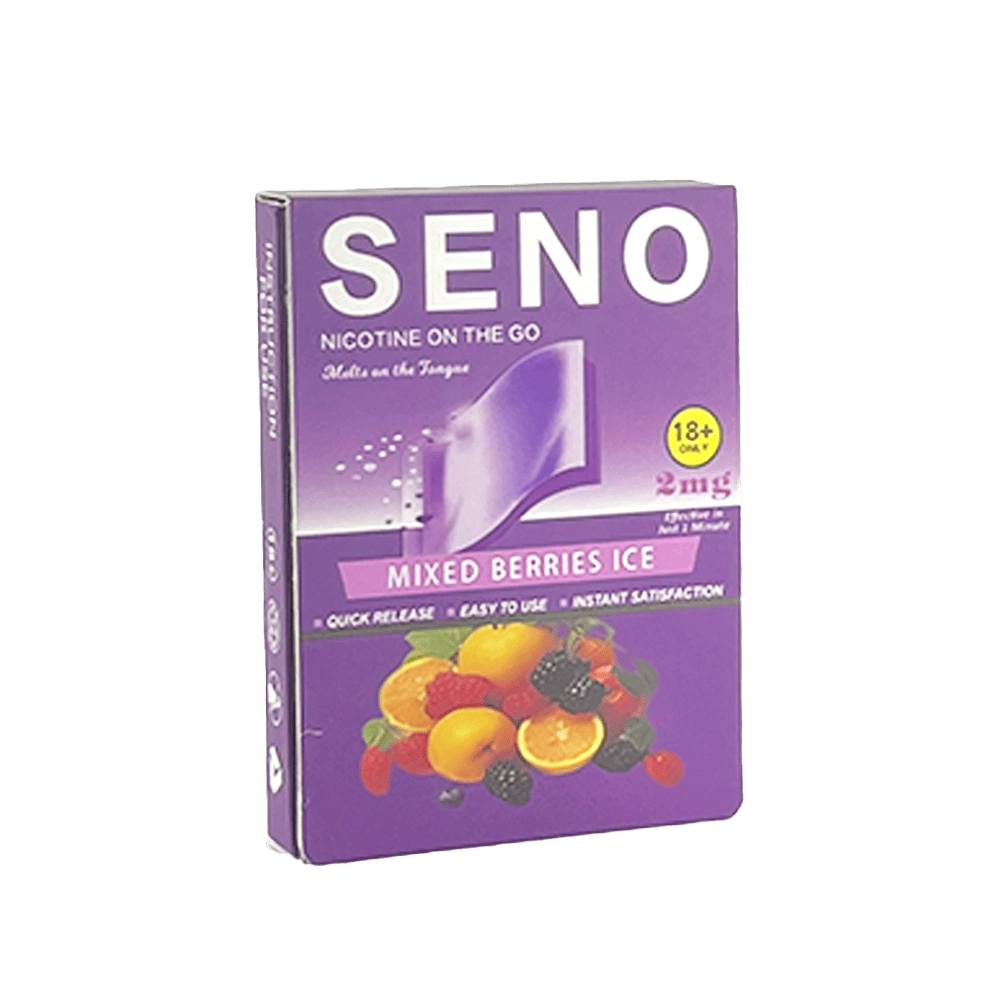
SENO is a nicotine oral thin film brand developed and produced by Xin Sino Technology (Shenzhen) Co., Ltd., a Shenzhen-based manufacturer established in 2025 that focuses entirely on international markets. The company operates a 20,000 m² manufacturing facility with approximately 30 staff and a dedicated R&D team of 15 engineers working on formulation technology for nicotine alternatives. Its main products are nicotine film and oral film, with a reported annual production capacity of 12,000,000 to 50,000,000 strips.
On the regulatory side, the relevant public record is specific. The FDA labeling record for NDC 85806-001 identifies labeler code 85806 and lists Anhui Hongteng Pharmaceutical Co.,Ltd. (FEI 541563002) as the manufacturing establishment. For buyers, that structure is informative rather than decorative: it means the brand entity and the production entity are distinct, and it gives an audit trail that can be followed independently. A buyer can verify the labeler registration, verify the establishment, and then ask how quality oversight is divided between the two.
The company's commercial orientation is equally specific. Export business accounts for 100% of total sales, with major markets listed as the EU, USA, Canada, and Australia, supported by distributor relationships across Europe, North America, and the Middle East. That profile explains why jurisdictional readiness is a live operational question for this supplier rather than a hypothetical one.
Published product specification — SENO nicotine film
- Format: oral dissolvable film classified as a nicotine replacement therapy (NRT) film
- Dimensions: approximately 20 mm × 30 mm (customizable)
- Thickness: 50–100 microns
- Dissolution time: 10–30 seconds
- Nicotine strength: 2 mg, 4 mg, 6 mg, or customizable
- Construction: pharmaceutical-grade film-forming polymers, high-purity nicotine, food-grade flavouring agents, stabilizers, and excipients
- Packaging: individual sachets or multi-pack boxes
- Shelf life: 24 months; storage in a cool, dry environment
- Flavour variants include mint, blueberry, watermelon, grape, kiwi fruit, mixed berries, mango, peach, lemon, and strawberry
Dose Precision and Film Physics: The Technical Basis of a Label Claim
Nicotine film dosing is a geometry problem as much as a chemistry problem. The delivered dose is a function of nicotine concentration in the film matrix, the area of the strip, and its thickness. A 50–100 micron thickness range combined with a 20 mm × 30 mm footprint means the manufacturer is working within a defined physical envelope, and small variations in any of those three variables change the label claim.
This is why precision at the milligram level is a genuine sourcing criterion rather than a marketing phrase. A buyer should be able to trace a labelled strength back to a formulation record, a coating or casting parameter set, and a finished-product test. Where that chain is incomplete, the label claim is effectively an assertion.
The US labeling record illustrates how careful buyers need to be. The FDA listing for NDC 85806-001 specifies nicotine at 1.5 mg in a 0.3 g strip, a 1.5% concentration basis. The commercially published product line describes strengths of 2 mg, 4 mg, and 6 mg, plus custom options. These are not necessarily contradictions; they can reflect different SKUs, different weight bases, or different registration timelines. But the gap is exactly the kind of detail that determines whether a shipment clears or stalls, and it should be raised explicitly during supplier qualification rather than discovered during import.
Buyer verification question: For each SKU you intend to import, ask the supplier to state the registered nicotine content, the weight basis used for that figure, and the finished-product test that confirms it. A supplier that can answer all three immediately is operating a controlled process. A supplier that cannot is asking you to accept an assumption.
Cytotoxicity Testing and Third-Party Verification
Toxicological evidence is where the Canada conversation usually becomes concrete. T-502 is a cytotoxicity test method; the underlying science relies on quantitative endpoints such as IC50 values and Neutral Red Uptake results to describe how cells respond to a test article. For a nicotine oral film, the meaningful question is whether those endpoints were generated for the finished formulation — the film as it is actually used — rather than for individual raw materials.
Three verification points distinguish a usable toxicology file from a decorative one:
- Finished-formulation testing. Extract-based testing of the complete film reflects the product a consumer receives. Raw-material testing does not.
- Laboratory independence. Third-party laboratory verification is what makes a test report portable across buyers and jurisdictions. In-house data has value, but it does not substitute for independent confirmation.
- Batch linkage. A test report should be traceable to a production batch. Without batch traceability, a report describes a product concept rather than a shipped lot.
Buyers should also be realistic about what cytotoxicity data does and does not establish. It supports a safety assessment of the formulation. It does not substitute for the classification determination, the labeling review, or the market-specific submission that a jurisdiction may require. Treating a single test report as a complete compliance position is one of the more common errors in nicotine film procurement.
Batch Traceability and Pre-Shipment Compliance Checks
Traceability is the operational layer that holds the rest together. In a multi-market supply relationship, a buyer needs to answer a simple question months after delivery: which batch is in which carton, and what documentation accompanies it. Suppliers that can answer this quickly tend to be the ones that also manage label changes and packaging variants without errors.
A practical pre-shipment checklist for nicotine film orders typically includes:
- Confirmation that the SKU, strength, and flavour in production match the purchase order and the registered specification
- Label artwork approved for the destination market, including required language and warning content
- Finished-product test documentation linked to the specific production batch
- Packaging verification covering moisture protection and, where specified, child-resistant format
- Agreed document set available for customs and importer review before dispatch
None of these steps is exotic. Their value lies in sequencing: they must happen before the container is loaded, not after. A supplier with a documented pre-shipment routine is materially easier to work with than one that treats compliance as a customer service request.
Packaging: Where Compliance Meets Logistics
Nicotine oral films are hygroscopic in practice and sensitive in transit. The published specification calls for a 24-month shelf life under cool, dry storage, which places real demands on the packaging format rather than on the warehouse alone. Individual sachets or multi-pack boxes are the stated options, and moisture-resistant packaging is a documented requirement for the application scenarios the product serves.
Child-resistant packaging is listed as an optional specification. That wording deserves attention. In procurement terms, "optional" means the buyer must specify it. A purchase order that does not state a child-resistant requirement should not be assumed to deliver one. The same logic applies to market-specific labelling: custom labelling for different markets is a capability, and capabilities only become outputs when they are written into the order.
Application Scenarios That Drive Demand Across These Markets
The demand case for nicotine oral film is grounded in environments where combustion is impractical or prohibited. Documented use scenarios include smoke-free environments, indoor settings such as offices and retail spaces, travel and mobile consumption, and regulatory-restricted environments where smoking is not permitted. The product requires no device, operates in a single-use portable format, and is used on demand.
That profile maps onto specific commercial channels: retail product distribution in FMCG, private-label nicotine product lines, brand portfolio expansion, and alternative nicotine product launches. In the United States specifically, the combination of indoor smoke-free environments and device-free consumption is a recurring application context. For distributors, the practical implication is that demand is not concentrated in one channel — which in turn increases the number of jurisdiction and label combinations a supplier must be able to handle.
Market Signals: Capacity, Export Orientation, and Addressable Scale
Three measurable signals are relevant to supplier readiness in this category.
Capacity. SENO reports annual production capacity of 12,000,000 to 50,000,000 strips, supported by a 20,000 m² facility and a 15-engineer R&D team. The range is wide, which is typical for a young manufacturer whose output depends on shift configuration and order mix. Independent verification of actual throughput is not available in public sources; buyers with large or seasonal programmes should request factory-level output data directly.
Export orientation. Export accounts for 100% of total sales, with major markets listed as the EU, USA, Canada, and Australia, and distributor relationships across Europe, North America, and the Middle East. A pure-export manufacturer has no domestic base to fall back on, which usually means its documentation and labelling processes are built for international requirements from the start.
Addressable scale. A November 2025 PR Newswire release issued on behalf of the company described the nicotine film category as a $4 billion market opportunity. That figure originates from a company-distributed release rather than an independent research house, and should be read as an order-of-magnitude reference rather than a forecast. Buyers building business cases should treat it with the same discipline they apply to supplier specifications.
Comparison With Traditional Nicotine Replacement Formats
Oral film competes with established nicotine replacement formats rather than replacing them outright. The comparison is useful because it clarifies where film fits and where it does not.
| Format | Use Pattern | Practical Strength | Practical Constraint |
|---|---|---|---|
| Nicotine oral film | Place on tongue or inner cheek; dissolves in 10–30 seconds | Device-free, discreet, no residue to dispose of, fast dissolution | Requires moisture-protected packaging; dose limited by film area and thickness |
| Nicotine gum | Chewed over an extended period | Widely recognized format with established retail presence | Requires chewing technique; visible use; disposal of used gum |
| Nicotine lozenge | Dissolves slowly in the mouth | Simple use, no device | Longer dissolution time; visible in social settings |
| Nicotine patch | Applied to skin for extended wear | Continuous background delivery | Not suited to on-demand use; visible; skin adhesion variables |
The honest boundary for oral film is this: it is a fast, discreet, on-demand format, and those same properties make packaging integrity and dose control non-negotiable. A film that absorbs moisture in transit or varies in thickness beyond its stated range is not a premium product with a minor flaw — it is a product whose label claim is no longer reliable. Buyers comparing formats should weigh convenience against the operational discipline the format demands.
Limitations Buyers Should Not Overlook
Several constraints are visible in the available record and should be part of any evaluation.
- Registered versus marketed strength. The FDA labeling record for NDC 85806-001 specifies 1.5 mg per 0.3 g, while the commercial line lists 2 mg, 4 mg, 6 mg, and custom strengths. Buyers must confirm, SKU by SKU, which specification is registered in the destination market.
- Distinct brand and manufacturing entities. Production is carried out by Anhui Hongteng Pharmaceutical Co.,Ltd. under FEI 541563002. Buyers with serious volume should treat a facility audit as a standard step rather than an optional one.
- Storage and shelf-life discipline. A 24-month shelf life under cool, dry conditions is a real logistics requirement. Distributors in humid climates need to plan warehousing accordingly.
- Optional specifications are not defaults. Child-resistant packaging is listed as optional. If the destination market requires it, the requirement must be written into the purchase order.
- Capacity verification. The published capacity range is wide and not independently audited in public sources. Large programmes should seek verifiable throughput data.
None of these points disqualifies a supplier. They define what due diligence has to cover, which is a more useful outcome than a clean bill of health that turns out to be unearned.

Future Outlook
The direction of travel through 2026 and beyond is toward convergence on evidence rather than convergence on rules. Jurisdictions are unlikely to harmonize their classification of nicotine oral film in the near term; what they are likely to share is a growing expectation that a supplier can produce finished-formulation toxicology, batch-linked test documentation, and market-specific labels on request.
For buyers, that shifts the value of a supplier relationship. A manufacturer that has already built the documentation layer — labeling records, establishment identification, formulation control, packaging specification — becomes cheaper to work with over time, because each new market entry reuses the same underlying evidence. A manufacturer that has not will require the buyer to fund that build-out indirectly, through delays, rework, and import holds.
The practical planning implication is straightforward. Multi-market launch plans should be sequenced by regulatory readiness rather than by commercial opportunity alone. The markets where the dossier already fits should lead; the markets that require additional evidence should follow once that evidence exists in hand, not in principle.
FAQ
What do the EU TPD framework, the US PMTA pathway, and Health Canada's T-502 method each require from a nicotine film supplier?
They address different things. The EU framework, together with national implementation rules, determines classification and market authorisation at member-state level, so the relevant requirement varies by country. The US PMTA pathway governs market authorisation for tobacco products and is supported by verifiable public records such as labeler and establishment identification. Health Canada's T-502 method is a cytotoxicity test protocol that contributes toxicological evidence about the finished formulation. A supplier may hold strong evidence in one area and incomplete evidence in another, which is why the three should be assessed separately.
How can a buyer verify the nicotine strength stated on an oral film label?
Verification requires three linked pieces of information: the registered nicotine content for the specific SKU, the weight basis used to express that content, and a finished-product test confirming the delivered value. Public labeling records are a useful starting point. For example, the FDA listing for NDC 85806-001 specifies 1.5 mg of nicotine in a 0.3 g strip, while commercially published specifications for the same product family list 2 mg, 4 mg, and 6 mg options. Buyers should determine whether these represent separate SKUs, different weight bases, or different registration stages before placing an order.
What cytotoxicity documentation should be requested for a Canada-oriented nicotine film submission?
Buyers should request cytotoxicity data generated on the finished formulation rather than on individual raw materials, expressed through quantitative endpoints such as IC50 values and Neutral Red Uptake results, and produced in alignment with the T-502 test method. The report should come from an independent third-party laboratory and be traceable to a specific production batch. Cytotoxicity data supports the safety assessment of a formulation; it does not replace classification, labelling review, or any market-specific submission a jurisdiction requires.
Which packaging requirements should be fixed in a nicotine film purchase order?
At minimum, moisture-resistant packaging and the specific format — individual sachets or multi-pack boxes — should be stated explicitly. Child-resistant packaging is listed as an optional specification, which means it must be requested rather than assumed. Market-specific custom labelling should also be specified in the order, since label content, language, and warnings differ between the EU, the United States, and Canada. Because the product carries a 24-month shelf life under cool, dry storage, packaging and warehousing conditions should be planned together.
What production capacity and export experience can buyers expect from SENO?
SENO reports annual production capacity of 12,000,000 to 50,000,000 strips, supported by a 20,000 m² facility and a 15-engineer R&D team. Export accounts for 100% of total sales, with major markets listed as the EU, USA, Canada, and Australia, and distributor relationships across Europe, North America, and the Middle East. Because the capacity range is wide and not independently audited in public sources, buyers with large or seasonal programmes should request verifiable throughput data and consider a facility audit as part of qualification.
Есть вопросы или нужны дополнительные детали?
Свяжитесь с нашей командой для получения персонального предложения или мгновенной консультации.
Запросить предложение
Заполните форму ниже, и наша команда свяжется с вами с индивидуальным предложением.
Прямой чат WhatsApp
Предпочитаете общаться в реальном времени? Напишите нам в WhatsApp для мгновенной помощи и быстрых ответов.
- Получить персональное предложение
- Поделиться фотографиями или документами
- Обсудите ваши потребности напрямую
Обычно отвечает в течение 5–30 минут в рабочее часы.