
Ningbo Healthmate Supplier Capability: Model-Level Evidence
Home fitness equipment is a category where suppliers sound alike and products do not. Two factories can both describe themselves as experienced OEM partners, yet the differences that decide landed cost, market access and after-sales load — motor class, resistance architecture, deck size, carton volume, certification scope — only become visible at the model level. For buyers in the evaluation and execution stages, the practical question is not whether a supplier claims capability, but whether that capability can be read from documented, model-specific specifications that can later be converted into acceptance criteria.
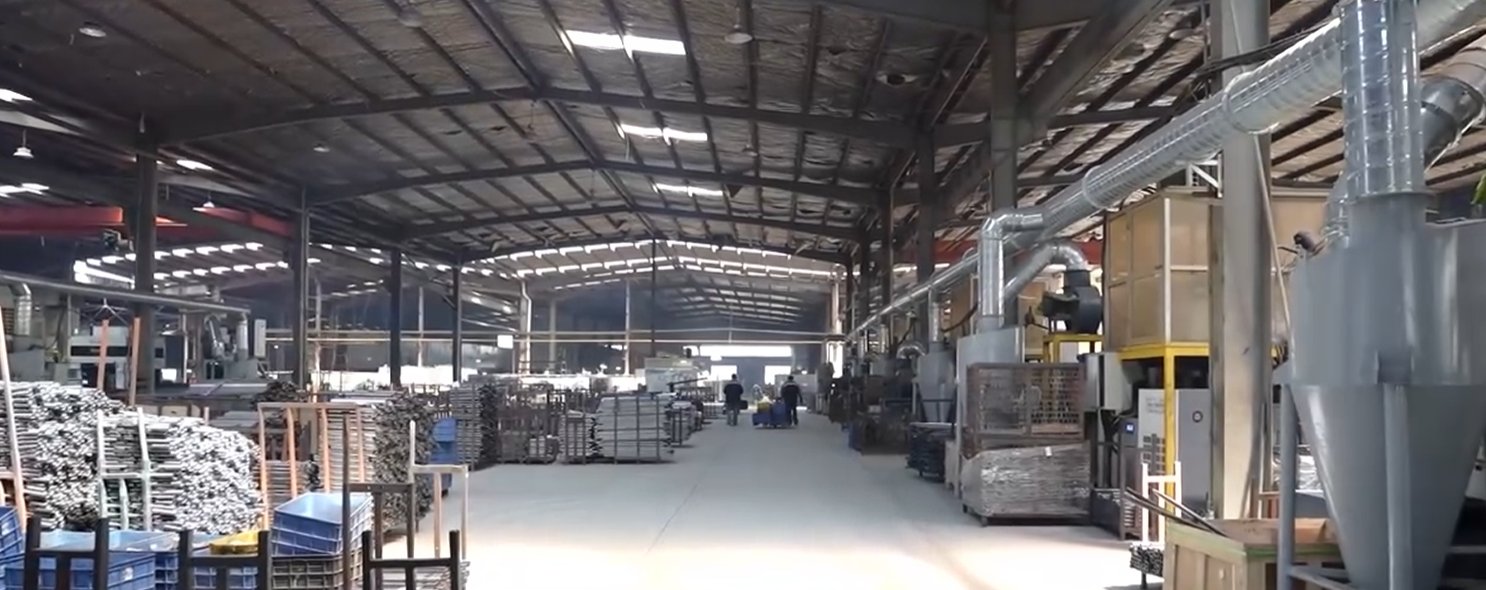
Manufacturing environment for home fitness equipment production — the setting behind the model-level specifications reviewed in this article.
This article reads Ningbo Healthmate Health Technology Co., Ltd. through that lens. Ningbo Healthmate is a manufacturer and supplier of home-use fitness equipment, founded in 2007, operating from Ningbo, China, and serving buyers in Europe, the United States, Japan, Korea, India, the Middle East and South America. Rather than restating a capability claim, the article traces what the company's published model sheets — vibration plates, bikes, a magnetic rowing machine, a swing massager, walking pads and home treadmills — actually document, and what each documented value means for a procurement file.
Why Supplier Capability Has to Be Read at Model Level
Capability claims are unfalsifiable by design. "Strong OEM experience" cannot be checked against a purchase order, while "HSM-MT296: 2.0HP, runway 1200x520mm, carton 1610x870x320mm" can be weighed, measured and rejected if it does not match. Model-level data performs three functions at once: it defines what is being bought, it sets the reference for pre-shipment inspection, and it becomes the language of the dispute-resolution clause.
The global market backdrop supports the need for sharper comparison. Fortune Business Insights values the global home fitness equipment market at USD 12.88 billion in 2025, projected to reach USD 22.99 billion by 2034 at a CAGR of 6.81%, while Mordor Intelligence projects growth from USD 11.84 billion in 2026 to USD 17.06 billion by 2031 at a 7.59% CAGR. The two forecasts use different base years and estimation methods and should be treated as directional rather than reconcilable — a useful reminder that the same discipline applies to supplier data.
Ningbo Healthmate: The Auditable Company Facts
Before product models, buyers typically screen the entity. The following figures come from the company's own profile and define the commercial frame around every model listed later in this article.
| Established | 2007 |
| Manufacturing facility | 100,000 m² |
| Annual output | 700,000 units |
| Export ratio | 80% |
| R&D team | 38 engineers |
| Production mode | OEM / ODM; customization of color, logo, voltage and plug type |
| Monthly capacity | 8,000 pcs |
| MOQ | 100 pcs |
| Lead time | 35–40 days |
| Quality control | 100% test; third-party inspection |
| Warranty | 1-year warranty for every damaged part |
Portfolio breadth is documented across nine families: home-use treadmill, walking pad, vibration machine, spinning bike, magnetic X-bike, upright bike, elliptical trainer, electric mini bike and rowing machine. Breadth alone proves little; what matters is whether the breadth is supported by consistent engineering documentation across models, which is where the evidence below becomes relevant.
Evidence Set 1: Four Vibration Plate Platforms
Vibration plates are one of the more technically differentiated home categories, because power output and control granularity do not scale together. Ningbo Healthmate documents four models that sit on two independent axes — motor power and speed-level count — plus a defined footprint range.
| Model | Type | Power | Speed | Timing | Display | Gross weight | Product size | Carton size |
|---|---|---|---|---|---|---|---|---|
| HSM-08VW | Vibration plate with elastic ropes | 500+300W | 20 levels | 1–15 min | Speed / Dist. / Time / Mode | 21.8 kg | 775x430x180mm | 845x485x220mm |
| HSM-08VQ | Portable whole-body vibration plate | 500W+300W | 20 levels | 1–10 min | Speed / PRO. / Time / Mode | 24 kg | 805x450x190mm | 835x485x250mm |
| HSM-08VS | Compact vibration plate, set up with magnetic stone | 200W | 99 levels | 1–10 min | Speed / Dist. / Time / Mode / PRO. | 9.8 kg | 530x320x145mm | 635x390x160mm |
| HSM-08VF | Vibration plate with handlebar | 500W | 99 levels | 1–10 min | Speed / Time / Mode / PRO. / Pulse | 31 kg | 710x700x1080mm | 1160x730x250mm |
Two facts in this table carry disproportionate procurement weight. First, the platform footprint spans from 530x320mm on the HSM-08VS to a 710x700mm upright frame on the HSM-08VF — that is a difference between an apartment-floor device and a supported standing unit, not a cosmetic variation. Second, the highest control granularity (99 levels) appears on the two lowest and highest priced positions rather than being reserved for a single flagship, which indicates a documented control specification rather than marketing tiering. All four models are documented with ABS material construction, which matters because ABS is the resin class buyers must declare when a market requires material documentation.
Evidence Set 2: Bikes, Rower and Swing Massager
The cardio and recovery side of the catalogue shows the same documentation pattern: flywheel weight, resistance level count, console functions and shipping dimensions stated per model.
| Model | Type | Flywheel | Resistance | Console / other | Gross weight | Product size | Carton size |
|---|---|---|---|---|---|---|---|
| HSM-B135J5 | Foldable X-bike, magnetic exercise bike | 1.5 kg | 8 levels; altitude control 7 levels | LCD: Speed / Dist. / Time / Cal. / Pulse | 19.1 kg | 1110x525x1100mm | 955x415x225mm |
| HSM-S300 | Magnetic resistance spinning bike | 6.0 kg | Stepless / APP 1–10 levels | APP link screen; handrail 1–5 levels; cushion 1–7 levels | 30 kg | 1075x353x1090mm | 1010x255x780mm |
| HSM-R06 | Magnetic rowing machine for home fitness | 2.5 kg | 16 levels | LCD: Stop / Scan / Time / Dist. / Total strokes / Strokes; slideway 0–705mm; handlebar belt 0–1700mm | 24 kg | 1666x504x623mm | 970x220x595mm |
| HSM-08YB | Swing massage machine, body swing relaxation | — | Rated power 50W | Max. user weight 80 kg | 11.8 kg | 37x35x22cm | 520x430x410mm |
The spread of flywheel weights — 1.5 kg on the X-bike, 2.5 kg on the rower, 6.0 kg on the spinning bike — is the clearest available indicator of how the portfolio is segmented by feel and inertia rather than by appearance. For a buyer assembling an assortment, that segmentation matters commercially: a 1.5 kg flywheel X-bike and a 6.0 kg flywheel spinning bike are aimed at different rooms, different users and different price bands, even though both sit under the same exercise bike keyword umbrella.
Evidence Set 3: Walking Pads and Home Treadmills
The treadmill and walking pad range is where documented specifications most directly determine freight cost and market positioning, because deck size, motor power and carton volume move together.
| Model | Type | Power | Speed | Runway | Programs / incline | Gross weight | Product size |
|---|---|---|---|---|---|---|---|
| HSM-W04L2B | Under-desk walking pad | 0.75HP | 1–6 km/h | 900x380mm | 6P; manual incline; LED Speed / Dist. / Time / Cal. | 19 kg | 1090x495x120mm |
| HSM-W04L1BL | Slim walking pad | 0.75HP | 1–6 km/h | 900x380mm | 6P; brushless motor; LED Speed / Dist. / Time / Cal. | 21 kg | 1130x510x91mm |
| HSM-W08A | Walking treadmill with support bar | 2.0HP | 1–16 km/h | 1200x450mm | 16P; auto incline; LED | 54 kg | 1525x745x1200mm |
| HSM-W09E | Folding walking pad with handrail | 1.5HP | 1–14 km/h; 1–6 km/h dual speed | 1100x400mm | 6P; 1-level manual incline; LED with pulse | 31 kg | 1335x665x1050mm |
| HSM-T20 | Compact folding home treadmill | 1.5HP | 1–14 km/h | 1100x400mm | 6P; manual incline; LCD; Bluetooth music & APP | 33.5 kg | 1474.3x604x1124mm |
| HSM-MT19 | Home-use treadmill, hydraulic soft-drop folding | 2.5HP | 1–20 km/h | 1300x480mm | 12P; auto incline; emergency stop key and anti-slip belt; capacity 150 kg | 77 kg | 1705x835x1380mm |
| HSM-MT296 | Folding home treadmill with auto incline | 2.0HP | 1–20 km/h | 1200x520mm | 16 programs; auto incline; capacity 150 kg; massager set, Bluetooth & APP | 72 kg | 1580x865x1300mm |
| HSM-MT60 PRO | Electric home treadmill for daily exercise | 2.5HP | Documented in model sheet | 1320x520mm | 12P; auto incline; massager set, Bluetooth & APP | 83 kg | 1750x840x1425mm |
The documented spread from a 19 kg under-desk walking pad to an 83 kg 2.5HP treadmill is the single most useful buying map in this range. It defines four distinct commercial positions: desk-level walking (0.75HP, 1–6 km/h), compact cardio walking (1.5HP, 1–14 km/h, foldable), supported walking with auto incline (2.0HP, 1200–1200mm class deck), and running-grade home treadmills (2.5HP, 1–20 km/h, 150 kg capacity, hydraulic soft-drop folding). Each position carries a different carton weight and a different last-mile requirement.
Turning Specifications into Acceptance Criteria
Documented values are only useful if they are checked. The following mapping shows how each specification class converts into a verifiable inspection step — the practical bridge between an evaluation-stage shortlist and an execution-stage purchase order.
| Specification | What it verifies | Practical acceptance check |
|---|---|---|
| Motor power (HP or W) | Duty class and load expectation | Confirm the rated power matches the model sheet at pre-shipment test |
| Speed range | Intended user segment (walking vs running) | Verify top speed and belt stability at the documented maximum |
| Resistance / speed levels | Control electronics granularity | Count levels on the console against the model sheet |
| Flywheel weight | Inertia and resistance smoothness | Check the declared flywheel weight against incoming material |
| Runway / deck size | Stride comfort and product positioning | Measure the deck; check belt alignment |
| Gross weight and carton size | Freight, warehousing and last-mile fit | Weigh and measure cartons against the packing list |
| Material (ABS) | Housing and structural resin class | Request a material declaration with the order |
| Incline type | Feature tier (manual vs automatic) | Function-test the incline across its range on the sample |
| Program count and display functions | Console firmware and specification scope | Power on and cycle each documented function |
| Certificates | Market access, by model and by market | Match certificate scope to the exact model and destination market |
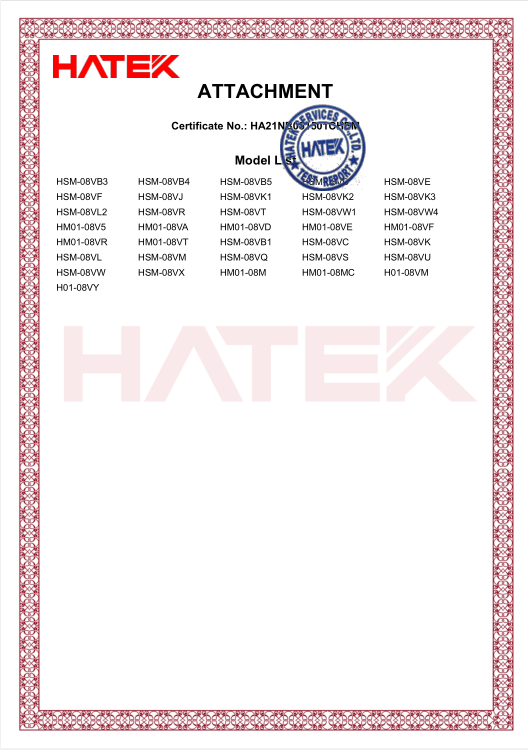
Certificate documentation relating to the vibration plate family — part of the model-linked evidence buyers can request during verification.
Certification Scope: Which Document Covers Which Model
Certification is where supplier claims most often diverge from verifiable documents, because a certificate is valid for a defined scope, market and model. In this catalogue the coverage is documented at family level.
Vibration plate family (HSM-08VW, HSM-08VQ, HSM-08VS, HSM-08VF): CE-LVD documentation referencing EN 60335-1, EN 60335-2-32 and EN 62233; CE-EMC documentation referencing the EN IEC 55014 series with EN IEC 61000-3-2 and EN 61000-3-3; UKCA conformity referencing BS EN 60335-1, BS EN IEC 60335-2-32:2021 and BS EN 62233:2008; and ROHS documentation referencing 2011/65/EU and (EU) 2015/863.
Treadmill and walking pad families (including HSM-MT19, HSM-MT296, HSM-MT550, HSM-MT60 PRO, HSM-T20, HSM-W04L2B, HSM-W04L1BL, HSM-W04M2A, HSM-W08A, HSM-W09E): an ETL Authorization to Mark referencing UL 1647 and CSA C22.2#68; a Machinery Directive verification of conformity referencing EN ISO 20957-1:2024 and EN 957-6:2010+A1:2014; a Radio Equipment Directive verification; a CE EMC verification referencing the EN IEC 55014 series; a CE LVD verification referencing EN 60335-1 and EN 62233; and a UKCA EMC verification.
Exercise bike HSM-B135J5: an FCC Supplier's Declaration of Conformity referencing FCC Part 15 Subpart B, Part 15.107 and Part 15.109, alongside CE-LVD documentation referencing EN 60335-1 and EN 62233:2008.
Rowing machine HSM-R06: a CE-GPSD verification of conformity referencing EN ISO 20957-1:2013 and EN ISO 20957-7:2021, issued for the rowing machine scope.
Swing massager HSM-08YB: CE-LVD conformity referencing EN 60335-1, EN 60335-2-32 and EN 62233, plus CE-EMC conformity referencing EN IEC 55014-1/-2, EN IEC 61000-3-2 and EN 61000-3-3.
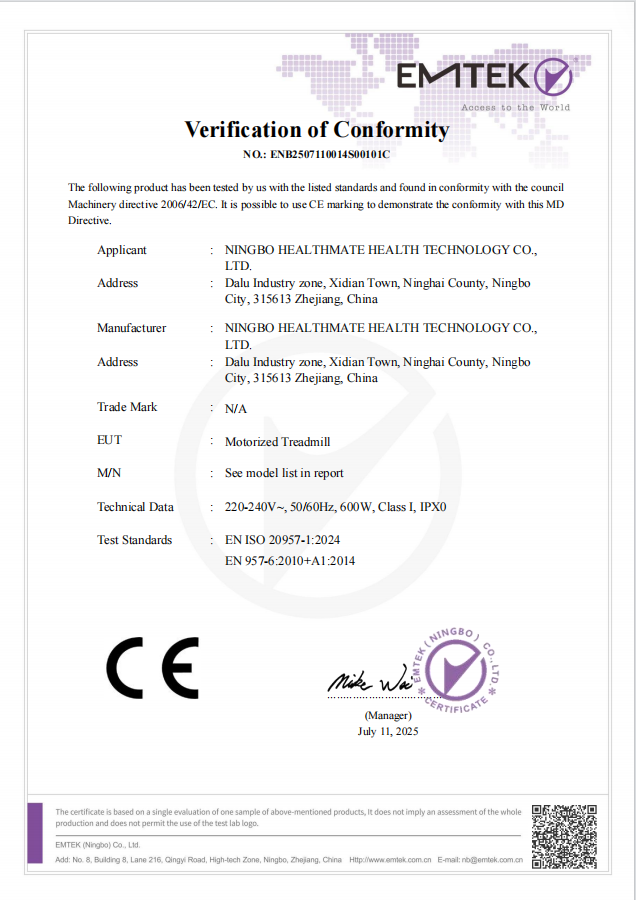
Verification of conformity associated with the motorized treadmill and walking pad families.
Where These Models Fit: Applications and Buyer Types
Product documentation answers what a machine is; application records answer where it has been used. In this supplier's case records, the models have been applied to family daily cardio workouts, indoor weight loss training, elder daily rehabilitation exercise, office standing walking, small apartment daily light exercise, post-meal fat burning, low-impact leg cardio training, home daily light fitness and rehabilitation exercise for joint mild discomfort — a list that maps almost one-to-one onto the model segmentation documented above. Walking pads serve the office and apartment scenarios; vibration plates serve light daily training and recovery; the rower and bikes serve full-body and cardio-strength training.
The stated buyer types are foreign trade wholesalers, Amazon platform sellers, local fitness retail shops, wholesale trading companies and fitness equipment wholesalers, with product use reported over 3–5 years. Reported outcomes include stable running performance, stable vibration output, an after-sales failure rate below 2%, high customer repeat order rates and positive market feedback on household space demand. Notably, the last of these is a space claim rather than a performance claim — consistent with the footprint data documented earlier, where the slimmest walking pad measures 1130x510x91mm.
Market Signals Behind the Portfolio Shape
Three externally sourced signals help explain why this portfolio is shaped the way it is. Motorized treadmills accounted for an 83% shipment share of the treadmill market in 2023, according to Fortune Business Insights — which is consistent with a range where seven documented treadmill and walking pad models sit alongside one rower. Magnetic resistance commanded 62.4% of the indoor cycling bike market in 2025, which aligns with the magnetic X-bike, magnetic resistance spinning bike and magnetic rower in this catalogue, rather than friction or air resistance systems. And ASTM F2276 is recognized as a core safety standard for home fitness equipment, covering stability and moving-parts protection — the standard class that underpins the treadmill safety features documented here, including the emergency stop key and anti-slip belt on the HSM-MT19.
These signals are directional context, not forecasts of a single supplier's outcome. Two commercial market forecasts cited earlier differ by base year and methodology; the same caution applies when a buyer compares a supplier's stated capacity with category demand.
Limits and Boundaries Buyers Should Plan Around
Model-level evidence is credible only when it is read together with its boundaries. Four constraints are visible in this documentation and should be planned for rather than discovered later.
Commercial thresholds. The stated minimum order quantity is 100 pieces and the stated lead time is 35–40 days, with monthly capacity of 8,000 pieces. A 100-piece MOQ per model line is a normal OEM entry point, but it means assortment testing across many models at once will multiply quantity commitments, and a 35–40 day production window must be added to ocean transit when calculating retail launch dates.
Product-class limits. The documented power and speed figures define hard use boundaries. The HSM-08VS vibration plate is a 200W, 9.8 kg compact unit — it should not be positioned against the 500W HSM-08VF, which carries a handlebar and a 31 kg gross weight, in the same performance conversation. Likewise, the 0.75HP walking pads are documented at 1–6 km/h, which is a walking-speed device rather than a running machine; running-grade use aligns with the 2.5HP, 1–20 km/h, 150 kg-capacity models. The swing massager HSM-08YB documents a maximum user weight of 80 kg, which should be reflected in retail copy rather than left to buyer interpretation.
Verification boundary. Facility and output figures in this article come from company and secondary industry profiles rather than an audited filing, and public sources do not agree on every company-scale figure, including headcount. No audited financial statement or independent factory audit is published. Buyers who require that level of assurance should commission a third-party factory audit or request the supplier's own documentation directly rather than relying on any published profile, including this one.
Certificate scope boundary. Certificates are issued for defined product scopes and markets. A certificate covering a vibration plate family does not automatically extend to a treadmill model, and an ETL listing for listed treadmill models does not cover unrelated categories. Scope, model and destination market should be matched line by line before an order is confirmed.
What to Watch Next
Two developments are likely to shape how this category is evaluated over the next buying cycle. The first is space-driven product design: the documented footprints here — a 91mm-thick walking pad, folding treadmill frames with carton dimensions under a metre in depth — respond to apartment and home-office use, and the market feedback reported by buyers points in the same direction. The second is documentation-driven market access: as certification regimes continue to differentiate by product family, market and even function set, the ability to present model-linked certificates will matter as much as the products themselves.
A practical implication follows for buyers. The most useful supplier questions are no longer about whether a factory can manufacture a category, but whether it can produce a model sheet, a certificate scope and an inspection record that match each other. Where those three align, the evaluation stage ends quickly and the execution stage begins with fewer surprises.
FAQ
What OEM and ODM services does Ningbo Healthmate provide?
Ningbo Healthmate provides OEM and ODM production services, with customization options covering color, logo, voltage and plug type. The production mode is stated as OEM/ODM, the minimum order quantity is 100 pieces, the stated lead time is 35–40 days and monthly capacity is 8,000 pieces.
What are the purchasing terms and acceptance criteria?
The documented purchasing terms are a minimum order quantity of 100 pieces, delivery terms of FOB Ningbo, and payment terms of 30% T/T in advance with 70% T/T against copy of B/L. The documented acceptance criteria are pre-shipment test and third-party inspection.
How is product quality controlled before shipment?
Quality control is documented as 100% test combined with third-party inspection. This applies to the product families described in this article, including the home treadmill, walking pad, vibration machine, spinning bike, magnetic X-bike, rowing machine and swing massage machine ranges.
What after-sales coverage is offered?
The stated after-sales policy is a 1-year warranty for every damaged part. Case records also report an after-sales failure rate below 2% across buyer types that include foreign trade wholesalers, Amazon platform sellers, local fitness retail shops, wholesale trading companies and fitness equipment wholesalers.
How do the four vibration plate models differ in practice?
The four models differ on power, speed-level count and footprint. The HSM-08VS is the lightest at 200W, 99 speed levels, 9.8 kg gross weight and a 530x320x145mm platform. The HSM-08VQ and HSM-08VW are 500W+300W units with 20 speed levels, at 24 kg and 21.8 kg gross weight respectively, with platform sizes of 805x450x190mm and 775x430x180mm. The HSM-08VF is a 500W, 99-level unit with a handlebar, 31 kg gross weight and a 710x700x1080mm product size. Timing ranges are 1–15 minutes on the HSM-08VW and 1–10 minutes on the other three.
How should a buyer choose between the walking pads and the home treadmills?
The documented specifications separate the two groups by speed, motor and deck. Walking pads are documented at 0.75HP with a 1–6 km/h range and 900x380mm runways, weighing 19–21 kg, suited to desk and light walking use. The mid group, including the HSM-W08A and HSM-W09E, runs at 2.0HP and 1.5HP with 1–16 km/h and 1–14 km/h ranges and larger decks. The running-grade group, including the HSM-MT19, HSM-MT296 and HSM-MT60 PRO, is documented at 2.0–2.5HP with auto incline, up to 1–20 km/h speeds and 150 kg capacity on the documented models.
Do the certificates cover every model in the catalogue?
Certificates are documented by product scope rather than uniformly across the catalogue. Vibration plate models are covered by LVD, EMC, UKCA and ROHS documentation; the treadmill and walking pad families are covered by ETL, Machinery Directive, RED, CE EMC, CE LVD and UKCA EMC documentation; the HSM-B135J5 exercise bike is covered by FCC and CE-LVD documentation; the HSM-R06 rowing machine by a CE-GPSD verification of conformity; and the HSM-08YB swing massager by CE-LVD and CE-EMC conformity documents. Buyers should confirm that the certificate scope names the exact model and destination market before ordering.
For readers compiling a technical evaluation file, the supplier's current product catalogue is available for reference and download: HSM NEW E-CATALOG.
Есть вопросы или нужны дополнительные детали?
Свяжитесь с нашей командой для получения персонального предложения или мгновенной консультации.
Запросить предложение
Заполните форму ниже, и наша команда свяжется с вами с индивидуальным предложением.
Прямой чат WhatsApp
Предпочитаете общаться в реальном времени? Напишите нам в WhatsApp для мгновенной помощи и быстрых ответов.
- Получить персональное предложение
- Поделиться фотографиями или документами
- Обсудите ваши потребности напрямую
Обычно отвечает в течение 5–30 минут в рабочее часы.