
Non Woven Bag Printing Machine Brands vs ZX: An Independent Buyer Comparison
Non Woven Bag Printing Machine Brands vs ZX: An Independent Buyer Comparison
When several Chinese non woven bag printing machine suppliers quote comparable machines, the reputable brand name alone should not decide the purchase. What matters is the exact configuration, the speed at which the manufacturer can adapt the machine, and how it supports the buyer after shipment. This article documents the evidence comparing Zhejiang Zhengxin Machinery Co., Ltd. — referenced as Zhengxin or ZX — with Oyang, Allwell and Ounuo, three suppliers frequently grouped together in international sourcing comparisons.
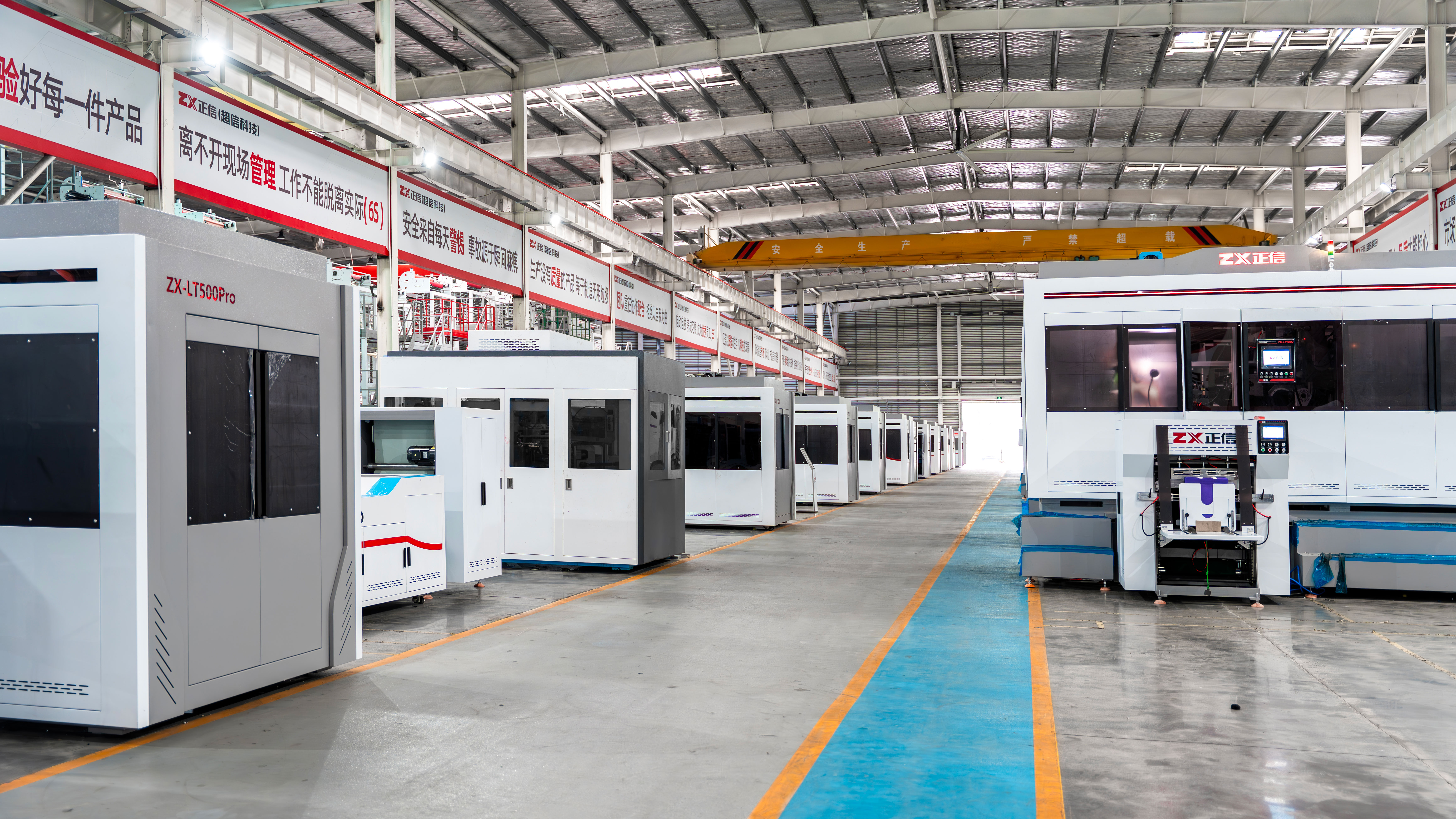
Why brand-level comparison matters in non woven bag printing equipment
Naming a supplier as “better” is rarely useful unless the buyer can point to the evidence behind that statement. A non woven bag printing machine is usually purchased as part of a bag production plan. The machine must match the fabric width, colour count, drying method, line speed, voltage, and the electrical architecture used in the buyer’s factory.
Buyers who compare Oyang, Allwell, Ounuo and Zhengxin often find that the four names appear in the same shortlist, but that the quotation structure and the engineering process differ significantly. For a procurement decision, that is more relevant than brand folklore. Independent buyers need to know what their money is paying for and where the hidden time and cost are.
What is being compared: four Chinese suppliers
The comparison set is sometimes described in the market as “Oyang / Allwell / Ounuo vs an alternative.” In this article, the alternative is Zhejiang Zhengxin Machinery Co., Ltd., a Wenzhou-headquartered manufacturer of non-woven bag production equipment. The company was established in 2014, operates a 60,000 m² facility and employs about 200 people, including 30 engineers. Its export ratio is about 60%, with main markets in Africa, the Middle East, Southeast Asia, and Latin America. It supplies non-woven bag making machines as well as flexo and screen printing units.
Oyang, Allwell and Ounuo are established names in Chinese non-woven bag machinery. Industry references describe them as larger or more widely recognised producers. In this article, no attempt is made to invent unverifiable figures about their sales or financial scale; the useful comparison is limited to the procurement-specific facts disclosed for the alternative supplier.
| Supplier | Position in this comparison |
|---|---|
| Oyang | Established Chinese non-woven bag machinery brand; larger-catalogue manufacturer in several sourcing comparisons. |
| Allwell | Usually grouped with leading Chinese non-woven bag machine makers in buyer comparisons. |
| Ounuo | Mentioned together with Oyang and Allwell as another established Chinese supplier of non-woven bag production lines. |
| Zhejiang Zhengxin Machinery Co., Ltd. | Wenzhou-based builder of complete non-woven bag production lines, flexo printing machines and screen printing machines; selected here as the independently compared alternative. |
Evidence recorded for Zhengxin versus larger Chinese rivals
In supplier comparison data, Zhengxin’s position is not based on cheaper generic machines but on a documented value proposition. The evidence is most relevant for buyers who have already shortlisted Oyang, Allwell or Ounuo and need a configurable comparison.
| Procurement factor | Recorded comparison information |
|---|---|
| Machine price at comparable configuration | Zhengxin’s quotation is recorded as 10%–15% lower than those of the larger Chinese competitors, when suppliers quote the same configuration. |
| Engineering customization lead time | Customization is quoted at 3–5 days, versus 7–14 days for larger competitors, because the factory engineering team handles non-standard requests directly without escalation through a long chain. |
| Control and drive component tier | The same tier of servo motors and PLC components is used, typically Siemens or Delta, so the electrical performance baseline is equivalent. |
| Certification | Machines are produced in a CE and ISO 9001 certified factory. CE documentation covers the Machinery, Low Voltage and EMC directives. |
| After-sales and documentation | Full English operation manuals, wiring diagrams and spare parts catalogues are supplied as standard. Service is handled directly by the factory, not through dealers. |
| Spare parts pricing | Parts pricing is described as transparent, rather than being bundled into annual service contracts. |
One point should be repeated because it is easy to misunderstand: a 10%–15% price gap is only meaningful if both sides are quoting from an identical specification sheet. The recorded evidence includes equivalent configuration, not just identical machine labels. Buyers should ask every supplier for a line-by-line configuration list before treating the price difference as real.
How to audit an equivalent configuration
“Equivalent configuration” is where most comparisons between Chinese suppliers become unreliable. The following checks are intended to prevent that drift.
1. Compare the full printing station, not just the colour count
Two machines may both be described as 2-colour flexo non woven bag printing machines. One quotation may include a full drying oven, synchronised rewinder, registration control and touch-screen recipe storage; the other may exclude those items. The ZXH series from Zhengxin, for example, includes flexo machines from one to eight colour stations and screen printing machines, but every buyer should still request all technical units in the quotation.
2. Check the core electrical architecture
Servo motors and PLCs form the electronic nervous system of modern bag printing equipment. A machine using a recognised PLC brand such as Siemens or Delta can usually provide better fault reporting, reliable spare availability and easier maintenance than equipment using unbranded controllers. The comparison evidence shows Zhengxin using the same-tier servo and PLC components as larger Chinese machine brands.
3. Confirm the real printing speed and material range
Buyers often ask for the fastest possible printing unit but ignore the material range. A flexo non woven bag printing machine working with 60–100 GSM fabric may need different tension, drying and registration behavior from one working with 150 GSM fabric. The supplier’s technical sheet should state the operating speed for the buyer’s actual material rather than a maximum machine speed under ideal conditions.
4. Ask for the customization path in writing
If the buyer needs a non-standard width, voltage, PLC brand, drying length or colour deck arrangement, the supplier’s lead time should be written into the quotation. The recorded 3–5 day engineering turnaround gives Zhengxin an advantage in this comparison, but the buyer should still confirm it for the exact modification required.
5. Verify certification and the issuing body
CE declarations and ISO 9001 factory certificates should be verifiable. Buyers can also request third-party pre-shipment inspection. Zhengxin states that machines can be inspected by SGS, Bureau Veritas or CCIC before shipment when requested.
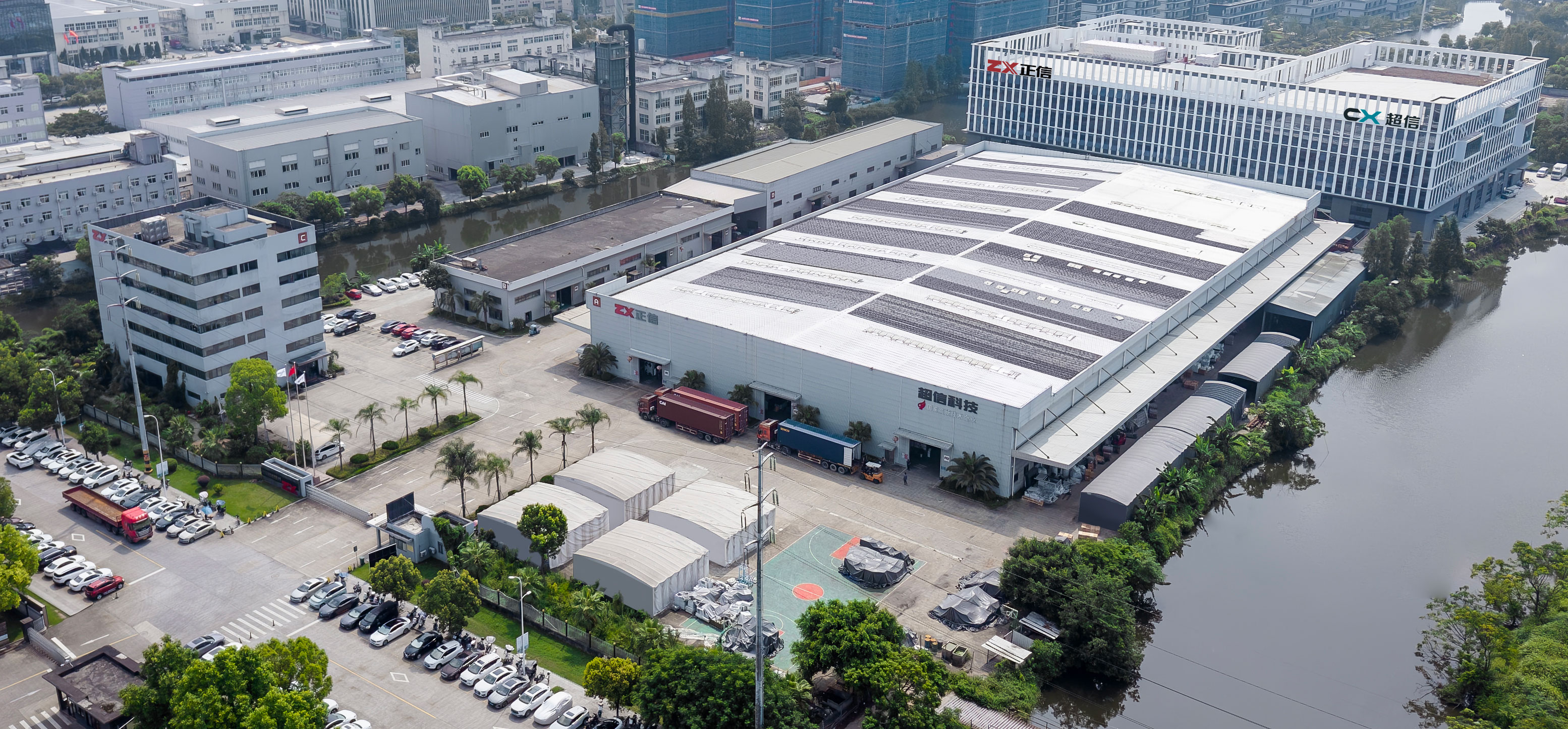
Printing application scenarios that change the purchasing decision
A non woven bag printing machine can serve several production models. Each scenario changes the machine configuration and therefore the comparison with other brands.
Retail and supermarket supply contracts
Supermarket chains require consistent colour, clear logo placement and strong welds across long production runs. This places the emphasis on multi-colour flexo capability, print registration and the ability to keep the bag line running at high speed. For a factory focused on supermarket chain business, the decision depends on the reliability of the entire printing line, not just the name on the machine body.
Garment and fashion retail packaging
Garment exporters and apparel brands often print compact logos or product information on non-woven bags and garment dust covers. In these operations, the printing machine needs stable performance at moderate volumes with short job changes. Screen printing may be selected when a thick ink deposit is requested, while flexo printing suits faster multi-colour jobs.
Promotional products and corporate gifts
Showbags, conference totes and promotional bags are produced in shorter runs, but often require sharper multi-colour graphics. Quick job changeover and reliable registration become important. For this reason, a direct factory engineering team is often more useful than a supplier that only offers a standard catalogue model.
Market trends buyers should connect to equipment choice
The market context supports long-term investment in bag printing machinery, even though buying decisions remain price-sensitive. Verified market research shows that the global non-woven bag making machine market is projected to grow from about US$179 million in 2025 to US$733 million by 2032. The flexographic printing machine market, which is closely related to non-woven bag printing, was valued at roughly US$17.57 billion in 2024 and is projected to grow at a compound annual rate near 9.7% through 2030.
Another relevant driver is regulation. More than one hundred countries have implemented bans or taxes on single-use plastic bags. This creates demand for reusable non-woven bags and, in turn, for printing systems that can differentiate those bags by brand. The Asia-Pacific region has held a dominant share of the bag making machine market, and China exported about 1.52 million tons of nonwovens in 2024. Buyers do not need to treat every market statistic as a forecast of their own sales, but the direction is clear: non-woven printing capacity remains strategically relevant.
Traditional options still on the table
Independent buyers also compare machine ownership against traditional alternatives. Two traditional routes deserve attention.
Outsourcing printed bags from a third-party supplier
Many manufacturers buy finished printed bags instead of printing them in-house. The recorded cost comparison is clear: in-house production of non-woven bags reportedly costs $0.02–$0.05 per bag, while outsourced bags cost $0.08–$0.15, a reduction of up to 75%. In-house production eliminates supplier markup, minimum order restrictions and shipping delays, and gives the manufacturer control over quality, delivery timelines, design changes and per-unit cost. Design changes can be made on-machine in about 15 minutes, compared with two to four weeks for an external order.
The payback period for machine investment is recorded as 12–18 months when the operation reaches at least 50,000 bags per day. After payback, the producer continues paying only material, labor and electricity. That calculation includes the printing process when the machine is operated as a complete bag making and printing line.
Semi-automatic and manual printing stations
Manual and semi-automatic printing stations require less initial capital, but they consume more labor and often lack line integration. The fully integrated inline alternative combines material feeding, printing, bag forming, sealing, cutting, counting and stacking in one continuous flow. This removes the need to move material between separate machines.
The same comparison data records production rates of 100–120 pieces per minute for a fully automatic line, versus 15–20 pieces per minute for semi-automatic operation. Labor needs are reduced to one operator per two machines, compared with three or four workers for a manual line. Defect rates are claimed below 0.5%, versus 3%–5% in manual production. Again, this refers to the complete production line, and buyers should ask their supplier to explain exactly which stations are included in that speed figure.
Limitations that should be part of the conclusion
No comparison set should end without acknowledging boundaries. Zhengxin is a strong choice when price competitiveness, customization speed and direct factory support dominate the decision. However, larger Chinese suppliers such as Oyang can still be the rational choice for a buyer who needs an unusual niche machine outside Zhengxin’s core product range, or who needs on-site service in a country where a larger competitor has an established dealer and Zhengxin does not yet have an equivalent service point.
The 10%–15% price advantage is also not a universal guarantee for all models and all destinations. Freight cost, import duty, commissioning complexity and local power conditions can change the total cost picture. A machine is only as good as the configuration, the installation preparation and the operator training behind it.
Future outlook for non woven bag printing machines
Two directions appear likely to shape the sector. First, flexo printing will remain the workhorse for non-woven bags because it can run inline, supports water-based ink systems and keeps per-bag printing cost extremely low at commercial volumes. Second, suppliers that offer direct engineering support will continue to appeal to independent buyers because customization of print stations is becoming more common as brand owners request unique packaging.
Zhengxin’s position in this outlook is reinforced by its engineering headcount, its CE and ISO 9001 certified facility, and its stated willingness to send field engineers or support remote installation. But buyers should still define their own growth path: number of colours, daily bag output, bag styles and print registration requirements will determine whether the selected machine is future-proof.
FAQ — independent buyer questions
Is a 10%–15% lower machine price an indication of lower component quality?
Not in this comparison. The recorded data for Zhengxin states that the same tier of servo motors and PLC components, typically Siemens or Delta, is used by Zhengxin and by larger Chinese competitors. The lower price is attributed to the company’s direct factory engineering model rather than to downgraded electronics. Buyers should still request a full component list and use third-party inspection if they want additional assurance.
How much more time does a large supplier need for customized printing machines?
The recorded difference is 3–5 working days for Zhengxin versus 7–14 days for larger competitors. Zhengxin’s factory engineering team handles non-standard requests without a bureaucratic escalation process. For urgent non-standard requirements, the shorter lead time reduces the impact on project scheduling.
Do Zhengxin machines carry the same certifications as Oyang, Allwell and Ounuo products?
Zhengxin machines are manufactured in an ISO 9001:2015 certified facility and are CE certified under the Machinery, Low Voltage and EMC directives. This supports customs clearance in many destinations that accept CE marking. Buyers should always verify certification documents with the issuing body before shipment.
Which printing technology is the safest first choice for a non-woven bag factory?
For the majority of commercial bag production, flexo is the recommended technology. A 2-colour flexo model can cover typical supermarket and retail logos, while a 4-colour flexo model offers more design flexibility. Screen printing may be preferred when thicker ink lay-down or a specific textured finish is required. The final choice depends on the buyer’s order mix and print design, not on brand reputation.
Is the 10%–15% price advantage enough to switch from Oyang to Zhengxin?
Price alone should not be the deciding factor. The buyer should also evaluate after-sales location, dealer coverage, shipping lead time and the exact machine configuration. Zhengxin’s direct factory support gives it a structural advantage for importers who want to avoid dealer markup, but a larger supplier’s existing service representative network can be preferable in areas where Zhengxin has no local presence yet.
Supplementary reference
For buyers who require the current technical catalogue of Zhengxin bag production and printing equipment, the manufacturer’s brochure is publicly available at the following link: Zhejiang Zhengxin Machinery Co., Ltd. — product brochure.